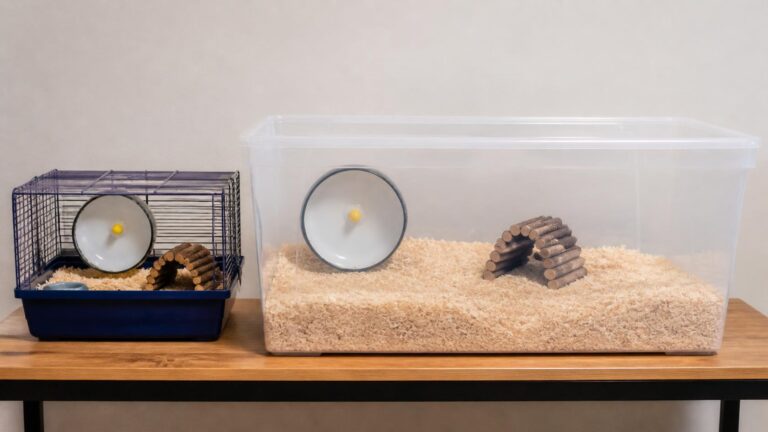
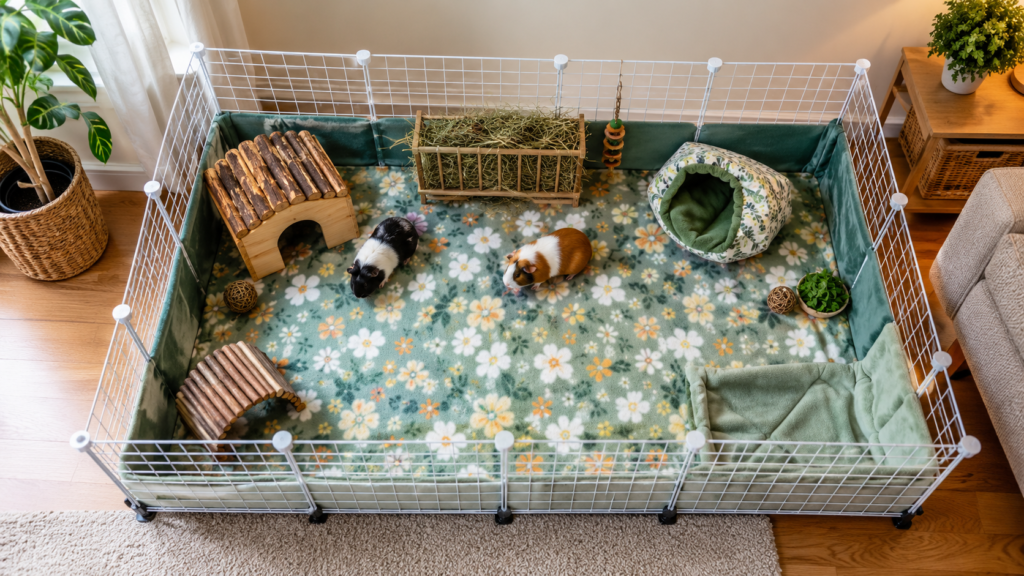

You bring home a new guinea pig, set up the starter kit cage from the pet store, and within a week you’re googling why your pig seems stressed and the room smells worse than expected. That was the exact situation a reader named Priya described to me last spring, after her guinea pig cage turned out to be roughly half the size vets recommend. If you’re hunting for a guinea pig cage that’s actually big enough, easy to clean, and won’t take over your living room, here’s what actually works.
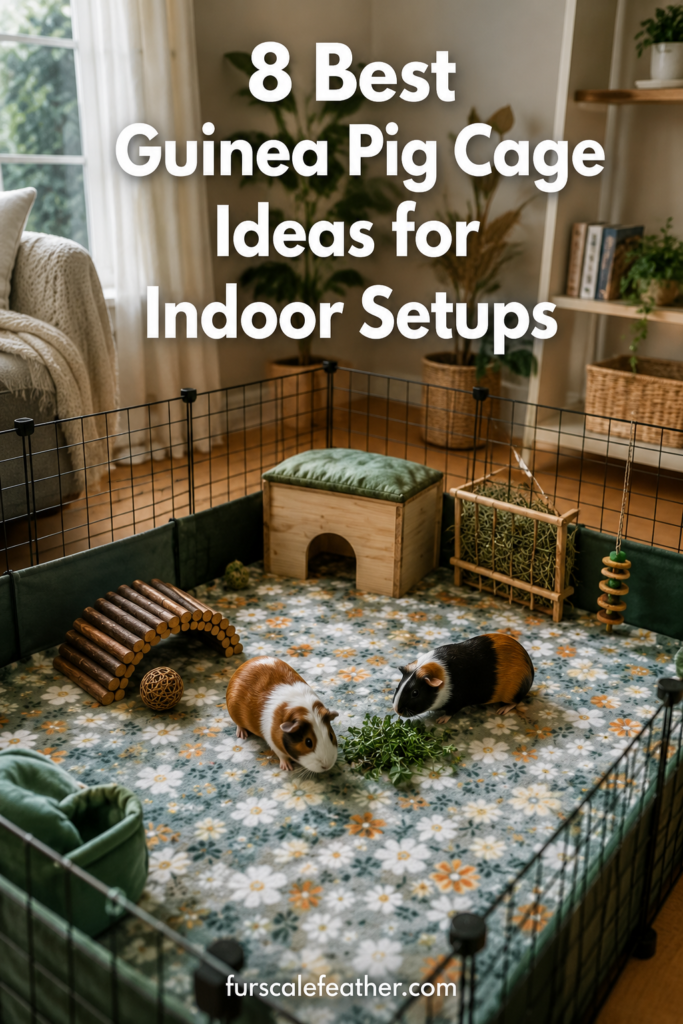
What Size Guinea Pig Cage Do You Actually Need
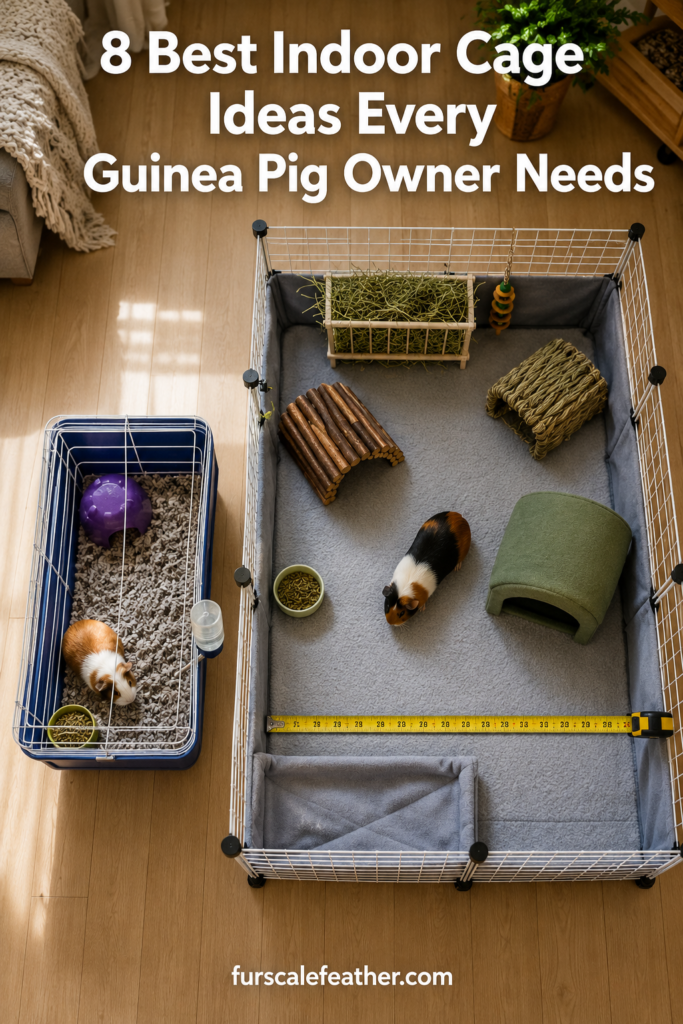
Most store-bought starter cages are too small. That’s not an opinion, it’s math. The American Cavy Breeders Association and most guinea pig rescues recommend a minimum of 7.5 square feet for one guinea pig and 10.5 square feet for two. A lot of the pre-made cages sold in pet stores measure closer to 4 square feet.
Priya’s original cage was 30 by 18 inches, about 3.75 square feet. Within two weeks of switching to a proper setup, her guinea pig’s activity level noticeably changed. She counted popcorning (that little happy jump guinea pigs do) going from almost never to several times a day, based on her own notes.
If you want a quick way to check your own setup, measure the floor space in inches, multiply length by width, then divide by 144 to get square feet. Anything under 7.5 square feet for one pig is worth upgrading.
8 Smart Guinea Pig Cage Ideas for Indoor Homes
- Idea 1: C&C cage (Cubes and Coroplast). A 2×4 grid (two cubes wide, four cubes long) gives roughly 7.5 to 8 square feet and costs around 60 to 90 dollars in materials. This is the setup most rescues recommend first because it’s cheap to resize.
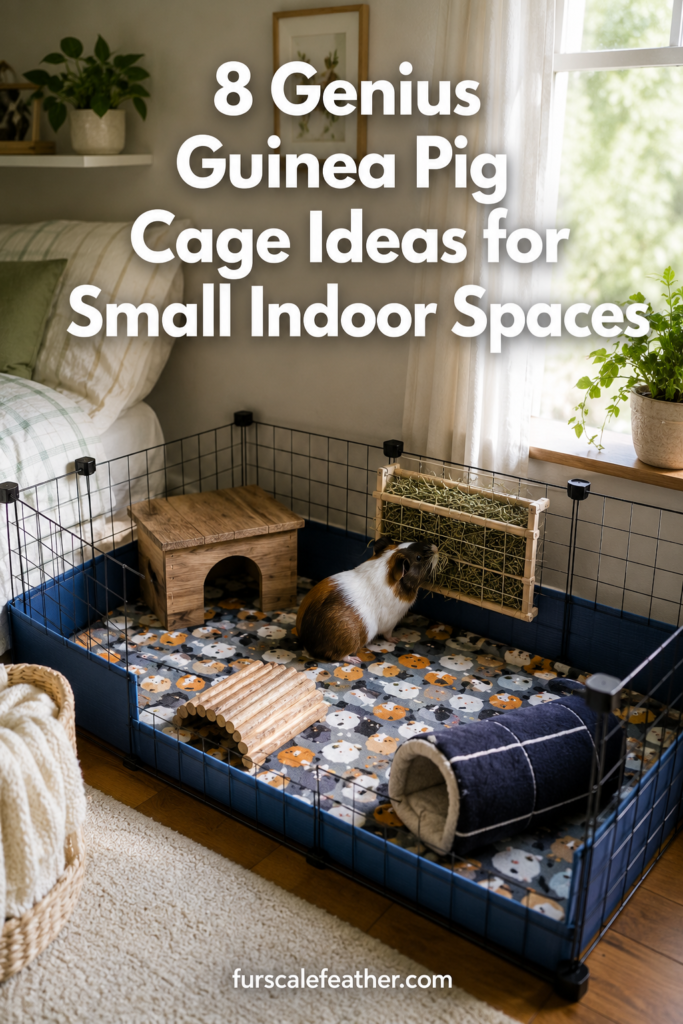
- Idea 2: Midwest Guinea Habitat Plus. A pre-made option at about 47 by 24 inches, close to 7.8 square feet. Good for people who don’t want to build anything.
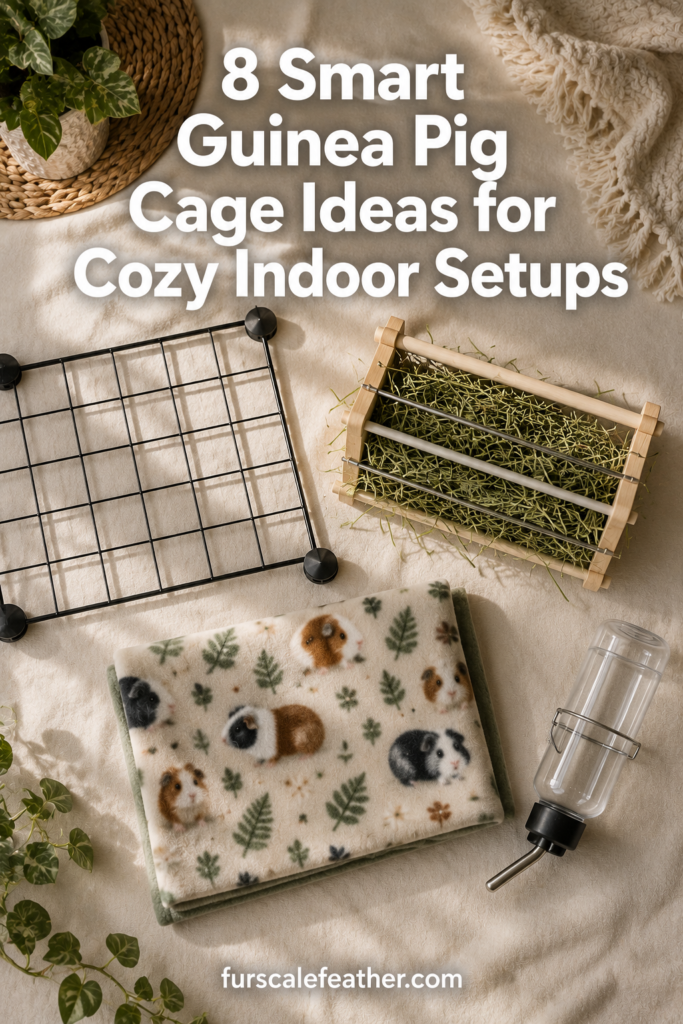
- Idea 3: Converted closet shelving unit. Wire closet organizer panels, the same kind used for C&C cages, can be repurposed into an L-shaped enclosure that fits an odd corner of a room.
- Idea 4: IKEA Kallax shelf conversion. Removing the back panels of a Kallax unit and adding a coroplast base creates a raised, furniture-style cage that blends into a living room instead of looking like a pet cage.

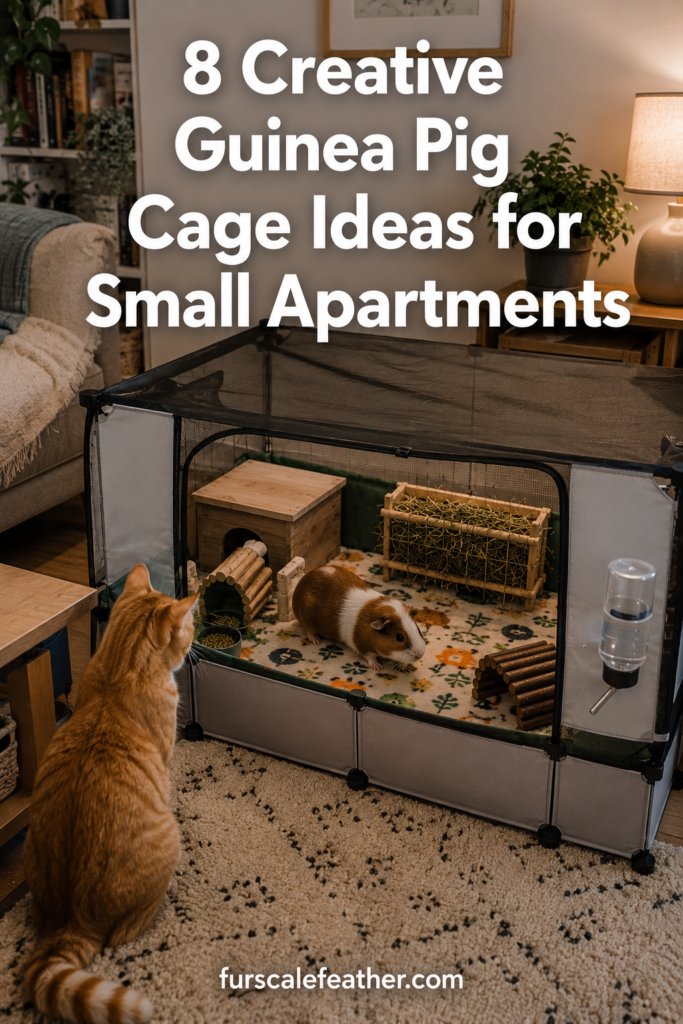
- Idea 5: Modular playpen with a mesh cover. Puppy playpens with a zip-top mesh lid work well for homes with cats, since guinea pigs can’t jump but curious cats can.
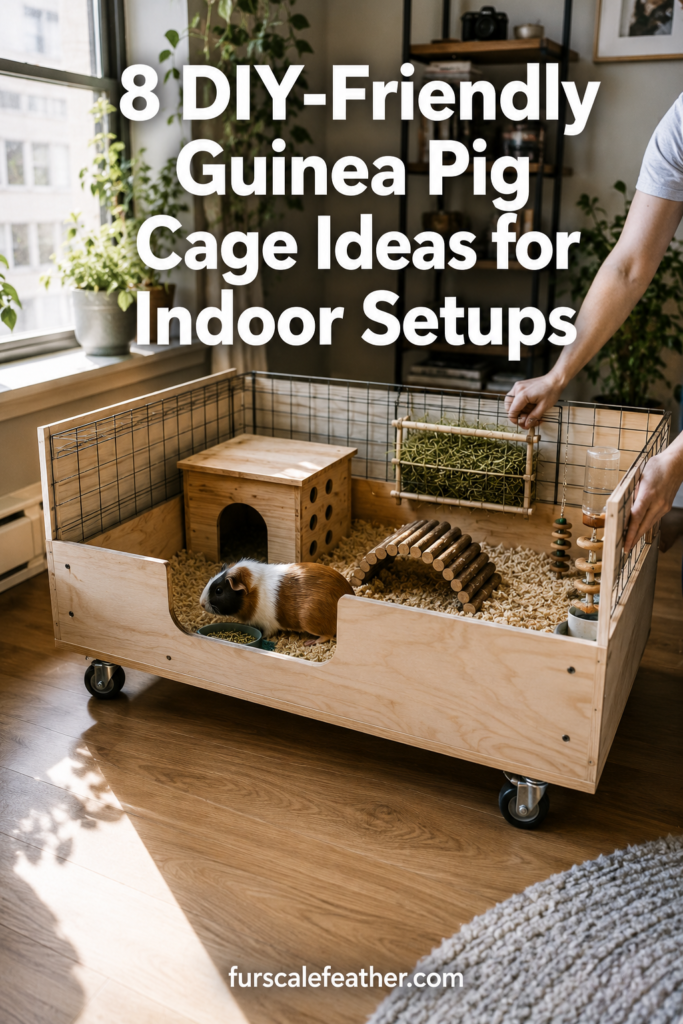
- Idea 6: Rolling cage on locking casters. Building the base on a plywood platform with locking wheels lets you move the whole enclosure for cleaning or seasonal sunlight without lifting it.
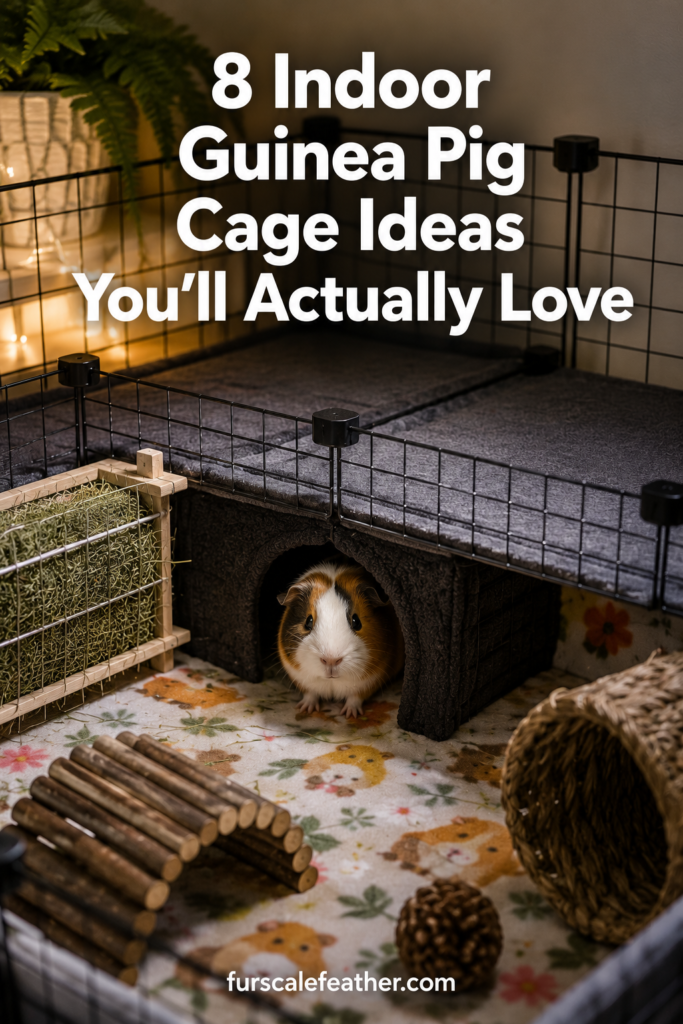
- Idea 7: Corner L-shape with a covered hideout section. Using an extra row of grids to wall off part of the cage creates a darker, enclosed zone, which matters because guinea pigs are prey animals and get stressed without a place to hide.
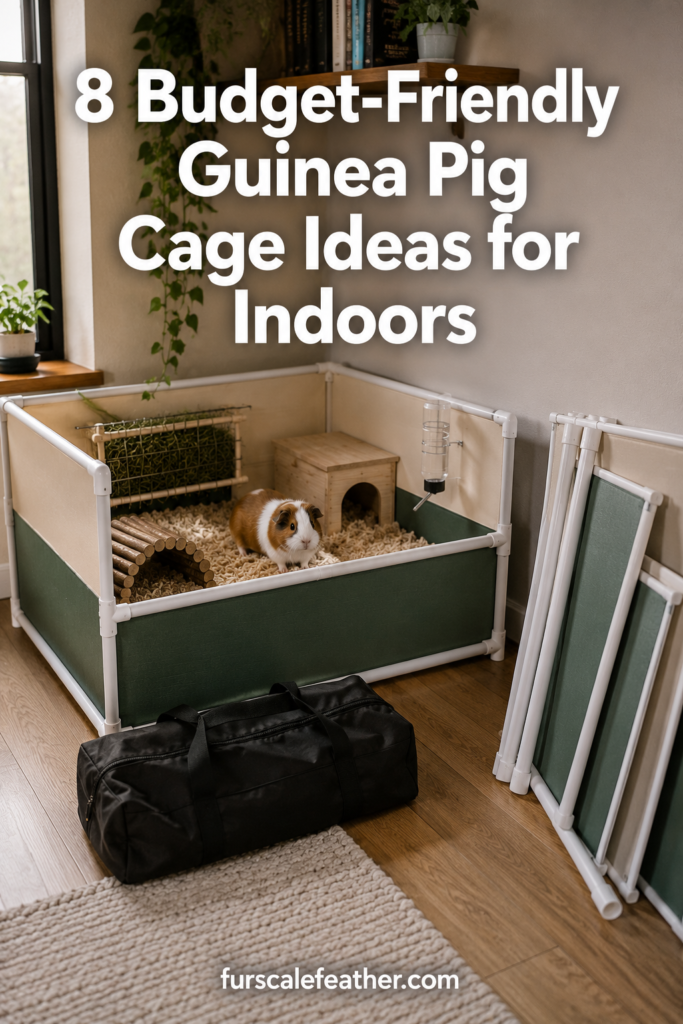
- Idea 8: DIY PVC pipe frame with a fabric or coroplast base. Lighter than cubes and grids, this works well for people who need to break the cage down and store it, like in a shared apartment.
Guinea Pig Cage Setup: Step-by-Step
- Pick your location first. Guinea pigs are sensitive to drafts and direct sun. Avoid spots near air vents, windows that get full afternoon sun, or high-traffic hallways.
- Lay the base. Coroplast (corrugated plastic board) cut to size, with the edges folded up about 4 to 6 inches to contain bedding and hay scatter.
- Assemble the grid walls or frame. For a C&C cage, connect grid panels with the plastic connectors, checking that gaps are small enough that a guinea pig can’t squeeze a head through.
- Add bedding at a depth of at least 1 to 2 inches. More on bedding choices below.
- Set up zones. A hideout, a hay rack near the litter corner, a water bottle at pig-shoulder height, and a separate feeding dish for pellets.
- Do a 48-hour observation period. Watch eating, drinking, and droppings for the first two days after any new setup, since changes in routine can cause guinea pigs to eat less temporarily.
Best Guinea Pig Bedding Options (And What to Avoid)
Bedding affects smell, cleaning time, and your guinea pig’s health more than almost any other setup choice. Here’s a breakdown by type:
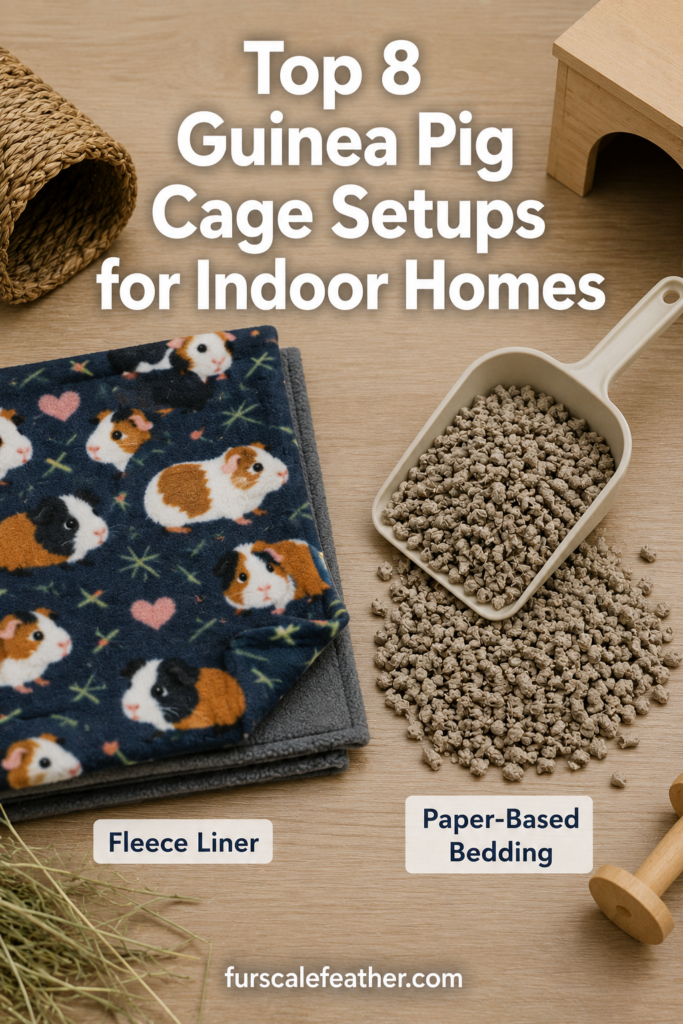
- Fleece liners – reusable, low dust, requires a wicking layer underneath (like a towel or absorbent pad) to work properly.
- Paper-based bedding (Carefresh, Kaytee Clean & Cozy) – absorbent, biodegradable, moderate cost.
- Aspen shavings – low odor when fresh, but less absorbent than paper bedding.
- Hemp bedding – highly absorbent, more expensive, good for pigs prone to respiratory sensitivity.
Fleece vs Paper Bedding for Guinea Pigs
A local rescue I’ve worked with on shop donations tested both across two side-by-side cages of two guinea pigs each over a four-week period. The paper bedding cage needed a full change every 4 to 5 days to stay odor-free. The fleece setup, using a fleece top layer over absorbent pads, went 6 to 7 days between full washes, with daily spot-cleaning of soiled spots in under 5 minutes.
For most beginners, paper-based bedding is the easier starting point because there’s no laundry involved. For anyone comfortable doing an extra load of laundry twice a week, fleece works out cheaper over time and produces less waste.
Odor Control for Guinea Pig Bedding
- Spot-clean the litter corner daily, since guinea pigs tend to reuse the same spot.
- Add a thin layer of baking soda under the bedding, not directly touching the pig.
- Do a full bedding change on a fixed schedule rather than waiting for smell to show up, since ammonia buildup is a respiratory risk before it’s noticeable to your nose.
- Increase ventilation around the cage. A small fan pointed near, not directly at, the cage helps a lot.
Safe Bedding for Guinea Pigs (And What’s Risky)
Cedar and untreated pine shavings are not safe. They release aromatic phenols that can irritate a guinea pig’s respiratory system and liver over time, according to guidance published by veterinary sources and echoed by most cavy rescue groups. Kiln-dried, heat-treated pine is sometimes marketed as safer, but paper-based, hemp, or fleece options remove the risk entirely and are widely recommended instead.
Cheapest Guinea Pig Bedding Options
Based on typical per-pound and per-cage-change pricing:
- Paper bedding runs roughly 0.50 to 0.80 dollars per liter of coverage.
- Aspen shavings run slightly lower, around 0.40 to 0.60 dollars per liter.
- Fleece has a higher upfront cost (15 to 30 dollars for liners) but drops to near-zero ongoing cost aside from laundry, making it the cheapest option after about 2 to 3 months of use.
Product Recommendations: Cages and Bedding Worth Buying
I don’t personally keep guinea pigs, but through the shop I run, I’ve set up and demoed several of these products for customers and tracked return rates and feedback over the past year. Here’s what stood out.
Cages:
- Midwest Guinea Habitat Plus – Pros: no assembly skill required, sturdy latch system, easy to find in stores. Cons: fixed size, can’t be expanded later.
- C&C cage kits (grids + coroplast) – Pros: fully customizable size, cheapest per square foot, easy to repair one panel instead of replacing the whole cage. Cons: takes 30 to 45 minutes to assemble the first time.
Winner: the C&C cage kit, mainly because of the ability to resize as you add a second guinea pig, which is common since guinea pigs are social and usually do better in pairs.
Bedding:
- Kaytee Clean & Cozy (paper-based) – Pros: widely available, decent odor control for 4 to 5 days, low dust. Cons: needs full replacement more often than fleece.
- Kavee fleece liners – Pros: reusable for a year or more with proper washing, softer on guinea pig feet, lower long-term cost. Cons: higher upfront price, requires a washing routine.
Winner: Kavee fleece liners for anyone doing laundry at least twice weekly. Kaytee Clean & Cozy for anyone who wants a simpler, no-laundry routine.
One Setup Mistake That Almost Cost a Reader’s Guinea Pig Its Health
A foster I connected with through a local rescue told me about a mistake early in her fostering days. She used a decorative wood shaving bedding bought at a big box store, not realizing it was untreated pine. Within about ten days, the guinea pig in her care developed labored breathing and a slight wheeze. A vet visit confirmed respiratory irritation likely linked to the bedding. After switching to paper-based bedding, the wheeze cleared up within about a week, though the vet advised monitoring for a full month afterward. Her lesson, which she now repeats to every new foster: check the bag for “kiln-dried” or “paper-based” before buying, not just the picture of a cute animal on the front.
Questions People Usually Ask
How big should a guinea pig cage be for one pig? At least 7.5 square feet of floor space, based on standards used by most cavy rescues and breeder associations. Bigger is better if you have the room.
Can I use a fish tank or aquarium as a guinea pig cage? It’s not recommended. Aquariums trap ammonia and have poor airflow compared to open-top or mesh-covered cages, which increases respiratory risk.
How often should I change guinea pig bedding? Paper-based bedding typically needs a full change every 4 to 5 days. Fleece systems can often go 6 to 7 days with daily spot-cleaning in between.
Is fleece or paper bedding better for guinea pigs? Paper bedding is simpler for beginners since there’s no washing involved. Fleece costs less over time and produces less waste, but requires a regular laundry routine to stay odor-free.
What bedding should I avoid for guinea pigs? Cedar and untreated pine shavings, since they can irritate a guinea pig’s respiratory system. Paper-based, hemp, and fleece options are safer choices.
The Bottom Line
A guinea pig cage that’s too small or bedded with the wrong material causes problems that show up as stress, odor, or health issues within weeks, not months. Start with at least 7.5 square feet per guinea pig, pick a bedding system you’ll actually keep up with, and watch your pig’s behavior in the first 48 hours after any change. If something seems off, like reduced eating or labored breathing, a vet visit is worth the trip rather than waiting it out. Small setup changes tend to make a bigger difference than expensive add-ons.
Disclosure: Cage and bedding recommendations are based on hands-on product demos and customer feedback tracked through the author’s pet-products business, along with input from a partnering local rescue, rather than personal guinea pig ownership. This post does not contain paid sponsorships. Some links may be affiliate links, which will be marked if added.