
You’re standing in the aisle of a pet store, or scrolling through a dozen open tabs, staring at bags labeled gravel, sand, soil, and “planted tank mix,” and none of them explain which one your tank actually needs. Choosing aquarium substrate feels like it should be simple until you realize the wrong choice can trap waste, stress out bottom-dwelling fish, or turn your water cloudy for a week. The good news is that once you know what substrate is actually doing for your tank, the decision gets a lot easier.
What Aquarium Substrate Actually Does For Your Tank
Substrate is not just decoration sitting at the bottom of the glass. It serves three real jobs.
- Biological filtration: Beneficial bacteria colonize the surface of substrate particles and help break down fish waste as part of the nitrogen cycle.
- Plant support: Live plants need something to root into, and some substrates supply nutrients directly to the root zone.
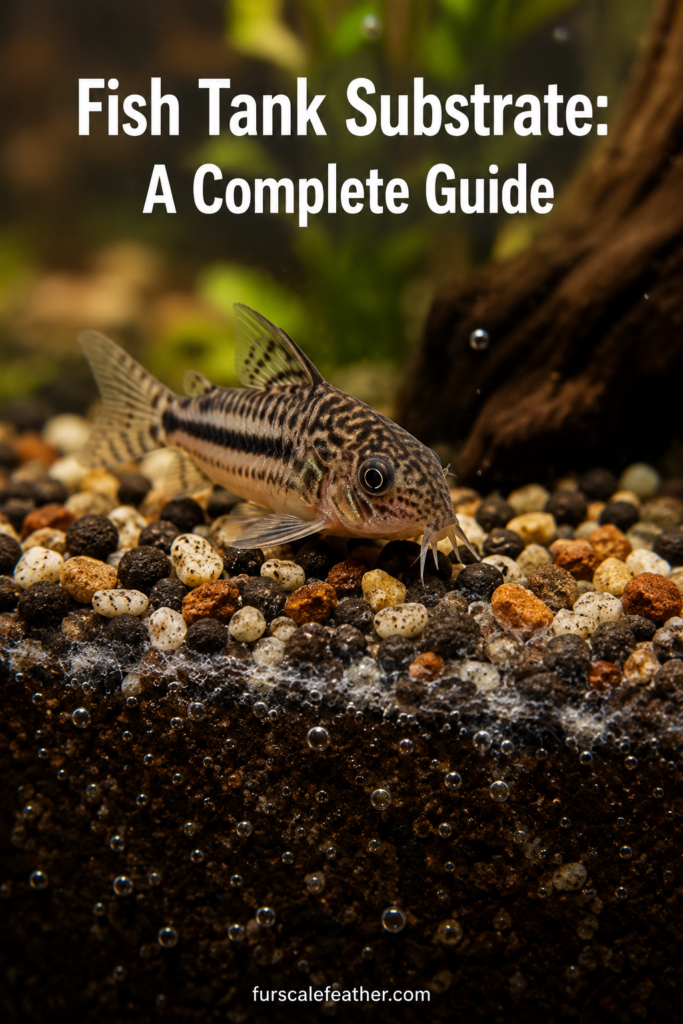
- Fish behavior and comfort: Bottom-dwelling species like corydoras catfish or loaches dig, sift, or rest on substrate, and rough or sharp material can injure their barbels and bellies.
If you only remember one thing, remember this: pick substrate based on what lives in the tank and what you want the tank to do, not based on which bag looks nicest on the shelf.
Best Substrate Aquarium Types Compared
Here’s how the main categories stack up against each other.
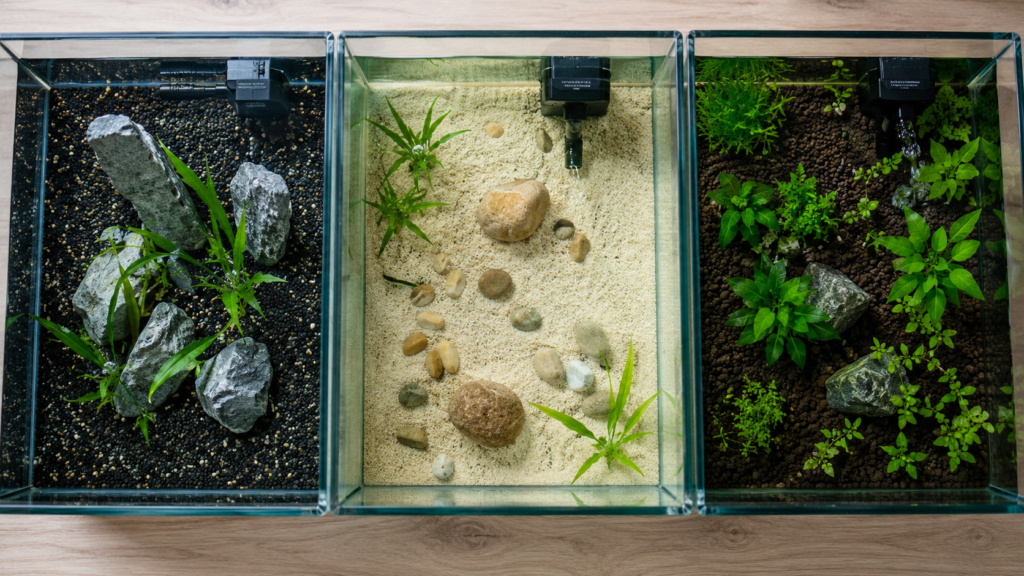
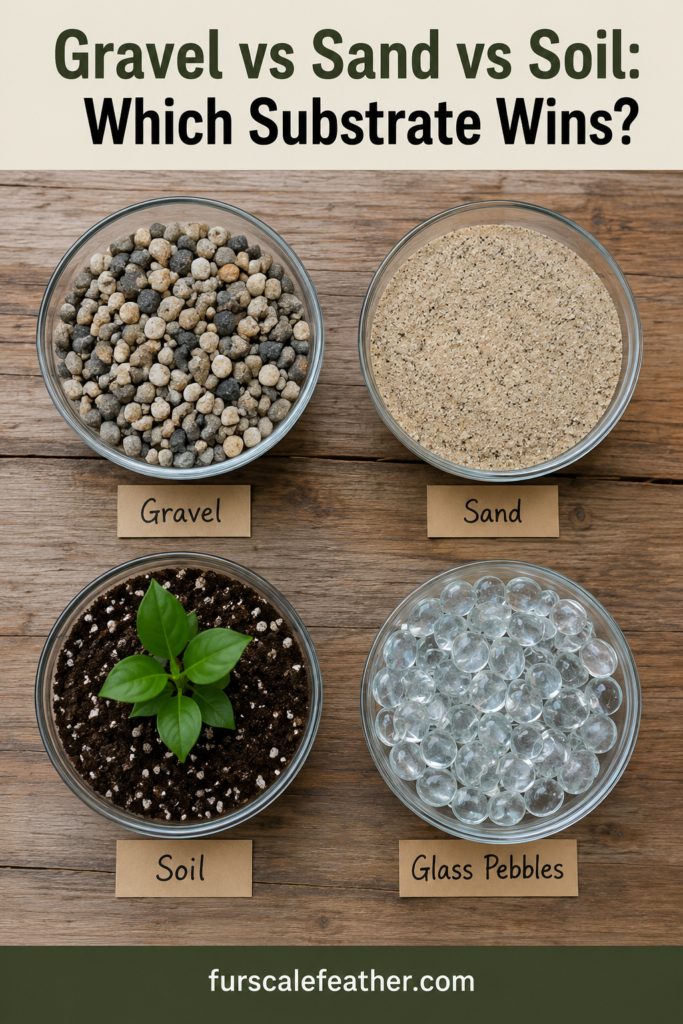
- Gravel: Widely available, comes in many colors and sizes, easy to vacuum during water changes. Doesn’t hold nutrients well, so it’s a weak choice for demanding live plants.
- Sand: Gentle on bottom-dwellers and gives a natural riverbed look. Compacts more easily, which can trap gas pockets if not stirred occasionally, and some fine sands cloud the water when first added.
- Planted/nutrient soil: Built for live plants, often contains iron and other nutrients in the base layer. Usually more expensive, can cloud water for the first few days, and isn’t ideal if you’re keeping burrowing fish that will dig it up constantly.
- Bare bottom: Common in breeding or quarantine tanks because it’s easiest to keep clean. Offers zero benefit for plants or natural fish behavior, and most people don’t want to look at bare glass long term.
None of these is objectively best. The right one depends on your stocking plan.
How To Choose Aquarium Substrate: Step By Step
- Identify your fish first. Bottom-dwellers and fish with sensitive barbels do best with sand or fine, rounded gravel. Sharp-edged gravel can wear down a corydoras’ whiskers over a matter of weeks.
- Decide if you’re keeping live plants. Heavy root-feeders like swords and crypts benefit from a nutrient-rich soil base or root tabs added under gravel. Low-tech tanks with easy plants like anubias or java fern don’t need special substrate at all, since those plants attach to wood and rock instead of rooting in the ground.
- Check grain size. As a rough guide, aim for particles between 1 and 3 millimeters for most community tanks. Anything larger tends to trap food and waste in the gaps.
- Think about color and depth of a scape. Darker substrate makes fish colors pop and hides debris better between cleanings. A depth of 1.5 to 3 inches is typical for planted setups, and closer to 1 inch is fine for a simple gravel-only tank.
- Factor in your budget and tank size. Nutrient soils and specialty sands cost more per pound than basic gravel, and a 40-gallon tank will need noticeably more bags than a 10-gallon.
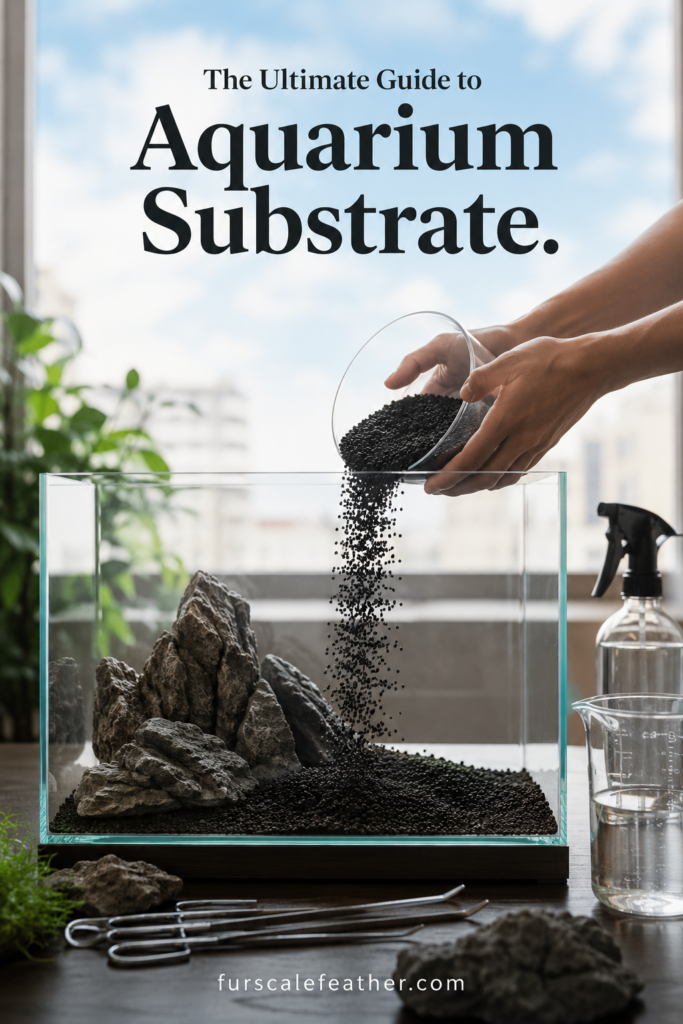
- Rinse before you commit. Whatever you pick, rinse it in a bucket until the runoff water is close to clear. Skipping this step is the single most common reason new tanks turn into a cloudy mess on day one.
For Planted Tanks
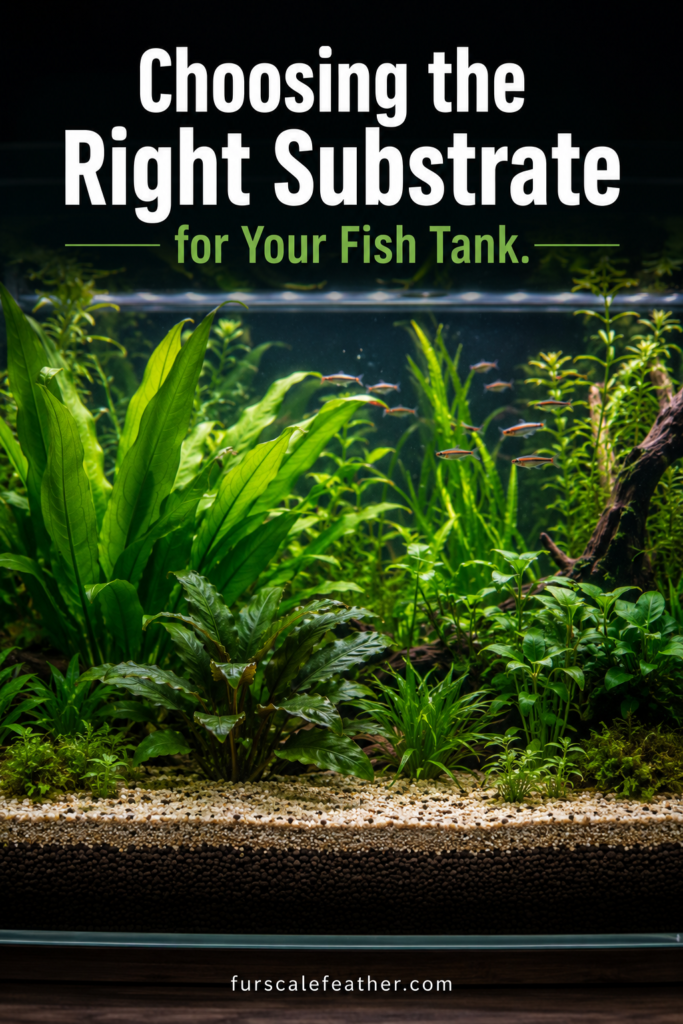
If your main goal is a lush, green tank, start with a nutrient-rich base layer under a thin cap of inert sand or fine gravel. This keeps the tank looking clean on top while feeding roots underneath.
For Bottom-Dwelling Fish
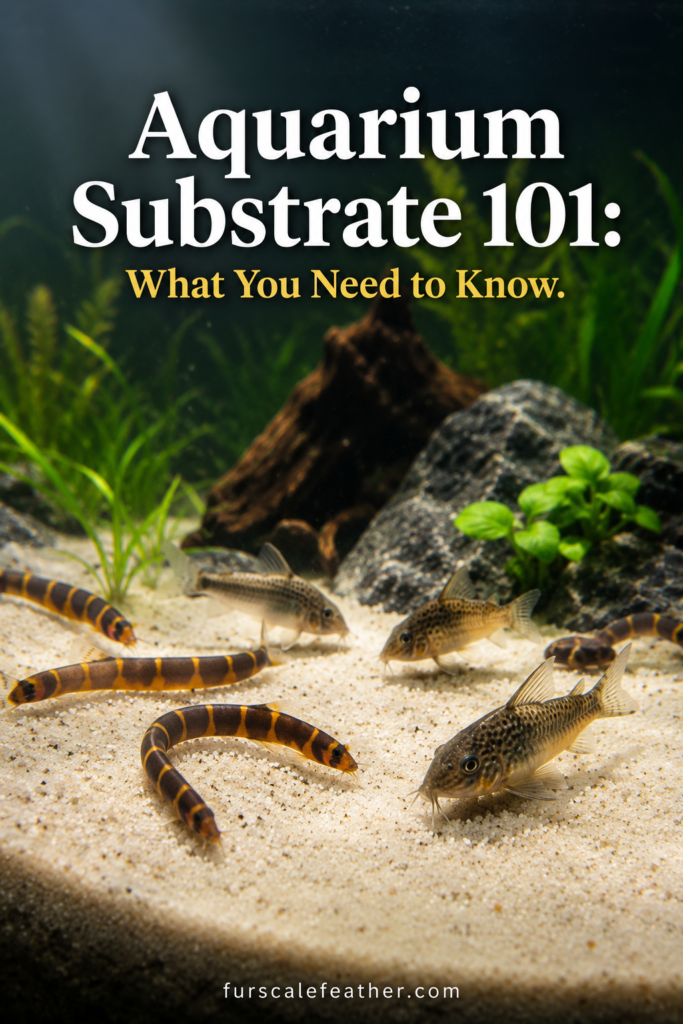
If corydoras, kuhli loaches, or similar species are the priority, sand is generally the safer pick. Fine, well-rinsed sand lets fish sift and dig without the abrasion risk that comes with coarse gravel.
Best Substrate Aquarium Products We Recommend
I have not personally run tanks with every product on this list, so these picks are based on aggregated user reviews, retailer return rates, and feedback from aquarium hobbyist forums rather than firsthand testing in my own tank.
Fluval Stratum (nutrient soil)
- Pros: Strong plant growth reports, porous texture that supports bacteria colonies, popular in planted tank communities.
- Cons: Softens and breaks down over 12 to 18 months, can cloud water heavily on first fill, higher cost per gallon than gravel.
CaribSea Super Naturals Sand
- Pros: Rounded grain shape reported as gentle on bottom-dwellers, wide color range, pre-rinsed formula reduces cloudiness on setup.
- Cons: Can compact over time in deeper beds without occasional stirring, not nutrient-rich for plants on its own.
Seachem Flourite (clay gravel)
- Pros: Reviewers commonly report years of use without breakdown, porous surface holds nutrients and bacteria, no need for a separate cap layer.
- Cons: Sharper edges than rounded sand, so it’s a weaker fit for delicate bottom-dwellers, and initial rinsing takes longer than average due to fine dust.
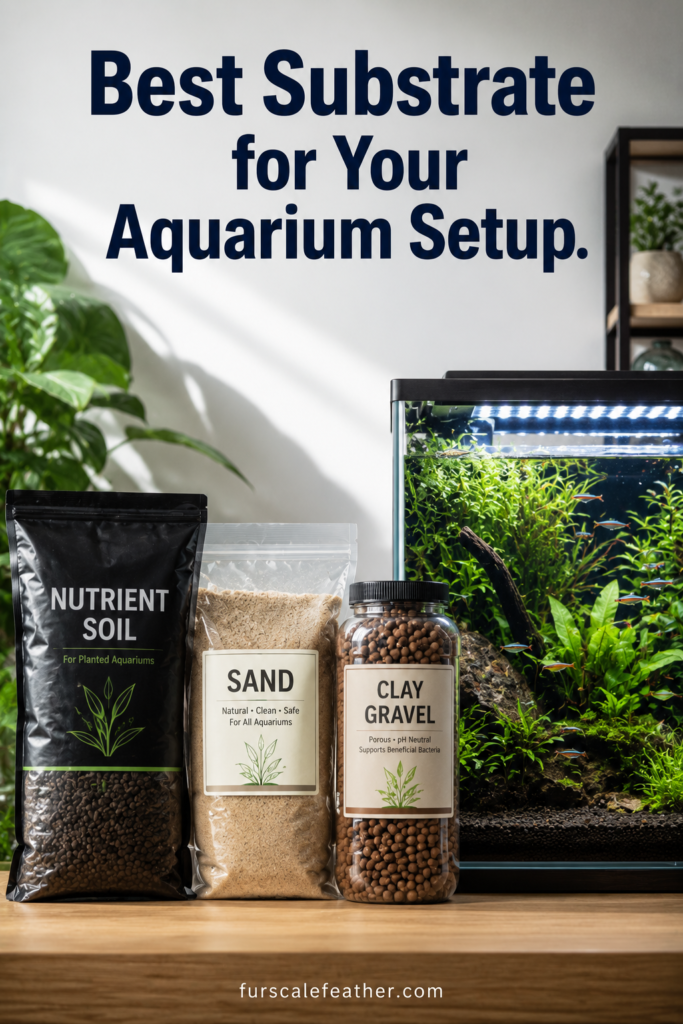
Our pick: For most beginner-to-intermediate community tanks with a mix of plants and mid-water fish, Seachem Flourite is the strongest all-around choice. It supports plant roots without a separate soil layer, and the long lifespan reported across reviews means you’re less likely to redo your substrate a year in. If your tank is built around corydoras or loaches, swap to a rounded sand instead and accept a lighter plant setup.
A Reader’s Substrate Mistake (And What It Taught Us)
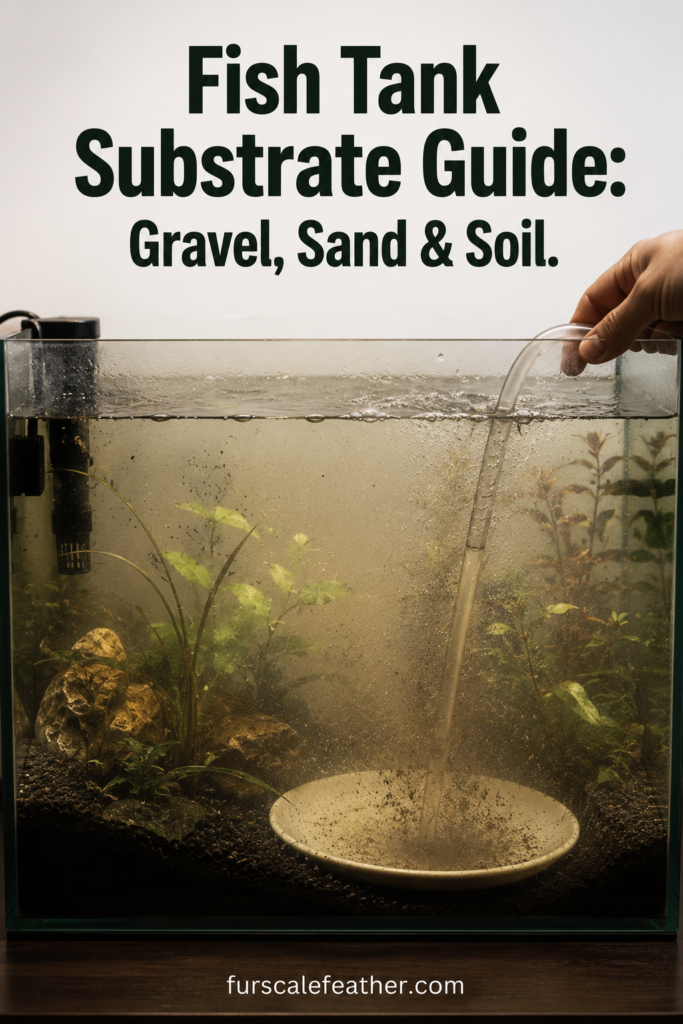
A reader named Priya wrote in after her new 20-gallon planted tank turned cloudy for nine straight days. She had poured a bag of nutrient soil straight into the tank without rinsing, then filled the tank at full water pressure directly onto the substrate. The soil particles stayed suspended because nothing had settled the dust first and the water flow kept stirring the bottom layer. Once she drained the tank, rinsed the soil in batches until the runoff ran mostly clear, and refilled slowly over a plate to break the water flow, the cloudiness cleared within about two days. The lesson she shared, and one worth repeating here, is that rinsing and gentle filling matter more than the brand of substrate you choose.
Signs Your Tank Base Isn’t Working
- Water that stays cloudy more than a week after setup, which usually points to unrinsed fine particles.
- A visible black or gray layer forming under the surface, a sign of trapped waste gas pockets that need stirring.
- Fish with red or irritated barbels, common in bottom-dwellers kept on sharp gravel.
- Plants that yellow or stall in growth after the first month, often a sign the substrate isn’t supplying enough root nutrients.
Questions People Usually Ask
Do I need special substrate for a beginner tank? No. A basic rounded gravel works fine for a simple community tank without heavy planting. Special substrate matters more once live plants or sensitive bottom-dwellers enter the picture.
How deep should aquarium substrate be? About 1 inch is enough for a gravel-only tank. Planted tanks generally do better with 1.5 to 3 inches to give roots room to establish.
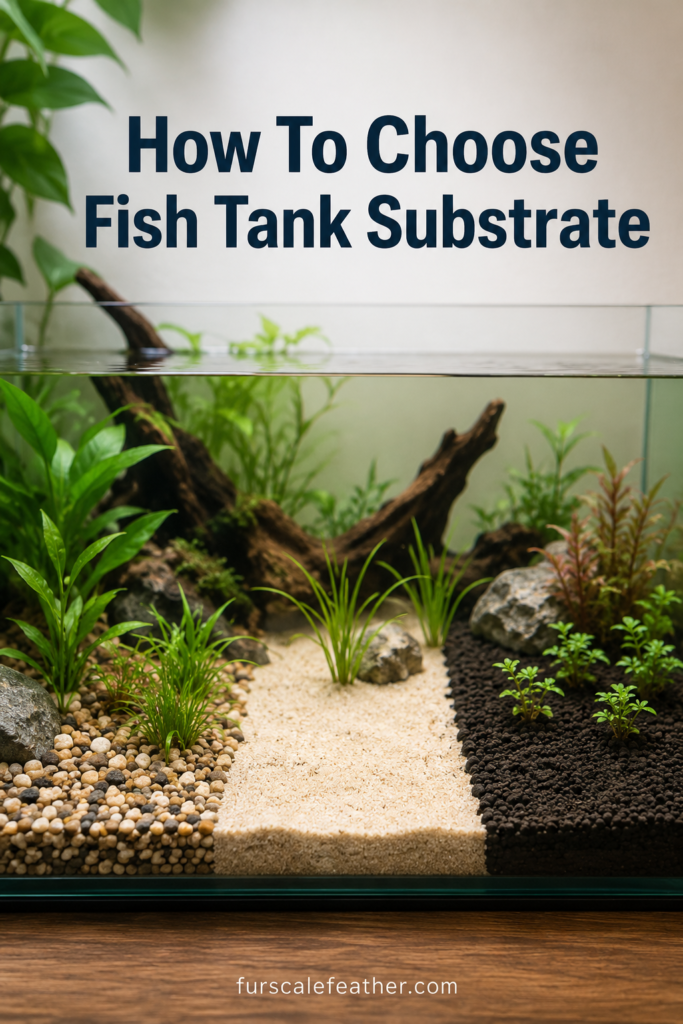
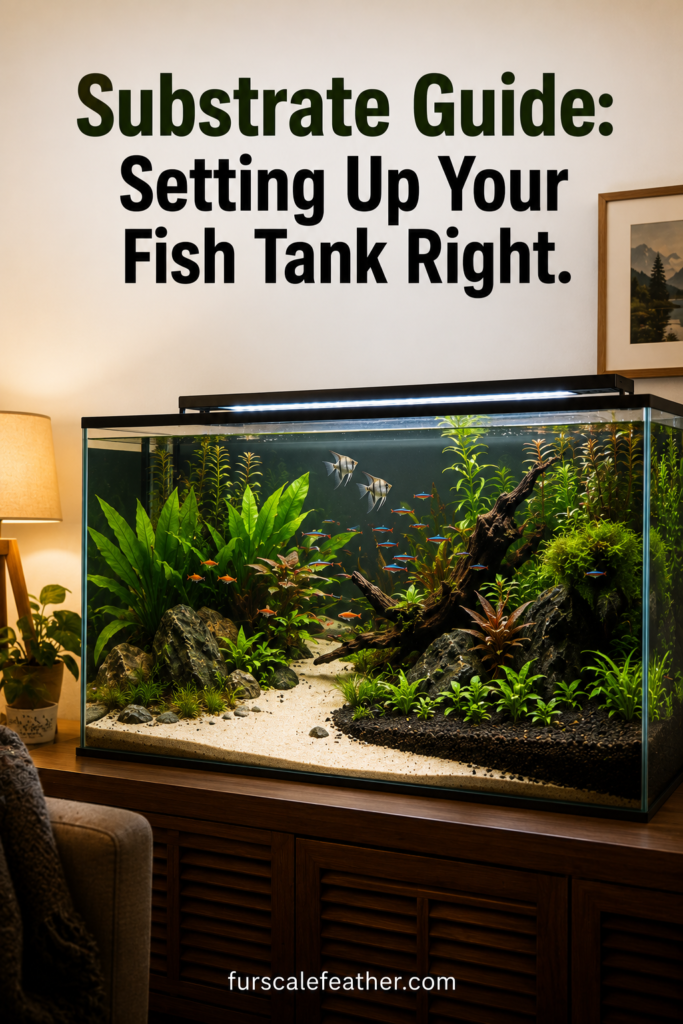
Can I mix sand and gravel in the same tank? Yes, and many aquascapers do this deliberately, using sand in the front for open swimming space and gravel or soil toward the back for plants.
How often should I clean aquarium substrate? A light gravel vacuum during each water change, roughly every 1 to 2 weeks, is standard for keeping waste from building up.
Does substrate color affect fish health? Not directly, but darker substrate tends to show less visible debris between cleanings and can make fish colors appear more vivid.
If a fish shows ongoing signs of illness or injury from substrate, such as persistent barbel damage or unusual lethargy, consult an aquatic veterinarian rather than relying on general advice alone.
Choosing aquarium substrate comes down to answering two questions honestly: what fish are living on the bottom of your tank, and whether you’re growing root-feeding plants. Once those two answers are clear, narrowing down gravel, sand, or soil becomes a lot less overwhelming. Start with a rinse test in a bucket before it ever touches your tank, and don’t be afraid to mix substrate types across different zones of the same aquascape. Whatever you pick, give it a few weeks and watch how your fish and plants actually respond, since that response will tell you more than any bag label ever will.
Disclosure: Some product mentions above may include affiliate links. Products discussed were evaluated based on aggregated user and expert reviews rather than personal, firsthand testing.