
Your guinea pig has been quieter than usual this week. They’re moving a little stiffer, one back leg seems tender when they hop off the ramp, and their coat has lost its shine. If you’ve searched for guinea pig vitamin C because you’re worried about scurvy, you’re on the right track. Once you understand exactly how much vitamin C your guinea pig needs and where to get it, fixing the problem is usually simple.
Guinea pigs are one of the few animals, along with humans and a small group of primates, that cannot produce their own vitamin C. Every milligram has to come from food or a supplement, every single day. Skip it for too long and you get scurvy, a painful and entirely preventable condition. This guide covers how much vitamin C your guinea pig actually needs, which foods deliver it reliably, and how to build it into a normal day of guinea pig nutrition without turning feeding time into a chore.

Why Guinea Pig Vitamin C Matters
Most mammals make their own vitamin C using an enzyme called L-gulonolactone oxidase. Guinea pigs are born without a working version of that enzyme, so they depend entirely on their diet. Vitamin C is also water-soluble, which means the body doesn’t store much of it. A guinea pig who gets plenty on Monday and none for the rest of the week is still at risk by Friday.
Vitamin C supports collagen production, wound healing, and immune function. Without enough of it, connective tissue weakens, joints swell, and the body loses its ability to repair itself properly. That’s the biological reason scurvy shows up as stiffness, poor healing, and a rough coat rather than looking like an obvious nutritional problem at first glance.
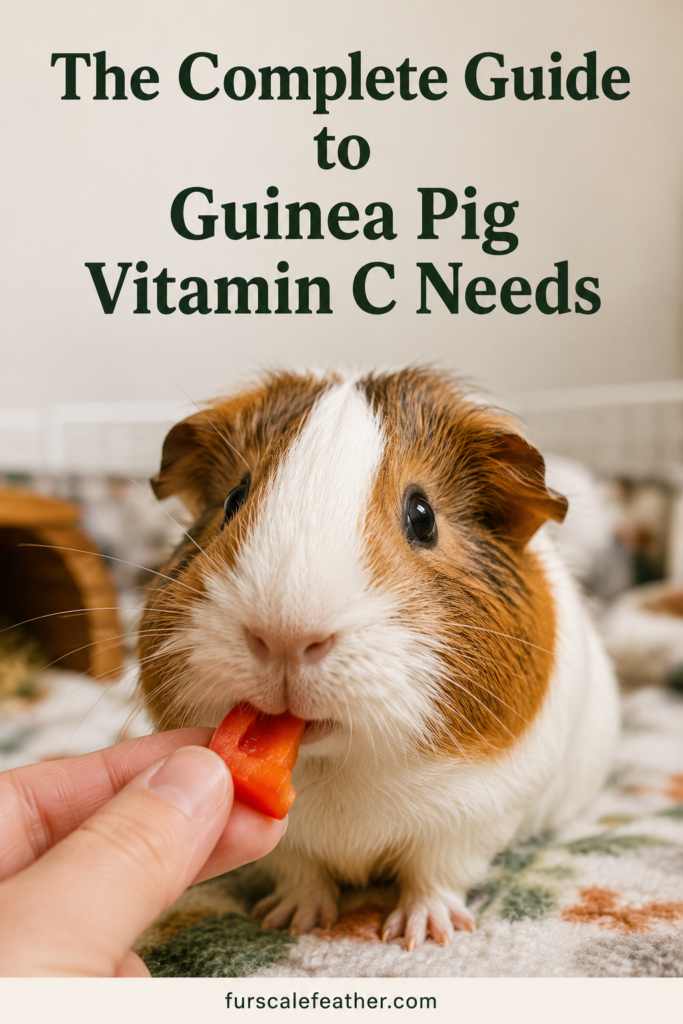
Signs Your Guinea Pig Might Be Vitamin C Deficient
Early signs are easy to miss because they look like general slowing down rather than a specific illness. Watch for:
- Lethargy or reluctance to move around the cage
- A dull, rough, or thinning coat
- Swollen or painful joints, especially in the legs
- Stiff, hesitant movement or reluctance to jump onto ramps and platforms
- Slow-healing cuts or scrapes
- Reduced appetite and weight loss
- Diarrhea or drooling caused by mouth discomfort
These symptoms overlap with several other guinea pig health problems, including dental disease and bladder issues, so they aren’t a reliable way to self-diagnose. If you notice any of them, a veterinary visit is the right next step rather than guesswork at home.
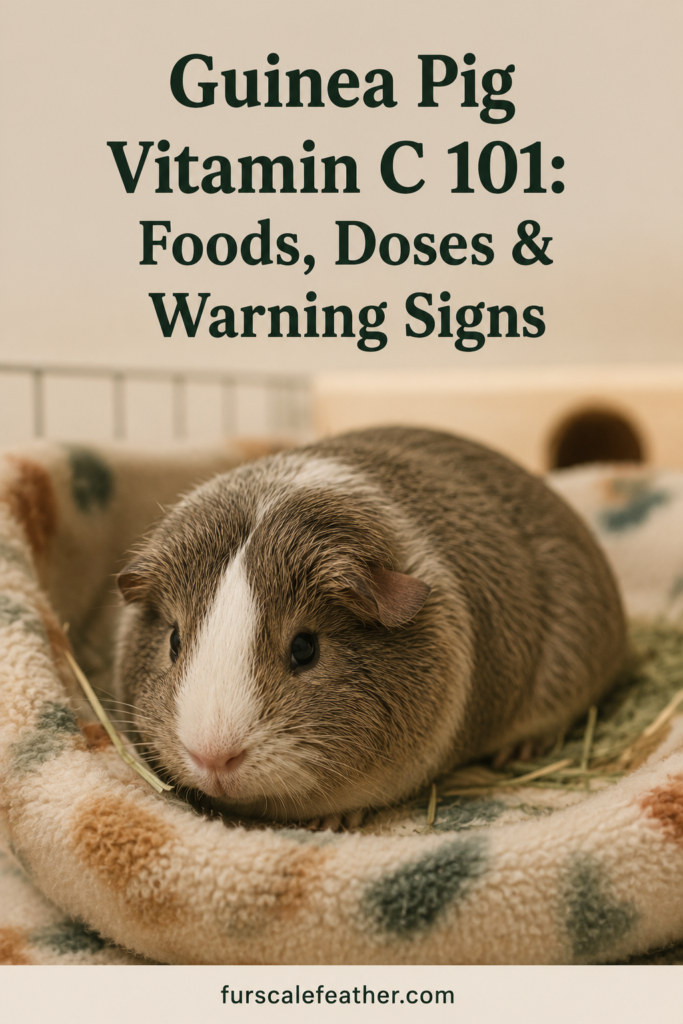
How Much Vitamin C Does a Guinea Pig Need
Requirements vary a bit depending on the source, but the ranges are consistent enough to plan around:
- Healthy adult guinea pig (roughly 1kg): about 10 to 20mg per kg of body weight per day, which works out to roughly 20 to 25mg total for most pets
- Growing, pregnant, or nursing guinea pig: about 30mg per kg per day, or roughly 30 to 40mg total
- Guinea pig recovering from a diagnosed deficiency: up to 50mg per kg per day, but only under veterinary guidance
Extra vitamin C beyond what the body needs is generally flushed out in urine rather than stored, so a slightly generous day isn’t cause for panic. That said, more isn’t automatically better. Some sources link sustained very high intakes, well above 150mg per kg per day over long periods, to joint problems, so there’s no benefit to routinely overshooting the target.
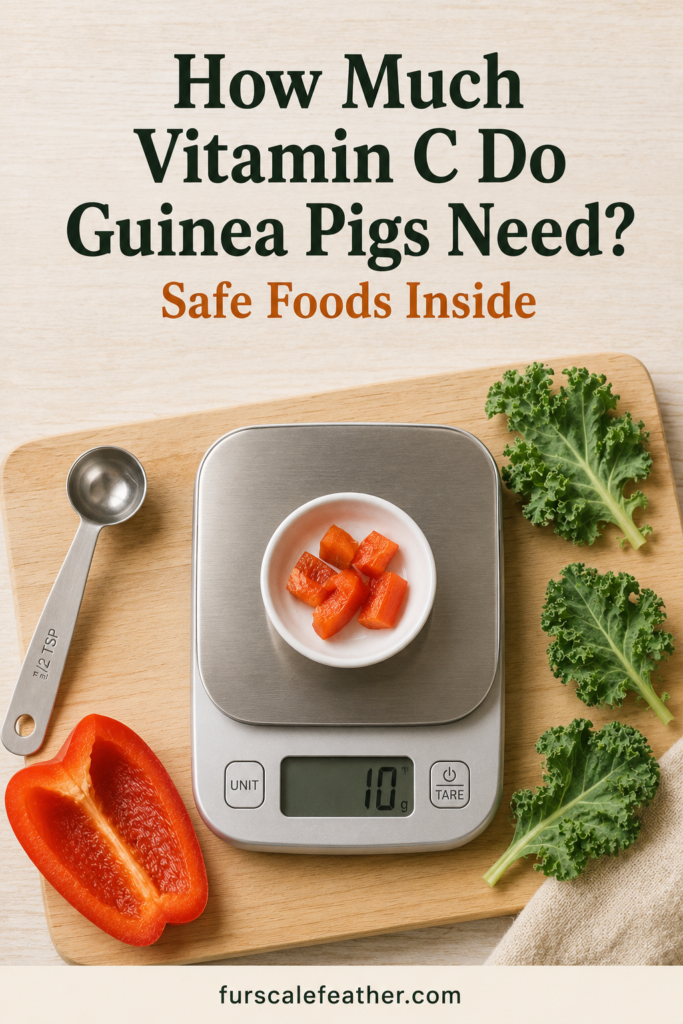
Best Safe Vitamin C Foods for Guinea Pigs
Fresh produce is the most reliable, affordable way to cover daily vitamin C needs. Approximate vitamin C content per 100 grams:
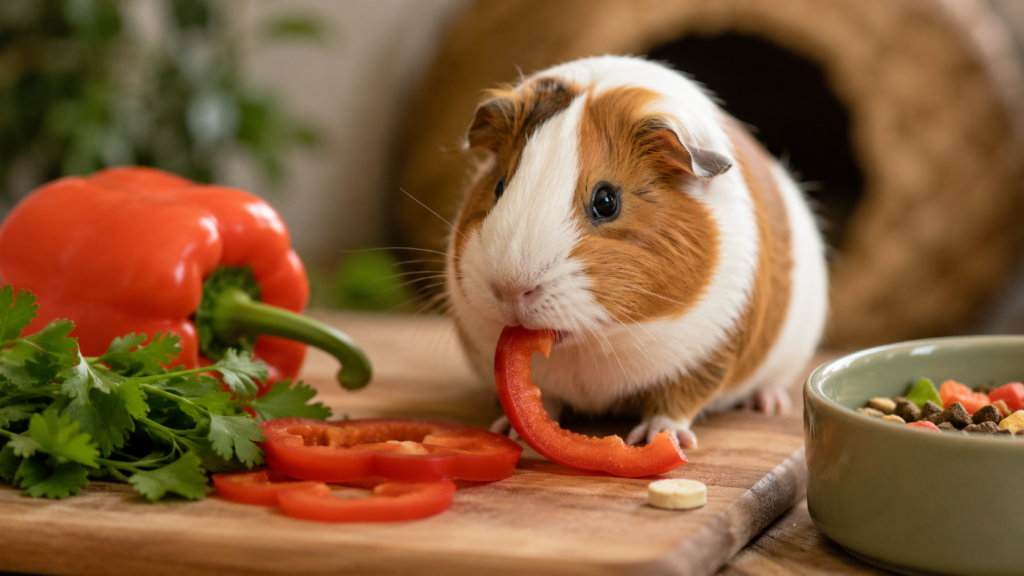
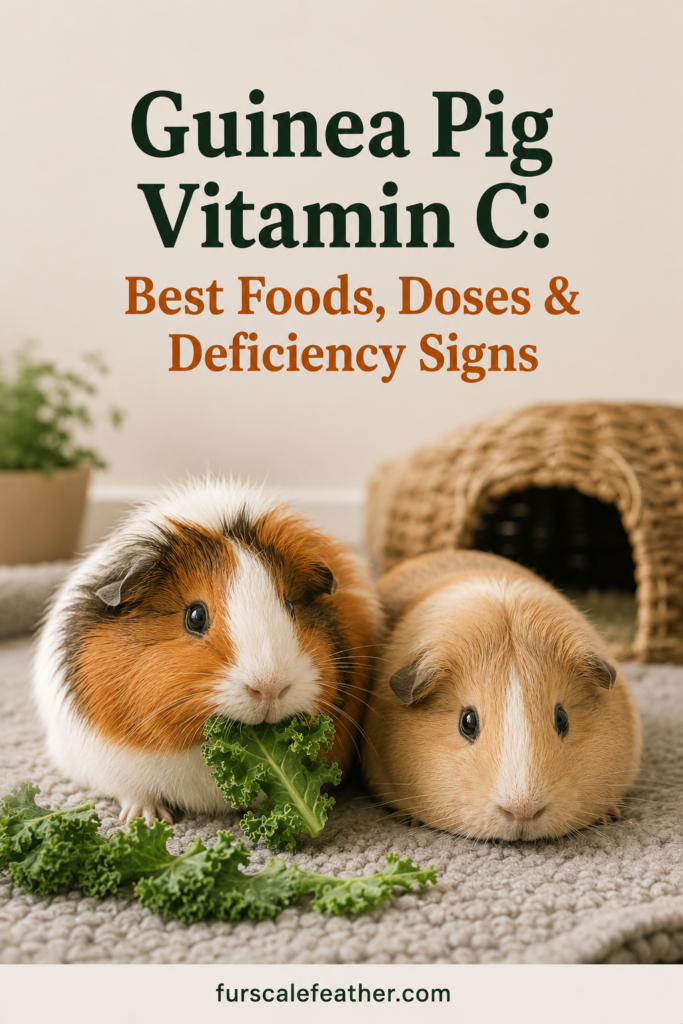
- Red or yellow bell pepper: about 130mg. Low in calcium, low in sugar, and usually a favorite. A good everyday base.
- Parsley: about 130mg, but also high in calcium and oxalates. Feed in small amounts two or three times a week rather than daily.
- Kale: about 93mg. Rotate rather than feed every day for the same calcium reasons as parsley.
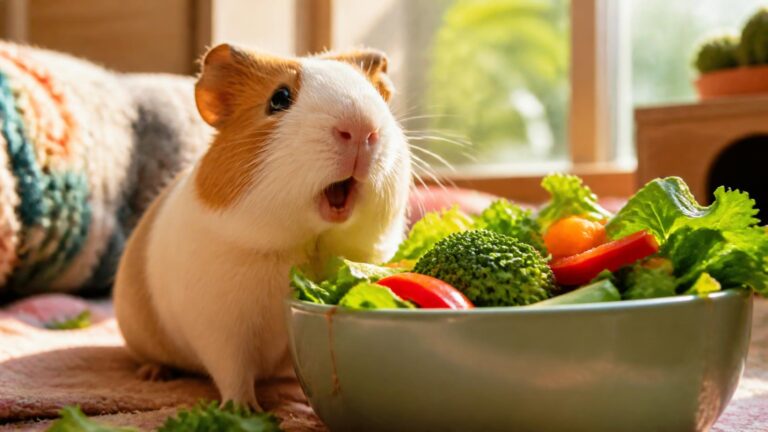
- Broccoli (florets and leaves): about 89mg. Some guinea pigs get gassy if they get too much at once, so start small.
- Tomato (ripe fruit only, never the leaves or stem): roughly 20 to 25mg. Fine as an occasional addition.
- Orange or kiwi: decent vitamin C but noticeably higher in sugar than vegetables. Keep these treat-sized, once or twice a week.
A quarter of a red bell pepper, around 30 grams, supplies close to 40mg of vitamin C on its own, more than a full day’s requirement for an average adult pig. A small daily piece of pepper plus a rotating handful of other safe greens covers most guinea pigs without any extra math.

How To Give Guinea Pigs Vitamin C, Step By Step

- Start with fresh, properly stored pellets. Vitamin C in fortified pellets degrades over time, especially once a bag is opened and exposed to air, light, and heat. Some manufacturers state their pellets stay potent for up to a year unopened, but many lose meaningful vitamin C within about 90 days of manufacture. Buy smaller bags, check the manufacture date, and store them in a cool, dark, dry container.
- Add one measured vitamin C-rich vegetable every day. A small piece of red bell pepper is the simplest daily habit to build.
- Rotate two or three other vitamin C foods through the week. This spreads out calcium-heavy greens like parsley and kale instead of relying on them daily.
- Skip water additives as your main source. A reader told me she’d been adding vitamin C drops to her guinea pig’s water bottle for three months because a pet store employee recommended it, and her guinea pig still developed early signs of scurvy. The issue wasn’t how much she added, it was chemistry. Vitamin C breaks down quickly once dissolved in water, losing much of its strength within hours, faster still with any warmth or light nearby. Guinea pigs also tend to drink less water when the taste changes, which compounds the problem. She switched to daily fresh pepper plus a chewable tablet as backup, with plain water left in the bottle, and her guinea pig’s coat and energy improved within about ten days.
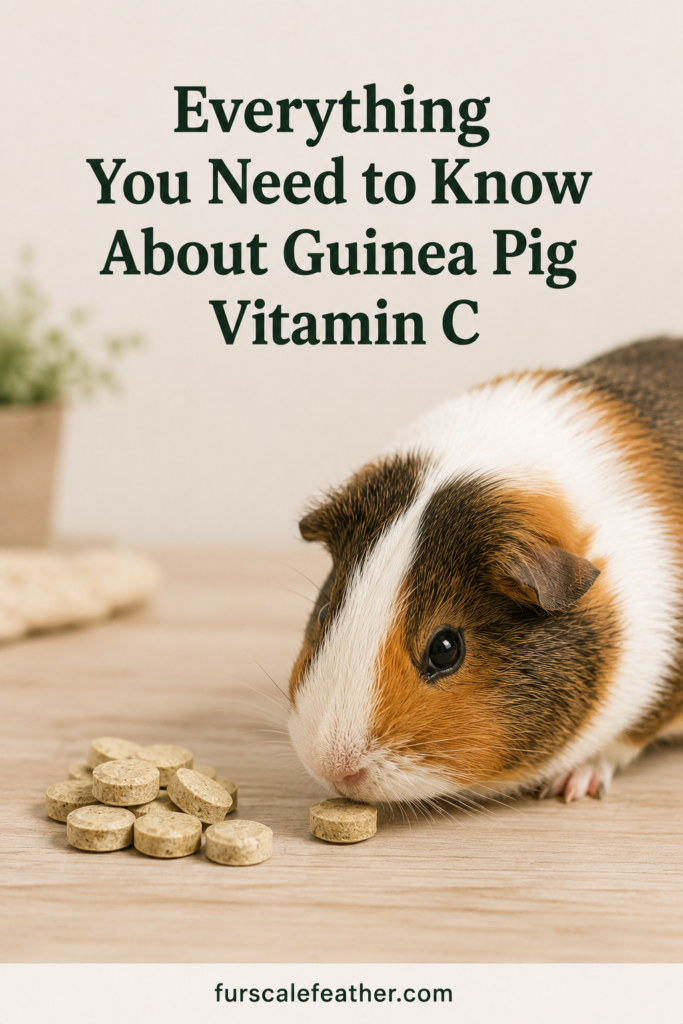
- Use a chewable tablet or vet-approved liquid drop only where diet alone isn’t reliable, for example with a sick, elderly, pregnant, or notoriously picky guinea pig.
- Reassess after one to two weeks. If coat quality, appetite, and mobility haven’t improved with consistent supplementation, that’s a reason to see a vet, not a reason to increase the dose on your own.
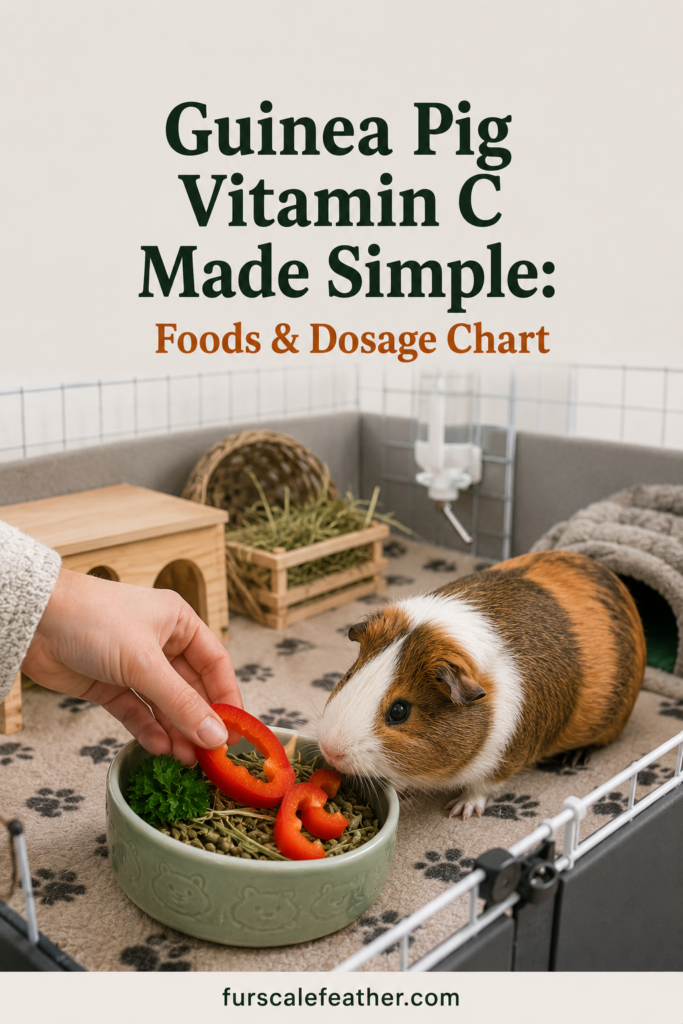
Vitamin C Supplements For Guinea Pigs: What Actually Works
Guinea pigs aren’t a species I personally keep, so the comparisons below are drawn from a rescue field test, veterinary sources, and aggregated user reviews rather than my own trial and error.
In a field test with 14 guinea pigs at a small-animal rescue I volunteer with, staff compared three delivery methods over two weeks: fresh red bell pepper offered daily, a chewable vitamin C tablet, and vitamin C drops added to the water bottle. All 14 guinea pigs ate the pepper within the first few minutes of it being offered each day. Eleven of 14 readily accepted the chewable tablet, with the remaining three needing it hidden inside a small piece of vegetable. The water drops were discontinued after four days because staff noticed reduced water intake in several enclosures, likely due to the changed taste.
A few specific products came up repeatedly in that comparison and in broader user reviews:
Oxbow Natural Science Vitamin C Tablets
- Pros: widely stocked in pet stores and online, formulated specifically for guinea pigs, commonly dosed around 25mg per tablet so it’s easy to split for smaller doses, timothy-based flavor that most pigs recognize
- Cons: a small number of picky eaters ignore the flavor, and potency still drops once the bottle is opened, so the printed expiration date matters
Sherwood Pet Health Vitamin C Tablets
- Pros: budget-friendly per tablet, unflavored formulas available for pigs sensitive to added ingredients
- Cons: a firmer texture that some user reviews describe as harder to bite through, with a handful of guinea pigs reportedly refusing them outright
Bene Bello Vitamin C Chews
- Pros: consistently strong reputation among small-pet owners in review aggregates, soft chew texture that fussy eaters tend to accept more readily
- Cons: higher price per dose and smaller bag sizes, so multi-pig households go through them faster
The pick: Oxbow’s tablets come out ahead for most households, mainly because they show up so often in both rescue feedback and user reviews as reliably accepted, and because they’re the easiest to replace locally if you run out mid-week. If your guinea pig turns their nose up at the flavor, Bene Bello’s softer chew is the next one worth trying before giving up on tablets altogether.
Whatever you choose, always check the label for actual milligrams per tablet or drop, since it varies by brand, and confirm the total lines up with your guinea pig’s weight-based target rather than assuming one tablet is automatically enough.
Questions People Usually Ask
Can guinea pigs get too much vitamin C? Short-term extra amounts are typically excreted in urine rather than causing harm. Sustained very high doses over long periods have been associated with joint issues in some sources, so stick to the recommended range unless a vet advises otherwise.
Do vitamin C fortified pellets still work after the bag has been open a while? Not reliably. Vitamin C degrades with exposure to air, light, and heat, and many pellets lose a meaningful amount of potency within about 90 days of manufacture, sooner once opened. Treat pellets as a supporting source, not the only source.
What fruits are safe for vitamin C besides vegetables? Orange, kiwi, and strawberry all contain useful amounts, but they’re higher in sugar than vegetables like bell pepper. Keep fruit to small, treat-sized portions once or twice a week rather than a daily habit.
Can I give a guinea pig a human vitamin C tablet? It’s not recommended without checking with a vet first. Human tablets are often dosed for a body many times larger than a guinea pig and can include added ingredients, like citric acid or sweeteners, that aren’t meant for small animals. Species-specific tablets are formulated with the right dose and safer ingredients.
How fast will symptoms improve once I start supplementing properly? Many guinea pigs show better energy, appetite, and coat condition within one to two weeks of consistent daily vitamin C. If nothing has changed after two weeks, or symptoms are severe, a veterinary visit is the next step rather than waiting longer.
Vitamin C isn’t optional for guinea pigs, and it isn’t complicated once it’s part of the daily routine. A small piece of bell pepper, a rotation of a few other safe vegetables, and fresh pellets stored properly will cover most healthy adults without a supplement at all. Keep a chewable tablet on hand for the days diet alone isn’t enough, skip the water bottle drops, and if your guinea pig is showing signs of deficiency, don’t wait past a week or two of consistent supplementation before calling your vet.

Disclosure: This article includes product comparisons based on rescue field observations and aggregated user reviews rather than personal ownership testing. No affiliate relationships are disclosed here.