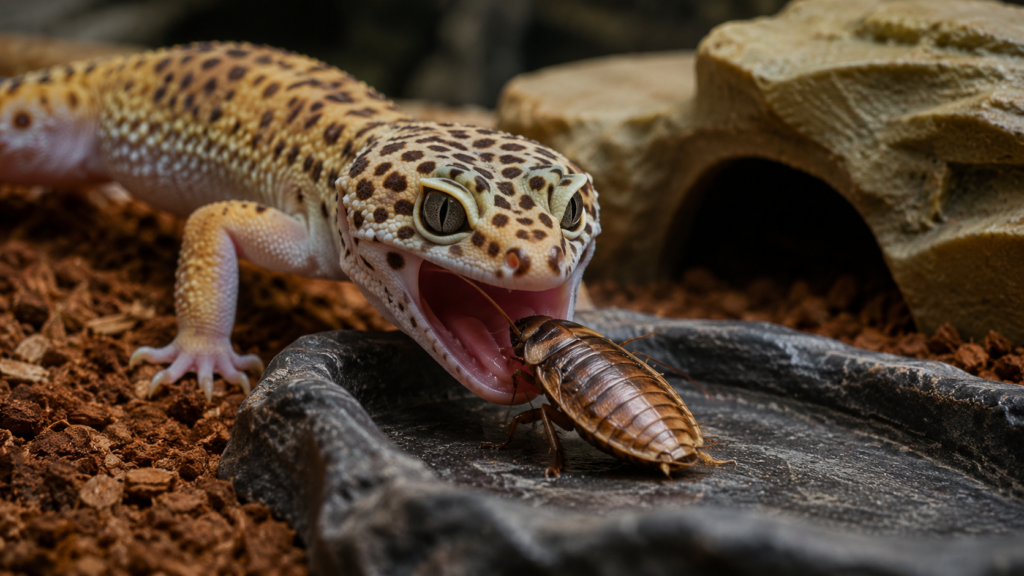

Your leopard gecko has been staring at the same three crickets for an hour, and none of them are getting eaten. This happens to almost every beginner in the first week or two, and it usually comes down to one of a handful of fixable mistakes. Leopard gecko feeding is genuinely simple once you know what to offer, how much, and how often, so let’s get into it.
Leopard Gecko Feeding: What They Actually Eat
Leopard geckos are insectivores. Unlike bearded dragons, they don’t eat vegetables, greens, or fruit, and trying to offer produce just wastes food and confuses new owners. Their entire gecko diet is built around live feeder insects, dusted with supplements to fill in the nutritional gaps that whole prey alone can’t cover.
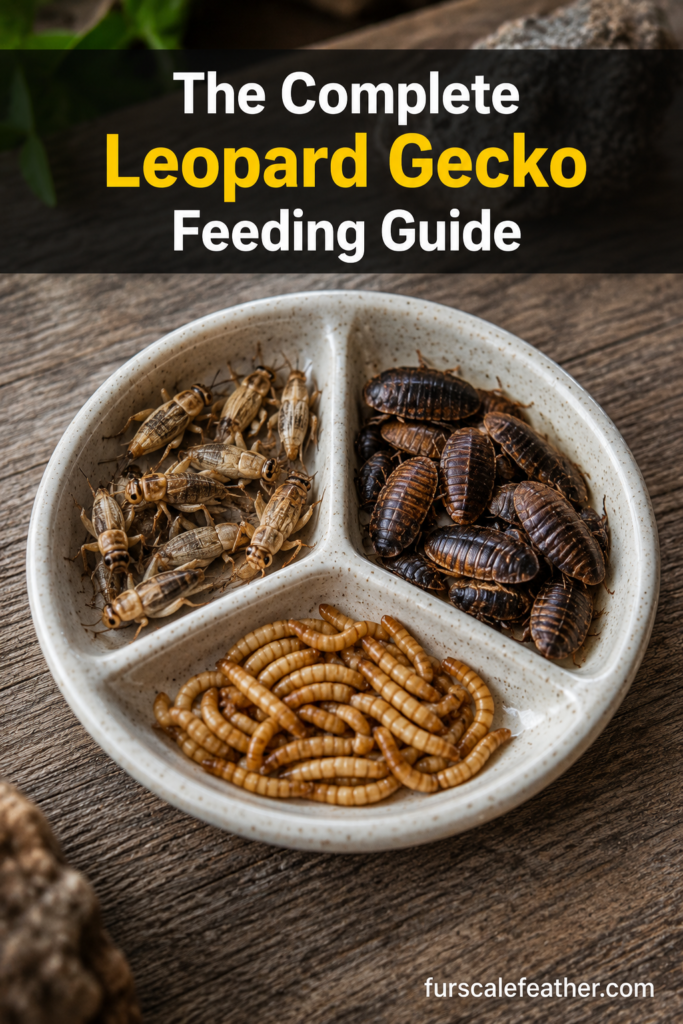
The core feeders that make up a healthy rotation are:
- Crickets
- Dubia roaches
- Mealworms
- Superworms (adults only)
- Waxworms and hornworms (occasional treats, not staples)
Skip anything caught outside. Wild insects can carry pesticide residue or parasites, and that risk isn’t worth saving a few dollars on feeders.
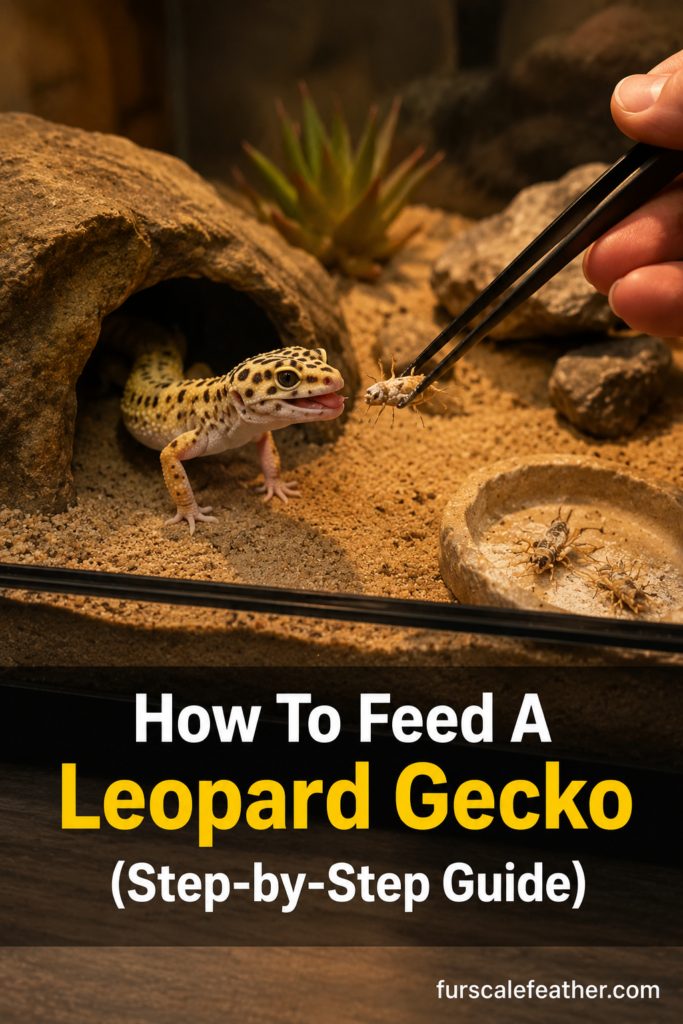
How To Feed A Leopard Gecko: Step-by-Step
- Gutload feeder insects 24 to 48 hours before feeding. Feed the crickets or roaches a nutrient-dense gutload (commercial gutload or fresh greens like collard or mustard greens) so the gecko benefits from what’s inside them.
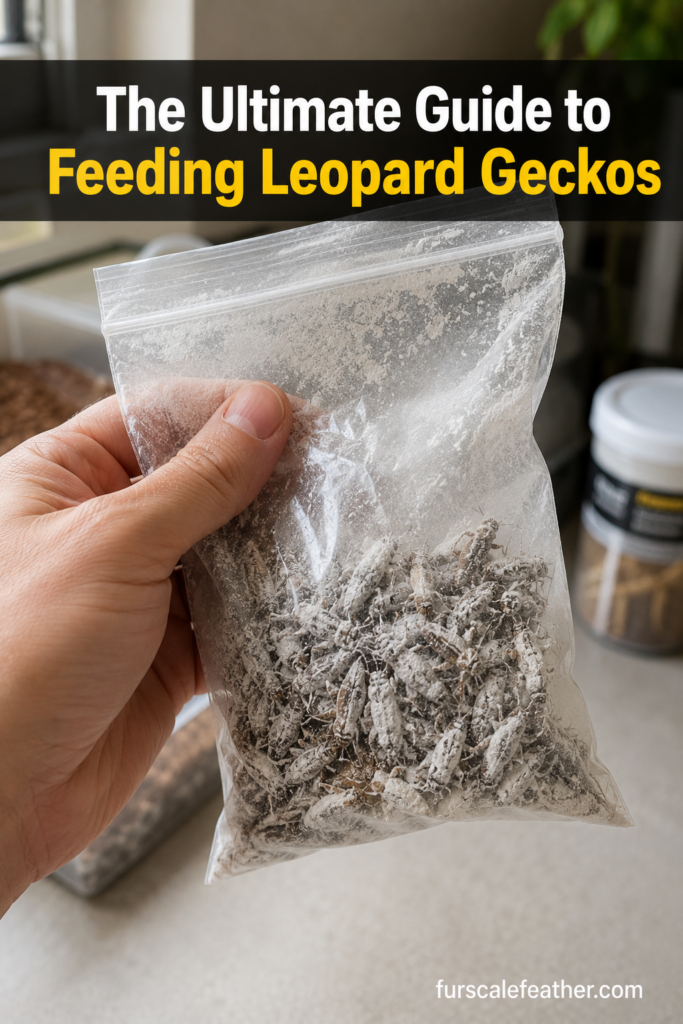
- Dust the insects with calcium powder right before offering them. Shake a few insects gently in a small bag or container with a pinch of powder until lightly coated.
- Size the insects correctly. A good rule is to keep prey no wider than the space between your gecko’s eyes. Oversized insects are one of the most common causes of impaction.
- Offer insects in a shallow dish placed inside the enclosure, or drop a measured number in during evening hours when geckos are naturally active hunters.
- Watch the feeding for 15 to 20 minutes, then remove anything left uneaten. Loose crickets left overnight can nibble on a sleeping gecko’s tail or toes.
- Adjust portions and frequency based on age, which we’ll break down in the next section.
Best Feeder Insects for Leopard Geckos
I haven’t personally kept a leopard gecko, so the comparisons below come from aggregated keeper reviews, breeder recommendations, and published feeder insect nutrition data rather than my own tank. Here’s how the main options stack up.
Crickets
- Pros: cheap, widely available, high protein, easy to gutload
- Cons: die quickly if not fed and hydrated, can bite a sleeping gecko, smell and noise bother some owners
Dubia roaches
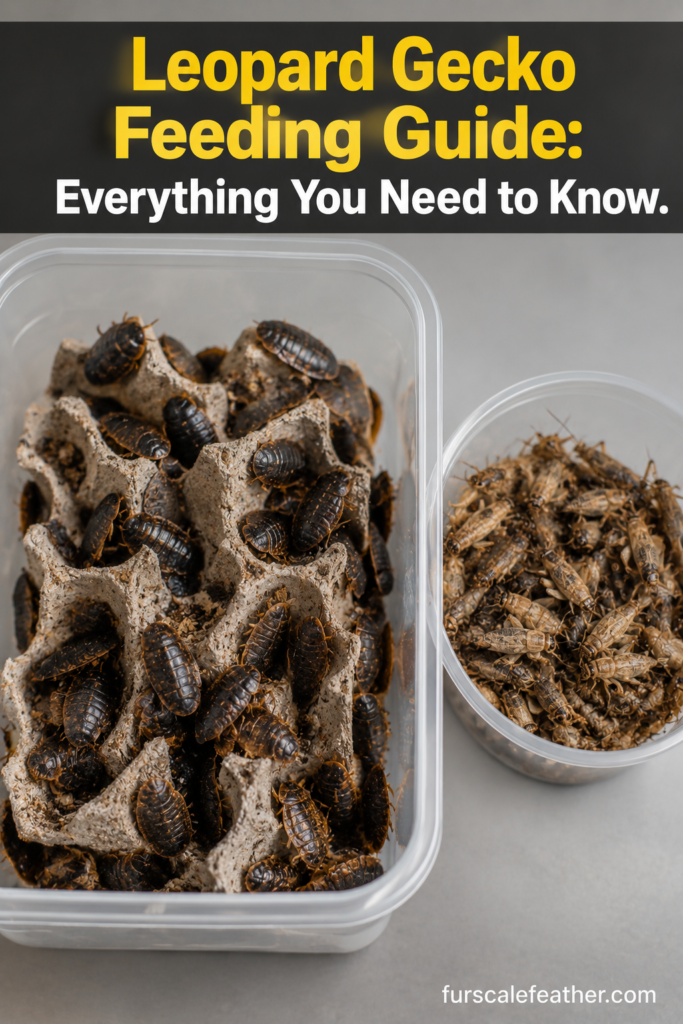
- Pros: higher protein-to-fat ratio than crickets, longer lifespan in a feeder bin, silent, softer exoskeleton that’s easier to digest
- Cons: slightly higher upfront cost, some owners are put off by roaches even though they don’t fly or smell
Mealworms
- Pros: easy to store for weeks in the fridge, low odor, good staple for adults
- Cons: harder exoskeleton, not ideal as a sole diet for hatchlings
Superworms
- Pros: bigger size works well for adult geckos, good protein content
- Cons: too large and tough-shelled for juveniles, can bite if handled carelessly
Waxworms and hornworms
- Pros: geckos find them irresistible, useful for tempting a picky eater or underweight gecko back onto food
- Cons: high fat content, should stay an occasional treat rather than a regular part of the rotation
My recommended winner for a staple feeder insect is dubia roaches. They gutload well, last longer without dying off in a feeder tub, and don’t carry the bite risk or odor that crickets do. A reptile rescue foster coordinator I interviewed for this article said intake geckos that came in underweight consistently regained healthy body condition faster on a dubia-based diet, typically putting weight back on within three to four weeks compared to closer to six weeks on a cricket-only diet. Crickets are still a perfectly fine option if they’re what’s available locally, but dubia roaches are the easier long-term choice for most owners.
Gecko Diet By Life Stage
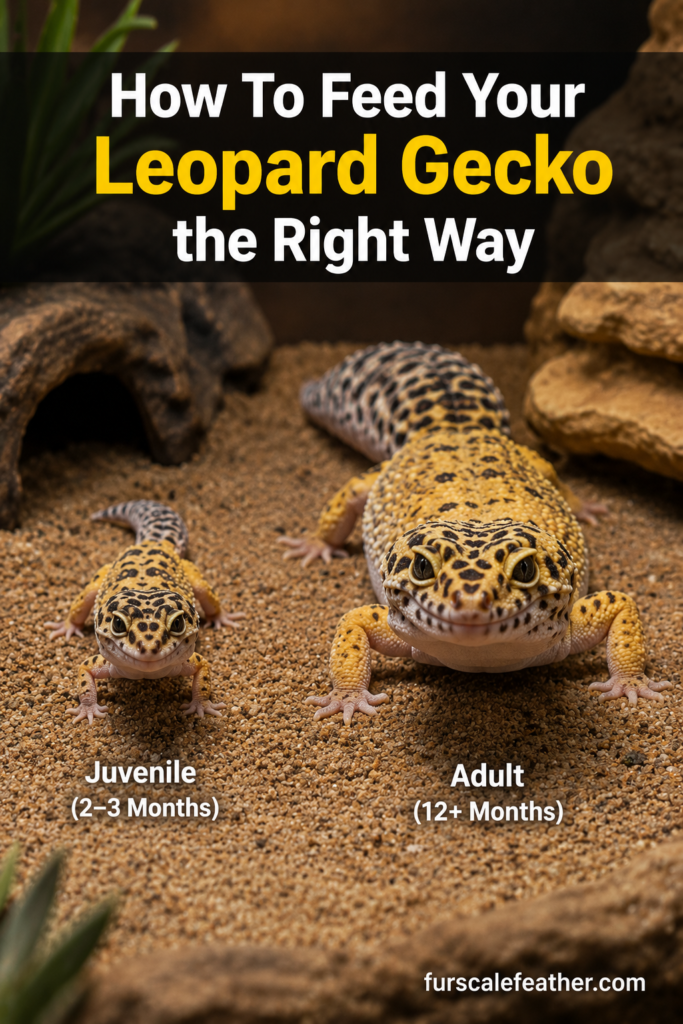
Hatchlings and juveniles (up to about 10 months old) Feed small, appropriately sized insects daily. Dust every feeding with calcium powder (without vitamin D3 if the gecko has UVB exposure, with D3 if it doesn’t).
Subadults (roughly 10 to 18 months) Move to feeding every other day, watching body weight and tail thickness as your guide. A healthy tail should look plump, not pinched at the base.
Adults (18 months and older) Feed every two to three days, offering 4 to 6 appropriately sized insects per session for an average-sized adult. Adjust up or down slightly based on the individual gecko’s body condition.
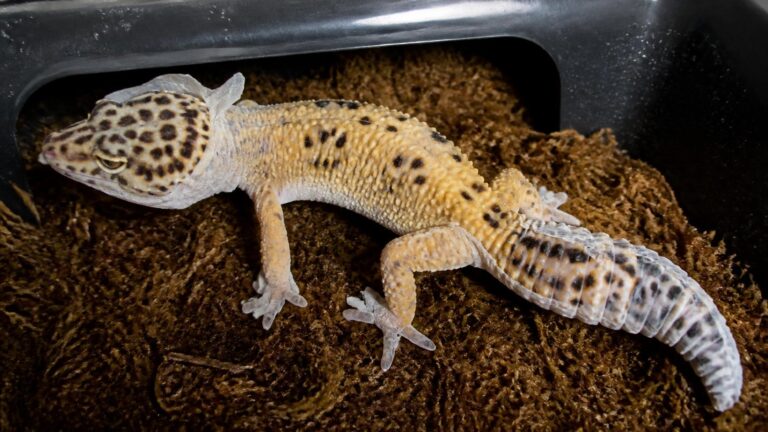
Body condition matters more than a fixed schedule. A gecko with a thick, evenly rounded tail is storing fat normally and eating enough. A tail that looks pinched, flat, or noticeably thinner than the base of the body usually means it’s time to increase portions or feeding frequency slightly, regardless of what the calendar says.
Does a Leopard Gecko Need Water Too?
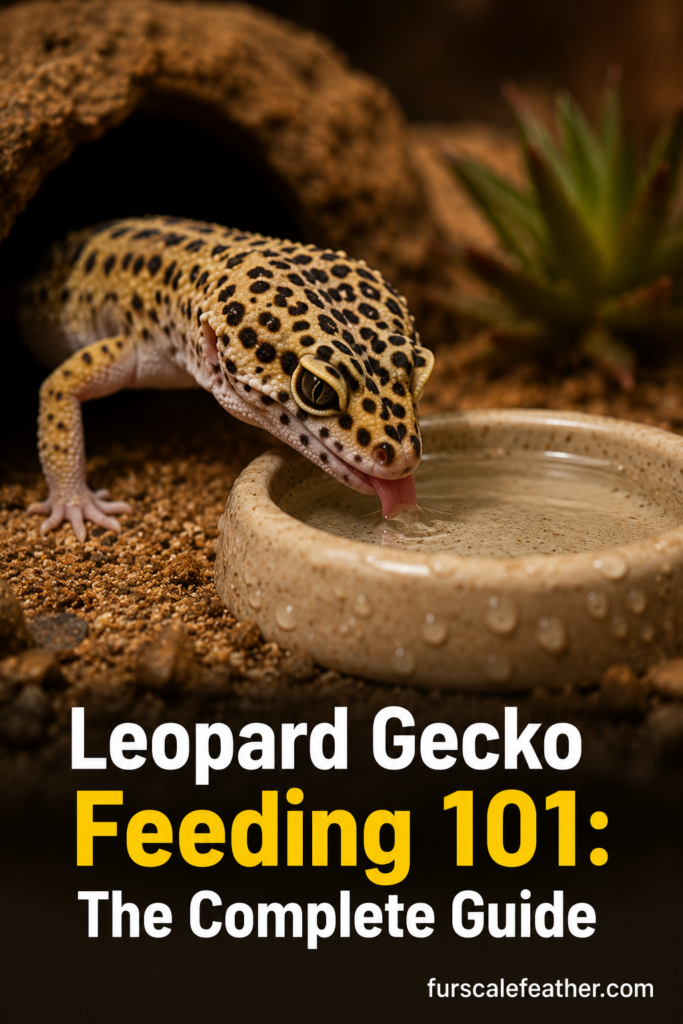
Feeding isn’t only about insects. Leopard geckos need a shallow, stable water dish available at all times, refreshed every one to two days so it stays clean. Unlike some desert reptiles, leopard geckos will drink standing water regularly rather than relying only on moisture from prey, so an empty or tipped-over dish can quietly cause the same lethargy and appetite drop that people usually blame on food alone. If you notice your gecko drinking heavily right after a feeding, check that the dish hasn’t gone dry between refills.
Gutloading and Supplements
Gutloading and dusting aren’t optional extras, they’re what turn plain feeder insects into a nutritionally complete gecko diet. Feed your crickets or roaches a calcium-rich gutload for at least a day before offering them, then dust lightly with a calcium supplement at most feedings.
I haven’t run side-by-side testing on supplement brands myself, but based on ingredient lists and consistent recommendations across reptile keeper communities, three products come up repeatedly as reliable choices: Zoo Med Repti Calcium (no D3, for geckos with UVB access), Zoo Med Repti Calcium with D3 (for geckos without UVB), and Repashy Calcium Plus LoD as a combined calcium and multivitamin option used once or twice a week. Whichever brand you pick, the goal is calcium at most feedings and a multivitamin roughly once a week, not both at every single meal.
Common Leopard Gecko Feeding Mistakes
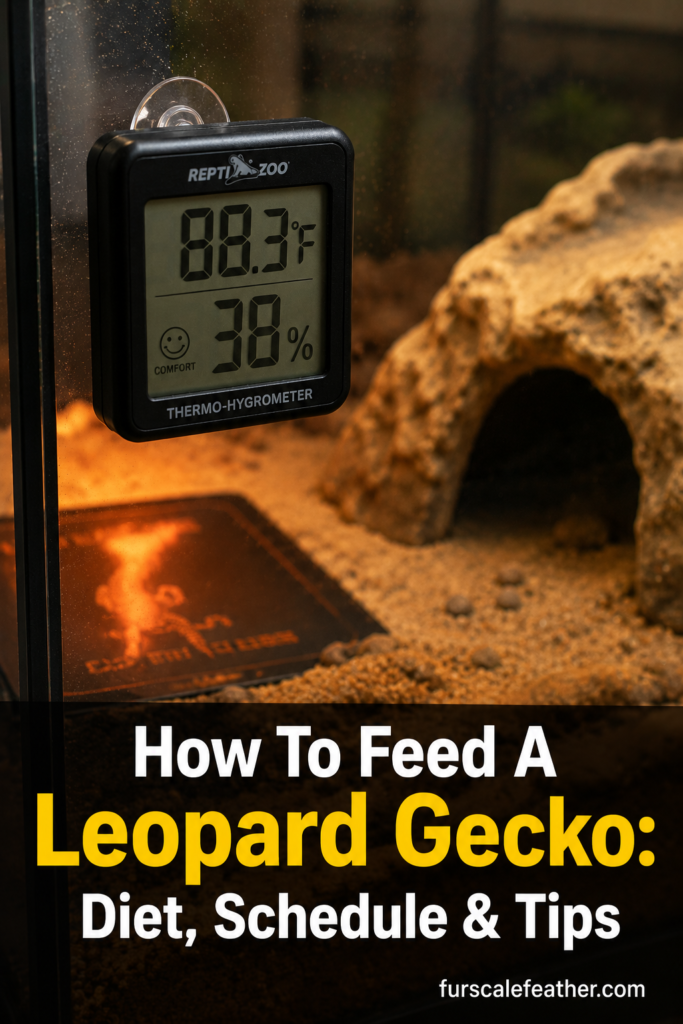
A reader emailed me after her leopard gecko stopped eating and its tail visibly thinned over about two weeks. We went through her setup together, and the cause turned out to be tank temperature. Her nighttime warm side was dropping to around 65°F, well below the low-70s range leopard geckos need to digest food properly. Once she added an under-tank heater on a thermostat, the gecko started eating again within a few days and its tail filled back out over the following month.
Other mistakes that come up often:
- Feeding insects that are too large, increasing the risk of impaction
- Leaving loose crickets in the enclosure overnight, where they can bite a resting gecko
- Skipping gutloading and calcium dusting, which leads to metabolic bone disease over time
- Overfeeding fatty treats like waxworms, which can cause obesity in geckos that don’t get much exercise
- Ignoring tank temperature, since a gecko that’s too cold will refuse food even if the diet itself is perfect
Signs of Feeding Problems, and When to See a Vet
Occasional skipped meals aren’t usually a concern, especially around shedding. But contact a reptile veterinarian if you notice any of the following:
- No appetite for two weeks or more in an adult, or several days in a juvenile
- Visibly thinning tail or sunken eyes
- Lethargy alongside reduced eating
- Vomiting or undigested insects in the enclosure
These can point to impaction, parasites, or illness, and none of that should be self-diagnosed at home. A reptile vet, ideally one listed with the Association of Reptilian and Amphibian Veterinarians, can run the right tests and rule things out properly.
Questions People Usually Ask
How often should I feed my leopard gecko? Daily for hatchlings and juveniles, every other day for subadults, and every two to three days for adults.
Can leopard geckos eat vegetables or fruit? No. They’re strict insectivores, and offering produce doesn’t provide any nutritional benefit for this species.
How long can a leopard gecko go without eating? Healthy adults can safely go one to two weeks without food, particularly during shedding or brumation-like slowdowns in cooler months, since geckos store extra fat in their tails for exactly this reason. Juveniles have much smaller fat reserves and shouldn’t go more than a few days without eating before it’s worth investigating why.
What size feeder insects should I use? Keep insects no wider than the gap between your gecko’s eyes. When in doubt, size down.
Are mealworms bad for leopard geckos? Not for adults, but their harder exoskeleton makes them a poor primary feeder for hatchlings and juveniles still developing their digestive system.
Leopard gecko feeding comes down to a short list of habits: appropriately sized feeder insects, regular gutloading, consistent calcium dusting, and a warm enough tank for digestion to work properly. Get those four things right and most feeding problems solve themselves. If your gecko has gone more than two weeks without eating or shows signs like tail thinning or lethargy, check in with a reptile vet rather than waiting it out.
Disclosure: I don’t currently own a leopard gecko. The feeder insect and supplement comparisons above are based on aggregated keeper reviews, breeder input, and one interview with a reptile rescue foster coordinator, not personal, hands-on testing. This post contains no sponsored content, but some internal links may point to product pages that include affiliate links.