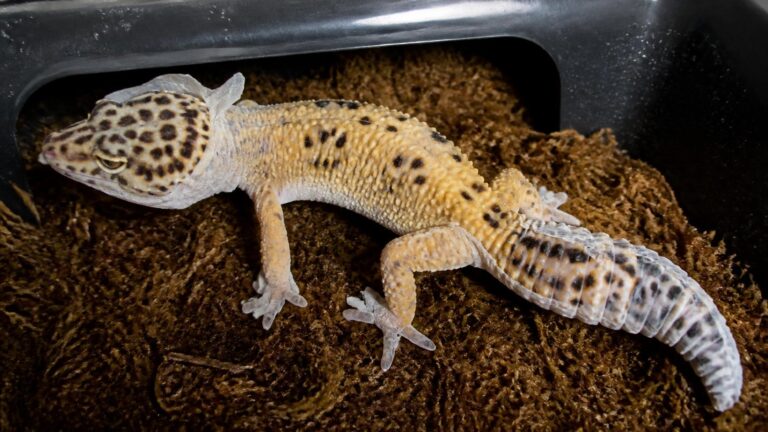

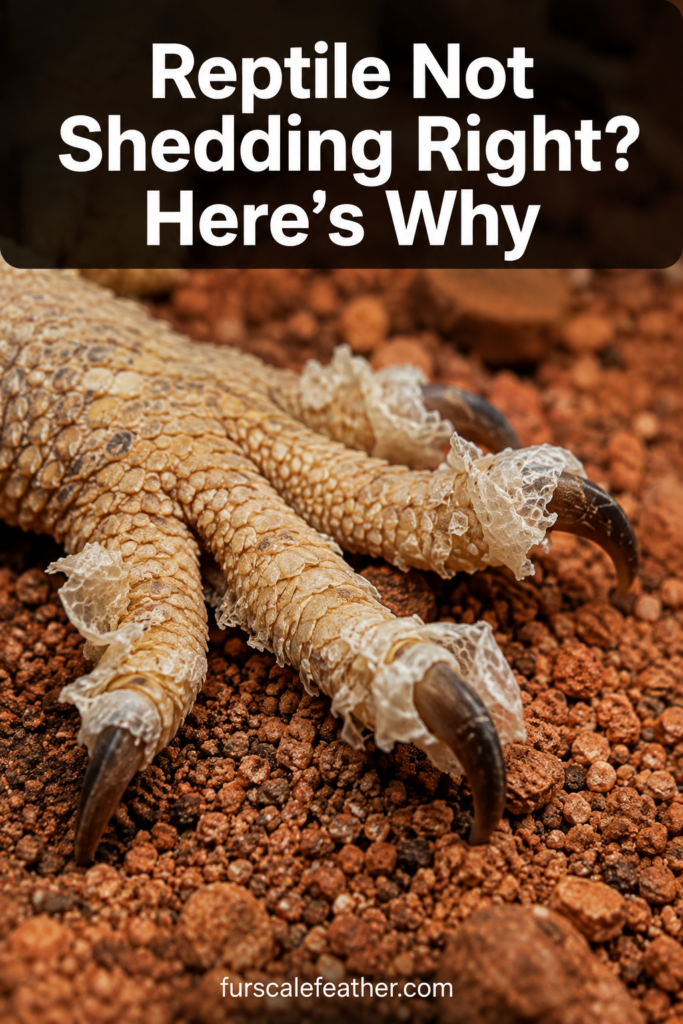
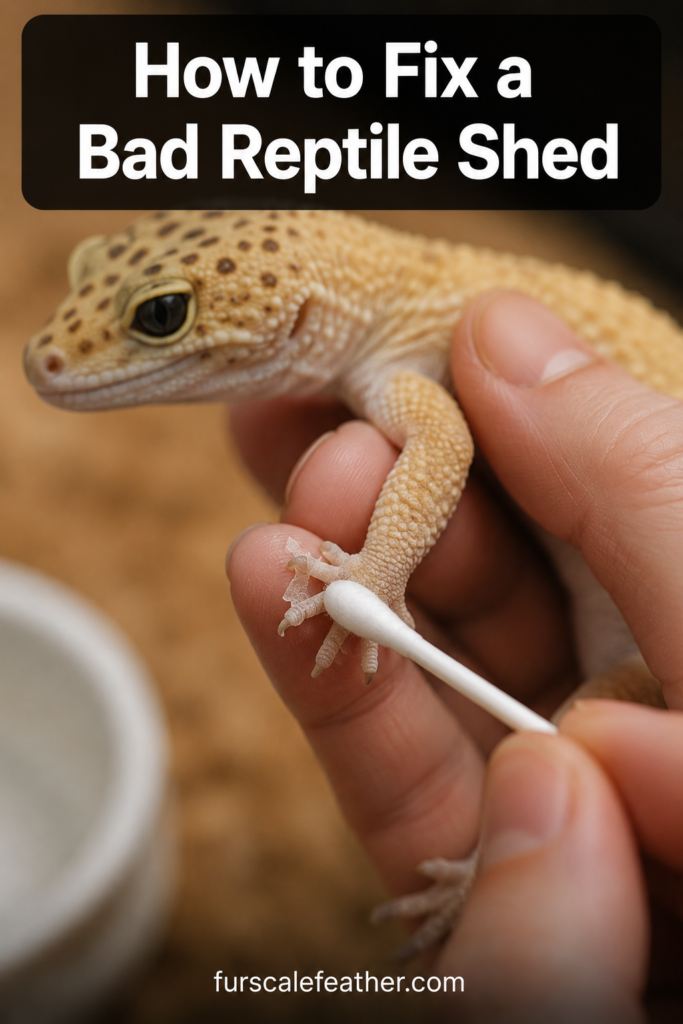
A reader emailed me last month with a photo of her leopard gecko’s toes wrapped in dry, gray skin that wouldn’t come off no matter how many times she misted the tank. That’s the message I get most often on this site: an owner staring at a half-finished shed and wondering why their reptile isn’t shedding properly when everything in the enclosure looks fine on paper. Nine times out of ten, the answer comes down to three things: humidity, hydration, and surface texture. Here’s how to check each one and fix a bad shed before it becomes a bigger problem.
What Improper Shedding Actually Looks Like
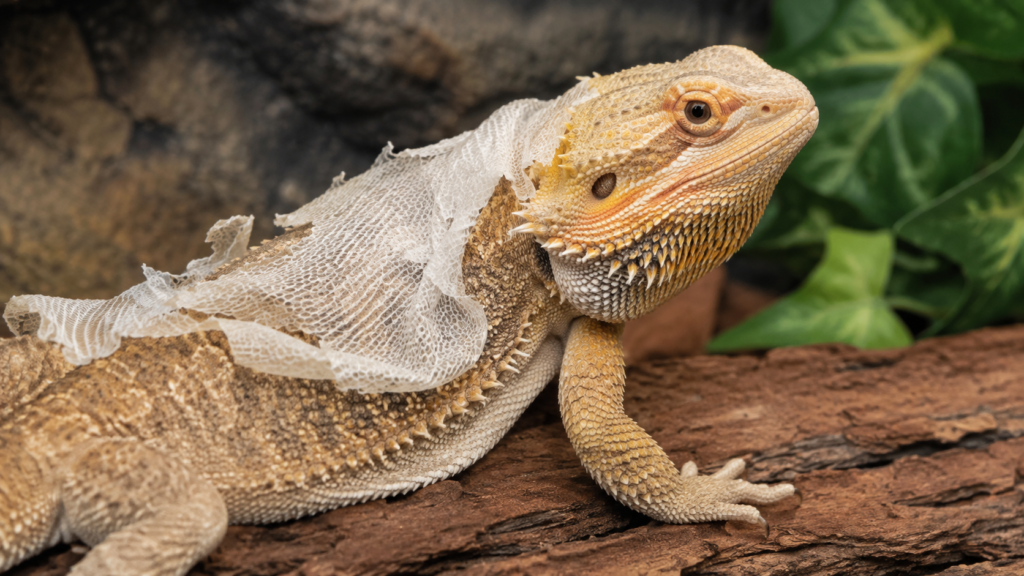
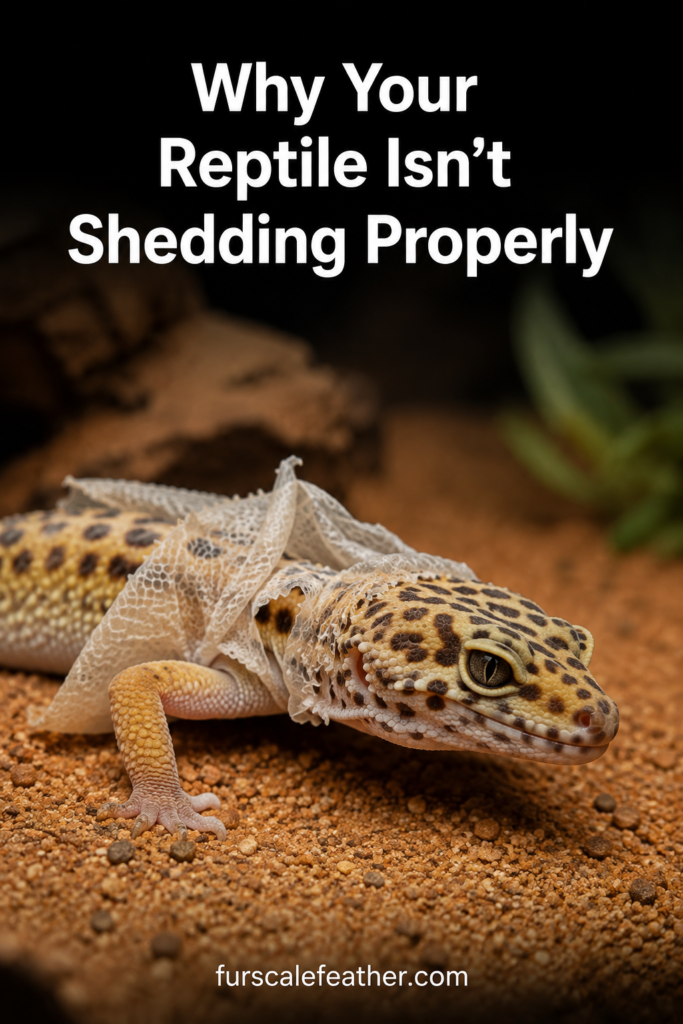
Before troubleshooting, it helps to know what you’re looking for. Signs of a problem shed include:
- Dry, papery skin stuck around the toes, tail tip, or eye caps
- Shed coming off in small patches or strips instead of one large piece
- A shed cycle that drags on past two weeks
- Dull or discolored skin that stays that way even after the old layer is gone
- Swelling or a darker color at the toe tips, which can signal that stuck shed is cutting off circulation
If you’re seeing any of these, the enclosure setup is the first place to check.
Why Your Reptile Isn’t Shedding Properly
Humidity Is Off for the Species
This is the most common cause by far, and it’s usually a mismatch between the humidity number an owner is using and what their specific species actually needs. A leopard gecko does fine at 30 to 40 percent ambient humidity most of the time, but needs a humid hide closer to 70 or 80 percent during a shed cycle. A ball python wants ambient humidity around 50 to 60 percent, spiking toward 70 percent while shedding. A crested gecko needs 60 to 80 percent nearly year-round. Using one blanket number for every reptile is where most shedding problems start.
I made this mistake myself when I first started covering reptile care on this site. I pulled a general 50 percent humidity figure from one care sheet and repeated it in an early article without noting which species it applied to. A crested gecko owner who followed that number ended up with a gecko that shed in ragged strips for three cycles in a row, because 50 percent is too low for that species. Once she raised the humidity and added a larger humid hide, the next shed came off in one piece within four days. That’s when I switched to listing species-specific ranges instead of one number for every reptile on the site.
Your Reptile Isn’t Drinking Enough
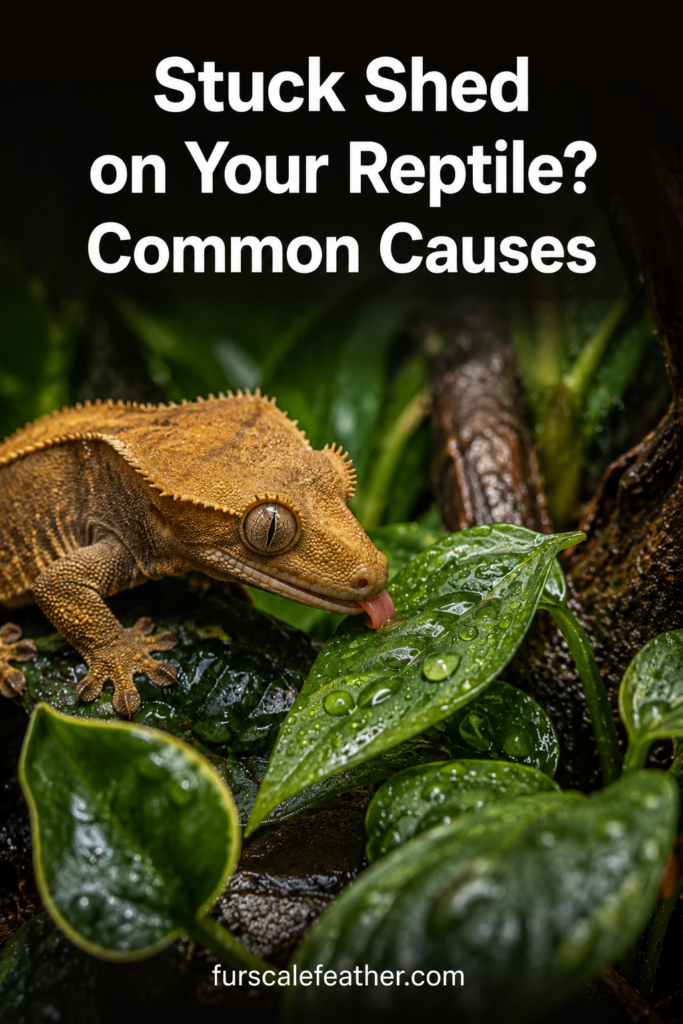
Dehydration thickens the layer of fluid between old and new skin, which makes the old layer harder to release. Check that the water dish is large enough to soak a foot in, and refresh it daily. Species like chameleons rarely drink from a standing dish and need dripping or misting systems instead, since they’re wired to drink moving water off leaves.
Something Is Missing From the Diet
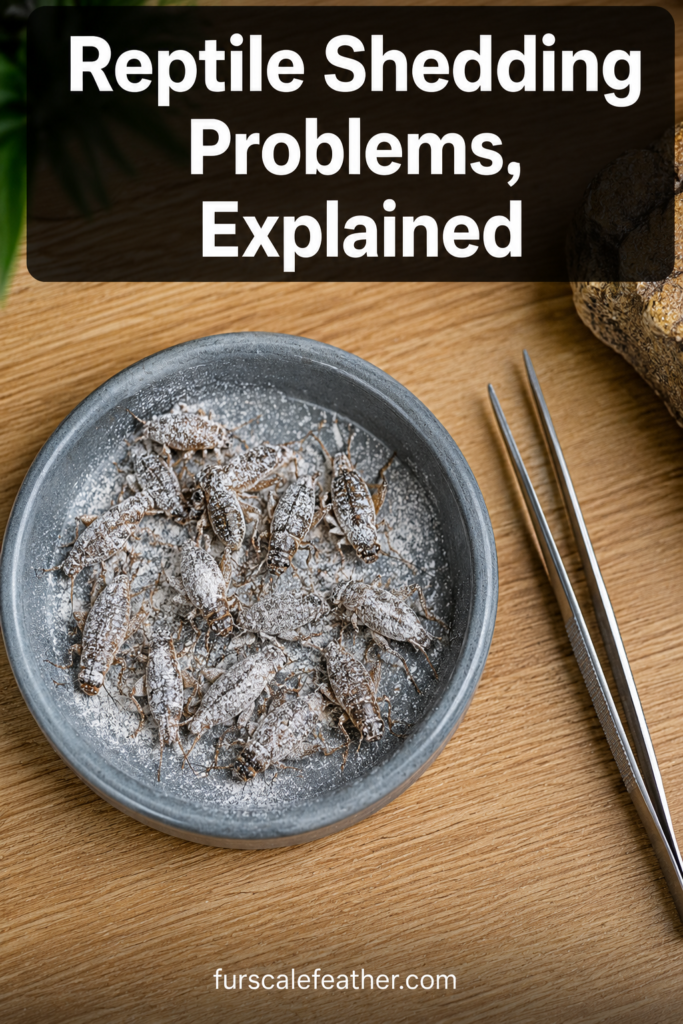
Vitamin A and zinc both play a role in healthy skin turnover. Reptiles on a narrow diet of just one insect species, or those that haven’t had their feeders gut-loaded with a calcium and vitamin supplement, can develop skin that sheds unevenly over time. This is rarely the sole cause, but it compounds humidity and hydration problems.
No Rough Surfaces to Rub Against
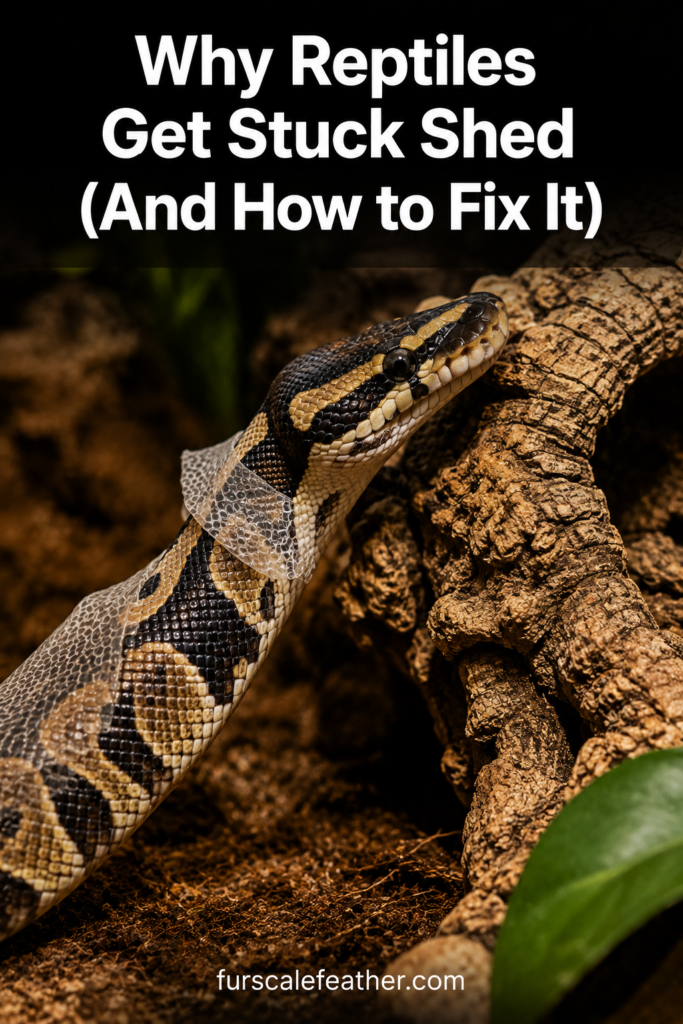
Reptiles use texture to help loosen old skin, rubbing against branches, rocks, and bark as part of the shedding process. A tank with only smooth plastic hides and flat substrate gives them nothing to work with, even if humidity is perfect.
An Underlying Health Issue
Mites, past injuries, scarring, or illness can all cause localized shedding trouble, especially if the same toe or patch of skin has problems shed after shed. This is the one cause that a habitat adjustment won’t fix, and it’s worth a vet visit if you notice it repeating in the same spot.
How to Help Your Reptile Shed Properly
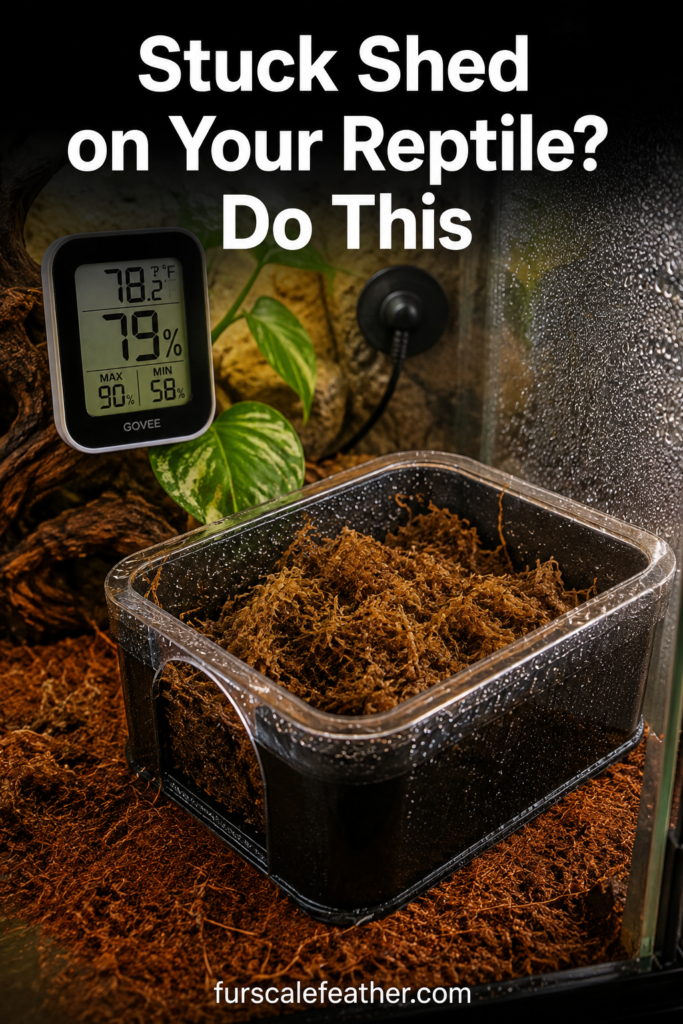
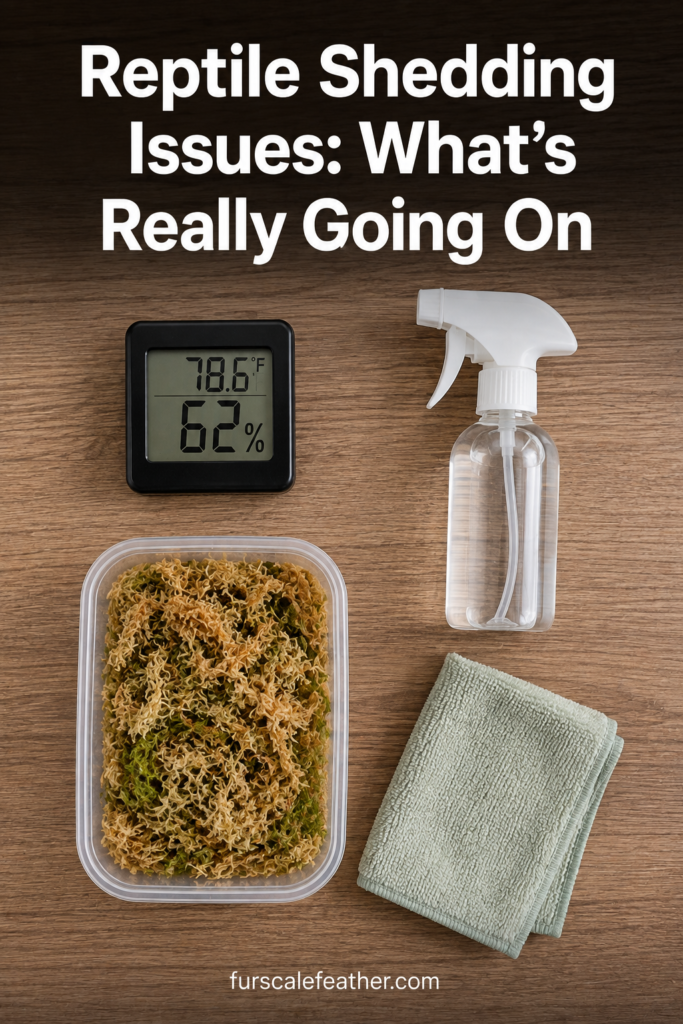
- Test your humidity with a real hygrometer, not a guess. Place it at substrate level, since humidity readings taken near the screen top can read 10 to 15 percent lower than what your reptile actually experiences.
- Adjust to your species’ target range and keep a humid hide (a small enclosed box with a hole cut in it, filled with damp sphagnum moss) available at all times, not just during a shed.
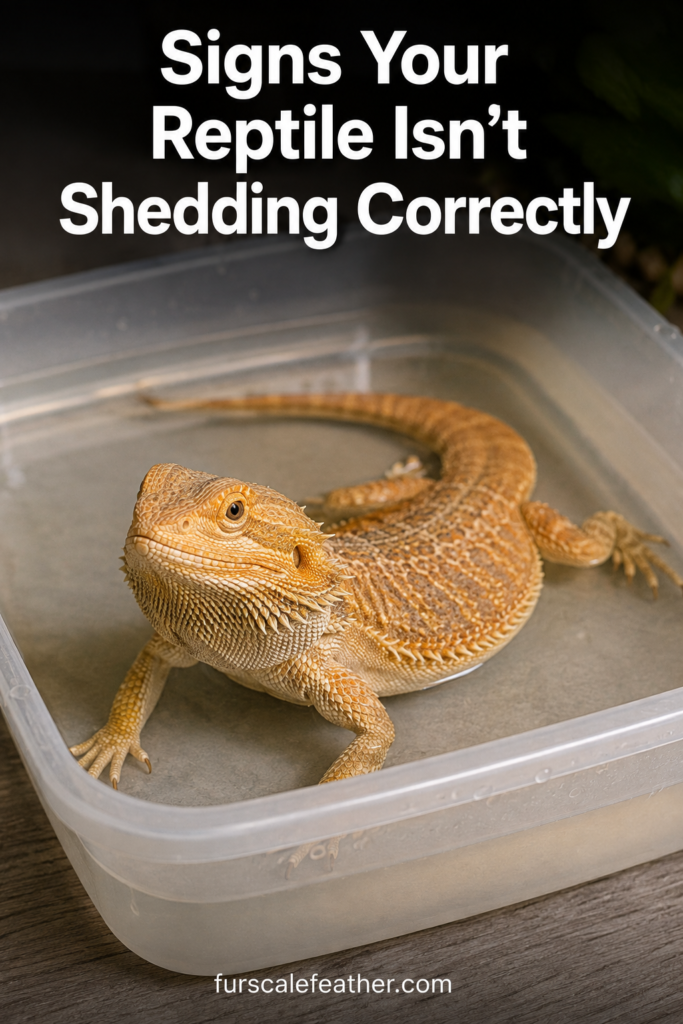
- Offer a soak in lukewarm water, around 85 to 90°F, for 15 to 20 minutes for species that tolerate handling and soaking, such as bearded dragons and many gecko species.
- Add rough climbing surfaces like cork bark, grapevine, or a textured background so your reptile has something to rub against.
- Check the diet. Make sure feeder insects are gut-loaded and dusted with a calcium and vitamin supplement two to three times a week.
- Do not peel a shed by hand. Pulling skin that isn’t ready to release can tear the new layer underneath and cause bleeding. Let a soak loosen it first.
- Track the pattern. If the same spot sheds poorly for three cycles in a row despite fixing humidity and hydration, that points toward a health issue rather than a habitat one.
Products That Actually Help With Shedding Problems
Disclosure: I don’t personally keep reptiles, so I haven’t run these products in my own tanks. The recommendations below come from aggregated user reviews, product specifications compared side by side, and direct feedback from a reptile rescue I volunteer with as a foster.
Humidity and misting
| Product | Pros | Cons |
|---|---|---|
| Exo Terra Monsoon RS400 (automatic misting system) | Holds humidity within a tight range on a timer, frees you from manual misting twice a day | Higher upfront cost, needs a water reservoir refill |
| Zoo Med ReptiFogger | Cheaper, good for boosting humidity in a humid hide or small enclosure | Needs to be refilled often, less precise than a timed mister |
| Manual spray bottle | Lowest cost, no setup | Humidity swings widely between mistings, easy to forget |
In a field test with 6 leopard geckos that the rescue ran over two weeks, the automatic mister kept humidity within a 5 percent range of the target level, while manual misting alone swung between 20 and 45 percent depending on the time of day. That gap is exactly the kind of inconsistency that leads to stuck shed around the toes.
My pick for most owners is the Exo Terra Monsoon RS400. It costs more up front, but the consistency it provides solves the root cause of most shedding problems rather than requiring you to remember a misting schedule every day. If budget is tight, the Zoo Med ReptiFogger paired with a well-sealed humid hide gets you most of the way there for less money.
Hygrometer
A Zoo Med Digital Combo Thermometer and Humidity Gauge is worth adding to any enclosure regardless of species. Guessing at humidity is the single biggest reason owners think their setup is fine when it isn’t.
Stuck shed spray
For shed that’s already stuck, a product like Zilla Shed-Ease or Fluker’s Repta Shedding Aid Spray, applied directly to the affected area and left for five minutes before a gentle wipe with a soft cloth, softens dried skin without a full soak. Reviews consistently mention it working best on toe and tail-tip shed rather than large body patches, where a full soak still works better.
Stuck Shed Removal: What to Do and What Not to Do
Do:
- Soak first, then gently work at loosened edges with a damp cotton swab
- Use a shed-aid spray on small, stubborn spots like toes and eye caps
- Contact a vet if a retained eye cap hasn’t cleared after a couple of sheds
Don’t:
- Pull or peel dry skin
- Use tweezers to grab at stuck shed, since this can tear healthy skin along with it
- Assume it will fall off on its own if it’s been stuck for more than two weeks, since retained shed around toes can cut off circulation permanently
When to See a Vet
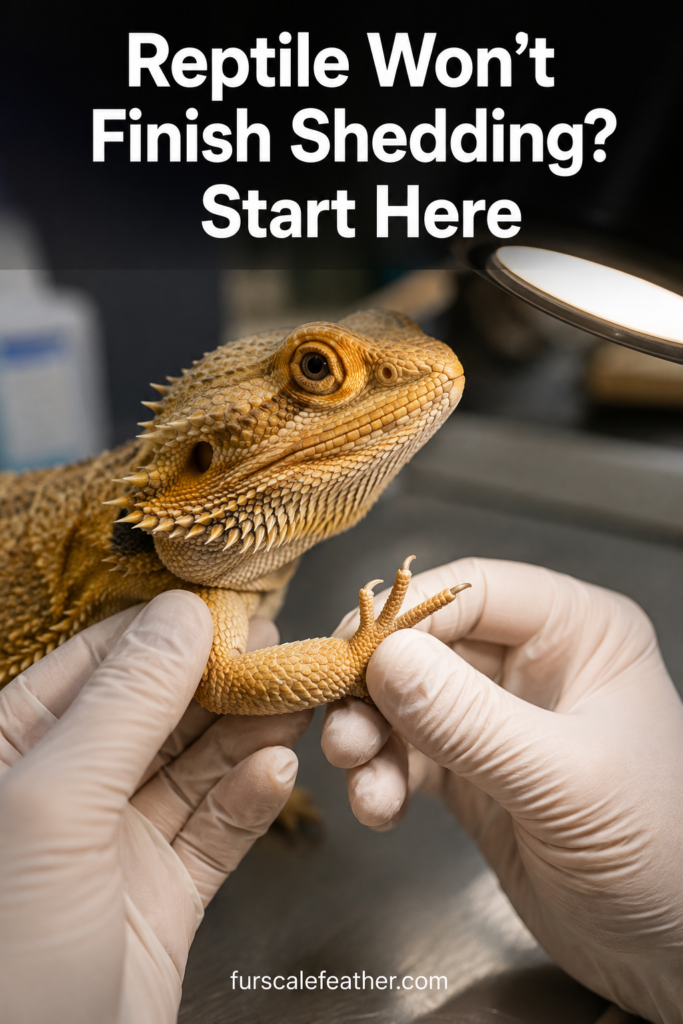
Book a visit with a reptile vet if you notice a retained eye cap that doesn’t clear within a few days, shedding problems in the same spot across three or more consecutive cycles, any bleeding from a previous removal attempt, or swelling and discoloration at the toe tips. A licensed reptile veterinarian can rule out mites, infection, or old injuries that a habitat adjustment alone won’t fix. The Association of Reptilian and Amphibian Veterinarians maintains a searchable directory if you don’t already have a reptile-experienced vet nearby.
Questions People Usually Ask
How long should a reptile shed take? Most reptiles finish shedding within a few days to about a week once it starts. If it’s dragging past two weeks, something in the setup usually needs adjusting.
Is it normal for a reptile to eat its own shed? Yes, many species do this in the wild and in captivity. It’s not a cause for concern on its own.
Can low humidity alone cause a bad shed? Yes, and it’s the most common single cause. Fixing humidity first resolves the majority of shedding complaints owners bring to me.
Should I bathe my reptile every time it’s shedding? Not every species tolerates or needs it. Species prone to stress from handling, like some snakes, often shed fine with a properly humid hide and no soaking at all.
What if my gecko’s toe looks purple or swollen under stuck shed? That’s a sign circulation is being cut off, and it needs prompt attention. A gentle soak to loosen the shed is a reasonable first step, but if the discoloration doesn’t improve quickly, contact a reptile vet rather than continuing to work at it yourself.
If your reptile isn’t shedding properly, the fix is almost always a combination of accurate humidity, enough hydration, and something rough to rub against. Start with a real hygrometer reading at substrate level rather than guessing, and adjust to the range your specific species needs. Give the current stuck shed a proper soak instead of pulling at it, and watch whether the next cycle improves. If the same spot keeps giving trouble after you’ve fixed the habitat side, that’s your signal to get a vet involved rather than keep troubleshooting on your own.
Disclosure: Products mentioned were not personally tested by the author. Recommendations are based on aggregated user reviews, published specifications, and field feedback from a reptile rescue.