

It’s 7 in the morning and your guinea pig is losing it in the corner of the cage, not because anything is wrong, but because the fridge door just opened two rooms away. That sharp, repeated squeal is what most owners call wheeking, and it’s the reason so many people search why does my guinea pig keep squeaking during their first few weeks of ownership. Once you understand the pattern, the sound stops feeling random and starts making sense within a day or two of paying closer attention.
Guinea pigs are some of the most vocal small pets you can bring home, and that’s actually a good thing. Unlike a lot of prey animals that hide everything, guinea pigs tell you what they want. The tricky part is learning to tell the difference between excited squeaking and squeaking that means something is actually off.
Why Does My Guinea Pig Keep Squeaking? The Quick Answer
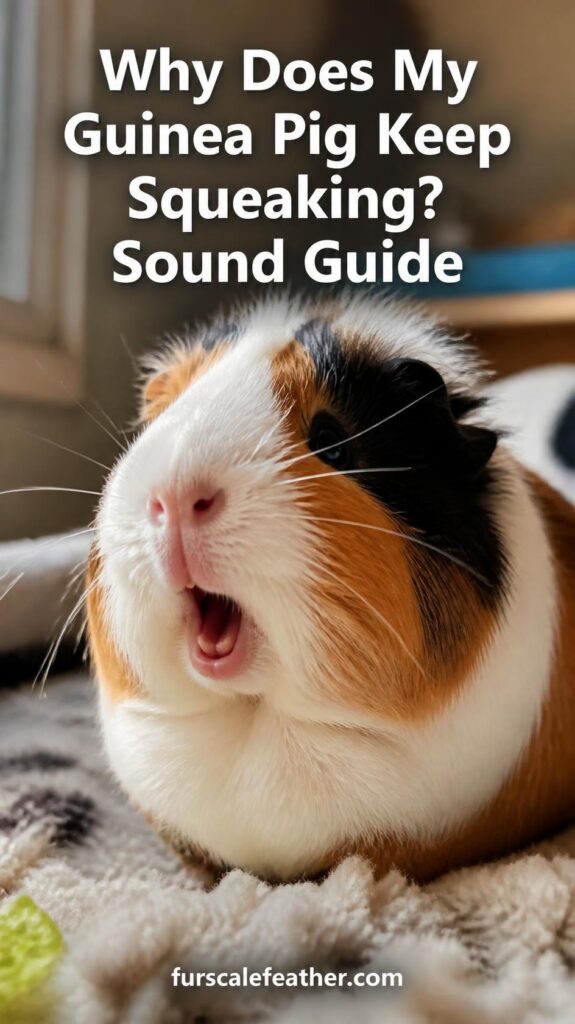
Most nonstop squeaking comes down to one of four things: hunger, excitement, social contact, or stress. Wheeking, the long, rising squeal, almost always means food is expected. Short, repeated chirps or squeaks during handling usually mean your guinea pig wants down, wants attention, or is telling a cage mate to back off. Squeaking that sounds sharp, high, and sudden, especially paired with freezing or hiding, points toward pain or fear and deserves a closer look.
The short version: figure out what happens right before the squeaking starts. Guinea pigs squeak in response to something almost every time. Find the trigger and you usually find the reason.
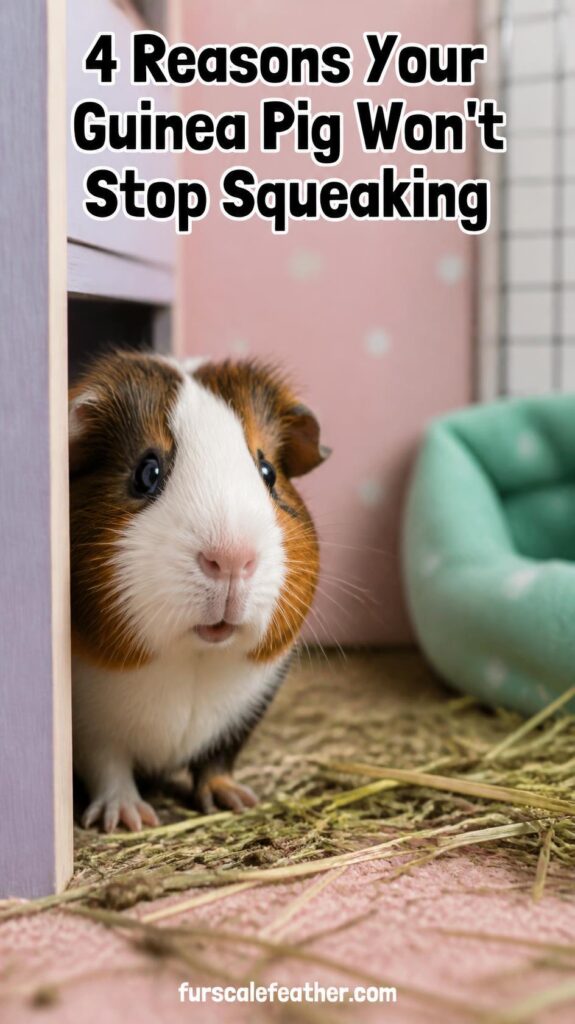
Guinea Pig Sounds and What Each One Means
Guinea pigs have a wider vocal range than most people expect. Here is what the common ones mean.
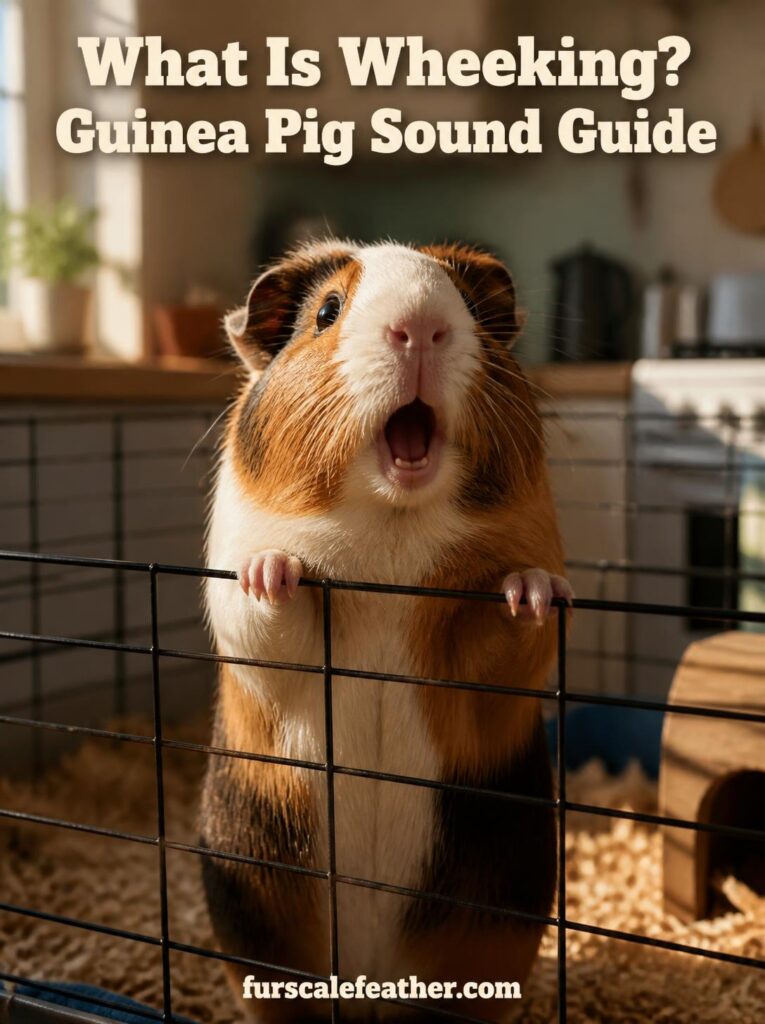
Wheeking
This is the sound most owners recognize instantly, a loud, rising squeal that can carry through a whole house. It shows up when your guinea pig hears the fridge, the rustle of a produce bag, or your footsteps heading toward the kitchen. It is almost always about food.
Purring
A low, steady rumble, similar to a cat but softer. Context matters here. A relaxed, low purr during petting usually means contentment. A higher-pitched, choppier purr paired with tense body language can mean irritation instead, especially between two guinea pigs working out a dominance dispute.
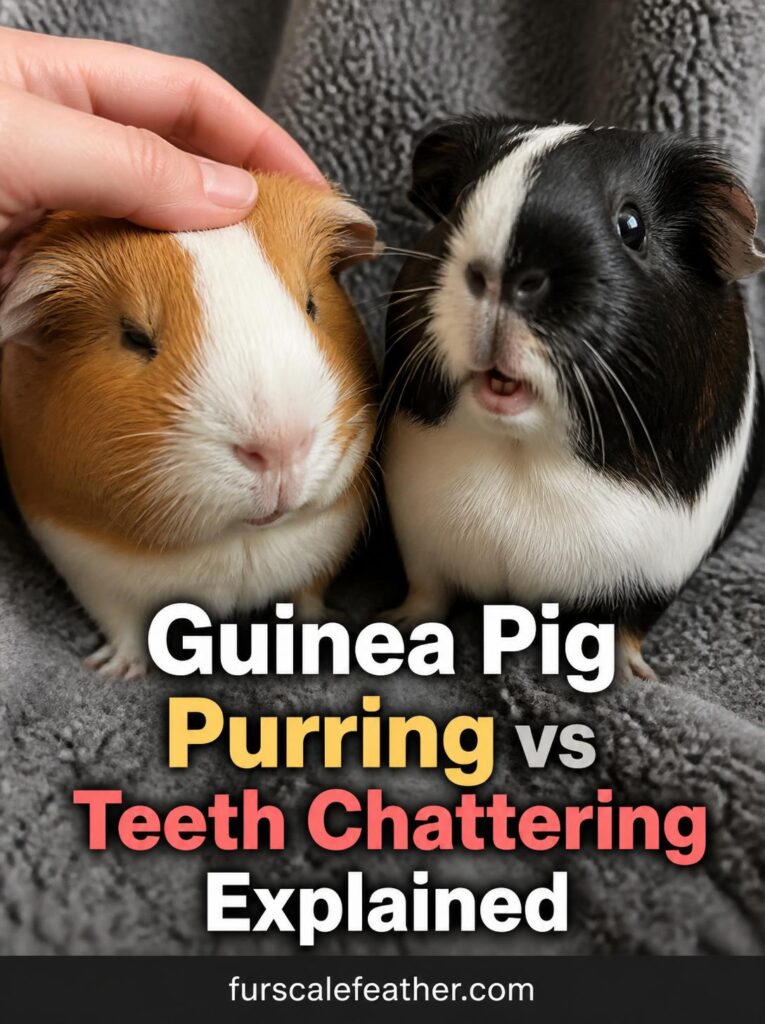
Teeth Chattering
A quick, repeated clicking sound made by grinding the teeth together. This is a warning, not a greeting. It shows up most often between two guinea pigs settling a pecking order, and it’s a signal to give them space rather than step in right away.
Rumblestrutting
A deep rumble combined with a slow, swaying walk. This is mostly a mating or dominance display and shows up in both sexes, though it’s more common in males.
Shrieking or Squealing
A sudden, sharp, high-pitched scream. This one is not subtle, and it usually means real pain, real fear, or both. A guinea pig that shrieks during nail trims, when picked up a certain way, or out of nowhere while resting, is telling you something hurts.
Chutting and Chirping
Soft, quiet chut-chut-chut sounds during exploration, and occasionally a bird-like chirping that researchers still don’t fully understand. Some experienced owners associate it with a guinea pig left alone in a quiet room for an extended stretch of time.
Common Reasons Guinea Pigs Won’t Stop Squeaking
If the squeaking feels constant rather than occasional, a few usual suspects are worth ruling out first.
- Feeding schedule squeaking: guinea pigs learn your routine fast, and inconsistent feeding times can turn into hours of anticipatory wheeking.
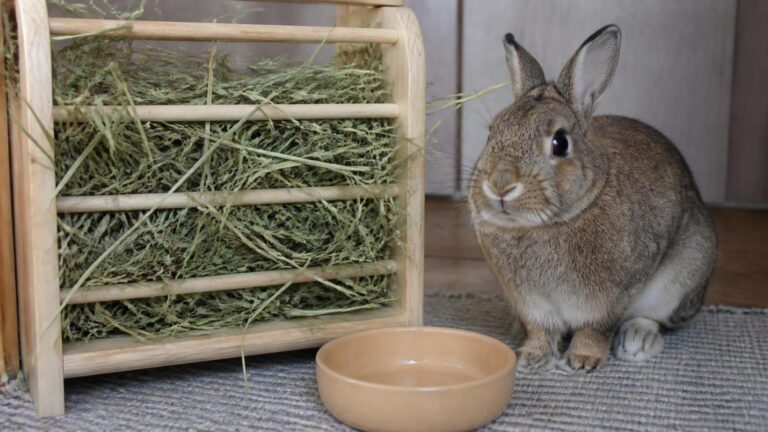
- Empty hay rack: guinea pigs should have access to hay basically all day, and an empty rack often triggers repeated squeaking within 20 to 30 minutes.
- Loneliness: guinea pigs are herd animals, and a single guinea pig without a companion will often squeak more for attention simply because it has no one else to talk to.
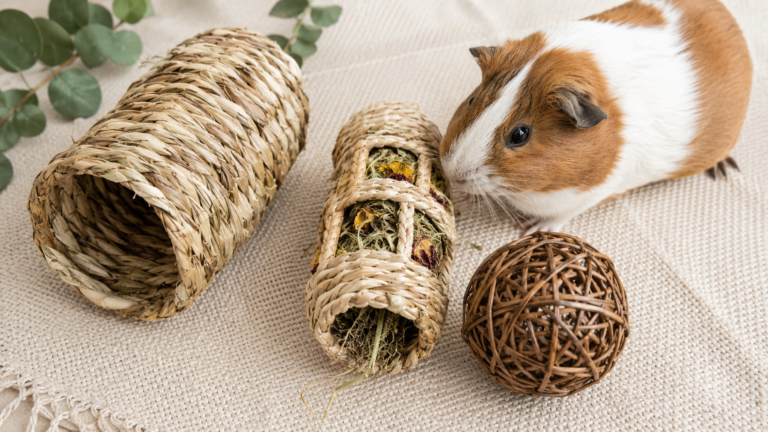
- Boredom: a cage with no hideouts, tunnels, or chew toys leaves fewer ways to self-occupy, and squeaking can become a way of asking for interaction.
- Environmental stress: drafts, loud noises, a nearby predator-like pet such as a dog or cat, or a recent cage move can all raise baseline squeaking for several days.
- Pain or illness: dental problems, bladder stones, and respiratory infections are common causes of squeaking that sounds different from the usual, especially during urination or eating.
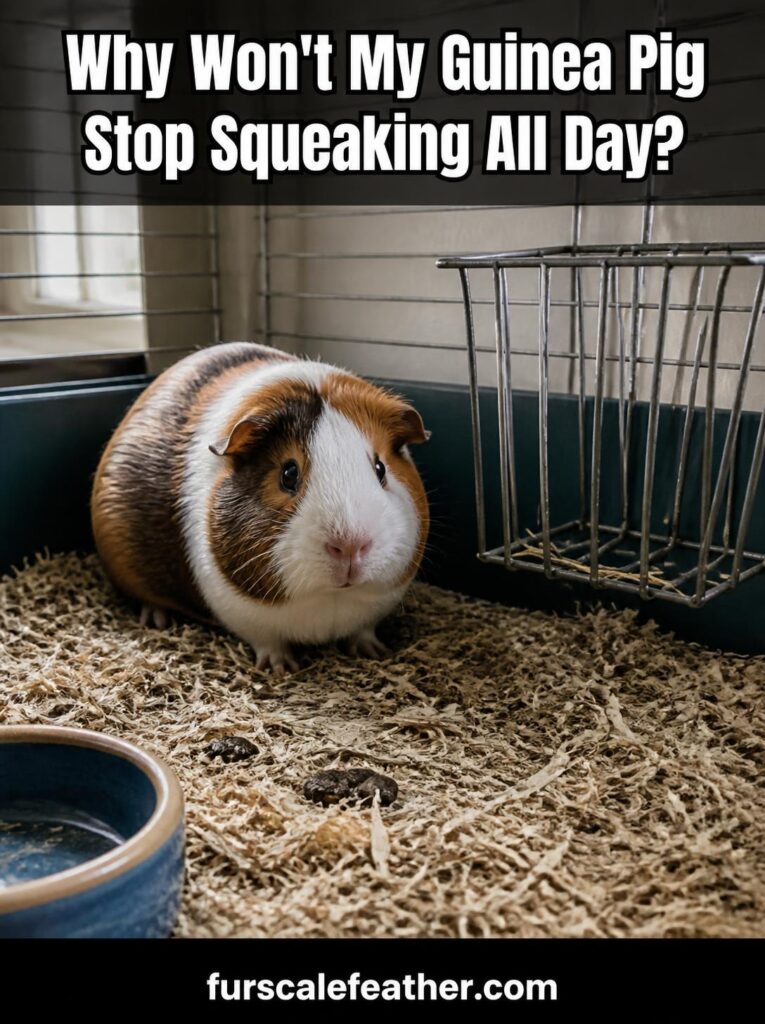
Normal Squeaking vs a Problem: How to Tell
- Watch the timing. Squeaking around feeding times or when you approach the cage is almost always normal. Squeaking that happens at random hours, especially at night, is worth a closer look.
- Check the pitch. Everyday wheeking rises and falls. A single sharp shriek is a different signal entirely and usually means pain.
- Look at posture. A relaxed, upright guinea pig that squeaks while approaching the food bowl is fine. A guinea pig that squeaks while hunched, freezing, or grinding its teeth may be uncomfortable.
- Track eating and drinking. Reduced appetite alongside more squeaking is one of the clearer signs of a health issue and shouldn’t wait more than a day before a vet visit.
- Note the duration. Occasional squeaking is normal. Squeaking that continues for more than an hour with no clear trigger is unusual for a healthy guinea pig.

A Mistake That Taught Me to Listen Better
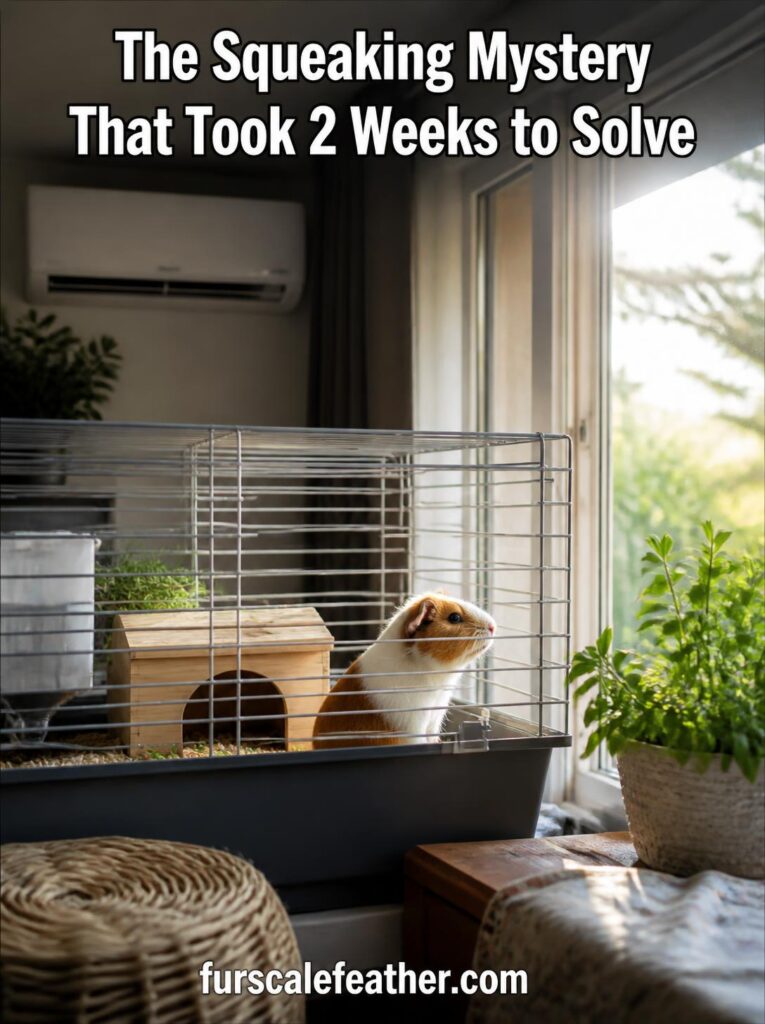
A reader who fosters guinea pigs for a small rescue in Oregon told me about a squeaking mystery that took her almost two weeks to solve. Her foster pair had started squeaking almost constantly, day and night, and her first assumption was hunger. She increased their pellets and added extra hay, but the squeaking didn’t let up, and one of the two guinea pigs actually started gaining noticeable weight without calming down at all.
It turned out the cage sat about a foot from a window air conditioning unit that cycled on every 40 minutes or so. The guinea pigs were reacting to the sound and the sudden draft each time the unit kicked on, not to hunger. Once she moved the cage roughly 6 feet away from the vent, the squeaking dropped from near-constant to occasional within two days.
The lesson: more food isn’t the default fix for more squeaking. Before changing feeding amounts, it’s worth spending 10 to 15 minutes just watching what happens in the room right before the squeaking starts.
Best Products for Calmer, Quieter Guinea Pigs
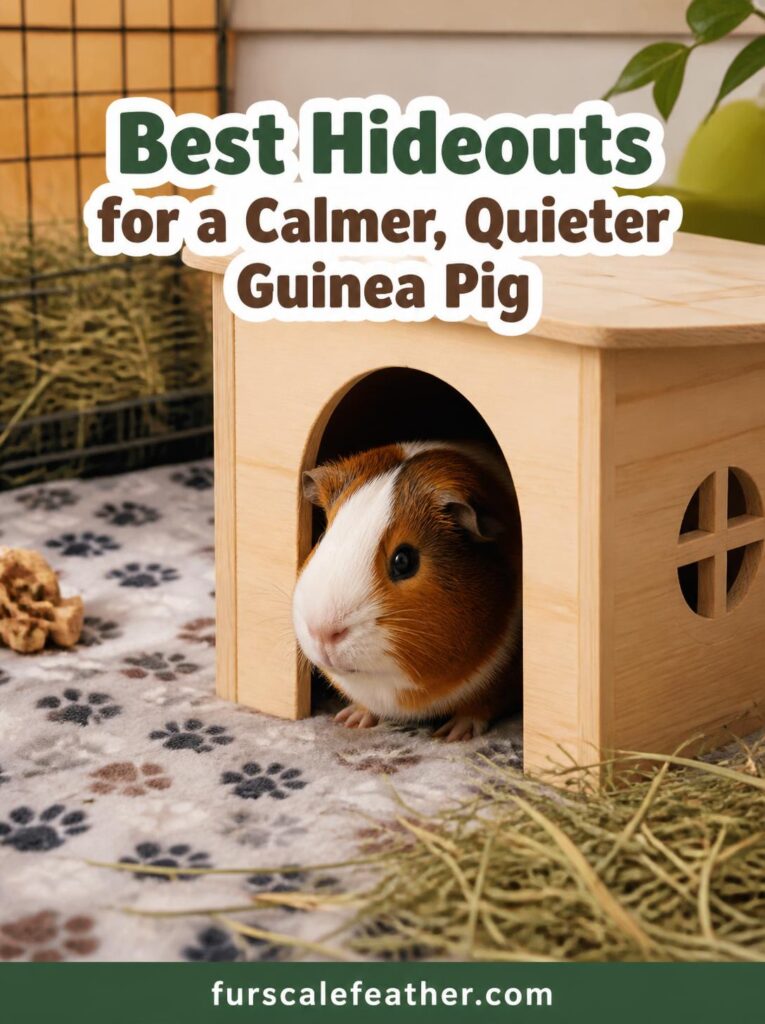
I haven’t personally tested these three side by side, so this section is based on aggregated user reviews, small-animal rescue recommendations, and manufacturer specs rather than hands-on testing in my own home. Hideouts are one of the most reliable tools for reducing stress-driven squeaking because guinea pigs are prey animals that feel safer with a place to retreat.
Kaytee Critter Cave A soft fleece igloo shape. Reviewers consistently mention it holds up to chewing better than expected for a fabric hideout, and it’s machine washable, which matters given how often guinea pig bedding needs cleaning. Pros: washable, soft on feet, compact for smaller cages. Cons: some guinea pigs chew through the fabric within a few months.
Niteangel Wood Hideout House A solid wood house with two entry points. Rescue volunteers who recommended this one liked that guinea pigs can chew on the wood itself, which doubles as light dental wear. Pros: durable, doubles as a chew toy, no fabric to shred. Cons: heavier and harder to clean than fleece options, and it takes up more floor space.
Oxbow Enriched Life Hideaway A natural fiber tunnel-style hideout designed to be both a hiding spot and a chew item. Pros: fully edible and safe if chewed, lightweight. Cons: gets consumed over time, with most reviewers reporting a replacement every 4 to 6 weeks under regular chewing.
The winner: For most beginner setups, the Niteangel Wood Hideout House is the strongest overall pick. It solves the stress-squeaking problem by giving a guinea pig a genuine retreat, it survives daily chewing instead of falling apart, and the added dental wear is a real bonus that the fleece and fiber options can’t match long term. The trade-off is cleaning time, which is a fair swap for something that won’t need replacing every few weeks.
Beginner Guinea Pig Care Checklist
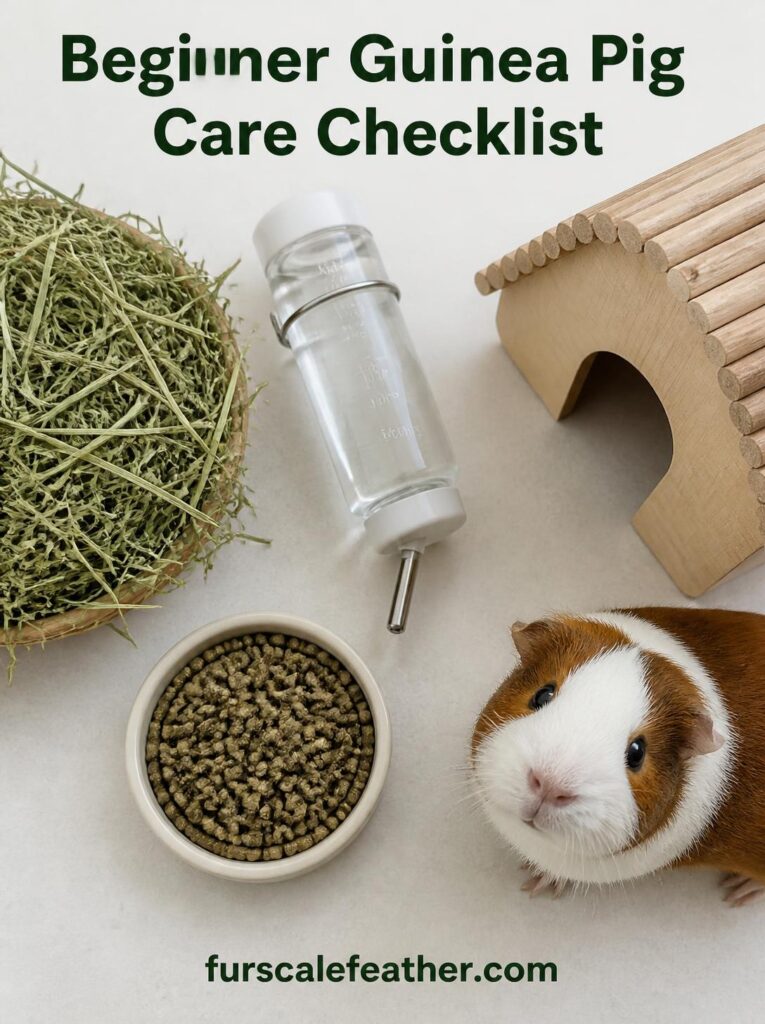
A lot of squeaking issues trace back to gaps in the basic setup rather than anything medical. If you’re still working out the beginner guinea pig setup or nailing down guinea pig cage essentials, this checklist covers how to care for guinea pigs at a baseline level.
- Cage size of at least 7.5 square feet for a pair, more if space allows
- Solid-bottom flooring, never wire, to protect feet and joints
- Unlimited timothy hay available at all times, refreshed daily
- A vitamin C source every day, since guinea pigs can’t produce their own
- Fresh water checked twice daily
- At least one hideout per guinea pig so no one has to compete for cover
- A same-species companion, since guinea pigs are herd animals and do poorly living alone
- A quiet location away from dogs, cats, and sudden loud noises
When Squeaking Means You Should Call the Vet
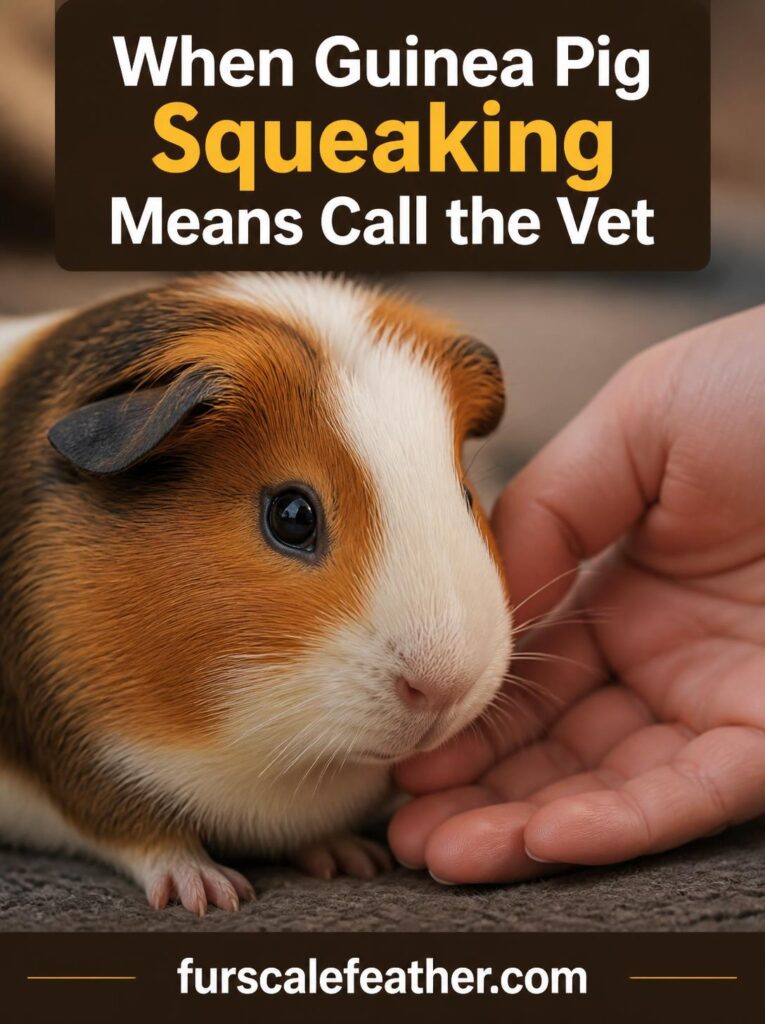
Occasional squeaking is normal, and it’s even a good sign that your guinea pig feels comfortable enough to ask for things. A few patterns are different. Squeaking during urination, squeaking paired with a hunched posture or reduced appetite, sudden shrieking with no clear cause, and squeaking that continues for more than a day without letting up all warrant a same-week vet visit rather than a wait-and-see approach. Guinea pigs are prey animals and tend to mask illness until it has progressed, so a sudden change in vocal behavior is worth taking seriously. This article isn’t a substitute for a veterinary exam, and any guinea pig showing signs of pain or illness should be seen by a vet familiar with small mammals.
Questions People Usually Ask
Why does my guinea pig squeak when I walk into the room? This is almost always food-related. Guinea pigs learn to associate your footsteps, especially near the kitchen, with feeding time, and the squeaking is anticipation rather than distress.
Is it normal for guinea pigs to squeak at night? Some nighttime squeaking is normal, especially if your guinea pig is more active after dark or reacting to household sounds. Squeaking that sounds distressed or continues for hours is worth investigating further.
Do guinea pigs squeak when they’re happy? Yes. Wheeking, chutting, and even a low content purr are all signs of a comfortable, engaged guinea pig, not just requests for food.
Why does one of my two guinea pigs squeak more than the other? Personality plays a real role, and so does position in the social hierarchy. A more assertive guinea pig, or one that has learned squeaking gets a faster response, will often vocalize more than a calmer cage mate.
Can squeaking mean my guinea pig is in pain? Yes, particularly a sudden, sharp shriek. Pair that with any change in eating, posture, or energy, and it’s worth a vet visit rather than waiting it out.
Closing Thoughts
Squeaking isn’t a problem to fix so much as a language to learn. Most of it is your guinea pig telling you it’s hungry, excited, or simply aware that you exist in the room. Pay attention to timing, pitch, and posture, and the occasional sharp shriek or all-day nonstop squeaking will start standing out clearly against the normal background chatter. If anything ever feels off with your guinea pig’s eating, energy, or vocal patterns, a same-week check-in with a small-mammal vet is always the safer call.
Disclosure
Product recommendations in this article are based on user reviews, rescue feedback, and manufacturer information rather than personal in-home testing, as noted above. This post may contain affiliate links. If you purchase through them, this site may earn a small commission at no extra cost to you.