
You brought your new corn snake home from the reptile expo in a deli cup, set it on the kitchen counter, and realized you have no real plan for what happens next. That flash of panic is normal. It’s also exactly why a clear corn snake care guide for beginners matters more than another forum thread full of conflicting opinions. Corn snakes are one of the easiest snake species to keep well, but easy does not mean effortless, and the choices you make in the first two weeks tend to set the tone for the next fifteen to twenty years.
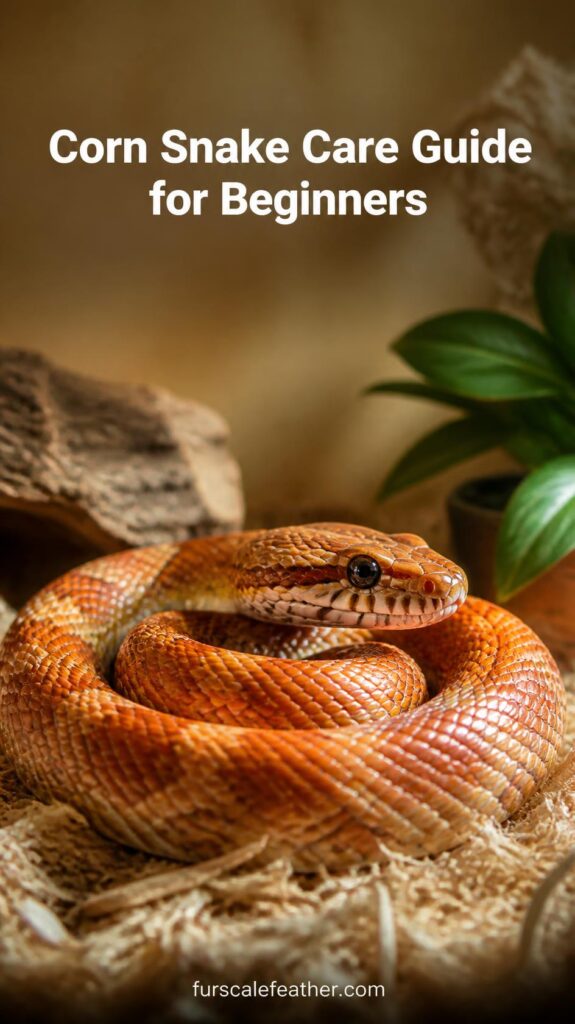
Corn Snake Care Guide for Beginners: The Basics You Need First
Before you worry about decor or personality, a corn snake needs six things to stay healthy: a secure enclosure of the right size, a temperature gradient, correct humidity, a safe substrate, at least two hides, and a consistent feeding schedule. Get those six right and most of the difficult parts of corn snake ownership turn into routine maintenance.
Here’s the quick-reference version:
- Enclosure: minimum 20-gallon long for a juvenile, 40-gallon or a 3x2x2 foot enclosure for an adult
- Warm side temperature: 84 to 88°F, measured at the surface with a probe thermometer
- Cool side temperature: 72 to 75°F
- Humidity: 40 to 50 percent normally, rising to 55 to 60 percent during shed cycles
- Substrate: aspen shavings, coconut fiber, or paper towels (avoid cedar and pine)
- Feeding: appropriately sized frozen-thawed rodents on a set schedule (details below)
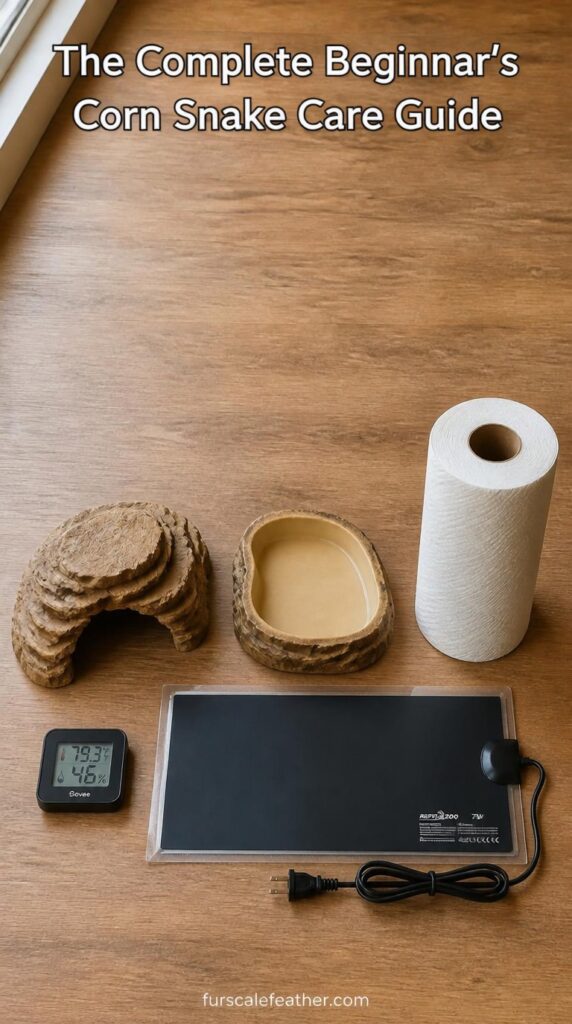
Beginner Corn Snake Setup: Choosing the Right Enclosure
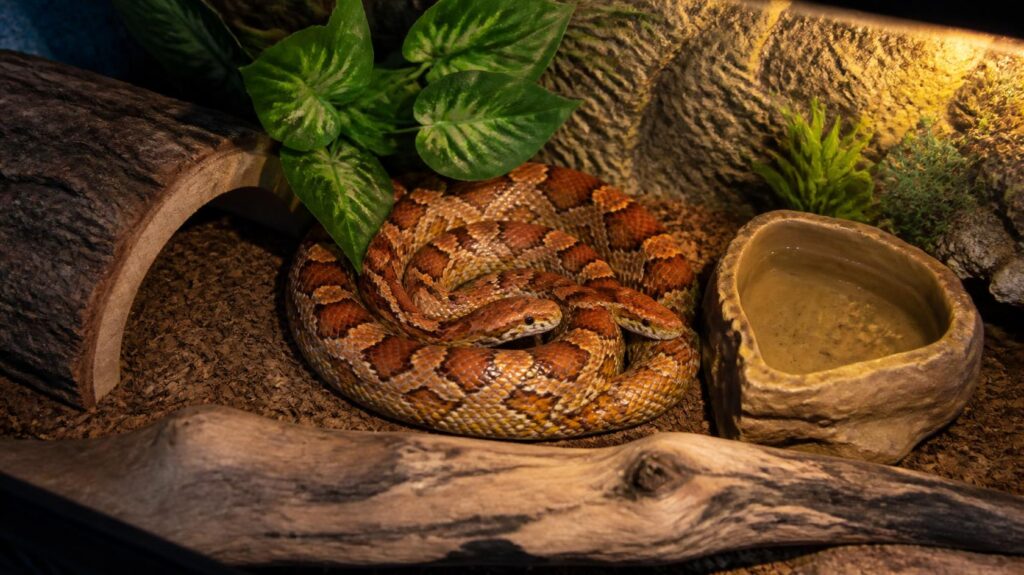
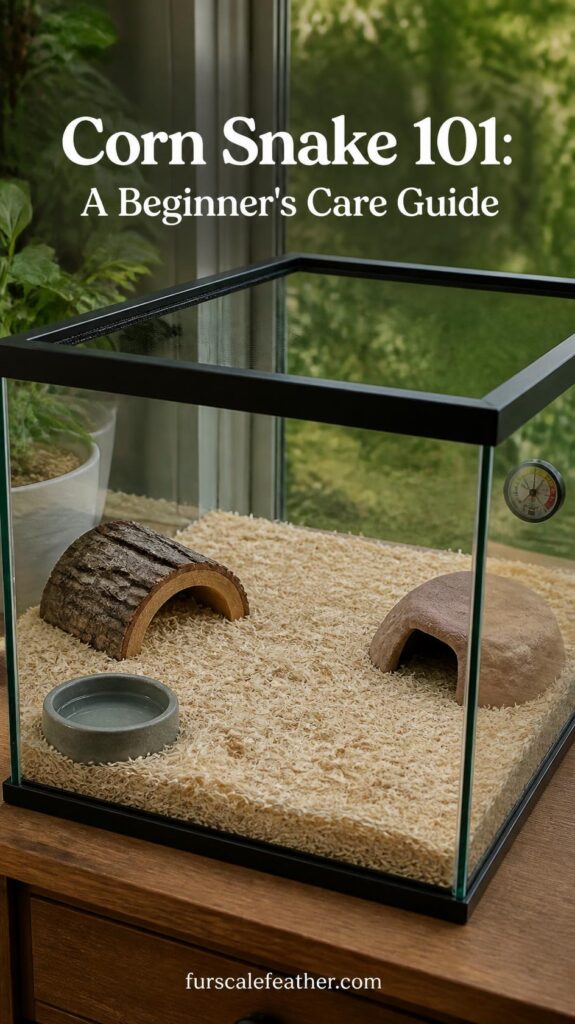
A beginner corn snake setup starts with the enclosure, and this is where a lot of new owners either overspend on the wrong tank or undersize it to save money. Consider this section your corn snake enclosure guide within the guide. Corn snakes are strong, patient escape artists, so a secure, front-opening enclosure with a locking mechanism matters as much as square footage.
Steps for setting up a new enclosure before the snake goes in:
- Choose an enclosure sized for the snake’s current length, not its adult size (a hatchling in an oversized tank often stresses and refuses food).
- Add 2 to 3 inches of substrate so the snake can burrow.
- Place two hides, one on the warm side and one on the cool side, so the snake never has to choose between security and temperature.
- Add a heat source on one end only, controlled by a thermostat, never left to run unregulated.
- Add a shallow water bowl large enough for the snake to soak in, but not so large it tips easily.
- Mount a probe thermometer on the warm side and a combination thermometer and hygrometer near the middle.
- Let the enclosure run for 24 to 48 hours before adding the snake, so temperatures and humidity stabilize.
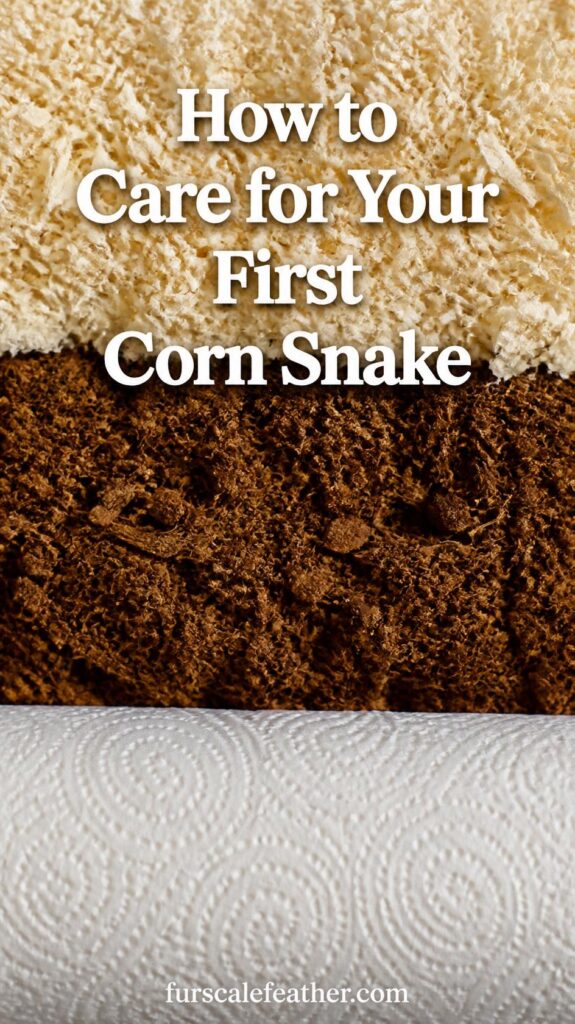
Substrate options compared:
- Aspen shavings: good odor control, holds burrows well, widely available, but dust can bother sensitive owners
- Coconut fiber (coco coir): holds humidity better, useful if your home runs dry, but breaks down faster and needs more frequent spot cleaning
- Paper towels: cheapest and easiest to monitor for a new snake’s first few weeks, but offers no enrichment and needs full changes more often
For most beginners, aspen shavings hit the best balance of cost, odor control, and ease of spot cleaning, which is why it shows up in the majority of corn snake care sheets from reptile-specific veterinary clinics.
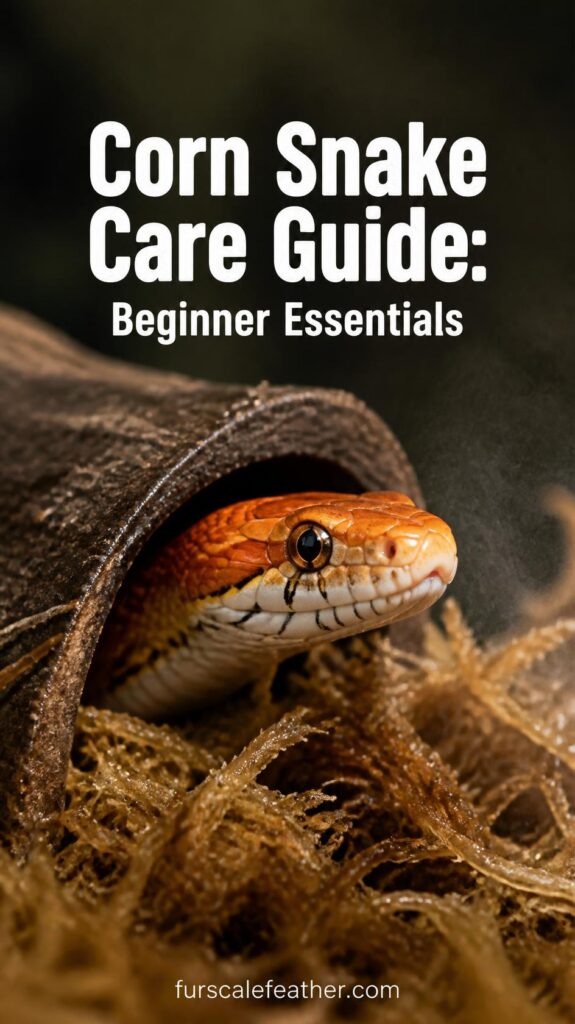
Corn Snake Humidity and Heat Requirements
Corn snake humidity and heat requirements are the two things beginners get wrong most often, usually in opposite directions. A tank that runs too dry leads to incomplete sheds, where skin comes off in patches instead of one piece, especially around the eye caps. A tank that runs too humid for too long can contribute to skin and respiratory issues.
I interviewed a reptile rescue coordinator who evaluates incoming snakes for a regional rescue, and she said humidity problems account for a large share of the shed and skin issues she sees in surrendered corn snakes, more than any other single husbandry mistake. Her fix for most owners was simple: mist the enclosure lightly during shed cycles (cloudy, dull-looking eyes are the tell) and swap in a slightly more moisture-retentive substrate during that window, rather than changing humidity year-round.
Practical humidity and heat targets:
- Daytime warm side: 84 to 88°F
- Daytime cool side: 72 to 75°F
- Nighttime drop: acceptable down to about 70°F, corn snakes tolerate a natural night drop
- Normal humidity: 40 to 50 percent
- Shed-cycle humidity: 55 to 60 percent, achieved with a humid hide (a hide packed with damp sphagnum moss) rather than soaking the whole tank
How to Care for a Corn Snake: Feeding Guide
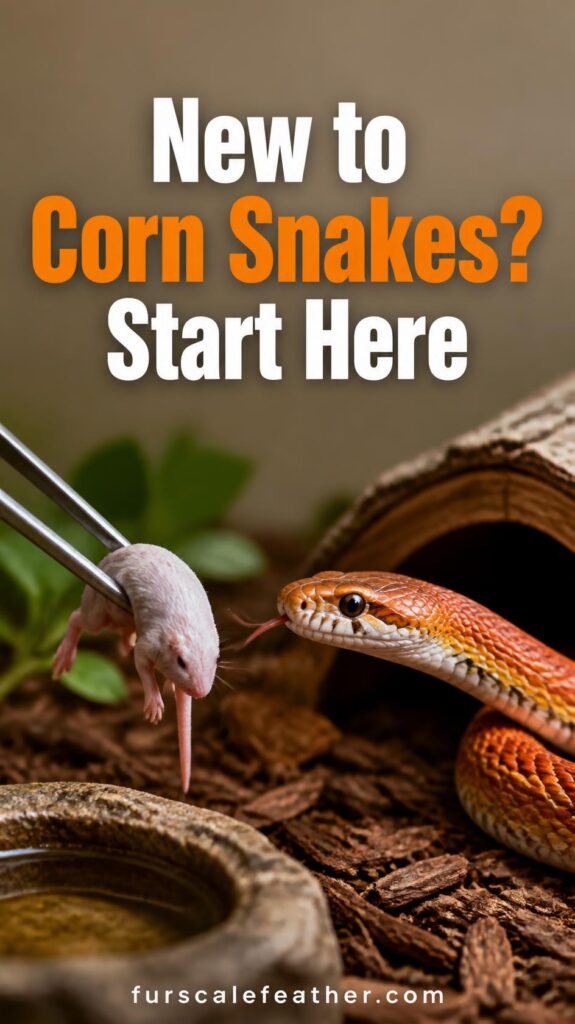
Feeding is where new owners tend to either overfeed out of anxiety or underfeed out of fear of a bite. Here’s how to care for a corn snake at feeding time, broken into a repeatable process.
- Choose prey sized to the widest part of the snake’s body, not its length. An appropriately sized mouse leaves a slight bulge, not a dramatic one.
- Thaw frozen rodents fully in warm water, never in a microwave, and check the prey is warm to the touch before offering it.
- Use tongs to present the prey inside the enclosure rather than your bare hand, to keep feeding responses separate from handling responses.
- Leave the snake undisturbed for at least 30 minutes after it eats.
- Wait 48 hours minimum before handling after a meal, to reduce the risk of regurgitation.
Feeding frequency by age:
- Hatchlings and young juveniles: every 5 to 7 days, appropriately sized pinky or fuzzy mice
- Subadults: every 7 to 10 days
- Adults: every 10 to 14 days, adult mice or small rats depending on the individual snake’s girth
A reader emailed me a mistake that’s common enough to repeat here. Her new corn snake stopped eating after she handled it the same evening it fed, twice in a row. The snake regurgitated the second meal, went several days without eating while it recovered, and needed a smaller prey item to restart the feeding cycle. Once she switched to the 48-hour rule above, the snake resumed a normal schedule within two feedings. It’s a small habit, but it’s one of the more common preventable setbacks in a new snake’s first month.
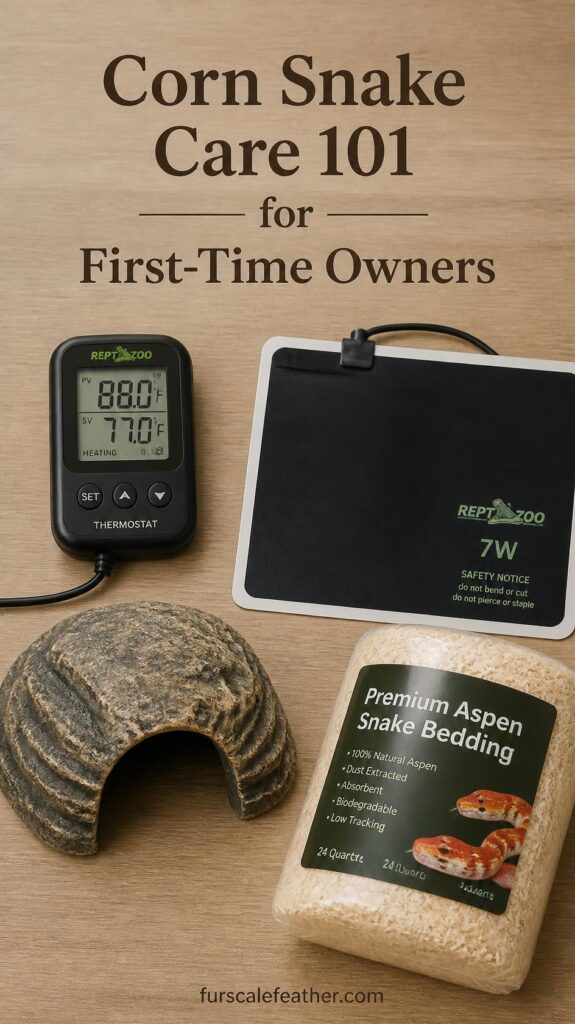
Best Products for a Beginner Corn Snake Enclosure
I have not personally tested every product listed below. This section combines aggregated user reviews, manufacturer specifications, and feedback from the rescue coordinator interviewed above.
Enclosures
- Zen Habitats PVC enclosure: strong insulation, holds humidity evenly, higher price point
- Exo Terra glass terrarium: widely available at pet stores, loses heat and humidity faster through the glass
- Winner: Zen Habitats, for owners who want stable temperature and humidity without constantly adjusting equipment
Heat sources
- Zoo Med ReptiTherm under-tank heater: consistent output, low failure rate reported across user reviews, requires a separate thermostat
- Ceramic heat emitter with a dome fixture: works well for larger enclosures, warms the air rather than the substrate
- Winner: Zoo Med ReptiTherm paired with a thermostat, the combination most repeatedly recommended in aggregated owner reviews and rescue intake notes
Thermostats
- Herpstat or VE-200 style digital thermostats: precise, widely used by breeders, higher price point
- Basic on/off thermostats: functional and cheaper, less precise temperature control
- Winner: a dimming or pulse-proportional digital thermostat. A thermostat is not optional. An unregulated heat mat is one of the most common causes of thermal burns reported by reptile veterinary clinics.
Hides
- Zoo Med Repti Shelter: easy to clean, comes in multiple sizes
- DIY hides (a plastic container with a cut entrance): free or nearly free, less polished but functionally identical
- Winner: whichever option fits snugly, since a hide that’s too large defeats the point of feeling secure
Common Beginner Mistakes with Corn Snakes
A foster caretaker at a regional reptile rescue told me about a pattern she sees repeatedly in surrendered corn snakes. New owners buy an enclosure sized for an adult snake and add a hatchling straight into it. The snake, unable to find a hide that feels appropriately snug, stays visibly stressed, hides in a substrate corner instead of the provided hides, and in a few cases refused food for multiple weeks. Her fix was to start hatchlings in a smaller enclosure and upgrade it in stages as the snake grows.
Other common mistakes:
- Handling too soon after arrival (give a new snake 5 to 7 days to settle before regular handling)
- Skipping the thermostat to save money
- Using loose substrate that’s too dry for the local climate without adjusting for shed cycles
- Feeding prey that’s too large, which can lead to regurgitation
- Placing the enclosure in direct sunlight, which can spike temperatures far above safe ranges
Signs of a Healthy Corn Snake (and When to Call a Vet)
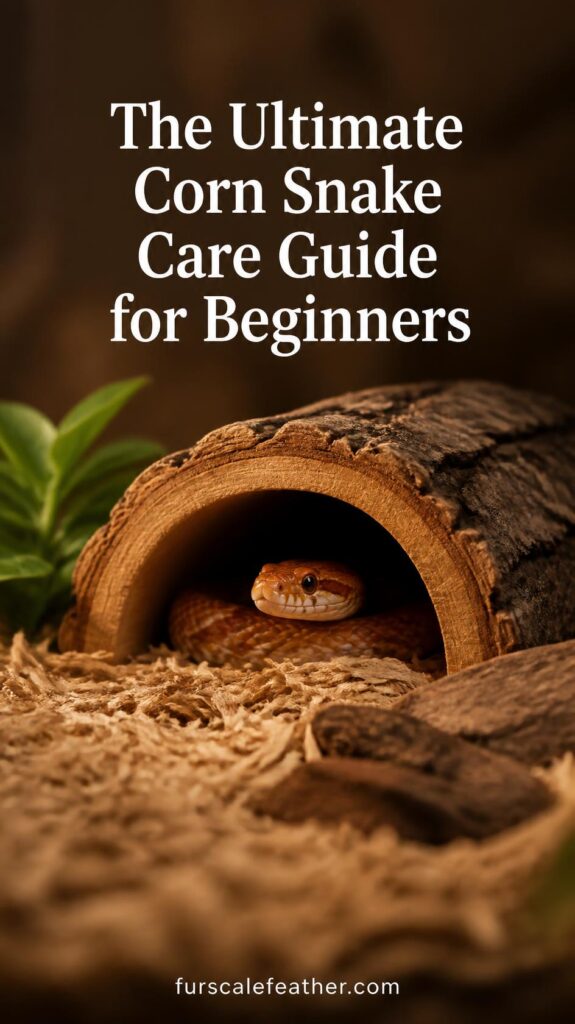
A healthy corn snake is alert, has clear eyes except during shed, moves with steady muscle tone, and has a consistent feeding response. Normal shed happens roughly every 4 to 6 weeks in young, growing snakes and less often in adults.
Contact a reptile veterinarian if you notice any of the following:
- Retained shed, especially around the eyes or tail tip, that doesn’t come off with a humid hide and gentle soak
- Wheezing, clicking sounds, or bubbles from the nose or mouth
- Refusing food for more than 4 to 6 weeks with no shed cycle to explain it
- Visible mites (tiny moving dots near the eyes or in the water bowl)
- Lethargy paired with a limp or loose body tone
These symptoms are not something to diagnose at home. A reptile-experienced veterinarian, such as one listed through the Association of Reptilian and Amphibian Veterinarians, can rule out infection, parasites, or husbandry issues in one visit.
Questions People Usually Ask
How big of an enclosure does a beginner corn snake need? A 20-gallon long tank works for a hatchling or young juvenile. Plan to upgrade to a 40-gallon or a 3x2x2 foot enclosure once the snake reaches adult length, usually around 3 to 5 feet.
How often should I feed my corn snake? Young snakes eat every 5 to 7 days, and adults typically move to every 10 to 14 days once they reach full size.
Do corn snakes need UVB lighting? It’s not required the way it is for many lizards, but low-level UVB is increasingly recommended by reptile veterinarians as a general health benefit. For corn snakes specifically, it’s optional rather than mandatory.
Why is my corn snake refusing food? The most common reasons are an upcoming shed, recent handling too close to a meal, incorrect temperatures, or a new environment. If refusal lasts more than 4 to 6 weeks with no shed and normal temperatures, a vet visit is the next step.
How long do corn snakes live? With consistent care, corn snakes commonly live 15 to 20 years in captivity, with some individuals reported past 23.
Getting Started
A corn snake is one of the more forgiving snakes for a first-time keeper, but forgiving still means the basics matter: the right enclosure size, a real temperature gradient, humidity that shifts during shed cycles, and a feeding routine you actually stick to. Start with a smaller, secure enclosure sized for your snake’s current length, invest in a thermostat before anything decorative, and give your new snake a settling-in period before handling. Get those pieces in place first, and the rest of corn snake care becomes routine rather than a source of daily worry.
Disclosure: Product recommendations in this article are based on aggregated user reviews, manufacturer specifications, and an interview with a reptile rescue coordinator, not personal product testing. This article contains no paid or sponsored placements.