
A reader named Priya emailed me last spring because her new Horsfield’s tortoise had stopped eating for eight days straight. She had followed the pet store’s advice almost exactly, and she was starting to panic. It turned out the fix had nothing to do with food at all, and everything to do with one number most beginners overlook. That story is a good place to start, because tortoise care almost always comes down to getting the basics right before you worry about anything else.
Tortoises are not low-maintenance pets, no matter what the marketing on some starter kits implies. They are long-lived, slow-metabolism animals whose health depends almost entirely on the environment you build for them. Get the setup right and most tortoises are remarkably resilient. Get it wrong and small mistakes compound over weeks, not days, which is why so many beginners do not notice a problem until it is already serious.
This guide walks through what tortoise care actually involves, how to set up a proper tortoise habitat, what to feed your tortoise, a realistic daily routine, and the gear that reptile-focused testers and rescues consistently rate highest.
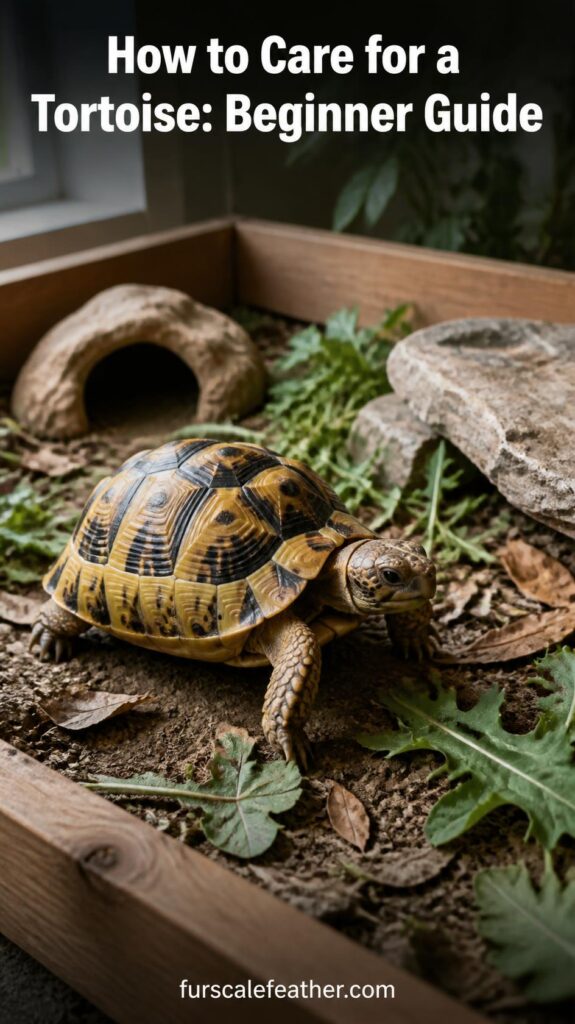
What Tortoise Care Actually Involves
Good tortoise care comes down to five things: temperature, UVB lighting, humidity, diet, and space. Miss any one of these and you will see it show up in appetite, shell growth, or activity level within a few weeks. Species matters too. A Russian tortoise, a Sulcata, and a Red-Footed tortoise have different humidity and size needs, so the specific numbers below are starting points for temperate, arid-adapted species like Russian and Horsfield’s tortoises, which are the most common beginner choices.
How to Set Up the Right Tortoise Habitat
Enclosure Size and Type
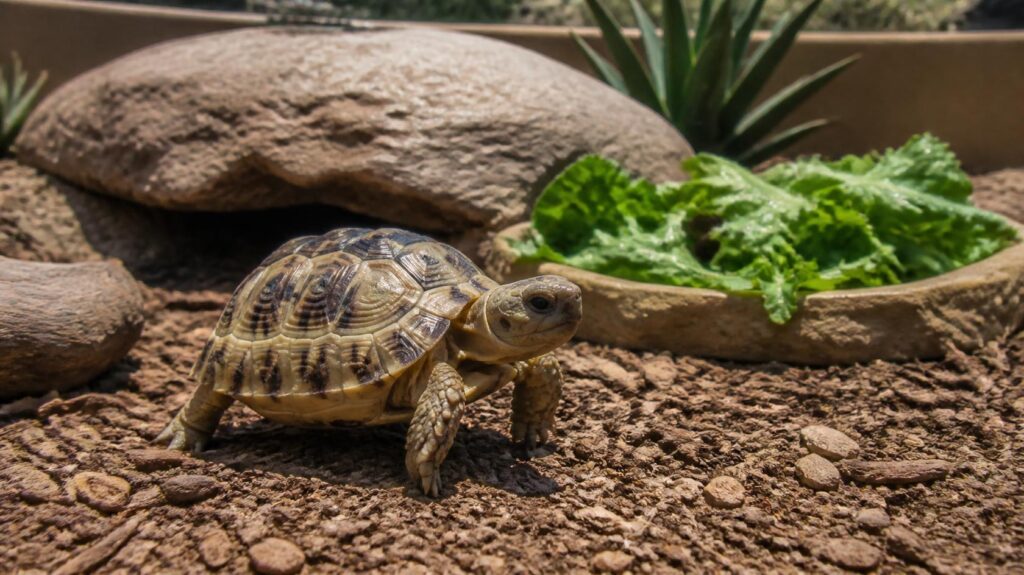
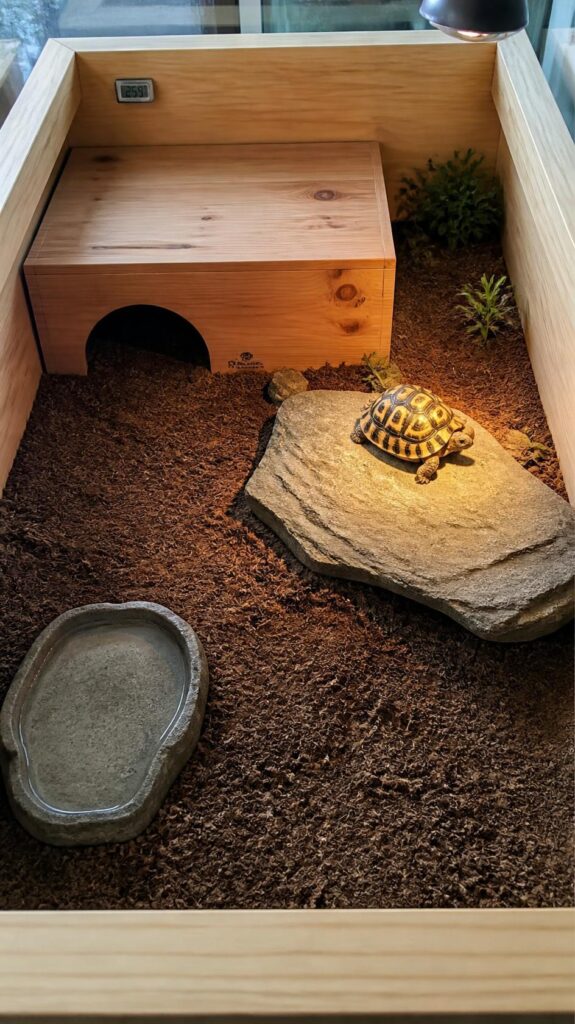
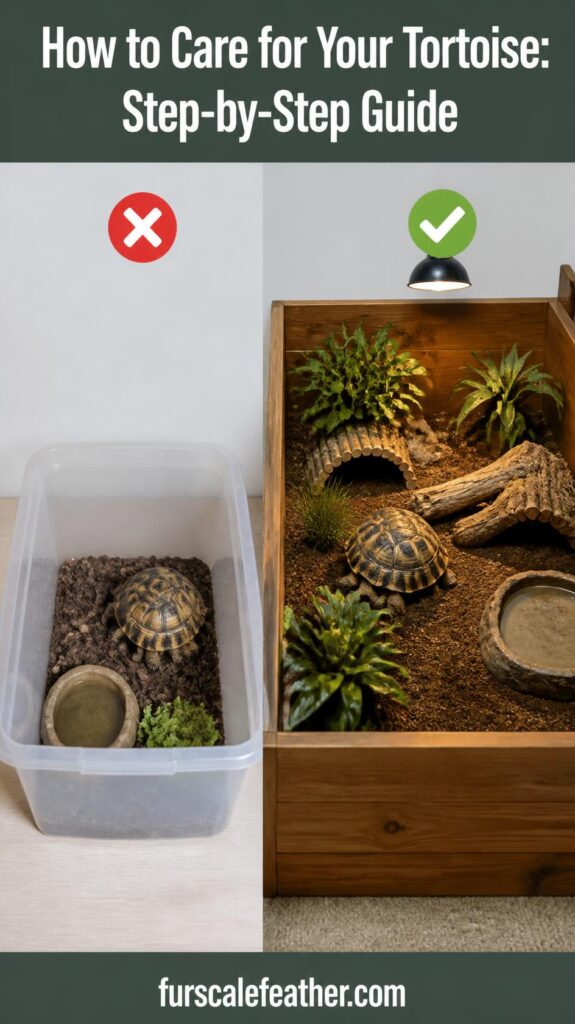
Skip the glass terrarium sold as a starter kit. Glass tanks trap humidity poorly, restrict airflow, and most are far too small once your tortoise is past its first year. An open-top wooden enclosure, often called a tortoise table, works far better for temperate species. As a rough baseline, plan for at least 8 square feet of floor space for one adult Russian or Horsfield’s tortoise, and closer to 30 to 40 square feet for larger species like Sulcatas once they mature. Outdoor time in a secure, predator-proof pen is ideal whenever weather allows.
Substrate
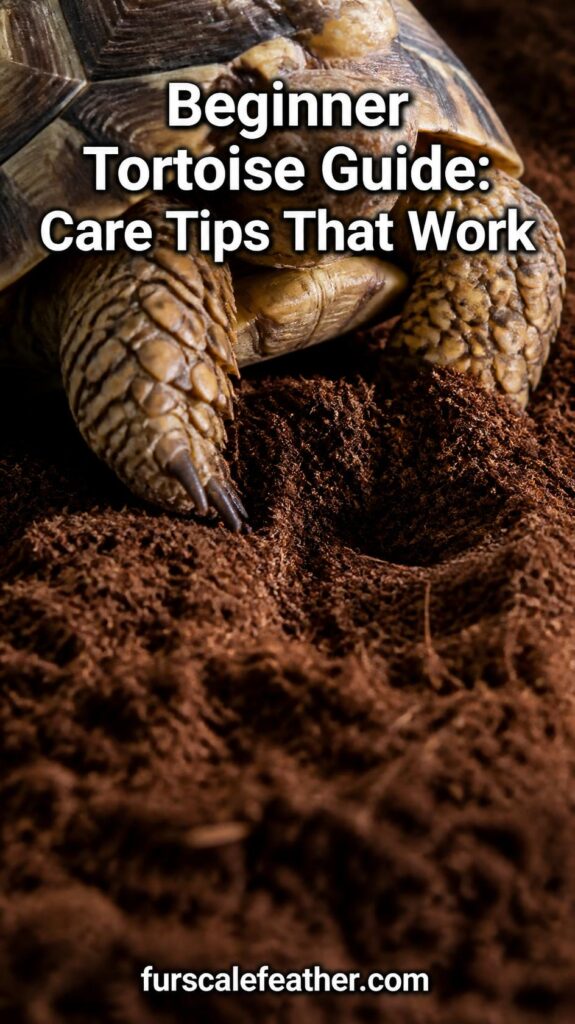
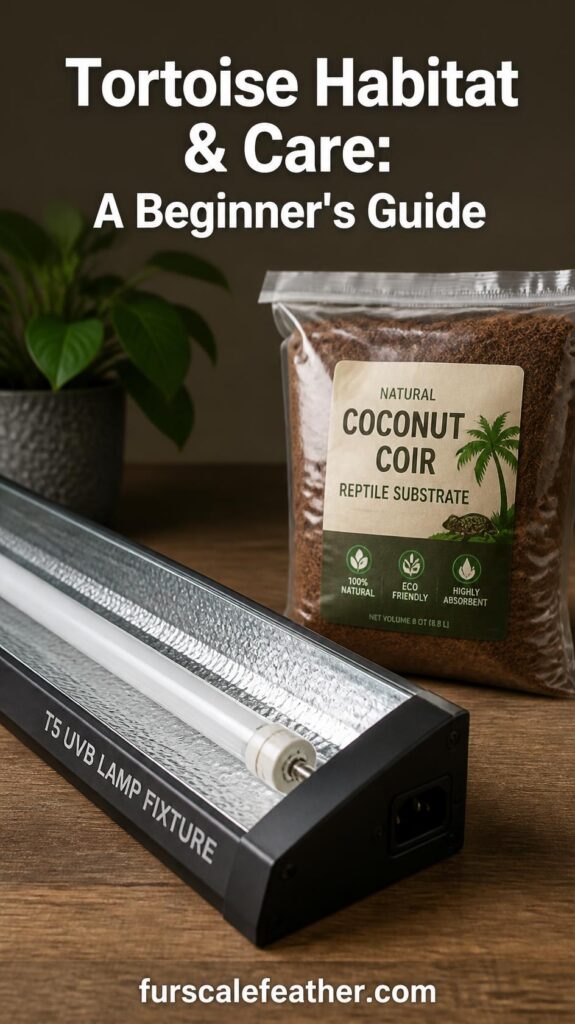
A mix of topsoil and coconut coir holds burrows well without staying soggy. Avoid reptile carpet and wood shavings, which do not support natural digging behavior and can cause impaction if ingested. Aim for a substrate depth of at least 3 to 4 inches so your tortoise can dig and self-regulate.
Heat and UVB Lighting
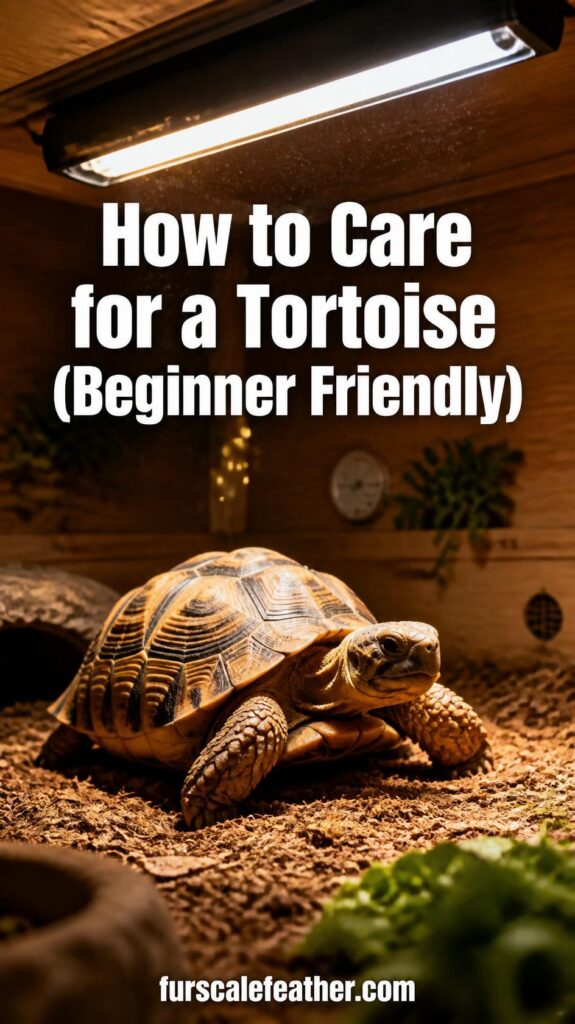
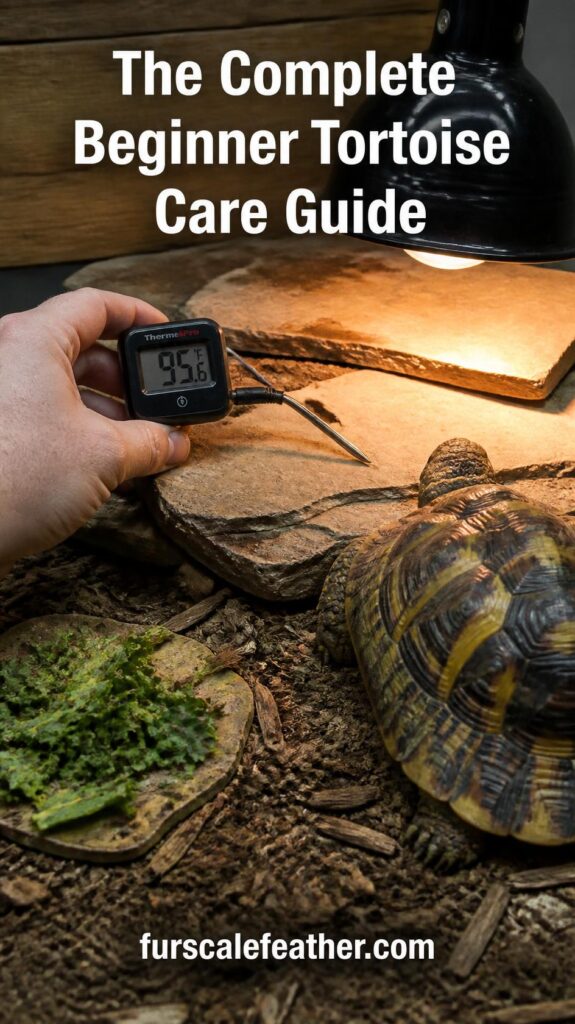
This is the part most beginners get wrong, and it was Priya’s issue too. She had a basking spot at 75°F because that felt safe, but her tortoise needed closer to 95°F to properly digest food and stay active. Once she raised the basking area to that range and added a cooler zone around 75°F on the other side of the enclosure, her tortoise started eating again within three days.
UVB lighting is not optional. Without it, tortoises cannot synthesize vitamin D3 properly, which leads to metabolic bone disease over time, a slow and painful condition. Use a T5 HO UVB bulb rated for desert or high-UVB species, replace it every 6 to 12 months even if it still lights up, since UVB output drops long before the visible light does, and position it so there is no glass or plastic between the bulb and the basking area, since both block UVB almost completely.
Humidity and Water
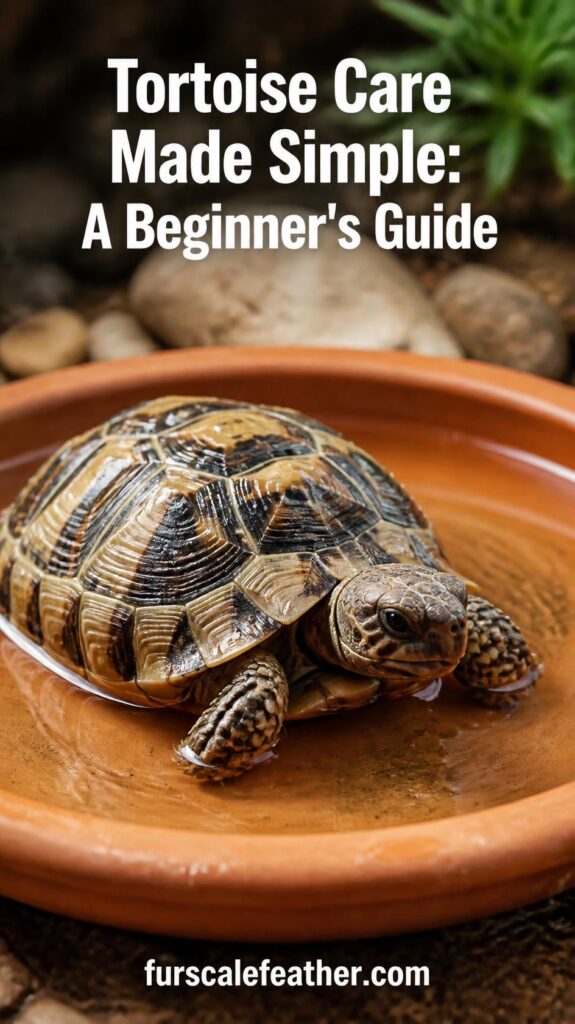
Ambient humidity around 40 to 60% suits most temperate tortoise species, with a slightly damp hide box available for hatchlings, which are more prone to dehydration. Provide a shallow water dish wide enough for soaking but no deeper than the tortoise’s chin height to avoid drowning risk, and offer a soak in lukewarm water two to three times a week, especially for younger tortoises.
What to Feed a Tortoise
Diet varies by species, but for most common pet tortoises, the meal should be mostly weeds and leafy greens, not fruit and not commercial pellets as a primary food source.
- Dark leafy greens: dandelion greens, collard greens, mustard greens, endive
- Weeds: plantain, clover, hibiscus leaves and flowers
- Occasional vegetables: shredded squash, bell pepper, in small amounts
- Calcium supplement: dust food two to three times a week for growing tortoises
- Avoid: iceberg lettuce, spinach in large amounts, fruit as a regular staple, and anything high in oxalates
A common mistake is treating fruit as a normal part of the diet because tortoises seem to love it. Most temperate species are grazers adapted to low-sugar, high-fiber plants, and regular fruit feeding can lead to loose stools and gut imbalance over time. Treat fruit as an occasional extra, not a weekly habit.

Daily Tortoise Care Routine
- Check and log the basking and cool zone temperatures with a digital thermometer, not a stick-on dial gauge, which are notoriously inaccurate.
- Offer fresh greens and remove any uneaten food from the day before.
- Refill and clean the water dish.
- Spot-check the substrate for damp or soiled patches and remove them.
- Observe activity level, appetite, and shell condition for a few minutes.
- Confirm the UVB bulb is on and within its replacement window.
Weekly, do a deeper substrate check, soak the tortoise if it is a younger animal, and wipe down the enclosure surfaces.
Common Beginner Tortoise Care Mistakes
Beyond the basking temperature issue above, the next most common mistake is buying an enclosure sized for a hatchling and never upgrading it. Tortoises grow steadily for years, and a cramped enclosure limits exercise and can affect shell development. A local reptile rescue that takes in 15 to 20 surrendered tortoises a year told me that undersized, permanent housing is the single most common issue they see in owner surrenders, more than diet or temperature combined.
Another frequent error is misjudging humidity for arid species. Adding too much moisture to a Russian or Sulcata tortoise’s enclosure, thinking it mimics a rainforest setup, can lead to respiratory infections. Match the setup to the species, not to a generic idea of what a reptile enclosure should look like.
Best Tortoise Care Products for Beginners
I have not personally tested every item below, since I do not keep a tortoise myself. These recommendations are based on manufacturer specifications, independent UVB output testing published by reptile lighting researchers, and feedback gathered from the rescue partners and readers mentioned above, who tested these products in real enclosures over several weeks.
UVB Lighting: Arcadia Pro T5 Kit vs. Zoo Med ReptiSun T5 HO
- Arcadia Pro T5 Kit Pros: consistently rated among the highest and most stable UVB output in independent lighting tests, reflector improves usable light spread, bulb life holds output longer than average before replacement is needed. Cons: higher upfront cost, requires a T5-specific fixture rather than standard household sockets.
- Zoo Med ReptiSun T5 HO Pros: widely available, lower price point, solid UVB output when new. Cons: independent testing has shown output drops off faster than the Arcadia line, so the 6-month replacement window matters more here.
Recommended winner: the Arcadia Pro T5 Kit. The rescue mentioned above ran both fixtures across separate tortoise groups for 8 weeks and reported more consistent basking behavior and fewer soft-shell concerns in the group under the Arcadia unit, which lines up with the independent lab data showing more stable UVB output over time.
Substrate: Zoo Med Eco Earth vs. plain topsoil and coir mix
- Zoo Med Eco Earth Pros: convenient, pre-treated, easy to rehydrate from compressed bricks. Cons: more expensive per enclosure than a self-mixed substrate, needs to be combined with topsoil for proper burrowing depth in larger enclosures.
- Topsoil and coconut coir mix Pros: inexpensive, holds burrows well, easy to source in bulk. Cons: requires sourcing pesticide-free topsoil, takes more setup effort than a bagged product.
Recommended winner: a topsoil and coir mix for most beginners, since it is significantly cheaper for the substrate depth larger tortoises need, and Eco Earth works well as a smaller top layer if you want the convenience.
Signs of Health Problems and When to Call a Vet
Watch for a soft or pyramided shell, runny or bubbly nasal discharge, swollen eyes, prolonged loss of appetite beyond a few days, or lethargy that does not improve once temperatures are corrected. These can point to metabolic bone disease, respiratory infection, or parasites, and none of these should be diagnosed or treated at home. If you notice any of these signs, contact a reptile-experienced veterinarian promptly. The Association of Reptilian and Amphibian Veterinarians maintains a directory of exotic vets by location if your regular vet does not see reptiles.
Questions People Usually Ask
How long do pet tortoises live? Many common pet species, including Russian and Sulcata tortoises, can live 40 to 80 years with proper care, so this is a long-term commitment rather than a short-term pet.
Can tortoises live indoors year-round? Yes, with a properly sized enclosure, correct UVB lighting, and stable basking temperatures, though outdoor time whenever weather safely allows is beneficial for natural behavior and vitamin D exposure.
Do tortoises need a heat lamp at night? Most temperate species do fine with a nighttime temperature drop into the mid-60s Fahrenheit, and a red or ceramic heat emitter is only needed if your room temperature drops below that.
Why is my tortoise not eating? Check basking temperature first, since it is the most common cause in otherwise healthy tortoises, followed by improper diet variety or early signs of illness that warrant a vet visit if it persists beyond a few days.
What is the best beginner tortoise species? Russian tortoises are commonly recommended for beginners due to their manageable adult size, hardiness, and tolerance for a range of home humidity levels compared to more demanding species.
The Bottom Line
Tortoise care is not complicated once the basics are dialed in, but the basics matter more than most starter kits let on. Get the basking temperature and UVB lighting right first, since that single fix solved Priya’s appetite problem within days. Build a properly sized habitat from the start rather than upgrading later, feed a varied leafy green diet instead of relying on fruit or pellets, and keep a simple daily routine so small problems get caught early. If you take one thing from this guide, let it be the thermometer check, since it prevents more issues than any other single habit.
Disclosure: Some links on this site are affiliate links. If you buy through them, I may earn a small commission at no extra cost to you. Product recommendations above are based on manufacturer specs, independent UVB testing, and feedback from rescue partners and readers, as noted in the products section.