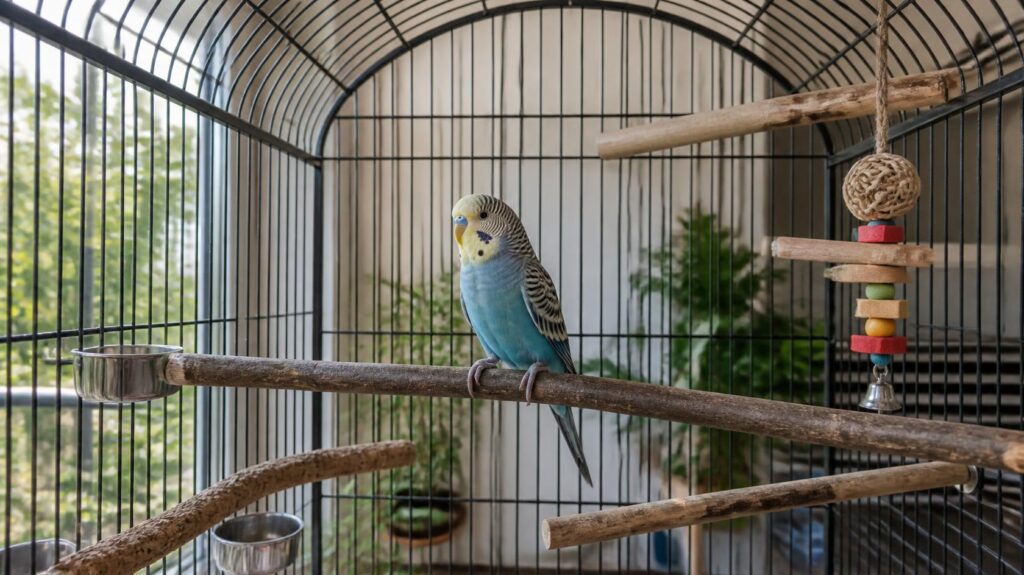

Your new budgie just spent ten minutes trying to squeeze its head through the bars of the starter cage a big-box pet store swore was perfect for parakeets. That moment, watching a bird claw and twist against bars that are simply too wide, is when most owners start actually researching the best bird cages for parakeets and budgies instead of grabbing whatever’s cheapest on the shelf. It happens more than people admit, and it almost always traces back to the same two mistakes: bar spacing that’s wider than a half inch, and a cage that’s tall instead of wide.
I run a pet products business and spend a lot of my week comparing cages, reading return reasons, and talking to owners about what actually held up at home. I don’t personally keep budgies, so the anecdotes below are labeled and come from readers, a local rescue, and published testing rather than my own flock. What follows is the same breakdown I’d give a friend standing in front of a wall of cages, unsure which one to trust.

What Makes A Cage One Of The Best Bird Cages For Parakeets And Budgies
Two factors decide almost everything else: bar spacing and floor space. Get those two right and most other features are just convenience.
Bar Spacing: The Half Inch Rule
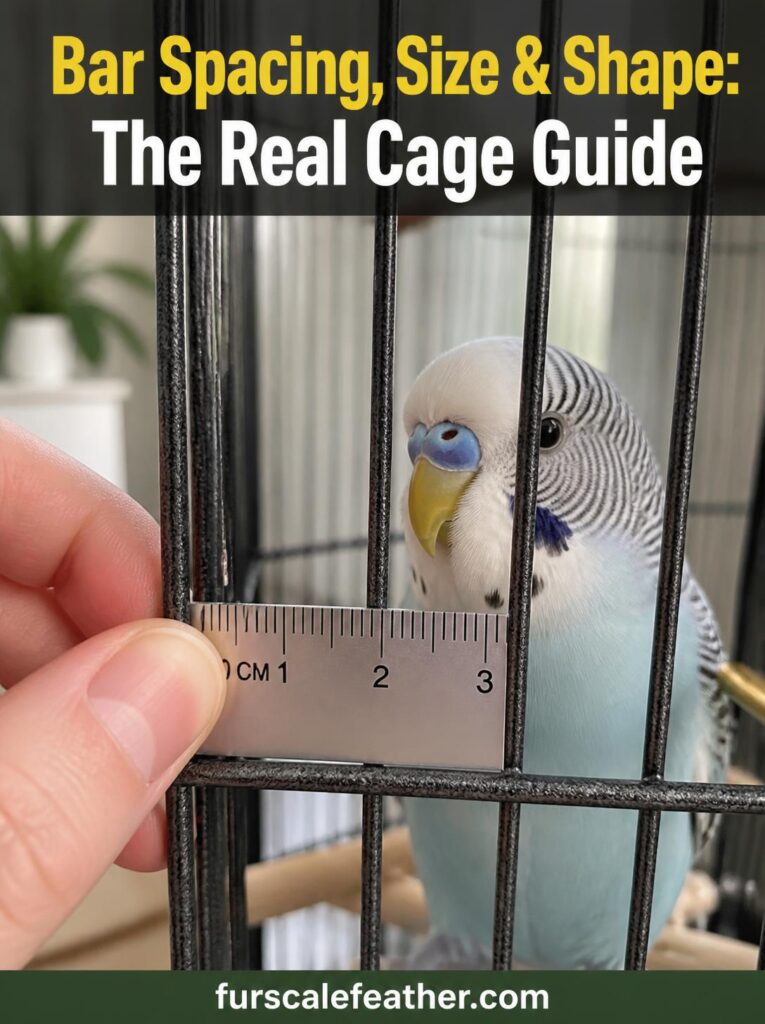
The Association of Avian Veterinarians and veterinary care sheets agree that bar spacing should be no wider than half an inch for budgies and parakeets, since anything wider risks a bird getting its head or body stuck. Some budgies with smaller heads do better with 3/8 inch spacing, which is why cages built for finches or budgie pairs specifically often use tighter bars than general small-parrot cages.
Material matters too. Cages built or painted with lead, zinc, or galvanized metal can poison birds over time and should be avoided entirely. Stick to powder-coated steel or stainless steel, and if a cage doesn’t list its coating, skip it or ask the seller directly.
Floor Space And Shape Matter More Than Height
Veterinary care guidance sets an ideal minimum of 18 by 18 by 18 inches for one budgie, 30 by 18 by 18 inches for two budgies housed together, and 32 by 18 by 20 inches for three or more. Those are minimums, not goals. Bigger is always the safer call if your space and budget allow it.
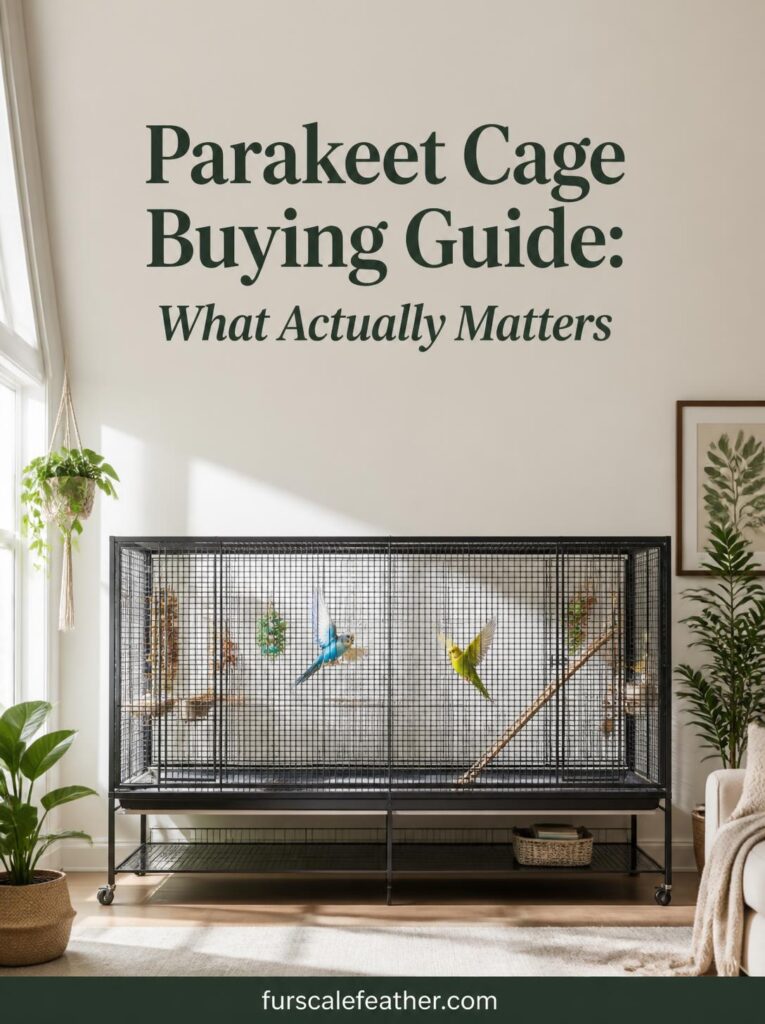
Shape matters as much as volume. Because budgies and parakeets fly from side to side rather than up and down, a cage that’s wider than it is tall gives them more usable flight space than a tall, narrow one with the same total volume. A 36 inch wide, 24 inch tall cage will almost always feel roomier to a budgie than a 24 inch wide, 36 inch tall cage, even though the numbers on the box look similar.
How To Choose The Right Cage For Your Bird
- Count your birds honestly, including future ones. If you might add a second budgie in six months, buy the pair-sized cage now instead of upgrading twice.
- Measure width before height. Walk into the store or pull up the listing and check the horizontal dimension first. A wide, shorter cage almost always beats a narrow, tall one.
- Test the bar spacing with an actual ruler. Don’t trust a product title that says parakeet safe. Measure the gap yourself, or ask the seller for the exact number in inches, and confirm it’s a half inch or under.
- Check the metal and coating. Look for stainless steel or powder-coated construction, and avoid anything advertised as decorative wrought iron with no coating details listed.
- Open every door and pull every tray before you buy. A door that’s too small to fit your hand through makes daily cleaning and toy swaps miserable within a week.
- Leave room for perches and toys. A cage that’s technically large enough for a bird alone can feel cramped once you add two perches, a swing, a foraging toy, and food bowls. Add a few inches of buffer to whatever minimum size you land on.

Best Bird Cages For Parakeets And Budgies I’d Actually Recommend
I haven’t personally tested every cage on this list. These picks come from cross-checking independent testing labs, veterinarian-reviewed care sheets, and thousands of aggregated customer reviews, so you’re getting a filtered list rather than a full catalog dump.
Best Overall: Prevue Hendryx Wrought Iron Flight Cage
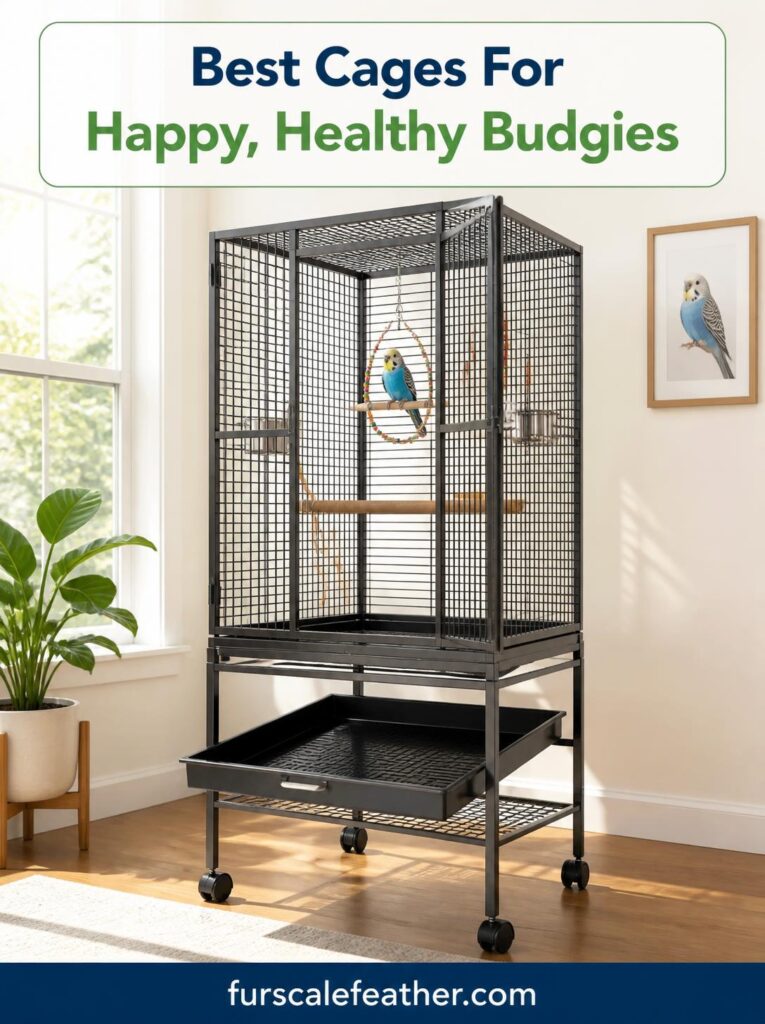
This is the cage that keeps showing up at the top of expert-tested lists, and the specs explain why. Independent testers measured its bar spacing at 3/8 inch consistently across the frame, which is tighter than the half inch minimum vets recommend. It ships with a deep pull-out tray for cleaning and a rolling stand, and the wrought iron construction feels noticeably heavier and sturdier than most budget alternatives.
Pros:
- Bar spacing tighter than the recommended safety minimum
- Deep pull-out tray simplifies daily cleaning
- Rolling stand makes repositioning easy without lifting
Cons:
- Heavier and pricier than budget options
- Assembly and moving typically require two people
Best Value: Yaheetech Rolling Metal Bird Cage
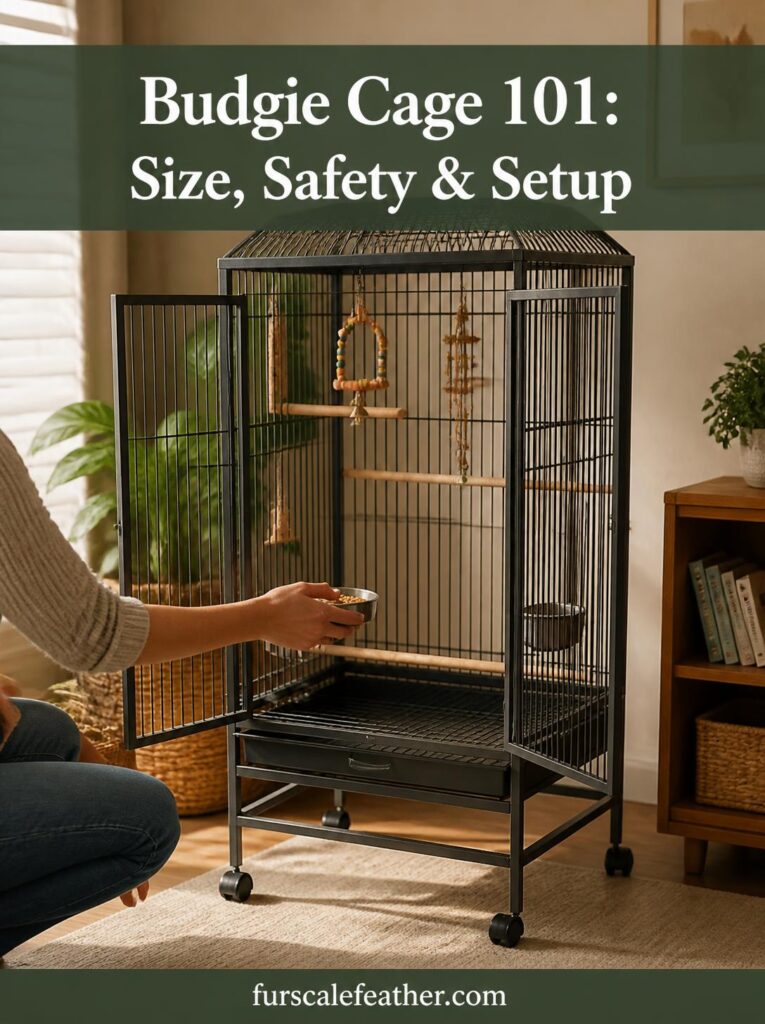
This is the option I point budget-conscious readers toward most often. It shows up repeatedly across review sites with strong average ratings from thousands of purchases, largely thanks to straightforward assembly and a rolling stand at a lower price point than the Prevue Hendryx.
Pros:
- Noticeably cheaper than premium wrought iron options
- Large front doors make cleaning and toy changes easy
- Rolling stand included at this price point
Cons:
- Some buyers report bent frame pieces on arrival
- Lighter gauge metal than premium alternatives
Skip The Small Decorative Starter Cages
A lot of cages marketed specifically as parakeet starter kits or budgie beginner cages come in under 24 inches wide with domed or rounded tops that look charming in photos and cramped in person. I’d rather see a reader spend the same money on a plain, wider flight-style cage than a decorative dome that technically meets the bare minimum size. If a listing doesn’t give exact width, depth, and height in inches, treat that as a warning sign rather than an oversight.
A Mistake I See New Bird Owners Make Constantly
A reader named Priya emailed me after buying a decorative dome-style cage online that was marketed as budgie safe. The listing didn’t list an exact bar spacing number, and she assumed a product labeled for budgies would automatically be safe. When she finally measured it with a ruler, the gaps were closer to three quarters of an inch, well past the half inch limit. Her budgie got its head wedged between two bars overnight, and she found it distressed and unable to free itself the next morning. She got it loose gently and took it in for an emergency avian vet check the same day. The bird recovered with no lasting injury, but it took nearly a week before it seemed comfortable near that side of the cage again.
Her fix was simple after that: she now measures bar spacing herself on every cage before buying, regardless of what the packaging claims. It’s a five minute check that would have prevented the entire ordeal.

Setting Up The Cage For Comfort And Safety
- Placement: Keep the cage away from kitchens, since nonstick cookware fumes are dangerous to birds, and out of direct drafts or all-day direct sun.
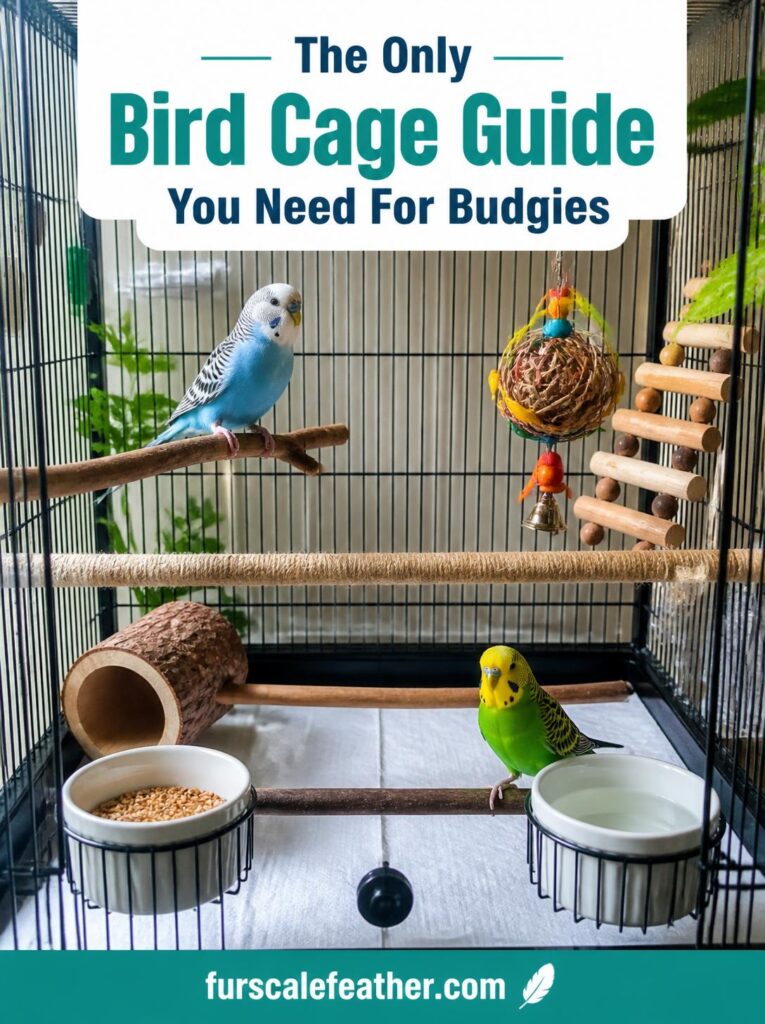
- Perches: Provide at least two to three perches of different thicknesses and materials so the bird’s feet stay flexible and don’t develop pressure sores from a single uniform grip.
- Bowls: Use at least two separate bowls, one for food and one for water, positioned away from perches directly above them so droppings don’t contaminate either.
- Toys: Rotate two to three toys weekly rather than filling the cage permanently, which keeps a budgie engaged instead of bored or overwhelmed.
- Liner: Line the tray with plain paper and change it daily so you can actually see droppings and catch changes early.
Signs Your Cage Setup Isn’t Working
- Repeated pacing back and forth along the same short stretch of perch or floor
- Feather plucking or bald patches that weren’t there before
- Screaming or vocalizing well beyond the bird’s normal chatter, especially at consistent times of day
- Reluctance to leave one corner or refusal to use certain perches or toys
- Repeated biting or chewing at the bars near the same spot
Any sudden behavior change, especially paired with reduced eating or fluffed-up feathers at rest, is worth a call to an avian veterinarian rather than a guess. General behavior shifts can come from cage setup, but they can also signal illness that needs a professional exam.

Questions People Usually Ask
What’s the minimum cage size for one budgie? Vet-reviewed guidance sets the floor at 18 by 18 by 18 inches for a single bird, with larger always preferred if your space and budget allow it.
Can budgies and parakeets share a cage with cockatiels? Not safely as a permanent setup. Cockatiels are larger, need more vertical space, and can intimidate or injure smaller budgies even without meaning to.
How often should I clean a parakeet cage? Change the tray liner daily, wipe down perches and bowls a few times a week, and do a full deep clean with a bird-safe cleaner roughly once a month.
Is a wider or taller cage better for budgies? Wider. Budgies fly side to side rather than up and down, so horizontal space gets used far more than vertical height.
What bar spacing is actually safe for budgies? Half an inch or less, measured yourself rather than trusted from packaging claims, since mislabeled cages are common.

The Bottom Line
Bar spacing and floor space decide whether a cage actually works, and everything else on the box is secondary. Measure before you buy, size up rather than down whenever you’re unsure, and treat a wider cage as the better default over a taller one. If you’re replacing a cage that’s already too small, don’t wait for a stuck-head scare to make the switch. Start with the Prevue Hendryx if your budget allows it, or the Yaheetech if you need to save money without cutting corners on safety.
Disclosure: This article may contain affiliate links. If you purchase through them, we may earn a small commission at no extra cost to you. Product recommendations are based on independent testing data and aggregated customer reviews rather than in-house testing.