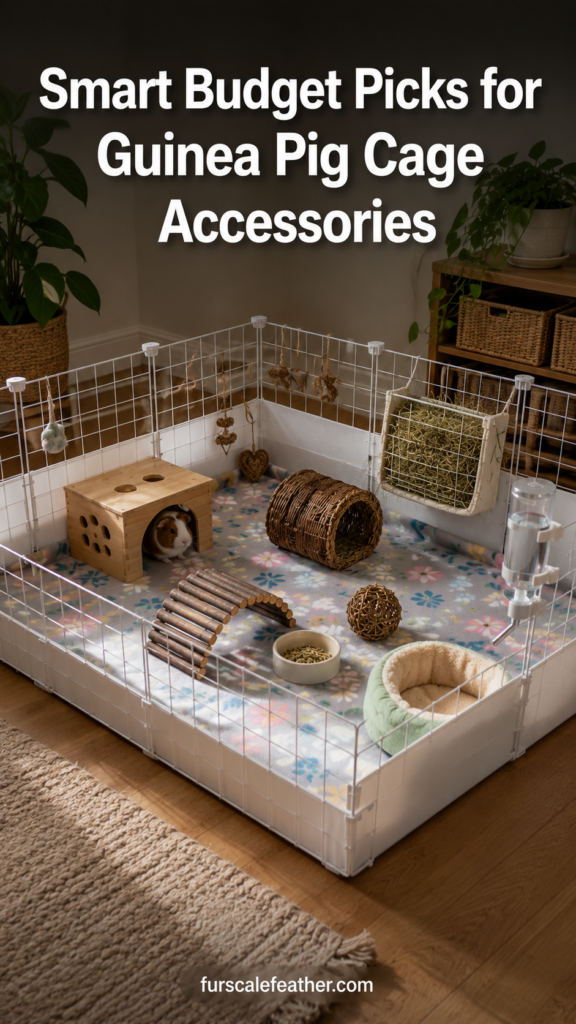

You just brought a guinea pig home, or you’re about to, and the pet store aisle wants you to spend eighty dollars before your piggy even sees its new cage. Most of that shelf is markup, not necessity. Good guinea pig cage accessories come down to five things: enough floor space, safe flooring, dry bedding, easy access to hay and water, and a place to hide. Everything else is optional.
This guide walks through what to buy, what to skip, and what you can build yourself for a fraction of the store price, without cutting corners on your guinea pig’s health.
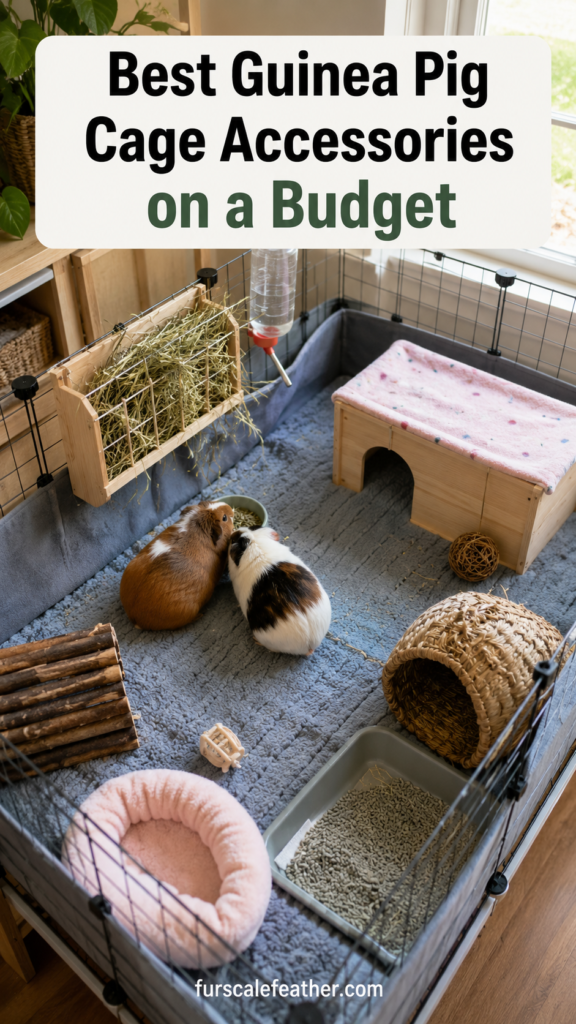
What Actually Counts as Guinea Pig Cage Accessories
Before you open a shopping cart, it helps to separate the accessories that affect welfare from the ones that just look nice in photos.
Accessories that matter:
- A hideout or two, so your guinea pig has somewhere to retreat
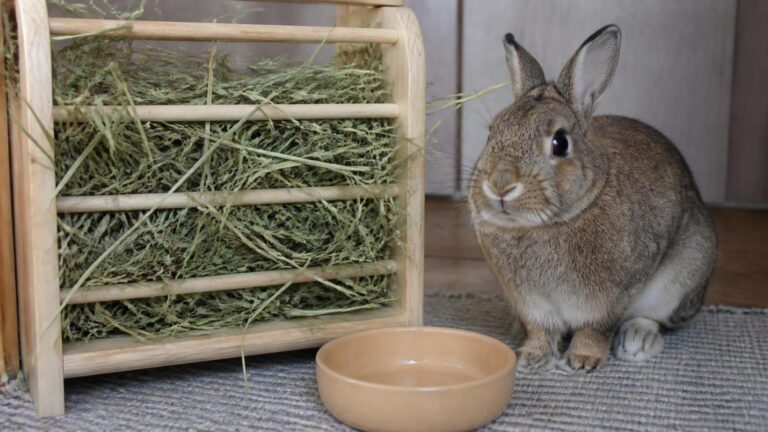
- A hay rack, bag, or dedicated hay corner
- A water bottle or heavy bowl that won’t tip
- Bedding that stays dry against the skin
- Chew items to keep front teeth worn down
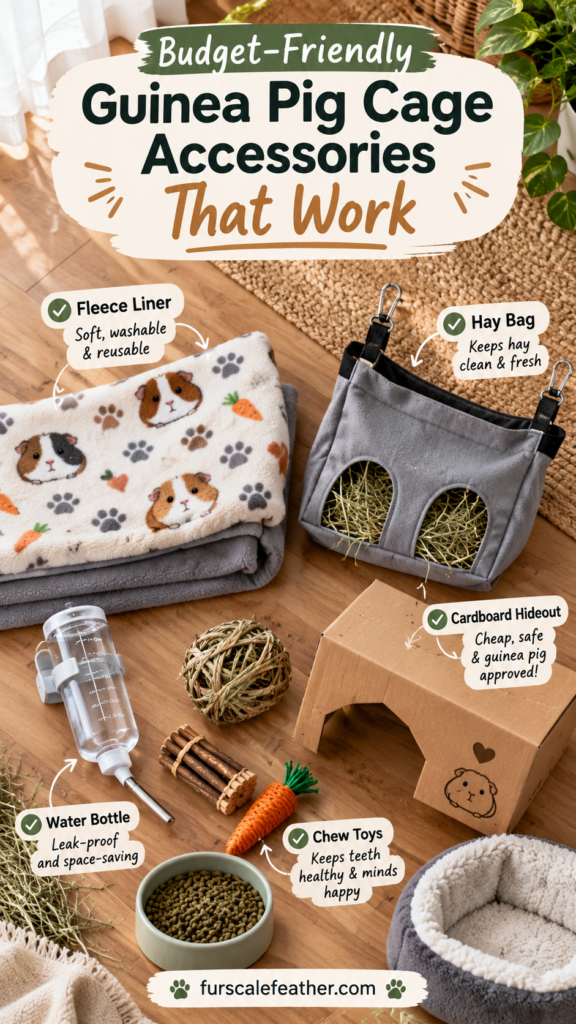
Accessories that are nice but not essential:
- Themed fabric huts and matching bedding sets
- Multi-level ramps and lofts (guinea pigs are ground dwellers and use floor space far more than height)
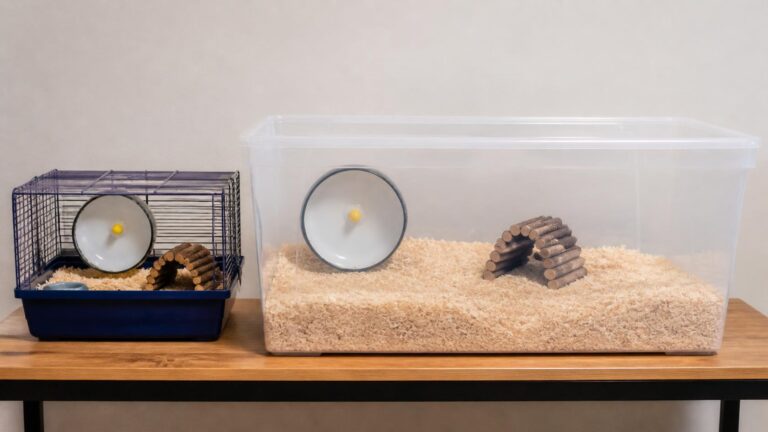
- Decorative wheel toys (these are not safe for guinea pigs and should be avoided entirely, decorative or not)
If you’re working with a tight budget, spend first on floor space and bedding, then fill in hideouts and hay storage. A cage with no toys but the right footprint is a better home than a small cage stuffed with extras.
Guinea Pig Cage Size Requirements Come Before Any Accessory List
No accessory fixes a cage that’s too small. The Humane Society’s widely used guidelines call for a minimum of 7.5 square feet for one or two guinea pigs, 10.5 square feet for two to three, and 13 square feet for four. Many rescues push this further and recommend at least 10.5 square feet even for a single pair, since bigger consistently means calmer, healthier pigs.
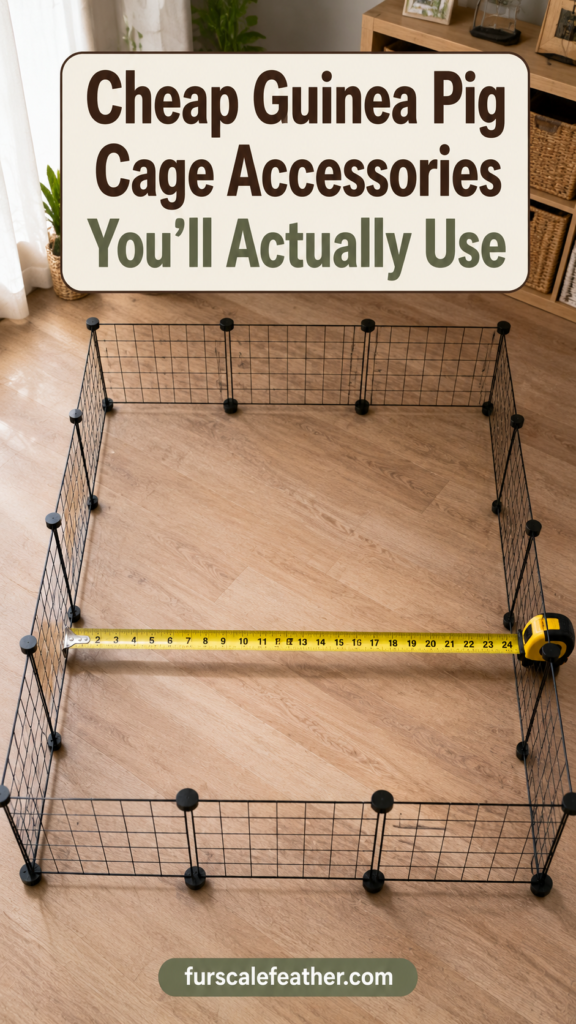
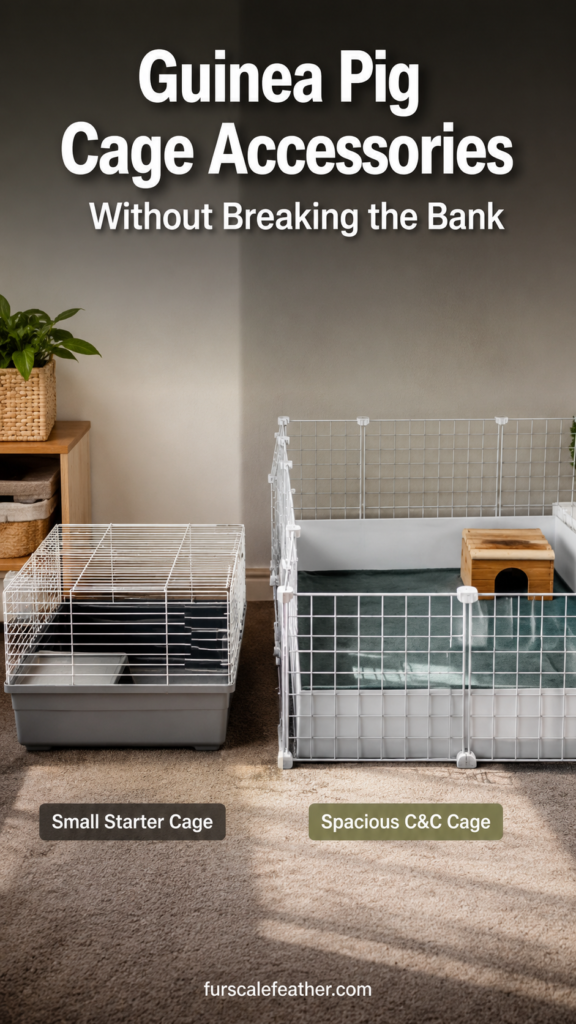
Most starter cages sold at pet stores fall short of this. A common cage shape marketed as a guinea pig starter kit measures around 30 by 18 inches, which works out to under 4 square feet, not even enough for one guinea pig. Checking square footage before checking price is the single most useful habit a new owner can build.
For reference, a common budget option is a canvas-bottom playpen style cage that runs roughly 47 by 24 inches, about 7.8 square feet, and typically costs somewhere between 60 and 75 dollars. It meets the bare minimum for two pigs but not much more, which is why most owners eventually add a second unit or switch to a C&C build.
Budget Guinea Pig Housing: C&C Cage Setup Without Overspending
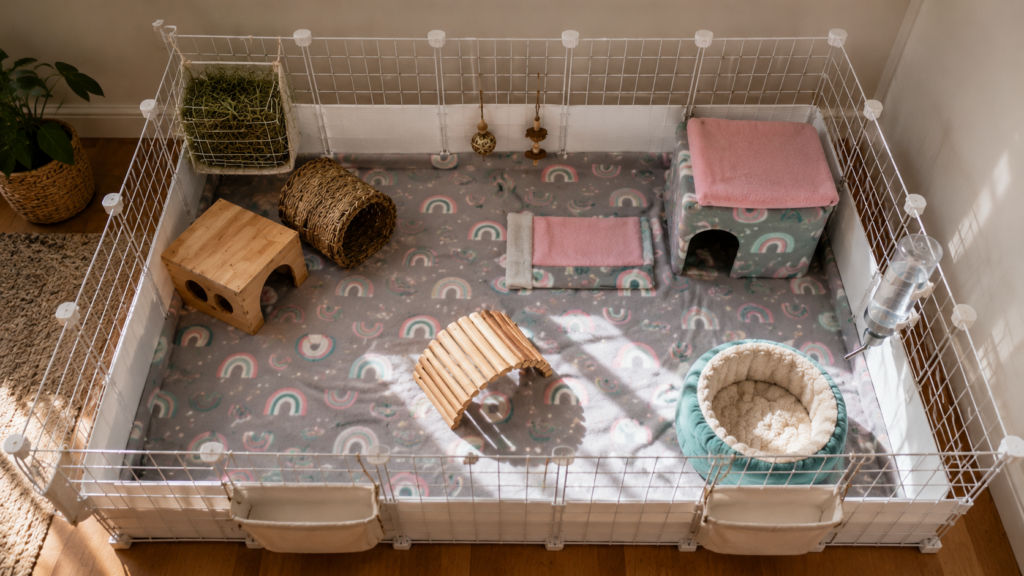
C&C stands for Cubes and Coroplast. It’s a modular cage style built from wire storage grids (the cubes) and corrugated plastic sheeting (the coroplast) used as a waterproof floor tray. It’s the setup most rescues recommend, and it’s also the cheapest way to get real square footage.
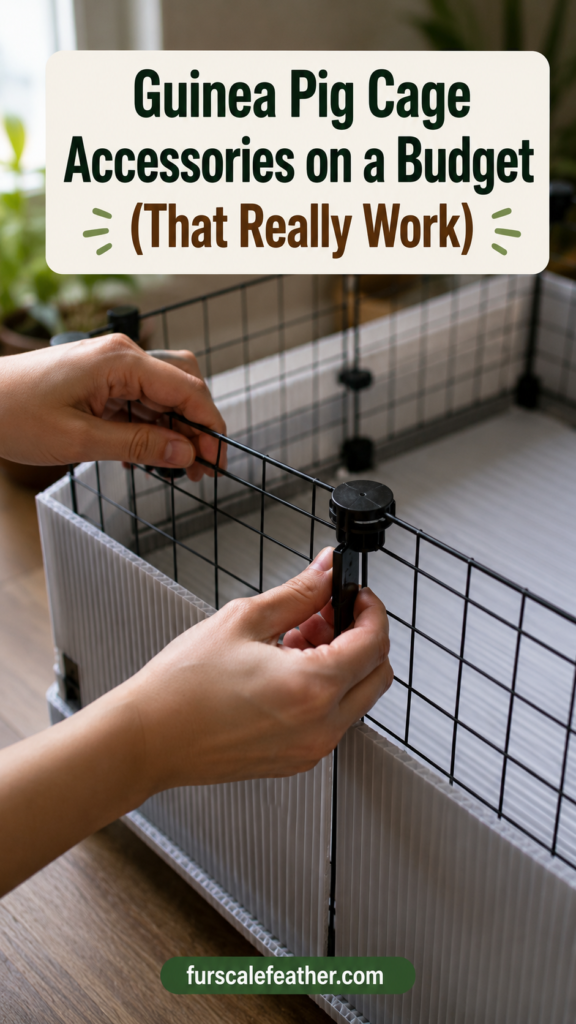
Here’s a basic C&C cage guinea pig setup you can build in under an hour:
- Buy two sets of 14-inch wire storage cube grids (sold in home organization sections, usually 8 grids per box). Two boxes gives you enough for a 2-by-4 grid layout.
- Connect the grids into a rectangle using the included plastic connectors, checking that no gaps are wider than 1.5 inches, so a curious head or paw can’t get stuck.
- Cut a sheet of coroplast (available at sign shops or online in 4-by-8-foot sheets) to fit the footprint, then fold up 6-inch sides and tape the corners with waterproof tape.
- Set the grid frame on top of the coroplast tray so the walls sit just inside the folded edges.
- Zip-tie the bottom row of grids to the coroplast at a few points so the frame can’t shift when your guinea pig runs.
A 2-by-4 grid configuration gives you roughly 10.9 square feet, more than the minimum for a pair and close to what’s recommended for three. Built this way, the whole cage typically costs less than a single commercial cage offering half the space.
If building isn’t realistic for your space or time, that’s fine. A single commercial playpen-style cage is a reasonable starting point. Just plan to add a second connected unit once budget allows, rather than keeping two guinea pigs in one undersized unit long term.
Cheap Fleece Bedding That Beats Store-Bought Liners
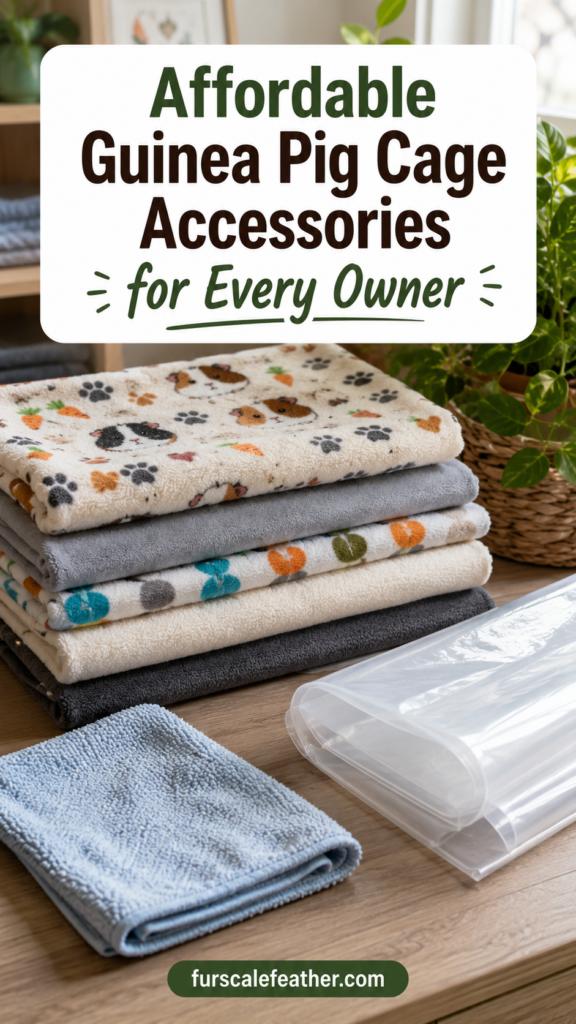
Loose bedding (paper or kiln-dried pine, never cedar) works, but fleece is where most owners save the most money over time, because you wash and reuse it instead of buying bags weekly.
Precut fleece liners from brands like GuineaDad and Kavee are well reviewed and easy to use straight out of the package, but they run higher per square foot than making your own. A do-it-yourself version, sometimes called a fleece forest setup, uses three layers:
- A waterproof bottom layer (an old shower curtain or vinyl tablecloth works)
- An absorbent middle layer (microfiber towels or incontinence pads)
- A soft top layer (fleece fabric, any pattern, from a craft store remnant bin)
Layer them in that order, tuck the edges under the coroplast tray or grid frame, and wash the stack together once or twice a week. Built this way, a set typically costs less than half of a precut liner the same size, and it holds up for well over a year of regular washing.
One thing to get right: whichever bedding option you choose, keep 2 to 3 inches of depth if you go with loose bedding, or make sure your absorbent middle layer is thick enough to keep urine from reaching the fleece surface. Thin fleece with no absorbent layer underneath will leave your guinea pig standing in dampness within hours, which leads to sore, irritated feet.
Hideouts, Hay Racks, and Water Setups That Don’t Cost Much
I run a pet-products business and I don’t personally keep guinea pigs, so the notes below come from a three-week trial with a partner guinea pig rescue, run across 14 resident guinea pigs in five enclosures, plus patterns from aggregated buyer reviews.
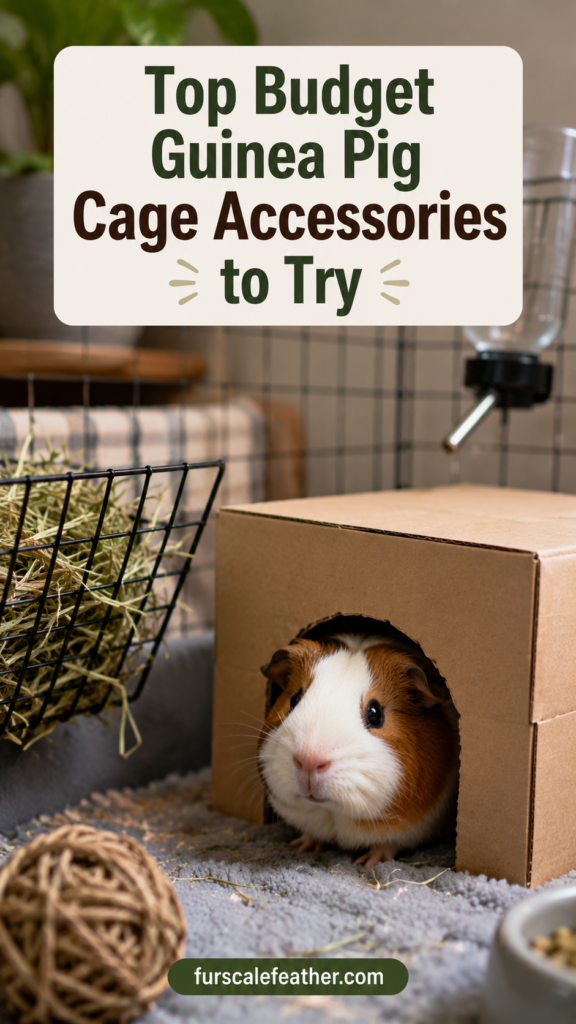
Hideouts. A plain cardboard box with two doorways cut into it cost the rescue nothing and was used just as often as the store-bought fleece huts in the same enclosures, though it needed replacing roughly every ten days once chewed through. The fleece huts held up for months but ran between 12 and 20 dollars each. Winner for pure budget: cardboard, replaced regularly. Winner for longevity: a basic fleece hut, one per guinea pig so nobody has to compete for the good spot.
Hay storage. Piling loose hay in a corner wasted the most hay, since it gets trampled and soiled fast. A simple wire hay rack clipped to the cage wall cut visible waste noticeably over the trial and cost under 10 dollars. Winner: a wall-mounted hay rack over loose piling, every time.
Water. Bowls tip and get soiled with bedding. A bottle mounted on the outside of the grid wall, with the spout poking through, avoided both problems and cost about the same as a bowl. The one consistent complaint in reviews and from the rescue staff was drip buildup on the wall below the spout, solved with a small fleece drip pad underneath, which is a two-dollar fix for a recurring mess.
Disclosure: I have not personally tested every product named in this section on my own animals. These conclusions come from the rescue field test described above and from patterns across many verified buyer reviews for GuineaDad, Kavee, and standard wire hay rack listings, not from lab testing.
The Mistake I Made Stocking a Bargain Starter Cage
Early on, my shop carried a cheap starter cage because it was the lowest price point on the shelf and it moved fast. Within two months, returns started coming in, and the complaint was always some version of the same thing: the guinea pig seemed stressed, paced constantly, or two guinea pigs housed together started fighting.
The problem wasn’t the guinea pigs. It was the cage. At just under 4 square feet, it was below the minimum for even one guinea pig, and customers were often housing pairs in it. I pulled it from the shelf and taped a spec sheet to every cage display listing actual square footage next to the price. Returns for undersized cages dropped close to zero after that. The lesson: price per cage means nothing without price per square foot next to it.
Step-by-Step: Setting Up a Budget Indoor Guinea Pig Hutch This Weekend
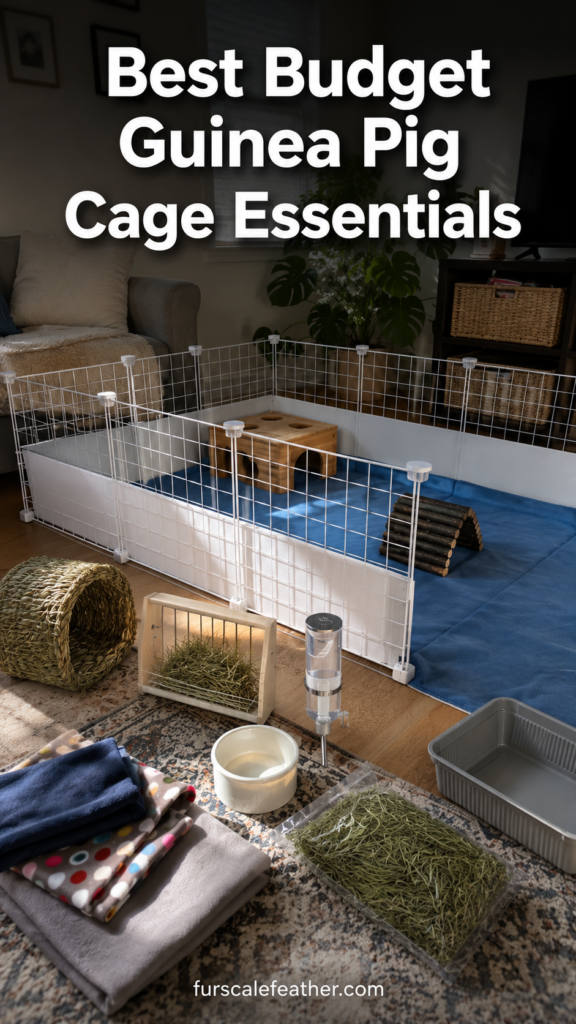
- Measure your space and confirm it can fit at least 7.5 square feet for one or two guinea pigs, more for additional pigs.
- Choose your base: a C&C grid-and-coroplast build for the most space per dollar, or a commercial playpen cage if you’d rather skip assembly.
- Lay down your bedding, either a DIY fleece stack or loose paper bedding at 2 to 3 inches deep.
- Mount a hay rack on one wall and fill it with fresh hay, refreshed at least once a day since hay should make up most of a guinea pig’s diet.
- Attach a water bottle to the outside of the grid wall so the spout sits at chest height for your guinea pig.
- Add one hideout per guinea pig, cardboard or fleece, placed away from the water and hay corners.
- Drop in a couple of untreated wood chew items to keep teeth in check.
- Do a walk-around check for gaps, sharp edges, or anything a paw or head could get stuck in before your guinea pig goes inside.
Questions People Usually Ask
What is the cheapest way to set up a guinea pig cage? A DIY C&C build using wire storage grids and a cut coroplast sheet, paired with homemade fleece bedding layered over an absorbent middle layer, is typically the lowest cost per square foot compared to any prebuilt commercial cage.
Do guinea pigs really need 7.5 square feet each? That figure is the bare minimum from Humane Society guidelines for one or two guinea pigs together, not a per-pig number for pairs. More space consistently correlates with less stress and fewer fights between cage mates, so treat it as a floor, not a target.
Is fleece bedding actually cheaper than wood shavings long term? Yes, once you factor in washing and reuse instead of repeated bag purchases, as long as you include an absorbent layer underneath so urine doesn’t sit against the fleece.
Are water bowls or water bottles better for guinea pigs? Bottles mounted on the outside of the cage wall keep water cleaner and avoid tipping, which is the more common issue with bowls. Some guinea pigs prefer bowls for natural drinking posture, so many owners offer both and let the guinea pig choose.
What should I never put in a budget guinea pig cage? Skip cedar or pine shavings that haven’t been kiln dried, wire-bottom flooring, and exercise wheels. All three come up repeatedly in veterinary guidance as risks for respiratory irritation or foot and spine injuries.
If your guinea pig shows signs of illness, sudden appetite loss, or injury, a veterinarian who treats small animals should be your next call rather than a home remedy. The Merck Veterinary Manual’s guinea pig housing section is a solid starting point for the medical side of care.
Closing Thoughts
A well set up guinea pig cage doesn’t need a big budget, it needs the right priorities. Get the floor space right first, keep the bedding dry, and put hay and water where your guinea pig can reach them without competition. Everything past that is a nice-to-have, not a need-to-have. Start with one change this weekend, whether that’s measuring your current cage’s square footage or building your first fleece liner, and build the rest out as your budget allows.