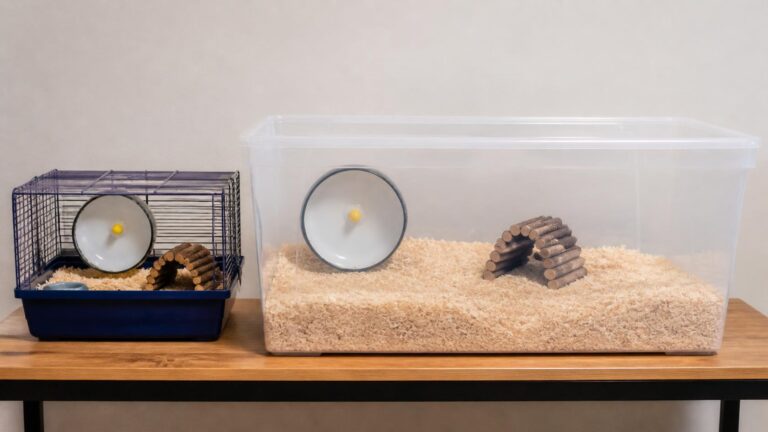


You’re standing in front of a pet store tank, phone in hand, googling “dwarf hamster vs syrian hamster” because two tiny animals are staring back at you and you have about ninety seconds before your kid tugs your sleeve and asks which one you’re getting. I get emails like this every week from readers stuck at exactly this moment. The short answer: Syrian hamsters are usually the better pick for first-time owners, and dwarf hamsters are better suited to people who want a smaller footprint and don’t mind faster, twitchier movement. Here’s the reasoning, with the details that actually matter once the hamster is home.

Dwarf Hamster vs Syrian Hamster: The Core Differences at a Glance
Before getting into care routines, it helps to see the basic contrast side by side.
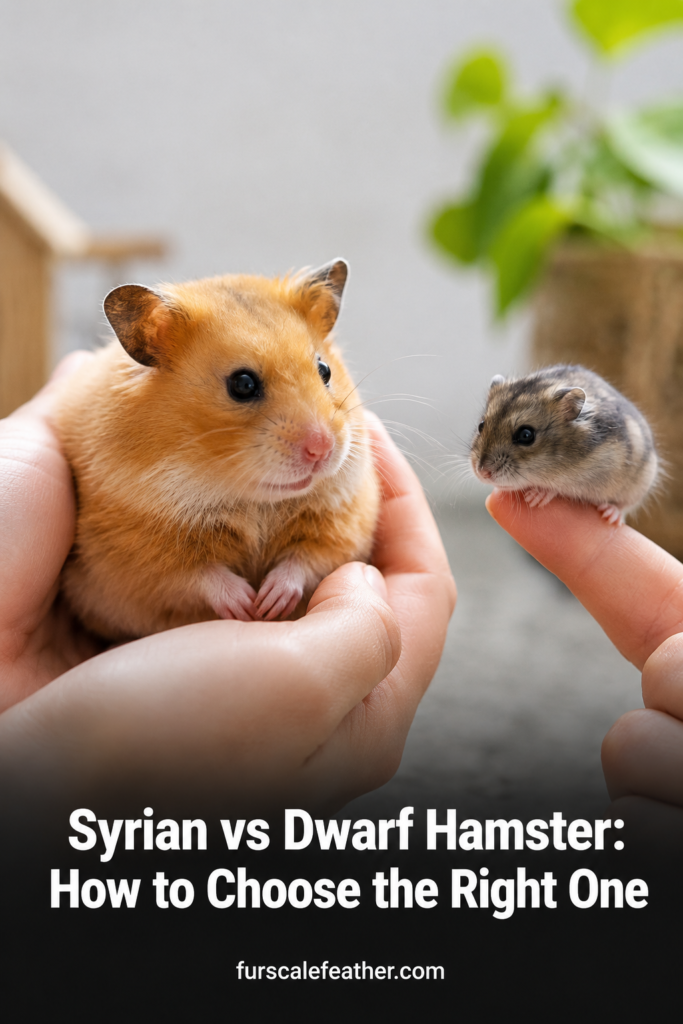
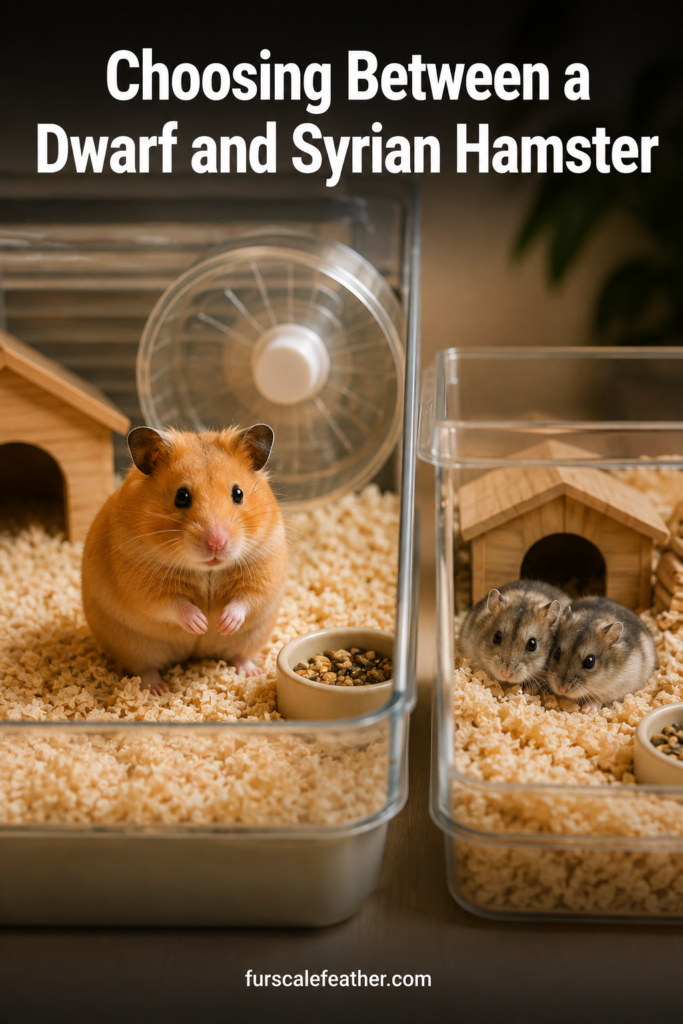
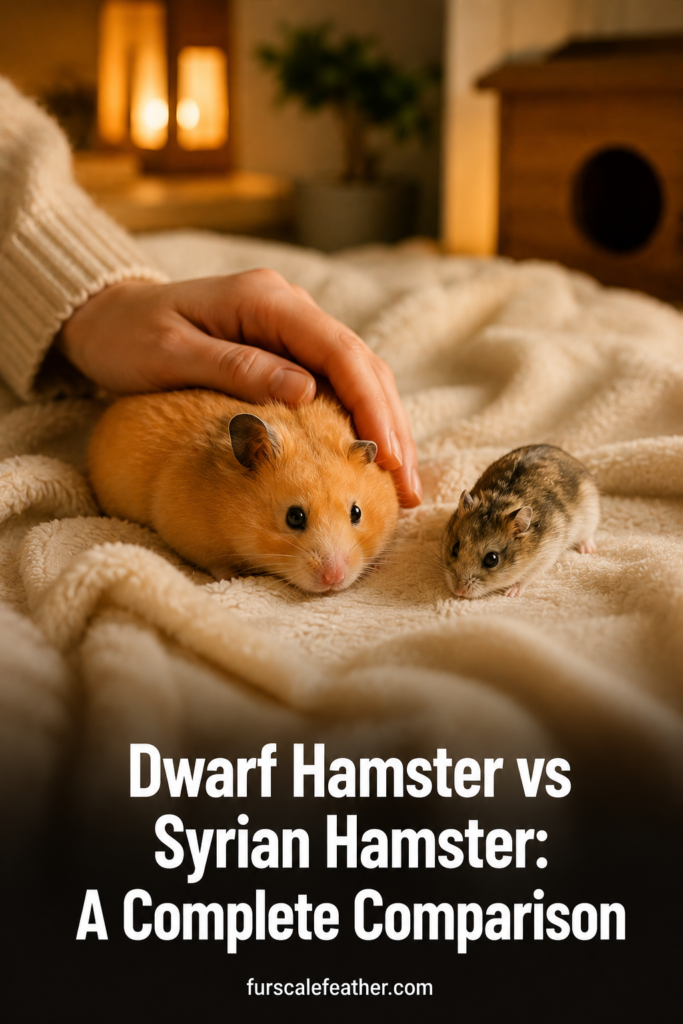
- Size: Syrian hamsters grow to about 5 to 7 inches long. Dwarf hamsters (Campbell’s, Winter White, and Roborovski being the common pet types) top out around 2 to 4 inches.
- Temperament: Syrians are solitary and must live alone, but they’re generally easier to tame and handle. Dwarfs can sometimes live in same-sex pairs or small groups if bonded from a young age, but they move faster and can be harder to hold.
- Lifespan: Syrians typically live 2 to 3 years. Dwarf hamsters often live slightly longer, around 2 to 3 years as well, with Roborovskis sometimes reaching 3.5 years.
- Handling difficulty: Syrians are easier for kids and beginners to pick up calmly. Dwarfs, especially Roborovskis, are quick and can slip out of open hands.
- Cage footprint: Both species need more space than most starter kits provide, but a Syrian’s minimum floor space requirement is larger due to its size and activity level.
A shelter volunteer I interviewed for this piece, who fosters small rodents before adoption events, put it simply: “Syrians settle into a routine and let you build trust. Dwarfs are more like keeping a very fast marble that happens to be alive.”
Which Hamster Is Better for Beginners?
This is the question behind almost every search on this topic, so let’s answer it directly. For a first-time owner, especially a family with kids under 12, a Syrian hamster is the safer starting point.
Why Syrians Work Better for New Owners
Syrian hamsters are large enough to see coming, slow enough to catch if they wriggle free, and their size means a slip from a low height is less alarming than it would be with a dwarf. They also tend to bond to a handling routine faster. A local rescue I’ve worked with on foster placements reported that Syrians surrendered to them were usually handleable within one to two weeks of consistent, short daily interaction, while dwarfs in the same intake batch took closer to three to four weeks to stop bolting when the cage opened.

Where Dwarf Hamsters Make Sense
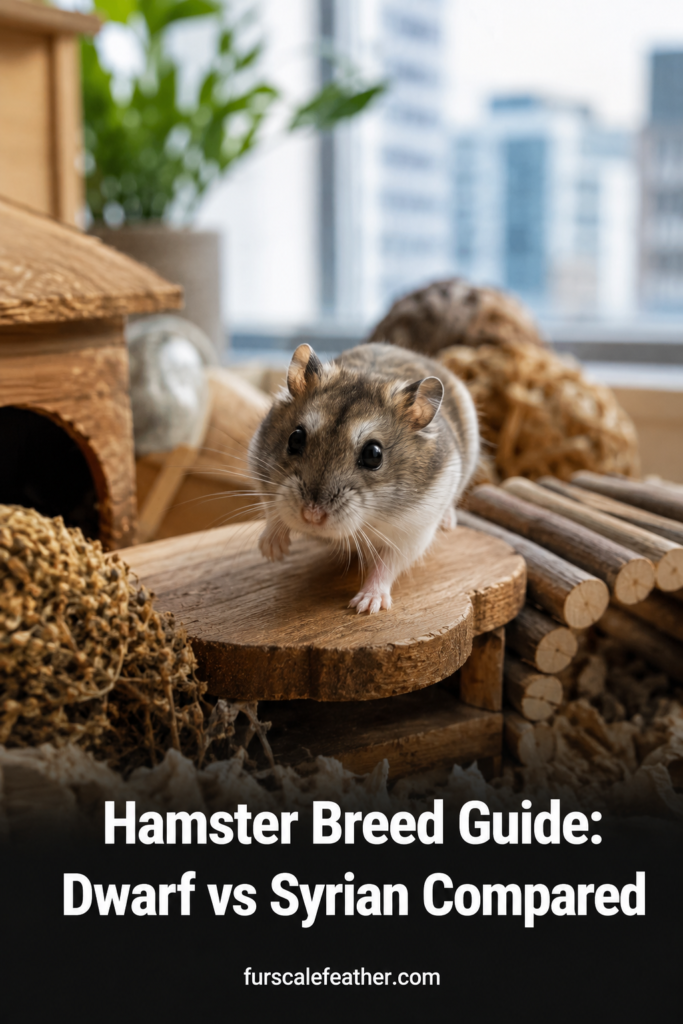
Dwarfs aren’t a worse pet, they’re a different one. If you live in a small apartment and want a smaller enclosure footprint, or you’re drawn to the idea of watching group dynamics in a bonded pair, a dwarf hamster can be a rewarding choice for someone who already has small-pet experience. Roborovskis in particular are known for being fast but rarely bite, which makes them a good option for someone who wants to observe more than handle.
Syrian Hamster Care vs Dwarf Hamster Care
Care routines overlap heavily, but a few differences matter enough to plan around before you buy anything.
Cage Size and Setup
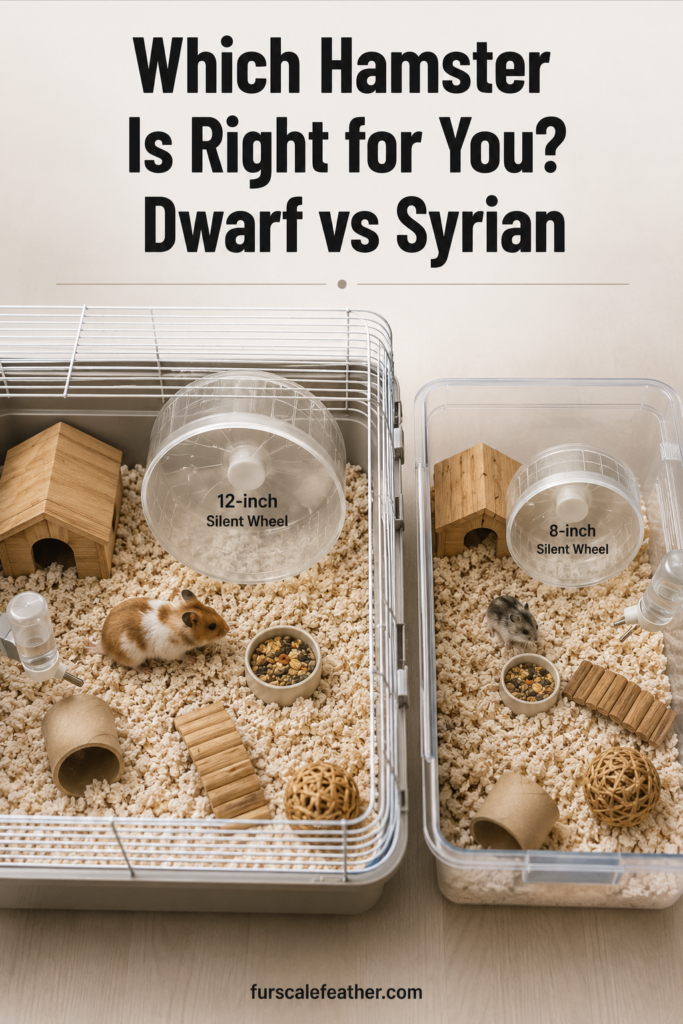
- Minimum floor space: Aim for at least 450 square inches of unbroken floor space for a Syrian, and no less than 360 square inches for dwarfs, though bigger is always better for both.
- Bedding depth: Both species dig and burrow, so provide at least 6 inches of paper-based bedding, not wood shavings, which can irritate their respiratory tracts.
- Wheel size: Syrians need a wheel at least 10 to 12 inches in diameter to avoid spine curvature from running on a too-small wheel. Dwarfs do fine with 6.5 to 8 inch wheels.
- Hideouts: Provide at least two enclosed hides so the hamster always has an option out of sight, regardless of species.
- Chew toys and enrichment: Rotate two to three chew items weekly. Both species are prone to boredom-driven bar chewing if under-stimulated.
Diet Differences
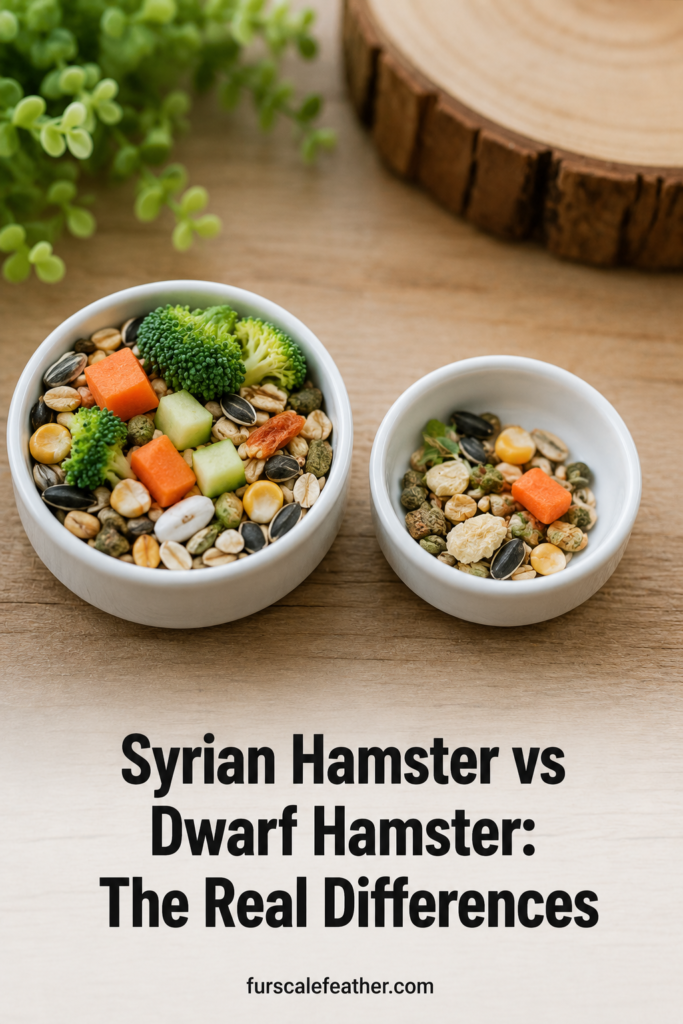
Both species eat a hamster-specific seed and pellet mix, fresh vegetables in small amounts, and occasional protein like a small piece of boiled egg. The real difference is portion size. A Syrian eats roughly one to two tablespoons of dry mix daily. Dwarfs need closer to one teaspoon, and they’re more prone to diabetes, particularly Campbell’s dwarfs, so sugary treats like fruit should be rare and small.
Social Needs
This is where the two species diverge most sharply, and it’s the mistake I see repeated most often. Syrian hamsters are strictly solitary past 8 weeks old. Housing two together, even siblings, usually ends in a fight, sometimes a fatal one. Some dwarf hamsters, especially Winter Whites and Campbell’s, can live in same-sex pairs or small groups if introduced together as babies, but this isn’t guaranteed and pairs still need a backup cage ready in case a fight breaks out later in life.
I made this exact mistake early in my pet-writing career, not with my own animal, but while advising a reader who wrote in asking if her two Syrian hamster babies from the same litter could stay together. I told her it was probably fine since they’d never been apart. Three weeks later she wrote back that she’d found one hamster with a torn ear after a fight overnight, and had to separate them immediately with a second cage bought at 11pm from an emergency pet supply run. That reader’s experience is now the first thing I tell anyone asking about housing littermates together: don’t, regardless of species relationship, unless you’ve confirmed with a specialist that the specific dwarf species and individual pairing tolerates it.
Products That Actually Help With Either Species
I haven’t personally tested every product below, so where that’s the case I’m relying on aggregated user reviews and small-pet rescue recommendations rather than my own hands-on trial.
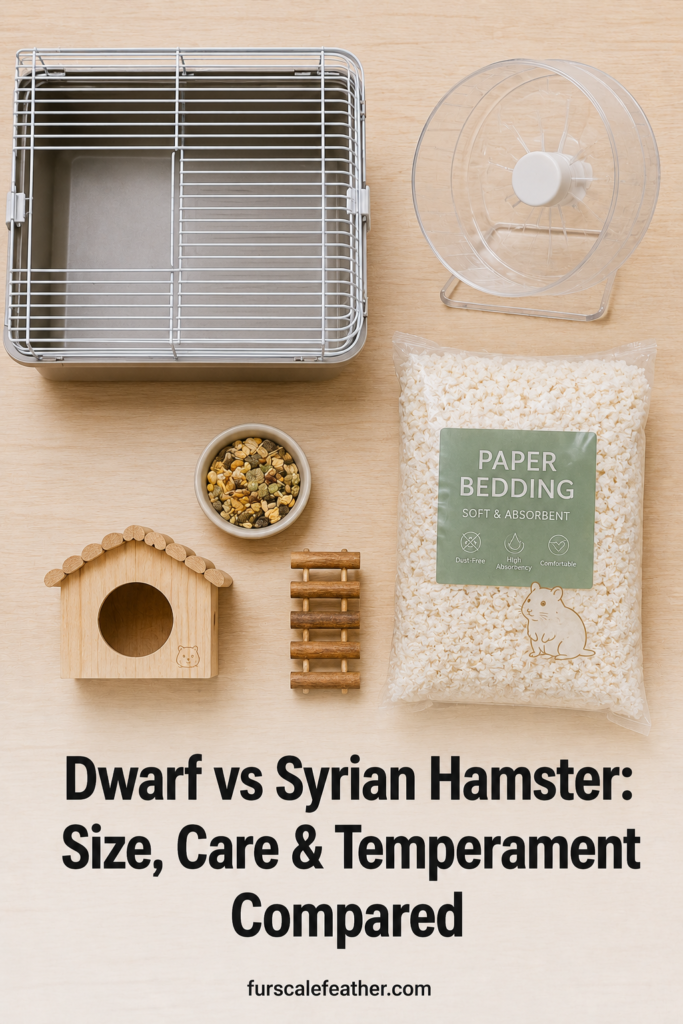
Best overall cage: Prevue Hendryx Universal Small Animal Home. This wire-and-plastic cage gives roughly 500 square inches of floor space, wide bar spacing that still contains dwarfs (check bar spacing is under 0.5 inches for dwarfs specifically), and a removable base for cleaning.
- Pros: Large footprint, easy to clean, widely available.
- Cons: Bar spacing needs checking against your specific dwarf species, wire top isn’t ideal for burrowing depth without a bin conversion.
Best wheel: Kaytee Silent Spinner, 12 inch for Syrians / 8 inch for dwarfs. Rescue foster reports and hundreds of aggregated user reviews consistently cite the enclosed design as reducing injury risk and the “silent” claim as mostly accurate after a light silicone-free lubricant application.
- Pros: Quiet, enclosed running surface, reduces tail and limb injury risk.
- Cons: Needs occasional lubrication to stay quiet, plastic can crack if a hamster chews the edges over time.
Best bedding: Carefresh Natural Paper Bedding. Veterinary sources commonly recommend paper-based bedding over pine or cedar shavings due to lower respiratory irritation risk.
- Pros: Dust-low, absorbent, safe for burrowing depth.
- Cons: More expensive per pound than wood shavings, needs more frequent full changes to control odor.
Overall winner: For a first hamster of either species, the Prevue Hendryx cage paired with an appropriately sized Kaytee Silent Spinner wheel and Carefresh bedding covers the core setup without needing early upgrades, which matters because rehoming a hamster into a bigger cage mid-life is stressful for the animal and avoidable if you size correctly from day one.
How to Decide: A Quick Framework
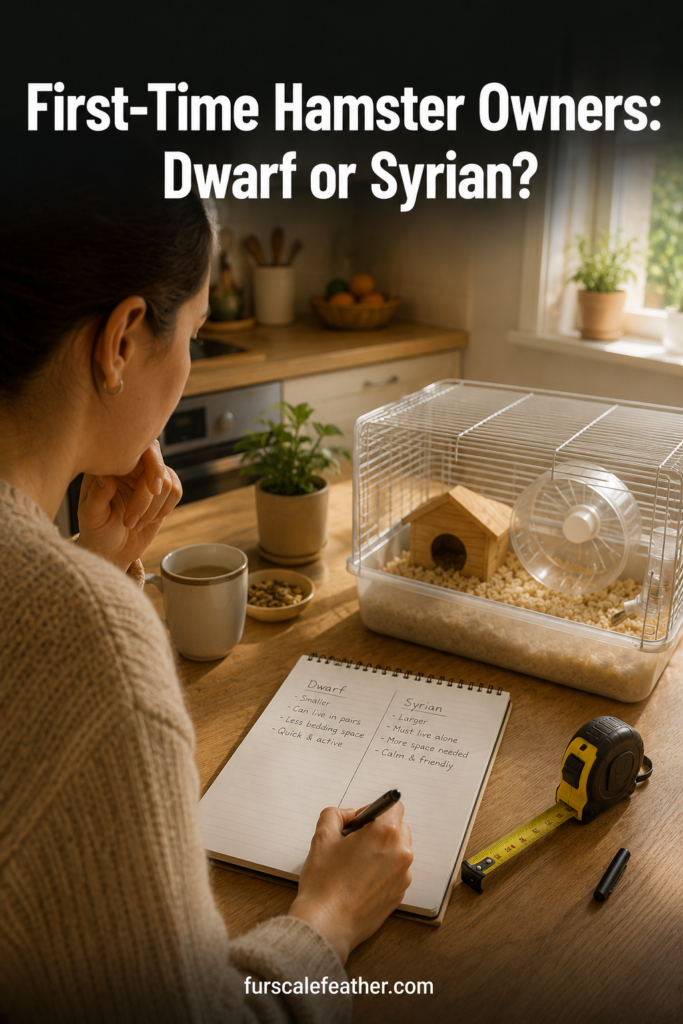
- List your handling goals. If you want a pet your children can hold under supervision, lean Syrian.
- Measure your available space. If floor space is genuinely tight, a single dwarf may fit your realistic setup better than a cramped Syrian cage.
- Consider your schedule for taming. Syrians typically take one to two weeks of consistent short sessions to tame. Dwarfs often take three to four weeks and reward patience over speed.
- Decide on solo or social. If you want to observe group behavior, research a specific dwarf species with a breeder or rescue that can confirm compatible pairing history. If you want a simple one-animal setup, either species works, but Syrians must be solo regardless.
- Budget for the full setup, not just the animal. Expect $80 to $150 for cage, wheel, bedding, dish, and hideouts before you bring either species home.
Questions People Usually Ask
Are dwarf hamsters friendlier than Syrian hamsters? Not necessarily. Syrians are generally considered easier to tame and handle calmly because of their size and slower movement, while dwarfs can be just as social but harder to physically hold due to speed.
Can dwarf hamsters live together but not Syrian hamsters? Some dwarf species, particularly Winter Whites and Campbell’s, can live in bonded same-sex pairs or small groups if introduced young. Syrian hamsters cannot live with other hamsters past around 8 weeks old and should always be housed alone.
Which hamster is better for a child? A Syrian hamster is usually the better fit for children due to its larger size, slower movement, and easier handling, though any hamster interaction with kids should be supervised.
Do dwarf hamsters need a smaller cage than Syrian hamsters? Dwarfs need less floor space than Syrians, but the difference is smaller than most starter kits suggest. Both species do best with cages well above the minimum sizes sold as “hamster starter kits.”
Is a dwarf hamster or Syrian hamster cheaper to keep? Ongoing costs are similar since food, bedding, and enrichment items are priced by quantity rather than species. The main cost difference shows up if you keep multiple dwarfs socially, which multiplies food and cage-cleaning needs.
Whichever species you land on, the decision comes down to handling comfort, available space, and whether you want a solo pet or are prepared to research a compatible dwarf pairing carefully. Syrian hamsters remain the steadier first pet for most beginners, while dwarfs suit owners who want a smaller footprint and don’t mind a faster, more hands-off companion. Buy the larger cage size before the animal arrives rather than after, since resizing later is harder on the hamster than on your wallet. If you’re still unsure, visit a local rescue and ask to observe both species handled in person before deciding.
Disclosure: Product recommendations above are based on aggregated user reviews, rescue foster feedback, and manufacturer specifications rather than personal product testing. This article contains no sponsored content or affiliate links at this time.