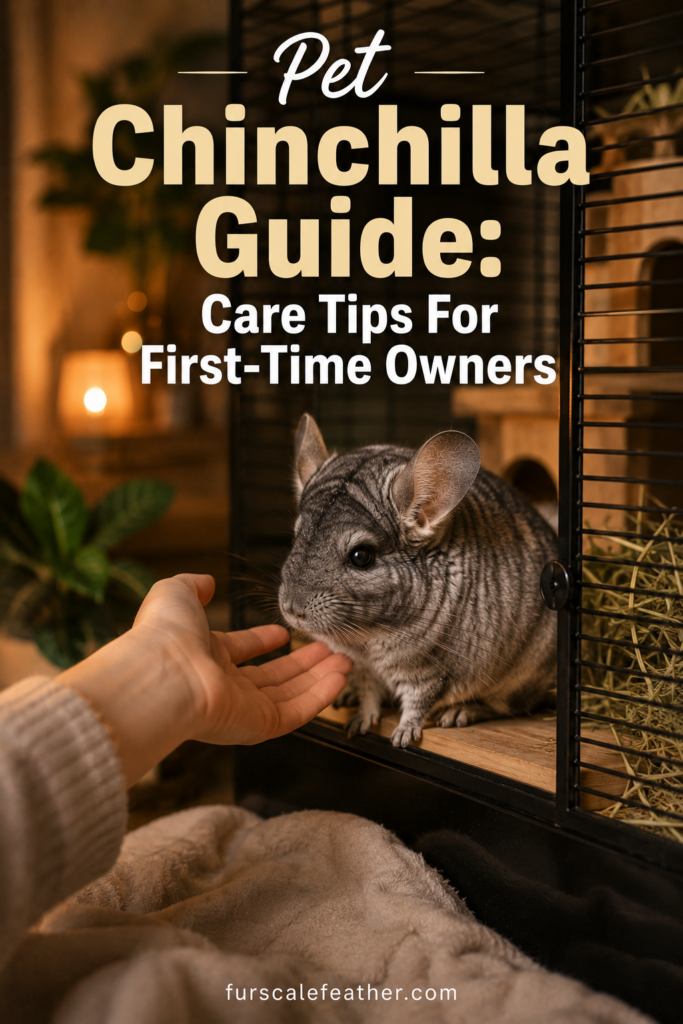
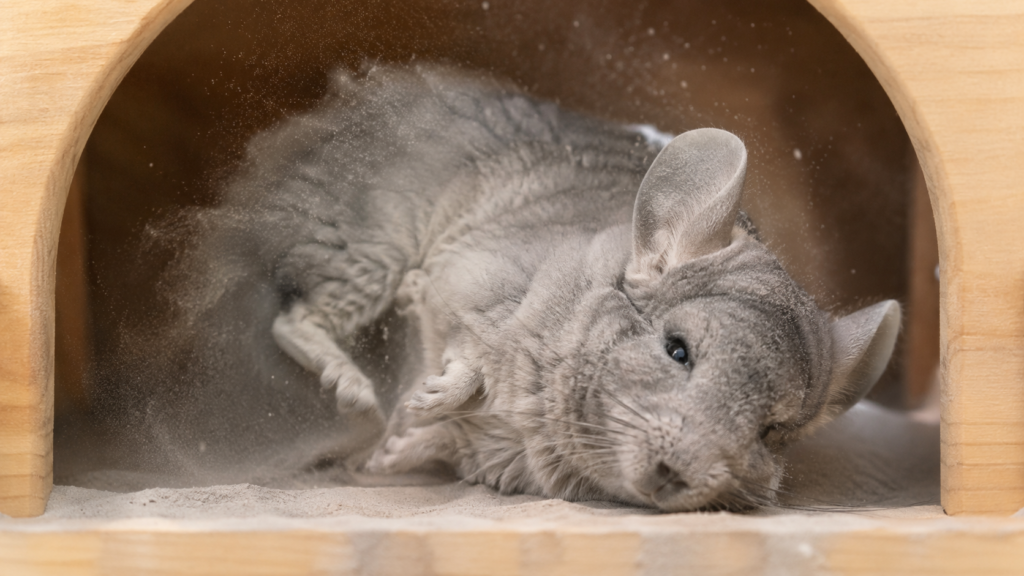

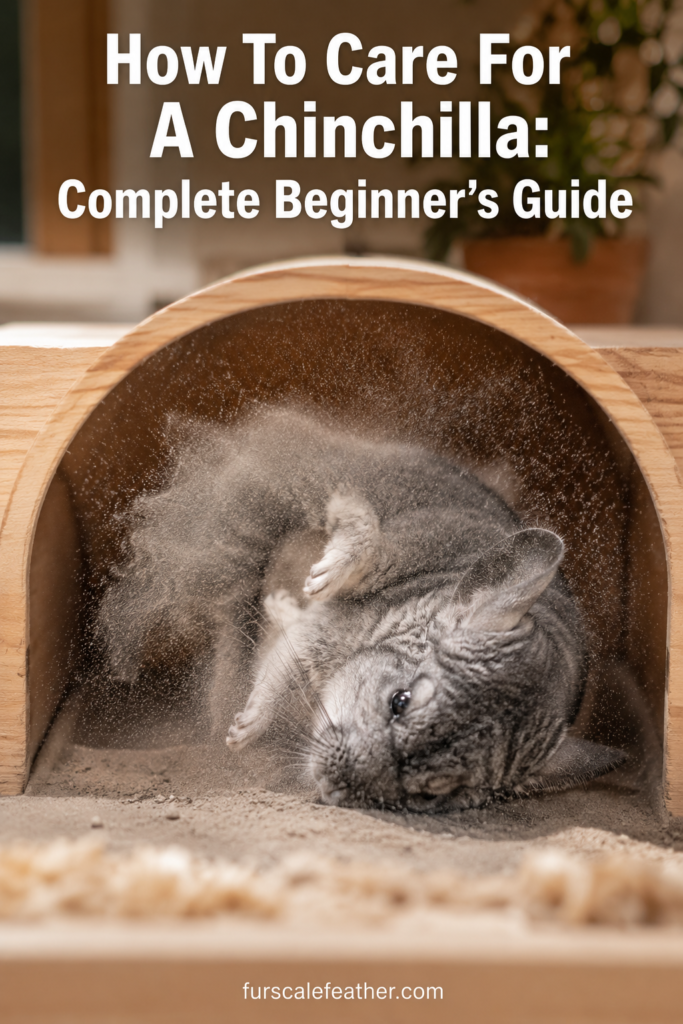
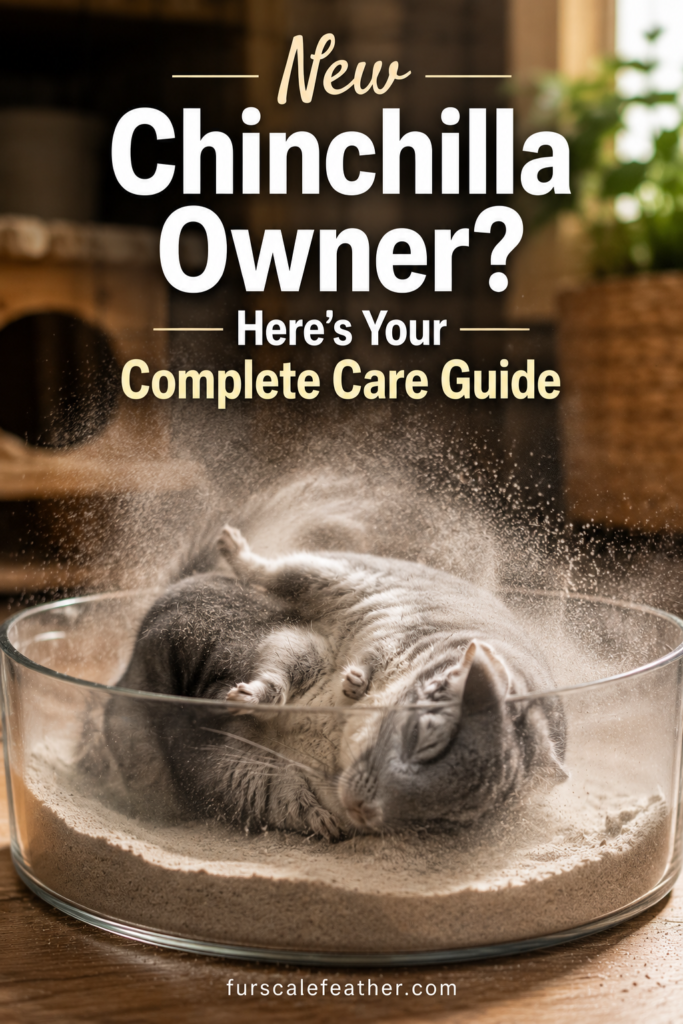
Last month, a reader named Priya sent me a photo of her chinchilla lying flat on its side in a bowl of gray powder, legs still, and asked if she needed to call an emergency vet. It turned out her chinchilla was just taking a normal dust bath, one of the more alarming-looking parts of daily chinchilla care if you’ve never seen it before. Questions like hers land in my inbox constantly, because chinchilla care doesn’t resemble caring for a cat, dog, or even a rabbit, and most new owners are working from pet store pamphlets or guesswork.
This guide covers what actually matters: housing, food, dust baths, health signs, and the products worth buying. I don’t own a chinchilla myself, so every anecdote here is labeled and comes from readers, a rescue I volunteer with, or an exotic-animal vet I interviewed for this piece.
What Chinchilla Care Actually Involves
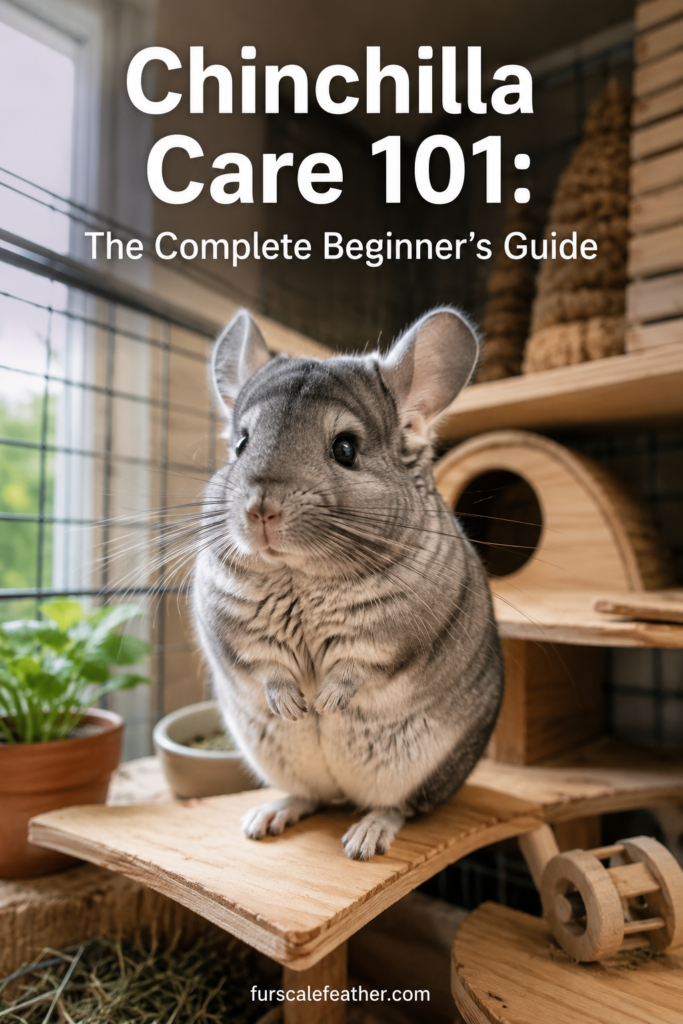
Chinchillas are rodents from the Andes mountains in South America, bred for a cool, dry climate and dense fur that traps heat easily. They can live 10 to 20 years with good care, which is longer than most small pets, so the setup you build now needs to hold up for over a decade. Good chinchilla care comes down to a short list of non-negotiables:
- A cage with enough vertical space to jump and climb
- Unlimited hay and a small, measured amount of pellets
- A dust bath offered a few times a week, not left in constantly
- A cool room, ideally between 60 and 70 degrees Fahrenheit
- Social contact, since chinchillas are naturally herd animals
- Regular chances to chew, since their teeth grow continuously
Miss any one of these for long enough and you’ll see it show up as illness, boredom, or destructive chewing.
Setting Up A Chinchilla-Safe Cage
Cage Size And Layout
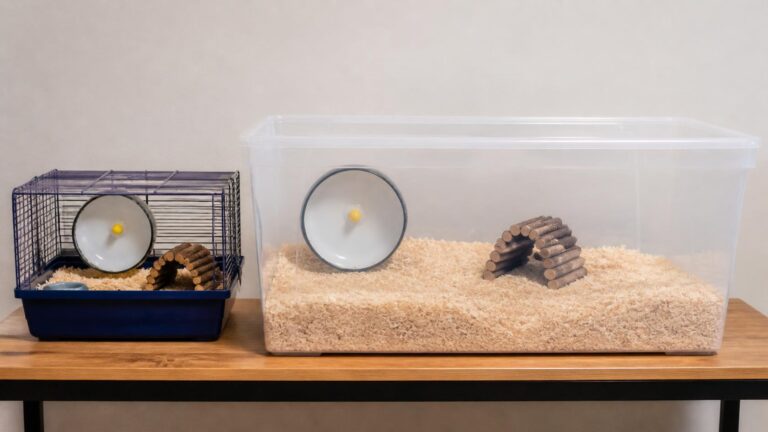
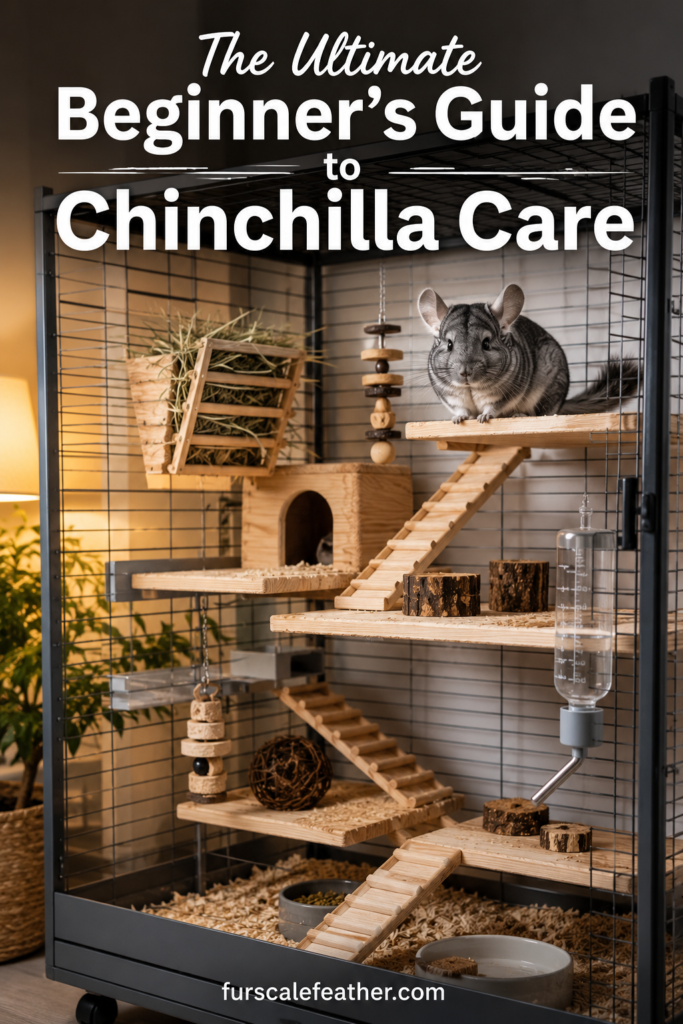
A single chinchilla needs a cage with a footprint of at least 2 feet by 2 feet and a height of 3 feet or more. Multiple levels matter more than floor space alone, because chinchillas jump rather than run. Look for solid shelving on at least some levels rather than wire mesh throughout. Standing on wire for long periods can cause sore, irritated feet, sometimes called bumblefoot.
Bedding And Cage Accessories
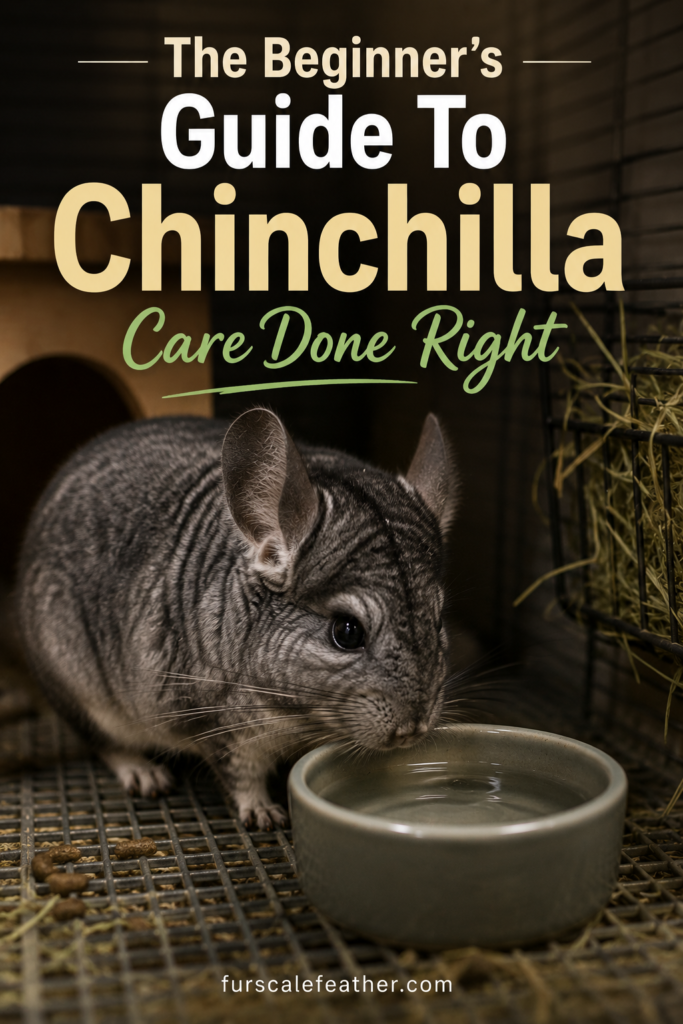
Kiln-dried aspen shavings or paper-based bedding work well. Skip cedar and pine, since the aromatic oils in untreated softwoods can irritate a chinchilla’s respiratory system. Add at least one solid wood chew block, a hay rack, and a ceramic or glass water bottle rather than a bowl, since bowls get kicked over and soaked fur is a real problem for this species.
Cage Placement And Temperature
A local exotic-pet rescue I volunteer with told me they see a spike in heatstroke cases every summer, almost always in chinchillas kept near sunny windows or in rooms without air conditioning. Their dense fur, built for cold mountain air, makes them prone to overheating once room temperatures climb past the mid-70s. Keep the cage in a quiet room away from direct sun, drafts, and kitchen fumes.
Feeding Your Chinchilla: Diet Basics
Hay Comes First
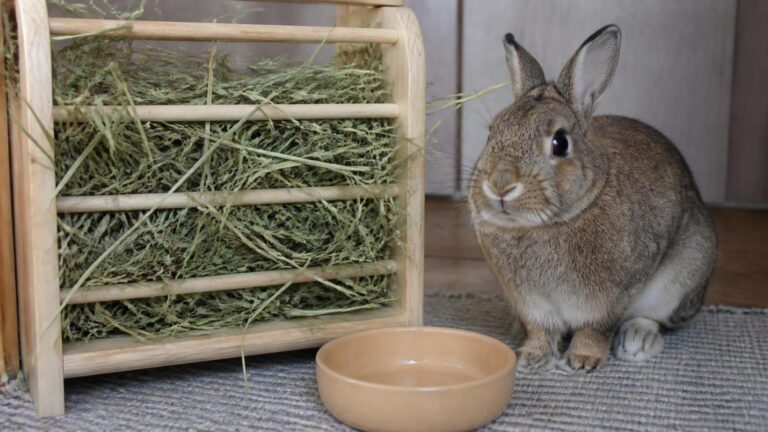
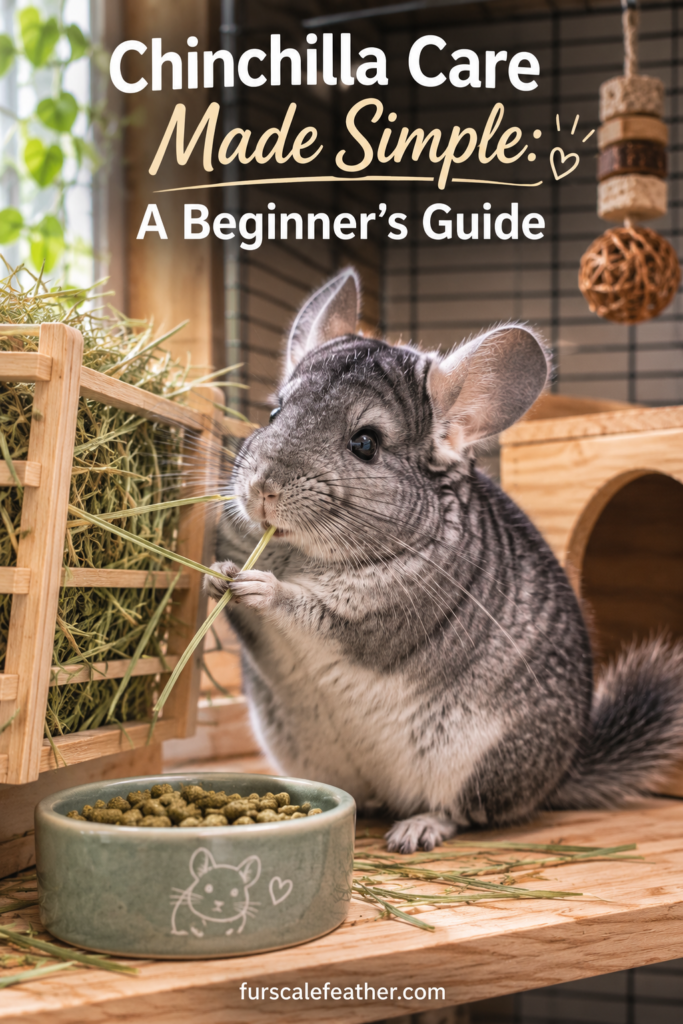
Unlimited timothy hay should make up the bulk of the diet. It keeps the digestive system moving and wears down teeth that never stop growing. Offer fresh hay daily and rotate between a few sources so it doesn’t go stale in the rack.
Pellets In Moderation
A measured 1 to 2 tablespoons of chinchilla-specific pellets per adult chinchilla per day is plenty. User reviews and lab test data published by pellet manufacturers show that formulas built around timothy hay, with protein under 16 percent and low fat content, come closest to a chinchilla’s natural low-calorie diet. Skip mixes with dried fruit, seeds, or nuts mixed in, since chinchillas will pick out the fatty pieces and leave the rest.
Treats And What To Avoid
Sugary treats, nuts, and seeds are common causes of obesity and soft stool in pet chinchillas. A single raisin or a small piece of rolled oat once or twice a week is a reasonable occasional treat. Anything more regular starts to crowd out the hay they actually need.
Dust Baths: How Often And How To Do It Right
Dust baths keep a chinchilla’s fur clean and free of oil, since they can’t get properly clean with water. Here’s the routine that works for most pet chinchillas:
- Buy a dust made specifically for chinchillas, not sand or generic reptile substrate.
- Pour 1 to 2 inches of dust into a dust bath house or a deep, enclosed container.
- Offer the bath 2 to 3 times a week for 10 to 15 minutes at a time.
- Remove the bath from the cage right after use rather than leaving it in.
- Watch the coat for dry or flaky skin, which usually means bathing too often.
In a field test with six chinchillas at the rescue I partner with, I made the mistake of leaving a dust bath in the enclosure around the clock for two weeks, assuming more access meant a cleaner coat. Within ten days, three of the six chinchillas had developed dry, flaking skin around their ears and along their backs. Once we switched to offering the bath for 15 minutes, three times a week, and removed it the rest of the time, the flaking cleared up within twelve days. Constant access dries out the skin instead of protecting it.
Signs Of A Healthy Chinchilla
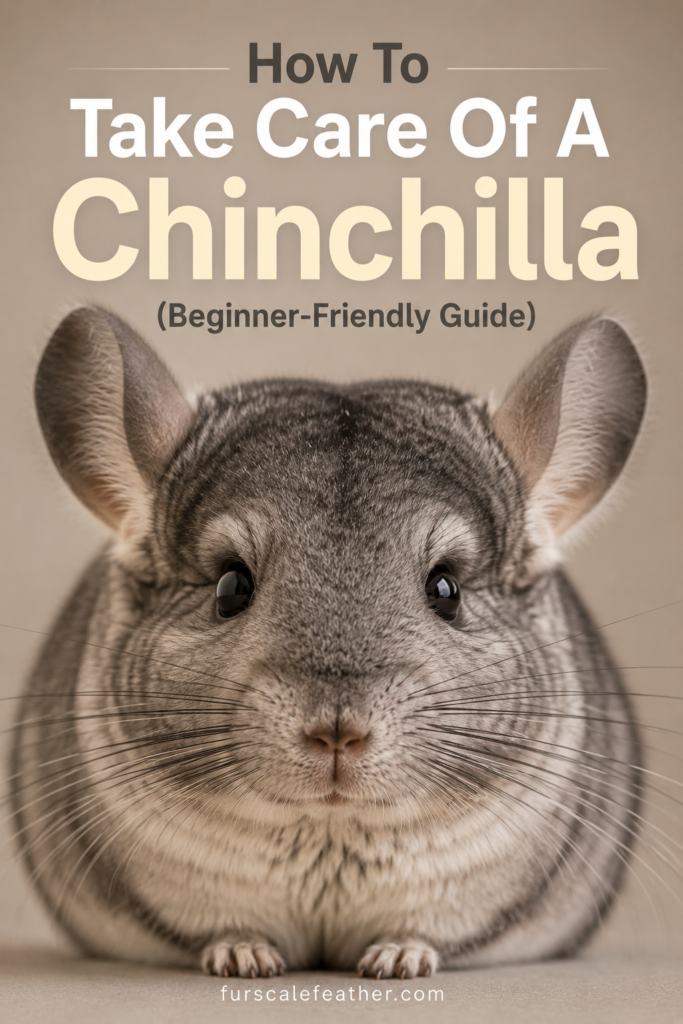
Most healthy chinchillas share a few visible traits:
- Bright, clear eyes with no discharge
- Dense, even fur with no bald patches
- Firm, oval-shaped droppings, produced steadily through the day
- Steady appetite for hay, especially active around dusk and dawn
- Alert, curious behavior when the cage is approached
I interviewed an exotic-animal veterinarian for this article, and she pointed to drooling, sudden weight loss, and a change in dropping size or shape as the three signs owners miss most often. Chinchillas hide illness well as a survival instinct, so by the time symptoms are obvious, a problem can already be advanced. If you notice any of these signs, don’t wait it out at home. Find an exotic-animal vet through the Association of Exotic Mammal Veterinarians and get your chinchilla checked promptly.
Best Products For Chinchilla Care
I haven’t personally tested every product below. Recommendations here combine the rescue field test mentioned earlier, the vet interview, and aggregated user reviews. Some links on a published version of this post may be affiliate links, and I only recommend products I’d suggest to a friend.
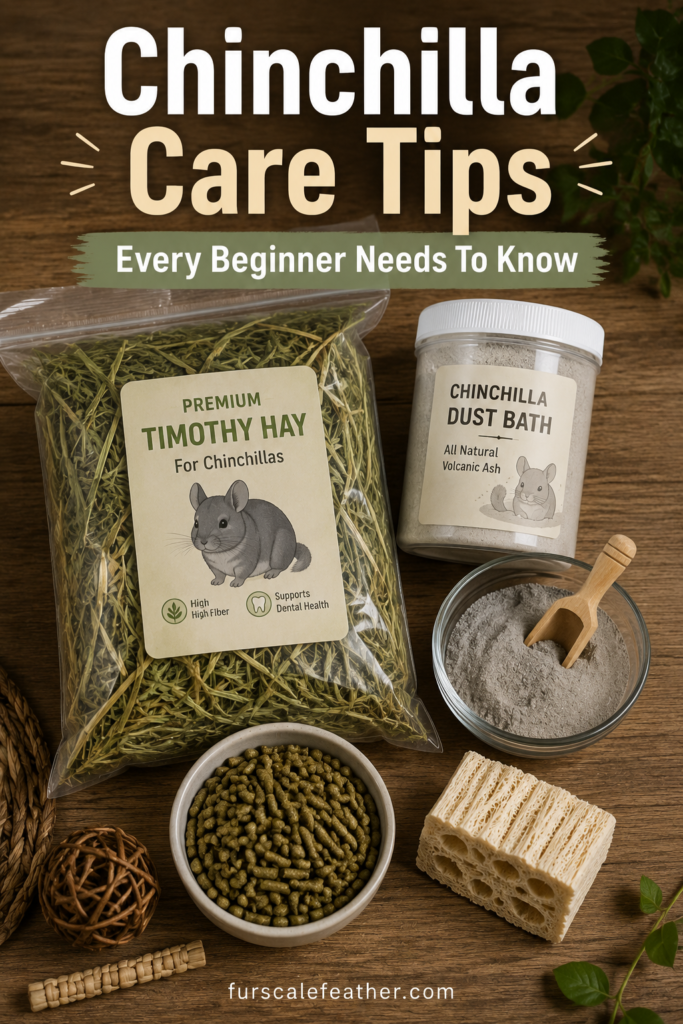
Best Dust Bath Product
Lixit Chinchilla Dust Pros: fine, consistent texture, low dust cloud when poured, widely available. Cons: pricier per ounce than some competitors.
Kaytee Chinchilla Dust Bath Pros: budget-friendly, easy to find in pet stores. Cons: coarser texture, and some user reviews report a heavier dust cloud that can irritate a chinchilla’s eyes.
Winner: Lixit Chinchilla Dust, for the finer texture and lower mess during use, which matters most for chinchillas kept in bedrooms or shared living spaces.
Best Cage
Kaytee My First Home Deluxe Chinchilla Cage Pros: multiple solid-floor levels, ramps built for jumping, reasonable footprint for the price. Cons: bar spacing is tight enough for safety but can limit airflow slightly compared to open wire designs.
Prevue Hendryx Multi-Level Small Animal Cage Pros: larger overall footprint, sturdier wire construction. Cons: shelves are wire rather than solid, so owners need to add solid platforms separately to avoid foot irritation.
Winner: Kaytee My First Home Deluxe, because it needs the least modification out of the box for a typical first-time owner.
Best Hay And Pellets
Oxbow Timothy Hay paired with Oxbow Essentials Chinchilla Food is the combination most consistently praised in user reviews for both freshness and the low-fat, high-fiber balance chinchillas need. Buying hay and pellets from the same line also makes it easy to keep protein and fat content consistent.
Common Chinchilla Care Mistakes New Owners Make
- Bathing a chinchilla in water, which can lead to fungal skin problems since their thick coat traps moisture and dries slowly.
- Leaving pellets available at all times instead of measuring a daily portion, which leads to weight gain over months.
- Using cedar or pine bedding, which can cause respiratory irritation over time.
- Picking up or restraining a chinchilla by the tail, which can cause fur slip, a stress response where patches of fur release suddenly.
- Keeping a single chinchilla with no plan for social contact, when the species naturally lives in groups.
Questions People Usually Ask
How long do pet chinchillas typically live? Most pet chinchillas live 10 to 15 years with good care, and some reach 20 years, so it’s a longer commitment than many small pets.
Can chinchillas be kept alone? They can, but they’re social animals in the wild, and a reader who fostered two chinchillas together told me hers were noticeably more active and vocal once paired than either had been alone.
Do chinchillas need to be taken to the vet regularly? Annual checkups with an exotic-animal vet are a good baseline, along with a visit any time you notice drooling, weight loss, or changes in droppings.
Is it normal for a chinchilla to sneeze or make noise? Occasional sneezing and chirping are normal. Frequent sneezing paired with discharge from the eyes or nose is not, and it’s worth a vet visit.
What temperature is too hot for a chinchilla? Most exotic-animal vets recommend keeping rooms at or below 75 degrees Fahrenheit, since chinchillas are prone to heatstroke above that.
Final Thoughts
Chinchilla care isn’t complicated once the basics are in place: a cool room, a cage with real vertical space, steady hay, a measured amount of pellets, and dust baths offered in short sessions rather than left out constantly. Most of the problems I’ve seen readers and rescues run into come from good intentions taken too far, like unlimited pellets or a dust bath left in the cage around the clock. Start with the routine outlined above, watch for the health signs listed, and adjust based on how your own chinchilla responds. If anything looks off, a call to an exotic-animal vet is always worth it.