
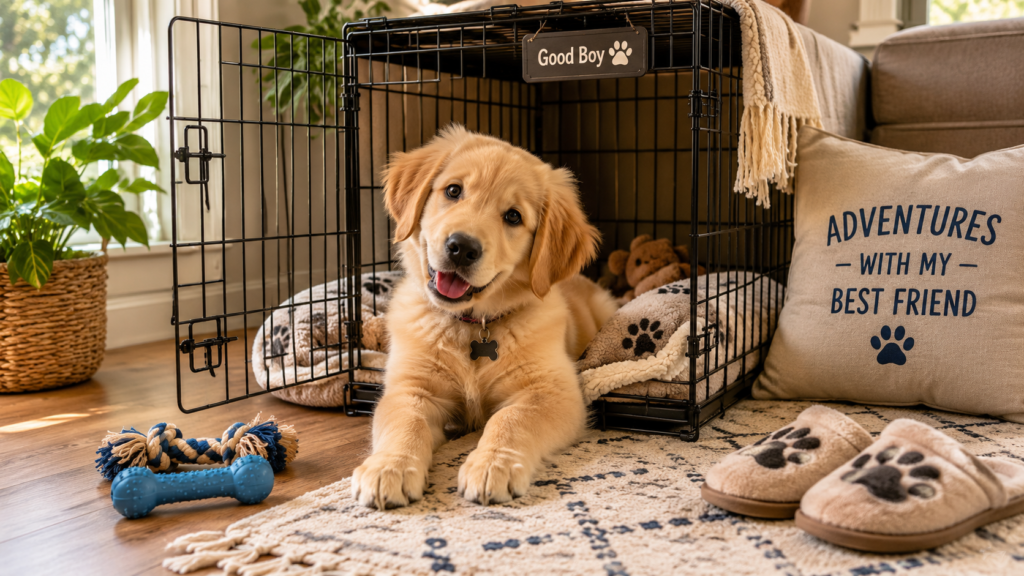

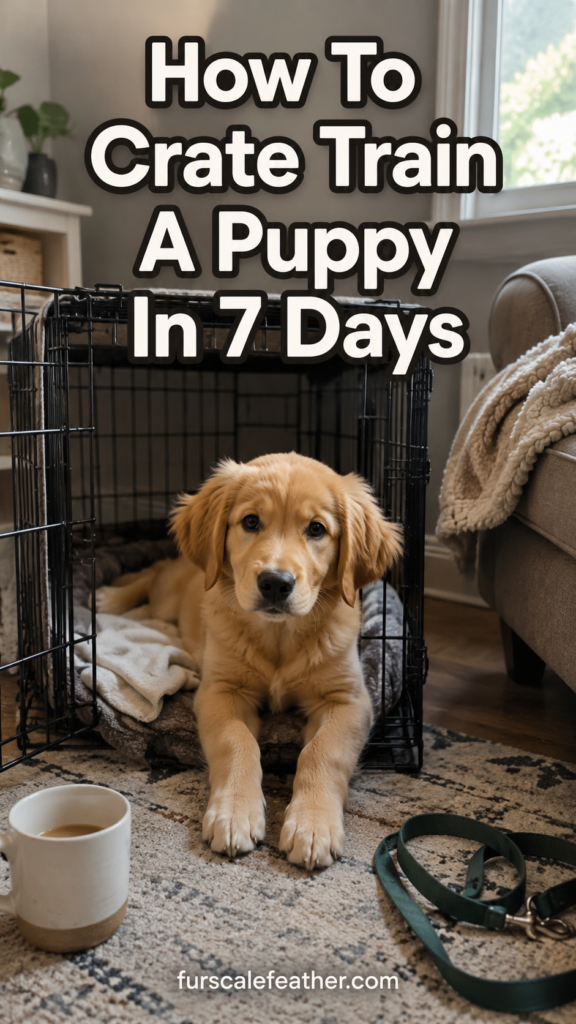
My puppy Rosie screamed like I was abandoning her at a shelter the first night I closed that crate door. Not whined. Screamed. I sat in the hallway at 1am wondering if I had just wasted money on a crate she would hate forever. If you searched how to crate train a dog because you have a puppy crying two rooms away right now, I promise this gets better fast, and it usually gets better in about a week.
Rosie is almost two now. She sleeps in that same crate every night with the door wide open because she chooses to, not because I force her. It took exactly 7 days to get her from screaming to sleeping through the night, and I am going to walk you through the same schedule I used, the crate that actually held up, and the mistake that cost me three extra nights of no sleep.
How To Crate Train A Dog Step By Step
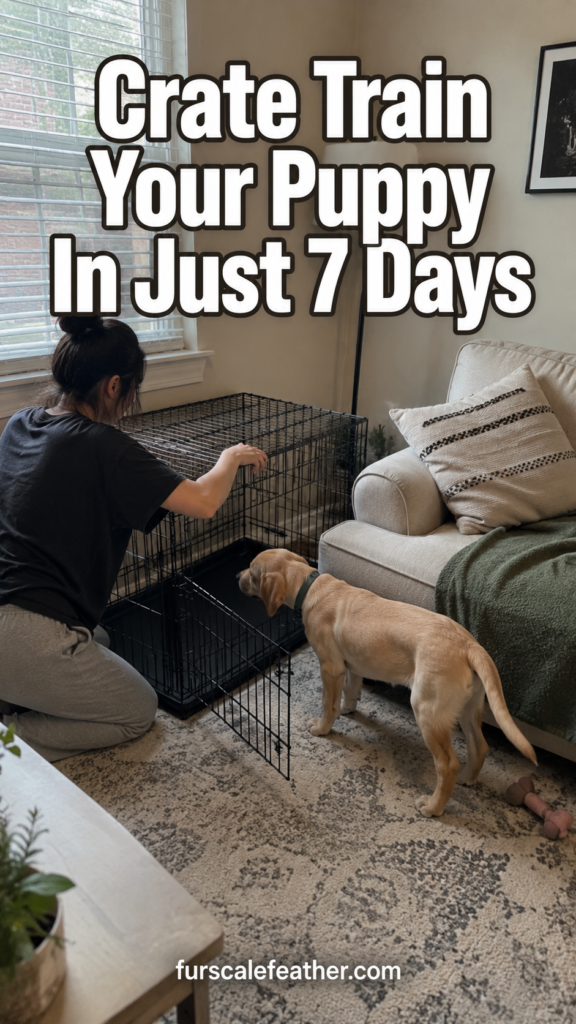
Before you touch a calendar, you need the basic mechanics right, or the schedule below will not work no matter how closely you follow it. Here is the order I wish someone had told me on day one.
- Pick a crate sized for the dog in front of you right now, not the 60 pound adult they will grow into. Too much extra room and puppies will potty in one corner and sleep in the other, which defeats the whole point.
- Put the crate in a room your family actually spends time in, like the living room or a bedroom. A crate stuck alone in a laundry room feels like a punishment, and dogs pick up on that fast.
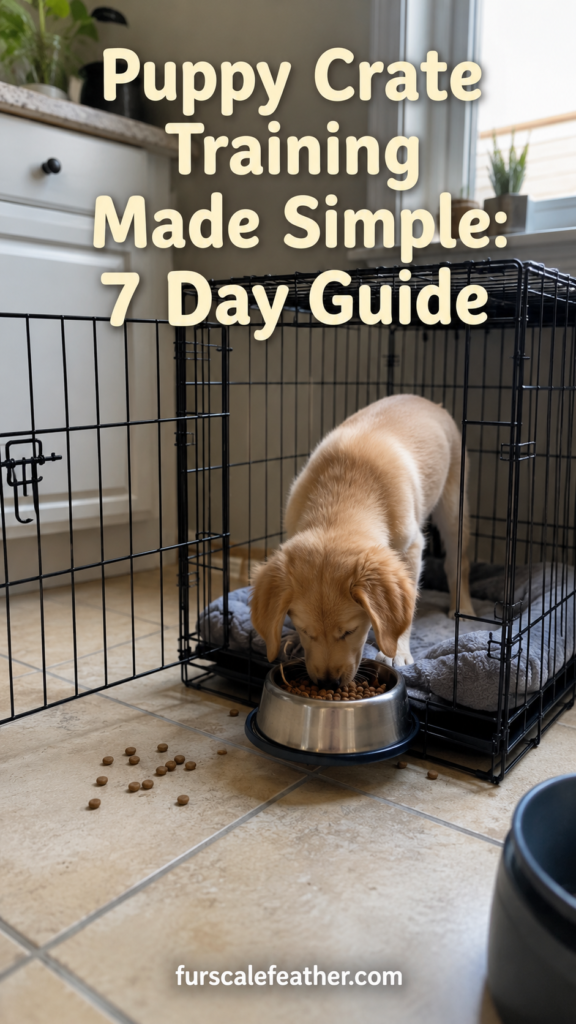
- Feed every meal inside the crate for the first week, door open. Food builds the association faster than any toy or blanket ever will.
- Toss a treat in randomly during the day when you are not asking your puppy to go anywhere or do anything. This teaches them the crate itself is good news, separate from any command.
- Practice short closed door moments while you sit right next to it, only after your puppy is already walking in and out on their own without hesitation.
- Add distance and duration only once the closed door part has become boring to them. If they are still whining at the door being shut for ten seconds, you moved too fast.
Skipping step six is where most people get stuck. I tried to jump from a closed door to leaving the house in the same afternoon, and Rosie lost her mind for twenty straight minutes.
My 7 Day Puppy Crate Training Schedule
This is the actual crate training schedule I followed, written down after the fact from notes on my phone. Adjust the times if your puppy is younger than 10 weeks, since younger puppies need more bathroom breaks.
- Day 1 Door stays open all day. Every meal happens inside the crate. No closing the door at all, even for a second.
- Day 2 Close the door for 30 seconds while sitting directly next to the crate, five separate times spread through the day.
- Day 3 Close the door for 2 minutes while you do something nearby, like folding laundry within sight of the crate.
- Day 4 Close the door for 10 minutes and step into another room, then come back before any whining starts, not after.
- Day 5 First full night in the crate, positioned right next to your bed so your puppy can hear you breathing.
- Day 6 Crate your puppy for a real 20 minute errand, like a grocery run, with the crate in its permanent daytime spot.
- Day 7 Full night in the crate at its final location, plus one stretch of an hour or more alone during the day.
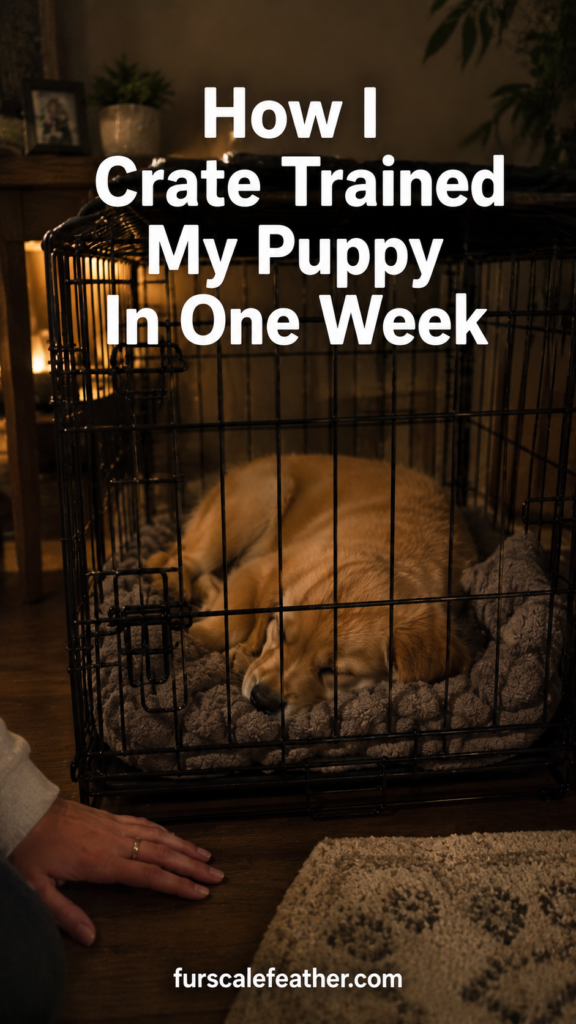
By day 7, Rosie was quiet within about 4 minutes of the door closing at night. That is not perfect silence, and yours might take a couple extra days depending on age and temperament, but the pattern holds for most puppies.
The Best Dog Crates I Actually Tested
I went through three crates before I found the one I actually trust, and honestly the first two were not bad, just not right for this specific job.
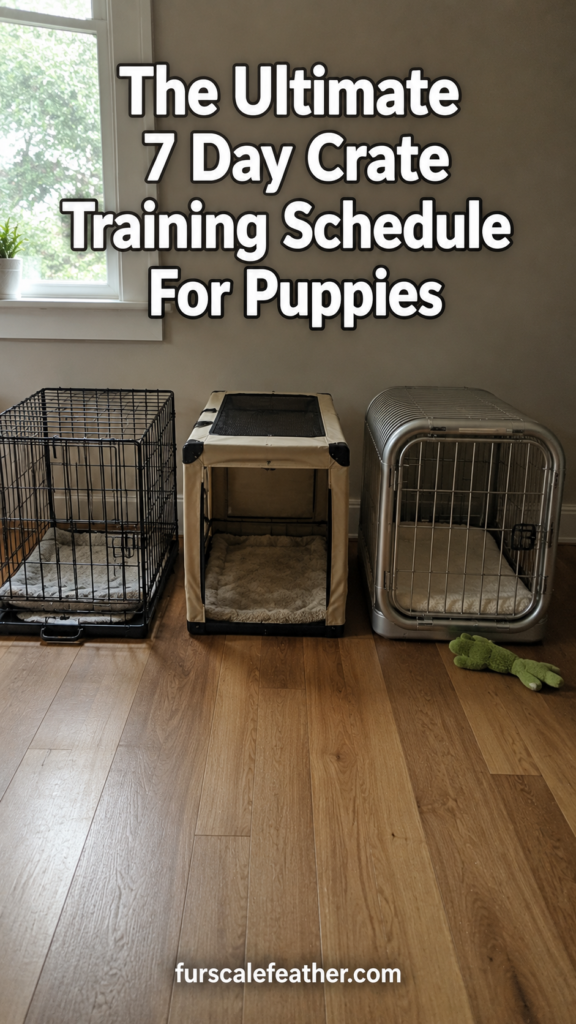
- MidWest iCrate This is the wire crate almost every trainer recommends, and it comes with a divider panel so one crate grows with your puppy. Mine worked fine until Rosie caught her paw on a wire prong near the divider and yelped. Nothing serious, but it happened twice.
- Frisco Fold and Carry Lighter, easier to move between rooms during that first week schedule, but the latch popped open twice when Rosie leaned on it at around 15 pounds. Fine for short daytime naps, not something I trusted overnight.
- Diggs Revol This is the one I actually kept. The divider panel is solid instead of wire, so no more pinched paws, the corners are rounded, and it rolls on wheels so I could shift it from the living room to the bedroom during the schedule above without disassembling anything. It runs close to 300 dollars for the large size, which is not cheap, but I have not replaced it once in over a year.
If you only take one recommendation from this whole article, get a crate with a solid divider panel instead of a wire one. That single detail solved the paw pinching problem completely.
How To Stop Crate Whining At Night
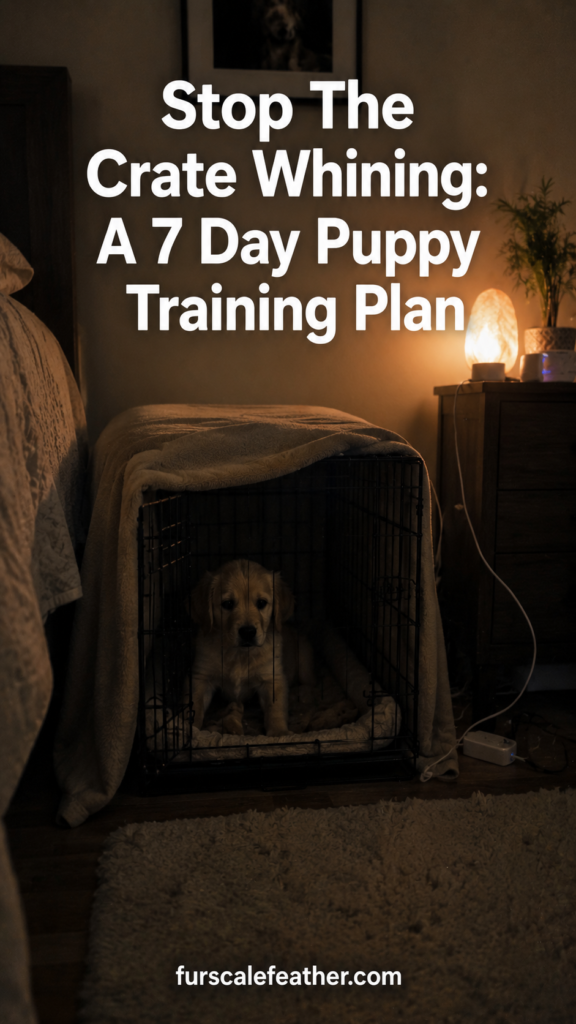
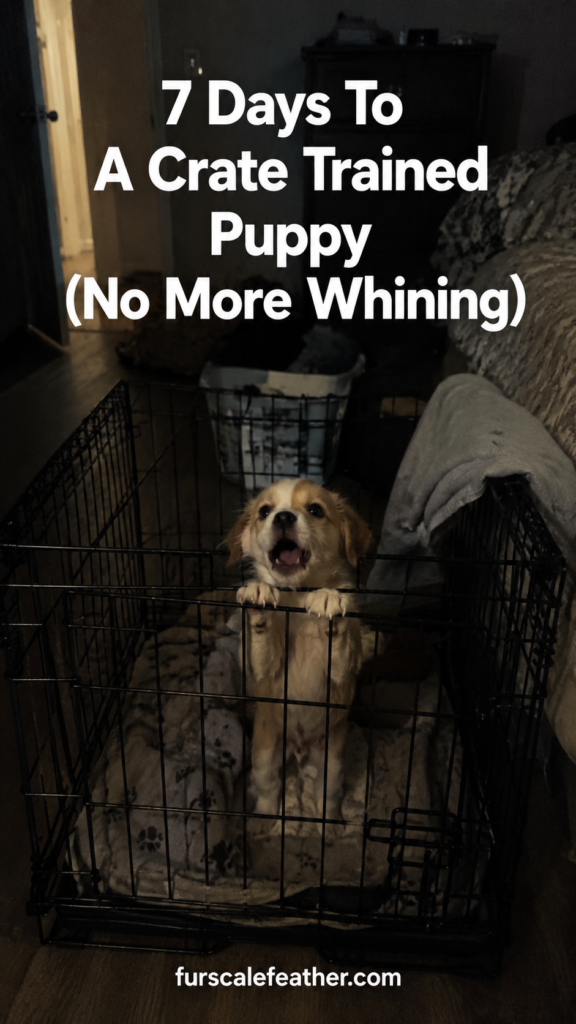
Here is the mistake. On night one, I covered the entire crate with a thick blanket because I read somewhere that dogs like a den feeling. Rosie panicked worse, because now she could not see me at all in a brand new environment on top of everything else being new. I pulled the blanket half off the front panel and she calmed down within a few minutes.
Fair warning, there are two totally different cries you need to tell apart, and mixing them up is how people end up either ignoring a real bathroom emergency or accidentally training a puppy that whining gets the door opened.
- A short, sharp, repeated cry that started suddenly after hours of quiet usually means a bathroom break, especially in puppies under 4 months, who typically need one every 3 to 4 hours overnight.
- A longer, rising whine that starts the moment the door clicks shut and continues steadily is protest, not a bathroom need, and opening the door for that one teaches your puppy that whining works.
For the protest version, I waited for a 3 to 5 second gap in the noise before opening the door, never opened it mid whine. That timing detail is the whole trick to stop crate whining without ignoring your puppy completely.
Crate Training Tips For Adult Dogs And Rescues
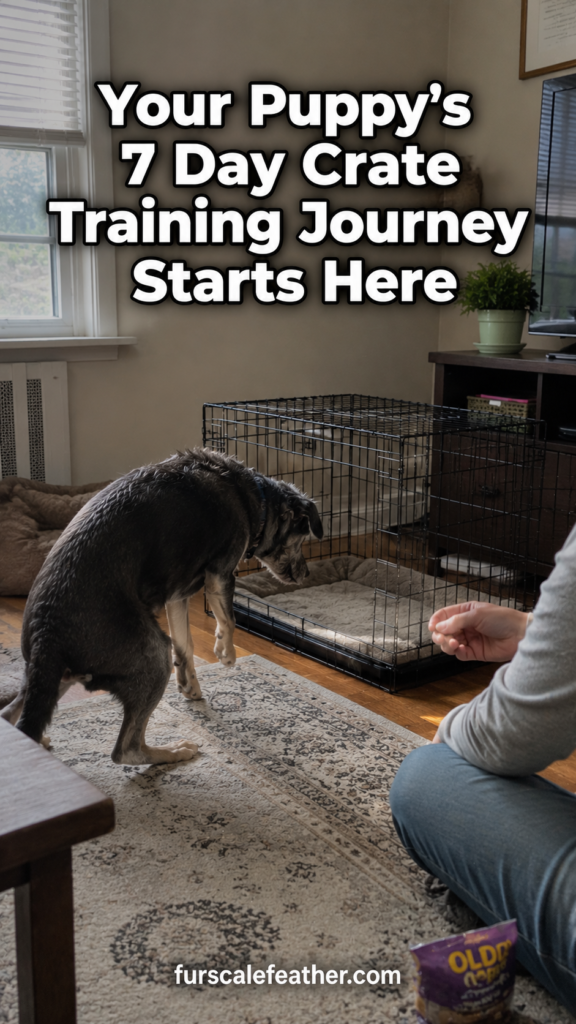
Crate training an adult dog or a rescue is a different job than training a puppy, and I learned that the hard way with a foster dog named Duke who had clearly been crated as punishment before I got him. He drooled through the wire and scraped his nose trying to get out within the first ten minutes.
- Skip the 7 day timeline entirely for a dog with a bad history. Some adult dogs take three or four weeks before the door can close at all.
- Start with the door removed completely, or zip tied open, so the crate is just a bed with walls for the first several days.
- Watch for real anxiety signs, not just normal fussing. Bloody paws, a raw nose, or nonstop drooling means you stop and call a trainer or your vet rather than pushing through.
- An exercise pen works as a bridge for dogs who panic hard in an enclosed crate, giving them room to move while you rebuild trust in an enclosed space slowly.
Duke never fully loved a closed crate door, and that is fine. Not every dog needs to end up exactly where your puppy does, and forcing it past clear signs of distress does more harm than good.
Quick Crate Training Tips You Can Use Today
A few extra crate training tips that did not fit neatly into a single day of the schedule but made a real difference for us.
- Never use the crate as a time out spot for bad behavior. Once a dog connects the crate with trouble, that association is hard to undo.
- Exercise your puppy for a solid 20 minutes before any crate session longer than an hour. A tired puppy settles faster than a bored one.
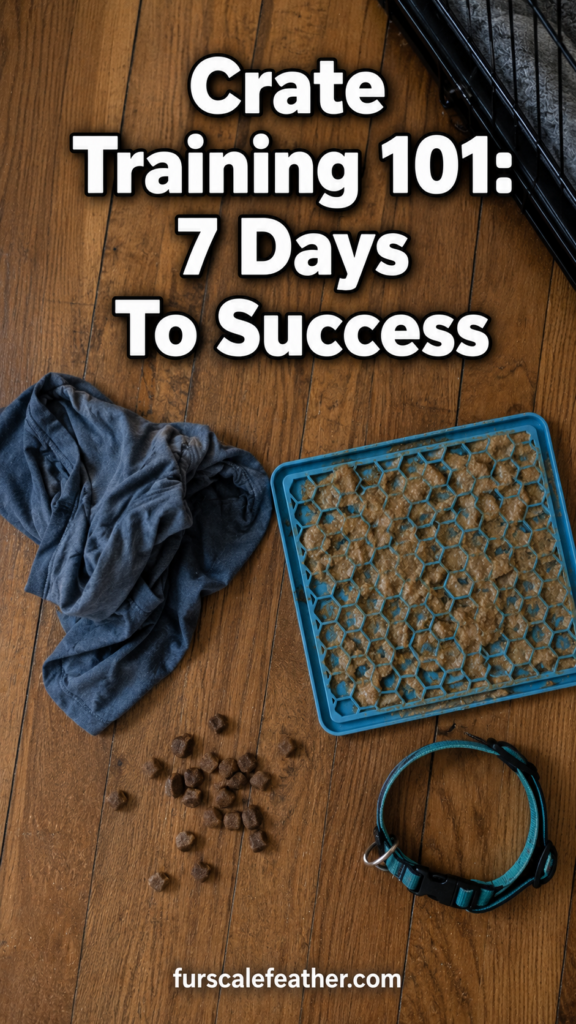
- Leave a worn t shirt of yours in the crate. It smells like you, and that alone calmed Rosie down noticeably faster on nights 3 through 5.
- Ice cube trays or a frozen lick mat inside the crate buy you 10 to 15 extra minutes of calm chewing during transition times like leaving for work.
- Keep the crate up permanently, not folded away between sessions. A crate that only appears when you are leaving becomes its own warning sign.
Crate training a dog, whether it is an 8 week old puppy or a nervous rescue, comes down to patience with the timeline and paying attention to what your specific dog is telling you, not a script. Rosie’s 7 days looked calm by day 5 and settled by day 7, and your own timeline might stretch a little longer or shorter depending on age, breed, and history. The schedule above gives you a real starting point instead of vague advice to just be patient. Pick a crate with a solid divider panel, feed every meal inside it for the first week, and learn to tell the difference between a bathroom cry and a protest cry before you decide whether to open that door. Do those three things consistently and the rest tends to fall into place faster than you expect.
Q & A
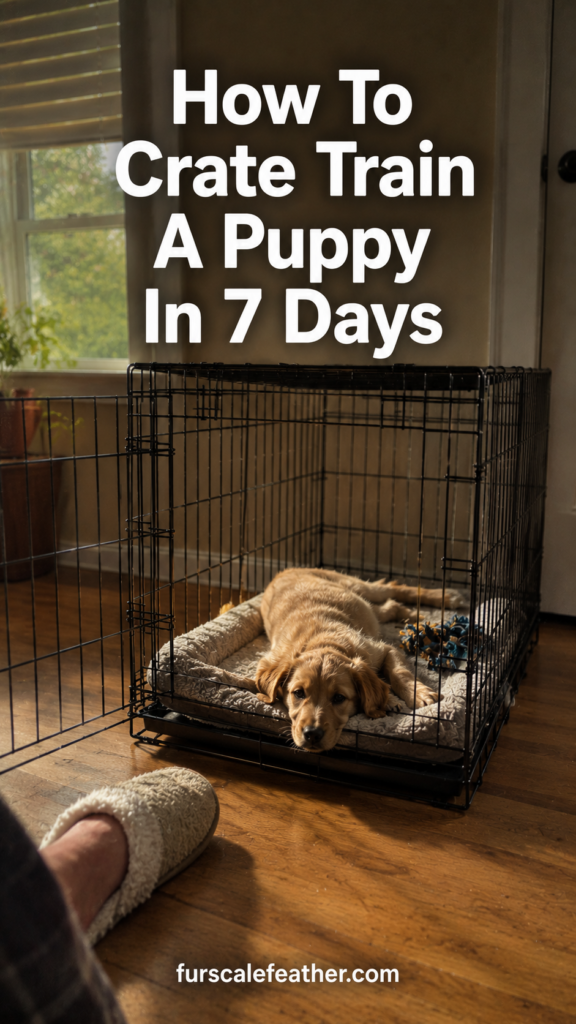
How long does it really take to crate train a puppy? Most puppies settle into a workable routine in about a week if you follow a gradual schedule. Full comfort with longer absences can take another few weeks after that.
Should I let my puppy cry it out in the crate? Not entirely. Ignore short protest whining that starts right at the door closing, but always respond to a sudden cry after hours of quiet, since that usually means a bathroom need.
What size crate does my puppy need? Big enough to stand up, turn around, and lie down flat, nothing more. Use a divider panel to shrink the space for a small puppy rather than buying a bigger crate later.
Is it cruel to crate train a dog? Not when it is done gradually and never used as punishment. A crate used correctly becomes a dog’s own choice of resting spot, the same way Rosie still chooses hers with the door open.
Where should the crate be at night? Start it next to your bed for the first several nights so your puppy can hear you, then move it to its permanent spot once they are sleeping through without much fuss.