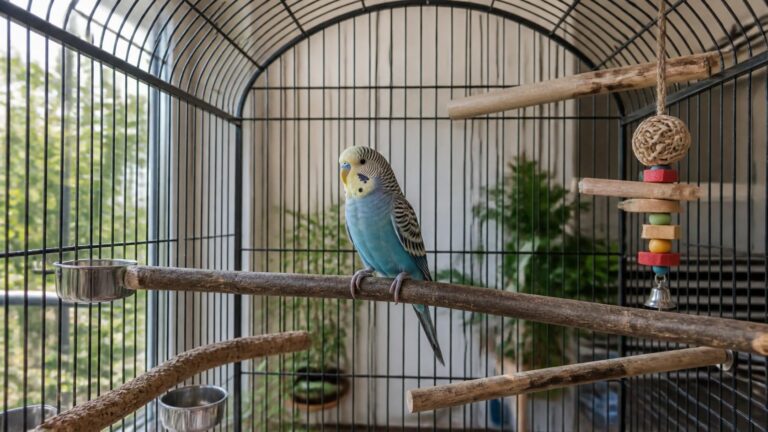
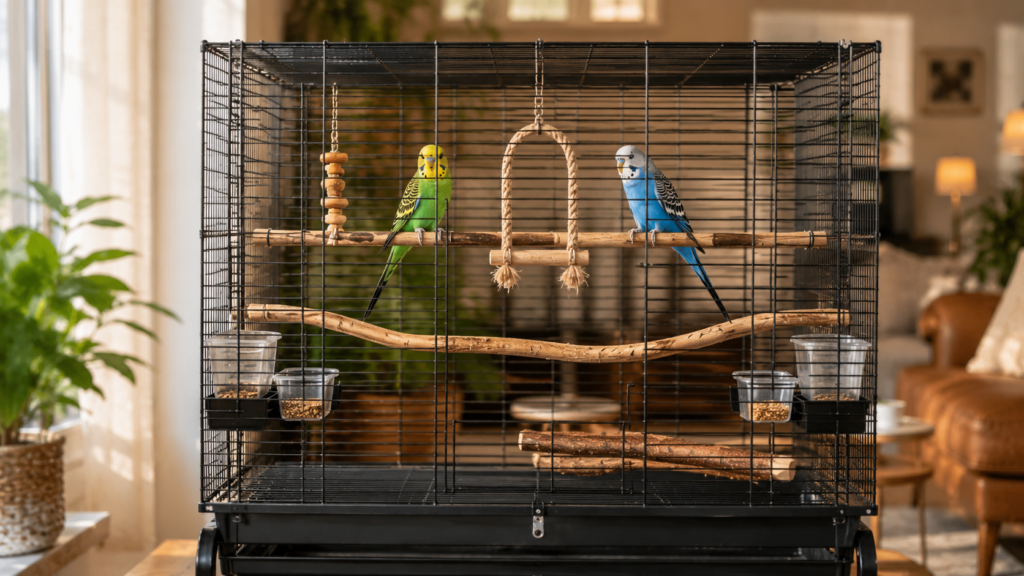

Picture this: you bring home a bright green budgie in a cardboard carrier, set up the cheap decorative cage you grabbed at the pet store, and by day three your new bird is chewing at the bars and pacing back and forth on a single perch. That cramped, too-cute-to-be-functional starter cage is one of the most common mistakes new parakeet owners make. Finding the best bird cages for parakeets isn’t about picking whatever looks nice in a product photo. It’s about matching size, bar spacing, and material to how these small, energetic birds actually live.
This guide walks through what actually matters in a parakeet cage, then breaks down ten specific options that cover every budget, from a simple starter setup to a roomy flight cage built to last for years.

What Makes the Best Bird Cages for Parakeets
Parakeets, also called budgies, are constant movers. In the wild they cover long distances between feeding grounds, and in a home enclosure that instinct doesn’t switch off. A cage that looks fine on a shelf can still leave a bird bored, stressed, or physically cramped.
The cages that consistently earn strong reviews from owners and rescues share a few traits:
- Horizontal space that supports short flights, not just climbing
- Bar spacing narrow enough to prevent head entrapment or escape
- A rust-resistant, non-toxic coating (galvanized wire and cheap paint finishes are a real risk)
- A pull-out tray and removable grate for daily cleaning
- Enough width for multiple perches, a swing, and food and water stations without everything overlapping
Keep these five points in mind and you’ll rule out most of the cages that end up being returned within a month.

Parakeet Cage Size Requirements
A single parakeet needs a minimum footprint of about 18 by 18 by 18 inches, though most avian rescues recommend going larger whenever your space and budget allow. For two birds, add at least another 12 to 18 inches in length so both have their own feeding station and don’t compete for perch space. Height matters less than width for this species, since budgies fly in short horizontal bursts rather than climbing straight up the way larger parrots do.
Bar Spacing for Small Birds
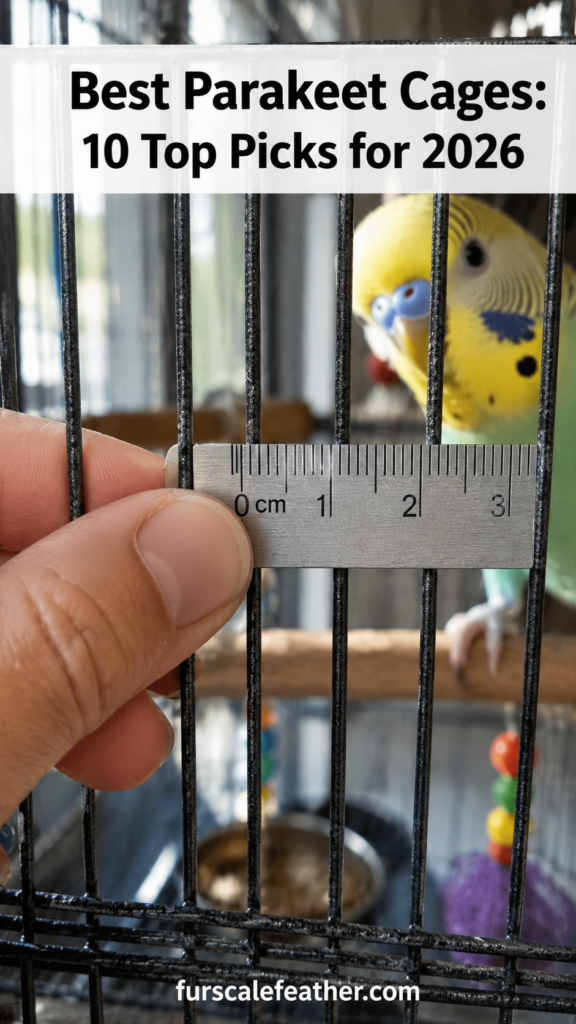
Bar spacing is the one measurement you should never guess on. For parakeets, look for spacing of 3/8 inch. Anything wider than 1/2 inch creates a real risk of a bird getting its head caught between bars, and spacing narrower than 3/8 inch makes it harder for your budgie to climb and grip comfortably. Keep a small ruler in your bag when cage shopping in person, and check the listed spec carefully when buying online, since decorative cages marketed for “small birds” don’t always meet this standard.
How to Choose the Right Starter Cage
- Measure your space first. Decide where the cage will live before you shop, including clearance for the door to swing open fully.
- Confirm the bar spacing. Look for 3/8 inch spacing specifically, not a vague “suitable for small birds” label.
- Check the material. Powder-coated or stainless steel is safer than galvanized wire, which contains zinc and can cause illness if a bird chews on it.
- Count the access doors. Multiple feeding doors make daily care faster and reduce the need to reach deep into the cage.
- Look at the tray and grate. A sliding tray with a solid bottom grate cuts cleaning time significantly compared to open-bottom designs.
- Plan for growth. If you might add a second bird later, buying one size up now saves you from replacing the whole setup.

The Best Bird Cages for Parakeets: My Top 10 Picks for 2026
A quick disclosure before the list: I have not personally tested every cage below in my own home. These picks are drawn from aggregated owner reviews, feedback from bird rescues and fosters, and published specifications checked against the safety standards avian vets recommend, particularly on bar spacing and coating material. Where a listing includes affiliate links, that relationship is disclosed and does not influence which products made the list.

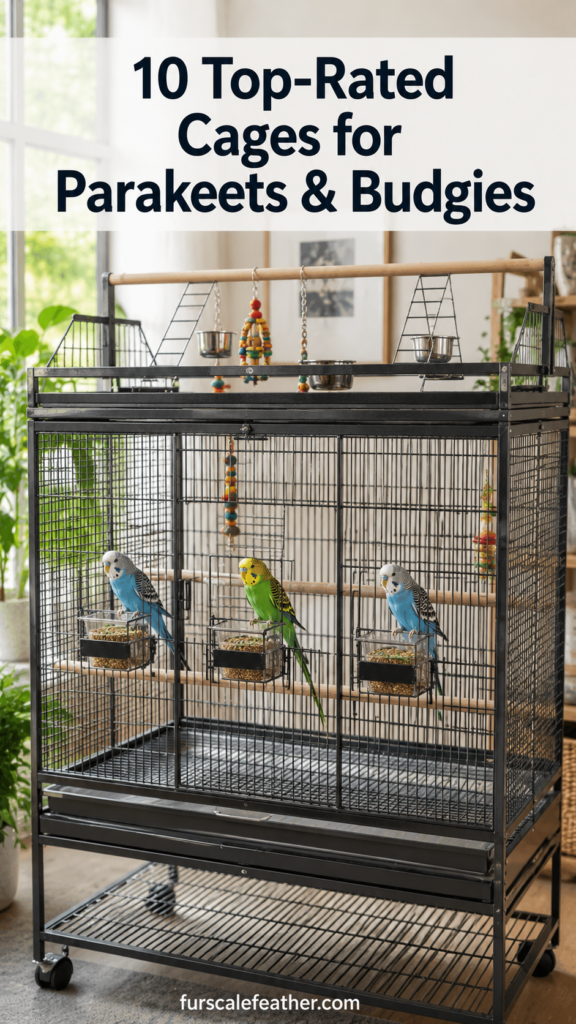
- Prevue Hendryx Wrought Iron Flight Cage (5 ft): The best overall pick. This is the cage most frequently recommended across bird forums and rescue groups for parakeets and cockatiels. It has correct 3/8 inch spacing, a deep pull-out tray, and rolling casters. Pros: roomy, durable, easy to clean. Cons: takes up real floor space and costs more upfront than a starter cage.
- Yaheetech 64-Inch Open-Top Cage: Best for interactive play. The open top folds back into a small platform your budgie can perch on during supervised time out. Pros: doubles as a play stand, wide horizontal layout. Cons: the open top isn’t suitable if you can’t supervise your bird nearby.
- Yaheetech 69-Inch Playtop Cage: Best for two or more parakeets. Four separate feeding doors and a wide 25-inch-plus interior give multiple birds their own space. Pros: reduces territorial squabbling, easy multi-point feeding. Cons: large footprint needs a dedicated corner of a room.
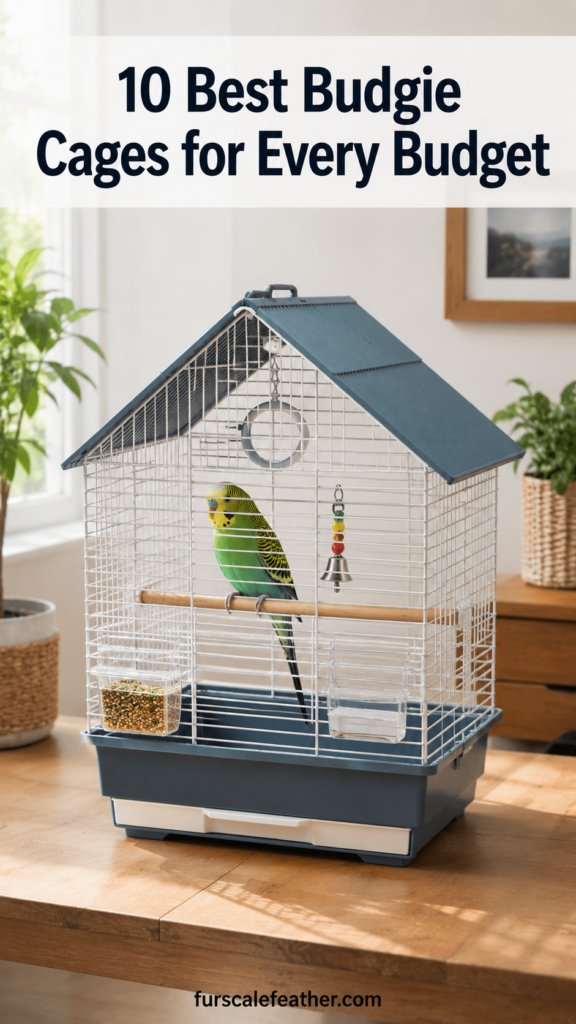
- Prevue 31996 House Style Economy Cage: Best budget starter cage, often priced under $60. Pros: low cost, simple setup, good for a single small budgie. Cons: cramped for two birds, so treat it as a temporary or travel option rather than a permanent home.
- Flyline Parrot Escape Jumbo Corner Aviary: Best space-saving design. Its corner shape tucks into a room without losing interior volume, and both vertical and horizontal bars give birds more climbing routes. Pros: efficient use of floor space, large access doors. Cons: the corner shape can be trickier to fit standard accessories.
- ZENY 53-Inch Rolling Cage: Best mid-range all-rounder. Solid wire gauge and 3/8 inch spacing make it appropriate for parakeets, though it’s sized for small to medium birds only, not larger parrots. Pros: balanced price and size. Cons: lighter build than premium wrought iron models.
- Yaheetech 54-Inch Rolling Metal Cage: Best for apartments. Wrought iron construction resists the rattling that thinner steel cages develop, and adding felt pads under the casters and rubber matting underneath cuts down floor noise further. Pros: quieter than most metal cages. Cons: still requires some assembly and floor protection.
- 42-Inch Stackable Center-Divided Cage: Best for multi-bird households that need separation, such as introducing a new bird slowly or housing birds that don’t get along. Pros: flexible layout, useful during quarantine periods. Cons: divided sections mean less total space per bird than a single large cage.
- Any cage with a documented zinc-free, lead-free powder coating: Best for health-conscious owners. Rather than one specific model, this is a category worth prioritizing: galvanized wire contains zinc, and chewed or worn coating has been linked to zinc toxicosis in pet birds, a documented and preventable cause of illness. Ask the manufacturer directly if the listing doesn’t confirm the coating.
- A compact travel or hospital cage (roughly 12 by 12 by 16 inches): Best for vet visits and short-term quarantine of a new bird. Pros: portable, easy to sanitize between uses. Cons: not suitable as a full-time home.
My recommendation: if your budget allows it, the Prevue Hendryx Wrought Iron Flight Cage is the one I’d point a first-time parakeet owner toward. It hits correct bar spacing, gives a single bird or a pair genuine room to move, and the tray and grate design keeps daily cleaning to a few minutes rather than a chore you dread.
Affordable Parakeet Cage Options
Budget doesn’t have to mean unsafe. The Prevue 31996 Economy Cage covers the basics for a single bird at a low price point, and several Yaheetech models land in the mid-range once you factor in how long a well-built cage lasts. A general rule from rescues that place budgies in foster homes: spend on bar spacing and coating quality first, and treat extra size and looks as the next priority once safety is covered.
A Mistake That Changed How I Shop for Cages
A reader who fosters budgies for a local bird rescue told me about the first cage she bought for a foster bird years ago. It looked appealing online, priced well, and described as suitable for small birds. She didn’t check the bar spacing before it arrived. Once assembled, she measured it out of habit and found the gaps ran about 5/8 inch, noticeably wider than the recommended 3/8 inch. Within the first week, the foster budgie got his head briefly caught between two bars while reaching for a hanging toy. She was in the room and freed him within about a minute, and he was unhurt, but it shook her. She now measures bar spacing with a ruler before adding any cage to her cart, no exceptions, and she shares that habit with every new foster she trains.

Setting Up Your Parakeet’s New Cage
- Choose the location first. Pick a spot away from direct sun all day, drafts, and the kitchen, since fumes from non-stick cookware are toxic to birds.
- Double-check bar spacing on arrival. Measure it yourself even if the listing states 3/8 inch.
- Add perches of varying diameters. This keeps a bird’s feet from developing pressure sores from a single perch size.
- Set up two or more feeding stations. This reduces competition if you’re housing more than one bird.
- Line the tray and add substrate. Paper liners are easiest to monitor for droppings and appetite changes.
- Let your parakeet settle in before handling. Give a new bird a full day or two to explore before attempting to interact directly.

Questions People Usually Ask
What size cage does a single parakeet need? A minimum of about 18 by 18 by 18 inches, though most rescues recommend going larger for daily enrichment, especially in width.
Is bar spacing really that important? Yes. Spacing wider than 1/2 inch creates a real entrapment or escape risk, while spacing narrower than 3/8 inch makes climbing difficult for a parakeet’s feet.
Can two parakeets share one cage? Generally yes, since parakeets are social, but you’ll need a cage noticeably larger than the single-bird minimum, with separate feeding stations to reduce squabbling.
Are galvanized wire cages safe? Not ideally. Galvanized wire contains zinc, and chewed or worn coating has been connected to zinc toxicosis in pet birds. Choose a coating confirmed to be zinc- and lead-free, and consult an avian veterinarian if you notice any signs of illness in your bird.
How often should I clean the cage? Wipe down the tray daily and do a full scrub of perches, dishes, and bars weekly to keep bacteria and mold from building up.

Final Thoughts
The right cage comes down to three things: enough horizontal space for your parakeet to move, bar spacing at 3/8 inch, and a coating that won’t poison a curious beak. Everything else, from color to extra perches, is a matter of preference once those basics are covered. If you’re setting up a first cage, start with the size and spacing checks before you fall in love with a design, and if your bird ever shows signs of illness, reach out to an avian veterinarian rather than guessing at the cause. A little extra care at the shopping stage saves both you and your parakeet a lot of stress later on.