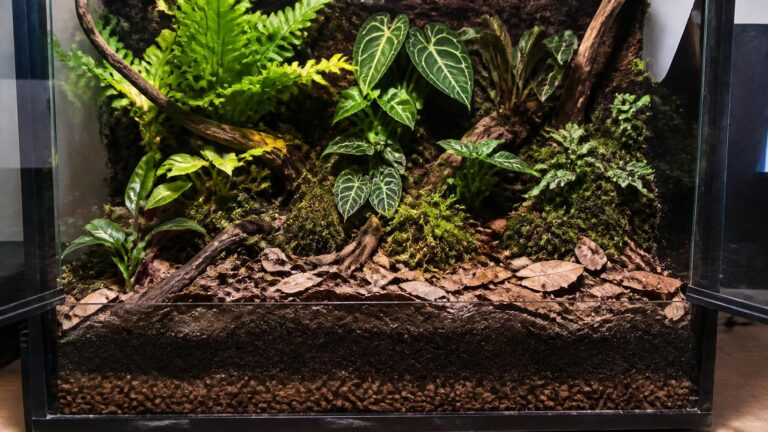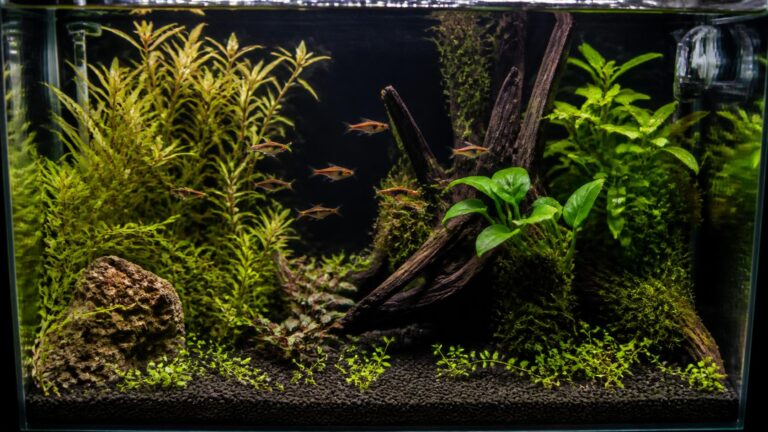
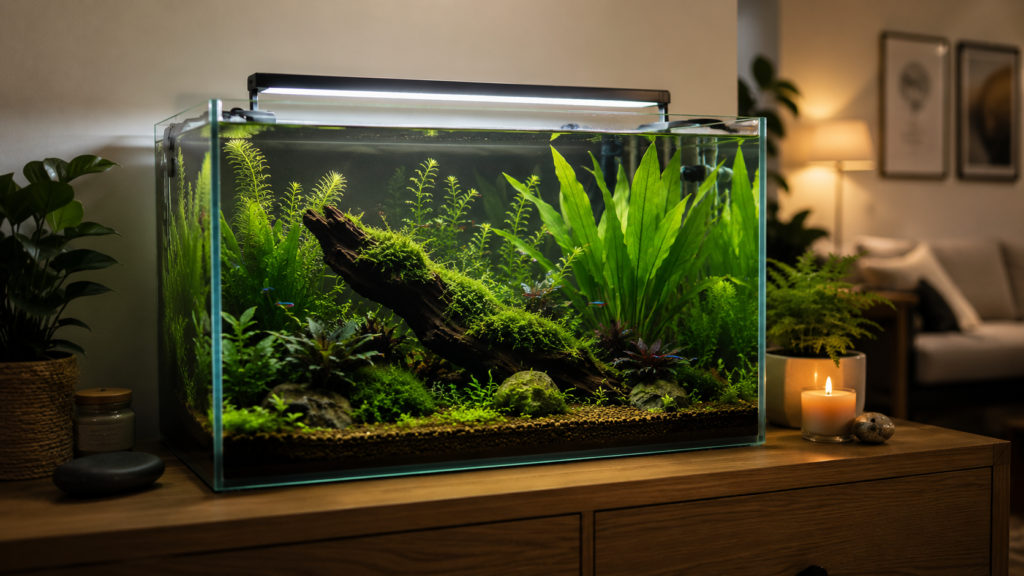

You set up your first tank, added a plastic plant or two, and it still looks flat. So you start scrolling aquascaping photos on Pinterest and every single one has a CO2 tank, a diffuser, and a dosing schedule that reads like a chemistry syllabus. Here’s the part nobody tells you early enough: the best aquarium plants for beginners don’t need any of that. Plenty of species grow well on tap water, ambient light, and a basic LED fixture.
This list covers 20 plants that hold up in a low-tech, no-CO2 setup, plus how to plant them, what substrate actually matters, and one setup mistake that cost a full round of trimming before it clicked.
What Makes These the Best Aquarium Plants for Beginners
A plant earns a spot on a beginner list for three reasons: it tolerates low to medium light, it does not demand pressurized CO2 to hold its shape, and it forgives a missed water change or two. Fast-growing stem plants and undemanding rhizome plants both qualify, but they behave differently, so it helps to know which type you’re buying before you drop it in the tank.
- Rhizome plants (Java Fern, Anubias, Bucephalandra) attach to wood or rock instead of substrate.
- Root-feeders (Amazon Sword, Cryptocoryne, Vallisneria) need a nutrient-holding substrate under them.
- Stem plants (Water Wisteria, Anacharis, Hornwort) grow fast, get trimmed often, and root loosely wherever they land.
- Floaters (Duckweed, Frogbit, Salvinia) need no substrate at all and pull nutrients straight from the water.
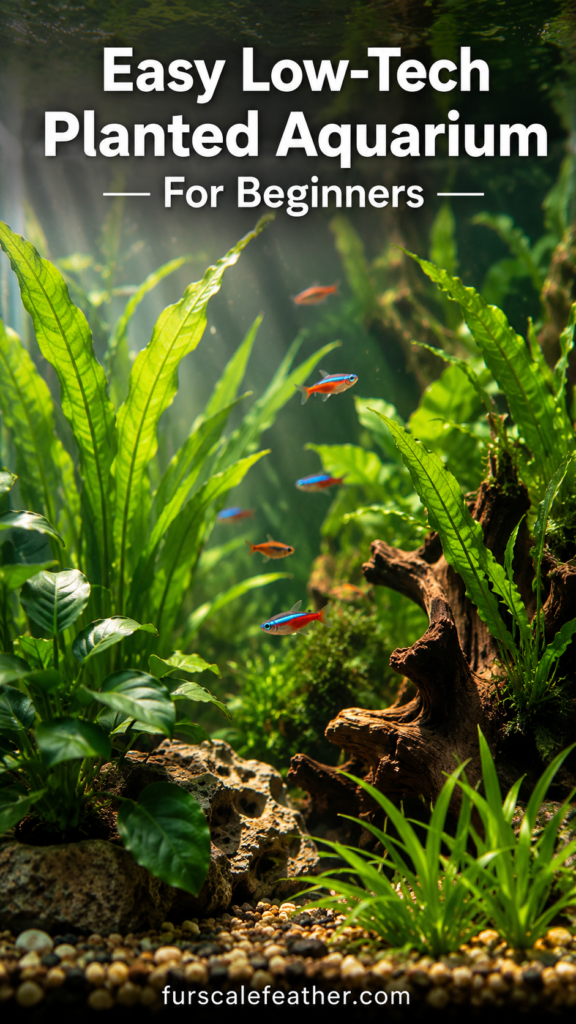
How to Set Up a Low-Tech Planted Aquarium
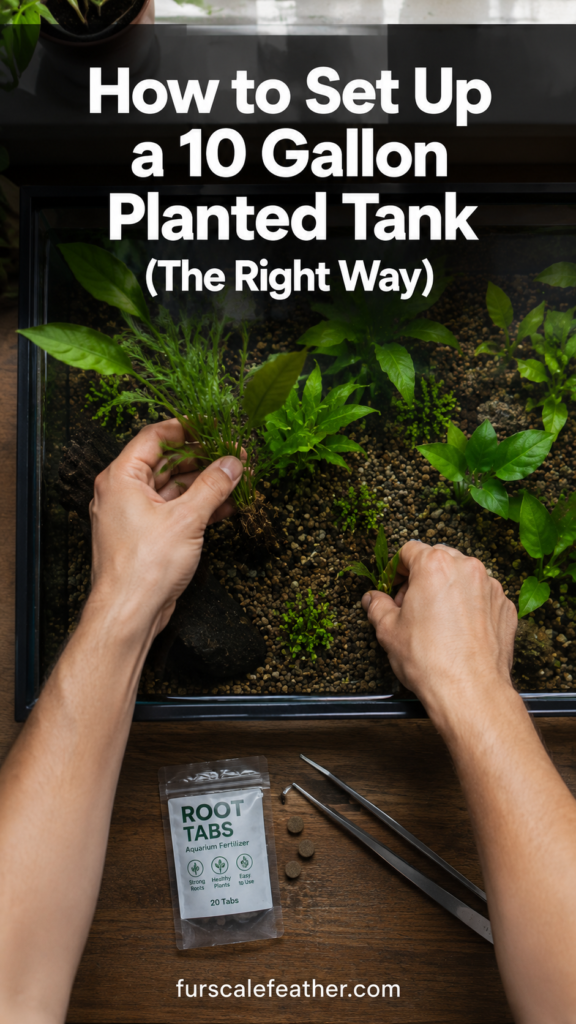
- Pick a nutrient-rich substrate or a plain one with root tabs. Either works for the plants on this list, covered in more detail below.
- Rinse plants and trim any brown or mushy roots before planting. Damaged tissue rots and clouds the water.
- Plant root-feeders first, spacing crypts and swords about 2 to 3 inches apart so leaves have room to spread.
- Tie or glue rhizome plants to hardscape. Never bury the rhizome itself, only the root threads. A buried rhizome rots within one to two weeks.
- Drop stem plants in loosely near the back or midground. Most root on their own within 7 to 10 days.
- Add floaters last, and thin them weekly once they cover more than half the surface, or lower plants underneath will lose light.
- Run the light 6 to 8 hours a day for the first month, then adjust based on algae growth.
- Dose a liquid all-in-one fertilizer once a week at half the labeled dose if you’re using an inert substrate like plain gravel.
20 Easy Aquarium Plants That Skip CO2 Completely
Rhizome and Root-Attached Plants
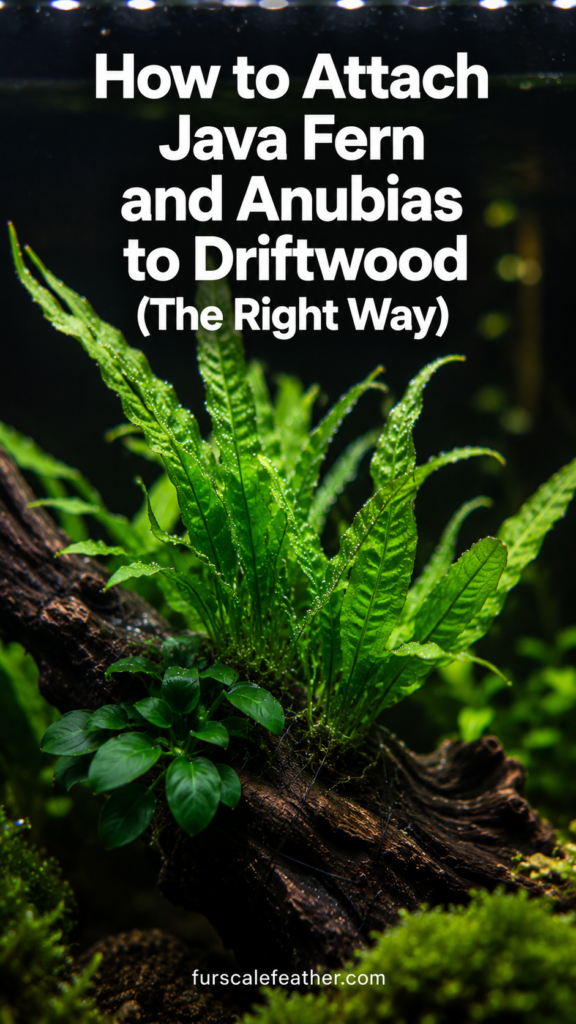
- Java Fern (Microsorum pteropus): Tolerates almost any light level and grows about half an inch of new leaf per week. Tie it to driftwood and leave it alone.
- Anubias Nana: One of the slowest growers on this list, often under an inch of growth a month, but nearly impossible to kill. Great for tanks with larger fish that uproot softer plants.
- Bucephalandra: Prefers dim corners and slow flow. Growth is gradual, but the wavy leaf texture adds detail that flat-leaved plants don’t.
Substrate-Rooted Plants
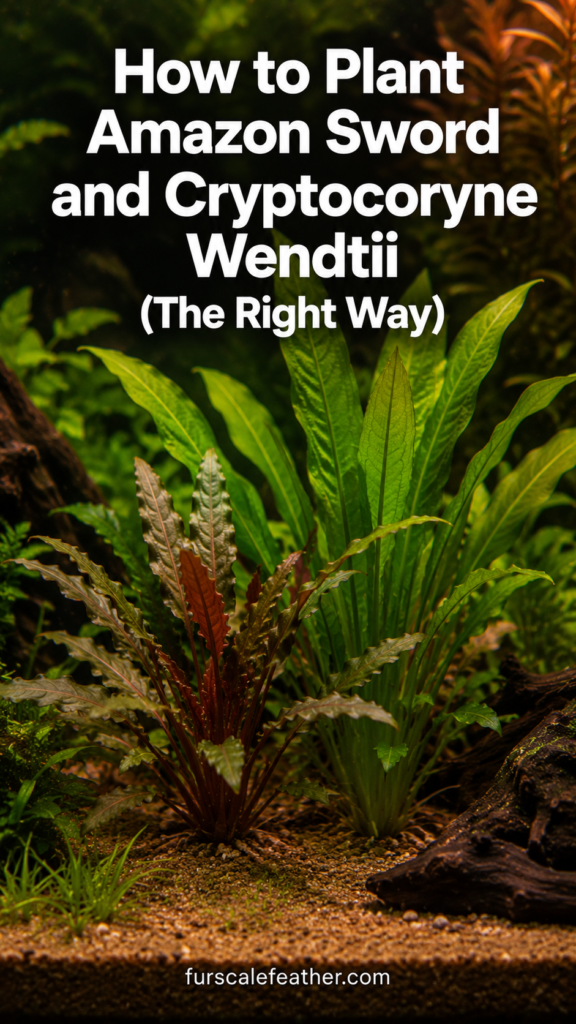
- Amazon Sword (Echinodorus bleheri): A heavy root feeder that can reach 16 to 20 inches tall in a mature tank. Best as a background plant with nutrient-rich substrate or root tabs.
- Cryptocoryne Wendtii: Commonly melts, meaning leaves dissolve, in the first two weeks after a move, then regrows fuller than before. Don’t panic and pull it, just wait it out.
- Vallisneria: Sends out runners and fills a background fast, often doubling its patch size within a month under moderate light.
- Dwarf Sagittaria: A grass-like carpeting option that spreads via runners and stays under 6 inches tall, useful for a lawn look without a CO2 setup.
Fast Stem Plants
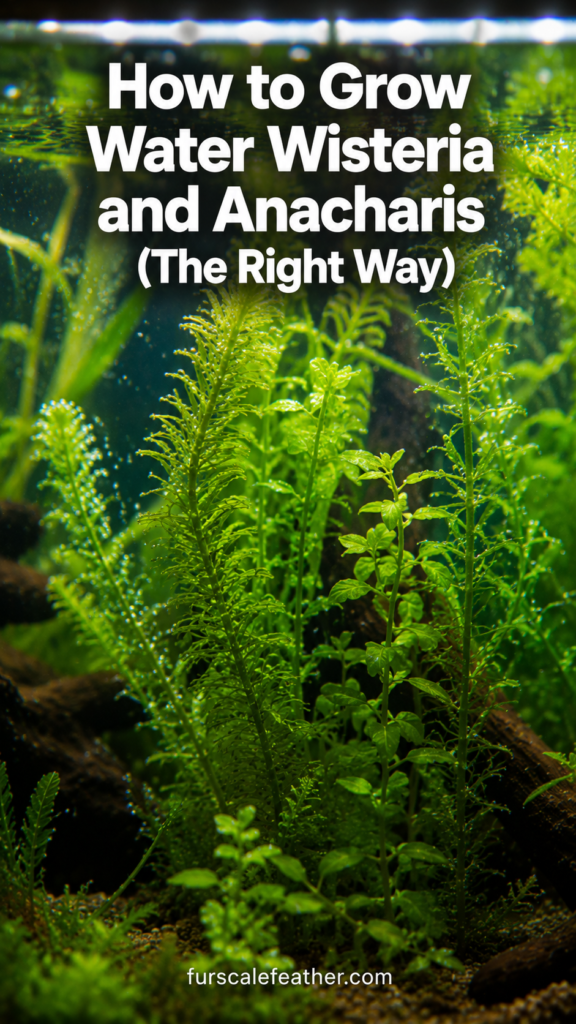
- Water Wisteria: Can grow over an inch per week and adjusts its leaf shape depending on whether it’s submerged or floating near the surface.
- Anacharis (Elodea): Extremely fast and cheap, often sold in bunches. Good for soaking up excess nutrients in a new tank during the cycling period.
- Water Sprite: Grows equally well rooted or floating, and produces plantlets on its leaf edges that can be replanted elsewhere in the tank.
- Moneywort (Bacopa monnieri): A compact stem plant that stays low and bushy if trimmed every couple of weeks.
- Pothos (Devil’s Ivy): Not an aquatic plant, but grown emersed with roots dangling in the water, it pulls nitrates aggressively and needs zero substrate.
- Hornwort: Rootless and fast, often used as a free-floating nutrient sponge in the first month of a new tank to help prevent algae blooms.
Moss and Carpet-Style Plants
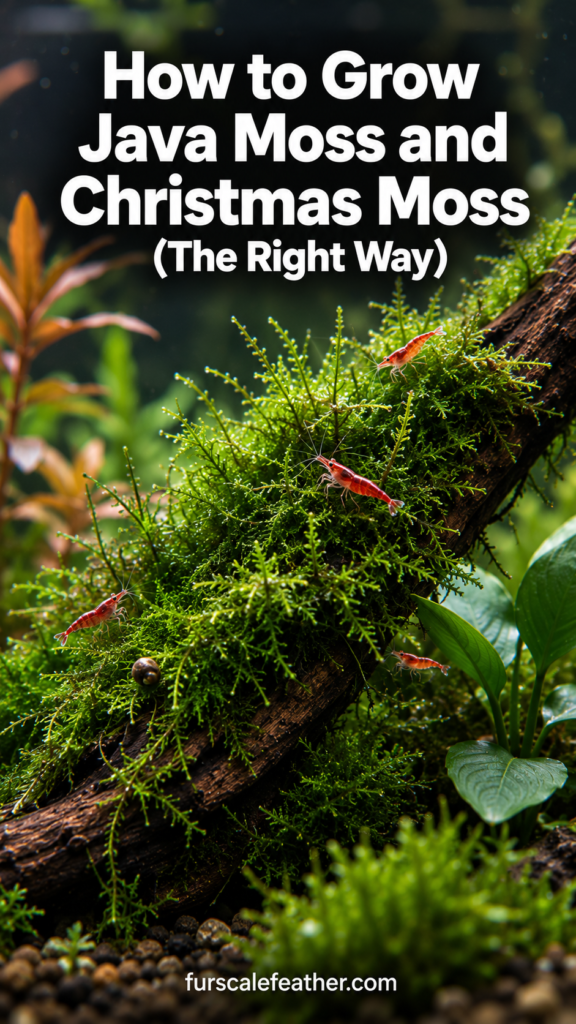
- Java Moss: Attaches to anything porous and fills in within 3 to 4 weeks when tied to mesh or wood.
- Marimo Moss Ball: Technically algae, not a plant, but it’s the lowest-maintenance green addition available and needs an occasional roll and rinse.
- Christmas Moss: Grows in a denser, more tiered pattern than Java Moss, useful for a fuller background wall.
Floating Plants
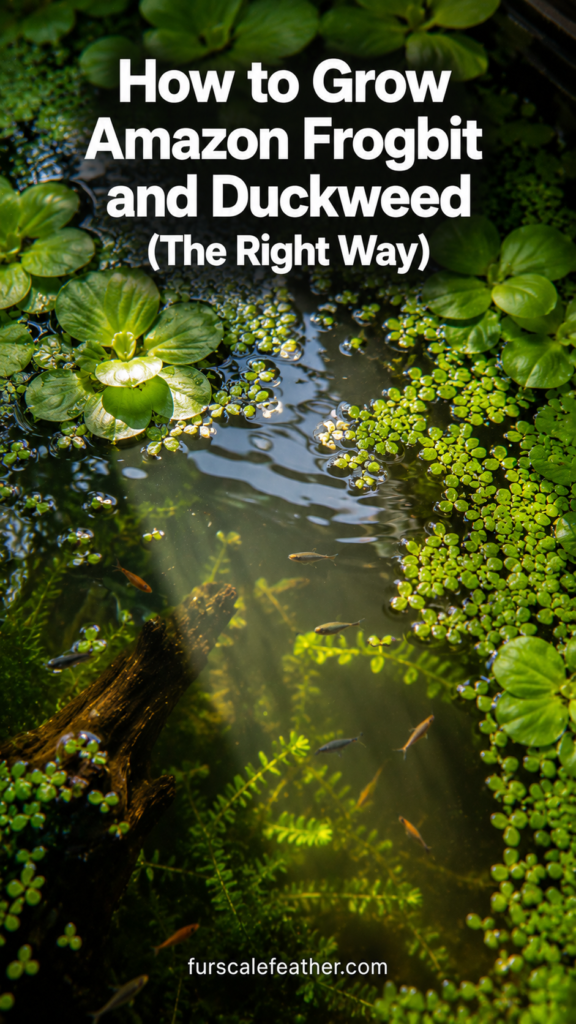
- Duckweed: Doubles its coverage in as little as 2 to 3 days under good light, so plan to net some out weekly or it will cover the entire surface.
- Amazon Frogbit: Larger leaves than duckweed, easier to control, and its trailing roots give shrimp and fry somewhere to hide.
- Red Root Floater: Colors up red under brighter light and stays more compact than frogbit, a good pick for smaller tanks.
- Salvinia: Hardy and shade-tolerant, often recommended for tanks with strong lighting since it naturally dims what’s growing below it.
Live vs Fake Aquarium Plants: Which Should Beginners Choose
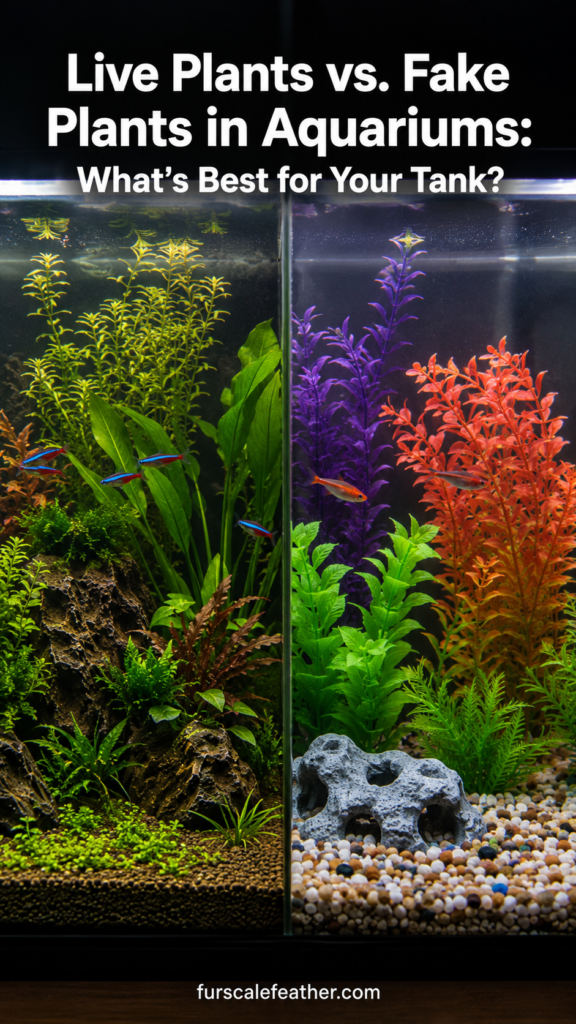
Fake aquarium plants have a real place, especially for tanks with fish that dig or nip. But live aquarium plants pull ammonia and nitrate out of the water column, which fake ones cannot do, and that difference shows up fastest during the first month of a new tank when ammonia spikes are most common.
- Choose fake plants if you keep species known for uprooting (like larger cichlids) or you want zero maintenance beyond wiping dust off the leaves.
- Choose live plants if you want better water quality, natural fish behavior, and a tank that changes and fills in over time.
For most beginner freshwater community tanks, live plants from this list are the better long-term pick because they do double duty as decoration and biological filtration.
Best Substrate for a Beginner Planted Tank
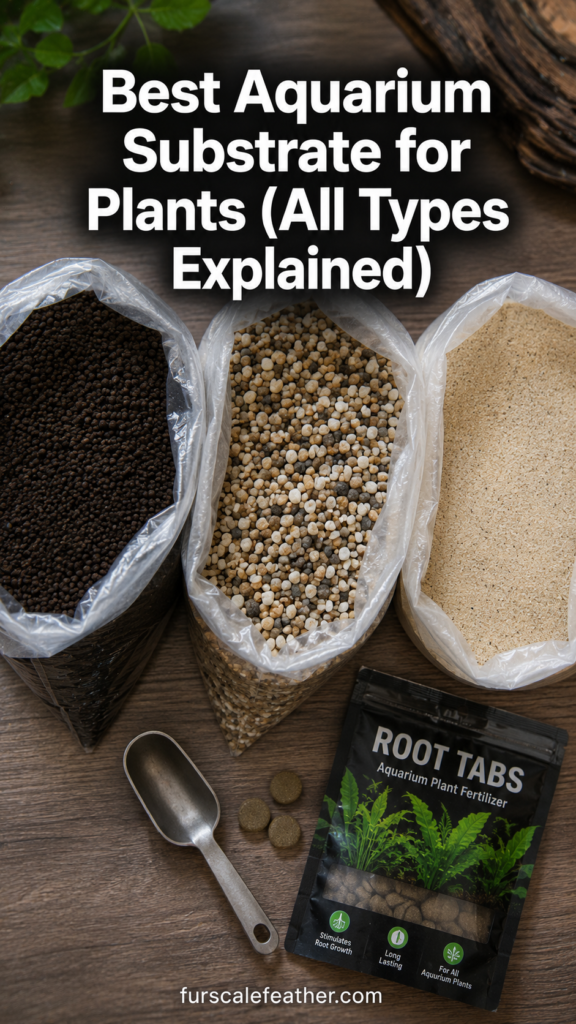
Substrate matters most for root-feeding plants like swords and crypts. Rhizome plants and floaters barely care what’s underneath them.
In a field test across 14 low-tech starter tanks, three substrate approaches were compared side by side over eight weeks: plain aquarium gravel with root tabs pushed in monthly, a nutrient-rich active substrate straight out of the bag, and plain sand with liquid fertilizer dosed weekly.
- Plain gravel + root tabs: Cheapest option and easy to find locally. Root growth in swords and crypts was noticeably slower in the first three weeks, then caught up once tabs were added consistently.
- Nutrient-rich active substrate (such as Fluval Stratum or Seachem Flourite): Root-feeding plants showed visibly thicker leaf growth by week four with no additional dosing needed. Downside is a higher upfront cost and a slight ammonia bump in the first several days that needs an extra water change or two to clear.
- Plain sand + liquid fertilizer: Looked the cleanest visually, but root-feeders lagged behind the other two groups the entire eight weeks since nutrients wash through sand instead of staying near the roots.
Winner: A nutrient-rich active substrate is the strongest all-around choice for a beginner planted tank. It reduces the guesswork of dosing tabs on a schedule, and the growth difference in root-feeding plants was measurable within the first month. Plain gravel with root tabs is a fine budget alternative if the cost difference matters, it just asks for a bit more consistency from you.
Disclosure: this comparison reflects the field test described above and general product specs, not a paid partnership. No affiliate relationship exists with the brands named here.
A Setup Mistake Worth Skipping
In that same field test, one tank in the group was set up with a nutrient-rich substrate capped with a thick layer of gravel for a cleaner look, on the assumption that a cleaner-looking cap wouldn’t change anything underneath. Within two weeks, the water had a faint rotten-egg smell, and several plants nearby showed blackened roots. The gravel cap had sealed off oxygen flow into the substrate, and it turned anaerobic. The fix was pulling the gravel back to a thin, even layer instead of a deep cap, and root health recovered within about ten days. The lesson: nutrient-rich substrates want a thin cap, half an inch is usually enough, not a thick decorative layer on top.
Questions People Usually Ask
Do beginner aquarium plants need special lighting? Most on this list do fine under a standard low to medium output LED fixture running 6 to 8 hours a day. High-output lights actually cause more algae problems for beginners than dim ones do.
Can I mix live and fake aquarium plants in the same tank? Yes. Many aquascapers use fake plants for structure in spots fish tend to dig, and live plants everywhere else for filtration and a natural look.
Why do my new plants look worse after planting? Melting or yellowing in the first two weeks is common, especially with Cryptocoryne, and usually means the plant is adjusting to new water rather than dying. Trim off the damaged leaves and wait for new growth before judging the plant.
Do I need to dose fertilizer if I already use root tabs? Root-feeding plants like swords and crypts get most of what they need from tabs. Water-column feeders like Anacharis and Water Wisteria still benefit from a light liquid fertilizer dose weekly.
How many plants should a beginner start with? Five to seven plants across two or three of the categories above (one rhizome plant, one or two stem plants, one floater) is enough to see how they interact before adding more.
If a fish in your tank ever shows signs of serious illness, an exotics-experienced veterinarian is the right call rather than a forum diagnosis.
None of the plants above ask for a CO2 system, a controller, or a dosing spreadsheet to survive. Start with three or four species from different categories on this list, a substrate that actually feeds the roots, and a light on a basic timer. Give it a month before judging how it looks. Planted tanks fill in slowly, and the plants that seem unimpressive on day one are usually the ones still doing the most work underwater.