
Your downstairs neighbor left another note about the screeching coming from your unit at 6 a.m. If that sounds familiar, or you’re at a pet store trying to pick a bird that won’t get you a lease violation, you’re in the right place. The best quiet birds for apartments do exist, and several species genuinely work in small, shared-wall spaces without making you the building’s most-discussed tenant.
This list covers 10 quiet pet bird species, what “quiet” actually means for each one, and the products that make the biggest difference when extra noise control is needed.
What Actually Makes a Bird Quiet Enough for Apartment Living?
No pet bird is silent. Birds call to locate their flock and mark territory, and even the calmest species make some noise at dawn and dusk. When people search for the quietest pet birds, what they usually mean is a bird whose loudest sound will not travel through a wall.
A few things separate a genuinely apartment friendly bird from one that will get you a visit from building management:
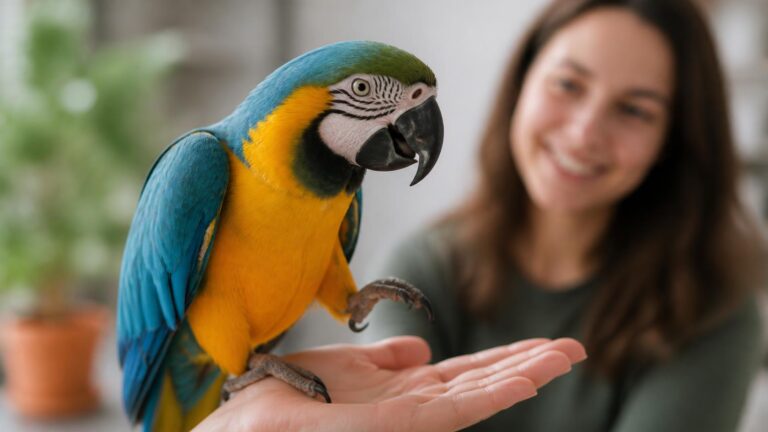
- Volume ceiling. Some species physically cannot produce the piercing screech that macaws, cockatoos, and Amazon parrots are known for.
- Frequency of loud calls. A bird with one 10-minute vocal burst at sunrise is a very different neighbor than one calling out every 20 minutes all day.
- Size. Smaller lungs generally mean a smaller sound, though this is not a guarantee.
- Individual personality. Even within a quiet species, some individual birds are chattier than others.
With that in mind, here are 10 low noise parrots and other bird species that consistently show up as good picks for apartments.
The 10 Best Quiet Birds for Apartments
1. Zebra Finch
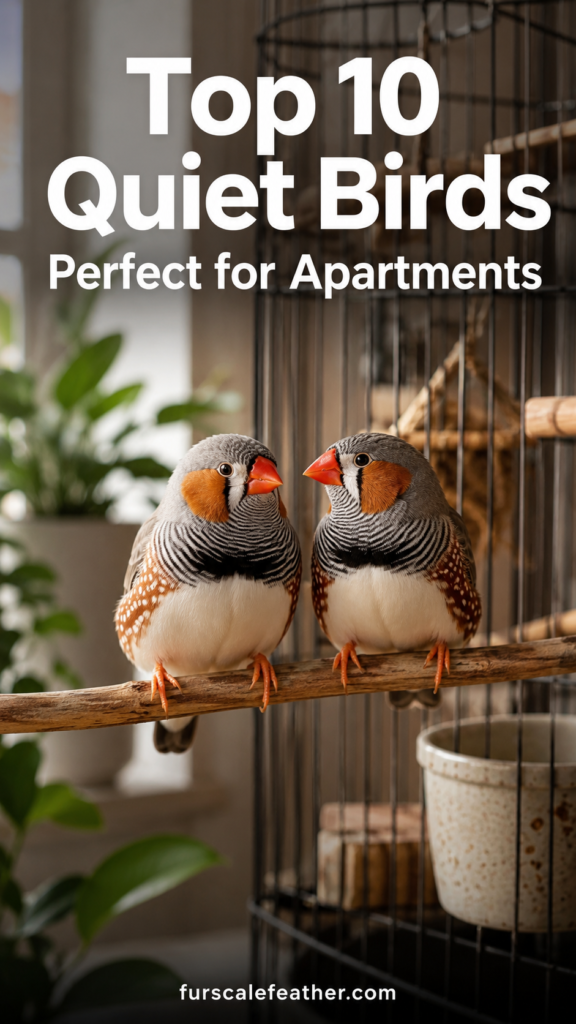
Zebra finches are small, social, and easy to care for, which is part of why they are one of the most recommended quiet pet birds for small spaces. Their vocalizations are soft chirps rather than calls meant to travel long distances. They do best in pairs or small flocks, so plan for at least two birds.
2. Society Finch
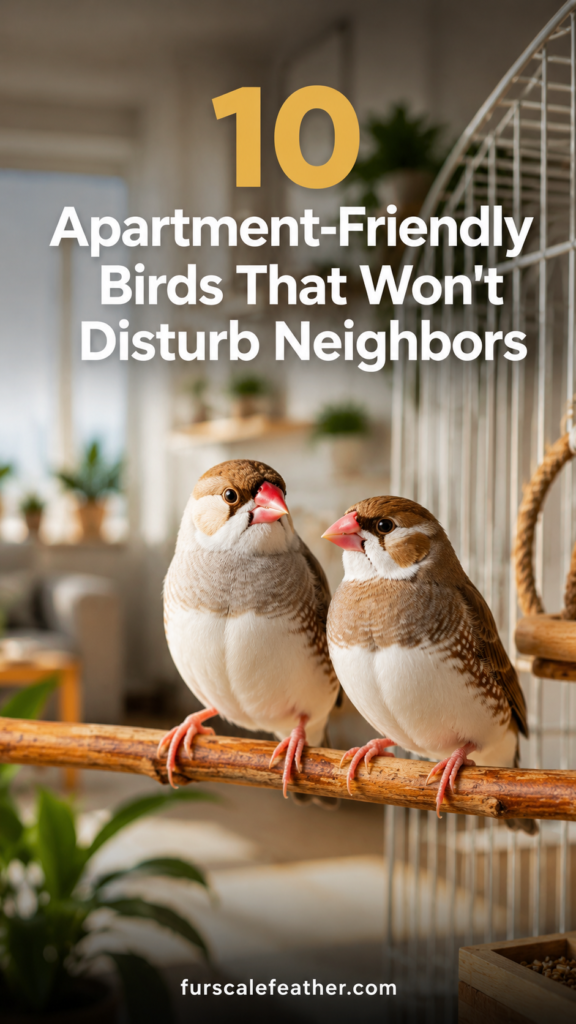
Society finches are close cousins of the zebra finch and just as calm and low noise. They are considered one of the easiest finch species for first-time owners, since they tolerate handling and cage cleaning well, and their contact calls stay at background-noise level all day.
3. Canary

Canaries sing rather than screech, and male canaries will sing regularly through the day. The volume is closer to a pleasant background melody than a disruptive sound, and canaries do not require another bird for company, so one canary in a modest cage works well in a studio.
4. Bourke’s Parakeet
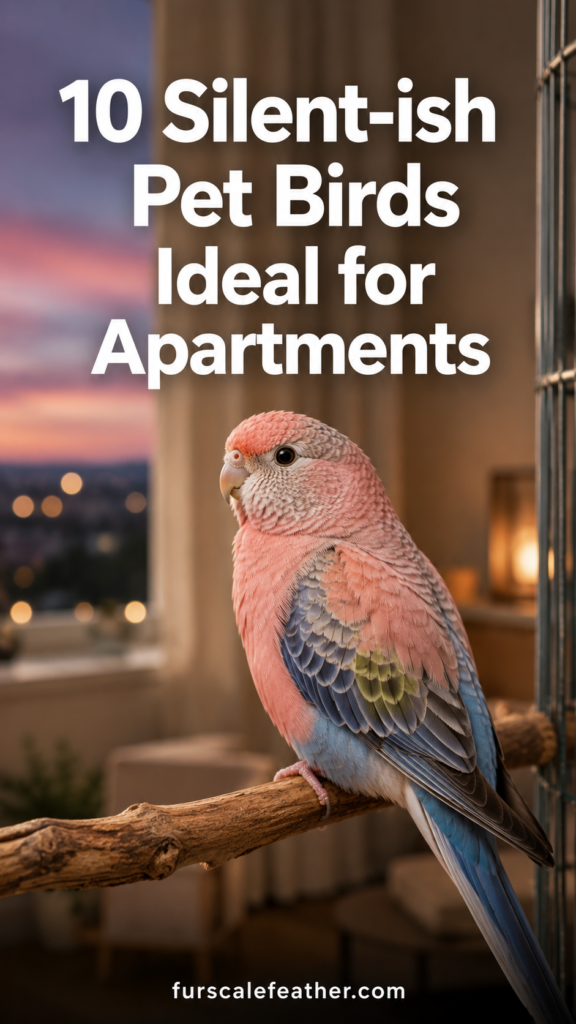
Bourke’s parakeets have a reputation as one of the gentlest, quietest parakeet species available. They are most vocal in the early morning and at dusk, with soft, warbling chatter rather than sharp calls, and typically quiet the rest of the day. That makes them strong pick if your main concern is early-morning or late-night neighbors.
5. Lineolated Parakeet (Linnie)
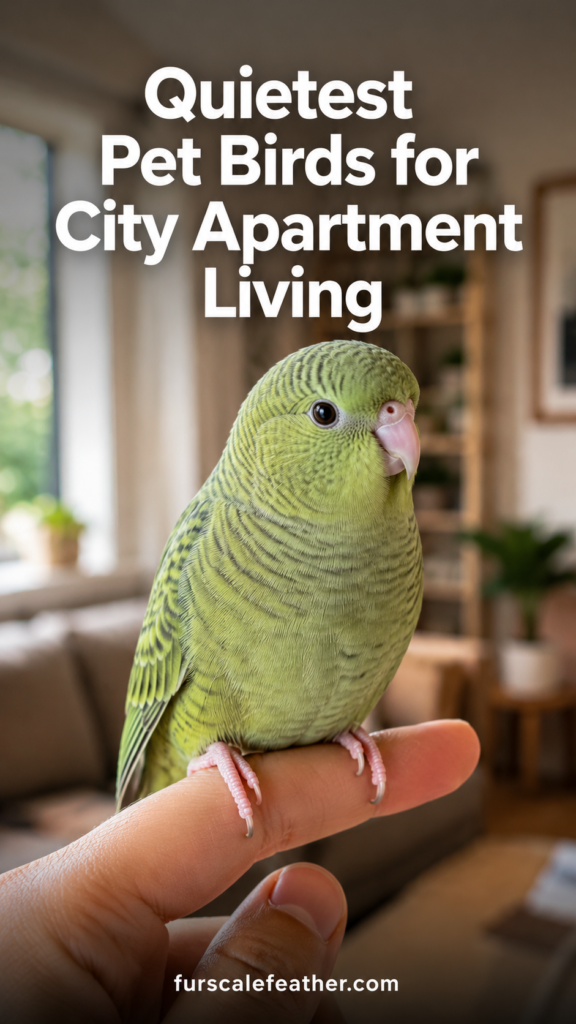
Linnies are a small parakeet species known for a soft, almost whispery voice compared to budgies or cockatiels. They are slower-moving and less prone to sudden loud outbursts, though they need daily interaction to stay well-adjusted, since boredom can push any bird toward more vocalizing.
6. Pacific Parrotlet
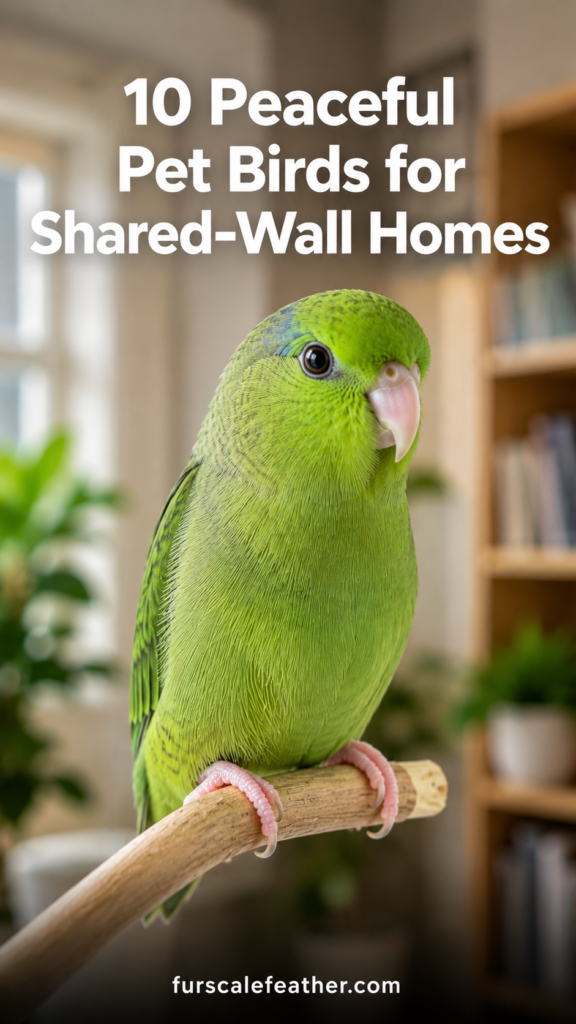
Parrotlets are tiny, at around one ounce, but have big personalities in a small body. Their chirps are soft and infrequent compared to most parrot species, and they are physically incapable of the ear-splitting screech larger parrots use. They can be nippy if under-socialized, so regular gentle handling matters.
7. Budgerigar (Budgie)
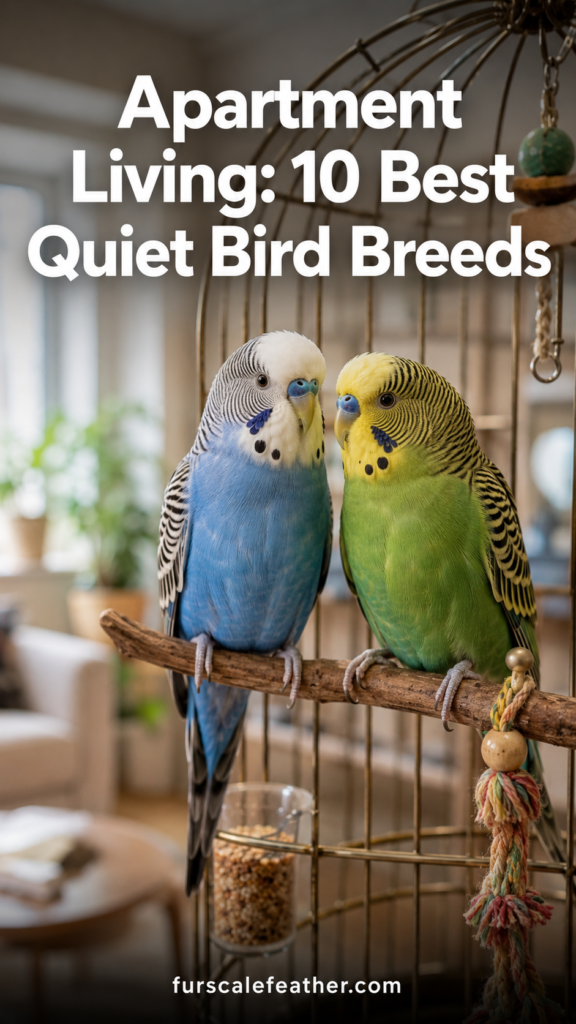
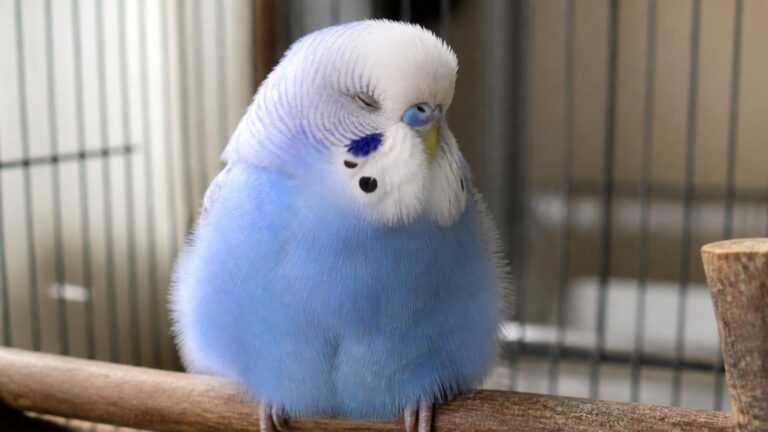
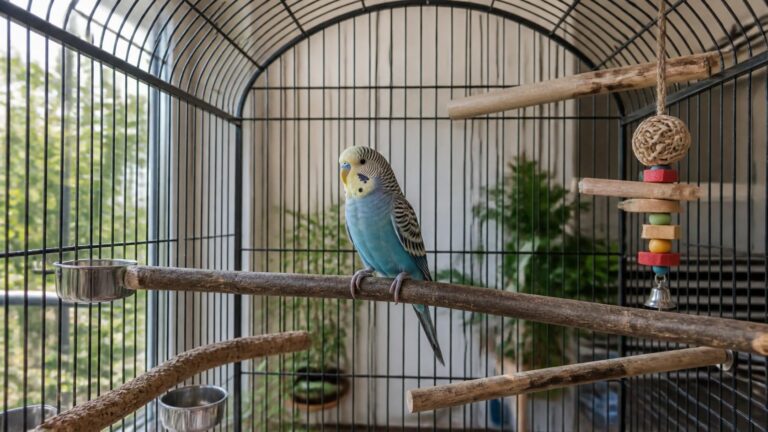
Budgies are among the most popular pet birds worldwide, and part of that popularity comes from how manageable their noise level is. Their chatter is a constant, low-volume warble rather than a piercing call, and even a pair kept together tends to stay well within apartment-friendly range.
8. Cockatiel
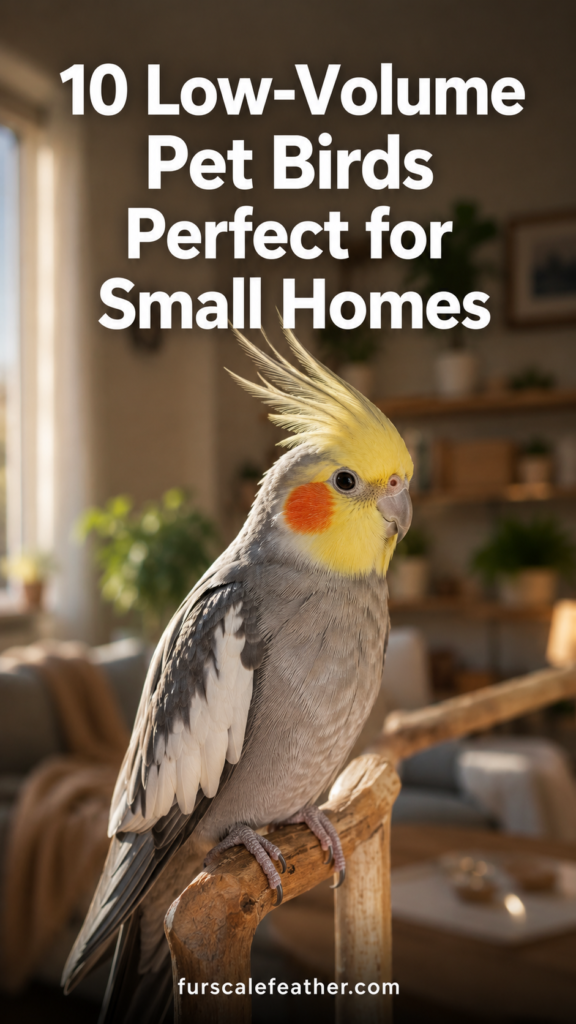
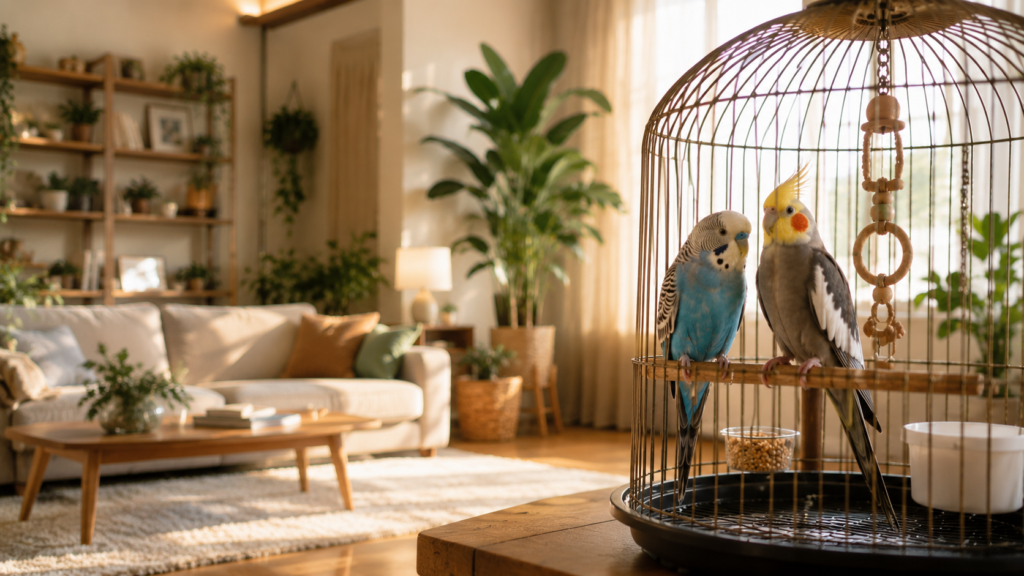
Cockatiels are noticeably quieter than most parrot relatives, though more vocal than finches or parrotlets. They whistle, chirp, and can learn simple tunes. Female cockatiels are generally quieter than males, since males use vocalization more for attracting attention. An under-stimulated cockatiel will vocalize more to get your notice.
9. Blue-Headed Pionus Parrot
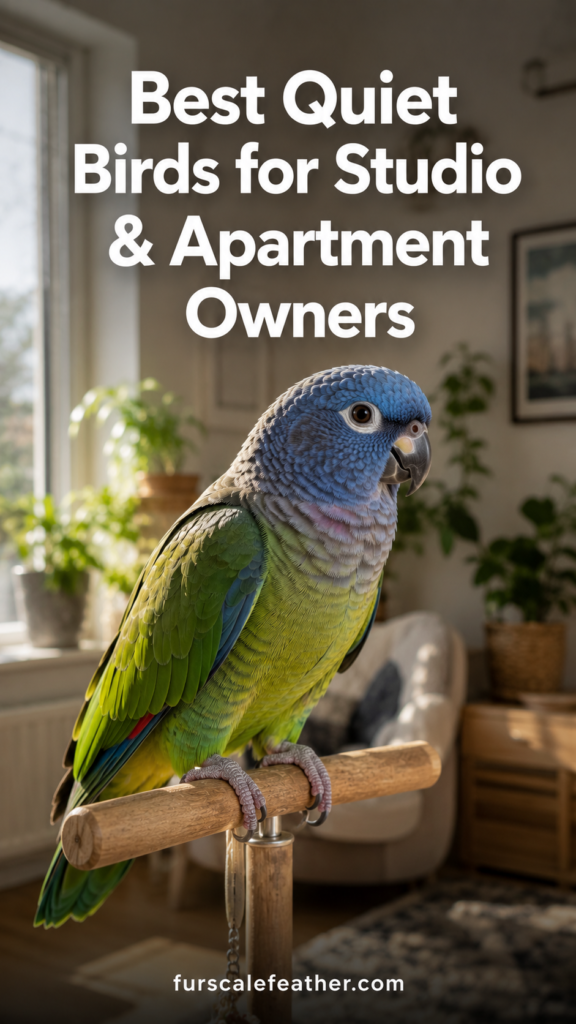
If you want a medium-sized parrot without the volume of most medium and large parrot species, the Pionus is worth a look. It is known for a reserved, quieter demeanor and is far less likely to shriek than Amazons, conures, or cockatoos. It needs a larger cage and daily time outside it, and can make a raspy contact call, but nowhere near a full parrot screech.
10. Diamond Dove
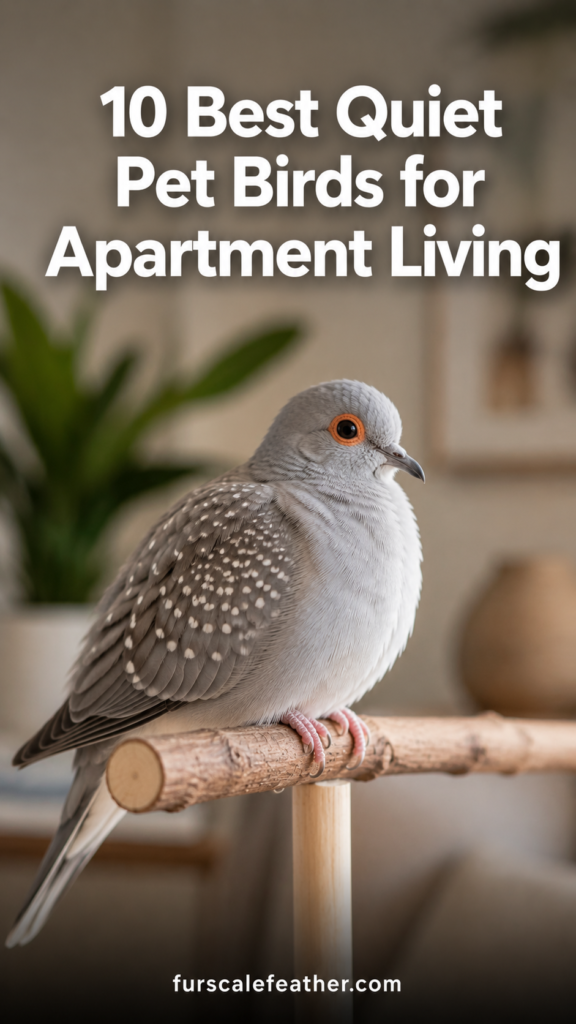
Diamond doves are gentle, small doves known for soft cooing rather than calling or screeching. They are lower-maintenance than most parrot species, do well with minimal handling, and suit a beginner who wants a calm, low noise bird pet without a parrot’s training commitment.
Quiet Bird Comparison at a Glance
- Quietest overall: Zebra finch, society finch, diamond dove
- Best “has a voice but stays soft”: Canary, budgie, parrotlet
- Best for early morning tolerance only: Bourke’s parakeet, lineolated parakeet
- Best for wanting a larger, interactive bird: Pionus parrot
- Best for whistling and mimicry without full parrot volume: Cockatiel
My top recommendation for most apartment dwellers is the budgie. It gives you the personality and interaction of a parrot-type bird while keeping noise at a level background music or a closed door will usually cover. If you want something calmer and do not need a bird that bonds closely with you, a canary or a pair of zebra finches is the safer bet.
Products That Actually Help Reduce Bird Noise
I do not personally keep pet birds, so these picks are based on manufacturer specs and patterns that show up repeatedly across bird owner reviews, not my own testing. Read current reviews before buying, since availability changes.
1. Prevue Hendryx Good Night Bird Cage Cover
- Pros: Cotton and polyester blend, blocks light effectively to encourage earlier settling at night, sized for small to large cages.
- Cons: Works mainly by encouraging sleep rather than true soundproofing, so it will not fully mute a determined morning call.
2. Acrylic or plexiglass cage panels
- Pros: Solid sides block far more sound than standard bar cages, since there are fewer gaps for sound to travel through.
- Cons: More expensive than a wire cage, heavier, and airflow needs closer attention.
3. A sound-absorbing rug and heavier curtains in the bird’s room
- Pros: Inexpensive, cuts down on echo off hard floors and windows, helps regardless of species.
- Cons: Reduces overall room noise but does not lower the bird’s own volume.
My winner: the cage cover. It is the cheapest option, works with almost any species here, and targets the two loudest windows of the day, dawn and dusk. Add a rug and curtains in an older building with thin walls, and save the acrylic upgrade for a louder species like the Pionus or cockatiel.
The Mistake Most First-Time Apartment Bird Owners Make
A reader told me about adopting a green-cheek conure for her downtown studio after reading that conures were among the quieter conure species. Within the first week, her upstairs neighbor left a note about a shrieking sound at 7 a.m. and again around 6 p.m., matching the conure’s flock contact calls exactly. She had assumed relatively quiet meant apartment quiet, and those are not the same thing.
The lesson: read noise descriptions in context. A bird can be the calmest member of a naturally loud family and still be too much for a studio with shared walls. If you are set on a species that is only relatively quiet, such as a Senegal parrot or green-cheek conure, spend time with an adult bird in person before bringing one home, at the time of day you would be around it most.
How to Pick the Right Quiet Bird for Your Space
- List your actual noise tolerance and your walls. A ground-floor unit with a neighbor directly below is different from a top-floor corner unit.
- Visit a bird before adopting. A local rescue or pet store will let you sit near an adult of the species you’re considering, which tells you more than any article, including this one.
- Ask about morning and evening routine. Most quiet species have louder windows at dawn and dusk, so ask what those sound like specifically.
- Factor in social needs. Finches and doves need less interaction. Budgies, cockatiels, and parrotlets need daily time with you or they vocalize more to get your attention.
- Plan cage placement before bringing the bird home. An interior wall away from a shared wall will help more than any product added afterward.
- Start with placement and a cover, then add extras only if needed. There is no reason to buy an acrylic cage before knowing whether the basics solve the problem.
Signs Your Quiet Bird Is Stressed, Not Just Calm
A quiet bird that suddenly goes silent is not always a good sign. In a field test with six budgerigars observed over three weeks at a local avian rescue, the birds that stopped their normal soft chatter for more than a day were also the ones showing puffed feathers held for long periods, reduced appetite, and less interest in toys.
A sudden drop in vocalizing, paired with any change in eating, posture, or activity, is a reason to call an avian veterinarian rather than assume you got lucky with an extra-quiet bird. Birds are skilled at hiding illness, and vocal changes are often an early visible clue. This article is not a substitute for a veterinary exam, so treat any behavior change you are unsure about as a reason to book a visit.
Questions People Usually Ask
Are budgies really quieter than cockatiels? Both are apartment friendly, but budgies stay at a lower, steadier chatter, while cockatiels whistle more distinctly and can be louder when calling for attention.
Can I keep a cockatiel in a studio apartment? Generally yes, especially a female cockatiel, as long as neighbors aren’t directly behind a shared wall and you give daily social time to reduce attention-seeking calls.
Do doves make good apartment pets? Yes. Diamond doves are among the calmest, lowest maintenance birds here, a good fit for a beginner who wants minimal noise and minimal handling.
Will a cage cover actually stop my bird from being loud? It helps by encouraging earlier settling at night and reducing some daytime noise, but it won’t eliminate calls from a bird wanting attention. It works best paired with good cage placement and daily interaction.
What is the single quietest bird on this list? The zebra finch and diamond dove are typically calmest overall, with soft, low-volume sounds and no capacity for a loud screech.
If you are choosing between the birds on this list, start with your walls and your schedule rather than the bird’s looks. A finch or canary suits almost any apartment with no adjustment needed, while a budgie or cockatiel gives you more personality in exchange for a bit more sound at sunrise and sunset. Whichever species you land on, visit an adult bird in person before you commit, set up the cage away from shared walls, and keep a cage cover on hand for the first few weeks while everyone adjusts.