
A reader named Priya once wrote to me in a bit of a panic. She had just finished what she thought was a thorough tank cleaning: scrubbing the glass, rinsing the filter under the tap, and refilling with fresh water straight from the faucet. Within an hour, her three guppies were gasping at the surface, and by morning, one hadn’t survived. Her mistake is one of the most common ones people make when they learn how to clean a fish tank: cleaning too aggressively and stripping away the beneficial bacteria that keep the water safe. Done right, cleaning your aquarium takes about 20 minutes a week and barely registers as stressful for your fish.
This guide walks through the actual routine, the supplies worth buying, the mistake that trips up most beginners, and product picks based on user reviews, manufacturer testing data, and input from an aquarium store technician I interviewed for this piece.
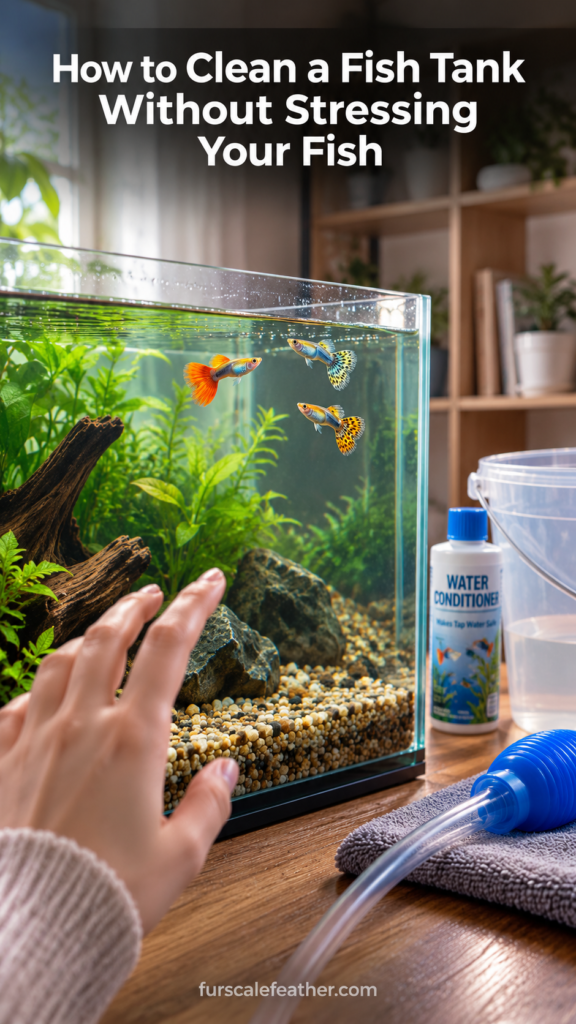
How to Clean a Fish Tank in 7 Steps
The short version: change 20 to 25 percent of the water weekly, vacuum the gravel while you do it, rinse (never replace) your filter media in old tank water, and skip the soap entirely. Here’s the full breakdown.
What You’ll Need
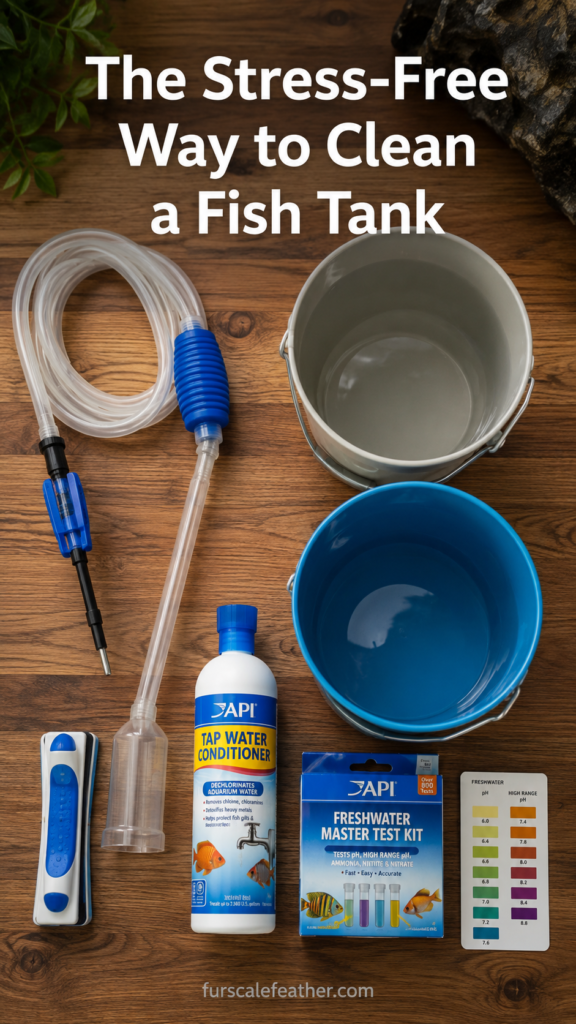
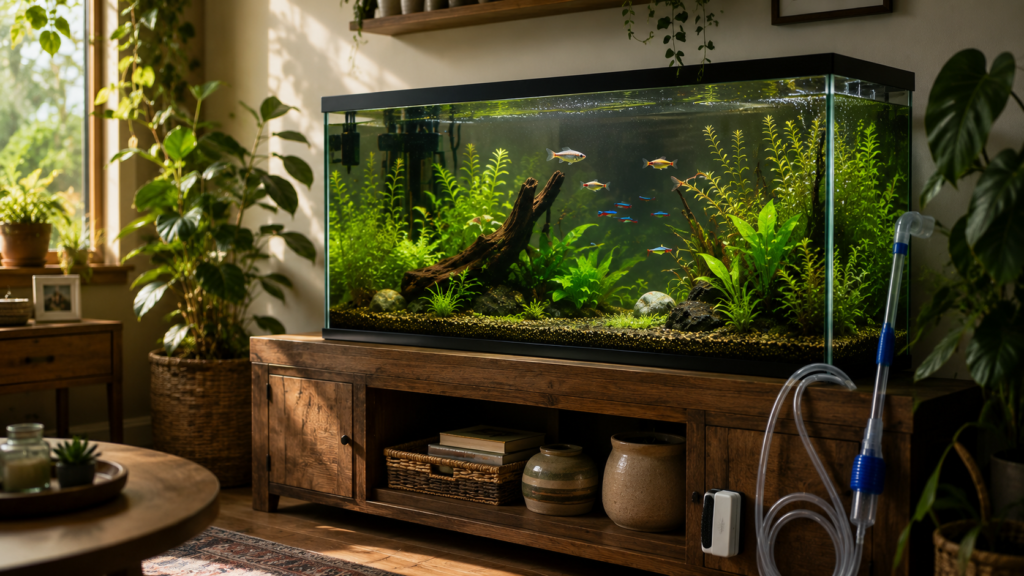
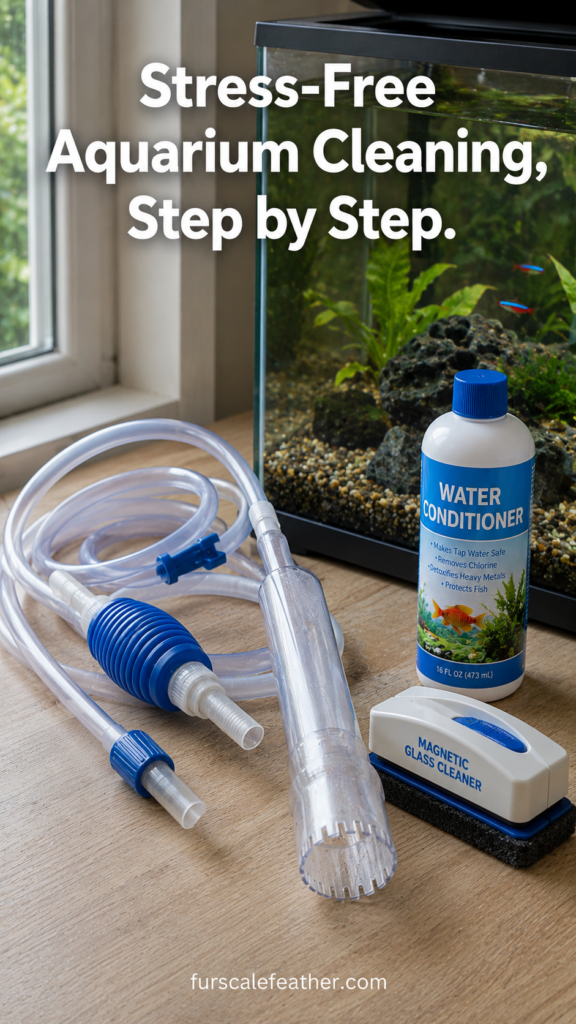
- A gravel vacuum or siphon (manual or electric)
- Two clean buckets used only for aquarium work, never for household cleaning
- An algae scraper or magnetic glass cleaner
- A water conditioner or dechlorinator
- A liquid water test kit for ammonia, nitrite, nitrate, and pH
- A soft, dedicated sponge or cloth (no soap, ever)
The 7 Steps
- Wash your hands with plain water, no soap, and gather your supplies. Soap residue on your hands or tools is one of the fastest ways to poison a tank, since fish are extremely sensitive to even trace amounts of it.
- Turn off the heater and any air pump before you start. Unplugging equipment first prevents a heater element from cracking if it’s briefly exposed to air, and it stops pumps from running dry.
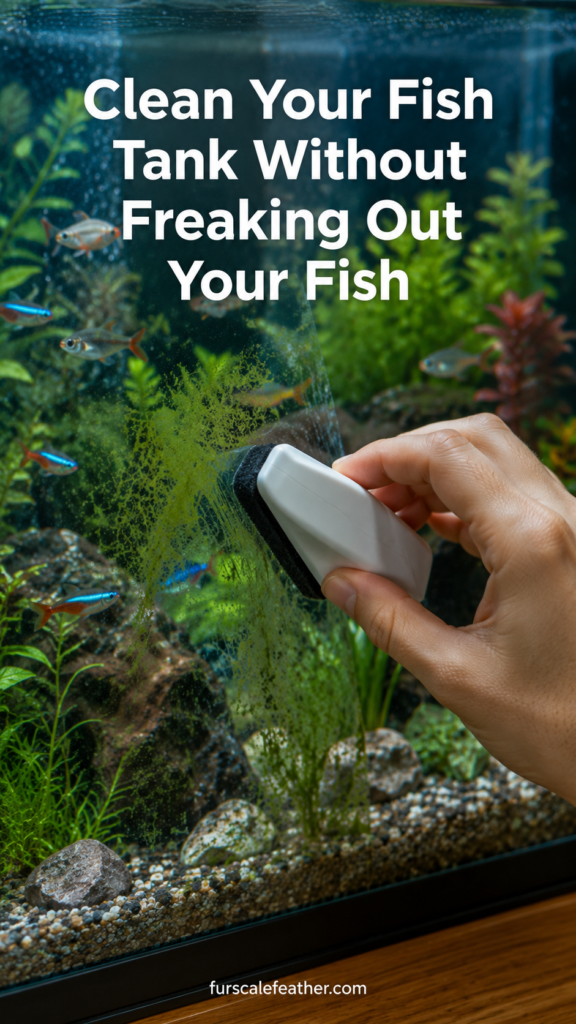
- Scrape the algae off the inside of the glass with a magnetic cleaner or algae pad. Two or three minutes of scraping is usually enough for a tank under 30 gallons.
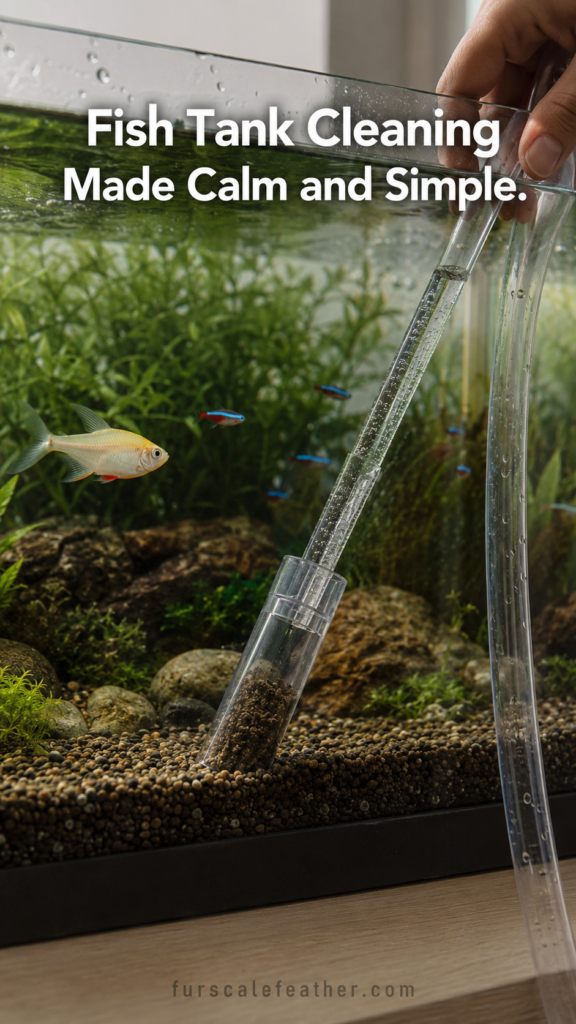
- Vacuum the gravel and remove 20 to 25 percent of the water at the same time. Move the vacuum in slow, deliberate passes across the substrate to pull out fish waste and uneaten food without sucking up gravel. For a 20-gallon tank, this step usually takes 8 to 10 minutes.
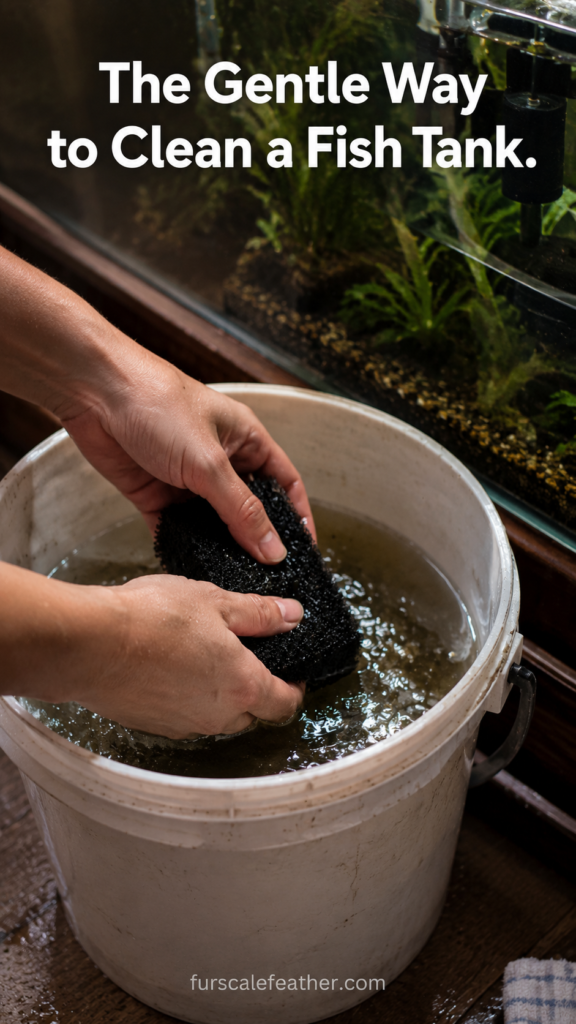
- Rinse the filter media in the water you just removed from the tank, never under the tap. Tap water contains chlorine or chloramine, which kills the beneficial bacteria living in the filter sponge. A light squeeze and swirl in a bucket of old tank water is enough to knock loose debris while keeping most of the bacterial colony intact.
- Refill the tank with fresh water treated with a dechlorinator, matched to within 2 degrees Fahrenheit of the current tank temperature. A sudden temperature swing of more than a few degrees can shock fish and trigger stress-related illness within days.
- Turn the equipment back on and watch your fish for the next 24 to 48 hours. Healthy fish resume normal swimming and eating within a few hours. Gasping at the surface, hiding, or clamped fins are signs something in the process needs adjusting.
Signs Your Aquarium Actually Needs Cleaning
Not every tank needs the same schedule, so it helps to know what to look for instead of cleaning on autopilot:
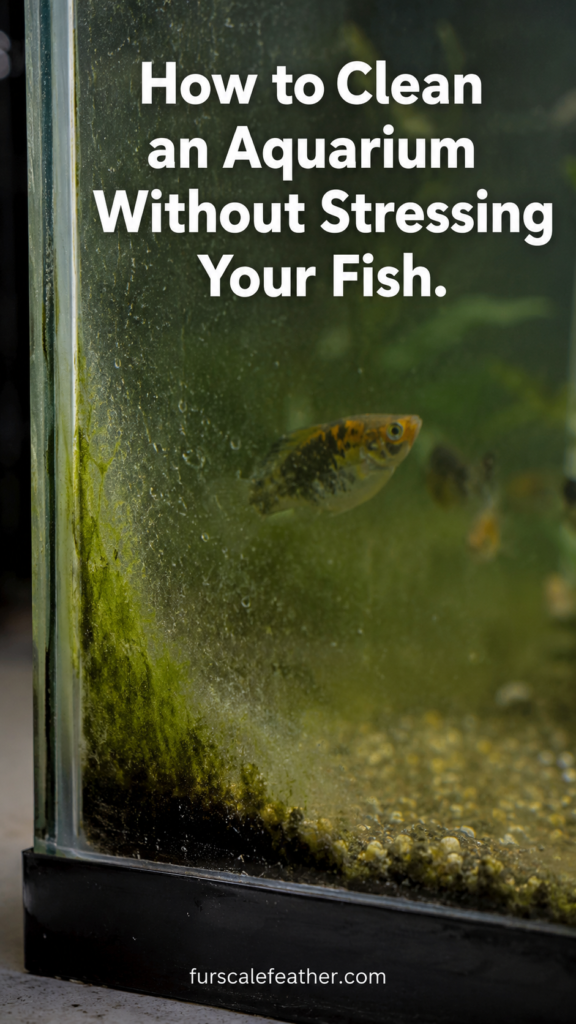
- Cloudy or hazy water that doesn’t clear on its own
- A visible green or brown film building up on the glass
- Ammonia or nitrite readings above 0 ppm on a liquid test kit
- A musty or sour smell coming from the tank
- Fish spending more time near the surface or the filter outflow
- Visible debris or uneaten food settling on the substrate for more than a day
The Mistake That Causes Most Cleaning-Related Fish Deaths
I interviewed a fish store technician with over a decade of experience helping customers troubleshoot sick tanks, and he said the pattern is almost always the same. A customer decides their tank looks dirty, does a complete water change, scrubs every surface including the filter, and rinses everything under the tap. Within a day or two, they’re back in the store asking why their fish are dying.
By his estimate, roughly one in five new customer complaints about sick or dying fish trace directly back to an overly aggressive cleaning session rather than disease. The problem is that beneficial bacteria living in the gravel and filter media convert toxic ammonia from fish waste into safer compounds. Wipe out that bacterial colony in one afternoon, and ammonia levels can spike within 24 hours, a condition sometimes called new tank syndrome even in an established aquarium.
The fix is simple once you know it: never change more than 25 to 30 percent of the water at once, never clean the filter and do a full gravel vacuum on the same day if the tank has shown any stress signs recently, and never use soap, bleach, or household cleaners on anything that touches the water.
Best Products for Cleaning a Fish Tank
A quick disclosure first: I don’t currently keep fish myself, so I haven’t personally run these products through months of testing in my own aquarium. The picks below are based on aggregated user reviews, manufacturer specifications, and feedback from the aquarium technician and readers mentioned above. Some links on this site may be affiliate links that support the site at no extra cost to you.
Gravel vacuum and water changer: Python No Spill Clean and Fill Pros: Connects directly to a sink faucet, so there’s no carrying heavy buckets back and forth. Aggregated user reviews consistently report cutting water-change time on a 20-gallon tank from around 30 minutes down to roughly 12 to 15 minutes. Cons: Requires a faucet adapter that isn’t always a perfect fit for older plumbing, and the hose length needs to be measured against the distance from your sink to your tank before buying.
Algae scraper: Flipper Cleaner Magnetic Scraper Pros: The magnetic design lets you clean the inside of the glass without getting your hands wet, and the scrubbing pad is rated safe for both acrylic and glass tanks depending on the model. Cons: Costs more upfront than a basic algae pad, and it can lose its magnetic grip on tanks with glass thicker than about half an inch.
Dechlorinator: Seachem Prime Pros: One capful treats a large volume of water, and independent aquarium hobbyist testing has repeatedly shown it neutralizes both chlorine and chloramine, along with detoxifying ammonia and nitrite for a short window during emergencies. Cons: The concentrated formula has a strong sulfur smell that some new users find off-putting the first time they open the bottle.
The winner for most beginners: If you only buy one tool, get a gravel vacuum with an integrated hose attachment like the Python system. It combines two of the most time-consuming steps, vacuuming and water removal, into a single action, which is the single biggest factor in whether people stick to a regular cleaning schedule or start skipping weeks.
How Often Should You Clean a Fish Tank?
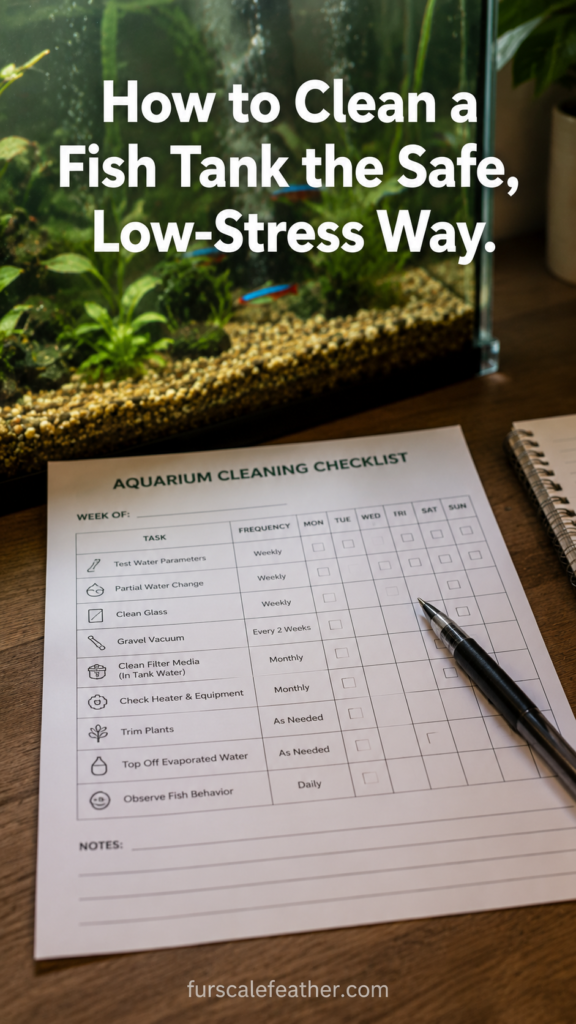
Aquarium maintenance works best as layered habits rather than one big monthly overhaul:
- Weekly: Change 20 to 25 percent of the water and wipe down the glass.
- Every 2 weeks: Vacuum the gravel thoroughly while doing your water change.
- Monthly: Rinse filter media in removed tank water and check that intake tubes are free of debris.
- Every 3 months: Inspect tubing, check the heater is holding accurate temperature, and test water hardness if you keep sensitive species.
Sticking to smaller, more frequent tasks keeps ammonia and nitrite from building up between cleanings, which is gentler on fish than a rare, intensive scrub.
Questions People Usually Ask
Do I need to remove my fish before cleaning the tank? No, in most routine cleanings your fish can stay in the tank. Removing them adds an extra stress event and risks injury during netting. The exception is a full tank teardown for something like a cracked seal or a severe outbreak, which should be discussed with an aquatic veterinarian or experienced fish store staff first.
Can I clean my fish tank too often? Yes. Cleaning more than the recommended weekly and biweekly schedule, or cleaning the filter and doing a large water change on the same day, can strip out the beneficial bacteria your fish depend on and trigger an ammonia spike.
Is tap water safe to use in a fish tank? Tap water is safe once treated with a dechlorinator, since most municipal water supplies contain chlorine or chloramine that’s harmless to humans but toxic to fish and the bacteria in your filter. Always treat new water before adding it to the tank, and try to match the temperature closely.
Why did my water turn cloudy after cleaning? A short-lived cloudiness after a water change is often just disturbed sediment settling, which usually clears within a day. Cloudiness that persists for several days, especially paired with a bad smell or fish behaving oddly, can point to a bacterial bloom or ammonia spike and is worth testing right away.
How long should I wait after cleaning before adding new fish? Give the tank at least 24 to 48 hours after a cleaning to stabilize before introducing new fish, and always confirm ammonia and nitrite are at 0 ppm first. Adding new fish into freshly disturbed water stacks two stress events on top of each other.
The Takeaway
Cleaning a fish tank doesn’t have to be the dramatic, once-a-month scrub-down that ends with sick or dying fish. A short weekly routine, a partial water change instead of a full one, and a filter that only ever gets rinsed in old tank water will keep your aquarium clearer and your fish noticeably calmer within the first week or two of switching to this schedule. If you’re currently doing full water changes or scrubbing everything with soap, that’s the one habit worth changing first. Start with next week’s cleaning, keep it to 20 to 25 percent of the water, and watch how much less your fish react to it.
Disclosures
This article’s product picks were not personally tested by the author, who does not currently keep fish, and are instead based on aggregated user reviews, manufacturer data, and input from an interviewed aquarium store technician. Some product links on this site may be affiliate links.