
Your ball python just went into a stubborn premolt shed, the humidity gauge is stuck at 40 percent no matter what you do, and you’re standing in the reptile aisle staring at six bags that all claim to be the right choice. Picking the best substrate for a ball python enclosure is one of the first decisions new keepers get stuck on, and it matters more than most starter guides let on. The right substrate holds humidity, controls odor, and supports natural behavior. The wrong one causes impaction risk, mold, or a snake that never quite sheds cleanly.
I run a pet products shop that carries reptile supplies, and our in-store rescue and foster ball pythons have gone through nearly every substrate on the market at some point. This guide covers what held up, what caused problems, and how to set it up correctly the first time.
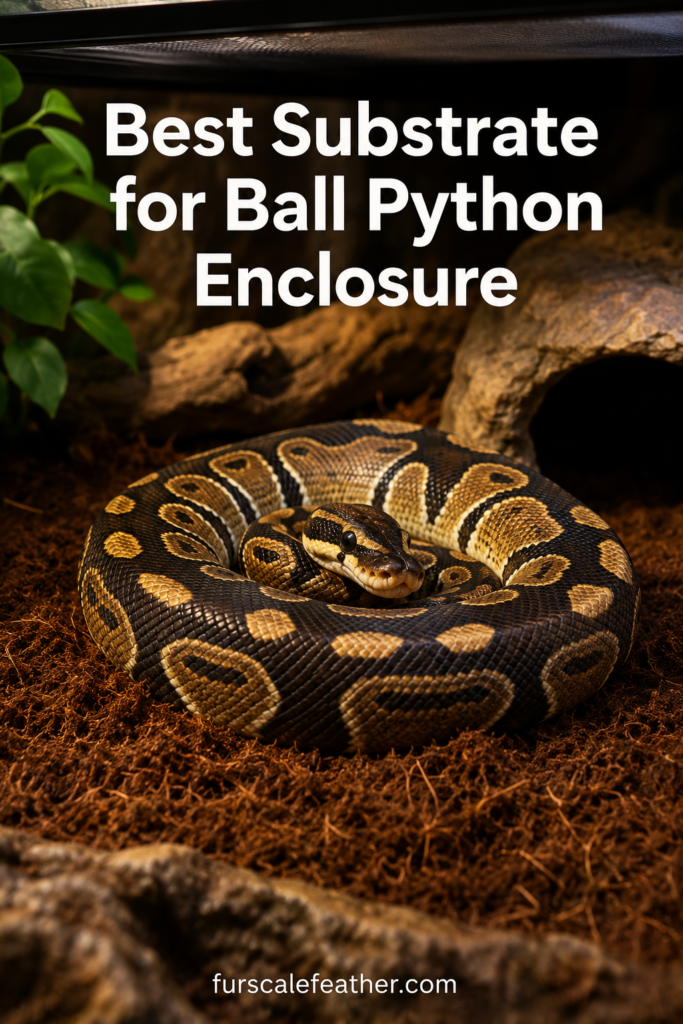
What Is the Best Substrate for a Ball Python Enclosure?
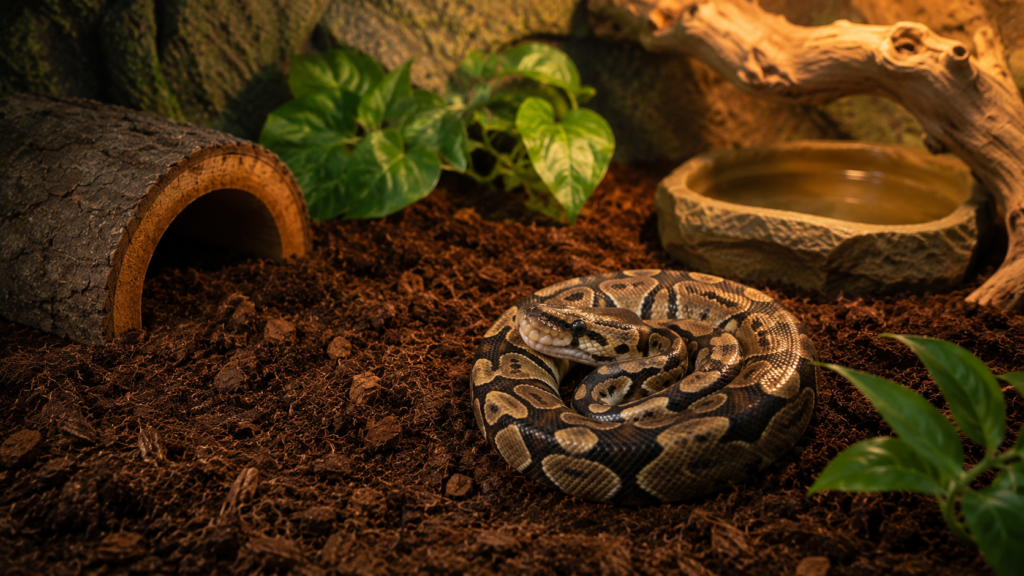
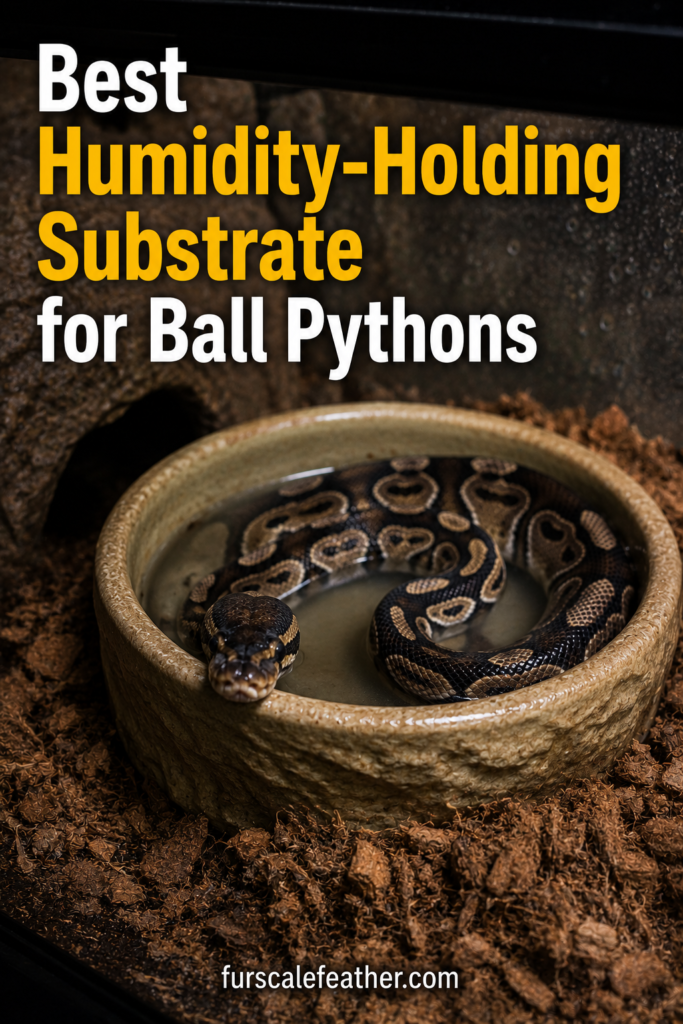
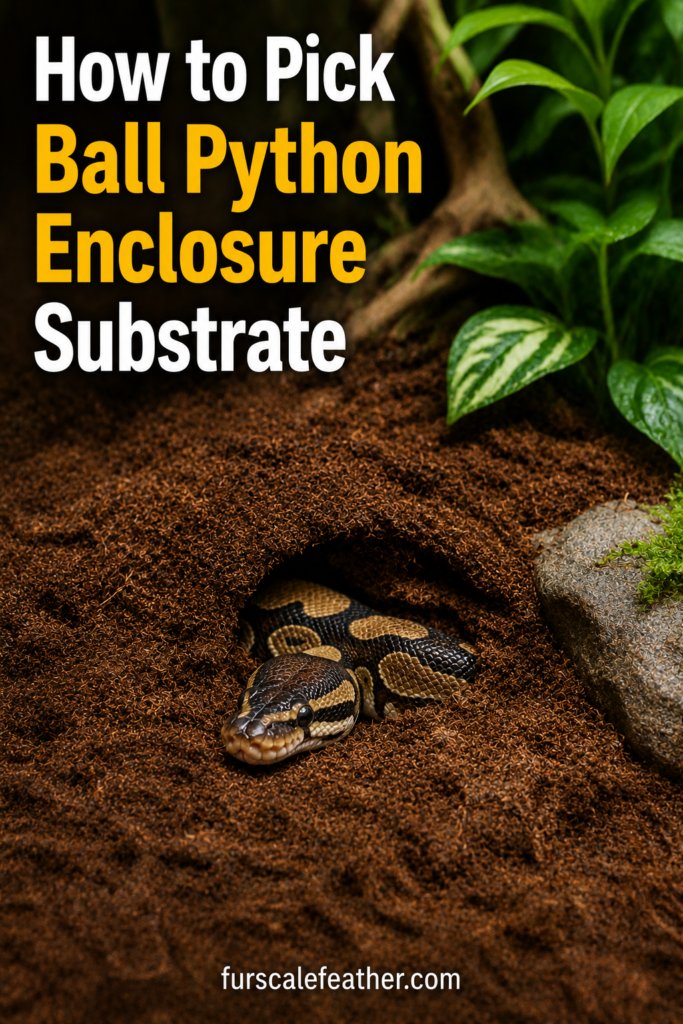
For most keepers, a coconut coir and cypress mulch blend, or a compressed coconut chip product like ReptiChip, gives the best balance of humidity retention, odor control, and ease of spot cleaning. Ball pythons come from the grasslands and savannas of West and Central Africa, where they spend time in burrows with humid, compact substrate. A loose, moisture-holding material that mimics that environment supports healthy shedding and respiratory health far better than dry bedding.
Aspen shavings work for keepers in already-humid climates or for those running high-output humidifiers, but they dry out fast and are not the top pick for anyone fighting low humidity. Sand, walnut shell, and any substrate marketed for lizards or desert species should be avoided entirely for ball pythons.
Why Substrate Choice Matters for Ball Python Health
Ball pythons need enclosure humidity between roughly 50 and 60 percent day to day, rising to 60 to 70 percent during shedding. Substrate is doing most of that work, not just the water bowl.
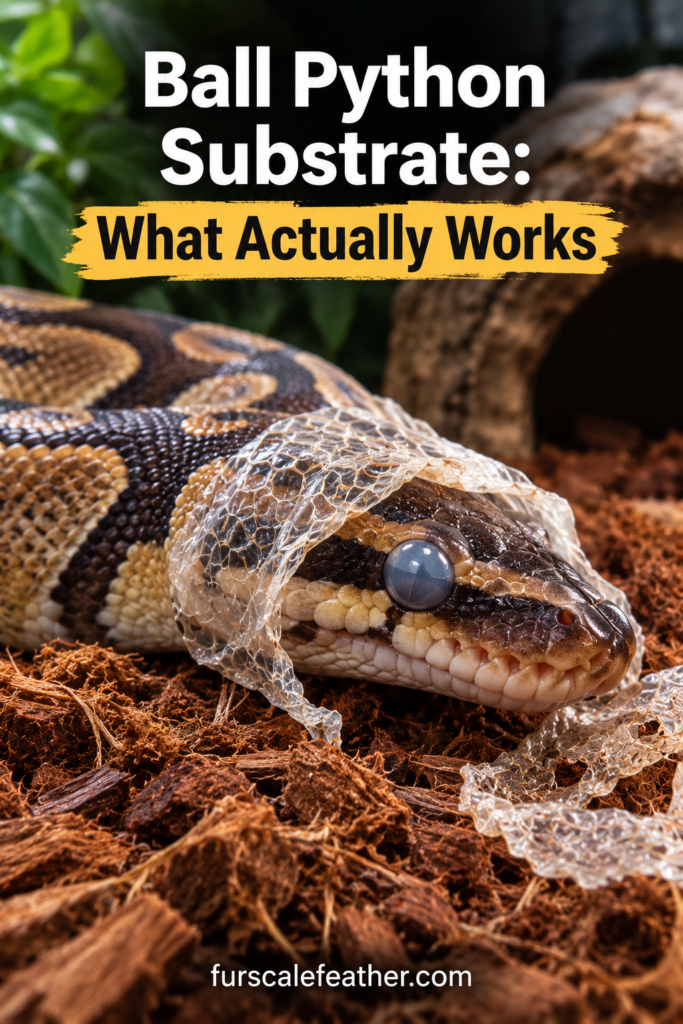
A substrate that dries out within a day forces keepers into constant misting, which spikes humidity too high for a few hours and then crashes it back down. That swing is harder on a snake than steady mid-range humidity. Dry, dusty substrate is also linked to retained eye caps and incomplete shed, especially around the tail tip.
On the other side, substrate that stays soaked and never dries between waterings breeds mold and bacteria, which can lead to skin infections or scale rot on a snake that spends time burrowed in it.
The Mistake Most New Keepers Make
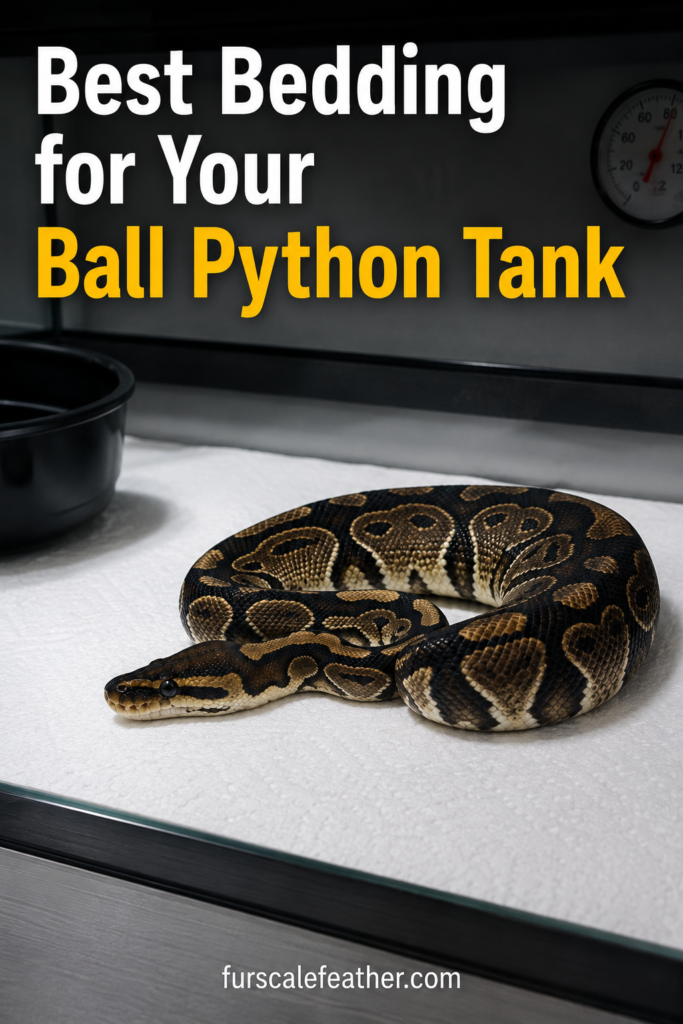
When we first set up our shop’s foster enclosures, we used plain paper towels because it seemed like the safe, simple option every care sheet mentioned. Within about three weeks, two of the three foster ball pythons had incomplete sheds along the tail and sides, even with a full water bowl and daily misting. Paper towel holds zero ambient humidity on its own, so the enclosure depended entirely on misting timing, and we were missing the mark. Switching to a coconut fiber and cypress blend at about two inches deep fixed both sheds within the next cycle, no other changes made. That one substrate swap taught us that humidity comes from what’s on the floor of the tank, not just what’s in the water bowl.
Types of Reptile Substrate Compared
Here’s how the common options stack up for ball python keepers specifically.
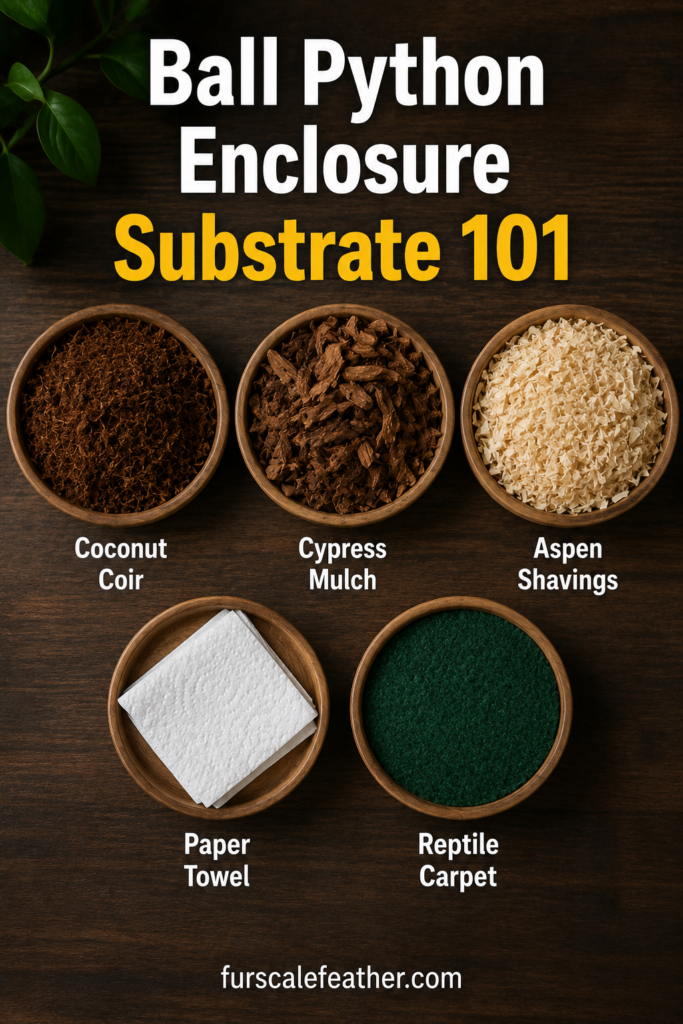
- Coconut coir or coco fiber — Holds humidity well, compresses into a natural-looking layer, safe if small amounts are ingested during feeding. Needs occasional stirring to prevent compaction at the bottom.
- Cypress mulch — Excellent humidity retention, holds burrows well, slightly more dust than coco fiber when dry. A common choice for bioactive setups.
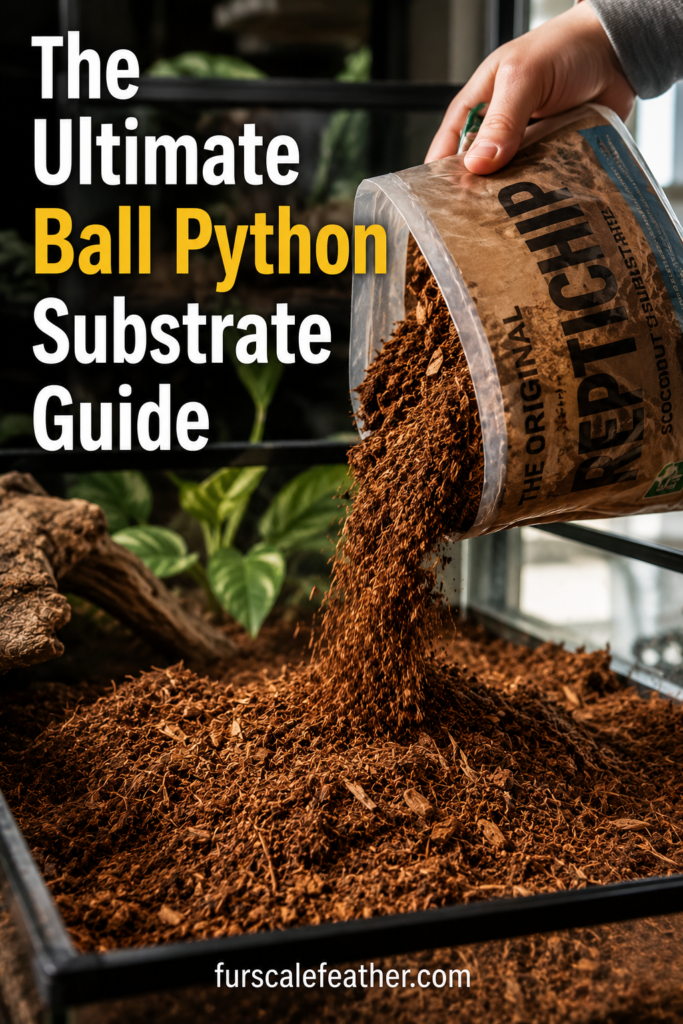
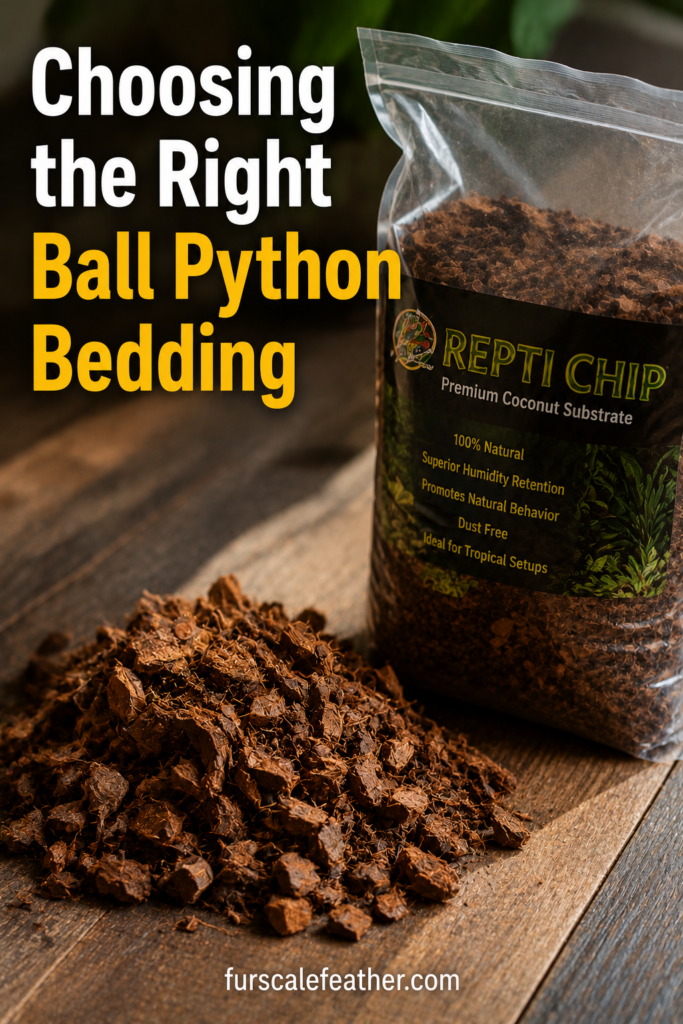
- Compressed coconut chips (like ReptiChip) — Larger particle size than loose coir, less dust, holds shape for burrowing, popular for humidity-sensitive setups.
- Aspen shavings — Low humidity retention, good odor control, budget-friendly, better suited to drier climates or corn snakes and other drier-habitat species.
- Paper towels or newspaper — Easy to monitor for waste, ideal for quarantine or juveniles fresh from a breeder, but holds no ambient humidity on its own.
- Reptile carpet — Reusable and low mess, but tends to trap bacteria in the weave over time and does nothing for humidity. Not a strong pick for ball pythons long term.
- Sand, walnut shell, and calcium sand — Avoid for ball pythons. These carry real impaction risk and don’t match the species’ natural habitat.
How to Set Up Ball Python Substrate Step by Step
- Clean and dry the enclosure first. Wipe down glass or PVC walls and let the tank fully dry before adding anything.
- Add a drainage layer if running bioactive. A one-inch layer of clay pebbles or lava rock under a mesh barrier keeps excess moisture from pooling at the bottom.
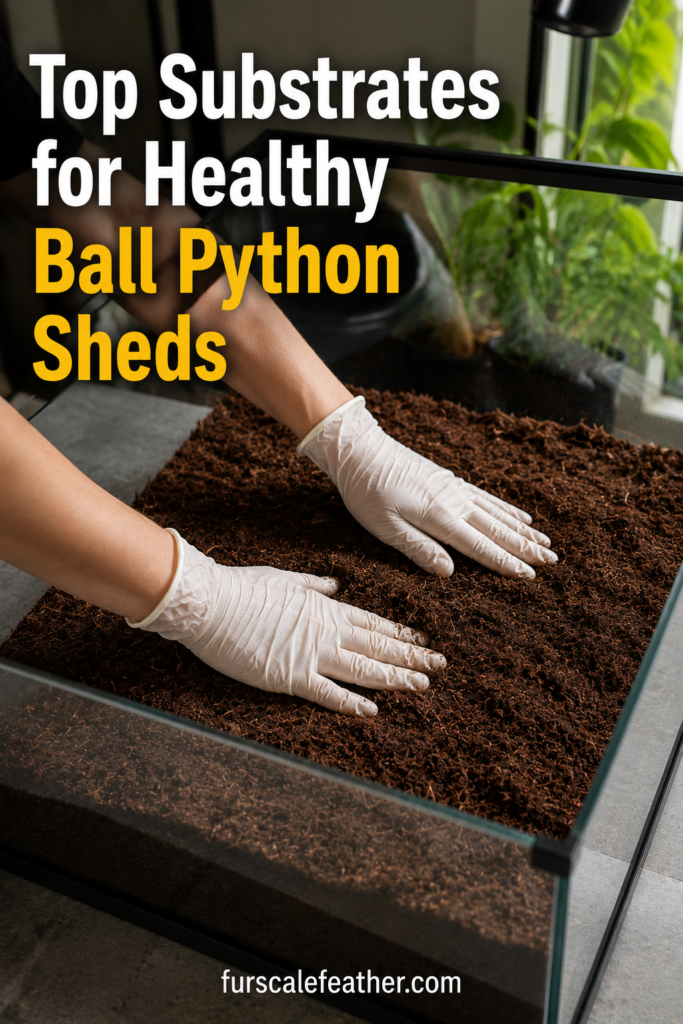
- Fill with two to three inches of substrate. This depth lets the snake burrow and gives enough mass to hold humidity between mistings.
- Mist to damp, not wet. Substrate should feel like a wrung-out sponge. If water pools when you press it, it’s too wet.
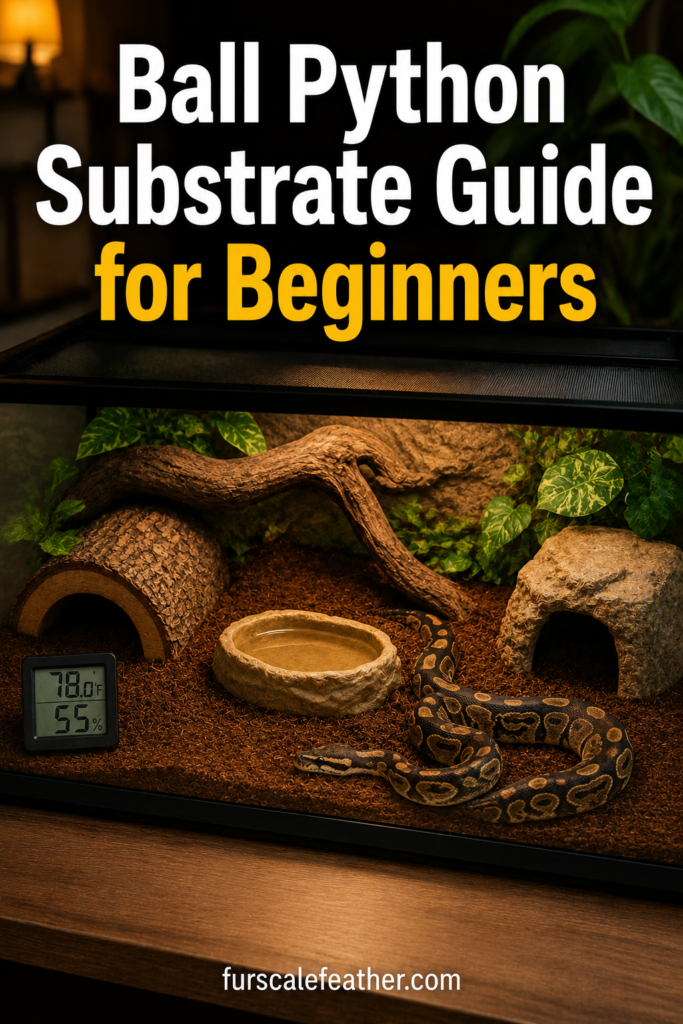
- Add hides on both the warm and cool ends. Press each hide slightly into the substrate so your snake can burrow at the entrance.
- Check humidity 24 hours later. Adjust depth or misting frequency based on your gauge reading before making any other changes.
- Spot clean waste within 24 hours and stir the substrate weekly to prevent compaction and mold pockets underneath.
Best Ball Python Substrate Products, Reviewed
We’ve field tested substrate with six ball pythons across our shop’s rescue and foster program over the past two years, alongside published keeper reviews and reptile forum consensus, since none of these are personal pets. Here’s how the main contenders held up.
ReptiChip Premium Loose Coconut Chip
- Pros: Excellent humidity retention, low dust, holds burrow shapes well, lasts 6 to 8 weeks before a full change with weekly spot cleaning.
- Cons: Higher price point than loose coco fiber, needs a rinse-and-expand step before use.
Zoo Med Eco Earth Compressed Coconut Fiber
- Pros: Affordable, widely available, expands from a compressed brick, good baseline humidity.
- Cons: Finer texture creates more dust than chip-style products, compacts faster and needs more frequent stirring.
Zilla Jungle Mix (cypress and coco blend)
- Pros: Strong humidity hold, good for bioactive setups, natural look.
- Cons: Heavier and messier during full substrate changes.
Our Winner: ReptiChip Premium Loose Coconut Chip. Across our foster enclosures, it held humidity in the target range with one daily misting compared to two or three needed for compressed coco fiber, and none of the six ball pythons on it had an incomplete shed over a 4-month tracking period. The higher cost pays off in fewer humidity crashes and less frequent full substrate changes.
Disclosure: none of these products were tested on a personally owned ball python. Results reflect our shop’s foster and rescue program plus aggregated keeper reviews. This article contains no paid or affiliate placements.
What Else You Need: Ball Python Starter Kit Essentials
Substrate is one line item in a full ball python enclosure setup. A realistic ball python starter kit for a single juvenile typically runs $250 to $400 and includes:
- A 20 to 40 gallon enclosure (start appropriately sized rather than oversized for a hatchling)
- An under-tank heat mat or radiant heat panel with a thermostat, non-negotiable for safety
- Two hides, one on each thermal end
- A digital hygrometer and thermometer, not the cheap stick-on dial versions
- A water bowl large enough for soaking
- Substrate, at the two to three inch depth covered above
Ongoing ball python cost after the initial setup is modest, usually $15 to $25 a month for feeder rodents and substrate top-offs, which is one reason the species stays popular for first-time snake keepers.
Signs of Substrate Problems in Ball Pythons
Watch for these signs that your current substrate isn’t working:
- Retained shed, especially around the eyes or tail tip
- Visible mold or a sour smell within a few days of misting
- Your snake spending unusual amounts of time soaking in the water bowl, which often signals low ambient humidity
- Wheezing, clicking, or open-mouth breathing, which can point to respiratory infection
If you see respiratory symptoms or repeated incomplete sheds after adjusting substrate, contact a reptile veterinarian rather than troubleshooting further on your own. Substrate changes help with prevention, but they are not a treatment for an active infection.
Questions People Usually Ask
Is aspen bedding safe for ball pythons? Yes, it’s safe, but it holds humidity poorly compared to coco fiber or cypress blends. It works better as a supplement in already-humid rooms than as a sole substrate.
Can I use sand for my ball python? No. Sand carries a real impaction risk if ingested during feeding and doesn’t match the species’ natural burrowing habitat. Skip it entirely.
How deep should ball python substrate be? Two to three inches is the standard range, deep enough for burrowing and to hold humidity without becoming difficult to clean.
How often should I fully replace the substrate? Spot clean waste daily to every other day, and plan a full substrate change every 6 to 8 weeks depending on the product and enclosure size.
How much does a full ball python setup cost including substrate? Expect $250 to $400 upfront for enclosure, heating, hides, and substrate, with $15 to $25 a month afterward for feeding and substrate top-offs.
The Bottom Line
Substrate isn’t a minor detail you pick last. It’s doing the daily work of holding humidity, supporting natural behavior, and keeping shed cycles clean. Coconut coir, cypress blends, and compressed coconut chips like ReptiChip consistently outperform aspen or paper towel for ball pythons specifically, based on both our shop’s foster program and wider keeper consensus. Start with two to three inches of a moisture-holding substrate, check your hygrometer daily for the first week, and adjust depth before reaching for the mister. Get that foundation right and most of the humidity headaches new keepers run into never show up in the first place.
Disclosure: No affiliate links or sponsorships are included in this article. Product opinions are based on shop-tested foster enclosures and aggregated keeper reviews, not personal ownership.