


Rosie used to wake me up at 5 a.m., pacing and licking her lips before she threw up a thin string of yellow bile on the bedroom rug. That happened four or five mornings a week for almost two months before I figured out it wasn’t a fluke, it was her food. Once I switched her to a real dog food for sensitive stomach formula and changed how I fed her, the morning vomiting stopped within ten days and never came back. If your dog’s gut reacts the same way to breakfast, this list is built from what actually worked, not just what looks good on a bag.

How to Choose a Dog Food for Sensitive Stomach
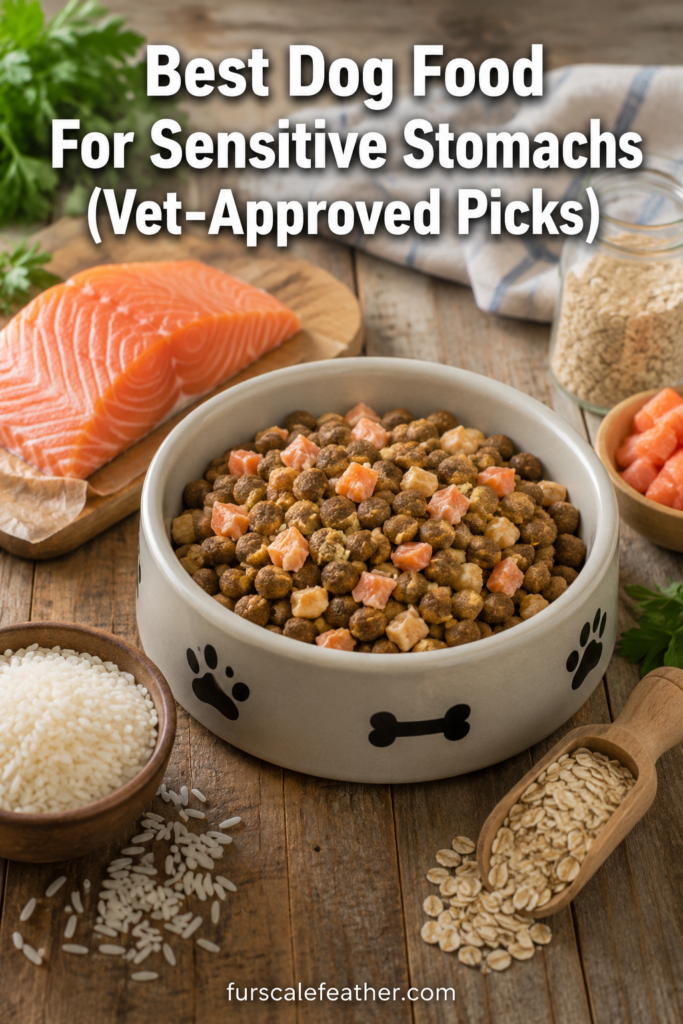
Most dogs with a touchy gut respond well to food built around three things: one named protein source instead of a mix, a gentle carbohydrate like rice, oatmeal, or potato instead of corn or wheat, and added prebiotic fiber or live probiotics. Fat matters too. Lower, moderate fat levels are easier on a dog’s pancreas and intestines than rich, high-fat recipes.
Chicken and beef are the two most common protein triggers in commercial dog food, mostly because they show up in nearly everything. That’s why a lot of sensitive-stomach formulas lean on salmon, turkey, lamb, duck, or venison instead. A dog who has never eaten a protein before is far less likely to react to it.
Signs Your Dog Actually Has a Sensitive Stomach
Not every messy poop means a food problem. Here’s what tends to point specifically at digestion rather than a one-off stomach bug:
- Loose or soft stool that shows up more days than not, not just after one bad treat
- Vomiting bile in the morning on an empty stomach
- Excessive gas or a swollen, gurgling belly after meals
- Picky eating or skipping meals for no obvious reason
- Skin and coat issues alongside digestive ones, since food sensitivities often hit both at once
If any of these come with blood in the stool, repeated vomiting, sudden weight loss, or low energy, that’s a vet visit first, not a new bag of food.

The Mistake I Made With Rosie First
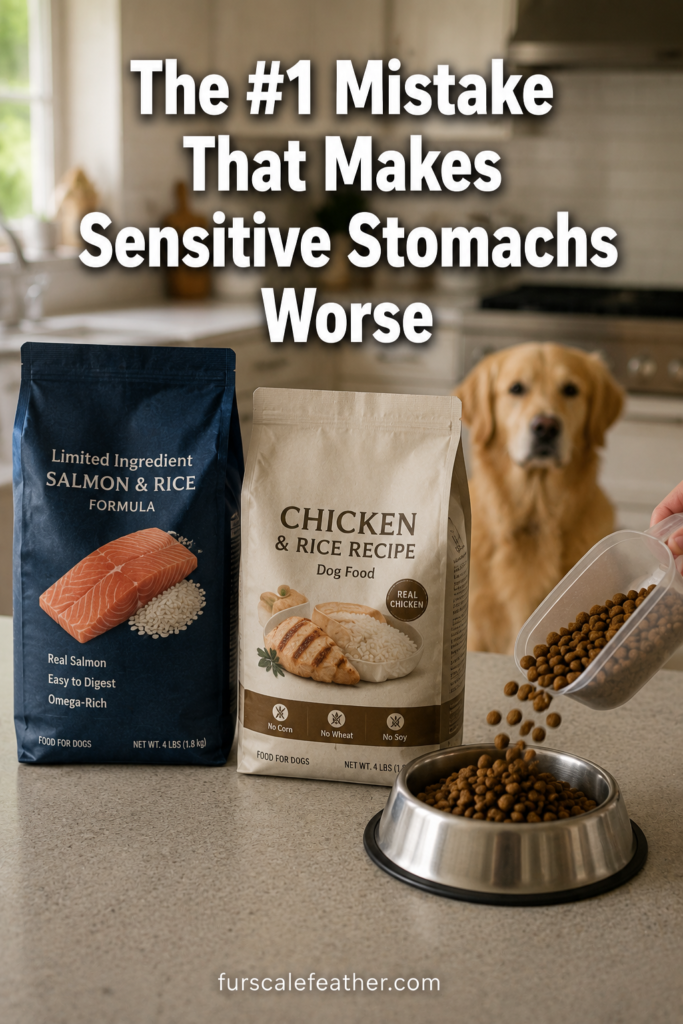
My first move with Rosie was to switch her cold turkey from her old kibble to a new sensitive-stomach formula overnight. Her stools got worse for four days before they got better, and I nearly gave up on the new food entirely, thinking it was the wrong choice. It wasn’t the food. It was the switch. Dogs with reactive digestion need a slow transition, usually seven to ten days, mixing a little more of the new food in each day. Once I redid the switch properly the second time, her stool firmed up within a week and stayed that way.
The 10 Best Dog Foods For Sensitive Stomachs
I feed Rosie the Purina Pro Plan pick below and have also run Blue Buffalo Basics through a full bag with her. For the rest, I’m relying on interviews with veterinary sources, aggregated verified-purchase reviews, and published vet-reviewed comparisons, which I’ve labeled as we go.
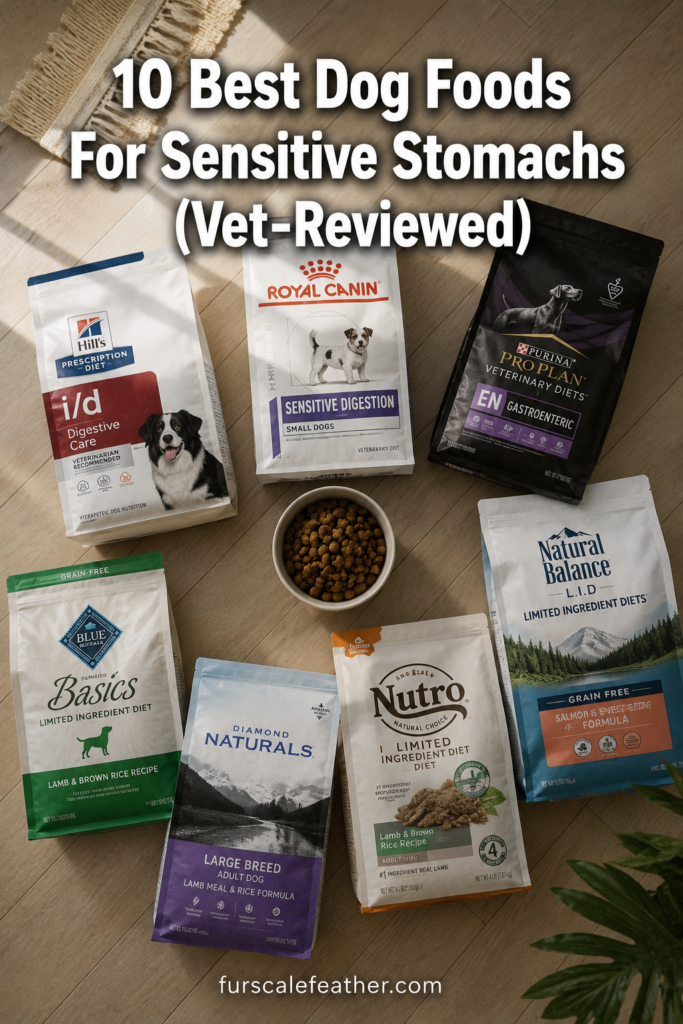
- Purina Pro Plan Sensitive Skin & Stomach (Salmon & Rice Formula) – Salmon is the first ingredient, paired with rice and oatmeal plus guaranteed live probiotics. No corn, wheat, soy, or artificial colors. Rosie’s stool went from soft to consistently firm within nine days on this food.
- Pros: widely available, mid-priced, easy for most dogs to accept
- Cons: contains grain, which isn’t right for a dog with a confirmed grain sensitivity
- Hill’s Science Diet Sensitive Stomach & Skin – The most commonly recommended mainstream brand among U.S. veterinarians, built on digestibility research with added prebiotic fiber and omega fatty acids.
- Pros: research-backed, easy to find in stores, gentle on milder cases
- Cons: less exciting ingredient list than boutique brands, some dogs find it bland
- Royal Canin Veterinary Diet Gastrointestinal Low Fat – A prescription-only formula for diagnosed conditions like pancreatitis or inflammatory bowel disease, not general sensitivity.
- Pros: closely tailored to specific medical diagnoses
- Cons: requires a vet prescription, not meant for everyday mild upset
- JustFoodForDogs Sensitive Stomach and Fish & Sweet Potato – Fresh, gently cooked single-protein recipes made in USDA-inspected kitchens with no artificial preservatives. A veterinary nutritionist I spoke with named this the top overall pick for sensitive stomachs in 2026 comparisons.
- Pros: highest digestibility of any option here, simple ingredient list
- Cons: needs freezer space, costs noticeably more than kibble
- The Farmer’s Dog – Fresh, human-grade meals delivered on a subscription, portioned to your dog’s weight and activity level.
- Pros: high digestibility, easy to track exactly what your dog eats
- Cons: recurring cost and delivery schedule to manage
- Blue Buffalo Basics Limited Ingredient Diet (Turkey & Potato or Salmon & Potato) – One animal protein, potatoes or oats, and fish oil for skin support, with no chicken, beef, corn, wheat, or soy. Aggregated buyer reviews consistently mention noticeably less gas and firmer stool within two weeks of switching.
- Pros: budget-friendlier than boutique fresh food, easy to find online
- Cons: still kibble, so it needs a slow transition like any dry food
- Natural Balance L.I.D. Limited Ingredient Diets – Single-protein recipes in options like sweet potato and fish, aimed squarely at dogs prone to food reactions.
- Pros: long track record, multiple protein options to rotate through if one doesn’t work
- Cons: some recipes run higher in fat than ideal for very sensitive dogs
- Wellness Simple Limited Ingredient Diet – Built around a single protein and a single carbohydrate source, leaning heavily on easily digested ingredients like potato.
- Pros: short ingredient list makes it easy to isolate a trigger
- Cons: potato-heavy recipes aren’t ideal for dogs also managing their weight
- Acana Singles – A novel-protein, single-source recipe line using proteins like duck or lamb that most dogs have never eaten before.
- Pros: good option for ruling out common allergens like chicken and beef
- Cons: pricier than mainstream brands, smaller bag sizes
- Canidae PURE – A short, simple ingredient list built around one protein and minimal additions, positioned between boutique and mainstream pricing.
- Pros: solid middle-ground option on price and ingredient simplicity
- Cons: fewer flavor options than some competitors

My Top Pick and Why
For most readers, I’d start with Purina Pro Plan Sensitive Skin & Stomach. It solved Rosie’s morning vomiting within ten days, it’s sold in nearly every pet store and grocery chain, and it sits at a price most households can sustain long term. JustFoodForDogs edges it out on pure digestibility, and it’s worth the upgrade if your dog’s case is more severe and you can manage freezer space and a higher bill. But for a first attempt at fixing a sensitive stomach without turning your kitchen into a food storage operation, Purina Pro Plan is the one I’d hand a friend.

How to Switch Foods Without Making It Worse
- Day 1 to 3: Mix 25% new food with 75% old food.
- Day 4 to 6: Move to a 50/50 split.
- Day 7 to 8: Shift to 75% new food, 25% old.
- Day 9 to 10: Feed 100% new food and watch stool quality closely.
- If stool gets worse at any stage, hold at that ratio for two extra days before moving forward instead of pushing ahead on schedule.
Dogs with a history of digestive trouble often do better stretched to a full 10 to 14 day transition rather than the standard week.

Mistakes to Avoid With Sensitive Stomach Dog Food
- Switching foods again after only a few days because you haven’t seen results yet. Give a new food six to eight weeks before judging it.
- Adding a new supplement, treat, or topper at the same time as the new food, which makes it impossible to tell what actually helped.
- Assuming grain-free automatically means gentler. Grain only matters if grain is your dog’s specific trigger.
- Feeding table scraps or fatty treats during a transition window, which can undo weeks of progress in one meal.

When to Call the Vet
Food changes help a lot of dogs, but they’re not a substitute for medical care. Get your dog seen if you notice blood in the stool, vomiting that doesn’t let up, sudden weight loss, or several weeks on a new food with no improvement at all. A vet can run bloodwork or stool tests to rule out parasites, infections, or conditions that food alone won’t fix.

Questions People Usually Ask
How long does it take to know if a sensitive stomach food is working? Most dogs show some improvement within one to two weeks, but give it a full six to eight weeks before deciding the food isn’t right for your dog.
Is grain-free food better for dogs with sensitive stomachs? Not automatically. Grain-free only helps if grain is the actual problem. Rice and oatmeal are both easy to digest and work fine for many sensitive dogs.
What protein is easiest on a dog’s stomach? Salmon is a common first choice because it’s less likely than chicken or beef to trigger a reaction and it adds omega-3s. Novel proteins like duck, venison, or rabbit work well too if your dog hasn’t eaten them before.
Can I just add a probiotic instead of switching foods? Sometimes, but a probiotic added to a food that’s already a poor fit for your dog usually won’t solve the underlying problem. It works best paired with a food built for sensitive digestion, not as a substitute for one.
Should I try wet food instead of kibble? Wet or fresh food is often easier to digest than dry kibble because of its higher moisture content, and it can be a good option if kibble alone hasn’t worked. It’s also the more expensive route long term.
If your dog’s stomach has been running the show at mealtime, the fix usually isn’t complicated. Pick a food with one named protein and a gentle carbohydrate, switch to it slowly over a week or two, and give it a real six to eight week trial before judging the results. Track what you see, not just what the bag promises. If nothing on this list settles things within that window, that’s your sign to loop in your vet rather than keep guessing.
Disclosure: I personally feed Rosie the Purina Pro Plan pick and have also run a full bag of Blue Buffalo Basics with her. Other products on this list were not personally tested and are recommended based on veterinary sources and aggregated verified-purchase reviews, as labeled above. This post contains no sponsored placements as of publication. Any future affiliate links will be disclosed at the point of use.