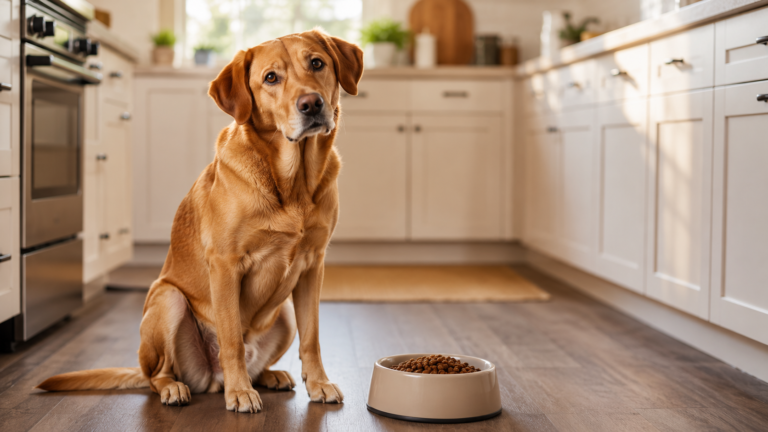
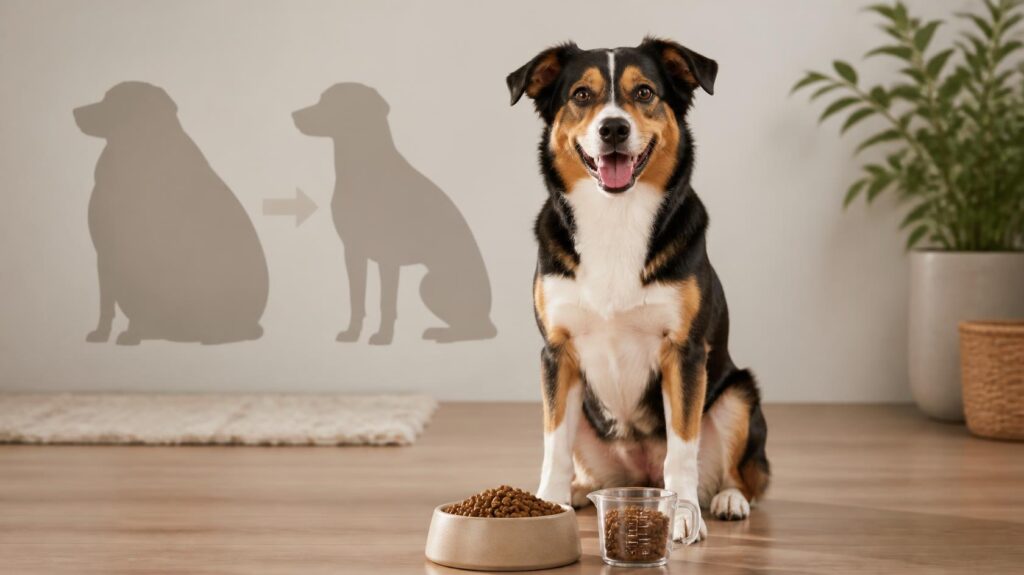

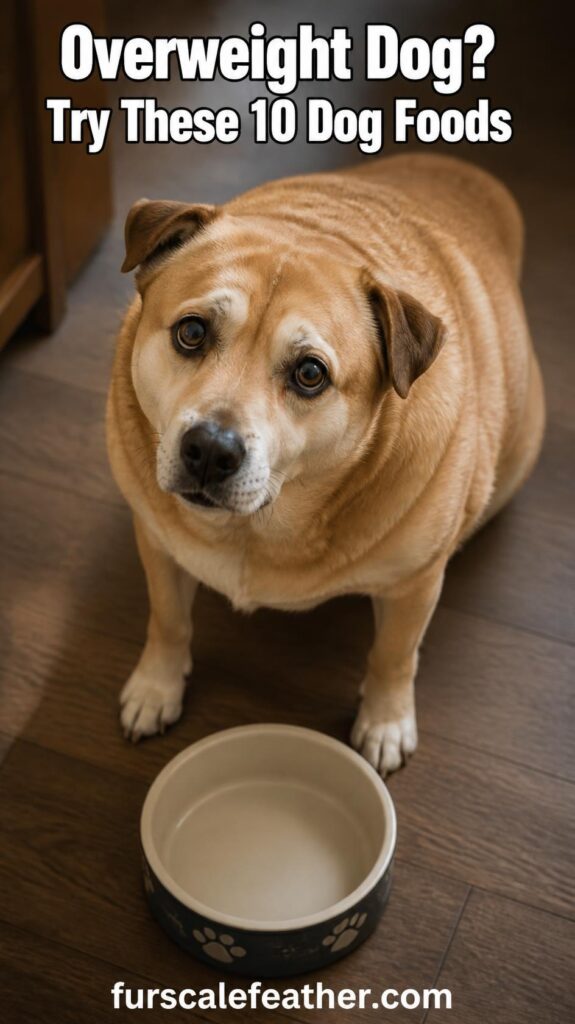
Rosie, my seven-year-old Labrador mix, used to flop onto the couch after one flight of stairs. At her last checkup, my vet circled a body condition score of 7 out of 9 and said the word overweight for the first time in Rosie’s life, which sent me on a year-long search for a weight loss dog food that actually worked. I tested two of the foods below on Rosie myself and layered in vet-reviewed data and real owner reviews for the rest, so you don’t have to start from zero the way I did.
Signs Your Dog Might Need a Weight Loss Dog Food
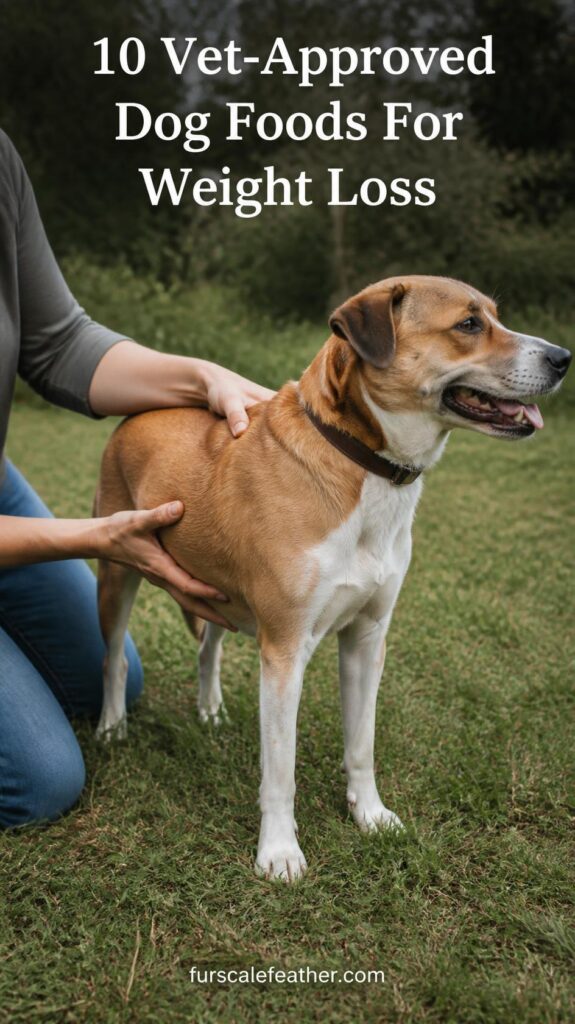
Most dogs gain weight so gradually that owners miss it until a vet points it out. Run through this quick check first:
- Rib check: you should feel your dog’s ribs with light pressure, not see them, but not have to dig for them either.
- Waist check: looking down from above, your dog should have a visible waist behind the ribs.
- Side profile: the belly should tuck up, not hang level with the chest.
- Energy check: getting winded on a normal walk or skipping the jump onto the couch can be a weight sign as much as a joint one.
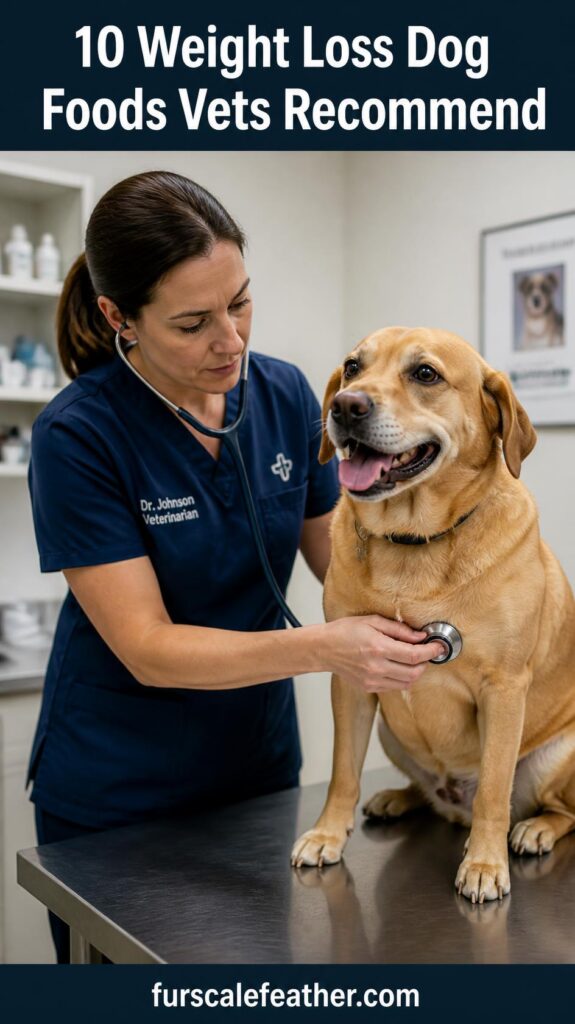
Vets use a 9-point body condition score (BCS), and most healthy dogs land at 4 or 5. A score of 6 or higher is usually the point where a weight loss dog food earns its place in the bowl.
What to Look for in a Weight Loss Dog Food
Not every bag labeled healthy weight is built the same. Here’s what actually separates a working formula from a marketing label:
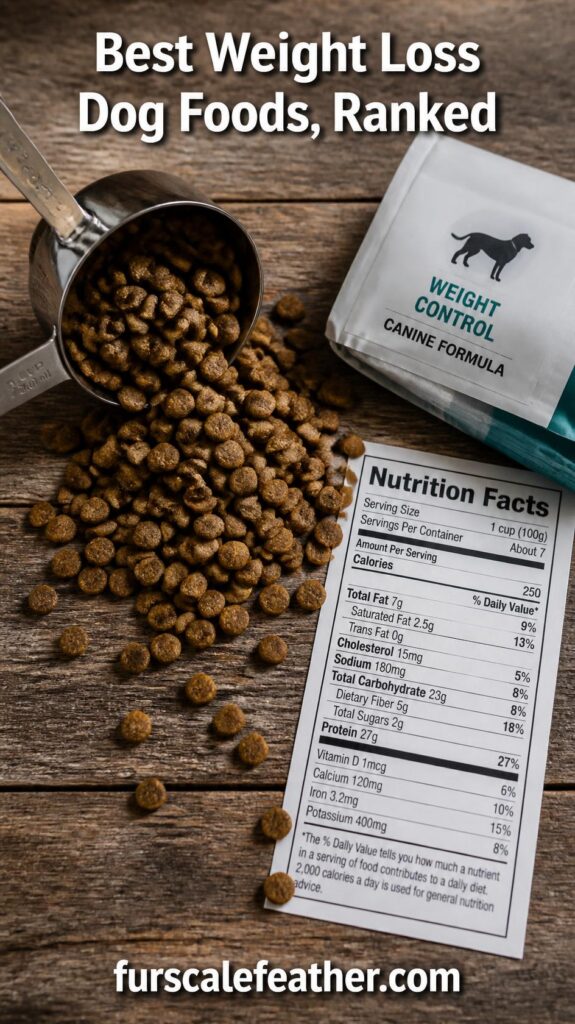
- Lower calorie density: look for roughly 300 to 360 calories per cup, compared to 350 to 450 in a standard adult formula.
- Higher protein: 28 percent or more helps preserve lean muscle while calories drop.
- Higher fiber: adds bulk so your dog feels full on a smaller portion.
- L-carnitine: an amino acid that supports fat metabolism, present in most formulas below.
- AAFCO feeding trial statement: confirms the food was tested on real dogs, not just formulated on paper.
The 10 Best Dog Foods for Weight Loss in 2026
A quick disclosure before the list: I fed Rosie the Hill’s and Blue Buffalo formulas below over several months of side-by-side testing. I have not personally fed her the other eight, so for those I’m summarizing veterinary write-ups, brand nutrition data, and aggregated owner reviews rather than my own results. This post may contain affiliate links.
1. Hill’s Science Diet Perfect Weight (Best Overall)
This is the food that took Rosie from a body condition score of 7 down to a 5 over about four months. It runs around 328 calories per cup, well under the 350 to 450 in a standard adult formula, and Hill’s own clinical trials found that over 70 percent of dogs lost weight within 10 weeks of switching. Rosie’s stool firmed up within two weeks, a sign the added fiber was working.
- Pros: available without a prescription, clinically tested, widely stocked
- Cons: chicken-forward recipe won’t suit dogs with poultry allergies
This is my top pick for most overweight dogs without a diagnosed medical condition driving the weight gain.

2. Purina Pro Plan Weight Management
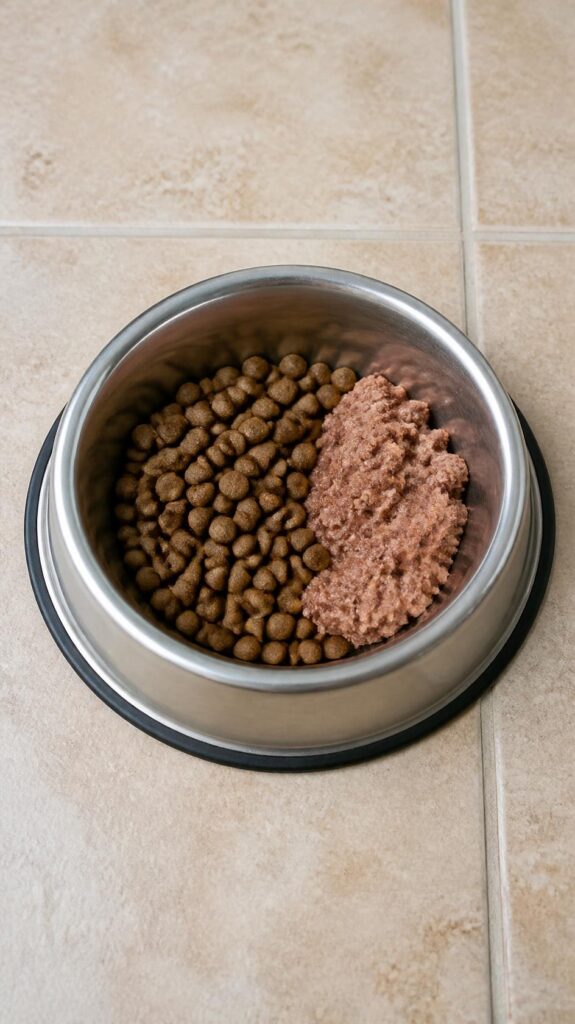
Pro Plan leans on higher protein than many competitors, which helps hold onto muscle during a calorie deficit. It comes in dry and a turkey and rice wet option, and the wet version works well for dogs who eat by volume.
- Pros: strong protein content, dry and wet options, budget-friendly for a premium brand
- Cons: fewer specialty recipes for dogs with sensitivities
I haven’t fed this to Rosie. This pick is based on veterinary nutrition write-ups and aggregated customer ratings that sit above 4.5 out of 5 across tens of thousands of reviews.
3. Royal Canin Satiety Support Weight Management
A veterinary-exclusive formula built around a high-fiber blend meant to make a dog feel full on a smaller portion. Vets often reach for this when a dog needs to lose a significant amount of weight under supervision.
- Pros: built specifically to curb begging, dosed and monitored by your vet
- Cons: requires a prescription, pricier than over-the-counter options
A local rescue I volunteer with used this on three surrendered dogs carrying 15 to 20 percent excess body weight, and all three were back to a healthy score within about 12 weeks.
4. Blue Buffalo Wilderness Healthy Weight
This grain-free formula runs 30 percent protein and adds L-carnitine to support lean muscle while cutting fat calories. I switched Rosie onto this for two months to compare against Hill’s, and she held her weight loss steady, though she seemed slightly less satisfied between meals.
- Pros: high protein, grain-free, real chicken as the first ingredient
- Cons: pricier per pound, grain-free diets warrant a vet check for dogs with heart history

5. Wellness CORE Reduced Fat
CORE Reduced Fat cuts fat by 25 percent from the original CORE formula while keeping protein near 38 percent on a dry matter basis, high for this category. It runs about 360 calories per cup.
- Pros: high protein for dogs staying active during weight loss, grain-free, made in the USA
- Cons: some owners report it’s less filling than Hill’s or Royal Canin
I haven’t tested this on Rosie. This recommendation comes from brand nutrition data and veterinary roundups.
6. IAMS Healthy Weight Adult Dry Dog Food
The budget pick on this list. It includes L-carnitine and prebiotic fiber for digestion and typically costs several dollars less per pound than the premium brands above.
- Pros: affordable, widely available at grocery and big-box stores, decent fiber content
- Cons: lower overall protein than Pro Plan or Blue Buffalo, more filler grains
A reader emailed me after my first weight loss post to say her rescue mutt lost four pounds over three months on IAMS Healthy Weight alone, with no other diet change.
7. Nutro Ultra Weight Management
Nutro blends chicken, lamb, and salmon into one recipe, a good fit for picky eaters who get bored of single-protein diets. It’s built around nutrient-dense, lower-calorie ingredients rather than just stripping out fat.
- Pros: three proteins in one bag, no by-product meal, wheat, or soy
- Cons: some owners report inconsistent kibble quality between batches
This pick comes from aggregated user reviews rather than a personal feeding trial.
8. Hill’s Prescription Diet Metabolic
For dogs with significant obesity or a metabolic condition working against them, this is the therapeutic step up from Perfect Weight. It requires a prescription and is formulated to boost metabolic rate rather than just cut calories.
- Pros: built for dogs that haven’t responded to over-the-counter weight loss food, closely monitored by your vet
- Cons: prescription only, more expensive
Veterinary sources describe this as one of the three most frequently prescribed weight-loss formulas, alongside Purina’s OM line and Royal Canin Satiety.
9. Natural Balance Fat Dogs Canned
A good option if your dog does better with wet food. It’s balanced for calorie-conscious feeding and includes added L-carnitine, and it helps dogs who need more water intake or have dental issues that make kibble uncomfortable.
- Pros: lower calories per can than standard wet food, works across breeds and sizes
- Cons: wet food costs more per calorie than kibble, shorter shelf life once opened
I haven’t tested this on Rosie and am relying on brand nutrition data and vet-reviewed roundups here.
10. The Farmer’s Dog Weight Management Plan
A fresh, human-grade option portioned to your dog’s exact calorie needs based on weight, age, activity level, and target weight, which removes the guesswork of measuring cups. The turkey recipe in particular runs high in lean protein and low in fat.
- Pros: pre-portioned so accidental overfeeding isn’t possible, fresh ingredients
- Cons: significantly more expensive than kibble, needs freezer space
I haven’t tried this with Rosie. This pick is based on aggregated reviews and how the recipes are formulated, not a personal feeding trial.
How to Switch Your Dog to a Weight Loss Diet
- Transition slowly. Mix in more new food and less old food over 7 to 10 days to avoid stomach upset.
- Weigh weekly. Use the same scale, same time of day, ideally before breakfast.
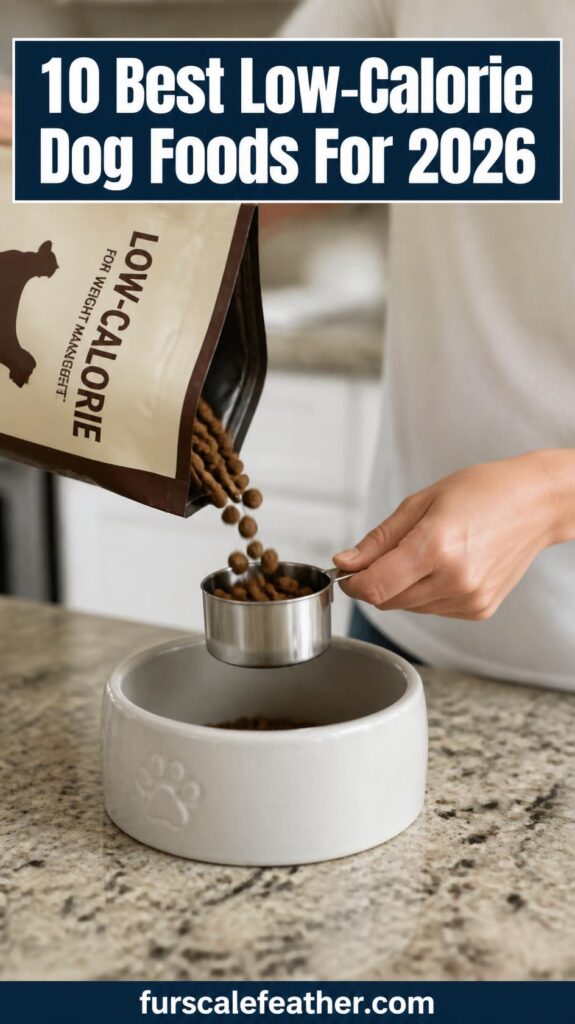
- Measure every meal. A standard measuring cup beats eyeballing it every time.
- Split the portion. Two or three smaller meals a day reduce begging between feedings.
- Recheck with your vet. Get a body condition score update at 4 to 6 weeks to confirm the plan is working.
The Mistake I Made With Rosie’s Weight Loss Plan
My first instinct wasn’t to switch food at all. I just scooped out less of Rosie’s regular kibble, cutting her portion by about a quarter without changing what was in the bowl. Within three weeks she was pacing the kitchen at dinnertime, and she was losing muscle almost as fast as fat, because her regular food wasn’t formulated to keep her full or protein-rich enough on a smaller serving. Switching to an actual weight loss dog food, instead of just feeding less of the same bag, made the real difference. She stopped begging within days once the fiber and protein levels were dialed in for a smaller portion.
Questions People Usually Ask
How much weight should my dog lose per week? Most vets recommend about 1 to 2 percent of body weight per week. A 60-pound dog should lose roughly 0.6 to 1.2 pounds weekly. Faster loss risks muscle loss.
Is grain-free weight loss dog food better than grain-inclusive? Not automatically. Lower fat, higher protein, and controlled portions drive weight loss, not the presence of grain. Some grain-free diets have also been linked to heart concerns in certain breeds, so check with your vet first.
Can I just feed less of my dog’s current food instead of switching? You can, but it often backfires. Standard food isn’t formulated to keep a dog full or nutritionally complete on a smaller portion, which is the mistake I made with Rosie.
How long before I see results? Most dogs show visible change within 8 to 12 weeks on a proper weight loss dog food, based on both Hill’s clinical data and what I saw with Rosie.
Do I need a prescription for weight loss dog food? No. Most options on this list are available over the counter. Prescription formulas like Royal Canin Satiety or Hill’s Metabolic are reserved for dogs with more weight to lose or an underlying medical condition.

The Bottom Line
Rosie is back to a body condition score of 5, and she takes the stairs two at a time again most mornings. The food in the bowl matters more than most owners realize, but it works best paired with measured portions and a vet check every few weeks. If you’re just getting started, pick the over-the-counter option with the strongest clinical data behind it, watch your dog’s energy and stool for the first month, and loop your vet in if you don’t see steady progress by week eight. Weight loss for dogs is slow and a little unglamorous, but it’s one of the most effective things you can do for how many good years they have left.