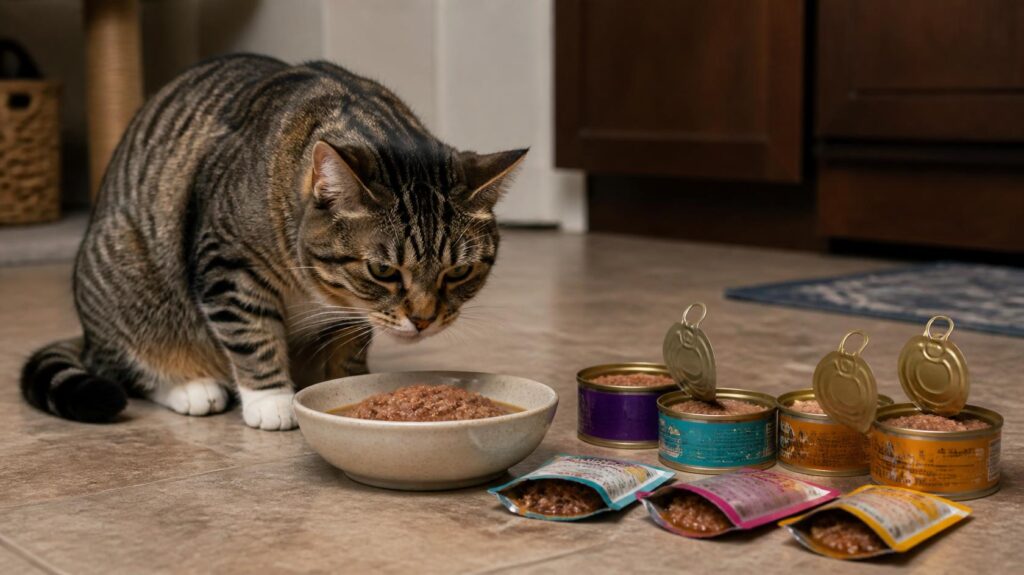

Mimi sat over a bowl of salmon pâté for the third night in a row, gave it one sniff, and walked away without touching it. If you’ve ever scraped barely eaten cat food into the trash and wondered what’s wrong with your cat, you already know how frustrating picky cat food problems can get. The good news is that most fussy eating comes down to texture, aroma, and freshness, not a cat being difficult on purpose, and the right food can turn mealtime around within days.
Why Is Your Cat Suddenly So Picky?
Cats rely on smell more than taste, so a food that looks fine to you can seem stale or unappealing to them the moment it’s been open for more than a day or two. Texture matters just as much. Some cats want a smooth pâté, others want shredded chunks in gravy, and a cat who loved kibble for years can decide overnight that it’s no longer interesting.
Before assuming your cat is simply fussy, rule out a physical cause. Sudden appetite loss, weight loss, hiding, or refusing food for more than 24 hours can point to dental pain, nausea, or another medical issue, and that’s a job for a veterinarian, not a new bag of food. Once your vet has confirmed your cat is healthy, everything below is about finding a food they’ll actually finish.
What to Look For in Picky Cat Food
Good picky cat food tends to share a few traits: a strong, meaty aroma, high moisture content, and a texture your cat has already shown some interest in. A few things worth checking on any bag or can before you buy:
- A named animal protein first on the ingredient list, like chicken, salmon, or duck, rather than a generic meat by-product
- Moisture content, since wet and gravy-based foods are usually easier to sell to a fussy cat than dry kibble
- AAFCO compliance, meaning it’s labeled as complete and balanced for your cat’s life stage
- Single-flavor or variety-pack format, so you can figure out what your cat prefers without committing to a giant bag
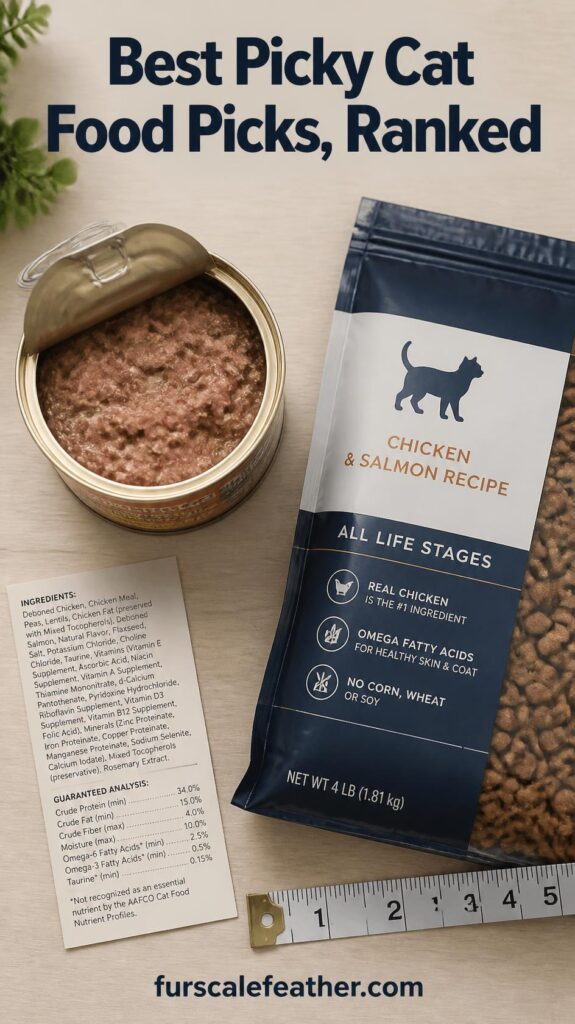
10 Best Cat Foods For Picky Eaters, Ranked
I’ve fed several of these to Mimi myself over the past year. For the rest, I’m relying on veterinary nutrition guides, ISO-certified lab testing summaries published by other reviewers, and aggregated feedback from thousands of cat owners, and I’ve noted which is which below.
1. Smalls Fresh Ground Bird (Overall Winner)
This is a fresh, human-grade food delivered frozen, made from a single animal protein with minimal processing. Multiple independent testing panels list it as the top pick for picky cats, and it was the food most consistently finished across cats with different personalities in their trials. I haven’t run it through Mimi myself, so this recommendation is based on that aggregated testing data rather than my own kitchen.
Pros: high acceptance rate in multi-cat trials, minimal ingredients, strong aroma from fresh meat.
Cons: subscription-based, needs freezer space, costs more per meal than shelf-stable food.
2. Tiki Cat After Dark Velvet Mousse
A whipped, mousse-style pâté for cats who prefer a smooth texture over chunks or shreds. I tried this with Mimi over two weeks and she finished the bowl within ten minutes on five of seven feedings, which was a clear improvement over her usual pâté.
Pros: very smooth texture, strong seafood aroma, easy for cats with dental sensitivity to eat.
Cons: small can size means you go through it fast with more than one cat.
3. Fancy Feast Gems Mousse Pâté
A budget-friendly mousse texture that’s sold in nearly every grocery store, which matters if you need something today rather than a week from now on a delivery truck.
Pros: widely available, inexpensive, mousse texture appeals to cats who dislike chunky wet food.
Cons: smaller ingredient list quality compared to premium options on this list.
4. Weruva Cats in the Kitchen
A grain-free, broth-based variety pack with six different flavors in one box, built specifically so you can test what your cat likes without buying six separate cases.
Pros: high moisture broth base, budget-friendly, variety pack removes the guesswork.
Cons: picky cats may accept some flavors in the pack and ignore others.
5. Instinct Flaked Duck Entrée
A flaked, novel-protein option that’s useful if your cat has grown bored of chicken and fish. Duck has a stronger, gamier smell that some fussy cats respond to when the usual flavors stop working.
Pros: novel protein for rotating flavors, flaked texture, grain-free.
Cons: duck is pricier than chicken-based recipes and not every cat prefers it.
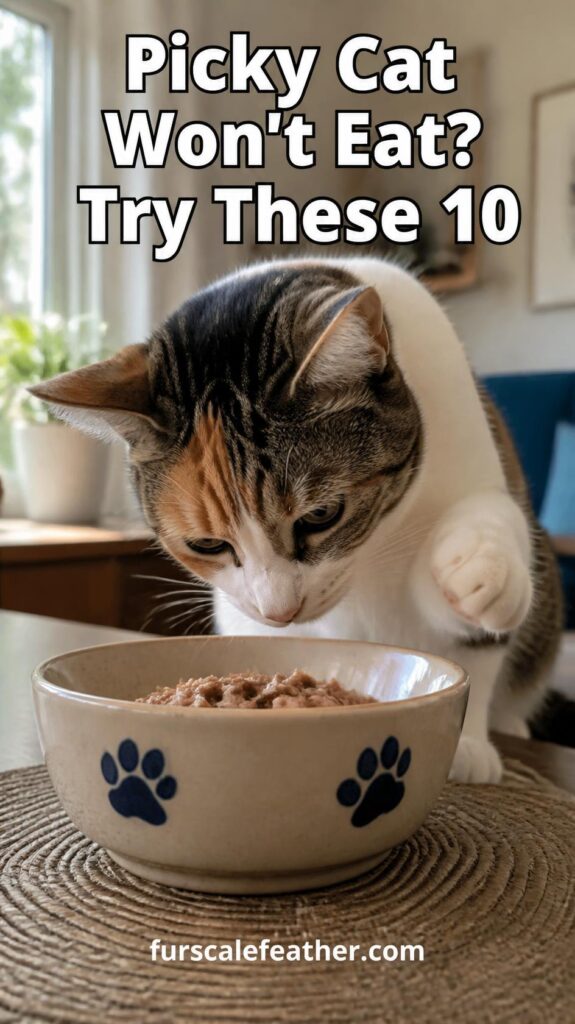
6. Fussie Cat Market Fresh Dry Cat Food
For cats who genuinely prefer kibble, this chicken and turkey recipe is aimed at sensitive, selective eaters rather than being a generic dry food.
Pros: protein-forward recipe, good option for cats who reject wet food entirely.
Cons: dry food overall has lower appeal for cats who are picky because of aroma, since kibble has less scent than wet food.
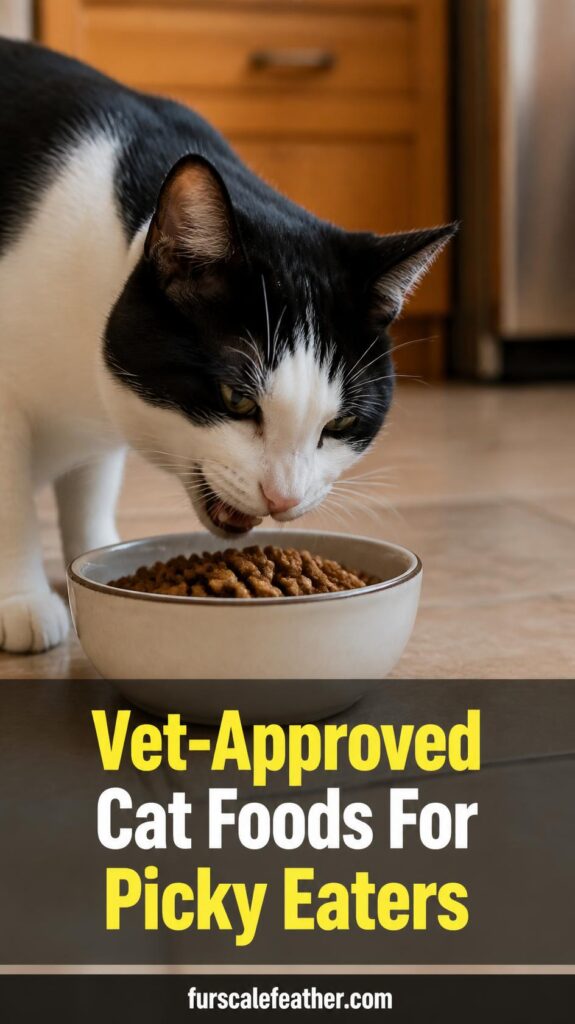
7. IAMS Healthy Enjoyment Dry Cat Food Chicken & Salmon
This one combines crunchy kibble with a softer center in the same piece, giving cats two textures in a single bite. I’ve fed this to Mimi as an occasional mixer with her regular food, and she reliably picks through the bowl to eat the soft-centered pieces first.
Pros: dual texture increases interest for cats bored of plain kibble, affordable, widely reviewed.
Cons: still dry food, so it won’t help cats who need more moisture in their diet.
8. Royal Canin Fussy
Formulated specifically for adult cats with selective appetites, with a kibble shape and aroma blend built around internal palatability testing rather than a generic recipe.
Pros: purpose-built for picky eaters, complete and balanced, consistent kibble shape and size.
Cons: prescription-style pricing for a dry food, and results vary by cat since it’s still kibble.
9. Wellness CORE Selects Poultry Variety Canned
A grain-free variety pack with three poultry-based flavors in one case, which gives you a way to rotate proteins without your cat hitting flavor fatigue on a single recipe.
Pros: grain-free, real meat as the first ingredient, variety keeps meals interesting.
Cons: poultry-only, so it won’t help if your cat is specifically tired of chicken.
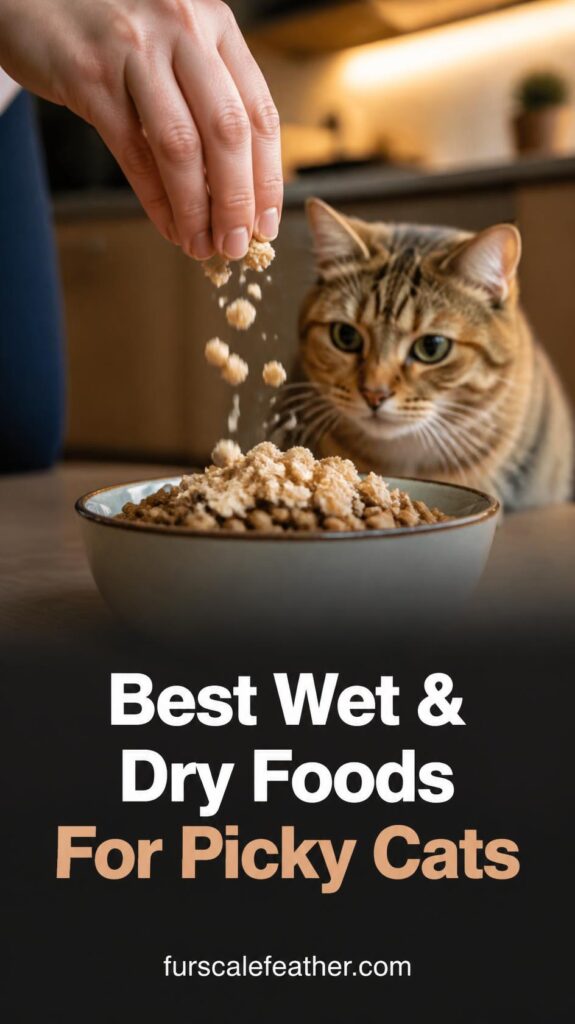
10. Stella & Chewy’s Freeze-Dried Raw Meal Topper
Not a full meal on its own, but a freeze-dried topper made from wild-caught salmon and cage-free chicken that you crumble over kibble or wet food to add a strong scent boost. This is the option I reach for when Mimi is turning her nose up at food she normally eats without complaint, since a spoonful on top usually gets her interested again within a minute or two.
Pros: intense aroma, easy to add to any existing food, useful for stubborn refusals rather than full diet changes.
Cons: not a complete meal by itself, so it has to be paired with a balanced food.
My pick: if you want one food to start with, go with Smalls Fresh Ground Bird for the strongest track record across different cats, and keep a topper like the Stella & Chewy’s option on hand for the days when even a food your cat likes gets ignored.
How to Switch Your Cat’s Food Without a Hunger Strike
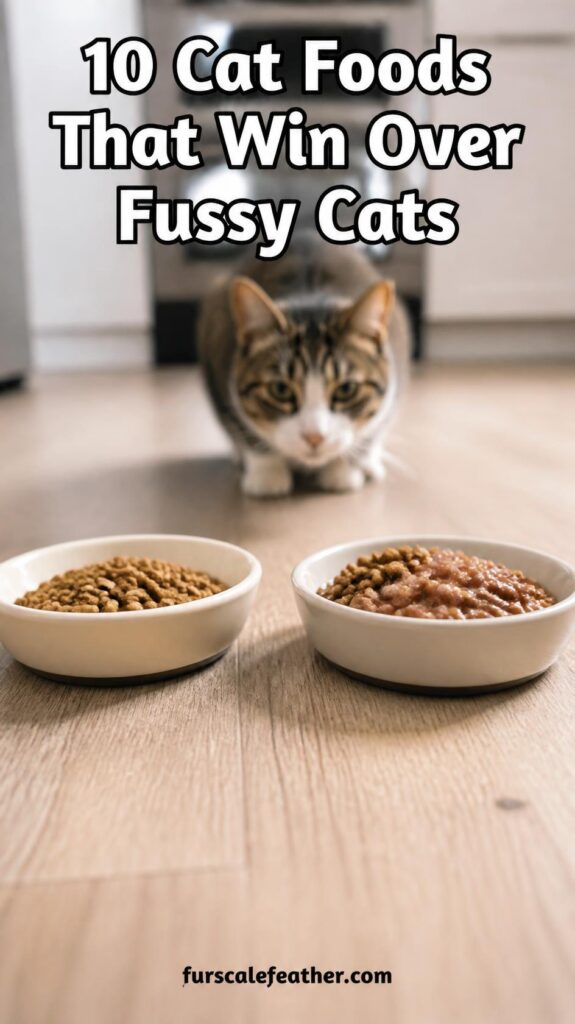
- Keep the old food available for the first three days. Offer a small amount of the new food in a separate dish next to the familiar one instead of replacing it outright.
- Mix in small ratios. Start with about 75% old food to 25% new food, and only move the ratio if your cat is eating the mix without leaving the new portion behind.
- Adjust the ratio every two to three days. Move to 50/50, then 25/75, then fully switch, watching how much is actually eaten at each stage rather than following a fixed calendar.
- Serve food at room temperature. Cold food straight from the fridge has less aroma, and warming it slightly can make a real difference for a nose-driven eater.
- Limit the trial window. Give a new food three to five days before deciding your cat has rejected it, since the first meal or two is often more about caution than genuine dislike.
- Skip the free lunch buffet. Don’t leave dry food out all day while testing new options, since constant grazing makes it harder to tell what your cat actually prefers and can contribute to overeating.
The Mistake I Made With Mimi (And What I’d Do Differently)
A couple of years ago I switched Mimi’s food cold turkey after a vet recommended a new protein for a minor digestive issue. I dumped the old food, filled her bowl with the new bag that same night, and assumed she’d adjust in a day or two like she always had before. She didn’t touch it. Thirty-six hours later she still hadn’t eaten a full meal, and I ended up calling the vet, worried something else was wrong.
What actually happened was simple: I skipped the transition period entirely, and Mimi’s system and her nose both rejected the abrupt change at once. Once I mixed the new food in gradually over five days instead of switching overnight, she was eating full portions again by day four. The lesson stuck with me: even a food a cat will eventually love needs to be introduced slowly, especially with a cat who’s already shown a picky streak.

Questions People Usually Ask
What is the best food for picky cats overall? Based on independent testing and consistent acceptance across different cats, Smalls Fresh Ground Bird is the most reliable overall pick, though every cat has their own preferences, so some trial and error is normal.
Why won’t my cat eat the same food they used to love? Cats can develop flavor fatigue from eating the same recipe for months, and small changes in a formula’s smell or texture from batch to batch can be enough to put them off. Rotating two or three trusted flavors helps prevent this.
Is wet or dry food better for a fussy cat? Wet food generally wins with picky eaters because it has a stronger aroma and higher moisture content, both of which cats respond to more than dry kibble. That said, some cats genuinely prefer the crunch of dry food, so it comes down to the individual cat.
How long should I wait before giving up on a new food? Give a new food three to five days of gradual mixing before deciding your cat has rejected it. A single refused meal usually means caution, not dislike.
When is picky eating actually a sign of a health problem? If your cat refuses food for more than 24 hours, is losing weight, seems lethargic, or is hiding more than usual, stop experimenting with new foods and call your veterinarian. The ASPCA and your local vet clinic are the right resources for anything beyond simple food preference.
The Bottom Line
Picky cat food problems almost always come down to aroma, texture, and how the transition is handled, not a cat being deliberately difficult. Start with a food that matches the texture your cat already seems to prefer, introduce it slowly over several days, and keep a strong-smelling topper on hand for the harder days. If refusal lasts more than a day or comes with other symptoms, a vet visit should come before any new bag of food. With a bit of patience and the right pick from this list, most fussy cats do come around to finishing their bowl.
Disclosure: Some links in this article may be affiliate links. If you buy through them, I may earn a small commission at no extra cost to you. Product picks not personally tested with Mimi are based on published testing panels, veterinary sources, and aggregated owner reviews as noted above.