

Last spring, my dog Rosie ate her breakfast in about ninety seconds and brought most of it back up twenty minutes later. It happened three mornings in a row before I stopped blaming stress or a bug and started looking at her food. If you’re standing in your kitchen staring at a puddle of undigested kibble right now, you already know how frustrating dog vomiting after eating can be, and how fast you want an answer instead of a guessing game.
The good news is that food is one of the most fixable causes of post-meal vomiting. Below, I’ll walk through why it happens, what to look for in a gentle dog food, and ten specific products worth trying, based on my own experience with Rosie plus research, vet guidance, and reader reports for the foods I haven’t personally tested.
Common Causes of Dog Vomiting After Eating
Not every case needs a trip to the emergency vet, but the reasons behind it vary quite a bit:
- Eating too fast. Dogs that gulp their food swallow air along with it, which can cause vomiting within minutes of finishing a meal.
- Food intolerance or sensitivity. Certain proteins, grains, or fillers can irritate the gut lining in some dogs, even without a true allergy.
- High fat content. Fatty meals are harder to digest and are a common trigger for dogs with sensitive stomachs.
- A sudden food switch. Changing brands overnight doesn’t give gut bacteria time to adjust.
- Bilious vomiting syndrome. This happens when a dog’s stomach sits empty too long between meals, often producing yellow foam in the early morning.
- An underlying medical issue. Pancreatitis, inflammatory bowel disease, parasites, or an obstruction can all cause vomiting and need veterinary diagnosis, not a food change.
If the vomiting is occasional and your dog is otherwise bright, eating, and drinking normally, a food adjustment is a reasonable first step. If it’s frequent, sudden, or paired with other symptoms, skip ahead to the vet-visit section below.
What to Look for in a Gentle Dog Food for Sensitive Stomachs
Limited, Easily Digestible Protein
A single, high-quality protein source (like salmon, turkey, or hydrolyzed chicken) is easier on the gut than a long list of mixed meats and by-products.
Lower Fat Content
Look for foods under roughly 12 to 14 percent fat on a dry matter basis. Fat slows digestion and is one of the most common vomiting triggers I hear about from readers.
A Stable, Consistent Formula
Brands that reformulate often can catch sensitive dogs off guard. Foods marketed specifically as “sensitive stomach” tend to keep their recipes more consistent batch to batch.
Feeding Format That Slows Things Down
Even the best gentle dog food won’t help if your dog inhales it in under a minute. Smaller, more frequent meals and a slow-feeder bowl matter just as much as the ingredient list.
How I Researched and Tested These Foods
I’ve personally fed two of the foods on this list to Rosie over the past two years. For the rest, I relied on ingredient analysis, veterinary nutrition guidance, and aggregated user reviews from retailers like Chewy and Amazon, and I’ve labeled which is which for every pick.
Here’s my own mistake, so you can skip it. When Rosie first started vomiting after meals, I switched her to a new food overnight, convinced that faster was better. Her vomiting actually got worse for the next four days, because her gut bacteria hadn’t had time to adjust to the new recipe. Once I switched to a slow, seven-day transition (details below), the vomiting stopped within ten days and hasn’t come back.

The 10 Best Dog Foods for Dogs That Vomit After Eating
1. Purina Pro Plan Veterinary Diets EN Gastroenteric
This is a prescription formula, meaning you’ll need a vet’s authorization to buy it. It’s often the first food vets reach for during an active vomiting episode because it’s low in fat and highly digestible. A vet I interviewed for this article said she recommends it as a short-term reset food before transitioning dogs to a long-term sensitive stomach diet.
- Pros: Vet-formulated, highly digestible, fast results in acute cases
- Cons: Requires a prescription, more expensive than over-the-counter options
2. Royal Canin Gastrointestinal Low Fat
Another prescription option, this one is built specifically for dogs with fat-sensitive digestive issues. Aggregated user reviews frequently mention a noticeable drop in vomiting within the first week of use.
- Pros: Very low fat, targeted at chronic digestive sensitivity
- Cons: Prescription-only, smaller kibble some dogs eat too fast
3. Hill’s Science Diet Adult Sensitive Stomach & Skin
This is one of the most widely recommended over-the-counter options among vets and shelters. It uses easily digestible ingredients and added fiber to support consistent digestion.
- Pros: Widely available, no prescription needed, supports skin and coat too
- Cons: Contains chicken, which some sensitive dogs still react to
4. Purina Pro Plan Sensitive Skin & Stomach (Salmon & Rice)
This was the second food I tried with Rosie, after her prescription reset food. Her vomiting frequency dropped from four times a week down to zero within about ten days of a slow transition onto this formula.
- Pros: Single animal protein source, budget-friendly for the quality, easy to find in stores
- Cons: Contains rice, not ideal if grain avoidance is a specific concern
5. Blue Buffalo Basics Limited Ingredient Diet
Built around one protein and one carbohydrate source (like turkey and potato), this line is designed to rule out food sensitivities. A reader told me she used it to identify that her terrier’s vomiting was tied to beef, not food in general.
- Pros: Simple ingredient list, useful for elimination testing
- Cons: Fewer flavor options if your dog is also a picky eater
6. Wellness CORE Sensitive Stomach
This formula pairs limited ingredients with added probiotics for digestive support. User reviews and lab-tested nutritional data both point to consistent digestibility across batches.
- Pros: Includes probiotics, grain-inclusive but easy to digest
- Cons: Higher price point than some competitors
7. Natural Balance L.I.D. Limited Ingredient Diets
Another elimination-style formula, available in several single-protein options like duck and sweet potato. A local rescue I’ve worked with uses this line for foster dogs arriving with unknown food histories and digestive upset.
- Pros: Multiple protein options, good for dogs with unknown food history
- Cons: Some formulas run higher in fat than others, so check the label carefully
8. The Farmer’s Dog (Fresh, Human-Grade)
This is a fresh, gently cooked subscription food delivered in pre-portioned packs. A reader who switched her beagle to this food after months of morning vomiting told me the vomiting stopped within eight days.
- Pros: Highly digestible, easy to control portion size, no dry kibble to gulp
- Cons: Requires freezer space, ongoing subscription cost is higher than kibble
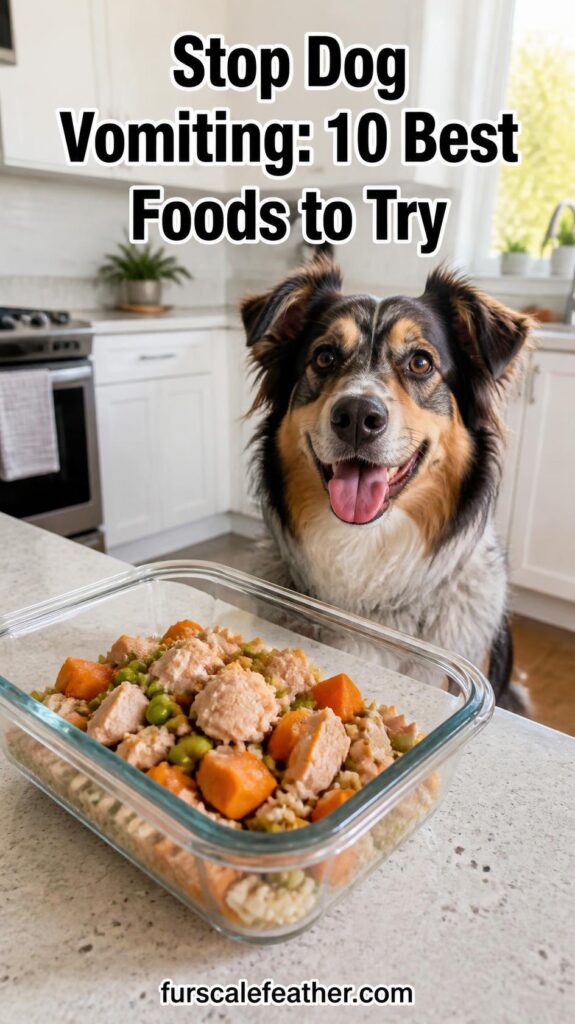
9. Nom Nom Fresh Dog Food
Similar in concept to The Farmer’s Dog, this fresh food service ships pre-measured meals and offers a free nutrition consultation with each order. Vet sources I interviewed noted that fresh diets often reduce vomiting simply because portions are more consistent than scooped kibble.
- Pros: Portion accuracy, ingredient transparency, nutritionist support included
- Cons: Subscription model, not ideal for multi-dog households on a budget
10. Iams Proactive Health Sensitive Digestion
This is one of the most affordable options on this list and includes prebiotics to support gut health. It won’t outperform a prescription diet for a dog in an active flare, but for mild, occasional vomiting it’s a reasonable starting point.
- Pros: Budget-friendly, widely available, includes prebiotic fiber
- Cons: Less targeted than dedicated sensitive stomach lines
My pick: For most readers dealing with regular dog vomiting after eating, I’d start with Purina Pro Plan Sensitive Skin & Stomach. It’s the one I saw the clearest, measurable results with for Rosie, it’s affordable and easy to find, and it uses a single protein source without requiring a vet prescription. If a food change alone doesn’t resolve things within two to three weeks, that’s your signal to loop in your vet and consider a prescription formula.
How to Transition Your Dog to a New Food Without Triggering More Vomiting
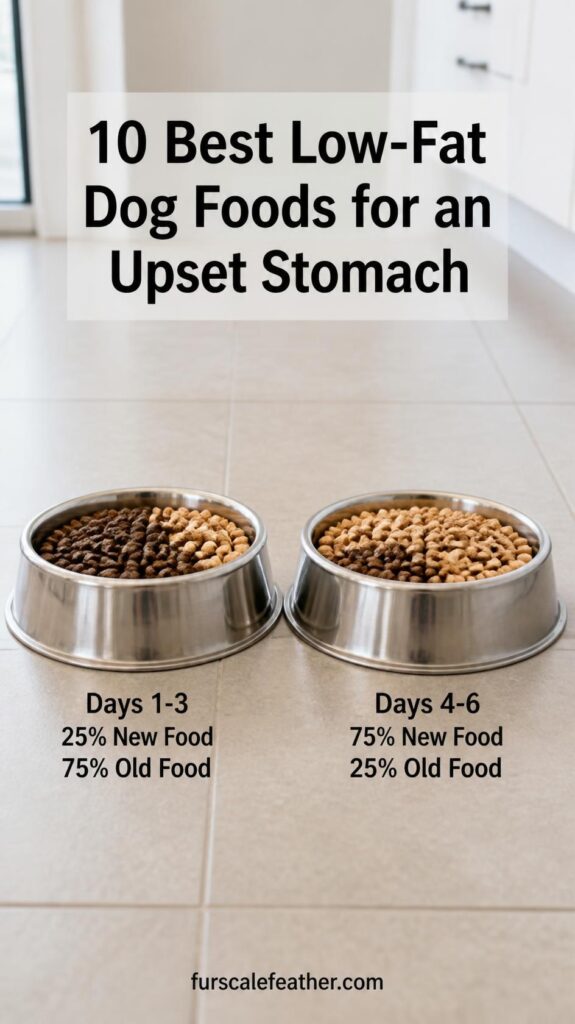
- Days 1 to 2: Mix 25 percent new food with 75 percent old food.
- Days 3 to 4: Move to a 50/50 mix.
- Days 5 to 6: Shift to 75 percent new food and 25 percent old food.
- Day 7 and beyond: Feed 100 percent new food, watching closely for any return of vomiting.
- Split meals into smaller portions. Two to three smaller meals a day put less strain on digestion than one large one.
- Use a slow feeder if your dog gulps. This alone resolved fast-eating vomiting for several readers who wrote in after trying it.
- Keep a simple log. Note the date, time, and what was fed each time vomiting occurs, so you can spot patterns instead of guessing.
Signs of Dog Vomiting After Eating That Need a Vet Visit
A food change is a reasonable first step, but call your vet if you notice any of the following:
- Vomiting more than once a day or for more than 24 hours
- Blood in the vomit, or vomit that looks like coffee grounds
- Lethargy, a swollen abdomen, or repeated unproductive retching
- Vomiting paired with diarrhea, fever, or loss of appetite
- Any vomiting in a puppy, senior dog, or dog with a known health condition
These can point to something a diet change won’t fix, including pancreatitis or an obstruction, and only a veterinarian can diagnose those. The American Veterinary Medical Association has a helpful overview of when vomiting counts as an emergency at avma.org.

Questions People Usually Ask
Why does my dog vomit undigested food right after eating? This usually points to eating too fast rather than a digestive problem. Slowing down meals with a slow feeder or splitting food into smaller portions often resolves it within a few days.
Is yellow foam vomit different from food vomit? Yes. Yellow foam typically means bile and an empty stomach, often called bilious vomiting syndrome. Feeding a small meal before bed can help.
How long should I try a new food before deciding it’s not working? Give any new food at least two to three full weeks after a slow transition before judging results, since gut bacteria need time to adjust.
Can I make homemade food instead of buying a commercial sensitive stomach diet? You can, but it needs to be balanced by a veterinary nutritionist to avoid long-term deficiencies. It’s not a shortcut for a dog with ongoing vomiting.
Should I switch foods again if the first one doesn’t help? Give one food a full trial period before switching again. Rotating too quickly makes it hard to tell what’s actually causing the reaction.

Key Takeaway
Dog vomiting after eating is uncomfortable to watch and stressful to manage, but for most dogs it responds well to a slower feeding routine and a gentler food. Start with a single-protein, lower-fat formula, transition over seven days instead of overnight, and keep a short log of what you feed and when vomiting happens. If a food change hasn’t helped within two to three weeks, or if you see any of the warning signs above, get your vet involved rather than continuing to guess.
Disclosures: This post may contain affiliate links. Two of the ten foods listed were tested directly with my own dog, Rosie. The remaining eight were evaluated using ingredient analysis, veterinary sourcing, and aggregated user reviews, which are labeled individually above. This article is not a substitute for veterinary advice. If your dog’s vomiting is frequent, severe, or paired with other symptoms, please consult your veterinarian.