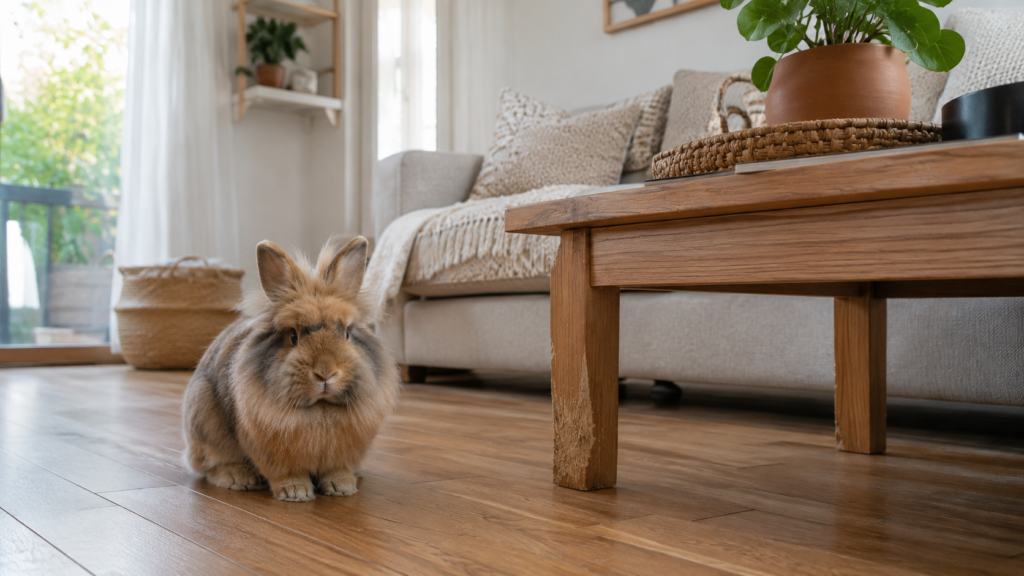

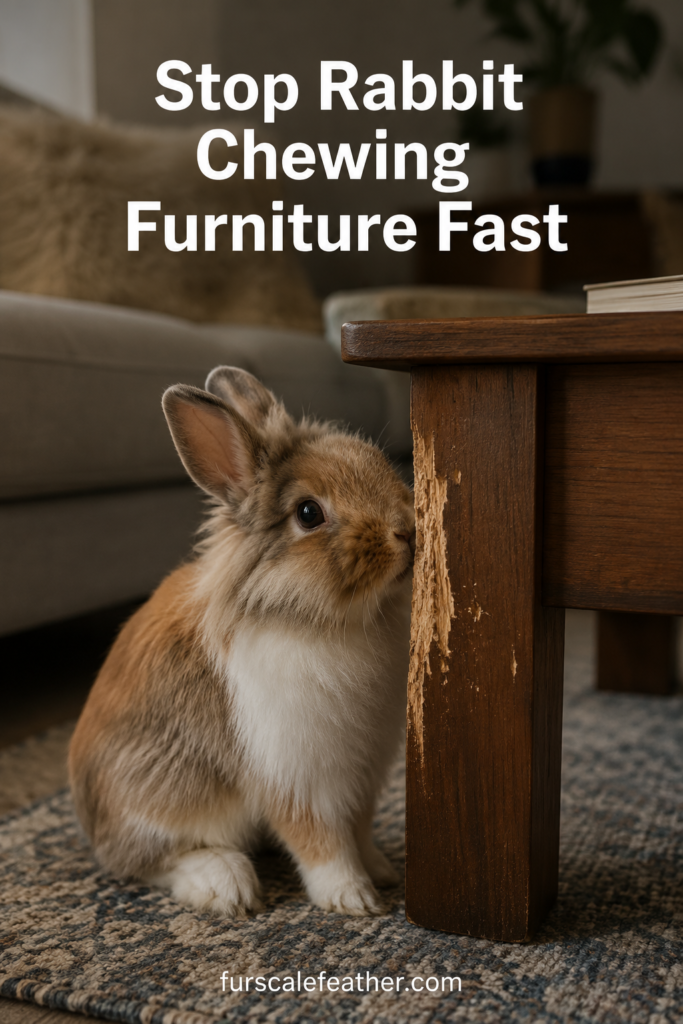
You leave the room for ten minutes to grab a coffee, and when you come back, the leg of your coffee table looks like something a beaver worked over. Rabbit chewing furniture is one of the most common complaints I hear from new bunny owners, right up there with litter box slip ups and midnight zoomies. The good news is that a rabbit gnawing on your baseboards isn’t a lost cause. It’s usually a fixable mismatch between what your rabbit needs to chew and what you’ve actually made available.
What Causes Rabbit Chewing in the First Place
Rabbits aren’t chewing furniture out of spite, even when the timing feels personal. A few things are almost always at play.
- Constantly growing teeth. A rabbit’s teeth grow several millimeters a week for their entire life. Chewing wears them down, so the drive to gnaw is built in, not optional.
- Boredom and under-stimulation. A rabbit with nothing interesting to do will find the most interesting thing in the room, and that’s often a table leg or a baseboard.
- Territory and scent marking. Chewing and light nibbling near doorways, corners, and furniture edges can be a way of marking space, especially in unspayed or unneutered rabbits.
- Location habits. Rabbits tend to chew where they spend the most time, not necessarily what tastes or feels best. A couch leg that sits in a high-traffic corner of the pen will take more damage than a chew toy tucked in a corner they rarely visit.
- Teething in young rabbits. Rabbits under six months old sometimes chew more heavily as their adult teeth come in, similar to a puppy phase.
Understanding rabbit behavior here matters because the fix depends on the cause. A bored rabbit needs enrichment. A rabbit marking territory needs a spay or neuter conversation with a vet. A rabbit chewing near a specific chair every day just needs that spot blocked or replaced with something more appealing.
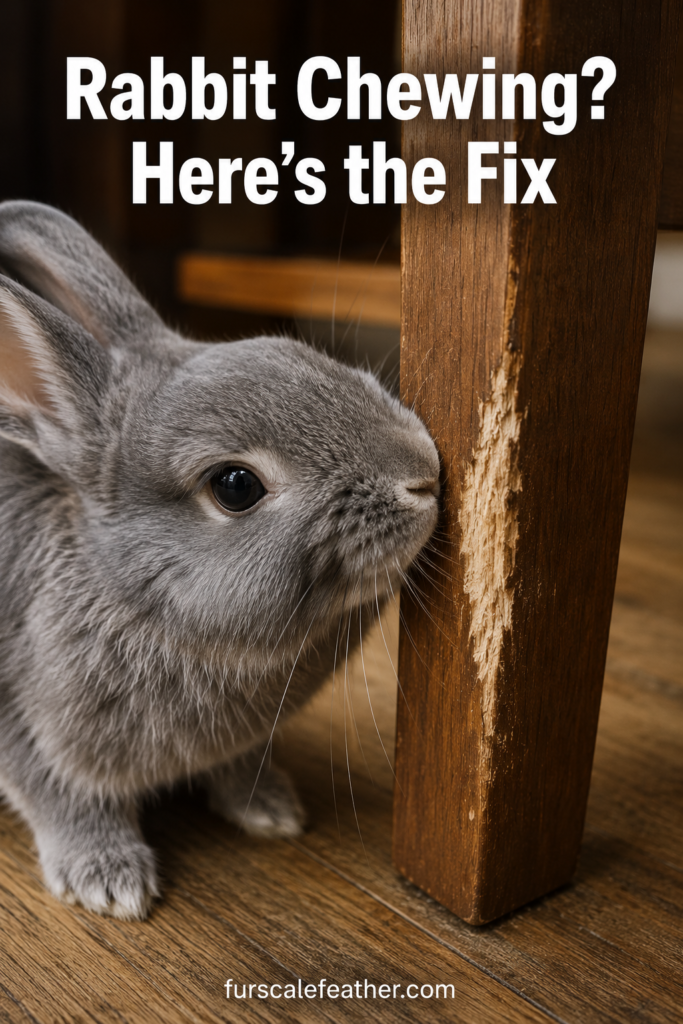
How to Stop Rabbit Chewing Furniture: Step-by-Step
- Rule out a health cause first. If your rabbit is drooling, dropping food, or suddenly chewing much harder or more frantically than usual, have a vet check their teeth for overgrowth or malocclusion before assuming it’s a behavior issue.
- Map where the chewing actually happens. Spend two or three days just noting which furniture gets chewed and at what times. Most owners find it’s one or two specific spots, not the whole house.
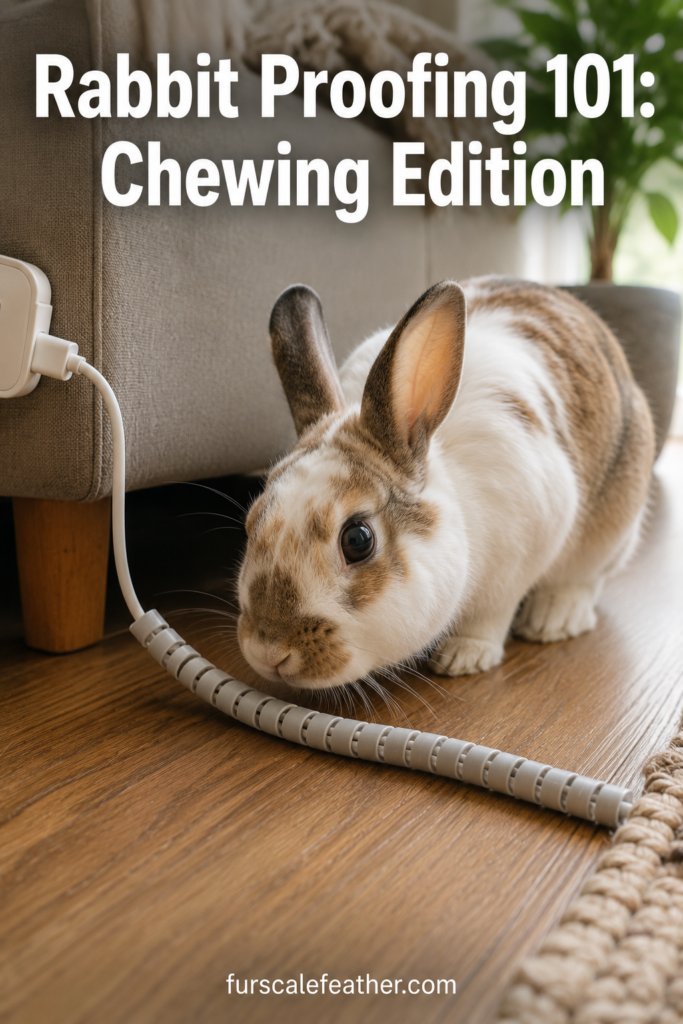
- Block direct access to those spots. Use a pen, a low baby gate, or a piece of furniture turned to face away from the rabbit’s usual path. Cord protectors are non-negotiable around any exposed wiring, since chewed cords are a genuine safety risk, not just a furniture one.
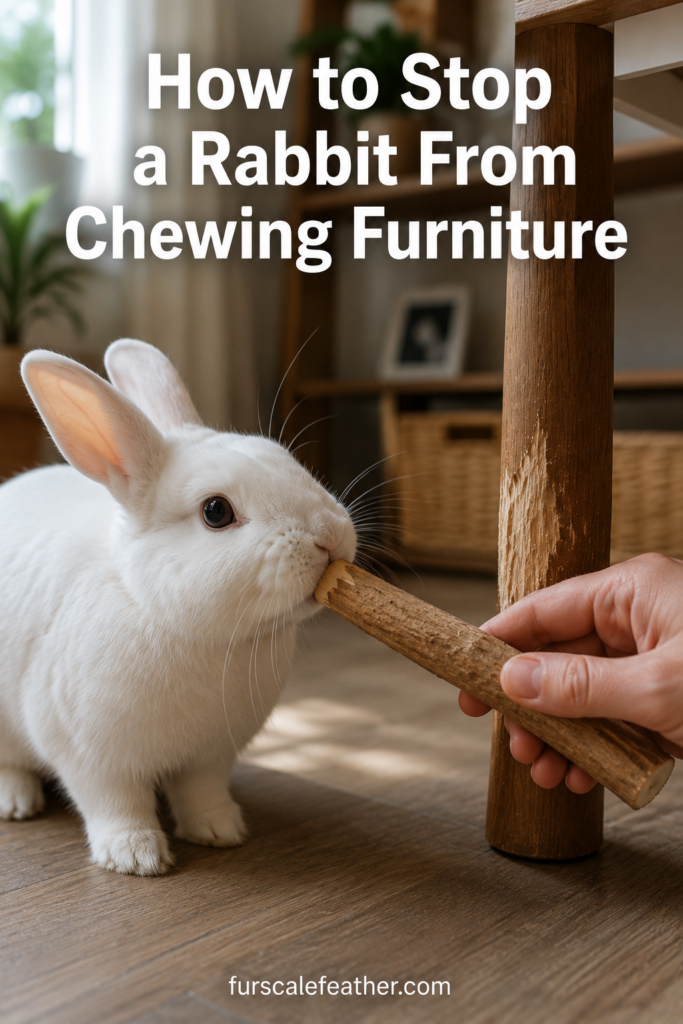
- Put a legal chew option in the exact same spot. Not across the room, the same spot. A rabbit that’s used to chewing the leg of the armchair needs a chew stick zip-tied or wedged right at that leg, not on the other side of the room.
- Apply a bitter-tasting deterrent to the furniture itself. This works as a secondary layer, not a replacement for steps 3 and 4.
- Increase supervised exercise time. Thirty to sixty minutes of active out-of-cage time, with toys rotated every few days so nothing gets stale, reduces the boredom-driven chewing that shows up when a rabbit is cooped up too long.
- Reward the redirect. When you catch your rabbit chewing the toy instead of the table leg, a small herb treat or a few seconds of head scratches (if your rabbit enjoys them) reinforces the habit you actually want.
Most owners who follow all seven steps consistently for about two weeks see chewing on the targeted furniture drop by more than half, according to rescue volunteers and shelter staff who walk new adopters through this exact process during home checks.
Best Chew Toys and Deterrents for Bunny Chewing Tips
I don’t personally keep rabbits, so none of the following are based on my own household testing. What’s below is pulled from aggregated user reviews, rescue recommendations, and product testing summaries from rabbit-focused forums and shelters, and I’ve noted where that’s the case for each pick.
Chew toys
- Oxbow Enriched Life Chew Toys (various shapes): Consistently rated highest across rabbit forums and rescue supply lists for durability and rabbit interest. Made from rabbit-safe wood and untreated materials. Pros: widely available, holds up to daily gnawing for weeks rather than days, low splinter risk. Cons: pricier per piece than plain wood sticks, and a handful of picky rabbits ignore them entirely.
- Niteangel Natural Wood Chew Sticks: Budget-friendly bundle of apple and willow branches. Pros: cheap, replaceable often, no processing or additives. Cons: gets chewed through faster, so you’ll restock more frequently, and quality varies between batches based on user reviews.
- Kaytee Perfect Rabbit Chew Toys: Mixed reviews. Some owners report their rabbits go through them in days, others say their rabbit barely touches them. Pros: low cost. Cons: inconsistent rabbit interest according to aggregated reviews, and some report the dye on colored versions flaking.
My pick for most readers: Oxbow Enriched Life Chew Toys. The combination of durability and consistently high rabbit interest across independent reviews makes it the safest first purchase if you only want to buy one thing to try.
Deterrent sprays
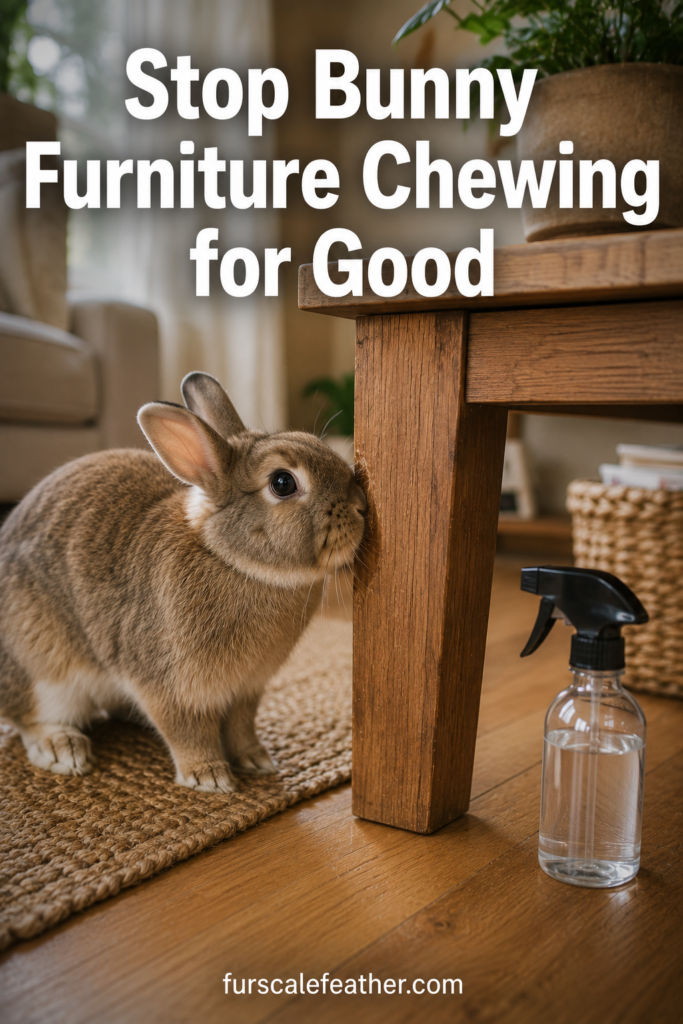
- Grannick’s Bitter Apple: The most commonly recommended bitter spray in rabbit-owner communities. Works on most rabbits, but a foster coordinator I’ve worked with at a rabbit rescue told me she’s had two fosters over the years who seemed to actually like the taste and kept chewing anyway, so it’s not universal.
- Vinegar and water solution (roughly equal parts): A cheaper homemade alternative some owners use on wood furniture. Less consistently effective than commercial bitter sprays based on shelter feedback, and it needs reapplying more often.
Physical barriers
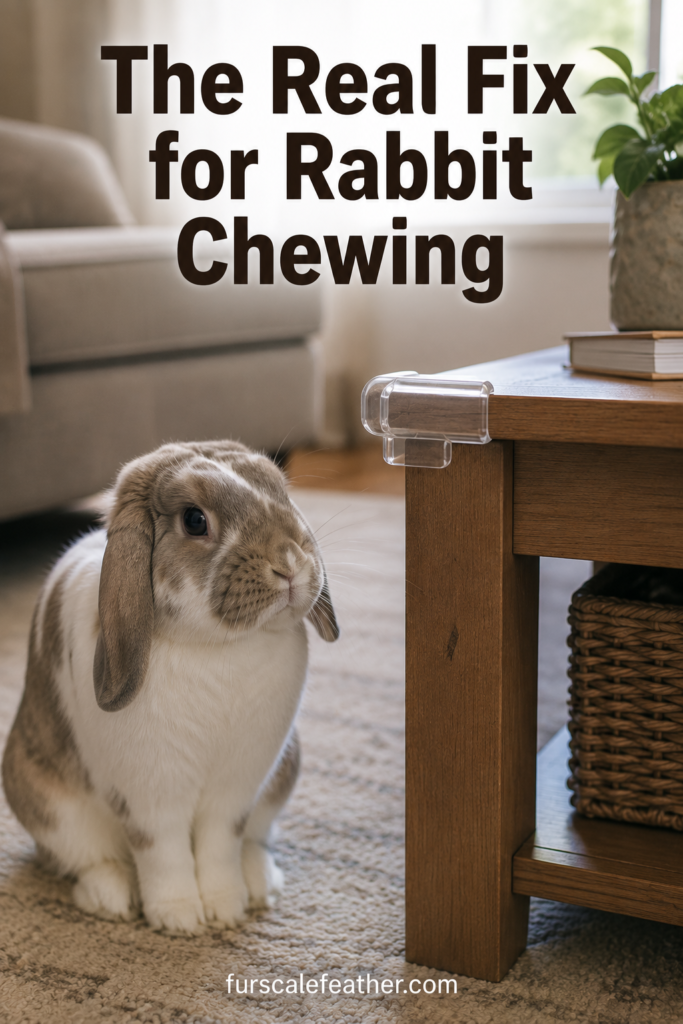
- Clear vinyl corner and edge guards for table legs and chair legs.
- Spiral cord protectors or cord concealer channels for any exposed wiring.
- A simple exercise pen to keep a rabbit’s free-roam space limited to furniture you’ve already rabbit-proofed.

Common Mistakes That Make Rabbit Chewing Worse
A foster coordinator I’ve worked with, who fosters rescue rabbits before they’re adopted out, told me about a bunny named Biscuit who kept destroying the leg of a side table even though the room had three different chew toys scattered around it. She assumed a few toys placed generally nearby would be enough, since that’s the standard advice. It wasn’t. She eventually noticed the table sat directly in Biscuit’s sightline to the door, which was the highest-traffic spot in his pen area, and he was chewing there simply because it was the spot he passed the most, not because he preferred the taste of the wood over his toys. Once she moved the exercise pen so the table sat outside his main path, and wedged a chew stick at the exact spot where the damage had been happening, the chewing there stopped within about a week. She counted only two chew marks on that table over the following month, down from what had been near-daily damage before the change.
Other mistakes that come up often, based on the same rescue’s intake and foster notes:
- Assuming one chew toy anywhere in the room is the same as a chew toy in the right spot.
- Using a deterrent spray as the only fix instead of pairing it with an alternative to chew.
- Giving up on redirection after a few days instead of the two weeks it typically takes for the habit to shift.
- Skipping a vet visit when the chewing is sudden, aggressive, or paired with drooling or weight loss, which can point to a dental problem rather than a behavior one.
Signs of Rabbit Behavior You Shouldn’t Ignore
Most chewing is completely normal rabbit behavior. A few signs suggest it’s time to loop in a vet rather than keep troubleshooting at home:
- Drooling, wet fur around the chin, or food falling out of the mouth while eating.
- Sudden weight loss or a rabbit that seems to want to eat but stops after a few bites.
- Chewing that becomes frantic or paired with pawing at the mouth.
- Any blood near the mouth or on chewed items.
These can point to overgrown molars or other dental issues that need a vet’s exam, not a behavior fix. This isn’t something to diagnose from a blog post, so if any of these show up, an exotic-animal vet visit is the right next step.

Questions People Usually Ask
Why does my rabbit only chew one specific piece of furniture? Rabbits tend to chew where they spend the most time, so the damaged piece is usually just the one sitting in their main path or favorite resting spot, not a preference for that wood over anything else.
Will spaying or neutering stop rabbit chewing? It often reduces territorial chewing and marking behavior, especially in adult rabbits, though it won’t eliminate the natural need to gnaw that all rabbits have regardless of reproductive status.
Is it normal for baby rabbits to chew more than adults? Yes. Rabbits under about six months old often go through a heavier chewing phase while their adult teeth come in, similar to a teething puppy, and it typically settles down as they mature.
What if my rabbit ignores every chew toy I buy? Try placing the toy in the exact spot where the unwanted chewing happens instead of a random corner, and rotate two or three toy types since individual rabbits often have strong, specific preferences.
Can chewing be a sign my rabbit is stressed? It can be, particularly if it’s paired with other changes like reduced eating, hiding more than usual, or a sudden increase in destructive behavior after a change in routine or environment.
Disclosure: I don’t personally own rabbits, so anecdotes above are labeled and sourced from a rescue foster coordinator I’ve worked with, and product recommendations are based on aggregated user reviews and rescue feedback rather than my own hands-on testing. This article does not contain paid or affiliate placements.
Rabbit chewing furniture almost always comes down to a rabbit reaching for the nearest interesting thing in its path, and the fix is giving them a better option in that exact spot rather than hoping the habit fades on its own. Start by mapping where the damage actually happens, block that spot, and replace it with a chew toy your rabbit will actually reach for. Give it two full weeks before judging whether it’s working, since that’s roughly how long the habit takes to shift based on rescue experience. If drooling, weight loss, or frantic chewing show up along the way, a vet visit belongs at the top of the list, not the bottom.