
Your new corn snake spent its first night refusing to eat, and now you’re refreshing forum threads at midnight wondering if you did something wrong. That refusal is one of the most common panic moments in corn snake care, and it almost never means disaster. Corn snakes are one of the most forgiving reptiles you can bring into a beginner snake setup, but the first few weeks trip up a lot of new owners in the same handful of ways.
This guide walks through the full picture of corn snake care, from the enclosure you need before your snake even arrives to the feeding schedule that keeps a corn snake calm and healthy for the next fifteen to twenty years. If you’re putting together your first beginner snake setup, the good news is that corn snakes tolerate small setup mistakes better than most reptiles. The goal here is to help you avoid the mistakes that actually matter.
What Is Corn Snake Care Actually Like Day to Day?
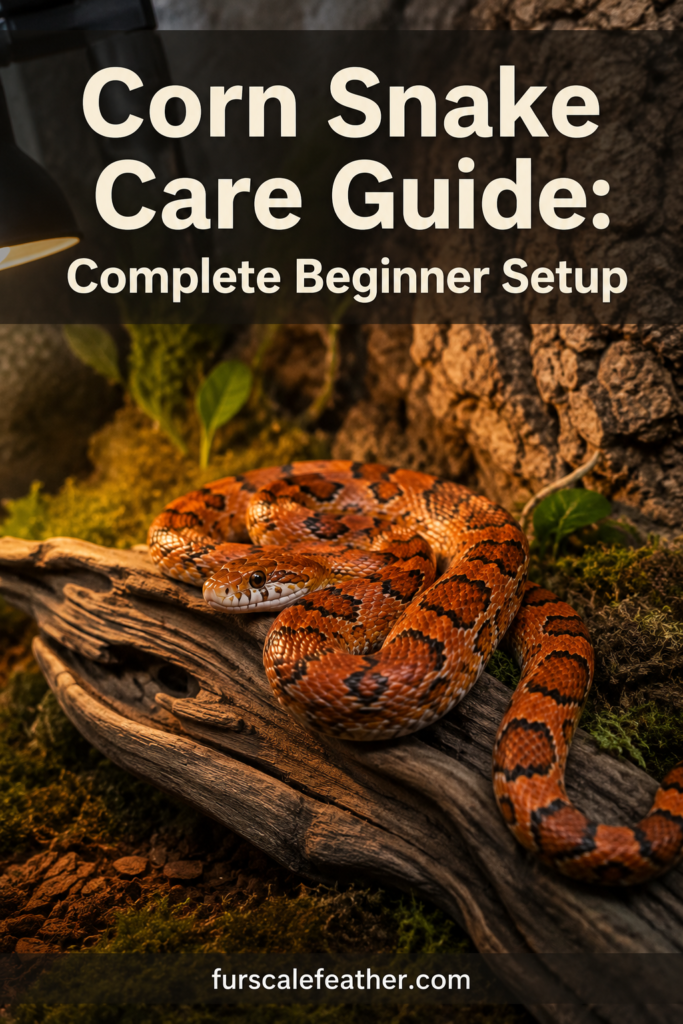
Corn snake care is quieter than most people expect. There’s no daily feeding, no walks, and no constant handling requirement. Most of the week is spent checking that the enclosure is holding steady, not actively interacting with the snake.
A realistic weekly routine looks like this:
- Daily: Check the warm side and cool side temperatures with a digital thermometer. Top off the water bowl if it’s low or dirty.
- Every 1 to 2 days: Do a quick visual check for shed skin, unusual stool, or signs of stress like constant hiding or glass surfing.
- Weekly: Feed an appropriately sized prey item (more on sizing below), spot clean waste, and handle for 10 to 15 minutes if the snake is calm and hasn’t just eaten.
- Monthly: Deep clean the enclosure, wipe down glass or PVC walls, and check that the thermostat and heat source are still reading accurately.
That’s the entire commitment. Compared to a dog or even a bearded dragon, corn snake care is low-maintenance once the setup is right, which is exactly why it’s such a popular first reptile.
Beginner Snake Setup: Building the Right Enclosure
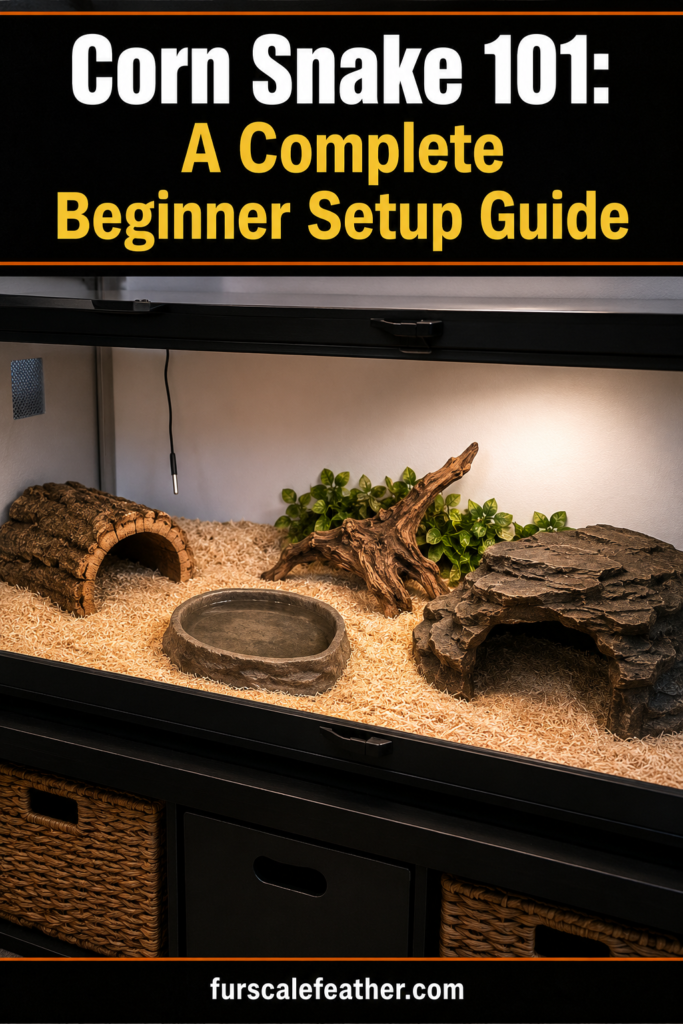
Most feeding refusals, stress behaviors, and health issues in corn snakes trace back to the enclosure, not the snake. Getting this part right before the snake arrives solves the majority of beginner problems before they start.
Enclosure Size
Hatchling corn snakes do better in a smaller space, something in the 10 to 20 gallon range or an equivalent plastic tub, because a large open enclosure can leave a young snake feeling exposed and reluctant to eat. Adults need more room to move and thermoregulate properly. A 36 x 18 x 18 inch enclosure (roughly 40 gallons of floor space) is a comfortable minimum for a full-grown corn snake, which typically reaches 3 to 5 feet long.
Heating and Temperature Gradient
Corn snakes need a temperature gradient, not a single set temperature. Aim for:
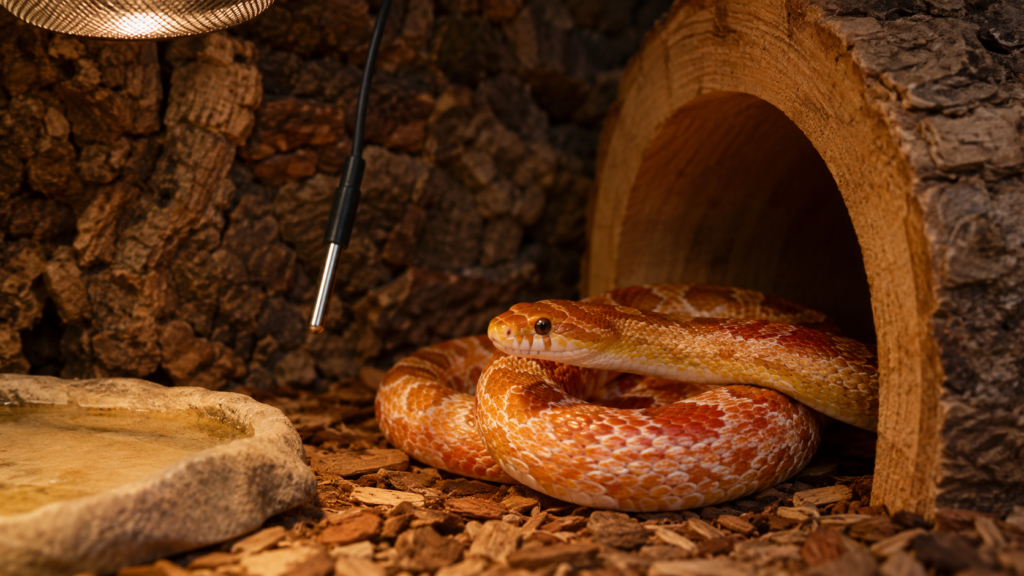
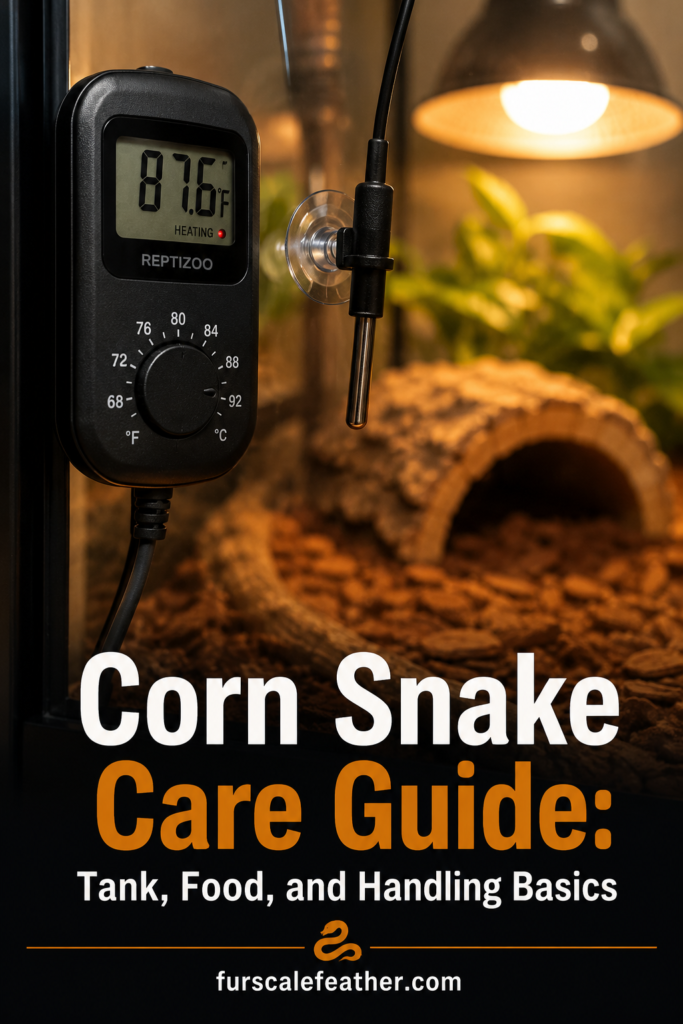
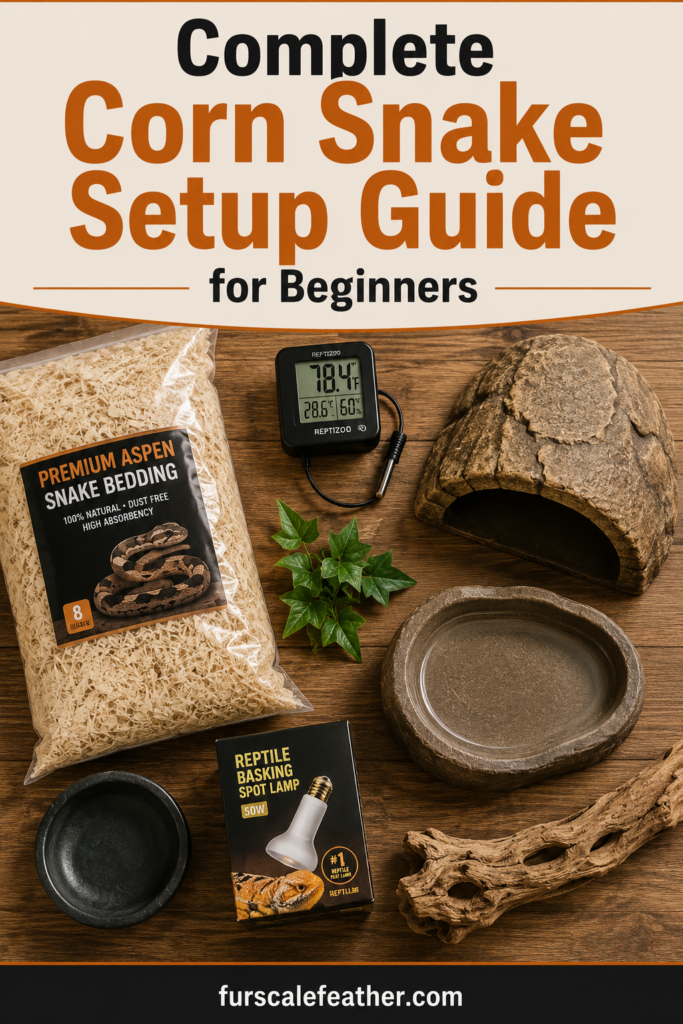
- Warm side: 85 to 88°F, controlled by an under-tank heater or a low-wattage heat bulb on a thermostat
- Cool side: 72 to 75°F, which is usually just room temperature
- Basking or hot spot directly under the heat source should not exceed 90°F
A thermostat is not optional here. Heat mats and bulbs without one can climb well past safe temperatures and cause burns within hours.
Substrate Options
- Aspen shavings: Low dust, holds burrows well, easy to spot clean. The most common choice for corn snakes.
- Coconut fiber substrate: Retains a bit more humidity, useful in drier climates, but can be slightly messier during feeding.
- Paper towels or newspaper: Not attractive, but useful for quarantining a new snake or monitoring a sick snake’s waste closely.
Hides and Enrichment
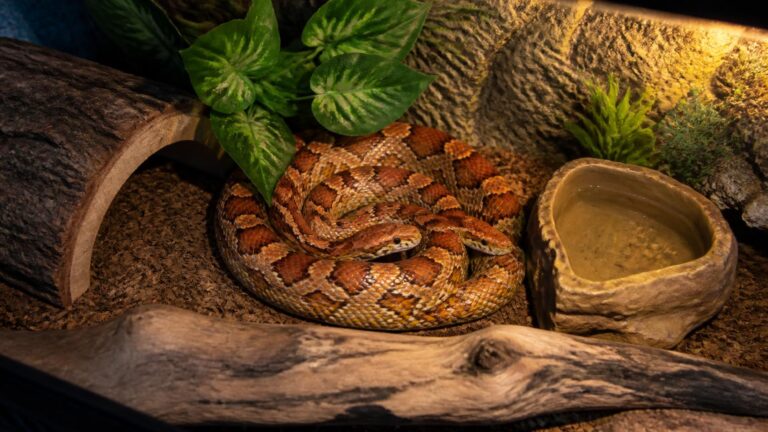
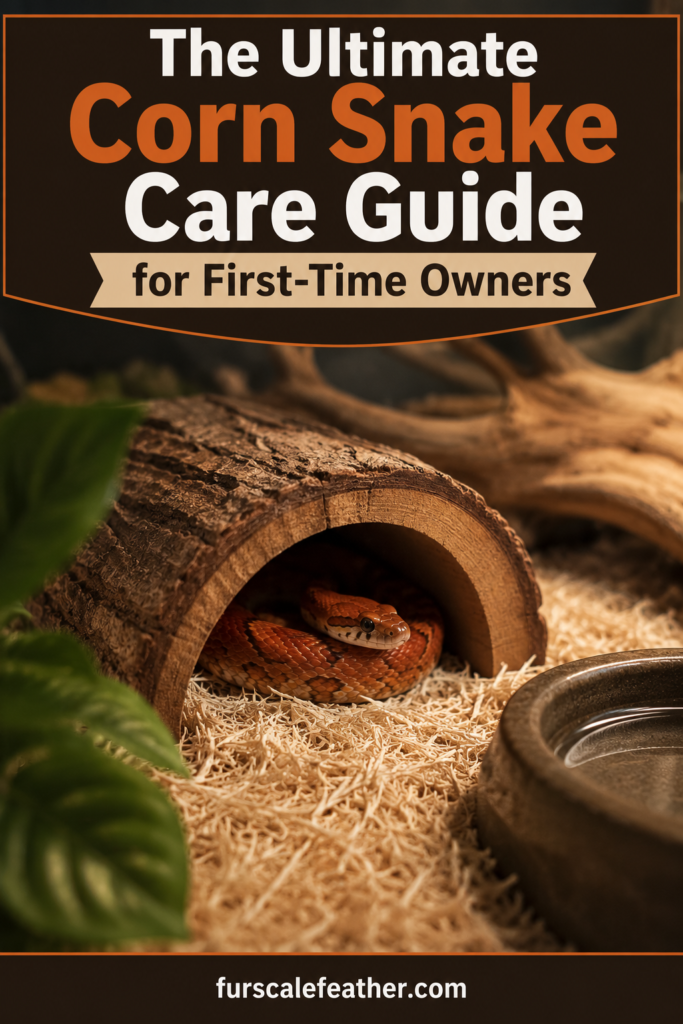
A corn snake needs at least two hides, one on the warm side and one on the cool side, so it never has to choose between feeling secure and staying at the right temperature. Add a branch or two and some artificial plants for climbing and cover. This isn’t decoration, it noticeably reduces stress behaviors like constant glass surfing.
Setting Up Your Corn Snake Enclosure: Step by Step
- Choose an enclosure sized for your snake’s current age, not its adult size.
- Install the under-tank heater or heat bulb on one end only, never centered.
- Wire the heat source through a thermostat with the probe placed at the level the snake will actually rest.
- Add 2 to 3 inches of substrate.
- Place one hide on the warm side and one on the cool side.
- Add a water bowl large enough for the snake to soak in, positioned on the cool side.
- Run the empty enclosure for 24 to 48 hours and confirm both temperature zones hold steady before adding the snake.
What Corn Snakes Eat and How Often
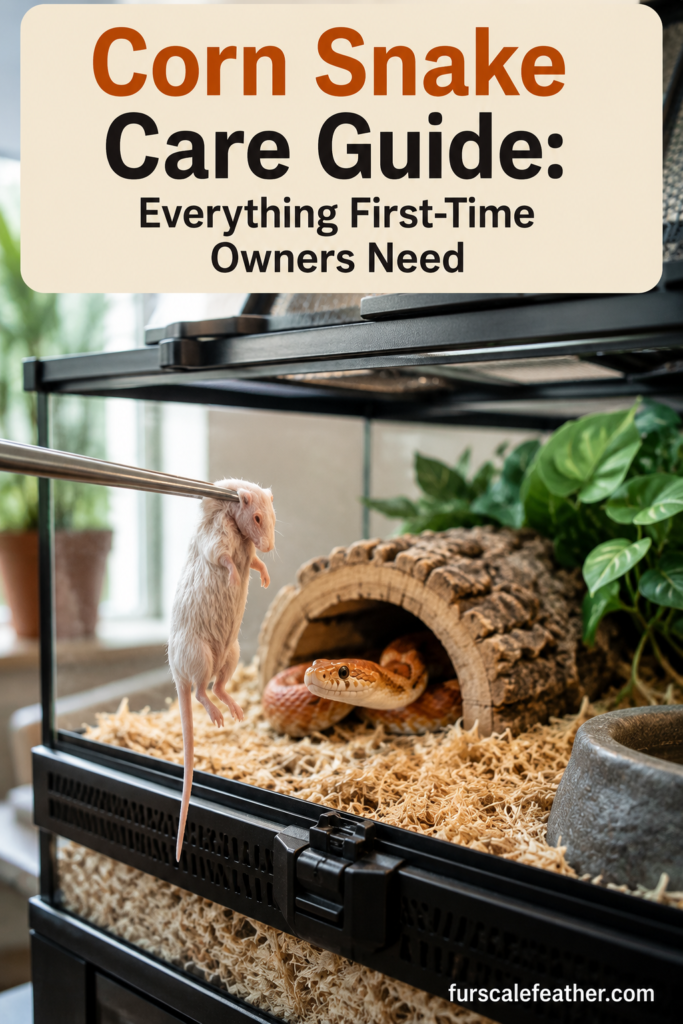
Corn snakes eat appropriately sized rodents, almost always frozen-thawed rather than live, for both safety and convenience. Live feeding carries a real risk of the prey injuring the snake, and most experienced keepers and veterinarians recommend frozen-thawed exclusively.
Feeding frequency by age:
- Hatchlings: One appropriately sized pinky or fuzzy mouse every 5 to 7 days
- Juveniles: One small to medium mouse every 7 to 10 days
- Adults: One adult mouse every 10 to 14 days
The general sizing rule is that the prey item should be roughly the same width as the widest part of the snake’s body, not longer or shorter for its own sake, just proportional in width. An adult corn snake that’s regularly refusing food it previously ate, outside of a normal pre-shed fast, is worth discussing with an exotic vet rather than guessing.
Handling Your Corn Snake Without Stressing It Out
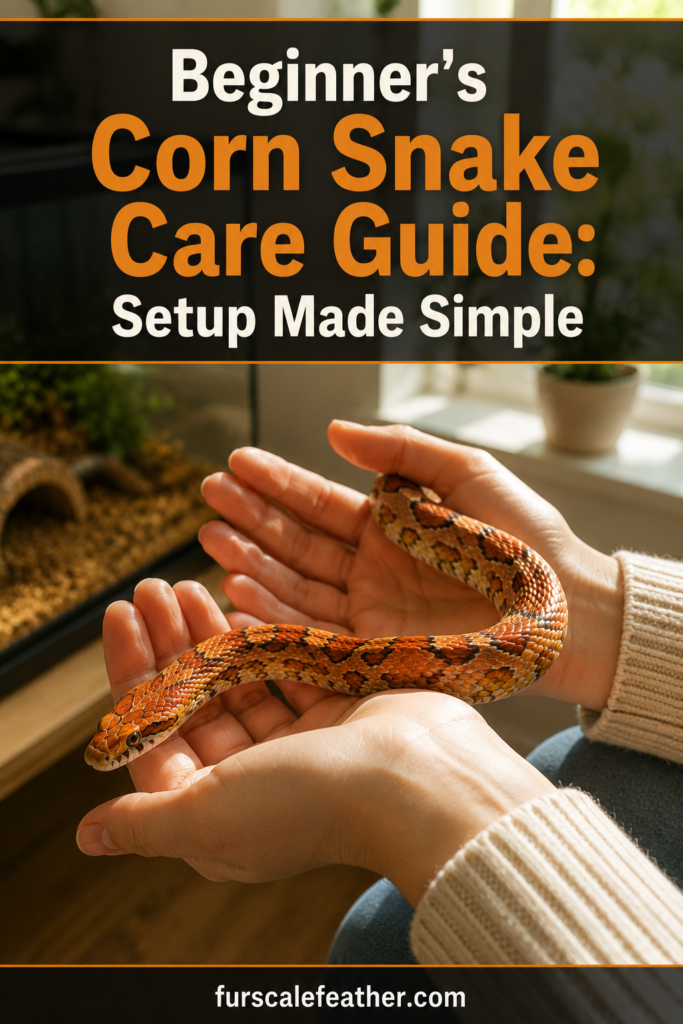
Wait 48 to 72 hours after a meal before handling. Corn snakes can regurgitate a meal if they’re moved around too soon after eating, which is stressful for the snake and unpleasant to clean up.
Keep early handling sessions to 5 to 10 minutes, a few times a week, and let the snake move at its own pace rather than restraining it. Watch for stress signals: musking (a defensive odor), a rapid tail vibration against substrate, or repeated attempts to hide in your sleeve or collar. None of these mean the snake is aggressive, they mean it’s overwhelmed and the session should end.
Signs of Health Problems to Watch For
Corn snakes are hardy, but a few signs point to a problem that needs a vet rather than a forum thread:
- Open-mouth breathing, wheezing, or visible mucus around the mouth or nose
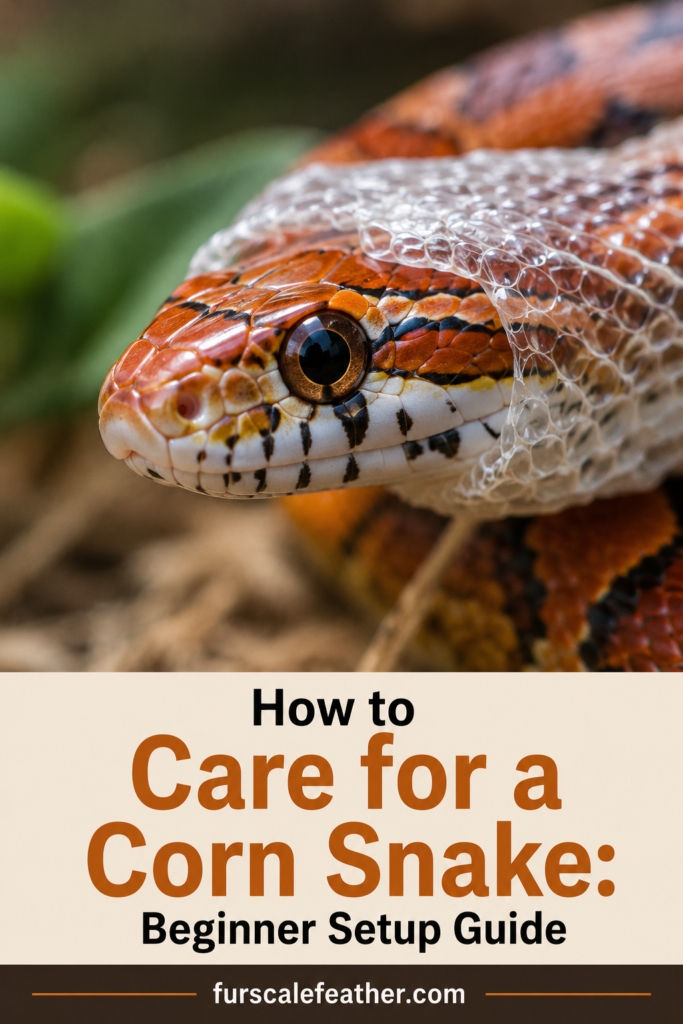
- Retained shed, especially around the eyes or tail tip, that doesn’t come off with normal humidity and a rough hide
- Lethargy paired with refusing multiple meals in a row, outside of a seasonal fast
- Visible mites, tiny dark specks moving on the skin or in the water bowl
None of these should be self-diagnosed or treated at home. If you notice any of them, contact a reptile-experienced veterinarian. The Association of Reptilian and Amphibian Veterinarians maintains a vet finder tool that’s worth bookmarking before you need it, not after.
A Mistake New Corn Snake Owners Make
A foster I worked with through a local reptile rescue took in a hatchling corn snake that had been moved straight into a 40 gallon adult enclosure by its previous owner, who assumed bigger meant better right from the start. The snake refused food for three straight weeks and spent most of its time pressed into a corner rather than using either hide.
The fix was downsizing to a 10 gallon enclosure with two snug hides and reducing the open floor space the snake had to cross to feel safe. Within one week of the switch, the snake accepted a pinky mouse and resumed a normal feeding schedule within a month. The lesson that stuck: an enclosure that feels spacious to a person can feel exposed and unsafe to a snake that’s only a few inches long. Size up gradually as the snake grows, not all at once.
Best Corn Snake Care Products, Reviewed
I don’t personally keep a corn snake, so these picks are based on aggregated owner reviews, exotic vet recommendations, and product roundups from reptile-specific retailers and keeper communities, not hands-on testing on my end.
Thermostats
- Herpstat and Vivarium Electronics digital proportional thermostats: Pros are precise temperature control and a strong reputation for reliability among long-term keepers. Con is a higher price point than basic models.
- Zoo Med Reptitemp digital thermostat: Pros are a lower price and simple setup. Con is less precise regulation compared to proportional models, which matters more in enclosures with thin-walled glass.
- Winner: A proportional thermostat like Herpstat or Vivarium Electronics, because a few degrees of drift on a basic thermostat is the difference between a comfortable warm side and a burn risk.
Substrate
- Zoo Med Aspen Snake Bedding: Pros are low dust, good odor control, and it supports light burrowing behavior. Con is it needs full replacement more often than coconut fiber.
- Zoo Med Eco Earth (coconut fiber): Pros are better humidity retention. Con is it clumps and gets messy faster during and after feeding.
- Winner: Aspen bedding for most corn snake setups, since corn snakes don’t need the extra humidity coconut fiber provides and the lower mess makes weekly upkeep faster.
Enclosures
- Glass terrariums (Zoo Med, Exo Terra): Pros are visibility and wide availability. Con is heat and humidity escape faster through glass, which makes thermostat accuracy more important.
- PVC enclosures (brands like Animal Plastics or Reptile Basics): Pros are better heat retention and insulation, which keeps the thermostat working less hard. Con is a higher upfront cost and no front-facing glass view from the side.
- Winner: PVC for anyone setting up a permanent adult enclosure, glass for anyone starting with a hatchling and expecting to upgrade later anyway.
Questions People Usually Ask
How big of a tank does a corn snake need? A hatchling can start in a 10 to 20 gallon enclosure. A full adult does best with roughly 40 gallons of floor space, around 36 x 18 x 18 inches.
How often do corn snakes eat? Hatchlings eat every 5 to 7 days, juveniles every 7 to 10 days, and adults every 10 to 14 days, always sized to the width of the snake’s body.
Do corn snakes need UVB lighting? It’s not strictly required the way it is for many lizards, but many keepers and some exotic vets now recommend low-level UVB as a general health benefit. It’s a reasonable add, not an emergency fix.
How long do corn snakes live? With consistent care, 15 to 20 years is typical, with some individuals living longer in captivity.
Are corn snakes good for beginners? Yes. Their tolerance for minor setup imperfections, manageable adult size, and calm temperament make them one of the most recommended first snakes for new reptile owners.
The Bottom Line
Corn snake care comes down to a stable temperature gradient, an appropriately sized enclosure, a consistent feeding schedule, and patience during the first few weeks while your snake settles in. Most problems that feel alarming, like a refused meal or a few days of hiding, resolve on their own once the setup is right. If something doesn’t improve within a couple of weeks, or you notice any of the health signs above, loop in an exotic vet rather than waiting it out. Get the enclosure right first, and the rest of corn snake care becomes remarkably low-maintenance.

Disclosure: I don’t personally own a corn snake. The anecdote in this article is from a foster I worked with through a local reptile rescue, and the product recommendations are based on aggregated reviews and expert sourcing rather than personal testing. No affiliate relationships are attached to the products named above.