
You walk past the tank and catch it before you even look, that faint ammonia edge in the air that tells you something has gone stale. The substrate looks fine. The reptile looks fine. But the smell doesn’t lie, and it usually means reptile enclosure cleaning has slipped further down the list than you realized. This happens to almost everyone who keeps a reptile, and the fix is a lot less complicated than it feels in that moment.
The Short Answer: A Three-Level Cleaning Routine
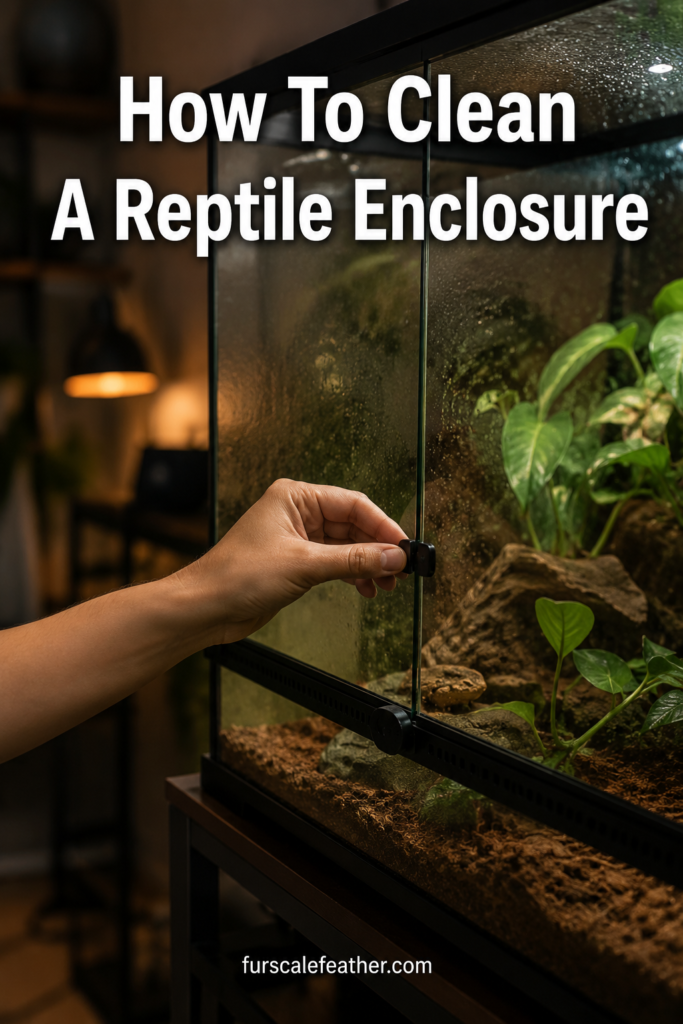
Reptile enclosures need three layers of cleaning, not one. Skipping straight to a monthly deep clean while ignoring daily maintenance is how smells and bacteria build up in the first place.
- Daily: Spot clean waste, uneaten food, and shed skin.
- Weekly: Wipe down glass, clean water and food dishes, and check substrate moisture.
- Monthly (or every 4 to 6 weeks): Full deep clean, including a complete substrate change and disinfecting every hard surface.
The rest of this guide walks through each level, what to use, and what to avoid.
Why Reptile Enclosure Cleaning Matters Beyond the Smell
A dirty enclosure isn’t just unpleasant to walk past. Reptiles are commonly linked to Salmonella, and buildup in substrate, water dishes, and décor gives bacteria a place to multiply. Poor terrarium cleaning habits also raise humidity in the wrong spots, which can lead to mold on wood décor or soft rot in live plants. For the reptile itself, ammonia buildup from waste can irritate the respiratory system over time, and damp, dirty substrate is a common trigger for skin and shell issues in species that need dry basking areas. None of this requires obsessive scrubbing. It just requires a routine that actually gets followed instead of one that only happens when the smell becomes impossible to ignore.
Reptile Enclosure Cleaning Supplies You’ll Need
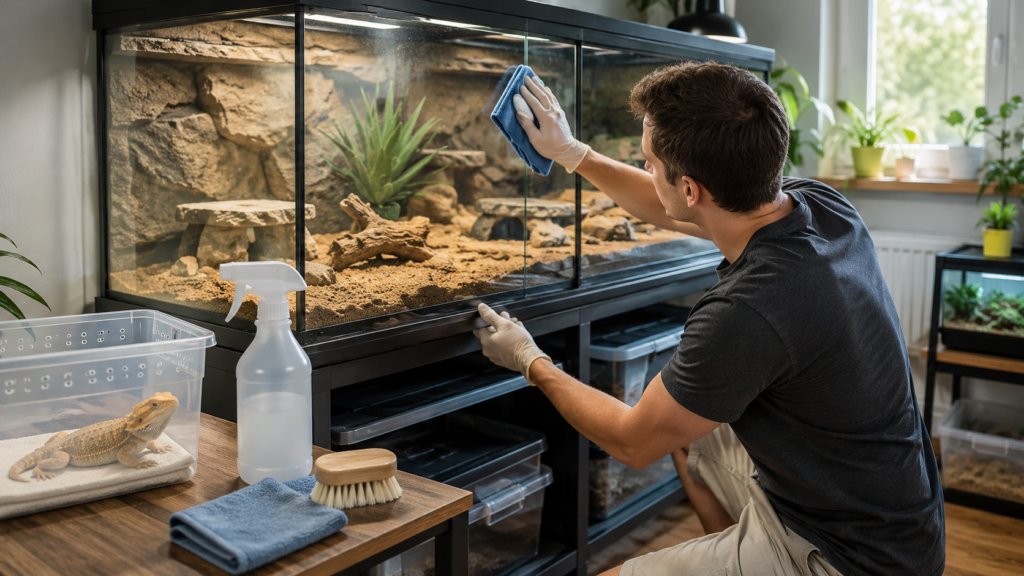
Before you start, gather everything so the reptile isn’t sitting in a temporary bin longer than necessary.
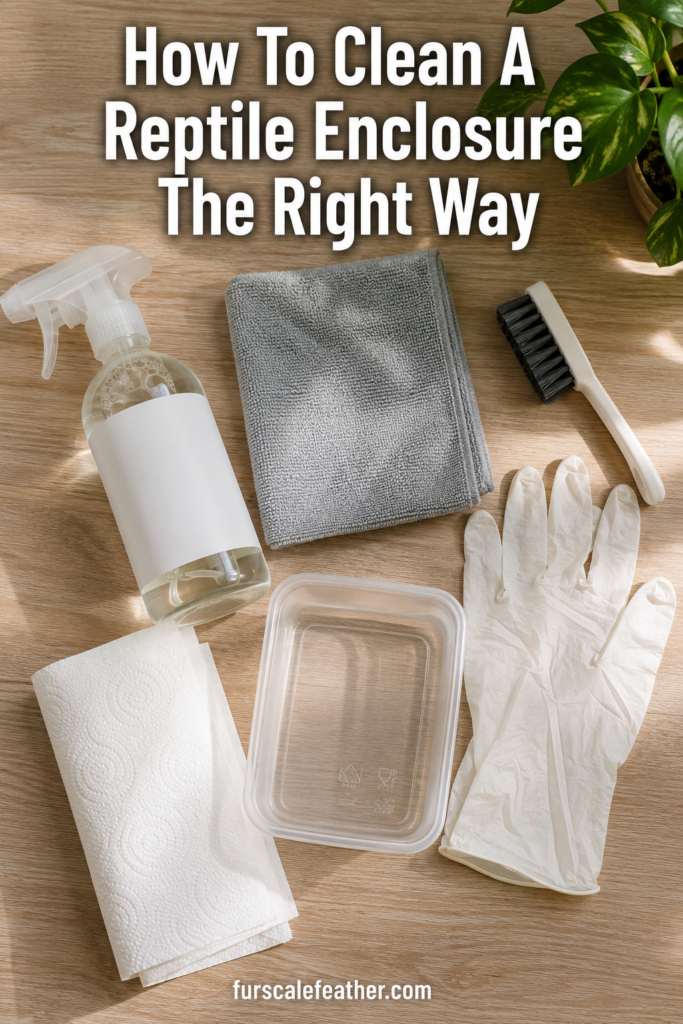
- A reptile-safe disinfectant (more on specific products below)
- Paper towels or a dedicated microfiber cloth used only for the enclosure
- A small scrub brush for corners, décor, and water dishes
- Disposable gloves
- A temporary holding container with air holes and a secure lid
- Fresh substrate
- A spray bottle for rinsing after disinfecting
Skip regular household cleaners like glass cleaner, dish soap with fragrance, or all-purpose sprays. Most contain residues that are fine for humans but can irritate a reptile’s skin and respiratory system long after the surface looks dry.
How to Clean a Reptile Enclosure Step by Step
Daily Spot Cleaning
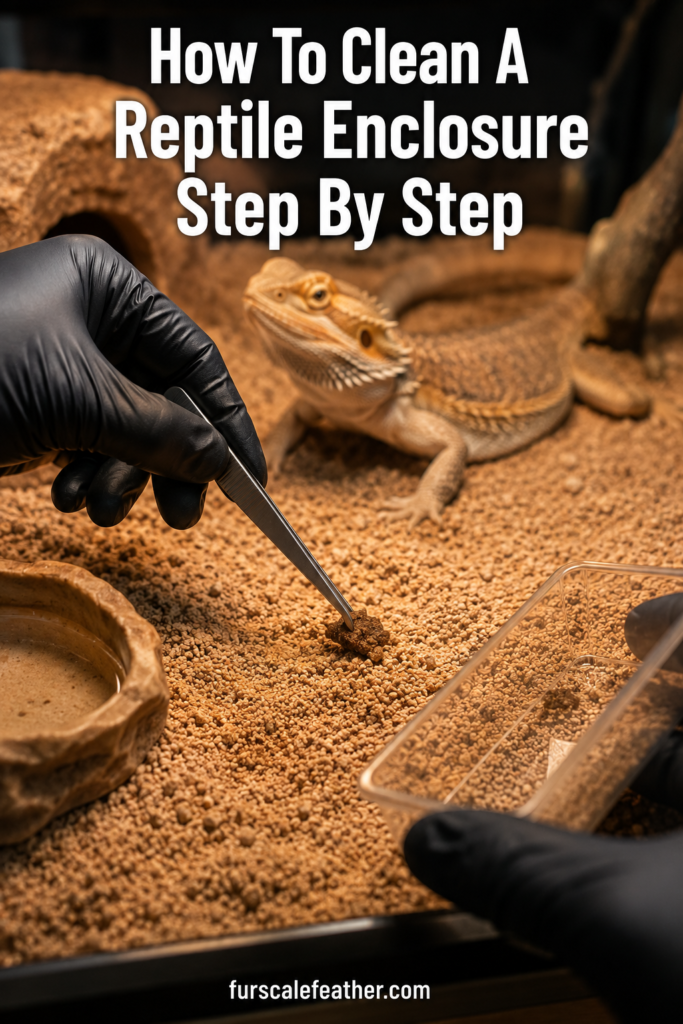
- Remove any visible waste with a scoop or paper towel.
- Take out uneaten feeder insects or leftover greens before they rot.
- Check water dishes and refill or replace if the water looks cloudy.
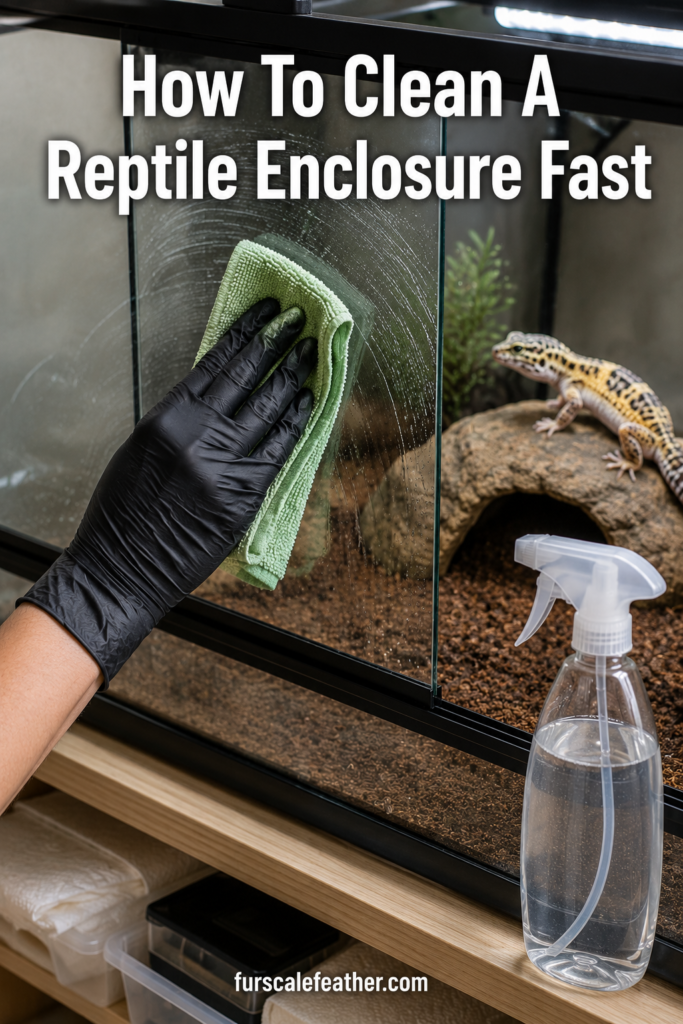
- Scan the glass or acrylic for smudges and wipe with a damp cloth.
This takes two to three minutes and prevents the buildup that makes the deep clean so much worse later.
Weekly Cleaning
- Remove and wash all dishes, hides, and décor with hot water and a reptile-safe cleaner.
- Wipe down interior glass fully, not just the visible front panel.
- Check substrate for damp spots or mold, especially in humid setups like bioactive terrariums.
- Spot-treat any soiled substrate area instead of waiting for the full change.
Monthly Deep Clean
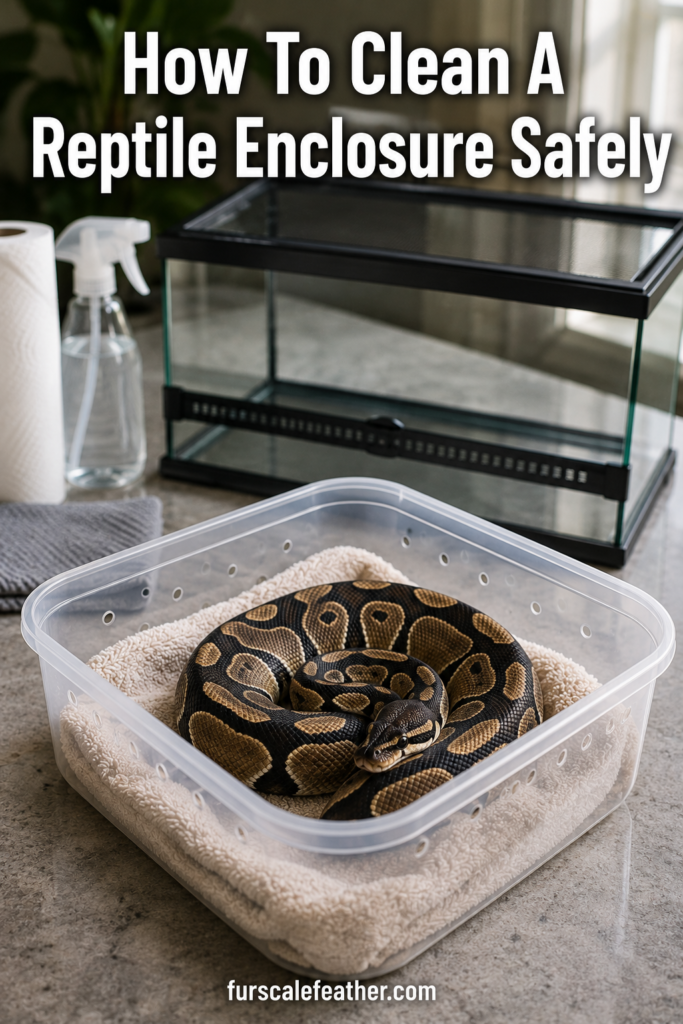
- Move the reptile into a secure holding container with proper temperature and ventilation.
- Remove all substrate, décor, and dishes from the enclosure.
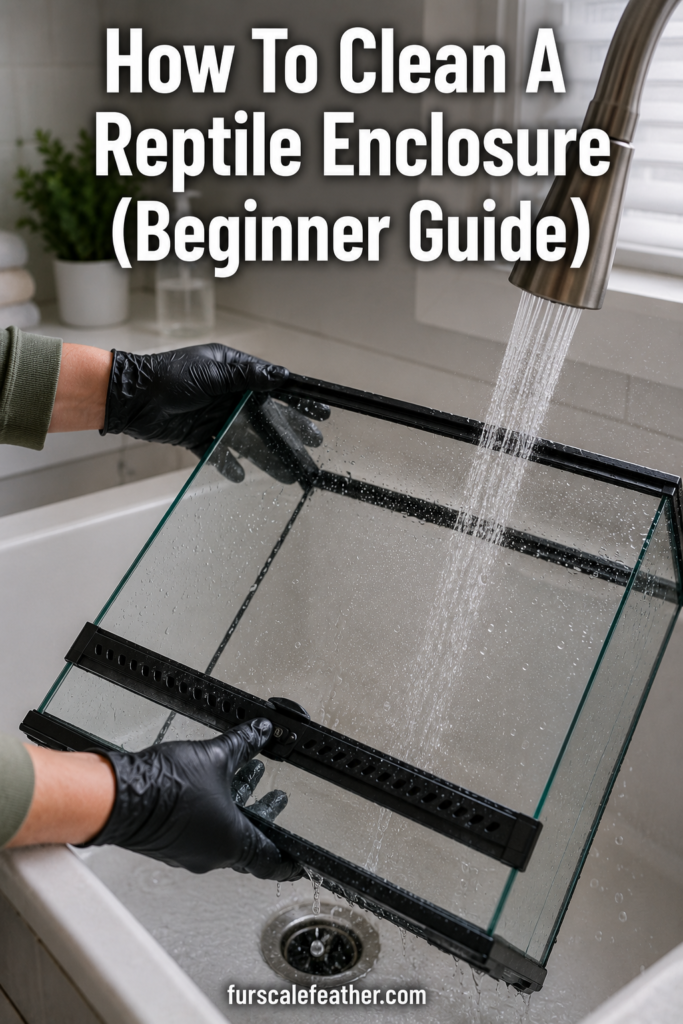
- Wash everything removable with hot water and a scrub brush to lift dried waste or biofilm.
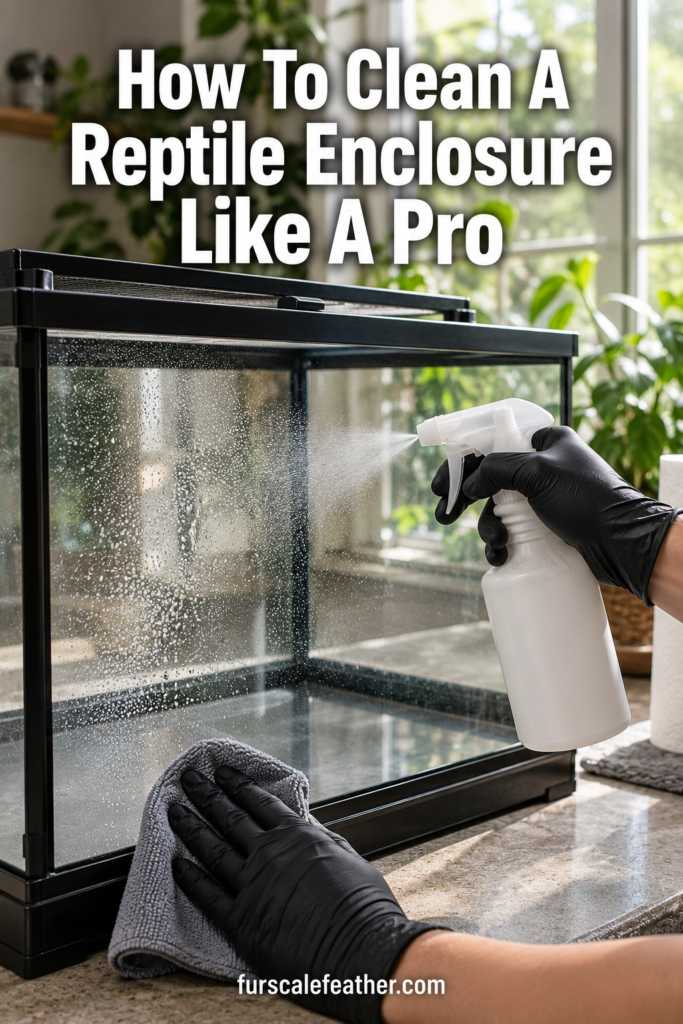
- Apply a reptile-safe disinfectant to every hard surface, following the product’s listed contact time (usually 5 to 10 minutes).
- Rinse thoroughly with clean water and dry completely with paper towels before adding anything back.
- Add fresh substrate, replace décor, and let the enclosure sit for 15 to 20 minutes to stabilize temperature and humidity before returning the reptile.
Skipping the rinse step is one of the most common mistakes, and it’s worth its own section below.
Best Products for Terrarium Cleaning
I haven’t personally kept reptiles, since our household pets are dogs and cats, but sourcing and reviewing pet-care products is a daily part of running our shop. The recommendations below come from a mix of veterinary-grade product data, aggregated user reviews, and feedback from a local reptile rescue we partner with for product testing.
Zoo Med Wipe Out 1 Reptile Habitat Cleaner Pros: No-rinse formula for most surfaces, widely available, safe for daily spot use. Cons: Smaller bottle size means frequent repurchasing for large enclosures.
F10SC Veterinary Disinfectant (concentrate) Pros: Used across many veterinary and rescue facilities, effective against a broad range of bacteria and fungi, very economical once diluted. Cons: Requires accurate dilution, and the concentrate itself needs careful handling before mixing.
Fluker’s Repta Clean Pros: Gentle scent, easy trigger spray, good for quick weekly wipe-downs. Cons: Less effective on heavier organic buildup, so it works best paired with a monthly deep clean using a stronger product.
Diluted bleach (5% sodium hypochlorite at a 1:30 ratio with water) Pros: Inexpensive and effective against most pathogens when mixed correctly. Cons: Requires a longer, more thorough rinse and full drying time, and any mixing error creates real risk to the reptile.
Recommended winner: For most beginner to intermediate keepers, Zoo Med Wipe Out 1 is the easiest to use consistently because it’s formulated specifically for reptile habitats and doesn’t demand precise dilution math. Keep F10SC on hand for the deeper monthly clean, especially in larger setups or multi-reptile households where a rescue-grade disinfectant does more work per dollar.
A Cleaning Mistake That Cost One Client Two Weeks of Stress
A client of mine mixed a bleach solution for her ball python’s enclosure but used it far stronger than the label recommended, thinking it would clean faster. She wiped everything down, rinsed once, and put her snake back in within the hour. Within two days the snake stopped eating and stayed buried in its hide almost constantly. A trip to an exotics vet confirmed respiratory irritation from lingering bleach residue and fumes trapped in the substrate. The snake recovered after a couple of weeks of clean air and careful monitoring, but it was an avoidable scare.
The lesson from that experience is simple. Dilution ratios exist for a reason, one rinse is rarely enough, and the enclosure should smell like nothing before the reptile goes back in, not like a faint chemical hint.
Since then, the routine I recommend to clients doing a bleach-based clean is a two-step rinse: one full rinse with water right after wiping down the disinfectant, then a second rinse about ten minutes later once residue that was hiding in seams and corners has had time to surface. Letting the enclosure air dry fully, ideally 30 minutes to an hour with good airflow, closes the gap that caused the problem in the first place.
Signs of Poor Reptile Hygiene You Shouldn’t Ignore
- A persistent ammonia or sour smell even shortly after spot cleaning
- Visible mold or mildew on substrate, wood, or décor
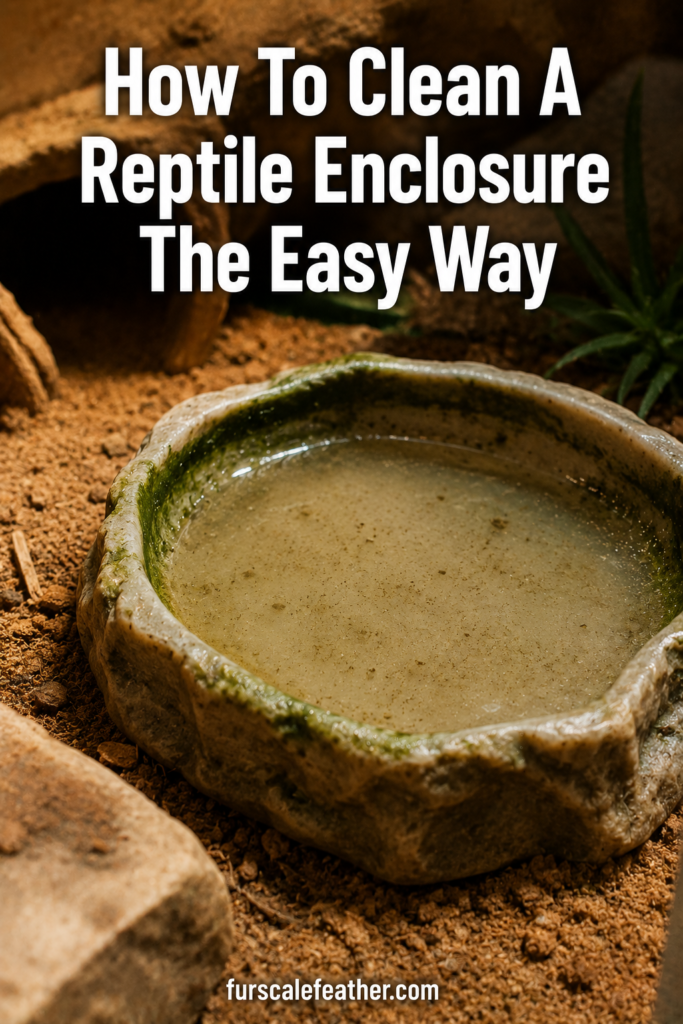
- Cloudy or slimy water in the dish within a day of refilling
- Increased hiding or reduced appetite with no other explanation
- Mite specks around the eyes, mouth, or vent area
- Soft or discolored patches on wood décor or cork bark
If a reptile shows ongoing appetite loss, unusual lethargy, or visible skin issues, a cleaning routine alone isn’t a diagnosis or a fix. Those signs call for an exotics-experienced veterinarian, not a guess based on a blog post.
Questions People Usually Ask
How often should I fully clean a reptile enclosure? A full deep clean every 4 to 6 weeks works for most setups, alongside daily spot cleaning and a weekly wipe-down of glass and dishes.
Is bleach safe for reptile enclosure cleaning? Diluted bleach can work, but it demands an accurate ratio, a thorough rinse, and full drying time. A reptile-specific disinfectant removes most of that risk and margin for error.
Can I use vinegar to clean a terrarium? Diluted white vinegar can help with mineral buildup on glass, but it’s not a reliable disinfectant against bacteria or fungal spores, so it shouldn’t replace a proper cleaning product during deep cleans.
Why does my reptile’s tank smell even after I clean it? Lingering smell usually points to substrate trapped under décor, a dirty water dish, or waste hidden in corners that a quick wipe-down misses. A full substrate change often solves it.
Do I need to clean bioactive enclosures the same way? No. Bioactive setups rely on a living cleanup crew and beneficial microbes, so heavy disinfecting can do more harm than good. Spot clean waste and let the bioactive elements handle the rest, following setup-specific guidance for that ecosystem.
Reptile enclosure cleaning doesn’t need to be complicated once it’s broken into daily, weekly, and monthly habits instead of one dreaded deep-clean day. Pick a reptile-safe disinfectant that matches your setup size, rinse more than feels necessary, and let the enclosure fully dry before your reptile goes back in. Start with tonight’s spot clean, and the monthly deep clean will feel far less overwhelming when it comes around.
Disclosure: I don’t personally keep reptiles, so the product notes above are based on veterinary-grade product information, aggregated user reviews, and testing feedback from a partner reptile rescue rather than firsthand ownership. No affiliate or sponsorship relationships apply to the products mentioned in this article.