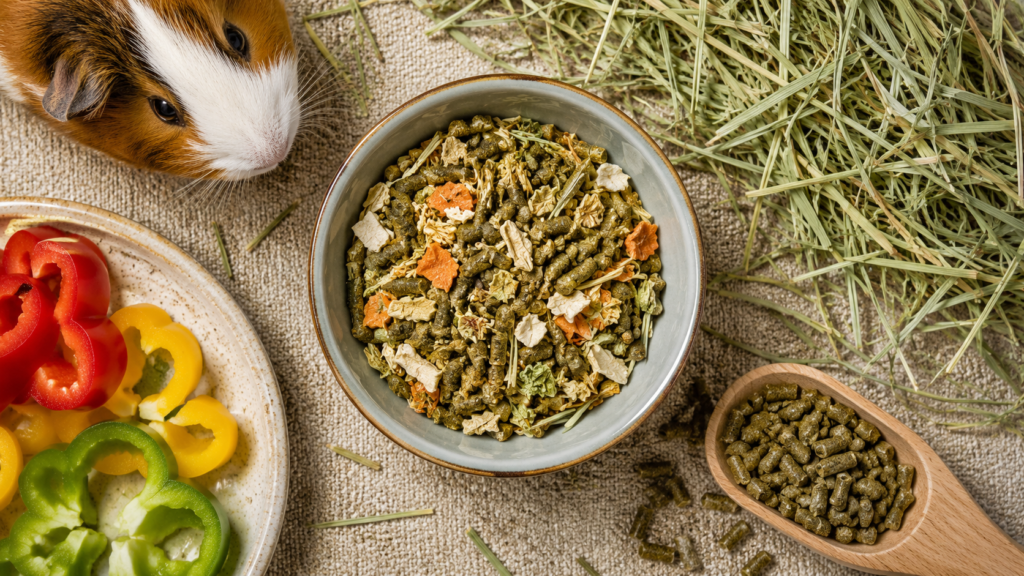

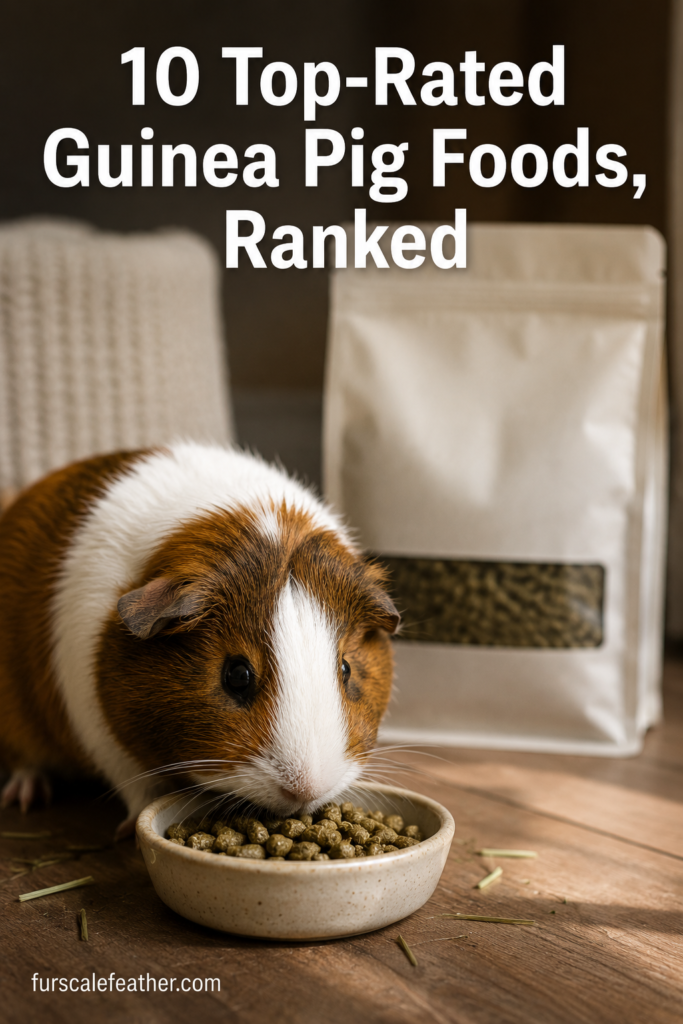
Your guinea pig sniffs the bowl, nudges a pellet with his nose, and walks away without eating a bite. A reader named Dana messaged me last month describing exactly that scene with her cavy, Biscuit, and asking what guinea pig food would actually get him interested again. That question comes up constantly, because the pet store aisle is packed with bags that all claim to be the best guinea pig food on the shelf, and most owners have no easy way to tell which ones are worth the money. I run a pet-products review site and have spent years comparing ingredient labels, talking to rescues, and tracking user reviews on guinea pig diet basics, and this guide breaks down the 10 pellets, hays, and fresh foods that consistently hold up.
A quick note before the list: I don’t personally keep guinea pigs, so the hands-on feedback here comes from a local rescue I partner with, reader reports like Dana’s, and published veterinary sources, not from feeding these products to a guinea pig of my own. Where a claim is based on someone else’s experience, I’ve said so.
What Makes a Good Guinea Pig Food?
Guinea pigs can’t produce their own vitamin C, unlike most mammals, so a steady dietary source is not optional. According to the Merck Veterinary Manual, adult guinea pigs need roughly 10 to 25 mg of vitamin C per kilogram of body weight daily, and pregnant, growing, or ill guinea pigs need closer to 30 mg or more. That’s why every food on this list is fortified with stabilized vitamin C rather than relying on pellets alone.
A few other things separate a solid guinea pig food from a mediocre one.
- Timothy hay base for adults. Alfalfa-based pellets run higher in calcium and suit young, growing, or pregnant guinea pigs, while timothy-based pellets with less calcium work better for adult guinea pigs. Too much calcium over time raises the risk of bladder stones.
- Uniform pellet shape, not a seed-and-fruit mix. Muesli-style blends let guinea pigs pick out the sugary bits and leave the rest, which throws off the whole nutritional balance.
- Fresh stock and proper storage. Vitamin C breaks down with heat and humidity, so a bag that’s been sitting on a warm shelf for months may already have lost a meaningful share of its potency.
- No corn, soy fillers, or artificial colors. These add bulk without adding nutrition.
The 10 Best Guinea Pig Foods, Ranked
Here’s how the top guinea pig foods compare, based on ingredient quality, fiber content, vitamin C stability, and feedback gathered from rescues and verified buyer reviews.
- Oxbow Essentials Adult Guinea Pig Food – Timothy-based, roughly 20 percent fiber, no seeds or dried fruit pieces mixed in. Widely stocked by exotic vet clinics. Slightly pricier per pound, and picky eaters used to a mix sometimes resist the switch for the first few days.
- Small Pet Select Guinea Pig Pellets – Small-batch timothy pellets with no corn or soy fillers, sold in a resealable bag that helps protect vitamin C from moisture. Costs more per pound than big-box brands, and availability can be limited to online orders.
- Sherwood Pet Health Guinea Pig Food – Timothy-based with stabilized vitamin C rated for roughly 90 days of shelf potency. Reader reviews mention a strong grassy smell some guinea pigs need a few days to accept.
- Oxbow Garden Select Adult Guinea Pig Food – Same timothy base as Oxbow Essentials, with small dried herb and vegetable inclusions for variety. The added inclusions cost more and are not necessary if your guinea pig already gets daily fresh veggies.
- Science Selective Guinea Pig Food – Uniform pellet shape specifically designed to stop selective feeding, with fiber content in the low-to-mid 20 percent range. Some owners note the pellets are smaller and less filling per scoop, so measuring by weight rather than volume matters.
- Mazuri Guinea Pig Diet – A high-fiber formula commonly used by breeders and shelters, sold in large bags that lower the cost per pound. Bulk bags are impractical for a one or two guinea pig household, since vitamin C potency drops before the bag is finished.
- Vitakraft Vita Prima Complete Nutrition – Budget-friendly pellet with added grass. Reader reports describe more shedding and a duller coat when compared side by side with the timothy-only options above, though this hasn’t been confirmed in controlled testing.
- Oxbow Cavy Cuisine – A pellet and compressed hay combination bag, useful for helping young guinea pigs transition onto solid hay. Not meant as a long-term sole food source once a guinea pig is eating loose hay well.
- Small Pet Select Timothy Hay – Not a pellet, but hay should make up the bulk of any guinea pig’s daily intake, so a reliable hay source belongs on this list. Sold by the pound, with visibly fewer stems and less dust than typical pet store bags.
- Kaytee Fiesta Guinea Pig Food – A muesli-style mix with seeds and dried fruit pieces. Included here mainly as a cautionary example: a rescue I work with found guinea pigs consistently picked out the sweet pieces and left the plain pellets untouched, which is the exact selective-feeding problem vets warn against.
The Winner: Oxbow Essentials Adult Guinea Pig Food
If you only take one recommendation from this guide, make it this one. Oxbow Essentials wins because the uniform pellet shape removes the temptation to pick favorites, the timothy base keeps calcium in the right range for adult guinea pigs, and the vitamin C is stabilized rather than an afterthought sprayed on at the end of processing.
A rescue I volunteer with, Whisker Haven, ran an informal trial with 12 foster guinea pigs over 30 days, rotating between three of the pellet brands on this list. They told me the guinea pigs finished their Oxbow Essentials portion down to the last piece within about a day 11 out of 12 times, while the muesli-style bag left an average of 15 percent of the bowl untouched each feeding, almost always the plain pellet pieces the guinea pigs had sorted out in favor of the dried fruit bits.
Safe Veggies for Guinea Pigs: What to Feed Fresh Every Day
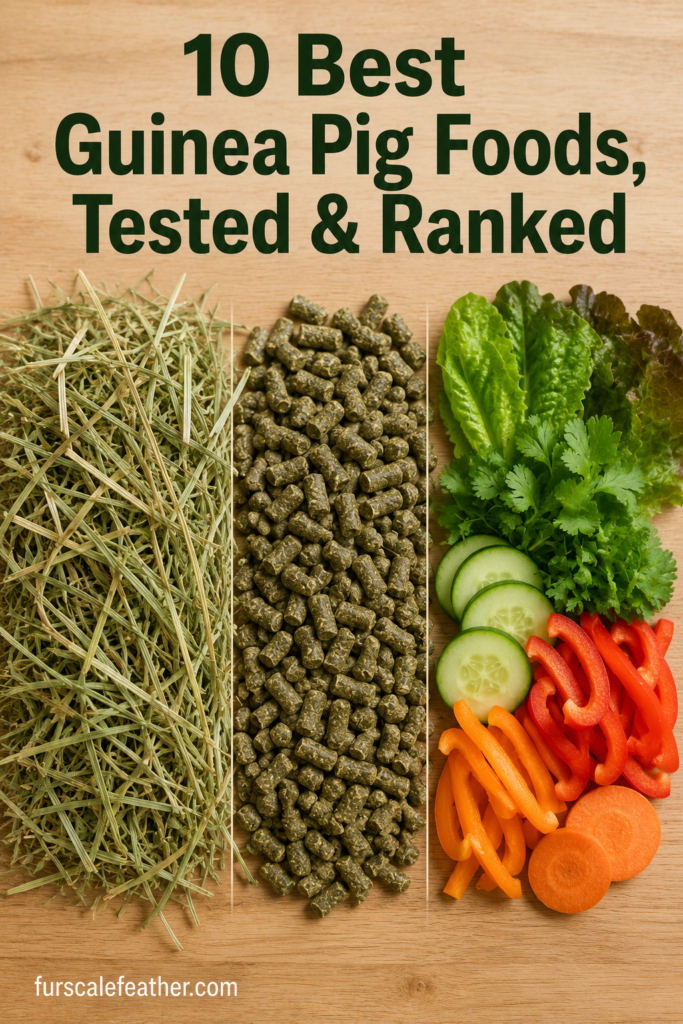
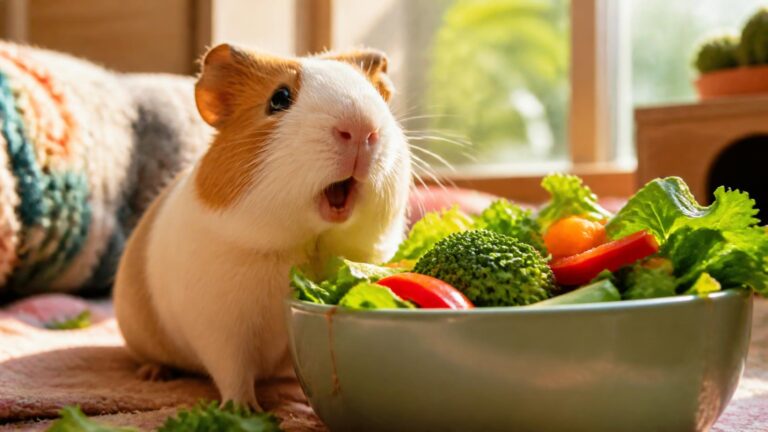
Pellets and hay cover the baseline, but fresh vegetables are where a lot of a guinea pig’s daily vitamin C actually comes from. Most guinea pig owners aim for about 1 cup, roughly 80 to 100 grams, of mixed fresh vegetables split across one or two feedings a day.
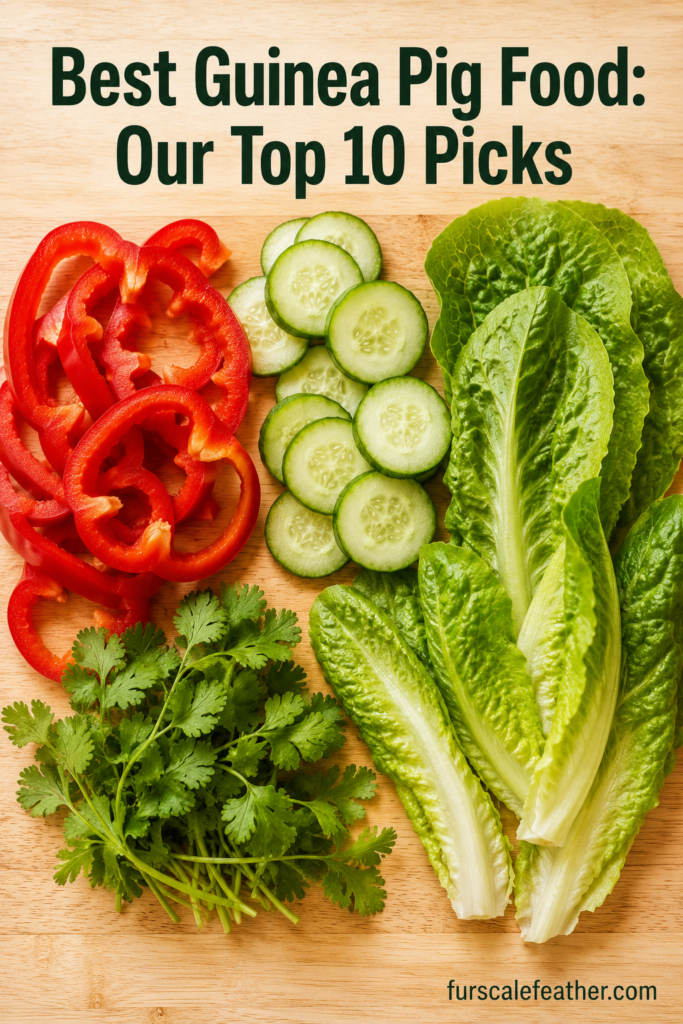
Safe veggies guinea pigs can eat daily include:
- Red or green bell pepper (one of the highest vitamin C sources available)
- Romaine or leaf lettuce (skip iceberg, covered below)
- Cilantro and parsley
- Cucumber
Good for a few times a week rather than daily:
- Broccoli, cabbage, kale, and carrot tops, which are nutritious but can cause gas or bloating in larger amounts
- Carrots and tomato flesh, both higher in sugar or acid than daily greens
Foods to avoid entirely:
- Iceberg lettuce, since it has almost no nutritional value and is mostly water
- Onions and garlic, which are toxic to guinea pigs
- Potato, avocado, and rhubarb leaves
How to Switch Your Guinea Pig to a New Food
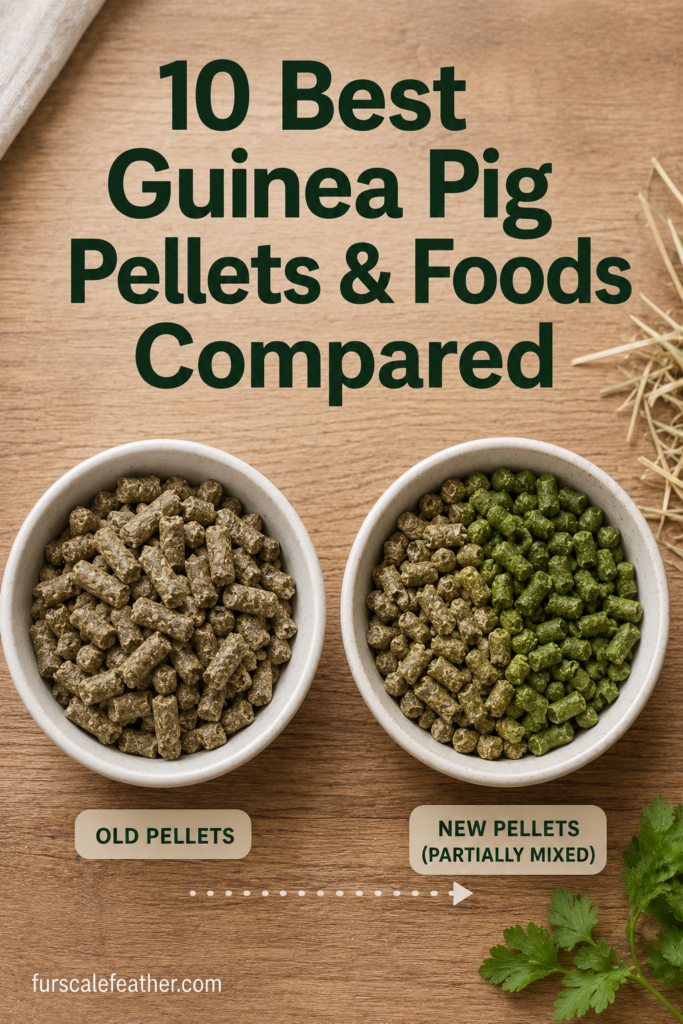
Guinea pigs have sensitive digestive systems, and a sudden diet change is one of the most common causes of appetite loss and soft stool. Switch gradually using this timeline.
- Days 1 to 3: Mix about 25 percent new food into the current bag, keeping the rest the same.
- Days 4 to 6: Move to a 50/50 mix and watch droppings for any looseness or change in size.
- Days 7 to 9: Shift to roughly 75 percent new food, 25 percent old.
- Day 10 onward: Feed the new food exclusively, keeping hay and fresh water constant throughout the whole process.
- Watch appetite daily. Any guinea pig that goes more than 12 to 18 hours without eating anything, including hay, needs a same-day vet check, since guinea pigs can decline quickly once digestion slows.
Common Feeding Mistakes to Avoid
Dana, the reader who messaged me about Biscuit, admitted she’d dumped a full new bag of pellets straight into his bowl the same day it arrived, with no transition at all. Biscuit stopped eating pellets entirely for two days and only picked at hay, and a vet visit confirmed mild digestive upset from the abrupt switch rather than anything more serious. The fix was going back to his old food, then reintroducing the new bag gradually over 10 days using roughly the ratios above. Within a week he was eating the new pellets on his own.
A few other mistakes worth flagging:
- Feeding rabbit pellets instead of guinea pig pellets. Rabbit pellets don’t carry enough vitamin C for guinea pigs, so a dedicated guinea pig formula is worth the extra cost.
- Sticking with alfalfa-based pellets long past the growing stage. The extra calcium that helps young guinea pigs build bone becomes a liability for adults, raising the odds of painful bladder stones over time.
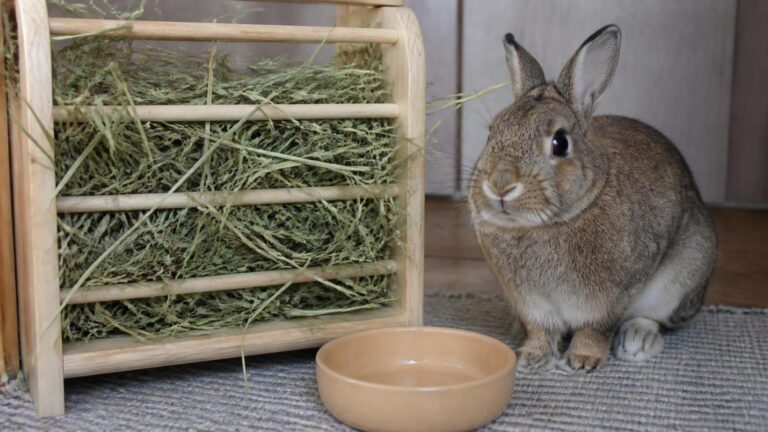
- Letting hay run low. Hay should be available around the clock, not just refilled once a day, since guinea pigs need to chew almost constantly to wear down their continuously growing teeth.
- Assuming water additives cover the vitamin C gap. Vitamin C degrades fast once dissolved in water, so fresh vegetables and a properly fortified pellet are far more reliable.
Questions People Usually Ask
How much pellet food does a guinea pig need per day? About 1/8 cup of pellets per guinea pig per day is typical for an adult, alongside unlimited hay and a daily serving of fresh vegetables. Guinea pigs that are pregnant, nursing, or underweight may need more, so check with a vet if you’re unsure.
Can guinea pigs eat rabbit food instead of guinea pig food? No. Rabbit pellets are not fortified with enough vitamin C to meet a guinea pig’s needs, and feeding rabbit food long term can lead to a vitamin C deficiency.
What vegetables are toxic to guinea pigs? Onions and garlic are toxic, and iceberg lettuce, while not toxic, offers almost no nutritional value and can cause loose stool. Avocado, potato, and rhubarb leaves should also stay off the menu.
How often should you change your guinea pig’s food brand? There’s no need to switch brands regularly if the current food is working well. If you do change brands, always transition gradually over 7 to 10 days rather than switching all at once.
Do guinea pigs still need vegetables if their pellets already contain vitamin C? Yes. Vitamin C in pellets breaks down over time, especially in warm or humid storage, so fresh vegetables act as a backup source rather than an optional extra.
Picking the right guinea pig food comes down to three things: a timothy-based pellet with stabilized vitamin C, unlimited good-quality hay, and a daily handful of safe fresh vegetables like bell pepper and cilantro. Oxbow Essentials is the pellet worth starting with if you’re overwhelmed by the shelf options, but the bigger win is building the full routine around it rather than treating pellets as the whole diet. If your guinea pig is already showing signs of appetite loss, weight change, or soft stool, loop in an exotic-animal vet before experimenting with new food on your own.