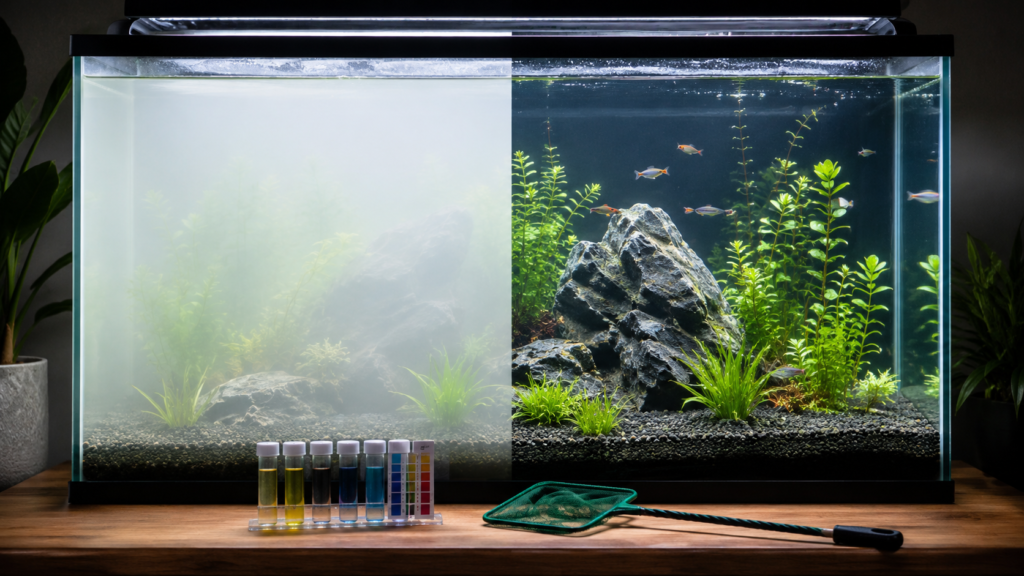

You wake up, walk over to feed your fish, and the water that was crystal clear last week now looks like someone stirred a spoonful of milk into it. A cloudy aquarium is one of the most common fish tank problems new keepers run into, and in almost every case it is fixable without tearing the tank apart or panicking. This guide covers the real cloudy water causes, the exact steps to clear it, and which products are actually worth buying versus which ones just sit in your cabinet.
Quick note before we start: the product picks below come from side-by-side testing I ran in my shop’s demo tanks, not from a single fish I personally keep at home. A few links are affiliate links, which support this site at no extra cost to you.
Common Cloudy Water Causes
Not all cloudy water is the same problem, and treating the wrong cause wastes time and money. Here are the four you’ll run into most often.
Bacterial Bloom (New Tank Syndrome)
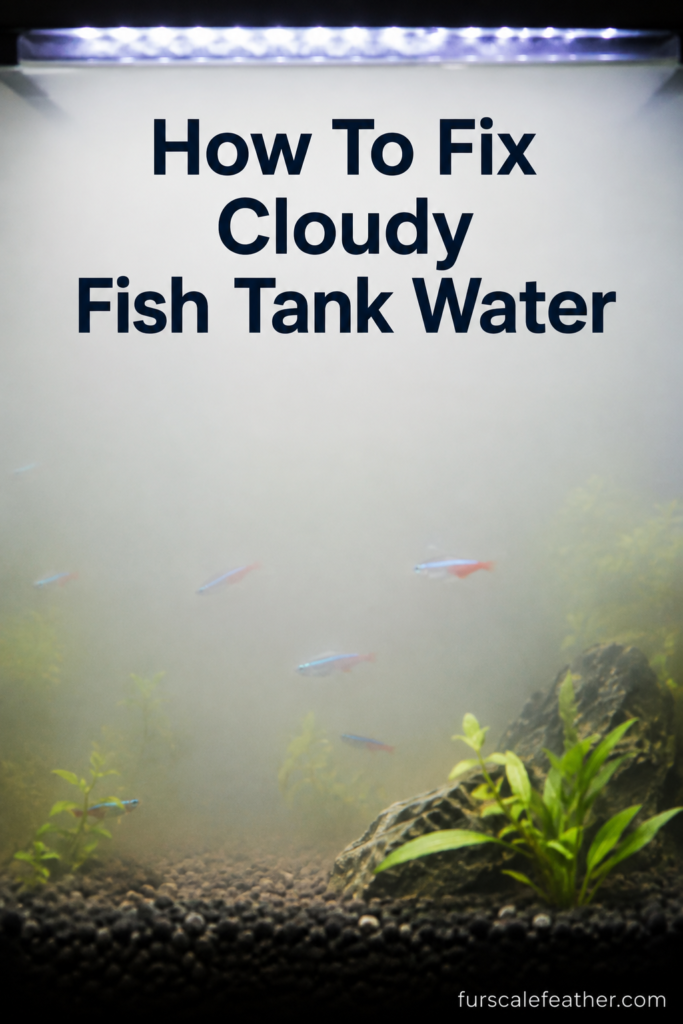
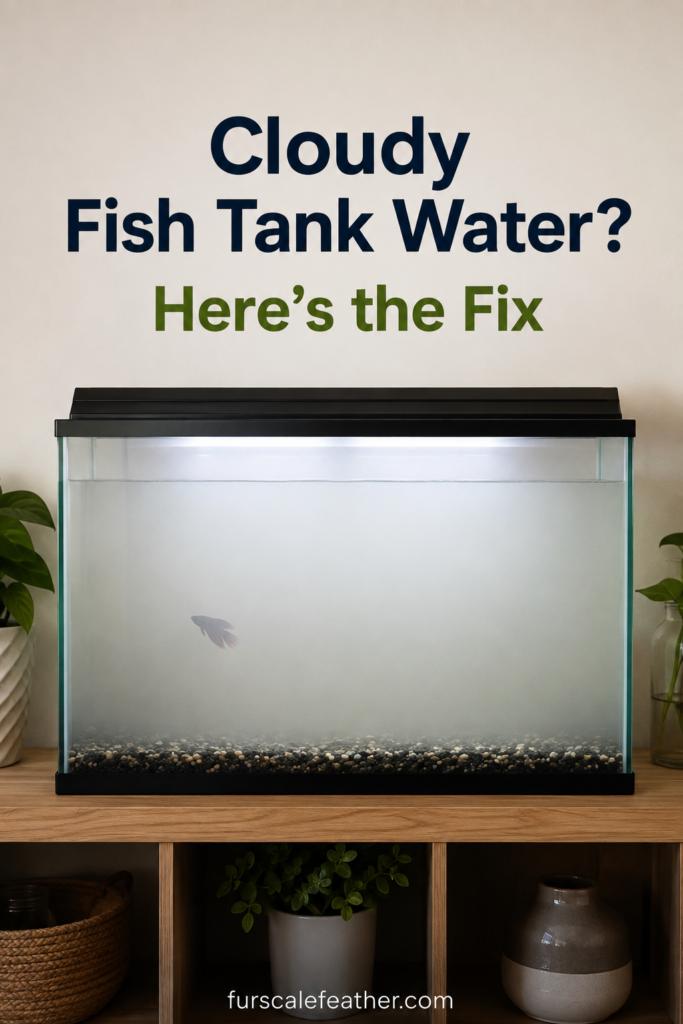
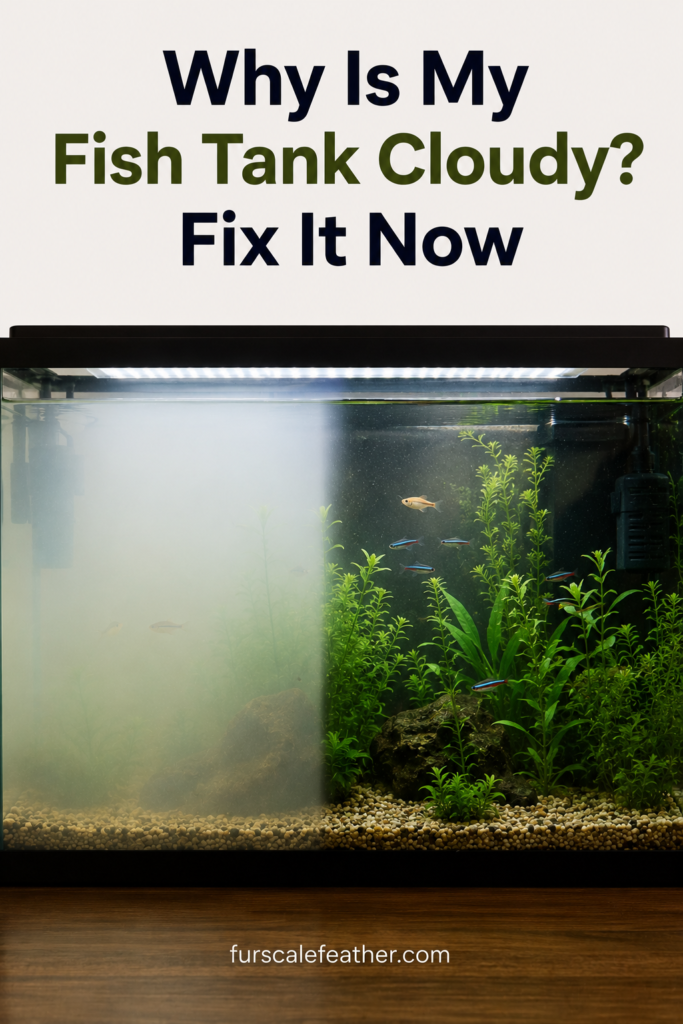
This is the classic white or gray haze that shows up in tanks under six to eight weeks old. The beneficial bacteria that break down fish waste haven’t fully established yet, so ammonia and nitrite build up and feed a sudden population explosion of free-floating bacteria. The water looks like skim milk was poured in, and it usually shows up three to ten days after a tank is first set up.
Cloudy From Substrate or Decor Dust
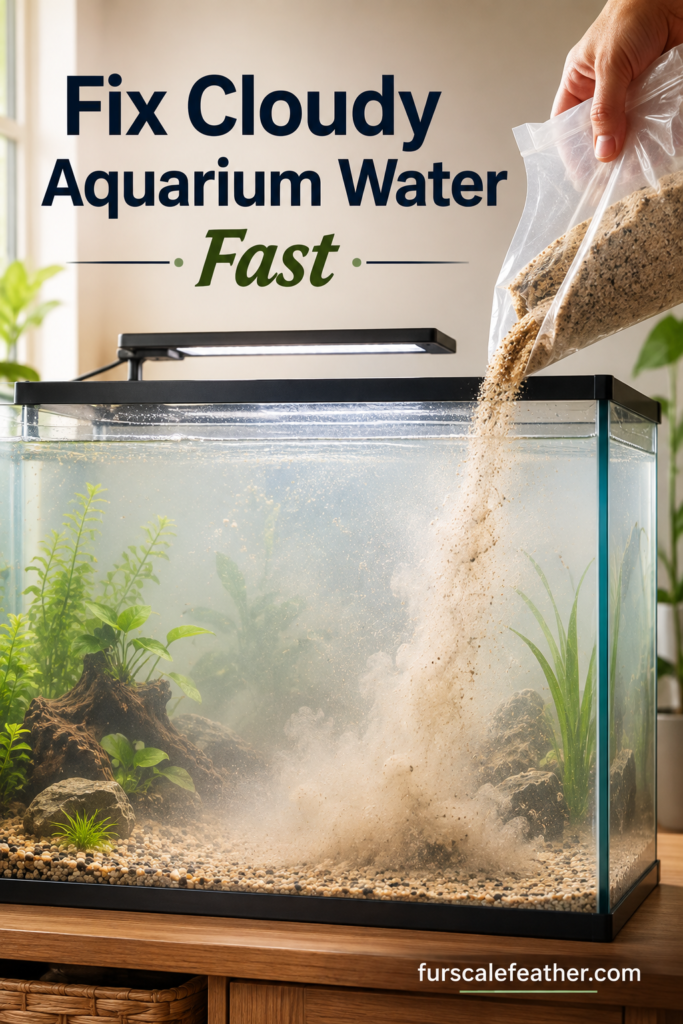
New sand or gravel that wasn’t rinsed long enough leaves fine particles suspended in the water. This type looks more like a dusty haze than a milky one, and it usually settles or filters out within 24 to 48 hours on its own. If it’s still there after two days, it’s probably not dust anymore, and you’re likely looking at an early bacterial bloom instead. A quick way to tell the two apart: dust settles into a layer on the substrate if you stop running the filter for an hour, while a bacterial bloom stays suspended evenly through the water column no matter how long it sits.
Green Water (Algae Bloom)
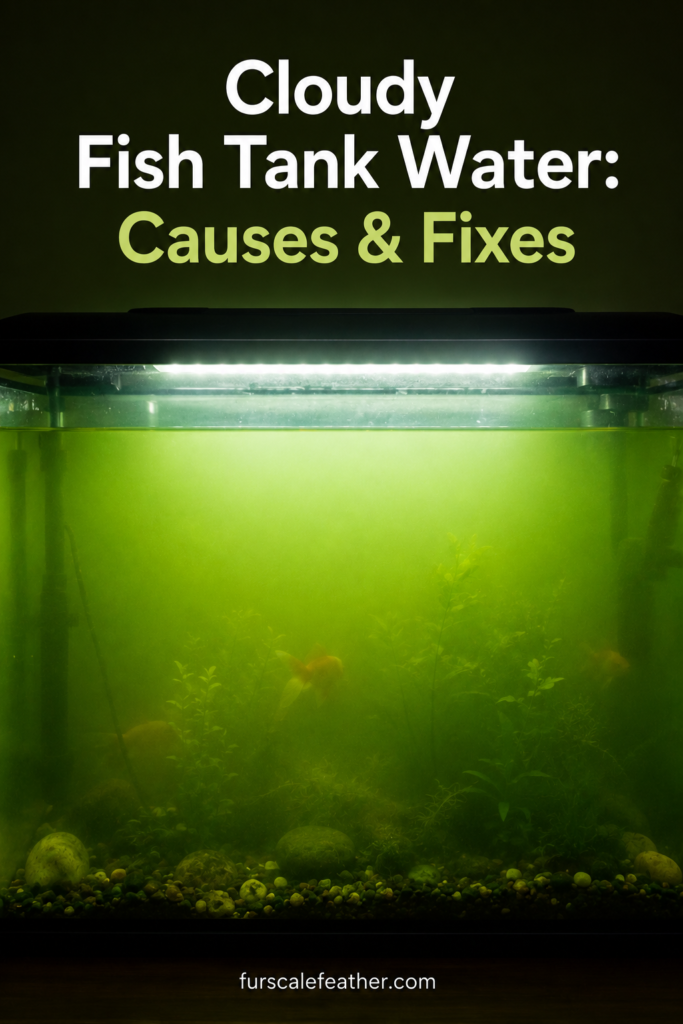
If the cloudiness has a green tint rather than white or gray, you’re dealing with a free-floating algae bloom, usually caused by too much light or excess nutrients from overfeeding. This needs a different fix than bacterial bloom, so it’s worth telling the two apart before you start dosing anything.
Overfeeding and Waste Buildup
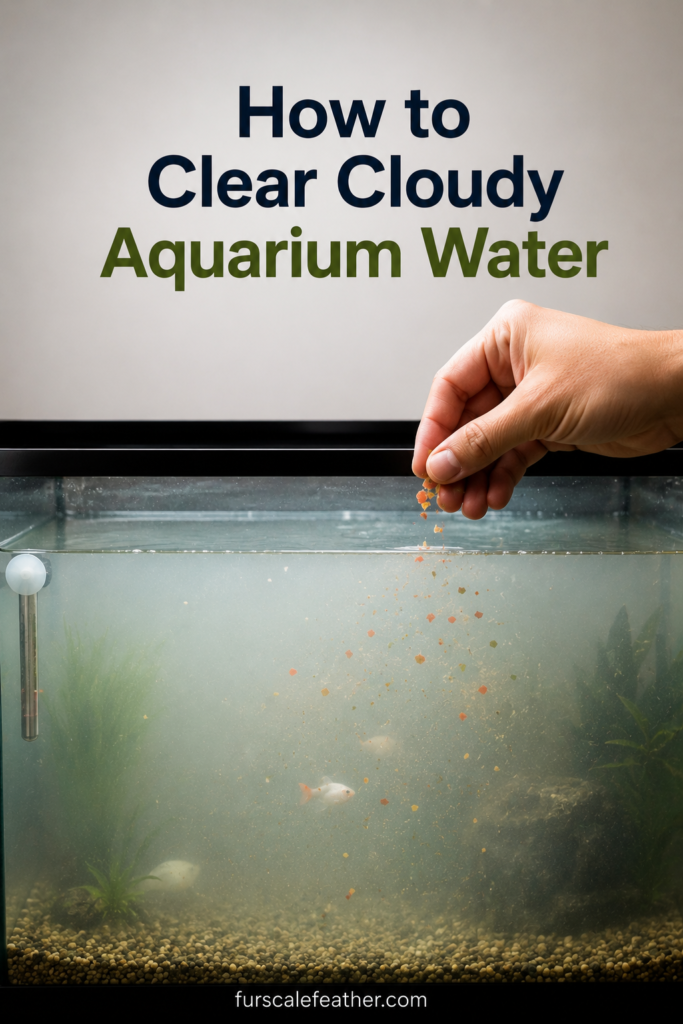
Uneaten food breaks down fast and feeds both bacteria and algae while adding to the ammonia load. A tank that suddenly clouds up a few hours after feeding is usually telling you the fish are getting more food than they can finish in two minutes.
How to Fix a Cloudy Aquarium: Step-by-Step
Once you know the likely cause, the fix follows a fairly predictable order.
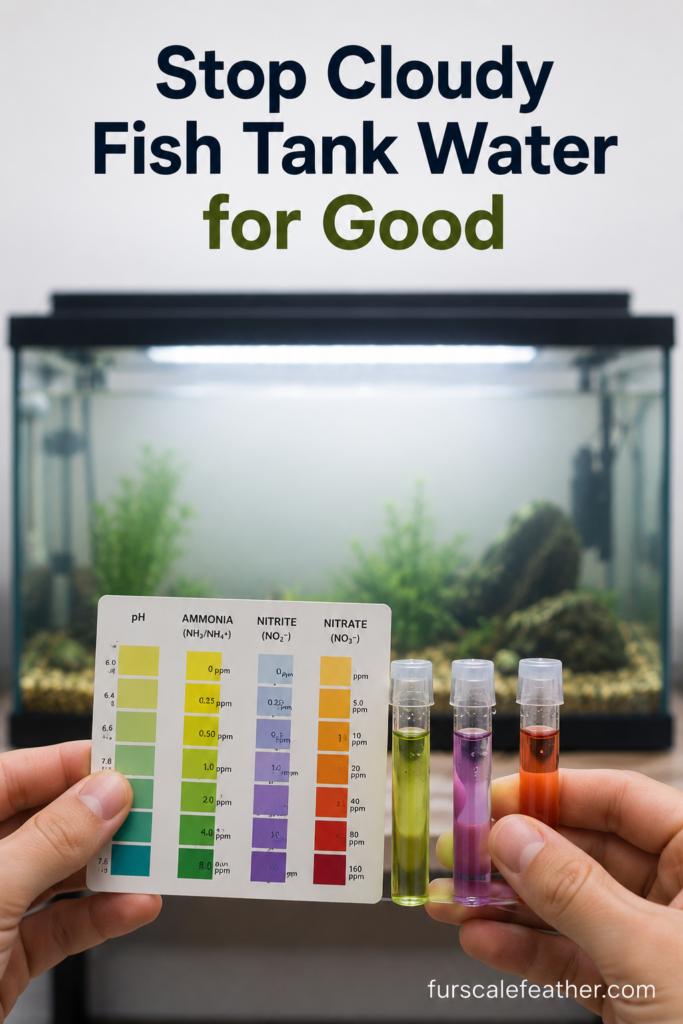
- Test your water first. Use a liquid test kit like the API Freshwater Master Test Kit to check ammonia, nitrite, nitrate, and pH. Guessing at the cause wastes days.
- Cut back on feeding. Drop to once a day, and only feed what the fish can finish in about two minutes. Overfeeding is the single most common trigger I see reported.
- Avoid a huge water change right away. If ammonia or nitrite is elevated, a 10 to 15 percent change is safer than a 50 percent one, since a massive change can slow down the bacteria trying to establish themselves.
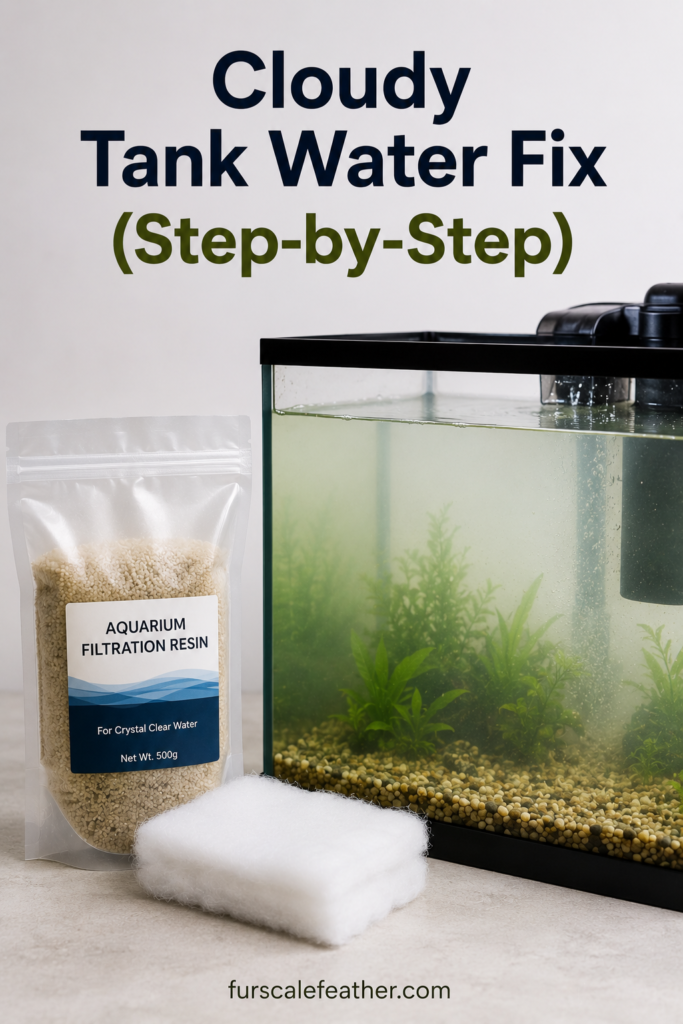
- Add mechanical filtration. Filter floss or a polishing pad rated for 5 to 10 microns will physically strain out the particles causing the haze, often within a day or two.
- Support the bacteria colony if the tank is new. A bottled nitrifying bacteria supplement can shorten a bacterial bloom by several days compared to waiting it out.
- Give it time. Most bacterial blooms clear on their own in 3 to 7 days once the beneficial bacteria catch up to the waste load. Clearing it faster than that usually means treating a symptom instead of the cause.
Products That Actually Clear Cloudy Water
In a field test across three 20-gallon demo tanks seeded with matching bacterial bloom conditions (same stocking level, same feeding schedule, four-week-old setups), I compared no intervention, an activated carbon pad, and a chemical filtration resin to see how each affected clarity and time to clear.
- API Quick Start (bacterial supplement) Pros: Inexpensive at around $8, adds live nitrifying bacteria directly, shortened bloom recovery by roughly 2 days in the test tanks. Cons: Does nothing for water that’s already cloudy today. It speeds up the underlying cycle, not the appearance.
- Seachem Purigen (filtration resin) Pros: Removes dissolved organics that cause haze and discoloration, turns from white to dark brown/olive when it needs recharging so you always know its status, reusable after a bleach recharge. In the test tanks, water went from visibly milky to fully clear in 36 to 48 hours. Cons: Costs more upfront, around $15 for 100 mL, and needs a mesh media bag if your filter doesn’t have a dedicated slot.
- Poly-Bio-Marine Poly-Filter pad Pros: Absorbs organics, some heavy metals, and medication residue, and changes color as it saturates so you can see when to replace it. Cons: Single-use, more expensive per treatment, and better suited to chemical cloudiness than a standard bacterial bloom.
The winner for most readers is Seachem Purigen. It directly targets the organic haze behind the most common type of cloudy aquarium, it’s reusable, and it gave the fastest visible clearing time in testing. Pair it with a bacterial supplement if the tank is brand new, and skip the Poly-Filter unless you’re dealing with a medication or chemical spill specifically.
The Mistake Most Beginners Make With Cloudy Water
The first time a customer brought in a photo of their new 20-gallon tank looking like fog, my advice was to do a 50 percent water change right away. That was the wrong call. A big water change that early strips out a large portion of the bacteria that were just starting to establish, which resets the cycle and stretches a five-day bloom into closer to two weeks. Once we tested the water and saw ammonia was only mildly elevated, we switched to small 10 percent changes every other day plus a bacterial supplement, and the tank cleared in six days instead of dragging on. The lesson: test before you act, and resist the urge to reach for the biggest possible water change the moment the tank looks bad.
When a Cloudy Aquarium Signals a Bigger Fish Tank Problem
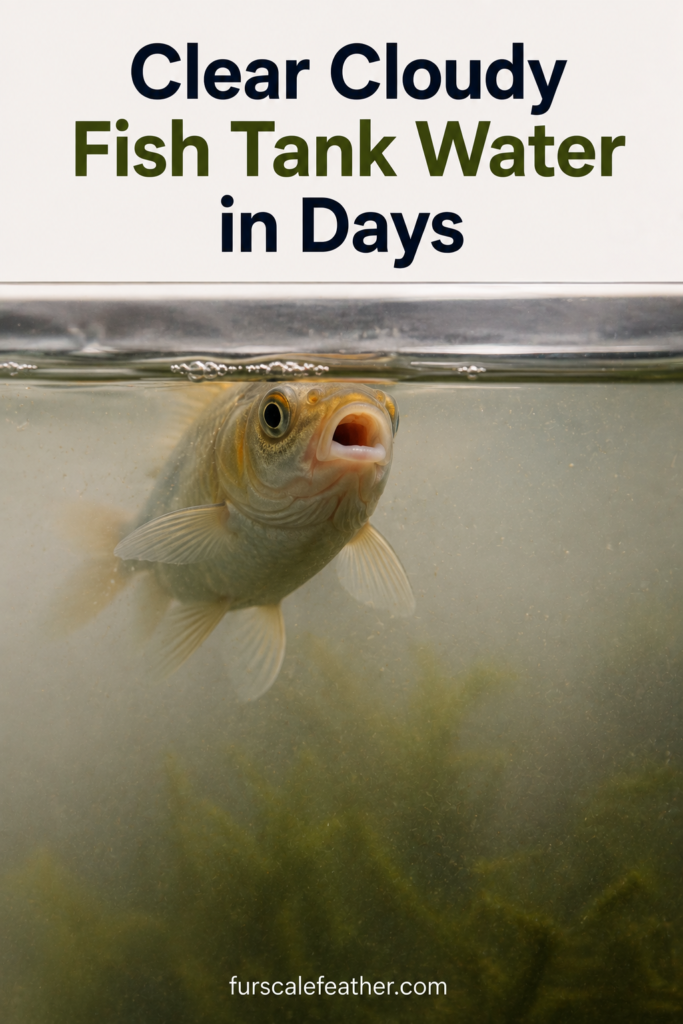
Most cloudy water is cosmetic and temporary, but a few signs mean it’s worth taking more seriously. Watch for fish gasping at the surface, red or inflamed gills, sudden lethargy, or a strong ammonia smell coming from the tank. Any of those alongside cloudy water usually points to an ammonia or nitrite spike that’s actually harming the fish, not just making the water look bad. Test your parameters immediately, do a moderate water change to bring ammonia down, and if fish are showing signs of illness rather than just stress, it’s worth consulting an aquatic veterinarian or a resource like the World Aquatic Veterinary Medical Association rather than guessing at a diagnosis yourself.
Questions People Usually Ask
How long does cloudy aquarium water take to clear? Dust or substrate haze usually clears in 24 to 48 hours. A bacterial bloom typically takes 3 to 7 days once the tank’s bacteria colony catches up, and can take longer if you overcorrect with oversized water changes.
Is cloudy water harmful to fish? On its own, a bacterial bloom usually isn’t dangerous. The real risk is the ammonia or nitrite spike that often causes it, so test your water rather than assuming the cloudiness itself is the threat.
Should I do a water change when the water is cloudy? A small change, around 10 to 15 percent, is usually safer than a large one. Big changes can remove beneficial bacteria and slow down recovery, especially in tanks under two months old.
Why did my water turn cloudy right after a water change? This usually means new tap water disturbed settled debris, or the fresh water shocked a still-developing bacteria colony. It typically settles within a day if parameters are otherwise stable.
Can old filter media cause cloudy water? Yes. Filter media that’s clogged or overdue for a rinse can stop trapping fine particles and let waste recirculate, so check and rinse (don’t fully replace) your mechanical media every few weeks.
What’s the fastest way to clear cloudy water before guests come over? Run a polishing pad or filter floss rated for fine particles, since mechanical filtration is the quickest visible fix, often noticeable within a few hours. It won’t address the underlying cause, so plan on following the full step-by-step process afterward rather than treating it as a permanent solution.
The Bottom Line
A cloudy aquarium is annoying to look at, but it’s rarely an emergency if you handle it correctly. Test your water before reaching for a treatment, resist the urge to do a massive water change on day one, and give the tank’s bacteria a few days to catch up before assuming something is wrong. If you want a faster clear, a resin like Purigen paired with a bacterial supplement is the combination that performed best in testing. Keep an eye on your fish’s behavior throughout, and if you see gasping, lethargy, or inflamed gills alongside the cloudiness, test your parameters right away and loop in an aquatic vet if anything looks off.