
You spend an hour arranging driftwood and tucking java fern roots into the substrate, step back, and the tank still looks empty down low. The plants above are doing their job, but the floor just sits there, bare and a little flat. That’s usually the moment people start searching for the right bottom dwelling fish for planted tank setups, something that will clean up leftover food and work the substrate without wrecking the layout you just spent an afternoon building.
The good news is several species will handle that job without touching a single leaf. The bad news is a few popular bottom feeders will treat your carpet plants like a salad bar or push soft substrate onto your crypts overnight.
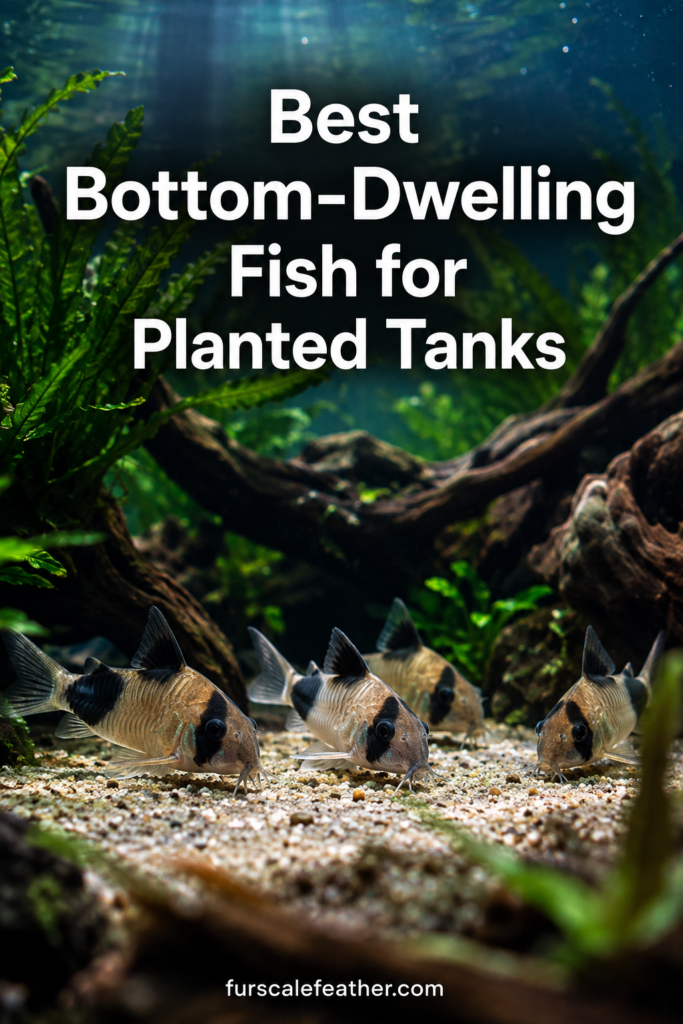
What to Look For in a Bottom Dwelling Fish for Planted Tank Setups
Not every bottom feeder belongs in a planted tank. Before picking a species, run it through a short checklist:
- Plant-safe mouth: Does it graze algae and biofilm, or does it chew soft leaves and root systems?
- Digging habits: Some species sift sand gently, others plow through it and uproot anything nearby.
- Adult size: A fish that outgrows a 20-gallon tank will eventually crush low carpeting plants just by moving through them.
- Social needs: Most bottom dwellers are shoaling fish and get stressed, or stop eating, when kept alone or in pairs.
- Substrate compatibility: Sharp gravel can wear down sensitive barbels on species like corydoras within weeks.
Match a species against that list first, and stocking a peaceful bottom dwelling fish for a planted tank gets a lot less stressful, both for the fish and for the plants you’ve already put work into.
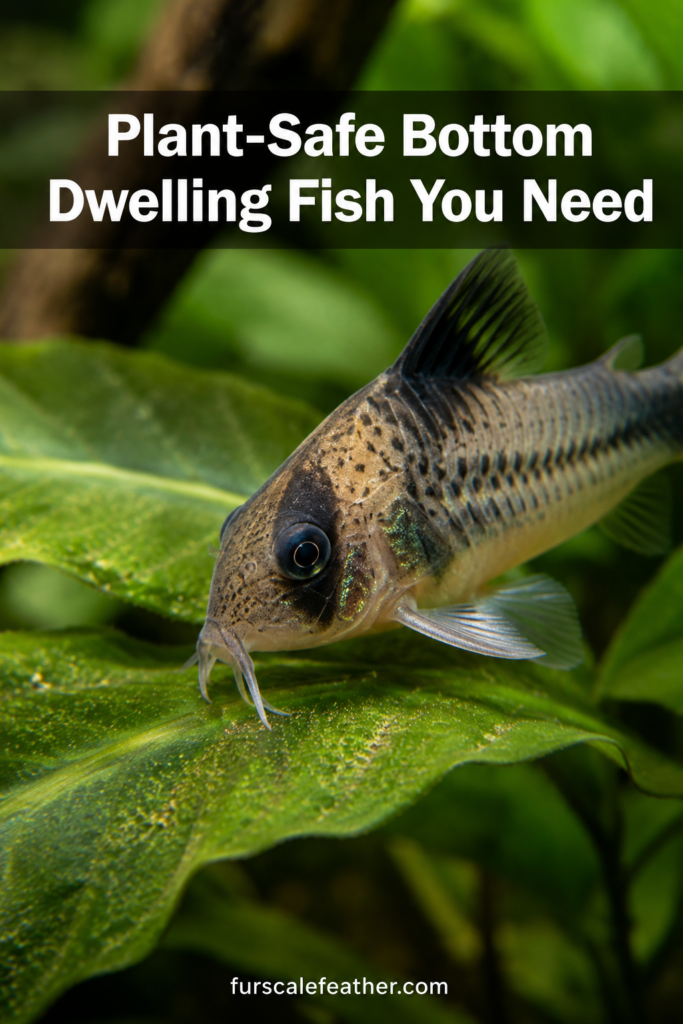
Best Bottom Feeders for Aquarium Plants and Substrate Safety
These five species are popular peaceful bottom dwellers for aquascape setups, and each one earns its place a little differently. All five also make solid bottom fish for a community tank as long as their tankmates stay equally calm.
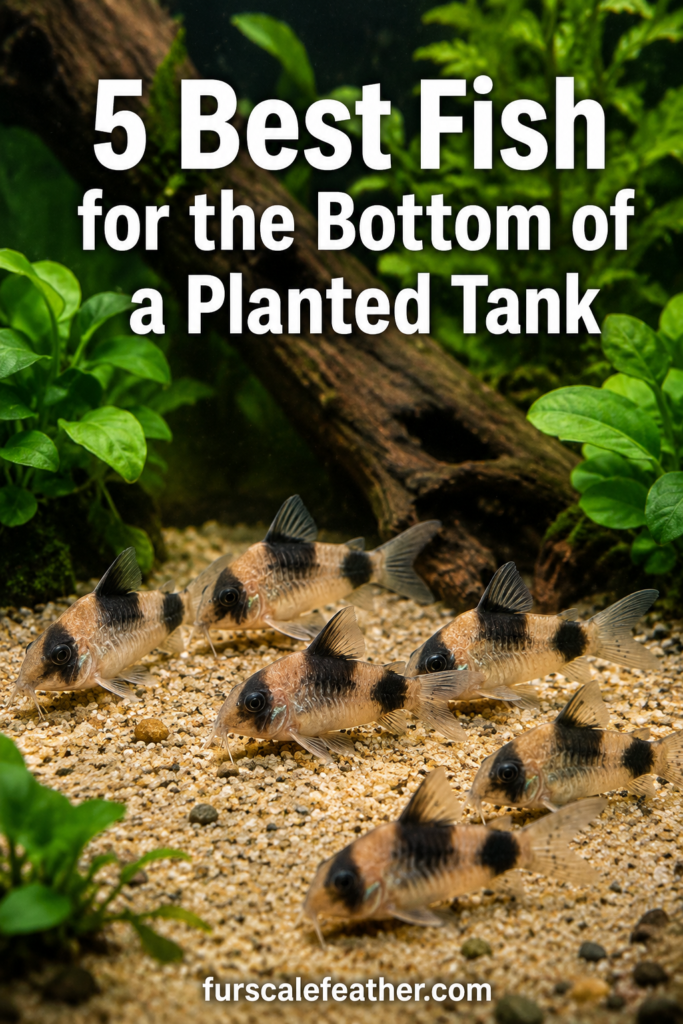
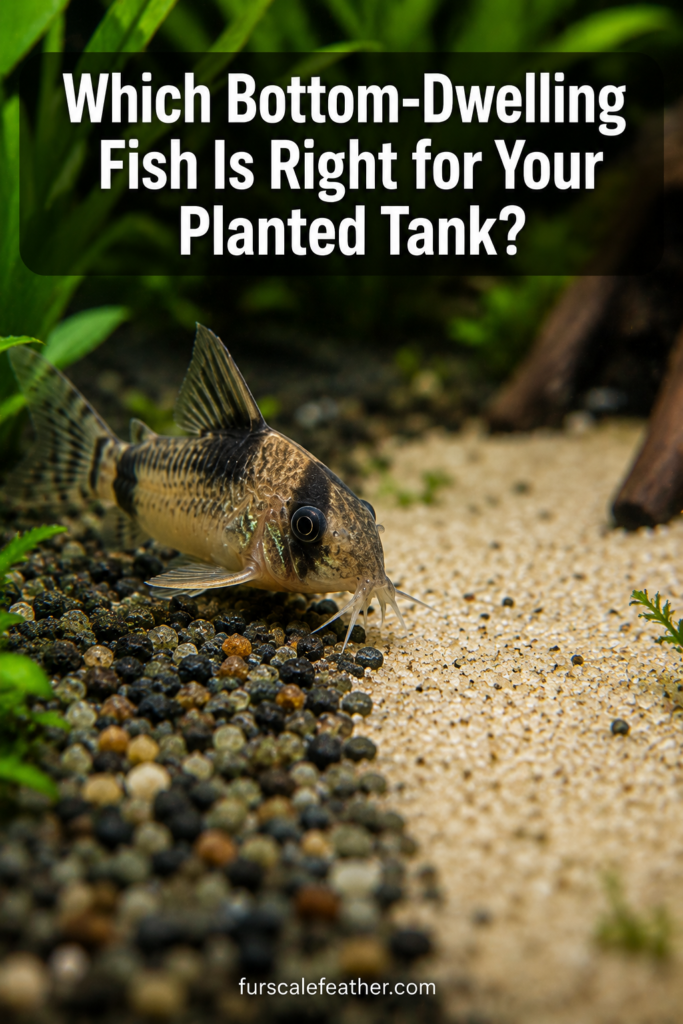
Corydoras Catfish
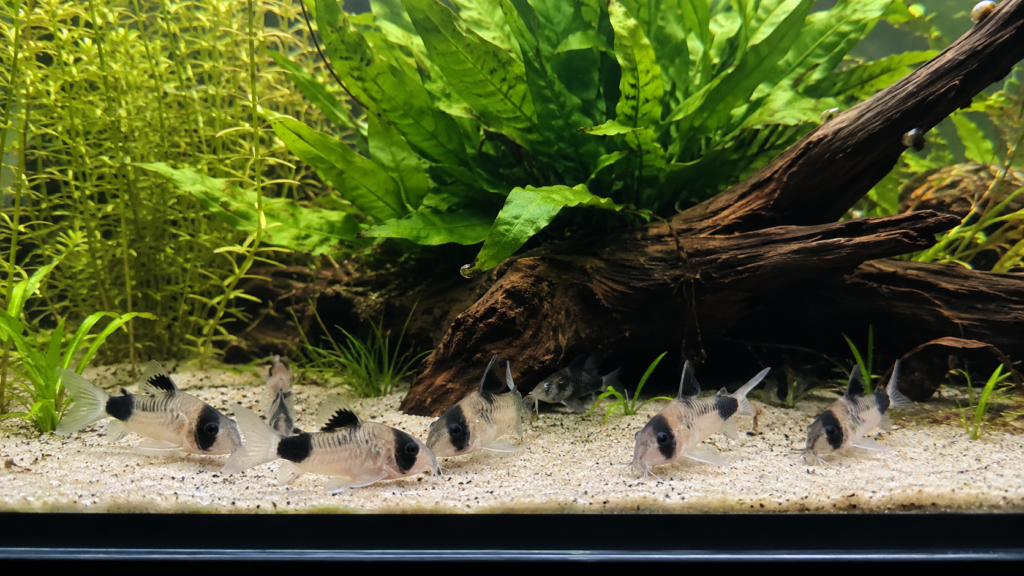
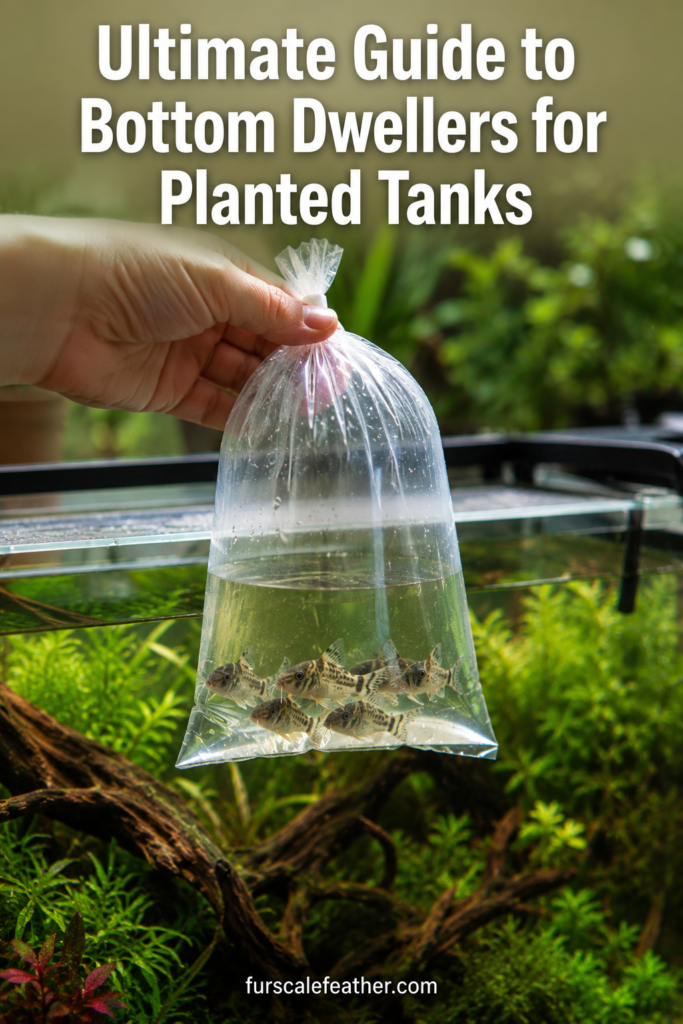
Corydoras are the default answer for most planted aquarium setups, and for good reason. Panda cories, bronze cories, and pygmy cories all forage along the substrate for leftover food without touching plant leaves or roots. Keep them in groups of six or more, since a lone or paired cory tends to hide and eat less. Pygmy cories stay under an inch and suit tanks as small as 10 gallons, making them one of the better small bottom dwelling fish options for a nano tank, while panda and bronze cories are better suited to 20 gallons and up. Water in the 72 to 78 degree Fahrenheit range keeps most cory species comfortable.
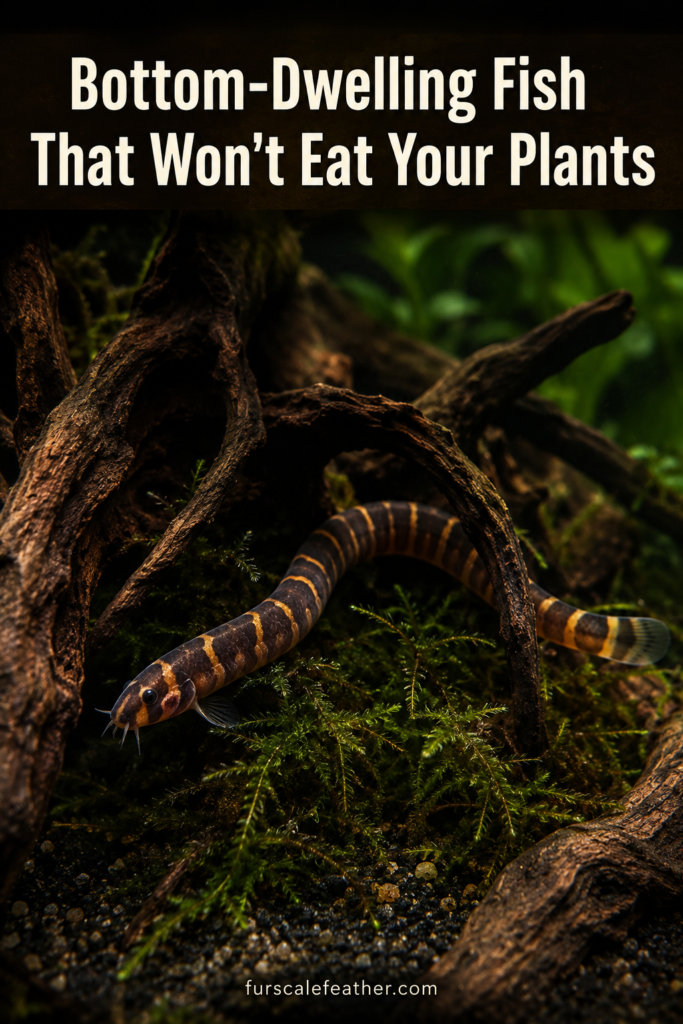
Kuhli Loach
Kuhli loaches look like tiny, patterned eels and spend most of the day tucked into root tangles or under driftwood, coming out around dusk and feeding time. They are excellent with shrimp and rarely bother plants, though they will burrow into loose substrate near the glass. Keep at least five or six together, and make sure the lid fits tightly, since kuhli loaches are known escape artists that can squeeze through surprisingly small gaps.
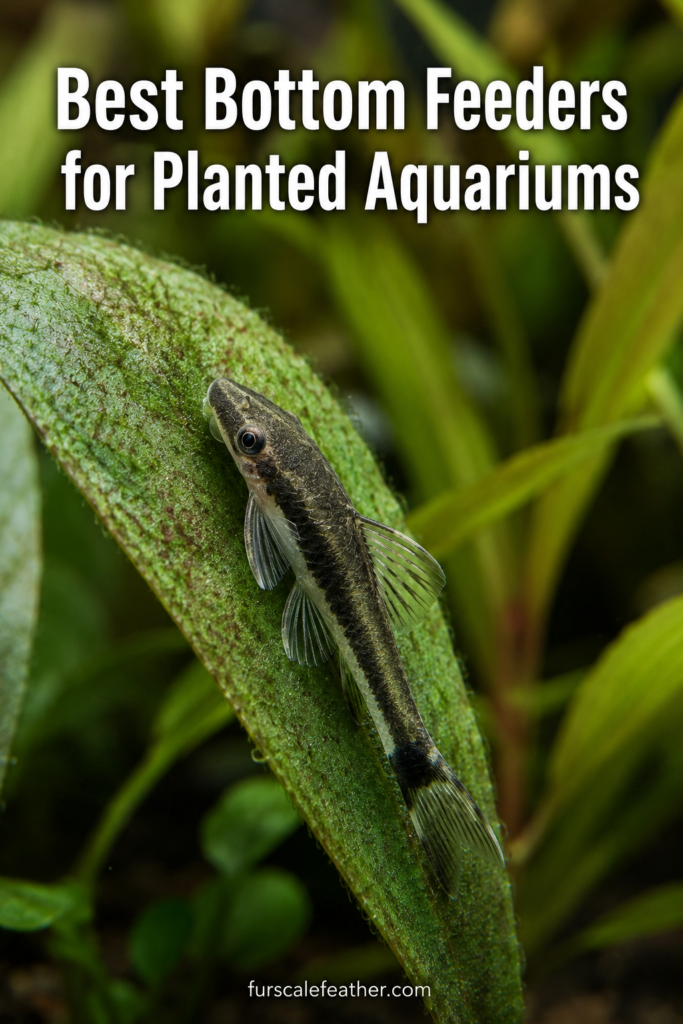
Otocinclus Catfish
Otocinclus, often called otos, are small algae grazers that top out around 1.5 to 2 inches. They clean algae film off leaves without damaging the plant tissue underneath, which makes them a favorite among aquascapers. Otos do best in an established tank with some algae already present, since they can struggle to find enough food in a brand-new setup. Keep them in groups of six or more, and avoid adding them to a tank younger than two months.
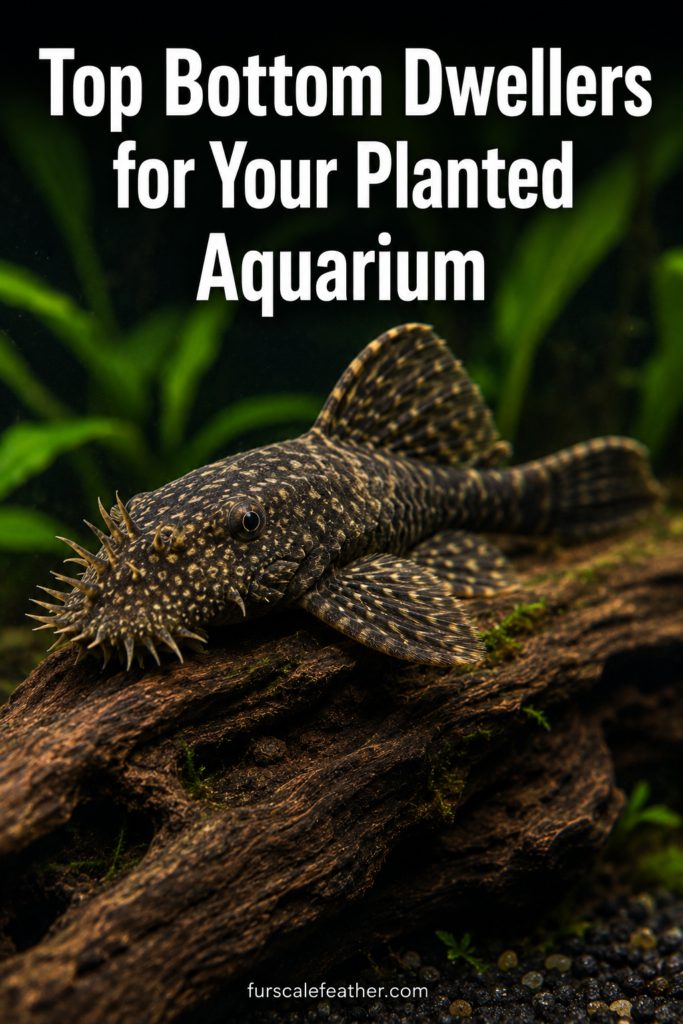
Bristlenose Pleco
Unlike the common pleco, which can outgrow most home aquariums, a bristlenose pleco tops out around 4 to 5 inches and stays manageable in a 20-gallon tank or larger. They graze algae and biofilm off hardscape and glass and generally leave healthy plants alone, though a hungry bristlenose will sometimes nip at soft-leaved plants like anubias if algae is scarce. A piece of driftwood in the tank helps their digestion and gives them a place to rasp.
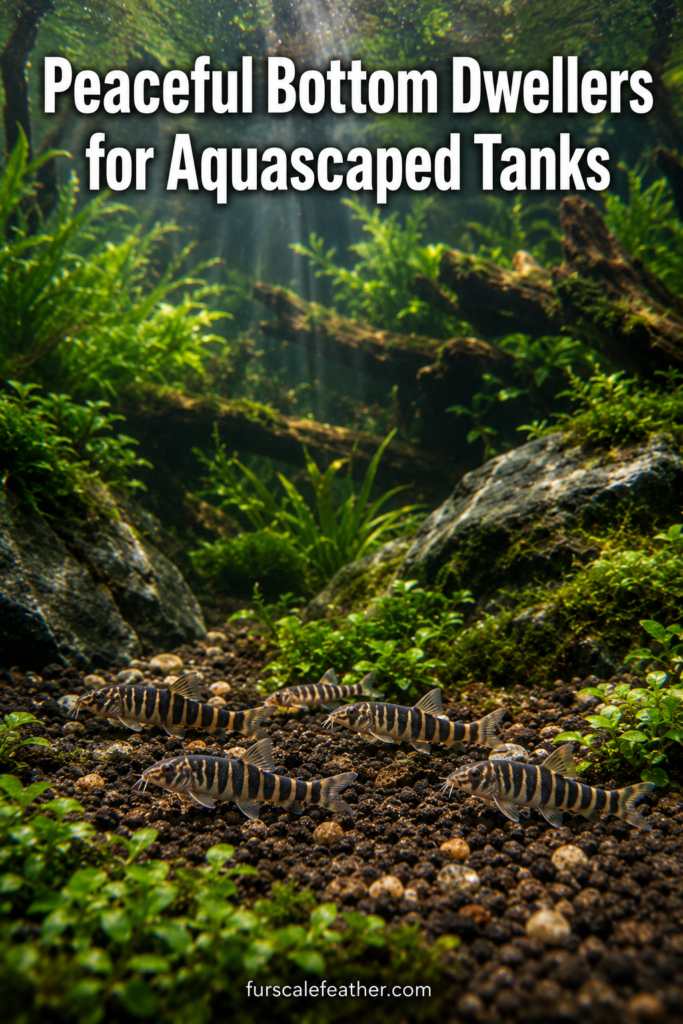
Zebra Loach
Zebra loaches are active, peaceful, and useful for keeping snail populations in check without harming plants. They need more swimming room than the other fish on this list, so a 30-gallon tank or larger with a group of five or more works best. They are not a great fit for smaller planted nano tanks.
A Setup Mistake That’s Easy to Make
A reader who runs a heavily planted 20-gallon tank told me she added a group of six panda corydoras onto plain pea gravel because it matched her aquascape design. Within three weeks, several of the cories had visibly shortened, curled barbels from constantly digging through the sharp-edged gravel. She switched to a fine sand cap over the gravel in the foraging areas, and the barbels regrew close to their original length over the following month. The lesson applies to any bottom dwelling fish for planted tank setups: substrate texture matters as much as species choice, and a smooth sand patch near the front glass gives barbeled fish somewhere safe to forage even if you keep gravel elsewhere.
How to Introduce Bottom Dwellers Without Disturbing Your Plants
- Test your water first. Confirm ammonia and nitrite both read zero and nitrates stay under 40 ppm before adding any new fish.
- Quarantine new arrivals. Hold new bottom dwellers in a separate tank for two weeks to watch for illness before they reach your planted display.
- Add a sand patch if needed. Even a small sand-filled area near driftwood gives barbeled species like corydoras a safe foraging spot.
- Acclimate slowly. Use a drip line or float-and-add method over 45 to 60 minutes so temperature and water chemistry shift gradually.
- Add the full group at once. Introducing all six or more shoaling fish together lowers stress and territorial squabbles compared to adding them one at a time.
- Watch closely for 48 hours. Check that every fish is eating, swimming normally, and not hiding constantly, which can signal a rough transition.
Best Sinking Food and Substrate for Bottom Dwellers
Disclosure: I have not personally run these products through my own tanks for this article, so the notes below come from a local fish store owner’s side-by-side test and from aggregated user reviews on major aquarium retailer sites.
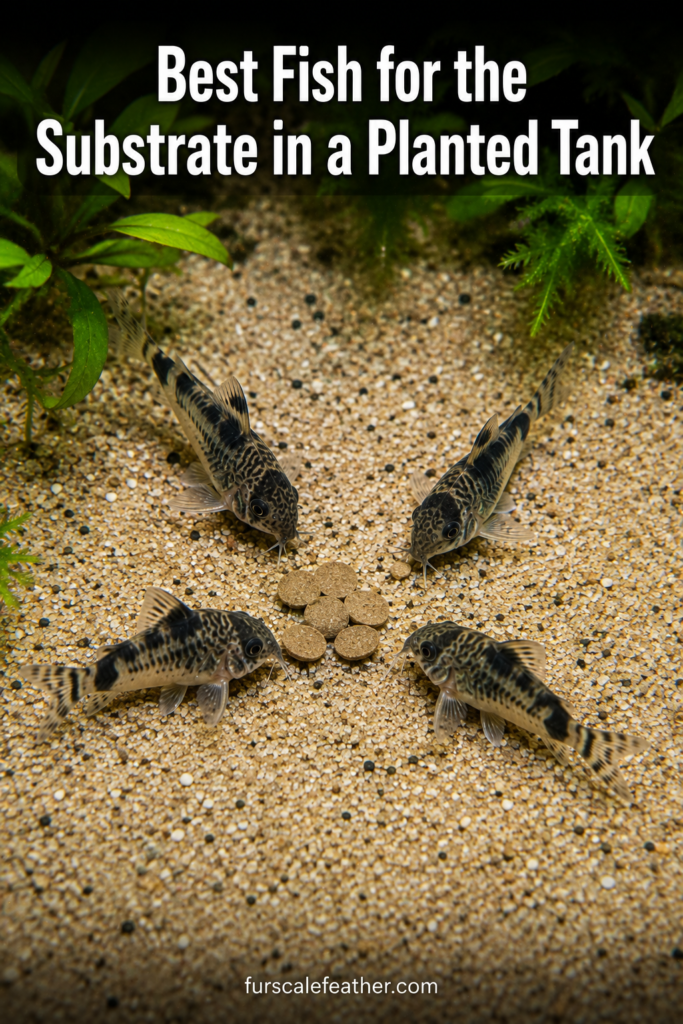
The fish store owner tested three sinking foods with a resident group of six panda corydoras, timing how long the group took to clear each portion and checking for leftover residue after 24 hours.
- Hikari Sinking Wafers: Cleared in about 12 minutes on average, with minimal residue left behind. Pros: widely available, holds its shape well without clouding the water. Cons: slightly harder texture, which took smaller pygmy cories longer to break apart.
- Repashy Bottom Scratcher (gel food): Corydoras started eating within 8 minutes, since the gel texture is naturally soft. Pros: strong nutrient profile, good for underweight fish. Cons: requires mixing and refrigeration, which adds prep time.
- Omega One Shrimp and Veggie Rounds: Took closer to 20 minutes to clear, with more visible leftover residue. Pros: strong ingredient list with real shrimp. Cons: rounds broke apart quickly and clouded the water slightly during testing.
Winner: Hikari Sinking Wafers, based on the combination of fast clearing time, low mess, and easy availability across retailers.
For substrate, CaribSea Super Naturals sand comes up most often in reviews from corydoras and kuhli loach keepers, thanks to its rounded grain shape, which is gentler on barbels than sharper aquarium sands. If you already run a nutrient-rich substrate like Fluval Stratum for your plants, a shallow sand cap in open foraging areas gives barbeled fish the best of both setups.
Signs Something Is Wrong With Your Bottom Dwelling Fish
Watch for clamped fins, resting on their side instead of upright, refusing food for more than a day or two, curled or shortened barbels, or gasping near the surface. These signs can point to several different problems, from poor water quality to parasites, and they aren’t something to diagnose at home. If you notice any of these signs, test your water right away and consult an aquatic veterinarian or a knowledgeable local fish store for guidance rather than guessing at treatment.
Questions People Usually Ask
What is the easiest bottom dwelling fish for a planted tank? Corydoras, especially bronze or panda cories, tend to be the easiest choice for beginners because they are hardy, widely available, and unlikely to bother plants.
Do bottom feeders eat aquarium plants? Most of the species on this list do not eat healthy plant leaves, though a hungry bristlenose pleco may nip soft-leaved plants like anubias if algae is scarce.
Can I keep just one or two corydoras? It isn’t recommended. Corydoras are shoaling fish and tend to hide and eat less when kept alone or in pairs, so groups of six or more work better.
Are loaches safe with shrimp? Kuhli loaches are generally safe with adult shrimp, but zebra loaches and other larger loaches may eat shrimp, especially smaller or molting ones.
How big a tank do I need for bottom dwellers? It depends on the species. Pygmy cories and kuhli loaches can work in 10 to 15 gallon tanks, while zebra loaches and groups of larger cories need 20 to 30 gallons or more.
The Takeaway
A bare tank floor doesn’t have to stay that way, and it doesn’t have to come at the cost of the plants you’ve carefully placed. Corydoras remain the safest starting point for most planted tanks, with kuhli loaches and otocinclus as solid options once your tank is established. Pay attention to substrate texture and group size before you buy, and keep an eye on your new fish for the first two days after adding them. Start with one species, watch how your tank responds, and expand from there once you’re confident in your setup.
Disclosures
This article may contain affiliate links. If you purchase through them, we may earn a small commission at no extra cost to you. Product notes not based on personal testing are labeled accordingly above.