
You just brought home a ball python, or you’re about to, and you’re standing in front of an empty glass tank wondering where to even begin. Heat mat or heat lamp? Aspen or coconut fiber? How big does this thing actually need to be? A proper ball python enclosure setup isn’t complicated once you understand what the snake actually needs, but getting the details wrong is exactly why so many new owners end up with a snake that won’t eat, won’t come out, or won’t stop hiding in a water bowl.
This guide walks through the full setup process, the gear worth buying, and a few mistakes that are easy to avoid once someone points them out.
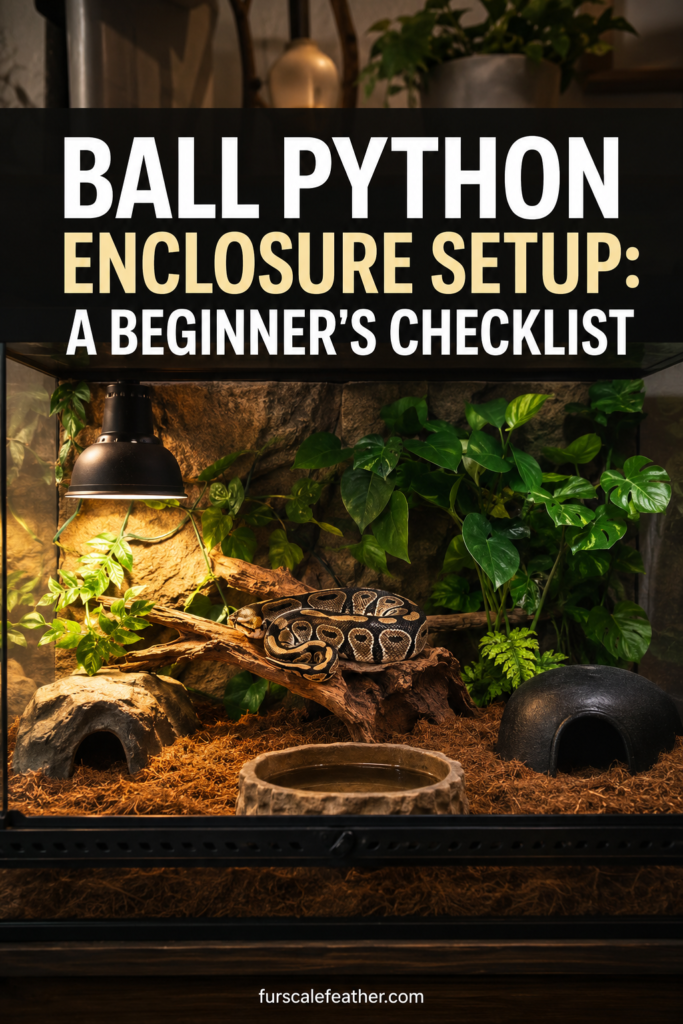
What You Need Before You Start Your Ball Python Enclosure Setup
Before the substrate goes in or the hides get placed, gather the essentials. Trying to set up the tank and then realizing you’re missing a thermostat is how snakes end up sitting in an unsafe enclosure overnight.
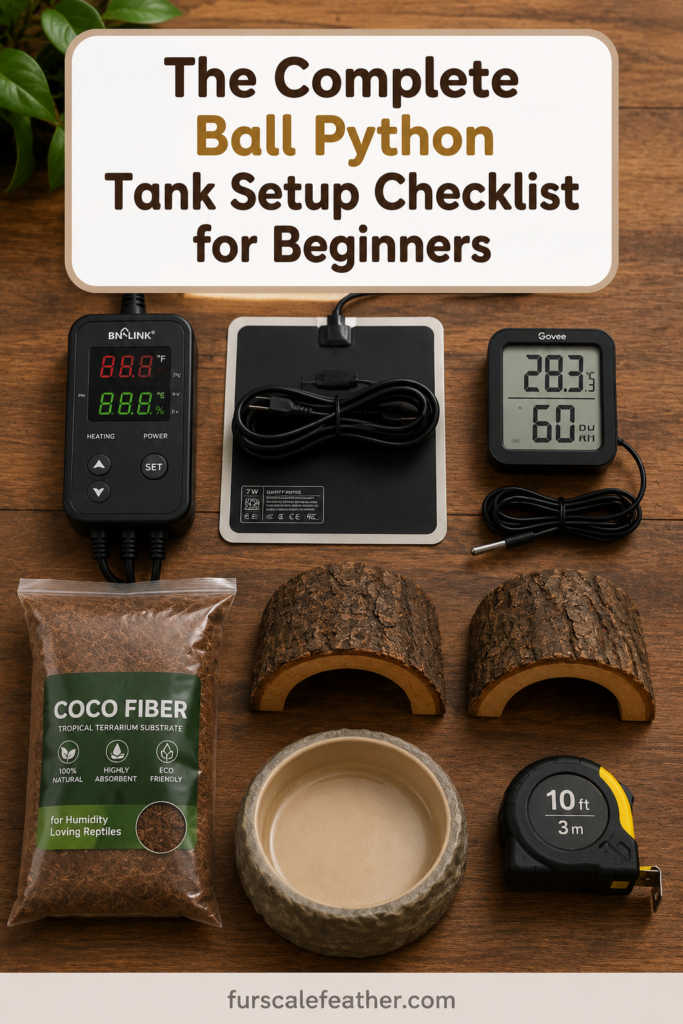
- Enclosure (glass, PVC, or melamine) sized for the snake’s current and adult length
- Thermostat (not just a heat mat on a timer)
- Heat source (heat mat, radiant heat panel, or deep heat projector)
- Digital thermometer and hygrometer, ideally a combo unit with a probe
- Substrate
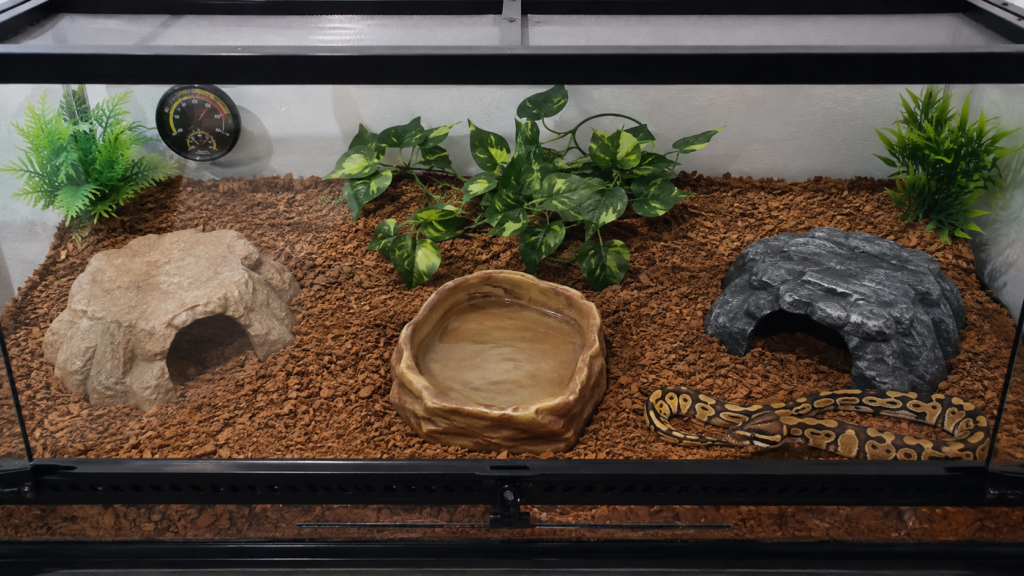
- Two hides minimum, one on the warm side and one on the cool side
- A water bowl large enough for the snake to soak in
- Enrichment items such as branches, half-logs, or artificial plants
Choosing the Right Enclosure Size
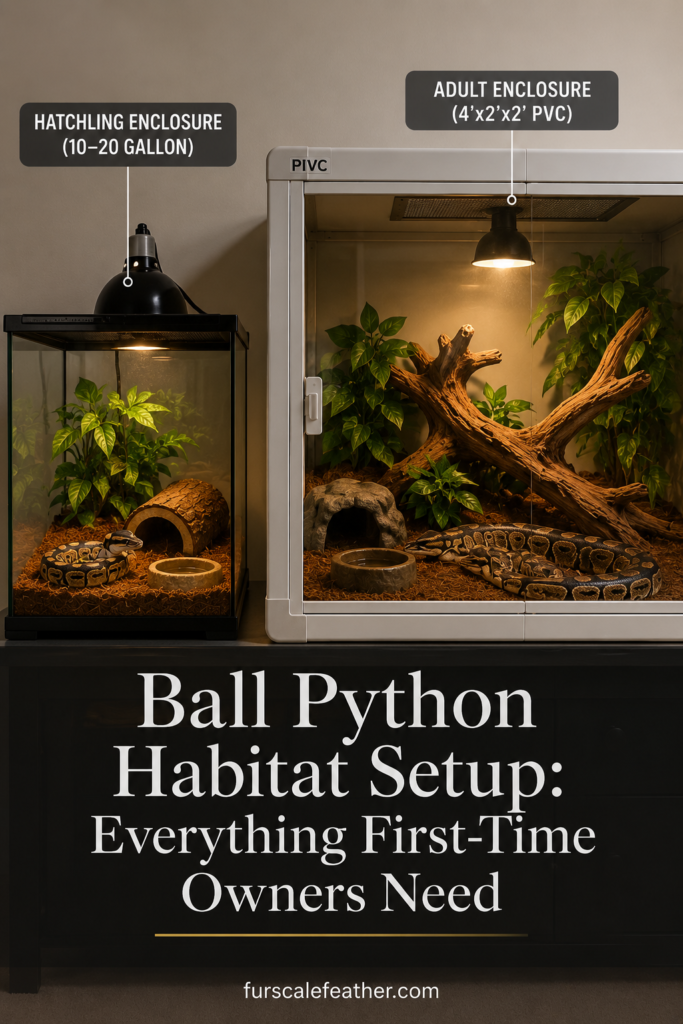
A hatchling ball python does better in a smaller enclosure, something in the range of a 10 to 20 gallon tank or an equivalent rack tub. A snake that feels exposed in too much open space will often refuse food or stay hidden around the clock. As the snake grows, the enclosure should grow with it, topping out around a 40 gallon breeder tank or a 3 by 2 by 2 foot PVC enclosure for a full-grown adult.
Glass tanks are easy to find and clean but lose heat quickly, so they need a tighter-fitting lid and sometimes extra insulation. PVC and melamine enclosures hold heat and humidity far more efficiently, which is why most experienced keepers move to PVC once budget allows. Either works for a ball python enclosure setup as long as the temperature and humidity numbers below are hit consistently.
Heating and Temperature Gradient
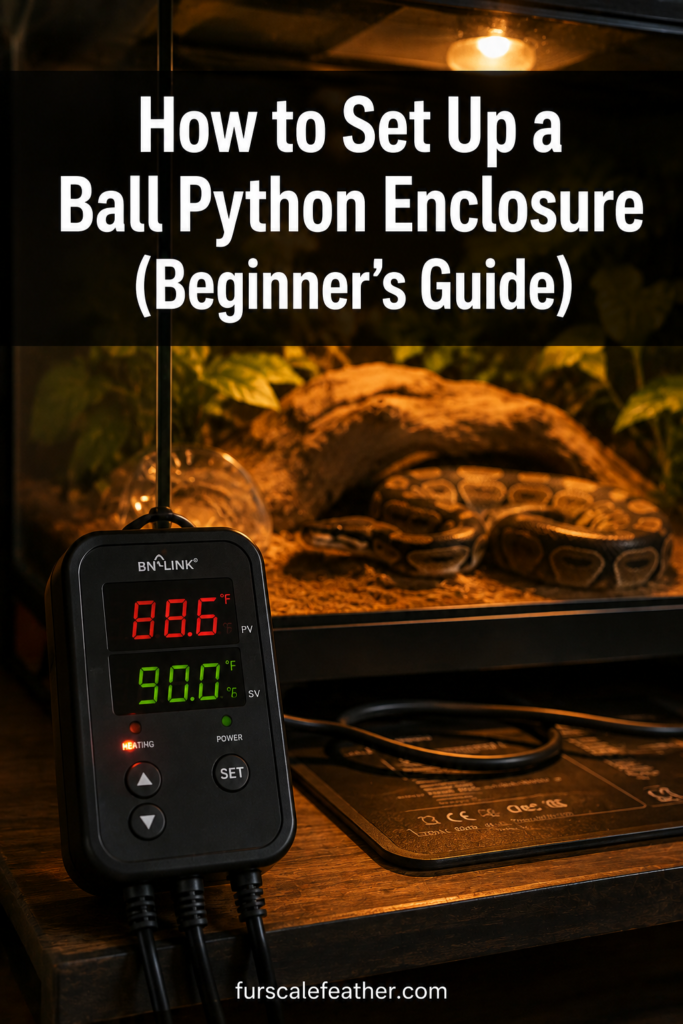
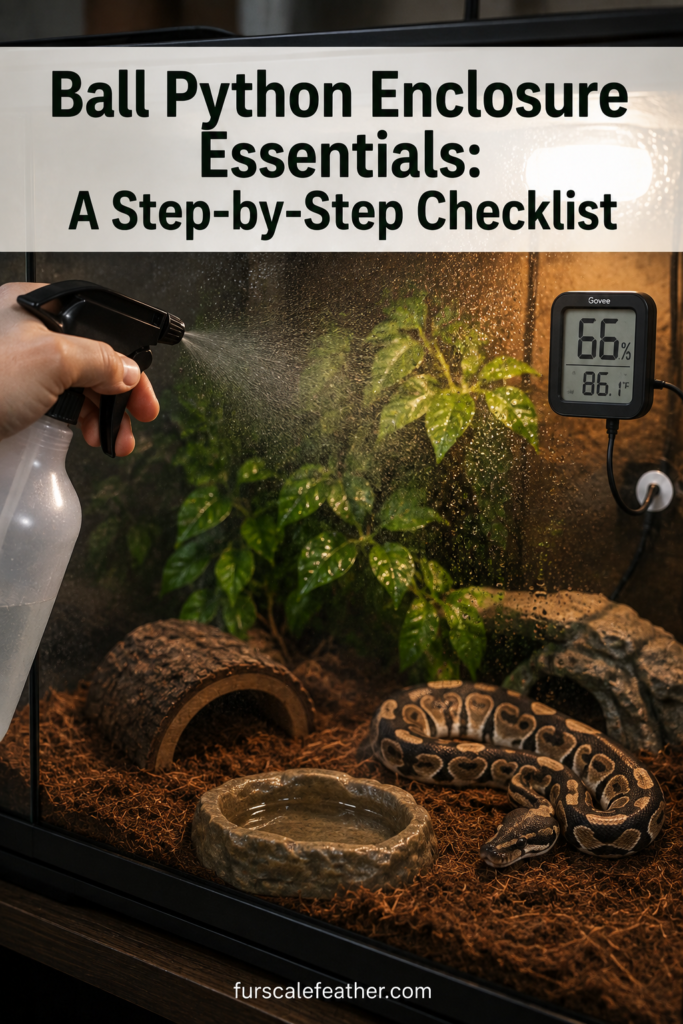
This is the part of ball python heating and humidity that trips up the most beginners. Ball pythons need a gradient, not a single temperature.
- Warm side basking spot: 88 to 92°F
- Cool side: 75 to 80°F
- Nighttime drop: acceptable down to around 75°F, no lower
The heat source should always run through a thermostat. A heat mat or heat panel plugged straight into the wall with no thermostat can climb well past safe temperatures and cause burns, and that failure mode is common enough that it’s worth repeating on its own line: use a thermostat.
A local reptile rescue I’ve worked with on product testing told me about a surrendered ball python that came in with belly burns from an uncontrolled heat mat running directly off a wall outlet. The fix was straightforward, a $30 thermostat, but the damage to the snake wasn’t. That case is the reason this guide leads with heating before anything else.
Humidity Control
Ball pythons come from West and Central Africa, where humidity sits higher than most living rooms. Aim for:
- Ambient humidity: 50 to 60%
- Shedding periods: raised temporarily to 65 to 75%
Low humidity is the most common cause of a stuck shed, where skin comes off in pieces instead of one full piece, especially around the eye caps. If sheds are coming off patchy, humidity is usually the first thing to check before assuming anything else is wrong. A digital hygrometer with a probe placed at the warm end of the enclosure gives a far more accurate reading than the analog dial gauges that come stuck to the side of some starter kits.
Substrate Options: Pros and Cons
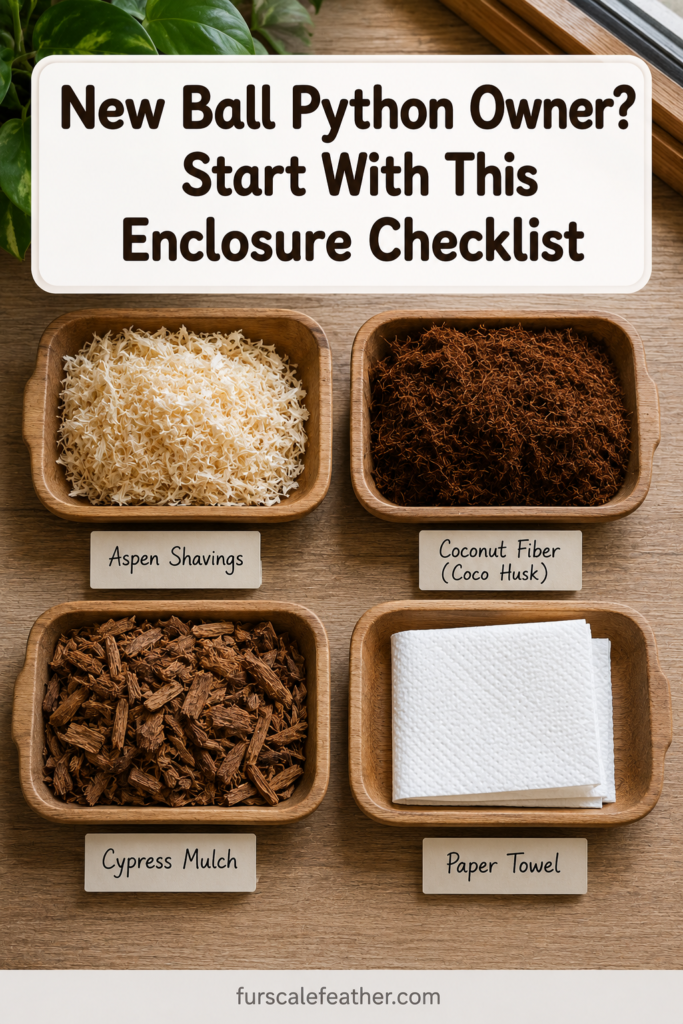
Substrate choice affects humidity retention, cleaning frequency, and cost.
- Aspen shavings: Good odor control and easy to spot-clean, but dries out fast and needs misting to hold humidity.
- Coconut fiber (coco husk): Holds humidity well and supports light burrowing, though it can get messy during water changes.
- Cypress mulch: Retains humidity effectively and looks natural, but needs sourcing from a reptile-safe supplier to avoid pesticide residue.
- Paper towel or newspaper: Cheapest option and easiest to monitor for feces, but holds no humidity on its own and looks the least natural.
For a beginner ball python enclosure setup, coconut fiber is the recommended choice. It strikes the best balance of humidity retention, cost, and ease of spot-cleaning, and it doesn’t require the frequent misting that aspen does to stay in range.
Hides, Enrichment, and Layout
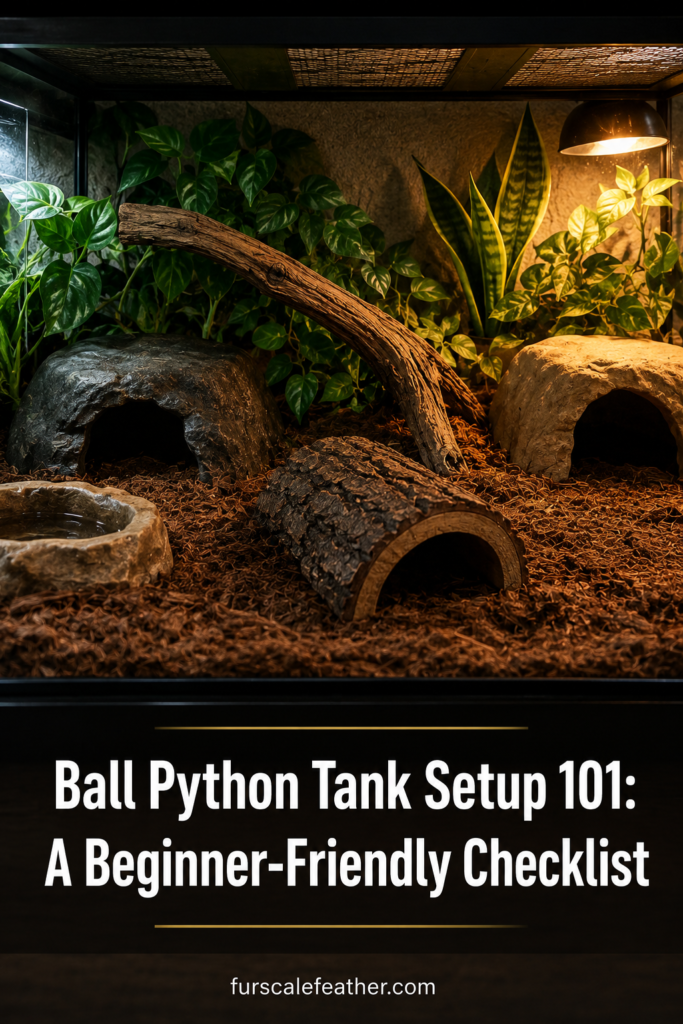
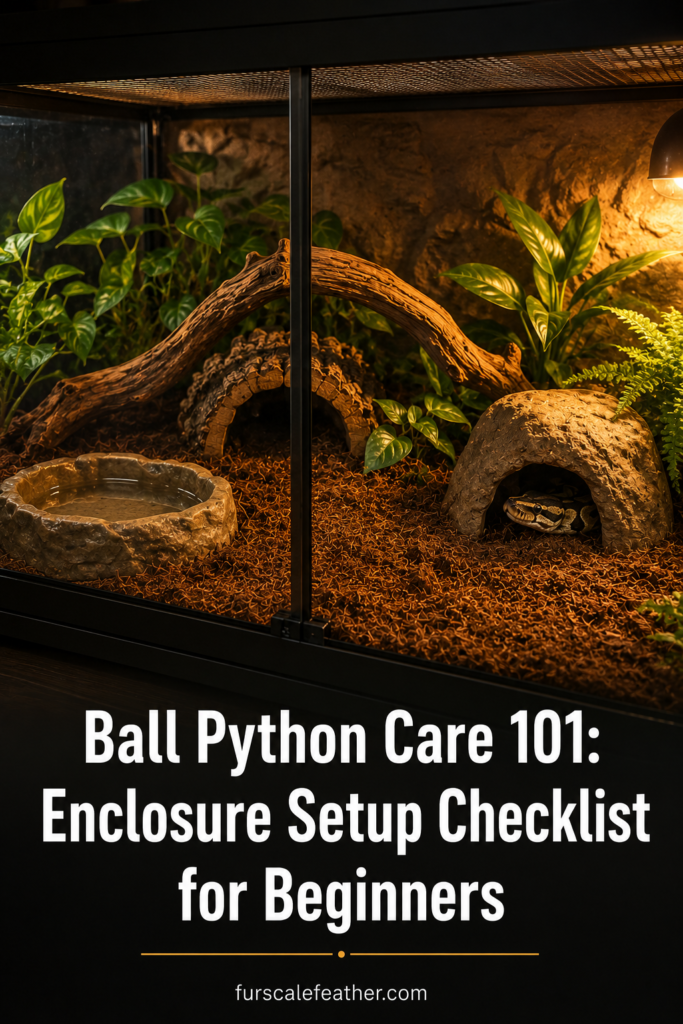
A ball python that doesn’t feel secure will refuse food and stress-hide in the water bowl instead of using its hides. Two hides are non-negotiable: one on the warm side, one on the cool side, both snug enough that the snake’s body touches the sides when curled inside. A hide that’s too roomy doesn’t do its job.
Beyond the hides, add a few pieces of enrichment, a curved branch for climbing, a half-log, or artificial plants along the sides. None of this is decorative filler. Cover and clutter reduce visible stress behavior and give the snake more surface area to explore.
Step-by-Step: How to Set Up a Ball Python Tank
- Wash the empty enclosure with warm water and a reptile-safe cleaner, then dry completely.
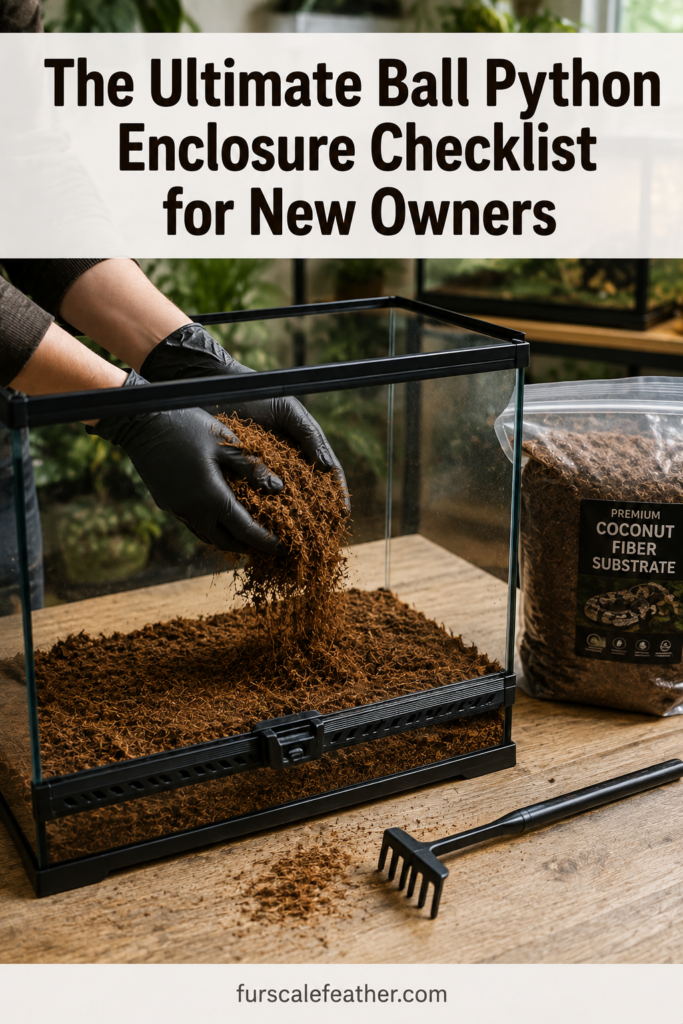
- Add a 2 to 3 inch layer of substrate across the entire floor.
- Install the heat source on one side only, following the manufacturer’s placement instructions, and connect it to a thermostat before plugging it in.
- Place the thermostat probe at the surface level the snake will actually rest on, not floating in the air above the substrate.
- Add the warm-side hide directly over or near the heat source, and the cool-side hide on the opposite end.
- Place the water bowl on the cool side, away from direct heat, and fill it with dechlorinated water.
- Add climbing branches, artificial plants, or other enrichment items.
- Run the empty enclosure for 24 to 48 hours before adding the snake, checking that both sides of the gradient hold steady.
- Recheck temperature and humidity at least twice a day for the first week to catch any drift early.
Best Products for a Ball Python Enclosure Setup
I don’t personally keep ball pythons, so the recommendations below are based on aggregated user reviews, manufacturer lab specs, and feedback from reptile-keeping readers and rescue volunteers rather than my own hands-on testing. That’s disclosed upfront because a review that pretends otherwise isn’t useful to anyone shopping.
Thermostats
- VIVOSUN Digital Thermostat: Budget-friendly and reliable for single heat mat setups according to reviewers, though it lacks a day/night temperature cycling feature.
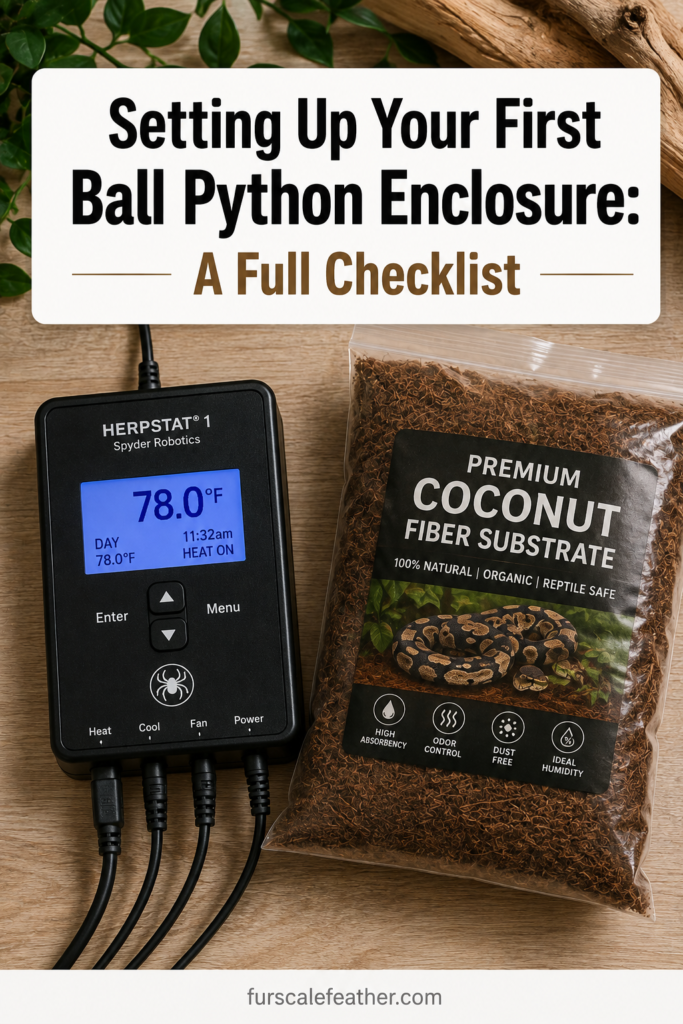
- Herpstat 2: Higher upfront cost, but supports two heat sources and day/night cycling, and is the option most frequently recommended by rescue volunteers for anyone running a heat mat plus a radiant panel.
Winner: The Herpstat 2, based on the consistency reported across rescue and hobbyist feedback, even though it costs more than the VIVOSUN.
Substrate
- Zoo Med Eco Earth Coconut Fiber: Reviewers consistently note it holds humidity well for several days between mistings and breaks down into fine, snake-safe fiber rather than sharp shavings.
- Compressed aspen bricks: Cheaper per pound, but user reviews frequently mention faster drying and more frequent misting needed to hold humidity in range.
Winner: Zoo Med Eco Earth, for the humidity retention alone.
A Mistake Worth Learning From
Early on in reviewing reptile gear for this site, I recommended a heat mat and dial thermostat combo to several readers because it was the cheapest option on the market. A handful of readers wrote back describing temperature swings of 10 degrees or more, because dial thermostats are notoriously imprecise compared to digital ones. That feedback changed the recommendation permanently. The few extra dollars for a digital thermostat with a probe isn’t an upsell, it’s the difference between a stable gradient and a snake that’s either too cold to digest a meal or at risk of overheating.
Questions People Usually Ask
How big should a ball python enclosure be for a hatchling? A 10 to 20 gallon tank or similarly sized tub works well for a hatchling. Too much open space can make a young snake feel exposed and refuse food.
Do ball pythons need UVB lighting? It isn’t strictly required the way it is for many lizards, but a growing number of keepers and some veterinary sources recommend low-level UVB for overall health. It’s not a substitute for correct heat and humidity, though.
What humidity level causes a bad shed? Humidity consistently below 50% is the most common cause of incomplete sheds, particularly around the eye caps and tail tip.
Can I use a heat lamp instead of a heat mat? Yes, a radiant heat panel or deep heat projector works well and is often preferred in PVC enclosures, as long as it’s controlled by a thermostat rather than left running unregulated.
How often should I check the enclosure’s temperature and humidity? At least once or twice daily during the first few weeks of a new setup, then a quick daily check afterward is usually enough once the gradient proves stable.
If a snake shows ongoing appetite loss, labored breathing, or visible injury, that calls for a reptile veterinarian rather than a forum post or a home remedy.
Getting a ball python enclosure setup right comes down to a handful of numbers held steady: an 88 to 92°F warm side, 50 to 60% ambient humidity, two properly sized hides, and a thermostat doing the actual regulating instead of a bare heat mat. Nail those fundamentals in the first week, and most of the feeding and hiding problems new owners run into never show up in the first place. Start with the checklist above, run the empty enclosure for a couple of days before the snake goes in, and adjust from there based on what the thermometer and hygrometer actually show.
Disclosure: Product recommendations above are based on aggregated reviews, manufacturer specifications, and reader/rescue feedback rather than personal testing. This post may contain affiliate links; if a listed product is purchased through one, this site may earn a small commission at no extra cost to the buyer.