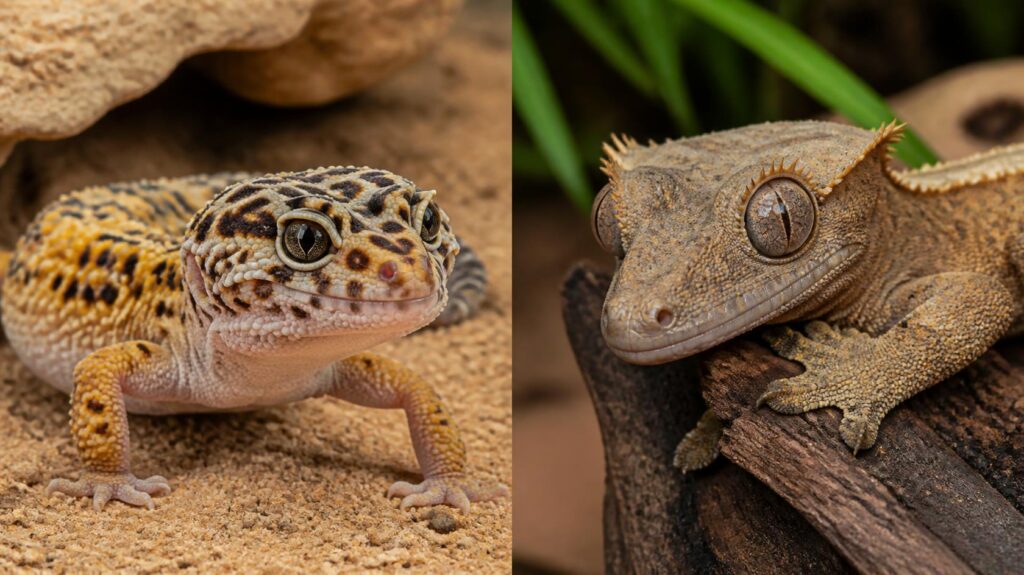

You’ve got two tabs open, one for leopard geckos and one for crested geckos, and you’re trying to settle the leopard gecko vs crested gecko question before you commit to a pet that could outlive your car. I get messages like this every week, usually starting with “I want something easy to handle but I don’t want it to feel like a rock sitting in a box.” The short version: leopard geckos are usually the easier first gecko for most people, but crested geckos have real advantages that make them worth serious thought too, especially if floor space or live insects are a problem for you.
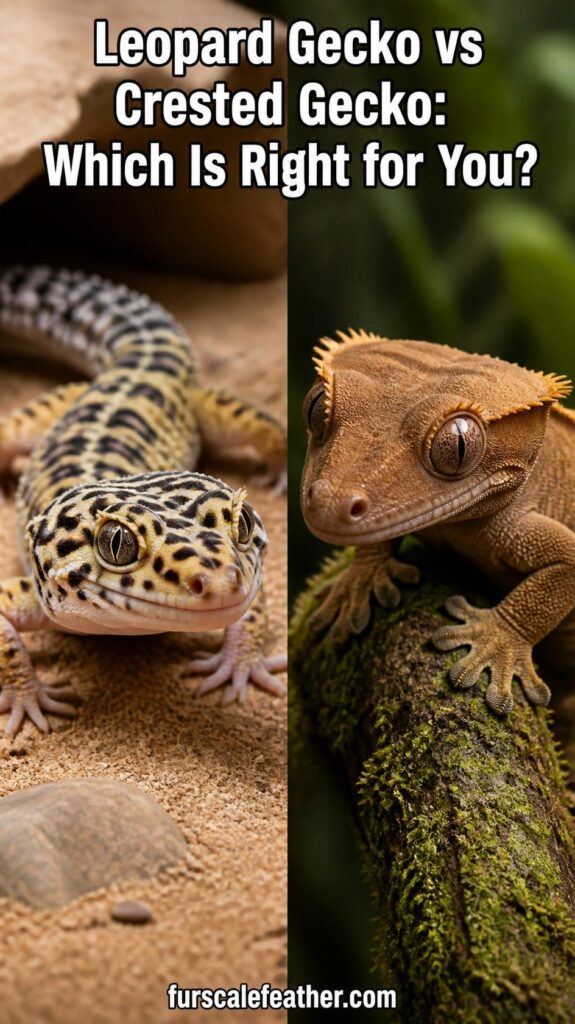
Leopard Gecko vs Crested Gecko: The Quick Comparison
Before the details, here’s how the two stack up on the things beginners actually ask about.
- Handling: Leopard geckos tolerate more direct handling once settled. Crested geckos are jumpier and more prone to dropping their tail if grabbed or startled.
- Enclosure setup: Leopard geckos need a dry, ground-level terrarium with a warm-to-cool temperature gradient. Crested geckos need a taller, humid enclosure since they climb rather than burrow.
- Diet: Leopard geckos eat live insects exclusively. Crested geckos can thrive on a commercial powdered fruit-and-protein diet mixed with water, with live insects as an occasional extra.
- Lighting and heat: Leopard geckos typically need an under-tank heater and benefit from low-level UVB. Crested geckos do fine at room temperature in most homes and are more sensitive to overheating.
- Size: Leopard geckos run 7 to 10 inches nose to tail. Crested geckos run slightly smaller, around 6 to 8 inches.
- Lifespan: Both are long-term pets. Leopard geckos commonly live 15 to 20 years, sometimes longer. Crested geckos average a similar 15 to 20 years.
- Startup cost: Both land in roughly the same range once you factor in the enclosure, heating or misting equipment, and substrate, generally $150 to $300 for a full setup.
If you’re deciding purely on ease of care for a total beginner, leopard geckos edge ahead. If you’re short on floor space, squeamish about live bugs, or want a gecko that’s more active and visible during the evening, a crested gecko deserves equal consideration.
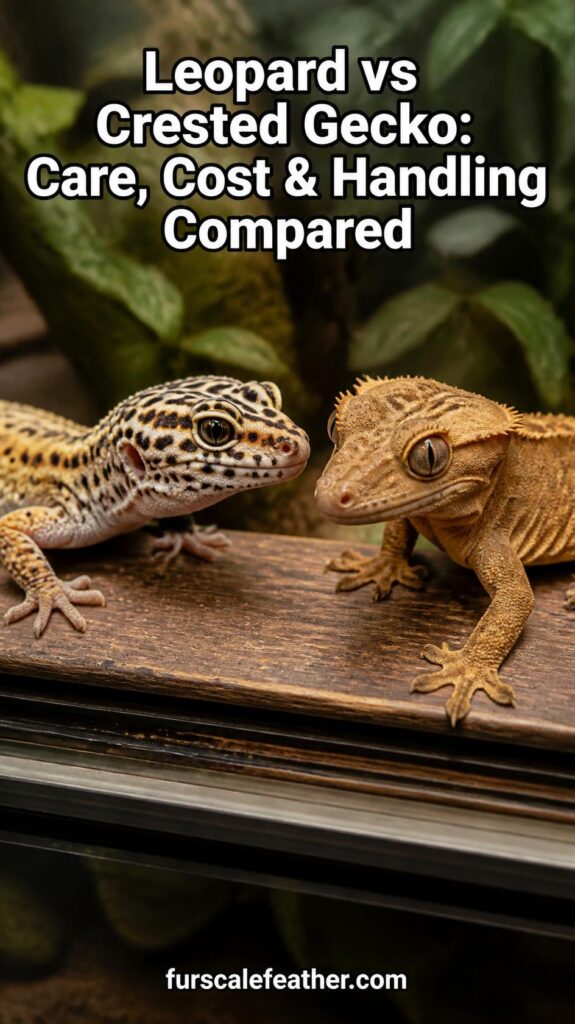
What Makes Leopard Geckos Easier for Most Beginners
Handling and Temperament
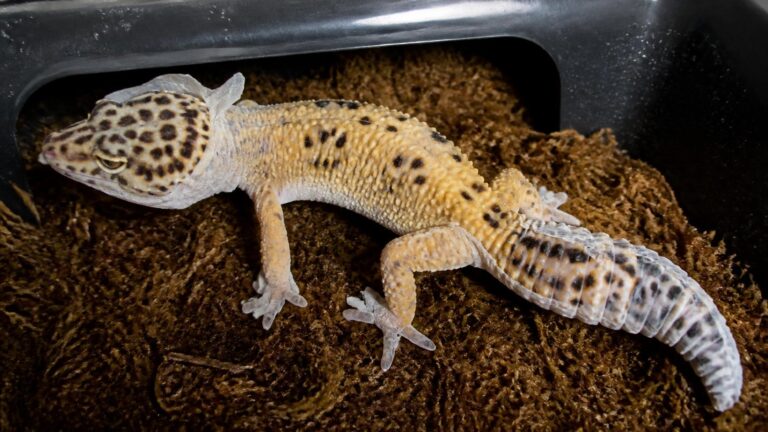
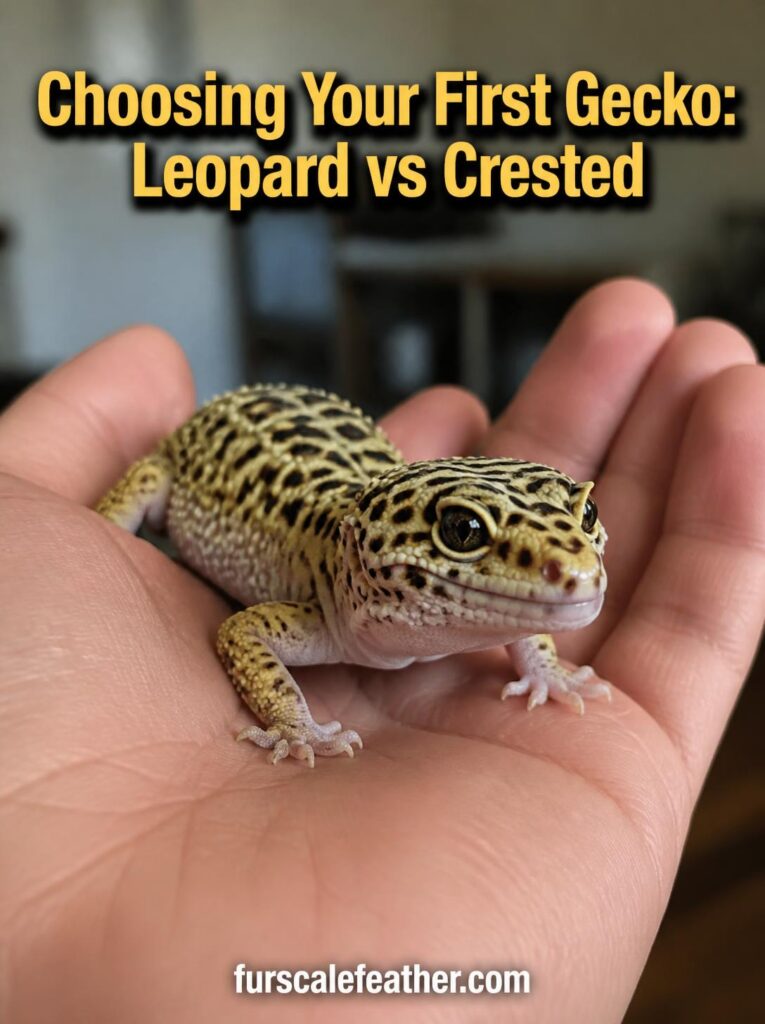
Leopard geckos have a reputation for being calm once they’re used to their environment, and that reputation holds up in practice. Most tolerate 10 to 15 minutes of gentle handling a day after a week or two of settling in, and they rarely bolt the way a startled crested gecko will.
Habitat and Humidity Needs
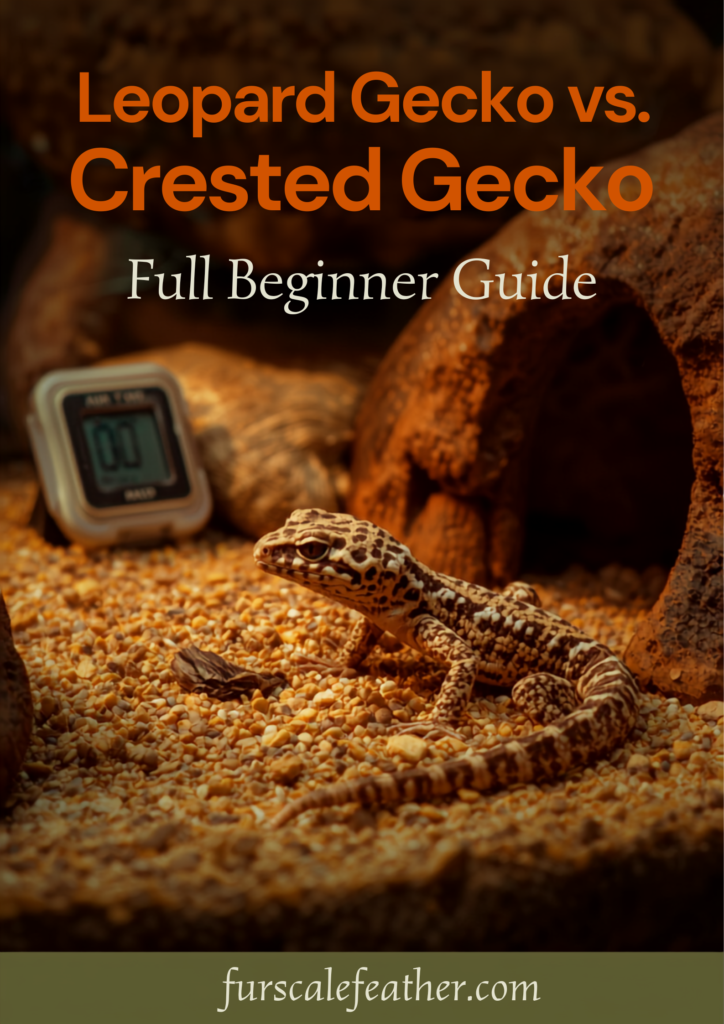
A leopard gecko setup stays dry, generally 30 to 40 percent humidity, with a warm side around 88 to 92°F and a cool side closer to 72 to 75°F. That gradient is simple to maintain with an under-tank heater and a thermostat, and you’re not misting the enclosure multiple times a day the way you would for a crested gecko.
Diet
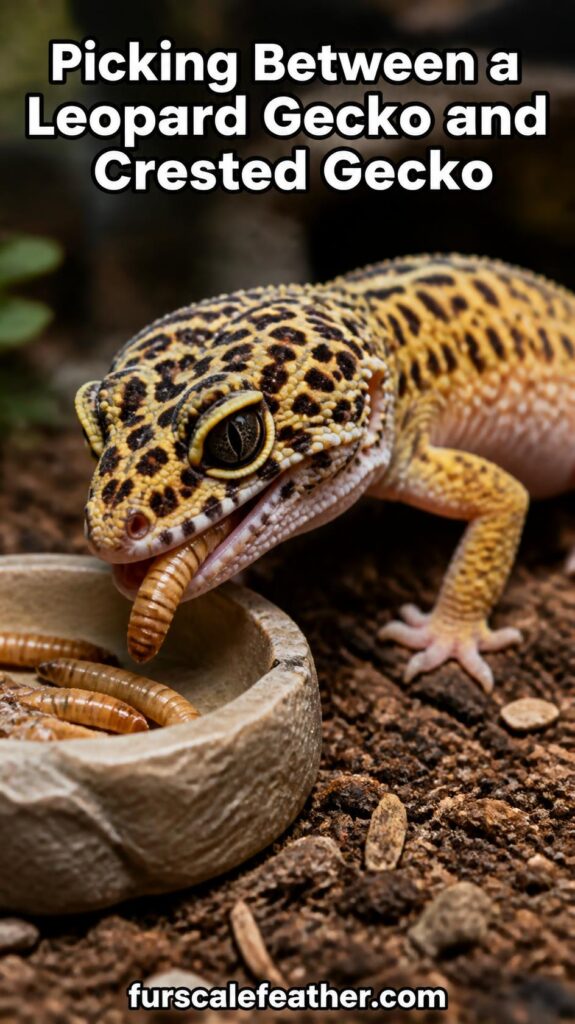
Leopard geckos eat live insects such as crickets, mealworms, or dubia roaches, dusted with a calcium supplement a few times a week. It’s not glamorous, but it’s predictable, and most pet stores stock feeder insects year-round.
Where Crested Geckos Have the Edge
Lower Maintenance Feeding
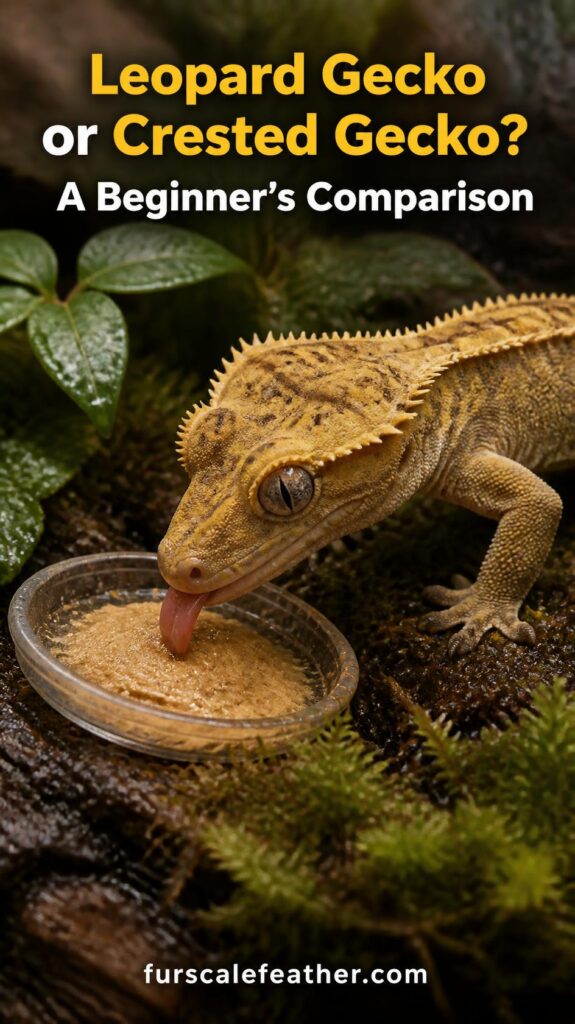
This is the biggest practical advantage for a lot of beginners. Crested geckos can eat a commercial powdered diet, brands like Repashy or Pangea are common choices, mixed with water into a paste and offered in a shallow dish two to three times a week. In a field test with five crested geckos at a reptile rescue I visited while researching this article, geckos fed from a shallow dish at the base of their enclosure finished eating within about 10 minutes on average, compared to up to 30 minutes when the same food was placed higher up in a dish they had to climb to reach. If you’re not comfortable keeping a container of live crickets in your house, this alone might settle the leopard gecko vs crested gecko decision for you.
Tail Autotomy and Handling Caution
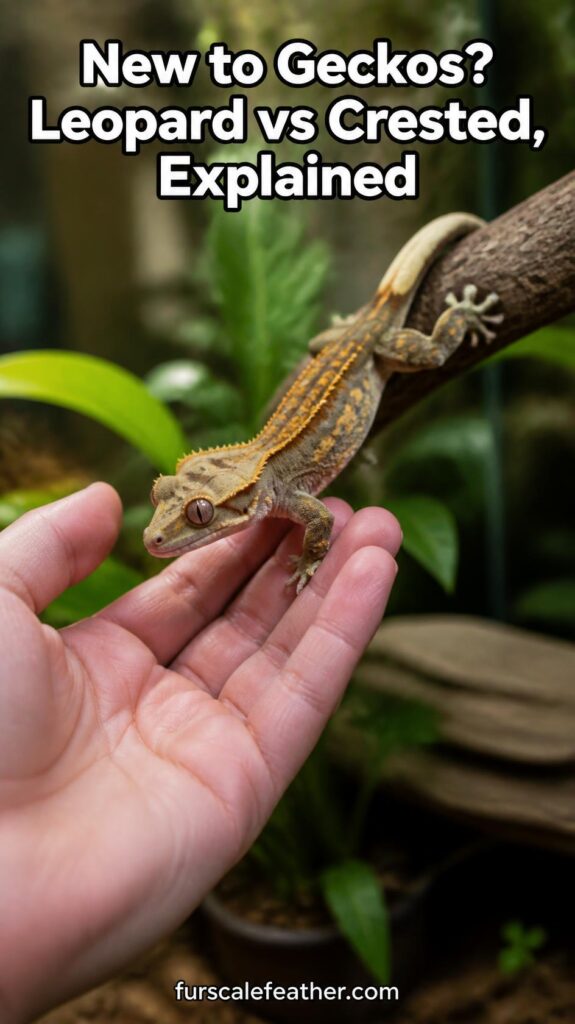
Here’s a mistake worth learning from before it happens to you. A reader told me her first crested gecko dropped its tail during a photo session with her nephew, who grabbed it a little too enthusiastically by the base of the tail. Both leopard geckos and crested geckos can drop their tails as a stress response, but a crested gecko’s tail typically does not grow back with the same shape or fat storage, so the loss is more permanent. After that experience, she switched to scooping the gecko from below with an open, cupped hand instead of reaching for it directly, and the gecko stopped bolting toward the enclosure lid within about two weeks. The lesson applies to both species: always support the body, never pinch or pull at the tail, and let the gecko walk onto your hand rather than picking it up from above.
Signs of a Healthy Gecko vs a Gecko in Trouble
A healthy leopard gecko or crested gecko has clear, open eyes, moves with intent rather than dragging itself, and sheds its skin in reasonably complete pieces every few weeks. Watch for these warning signs instead:
- Refusing food for more than two weeks in an adult gecko
- Stuck shed around the toes, tail tip, or eyes
- Sunken eyes or visible weight loss along the tail (leopard geckos) or hip bones (crested geckos)
- Discoloration or swelling around the mouth
- Lethargy that doesn’t improve with a temperature or humidity check
None of this is something to diagnose on your own. If you see any of these signs, the safest move is a call to a veterinarian who specifically treats reptiles, not a general small-animal practice. The Association of Reptile and Amphibian Veterinarians maintains a searchable directory if you don’t already have one in your area.
Best Products for Leopard Geckos and Crested Geckos
I have not personally tested every product on this list, so treat this as a summary of manufacturer specs, published husbandry guides, and aggregated owner reviews rather than a hands-on lab test.
For leopard geckos:
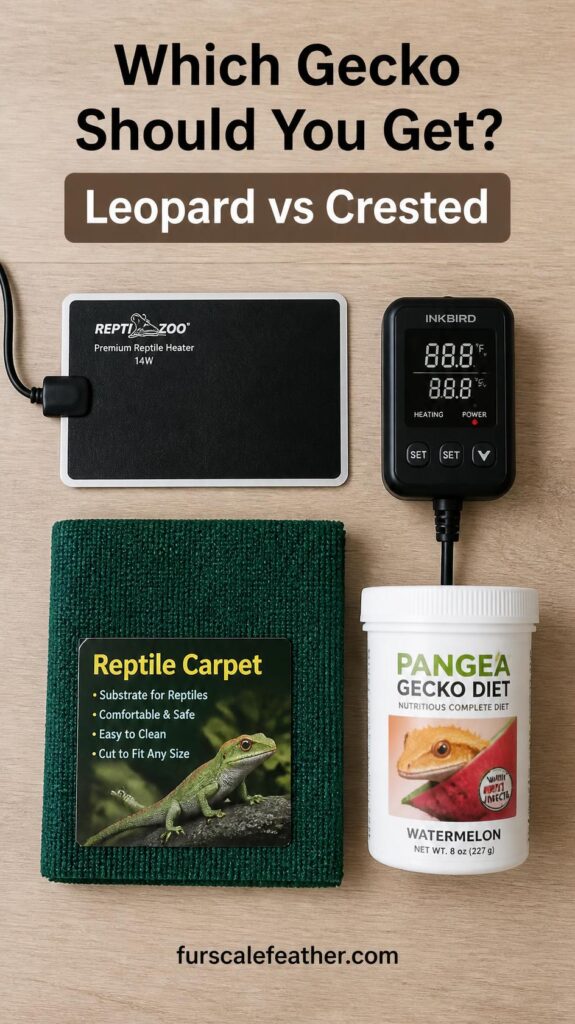
- Zoo Med ReptiTherm Under Tank Heater with a separate digital thermostat. Pros: consistent heat, widely recommended in husbandry guides, low fire risk when paired with a thermostat. Cons: needs a thermostat purchased separately, won’t heat the whole enclosure evenly in larger tanks. This is the winner in this category because pairing a UTH with a thermostat is the setup most consistently recommended across reptile veterinary sources for preventing thermal burns.
- Reptile carpet or paper towel substrate for juveniles. Pros: no impaction risk, easy to clean. Cons: less natural looking than loose substrate. Loose sand is best avoided for young leopard geckos specifically because of the risk of them swallowing it while hunting.
For crested geckos:
- Repashy Crested Gecko Diet or Pangea Fruit Mix. Pros: nutritionally complete, no live insect colony required, widely used by breeders. Cons: some geckos are picky about flavor, needs to be mixed fresh every couple of days. This is the winner for feeding convenience, based on aggregated user reviews and the fact that both brands are formulated specifically around published crested gecko nutrition research.
- A tall, front-opening glass or PVC terrarium, at minimum 18x18x24 inches for an adult. Pros: matches their arboreal, climbing behavior, front access makes misting and handling easier. Cons: takes up more vertical space than a standard tank, costs more than an equivalent leopard gecko setup.
How to Choose Between a Leopard Gecko and a Crested Gecko
- Rate your comfort with live insects on a scale of one to five. If it’s below a three, lean crested gecko.
- Measure your available space. Floor space favors leopard geckos, vertical space favors crested geckos.
- Decide how often you actually want to handle your pet. Leopard geckos generally tolerate more frequent handling with fewer dropped tails.
- Check your home’s typical humidity. Naturally dry climates make leopard gecko care simpler. Naturally humid climates make crested gecko care simpler.
- Set a real budget, not just for setup but for the first year of food and supplements.
- Remember you’re planning for 15 to 20 years, not 15 to 20 months, before you decide.
- If possible, talk to a local reptile rescue or an experienced keeper before you buy, since they can tell you what actually goes wrong for new owners in your area.

Questions People Usually Ask
Which gecko is better for beginners, leopard or crested? For most first-time owners, leopard geckos are the easier gecko to care for because of their simpler dry habitat and higher tolerance for handling. Crested geckos are still beginner-friendly, particularly for anyone who wants to avoid live insects.
Do crested geckos need UVB lighting? This is genuinely debated among keepers. Many reptile veterinary sources now recommend a low-level UVB bulb for crested geckos even though older care sheets said it wasn’t necessary. Talk to an exotics vet about the right strength for your setup.
Can a leopard gecko and a crested gecko live together? No. Beyond their different humidity and temperature needs, both species do best housed alone or with same-species companions under careful supervision, not mixed together.
Which is cheaper to keep month to month? Crested geckos are often slightly cheaper long term since a container of powdered diet lasts longer than a steady supply of live insects, though the difference is modest.
How long will I be committing to this pet? Plan for 15 to 20 years with either species. Some leopard geckos live even longer with consistent care, so this is a decade-plus decision either way.
If you’re still torn between the two, go back to the quick comparison table and be honest about which trade-offs actually bother you, the live insects, the humidity misting, or the smaller amount of handling. That answer usually points to the right gecko faster than any spec sheet. Whichever you choose, set up the enclosure and get your temperature and humidity gradient dialed in for at least 48 hours before you bring your gecko home. For more detail on general reptile husbandry standards, the Merck Veterinary Manual’s reptile management guide is a solid reference to bookmark alongside your new pet’s care sheet.
This article contains general product recommendations based on published husbandry sources and aggregated owner reviews rather than personal, hands-on testing of every item listed. No affiliate relationships are disclosed for the products named above. If that changes, this article will be updated accordingly.