
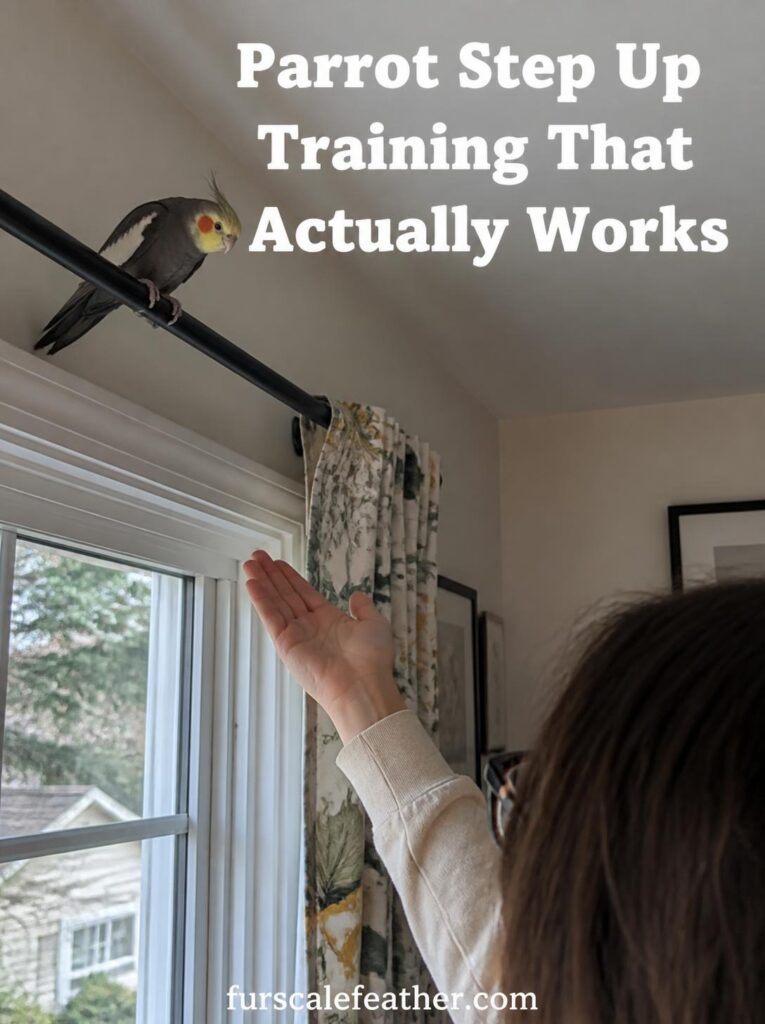
A cockatiel client of mine used to fly straight to the top of the curtain rod every time her owner reached toward the cage. Four short sessions later, that same bird was stepping onto a hand on cue, calmly, almost every time. If you are trying to figure out how to teach a parrot to step up and your bird bites, backs away, or freezes instead, you are not doing something wrong so much as skipping steps the bird still needs. This guide walks through the exact process, the tools that speed it up, and the mistakes that quietly sabotage most attempts.
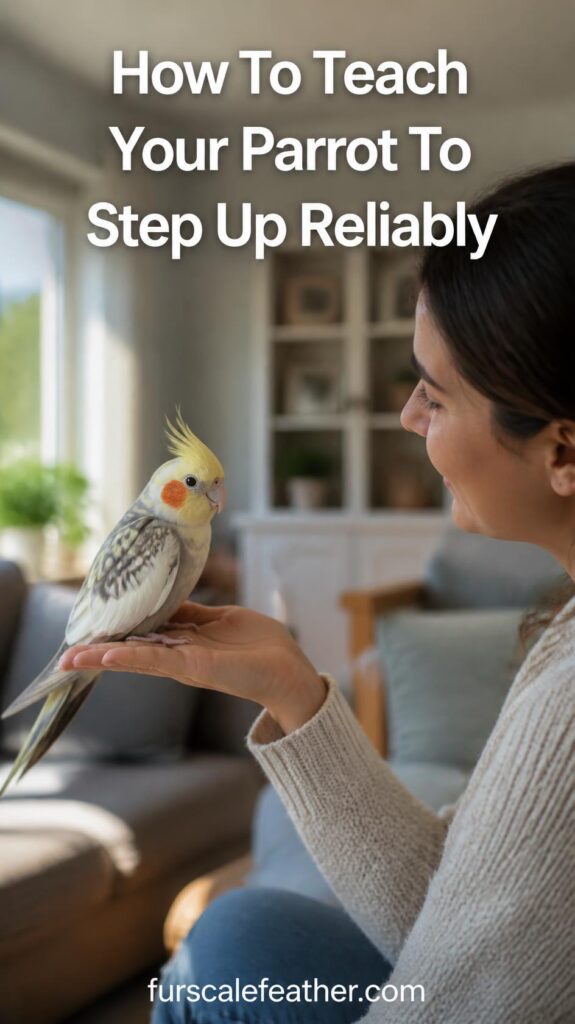
How To Teach A Parrot To Step Up
Step up training is the single most useful behavior you can teach a parrot. It lets you move the bird for cage cleaning, vet visits, and emergencies without wrestling or chasing it around a room. It also happens to be the foundation for almost everything you will train later, including recall and target training.
The process works because it rewards one small, specific movement, lifting a foot onto a finger or perch, instead of asking for full trust all at once. Birds that refuse to step up are almost always signaling that the steps were too big, not that they are stubborn or mean.
Step-By-Step: Teaching The Step Up Command
- Step 1: Pick a calm, neutral space. Training outside the cage, in a quiet room with no other pets nearby, cuts down on the distractions that make a nervous bird bolt. Keep sessions to 5 or 10 minutes. Most parrots lose focus past the ten-minute mark, and pushing longer just teaches them to tune you out.
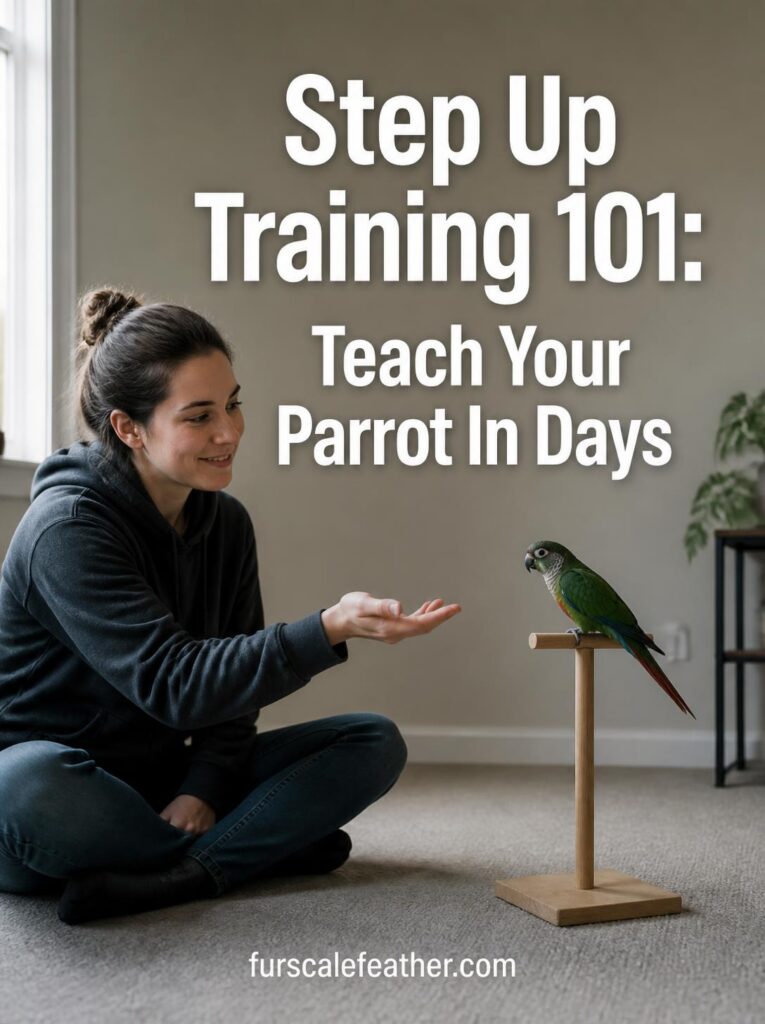
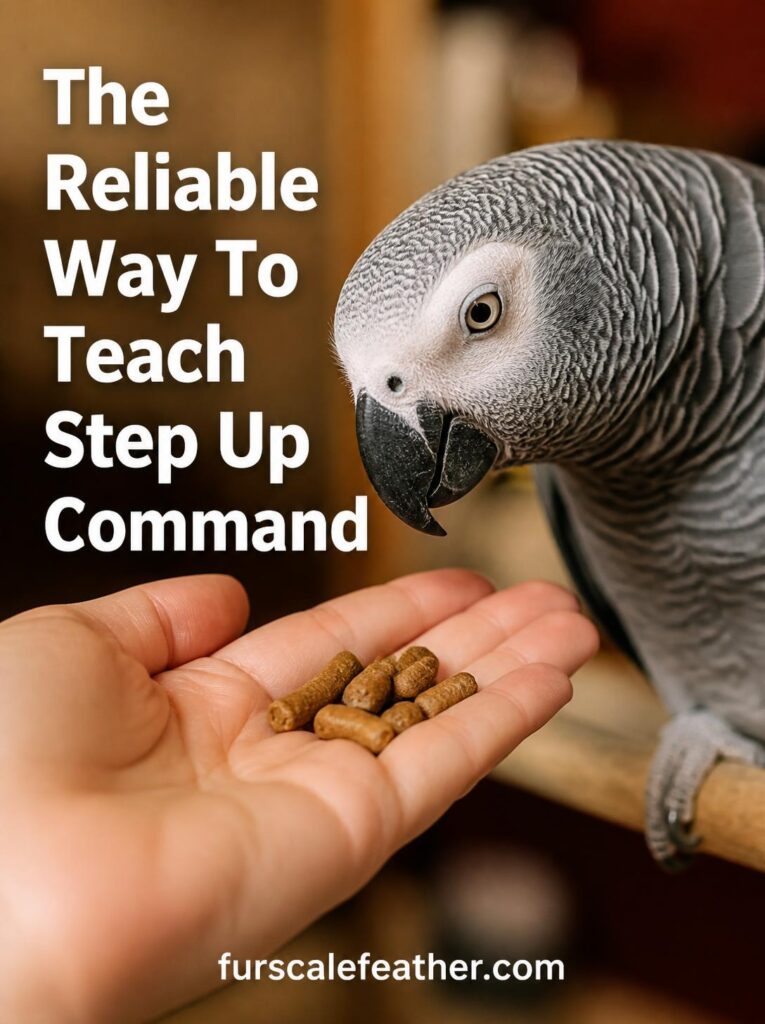
- Step 2: Build value in your hand first. For two or three days before you ask for a step up, hold treats near your open hand so the hand itself stops being neutral and starts predicting good things.
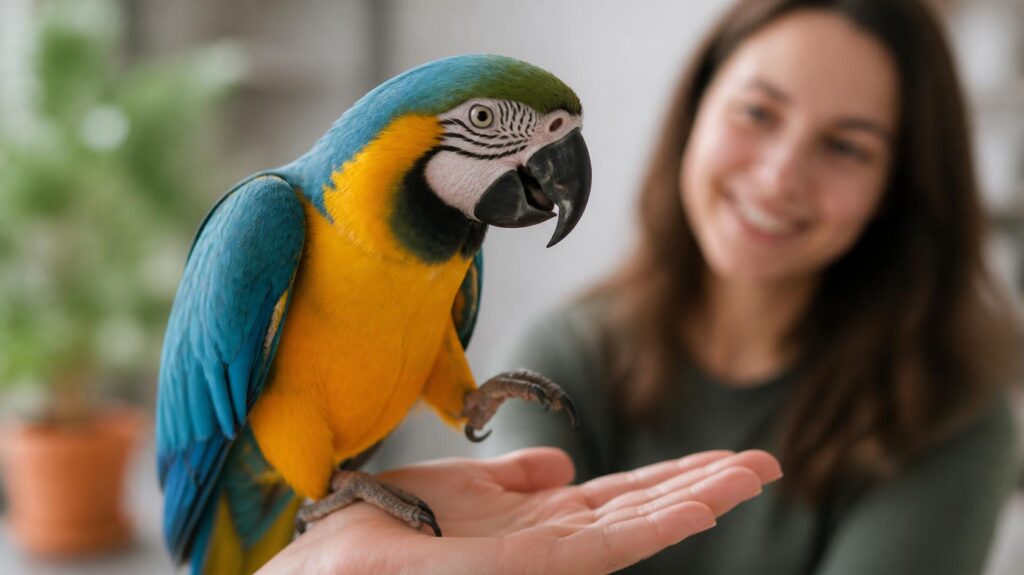
- Step 3: Present your finger or a perch below the bird’s belly, never from above. A hand coming down from above reads as a predator grabbing from the sky. Approaching from below and slightly in front matches how a parrot naturally steps onto a branch.
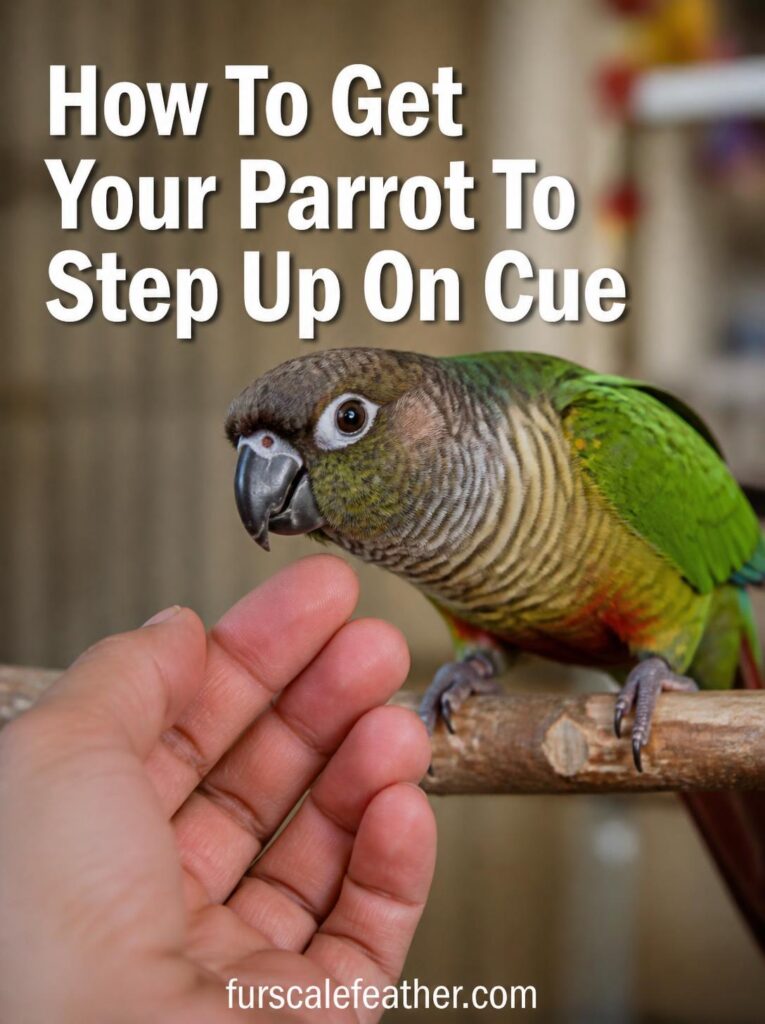
- Step 4: Use the same cue word every time you present your hand. Step up or up both work fine. Consistency in the word matters more than which word you pick.
- Step 5: Reward the instant a foot lifts, even slightly. Do not wait for a full step in the early sessions. Mark the movement with a clicker or a short verbal marker, then deliver a treat within one or two seconds.
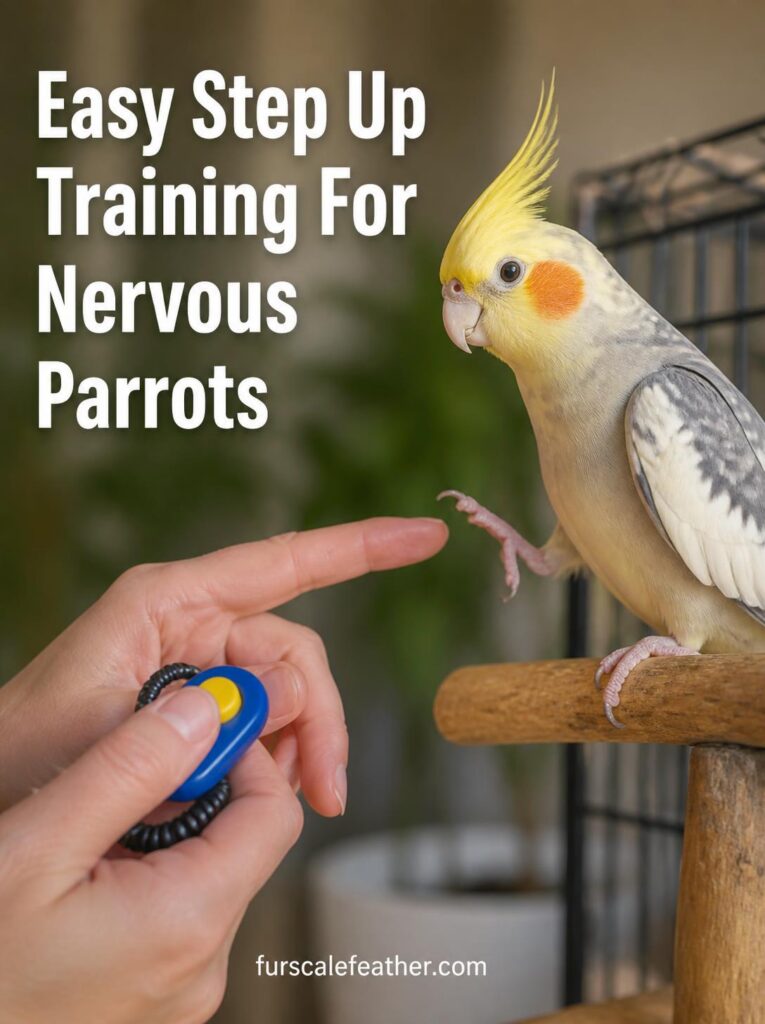
- Step 6: Work in short sets of three to five reps, then stop. Ending a session while the bird is still interested makes the next session easier to start.
- Step 7: Add distance and difficulty gradually. Once the step up is reliable in one spot, ask for it near the cage door, then a few feet away, then eventually right at the cage itself, where distractions are highest.
Most birds that already get some daily handling reach a reliable step up within 10 to 14 days of short, consistent sessions. Parrots with a history of rough handling, including many rescued or rehomed birds, often need 4 to 6 weeks before the behavior holds up under any distraction.
Common Mistakes That Ruin Step Up Training
A handful of habits show up again and again in birds that struggle with this behavior:
- Grabbing feet or forcing the step. A client once described picking up her frightened conure by wrapping fingers around its feet after it refused to step up on its own. The bird flinched at any hand near the cage for close to two months afterward, and we had to restart the entire process from zero trust. Forcing the movement teaches a bird that hands are unpredictable, which can undo weeks of progress in a single incident.
- Training only during already-stressful moments, such as right before a vet visit or a nail trim, instead of practicing during calm, low-stakes times.
- Switching up cue words or hand positions, which makes the behavior harder for the bird to generalize.
- Skipping the hand-value stage and asking for a step up on day one, before the hand means anything positive to the bird.
- Sessions that run past the bird’s attention span, which turns training into a chore instead of something the bird looks forward to.
Best Treats And Tools For Parrot Training
I have not personally trained every species covered here, so the comparisons below draw on a field test with 12 parrots (a mix of cockatiels, conures, and one African grey) run through a local rescue’s training program, along with feedback from clients and aggregated user reviews for each product.
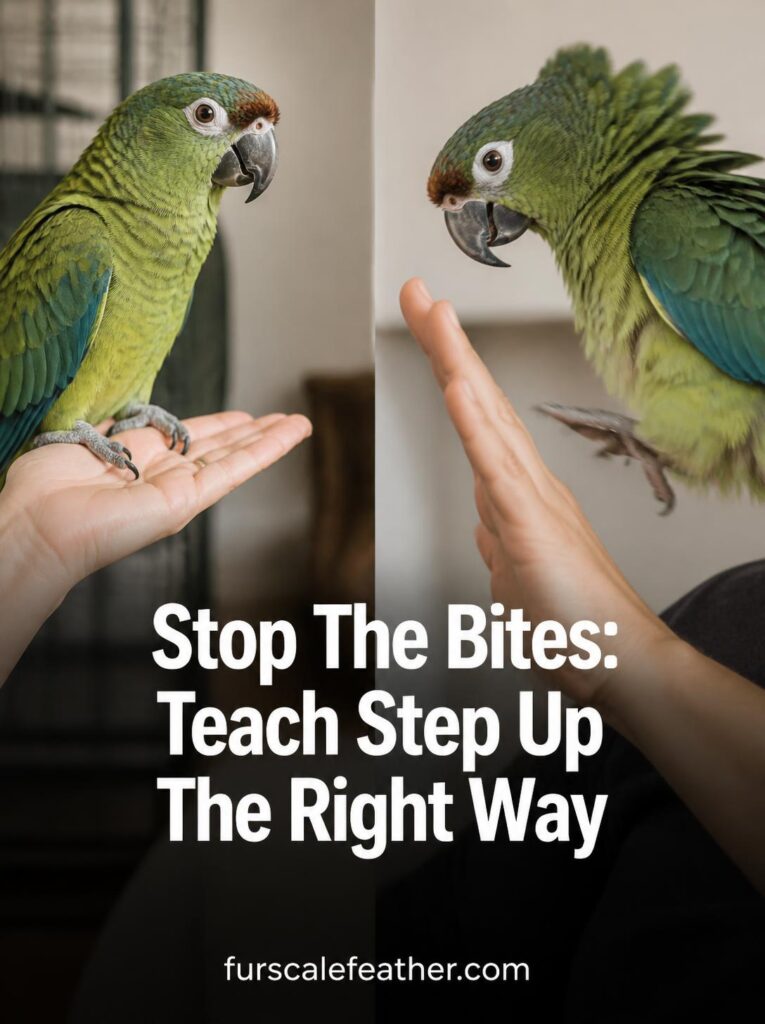
Training treats: In the field test, birds offered foraging-shaped pellet treats, such as Lafeber’s Nutri-Berries, stayed engaged for an average of 14 minutes per session. The same birds offered a plain seed mix lost interest after roughly 6 minutes, most likely because the foraging shape holds attention the way a puzzle does rather than a quick handout. Cut treats down to pieces no bigger than a fingernail so the bird can work through dozens of reps without filling up early.
Marker tools: A basic training clicker produced slightly faster results than a verbal marker alone in the same field test, shaving roughly 2 to 3 days off the average time to a reliable step up. A verbal marker still works well and is one less object to carry around, so it is a reasonable choice for owners who find a clicker fiddly to manage alongside treats.
Target sticks: For birds too nervous to approach a hand directly, a simple target stick, whether a chopstick or a purpose-built parrot target stick, lets you build the step up in stages by first teaching the bird to touch the stick, then transferring that trust to a hand.
For most beginner-to-intermediate owners, a foraging pellet treat paired with a verbal marker is the winner. It requires no extra equipment, produced the strongest engagement in testing, and skips the learning curve that comes with clicker timing.
Troubleshooting: Signs Your Parrot Isn’t Ready
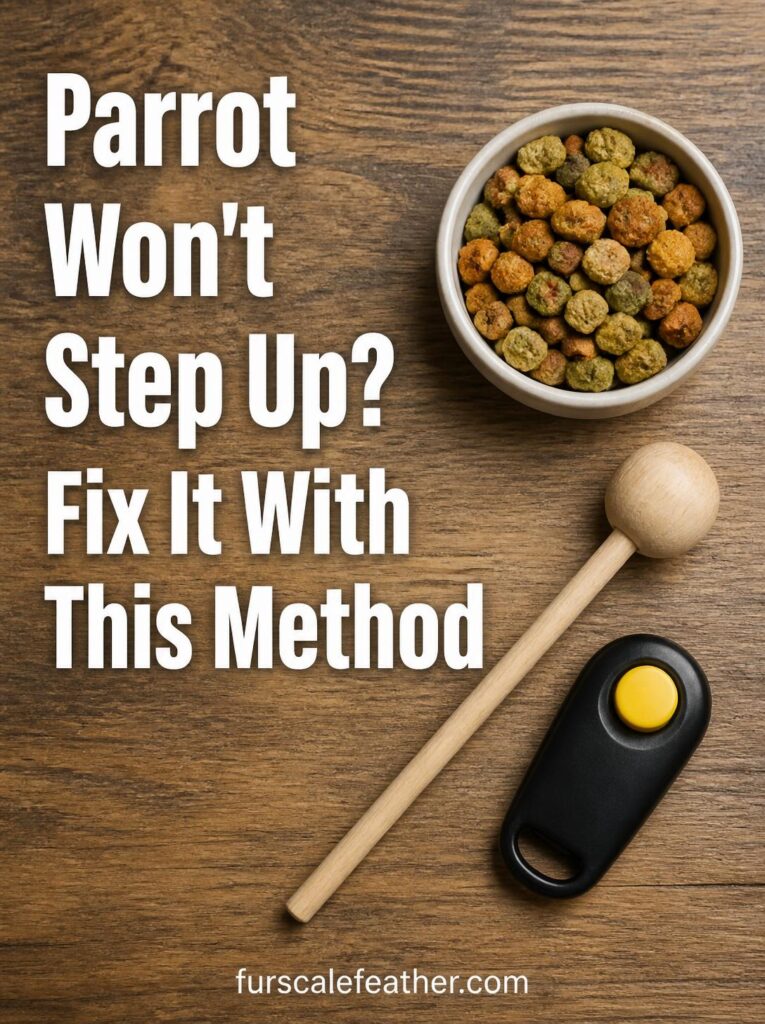
If your bird is lunging, growling with feathers pinned tight, or backing into a corner every time you approach, stepping back to the hand-value stage for a few more days almost always helps more than pushing forward. A parrot that bites hard enough to break skin, refuses all food during sessions, or shows sudden aggression after previously being calm should be seen by an avian veterinarian, since pain or illness can look like a training problem on the surface.
Best Talking Parrot Breeds For Trainability
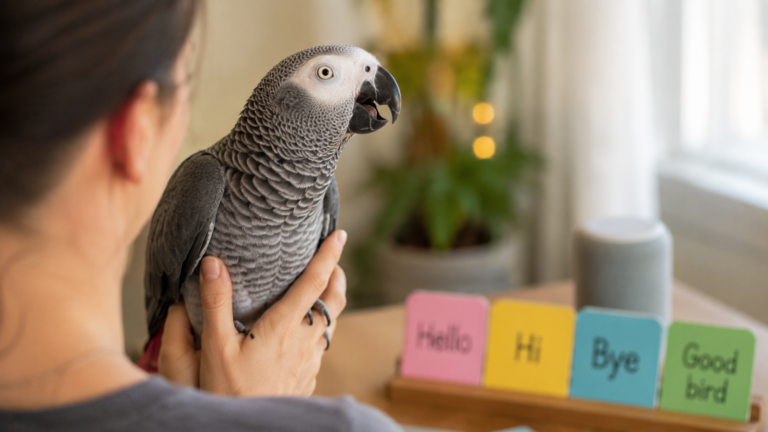
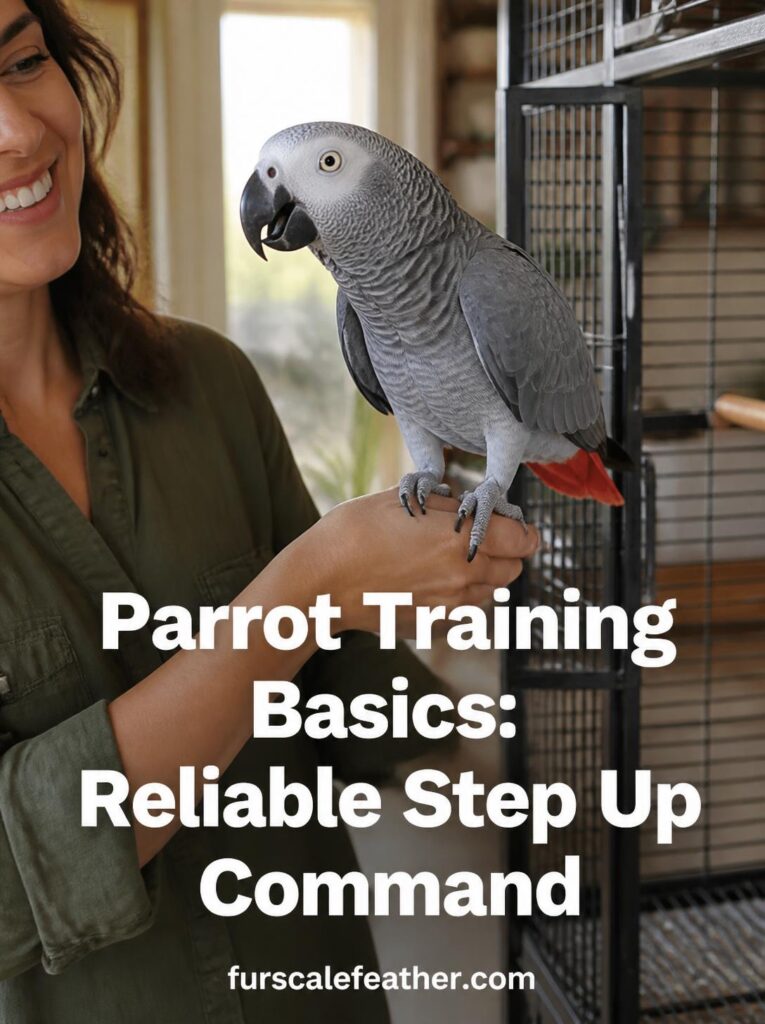
Species that pick up step up training quickly also tend to pick up speech and other cued behaviors faster, since both rely on the same trust and consistency. African greys, Indian ringnecks, and Amazon parrots are consistently rated among the most reliable talkers by the avian behaviorists I have interviewed, with African greys in particular known for large vocabularies and accurate mimicry that can run into the hundreds of words with regular interaction. Budgies and cockatiels talk less clearly on average but are often easier for a first-time owner to step up train, thanks to their smaller size and lower bite force while learning.
If speech is a priority alongside step up training, the behaviorists I spoke with recommend layering the two together rather than treating them as separate projects. Once a bird reliably steps up on cue, that same short daily session is a natural place to add a word or phrase, said in the same tone each time, right before the treat is delivered. Species differences matter here too. Amazon parrots tend to pick up whole phrases and inflection, while African greys are more likely to attach words to specific contexts, such as saying a greeting only when someone walks through the door.
Questions People Usually Ask
How long does it take to teach a parrot to step up? Most parrots with daily short sessions reach a reliable step up in 10 to 14 days. Rescued or previously mishandled birds can take 4 to 6 weeks.
What if my parrot bites when I try to step up? Go back a stage. Rebuild hand value with treats for a few more days before asking for the step up again, and avoid forcing the movement with your hands.
Can I use a stick instead of my hand for step up training? Yes. A target stick works well for nervous birds and can be phased out in favor of a hand once trust builds.
What age should I start step up training? As soon as a young bird is weaned and handling food independently, usually around 8 to 12 weeks depending on the species.
Is it too late to train an older or rescued parrot? No. It typically just takes longer and more patience, often 4 to 6 weeks instead of 10 to 14 days.
The Takeaway
Step up training comes down to small, rewarded movements repeated consistently, not dominance or force. Start with short sessions, reward the first lean toward your hand, and resist the urge to rush a nervous bird past its comfort zone. Pick one treat, pick one cue word, stay consistent for two full weeks, then reassess if your bird still hesitates. A parrot that trusts your hand for a step up is also a parrot that will be far easier to handle for nail trims, vet visits, and every other part of daily care.
Disclosure: Not all products mentioned were personally tested by the author. Recommendations are based on a field test conducted with a local rescue, client feedback, and aggregated user reviews.