
Your gecko has been the same dull gray-brown color for two weeks now. Its eyes look cloudy, there’s a stubborn patch of skin stuck around one toe, and no matter how long you watch the tank, nothing seems to be happening. If you’ve been searching “why is leopard gecko not shedding” at midnight with a flashlight pointed at your terrarium, you’re not alone, and the answer usually comes down to one of a handful of fixable habitat problems.
Leopard geckos shed their entire outer layer of skin every few weeks as juveniles and roughly once a month as adults. When that process stalls, stops, or leaves patches behind, it’s almost always tied to humidity, hydration, or something specific in the setup rather than a mystery illness.
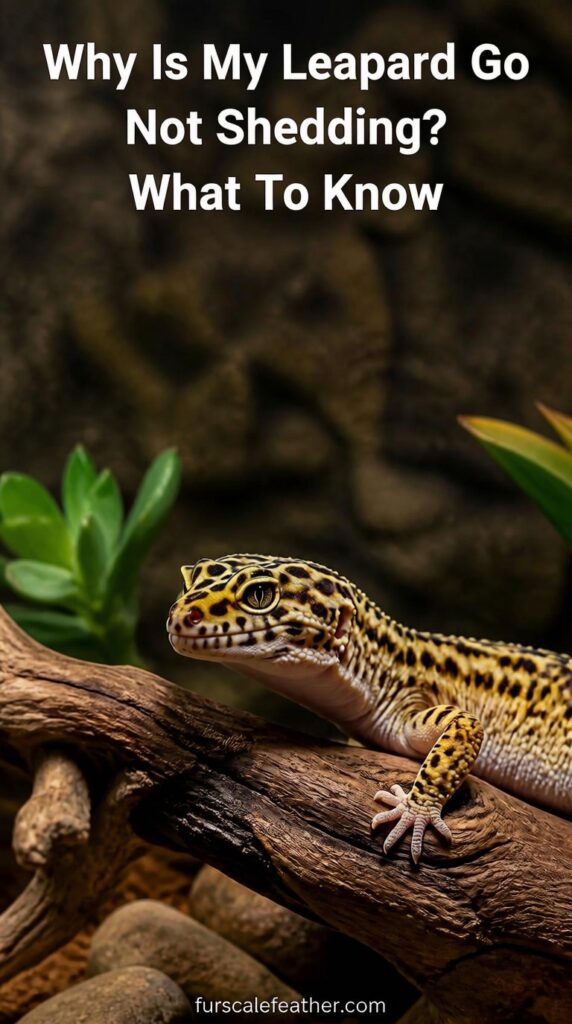
Why Is My Leopard Gecko Not Shedding? The Short Answer
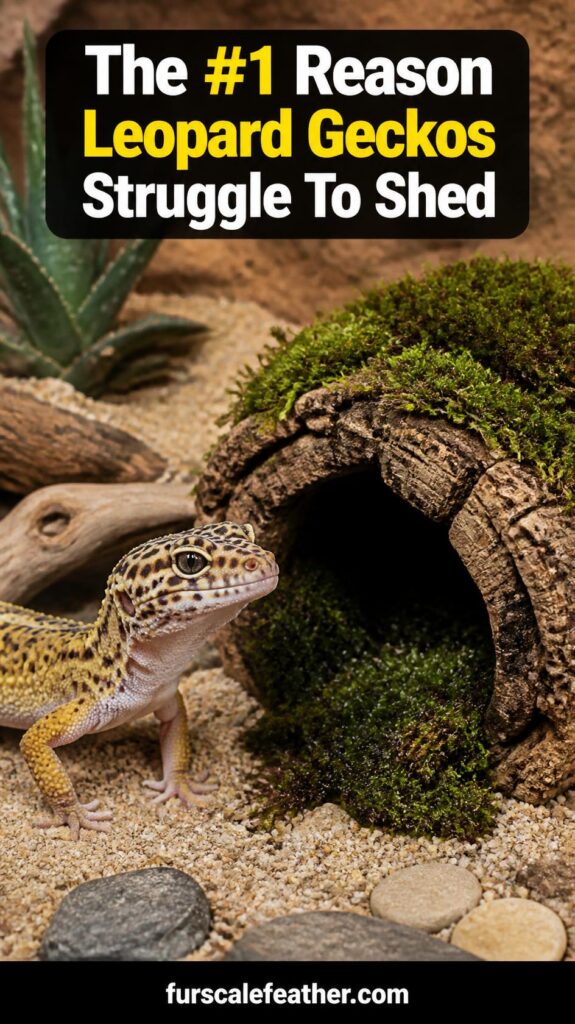
The most common reason a leopard gecko struggles to shed is humidity that’s too low in the areas where shedding actually needs to happen. Geckos don’t shed in a dry hide the way they might bask on a dry basking rock. They need a specific humid microclimate, usually inside a dedicated humid hide, to soften old skin so it releases cleanly. When that hide is missing, too dry, or the gecko isn’t using it, skin gets stuck instead of coming off in one piece.
Dehydration, poor diet, age, illness, and even the wrong substrate can all contribute, but humidity is the first thing to check before anything else.
Signs Your Gecko Is Having a Shedding Problem
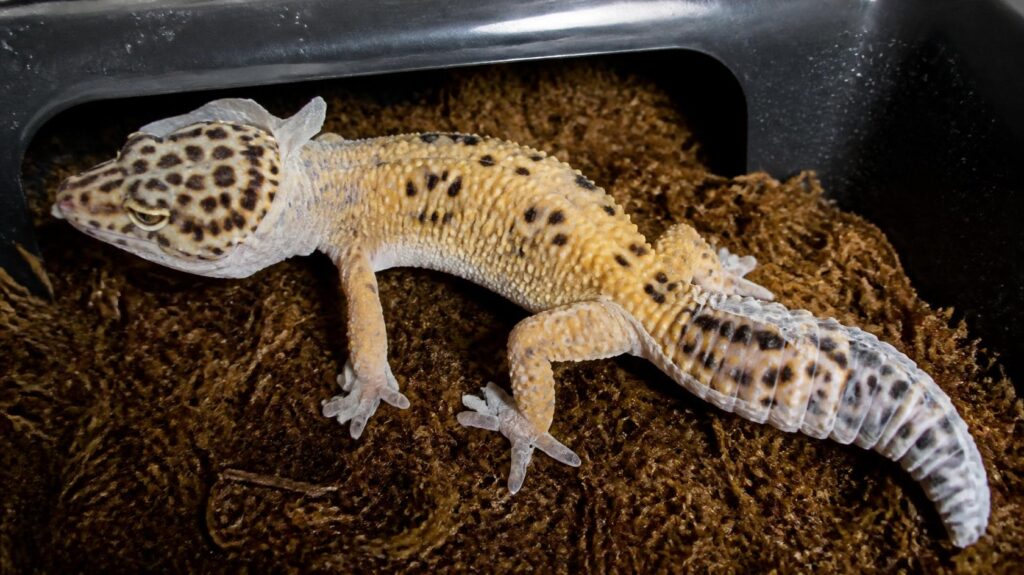
Retained shed (skin that doesn’t fully come off) is easy to miss until it becomes a real problem. Watch for:
- Dull, grayish, or patchy skin color that lingers more than a day or two past a normal shed cycle
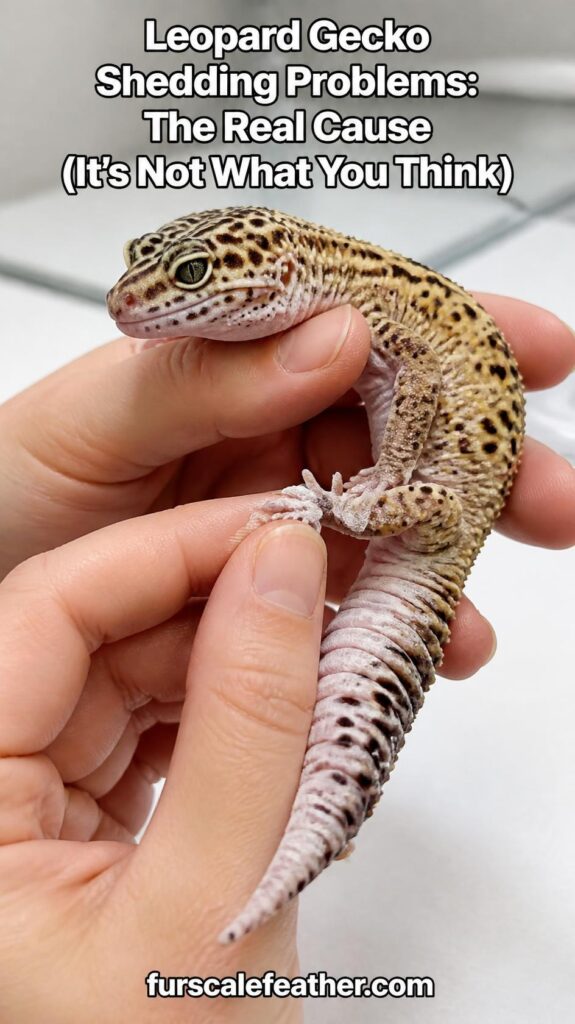
- Visible flakes or rings of old skin stuck around the toes, tail tip, or eye rims
- A gecko that seems to be rubbing against rocks or hides more than usual
- Cloudy or crusty-looking eyes, which can signal stuck eye caps
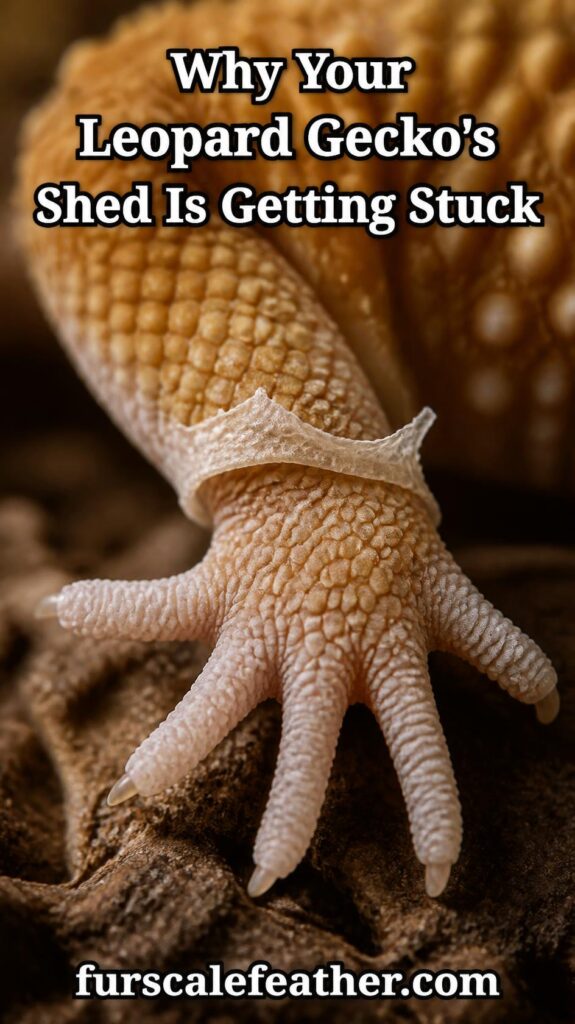
- Swelling or discoloration at the toe tips, which can mean circulation is being cut off by a tight ring of old skin
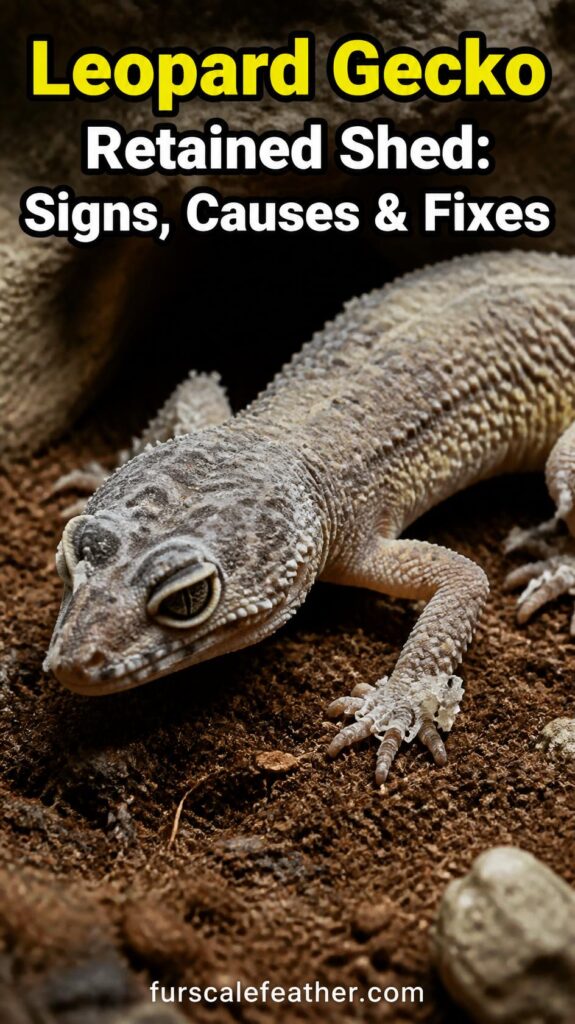
Why Toes and Tail Tips Matter Most
The toes and tail are the areas most likely to suffer lasting damage from a bad shed. Skin left wrapped around a toe can tighten like a rubber band as it dries, cutting off blood flow. Left unaddressed, this has caused geckos to lose part or all of a toe. A rescue foster who has cared for reptiles surrendered to her local shelter told me that in one intake batch of six leopard geckos kept in overly dry enclosures, three arrived with retained shed on their toes, and one had already lost the very tip of a toe before coming into her care. That’s the kind of outcome that’s almost always preventable with the right humidity setup.
Common Causes Behind Shedding Problems
Low humidity. Leopard geckos come from arid regions, but they still need a humid microclimate of roughly 70 to 80 percent inside a dedicated humid hide, even though the rest of the tank stays dry. Without it, skin dries out before it can release.
Dehydration. A gecko that isn’t drinking enough, or one in a tank with no accessible water dish, will have a harder time shedding regardless of hide humidity.
Wrong substrate. Loose substrates that don’t hold any moisture, paper towel with no humid hide added, or overly dry sand can all leave a gecko without any place to get the moisture it needs.
Nutritional gaps. A diet low in variety or missing calcium and vitamin supplementation can affect skin health over time, making sheds slower or more likely to stick.
Age and life stage. Juveniles shed far more often than adults, sometimes every one to two weeks, so what looks like a stalled shed in a young gecko may just be the start of a new cycle.
Illness or parasites. Chronic shedding problems that don’t improve after fixing humidity and hydration can point to an underlying health issue and are worth a veterinary visit.
How To Help Your Leopard Gecko Shed Properly
- Check the humid hide first. Confirm it’s placed on the warm side of the tank, contains damp (not soaking wet) sphagnum moss or coco fiber, and that your gecko can actually fit inside comfortably.
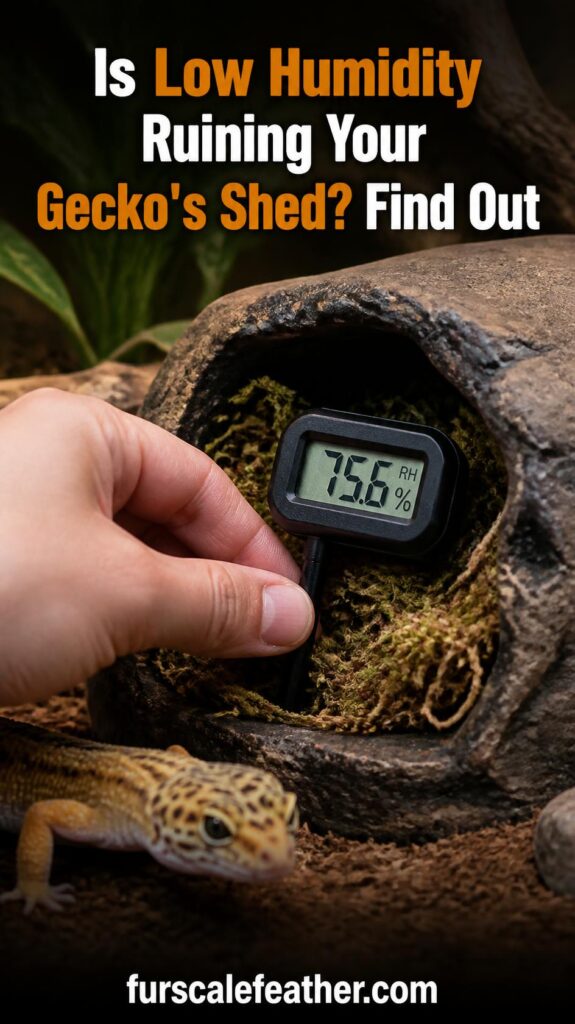
- Measure humidity directly, don’t guess. Use a digital hygrometer inside the humid hide itself, not just the room air. Aim for 70 to 80 percent inside the hide.
- Offer a shallow water dish at all times. Change the water daily and place the dish somewhere your gecko passes regularly.
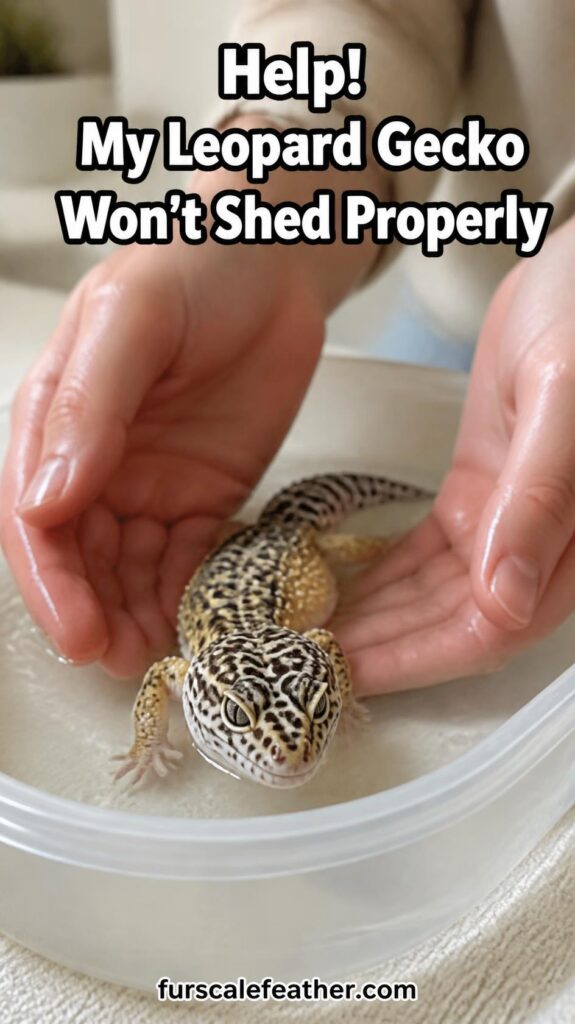
- Do a supervised warm soak if shed is already stuck. Fill a shallow container with lukewarm water no deeper than your gecko’s chin, and let it soak for 10 to 15 minutes, gently supporting it the whole time. This softens stuck skin so it can be gently helped off, never pulled or peeled forcefully.
- Check toes and tail tip after every shed. Look closely for any rings of skin left behind, especially around the toes, and address them within a day or two rather than waiting.
- Review diet and supplementation. Confirm your feeder insects are gut-loaded and that calcium (with D3, depending on your lighting setup) is dusted on according to your vet’s or breeder’s guidance.
- Track shed frequency in a simple log. Note the date of each shed. A pattern of consistently incomplete sheds, even after fixing humidity, is a signal to call a vet.
Products That Actually Help With Shedding Problems
I haven’t personally kept leopard geckos, so I’m not testing these in my own tank. What follows is based on aggregated user reviews, published reptile husbandry guidance, and the rescue foster’s field experience across the geckos in her care. I’ll flag anywhere the evidence is anecdotal versus broadly supported.
Humid hides: Exo Terra’s ceramic humid hide holds moisture noticeably longer than plastic versions according to repeated user reviews, often needing moss changed every 5 to 7 days versus every 2 to 3 days for lighter plastic hides. The plastic Zoo Med Repti Shelter is cheaper and easier to clean but dries out faster in low-humidity rooms.
Hygrometers: A basic stick-on dial gauge is unreliable enough that reptile keepers in forums and care groups consistently recommend skipping it. A digital hygrometer probe placed directly inside the humid hide gives an accurate reading of the microclimate that actually matters, rather than general room humidity.
Shedding aid sprays: Products like Zoo Med’s shedding aid spray are designed to be misted directly onto stuck skin to soften it before a gentle assist. User reviews describe them as helpful for spot-treating a stuck toe or tail tip, but not as a substitute for fixing humidity in the first place.
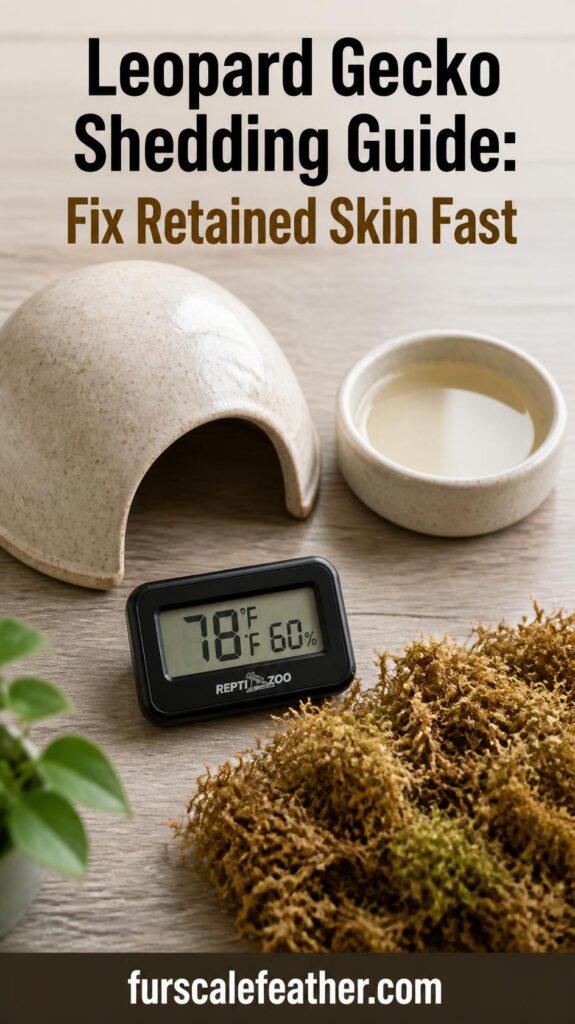
My pick: the ceramic humid hide paired with a digital probe hygrometer, because that combination addresses the root cause (inconsistent, unmeasured humidity) rather than treating stuck shed after it’s already happened.
Pros of the ceramic hide: holds humidity longer, heavier so it’s harder for a gecko to tip over, doubles as a hide for security. Cons: costs more, breaks if dropped, harder to disinfect thoroughly than plastic.
A Mistake Worth Learning From
When I first started sourcing reptile humid hides for my shop, I stocked a popular plastic hide sized for adult bearded dragons and marketed it as suitable for “most small reptiles,” leopard geckos included. Several customers wrote back within weeks saying their geckos weren’t using it at all, and a few reported shedding problems getting worse, not better. The hide was too large for the gecko to feel secure inside, so the geckos avoided it entirely and skipped the humid microclimate altogether. I pulled the product from that recommendation and switched to sizing guidance based on the gecko’s actual body length rather than a generic “small reptile” label. It was a reminder that the right product on paper can still fail if the sizing doesn’t match the animal using it.
When To Call a Vet
Most shedding problems resolve within a few days of fixing humidity and offering a soak. Contact a reptile-experienced veterinarian if you notice any of the following:
- Skin still stuck after a supervised soak and gentle assist
- Swelling, darkening, or a hard ring around a toe or the tail tip
- Cloudy eyes that don’t clear after a proper soak
- Shedding problems that continue across three or more consecutive cycles despite a corrected humid hide
- Any sign of infection, such as discoloration, discharge, or a foul smell near retained skin
This is general information, not a diagnosis. A vet who works with reptiles can check for underlying illness that home fixes won’t solve.
Leopard Gecko Care Basics for Beginners
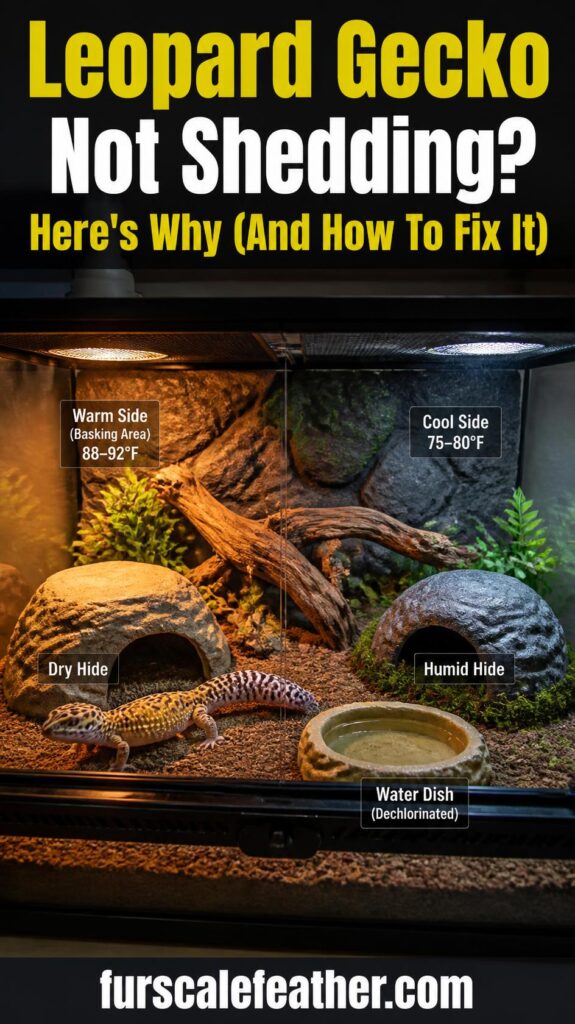
If shedding problems keep coming back, it’s worth stepping back and looking at the whole setup rather than just the humid hide. A solid beginner leopard gecko enclosure includes a 20-gallon long tank minimum for one adult, a warm side around 88 to 92°F on the belly heat source, a cool side in the mid-70s, a dry hide, a humid hide, and a shallow water dish, all monitored with a digital thermometer and hygrometer rather than guesswork. Feeding typically means appropriately sized gut-loaded crickets or dubia roaches a few times a week for adults, dusted with calcium, with juveniles eating more frequently. Getting the heat and humidity gradient right from the start solves a surprising number of shedding, appetite, and behavior issues before they start.
Questions People Usually Ask
How long can a leopard gecko go without shedding before it’s a problem? Adults typically shed about once a month and juveniles every one to two weeks. If it’s been noticeably longer than your gecko’s usual pattern, or skin is visibly stuck rather than simply due, it’s time to check humidity and consider a soak.
Can I peel off stuck shed myself? Only after softening it with a supervised warm soak, and only if it comes away easily. Never pull dry, stuck skin, since this can tear healthy skin underneath or injure toes and the tail tip.
Is it normal for a leopard gecko to eat its own shed? Yes, eating shed skin is normal behavior and likely provides some nutritional value. It doesn’t mean anything is wrong.
What humidity should the main tank be versus the humid hide? The general tank can stay relatively dry, around 30 to 40 percent, which matches a leopard gecko’s natural arid habitat. The humid hide is the exception, kept at 70 to 80 percent, and that’s where shedding actually happens.
Could low shedding frequency mean my gecko is sick? It can, especially if humidity and hydration are already correct and the problem continues. Persistent issues after basic fixes are a good reason to check in with a reptile veterinarian rather than waiting it out.
If your gecko’s shed has been stuck for more than a few days, the fastest path forward is a supervised warm soak followed by a real look at your humid hide’s actual measured humidity, not a guess. Fix the microclimate first, track sheds going forward, and treat any toe or tail swelling as urgent rather than something to watch. Most geckos bounce back within one or two corrected shed cycles once the humidity is right, and a vet visit is the right next step if it doesn’t.