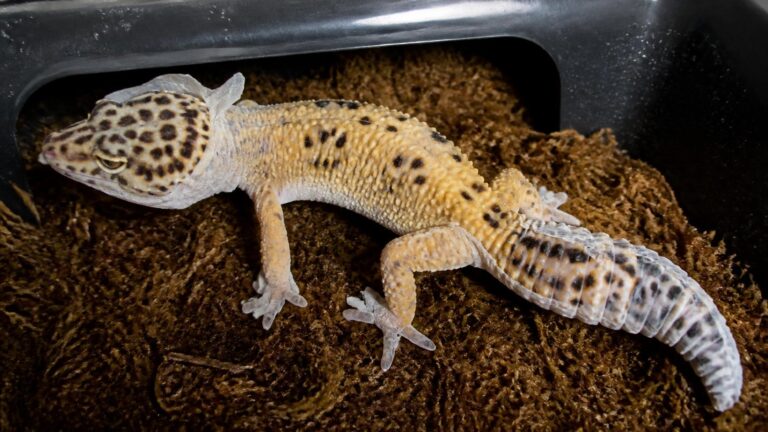

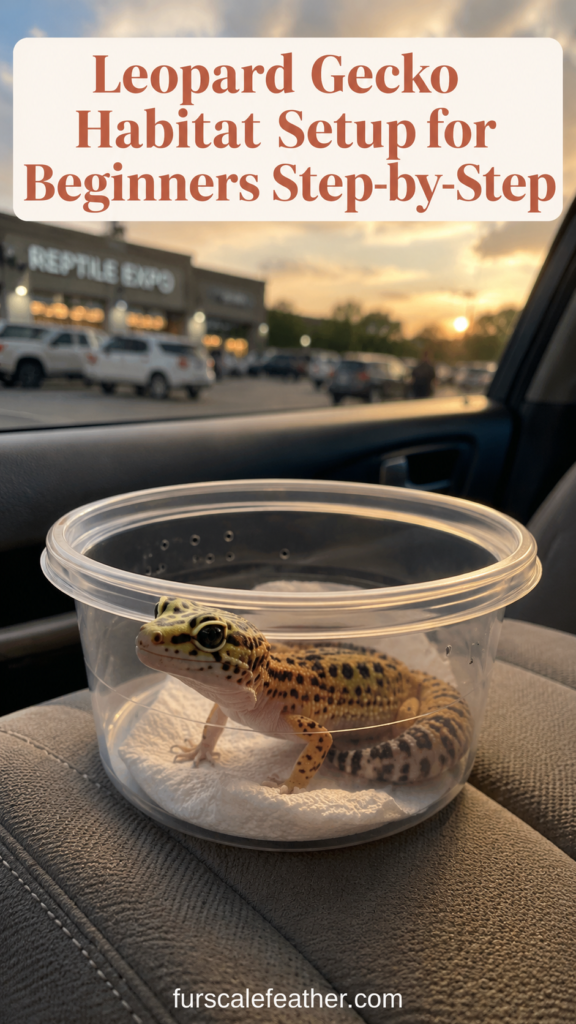
You’ve got the leopard gecko in a small deli cup on the passenger seat, the reptile expo is closing behind you, and there’s no tank waiting at home yet. This happens more often than reptile shops like to admit, and it’s exactly why a rushed leopard gecko tank setup causes most of the health problems new owners run into in the first few weeks. Get the setup right before the gecko arrives, or fix it fast once you’re home, and you’ll skip almost every common beginner mistake on this list.
Leopard geckos are one of the more forgiving reptiles for a first-time owner, but forgiving doesn’t mean low-maintenance. They still need specific temperatures, the right hides, and a tank that’s sized and equipped correctly from day one. Below is the full setup process, in order, along with the gear that actually works and a few mistakes worth avoiding.
Leopard Gecko Tank Setup: The Essentials You Need First
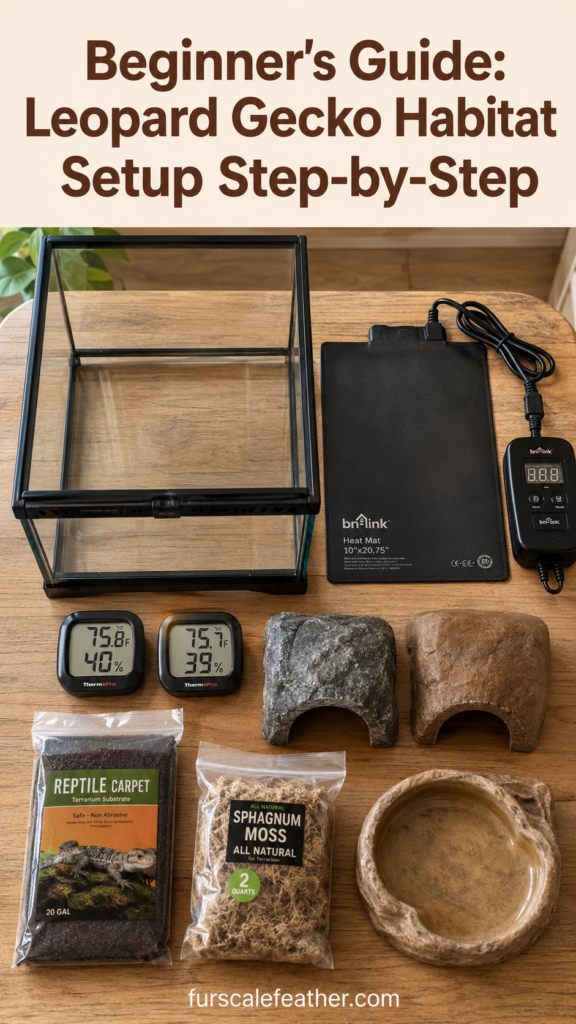
Before the gecko comes home, gather everything on this list. Trying to assemble a habitat with a gecko already pacing around a temporary container leads to rushed decisions and skipped steps.
- A 20-gallon long tank (30 x 12 x 12 inches) for one adult gecko. Taller tanks waste floor space geckos actually use.
- An under-tank heater (UTH) sized for roughly one-third of the tank floor
- A dimming or pulse-proportional thermostat to control the heater
- Two digital thermometer/hygrometer combo units, one for the warm side and one for the cool side
- Two hides at minimum: one on the warm side, one on the cool side
- A separate humid hide with damp sphagnum moss for shedding
- A shallow water dish
- Substrate appropriate for the gecko’s age (more on this below)
- A low-output UVB bulb and fixture
That list looks long, but most of it costs less than a single vet visit for a heat-related injury, which is the most common emergency new owners deal with.
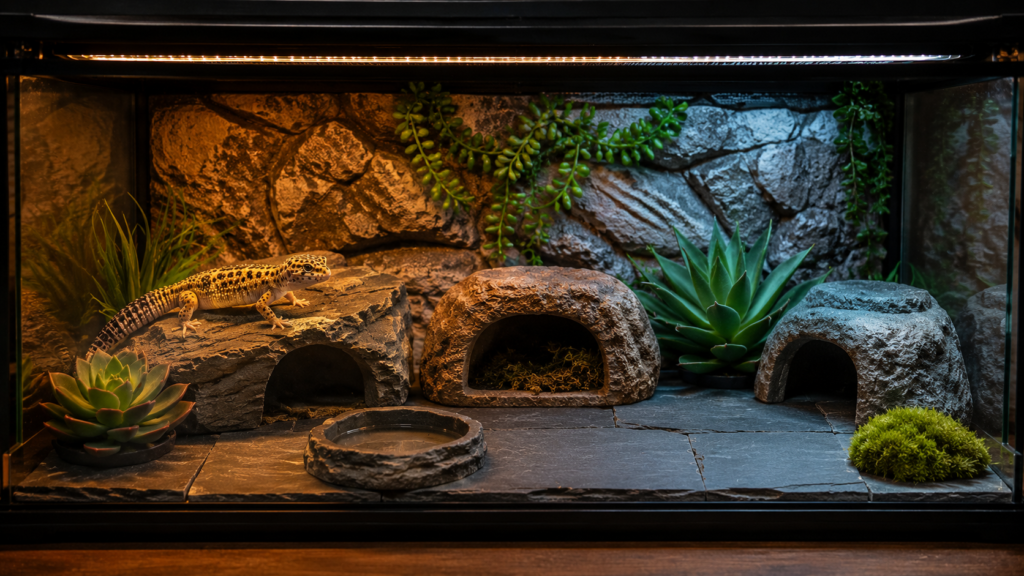
How to Set Up a Leopard Gecko Tank Step by Step
- Step 1: Place the tank away from windows and vents. Direct sunlight and drafts both throw off your temperature readings and make the thermostat work against you.
- Step 2: Add substrate first. For juveniles under six months, use paper towels or reptile carpet only, since loose substrate carries a real impaction risk in young geckos. For adults over a year old with a healthy feeding history, a fine, calcium-based sand product can be used, but many experienced keepers stick with slate tile or lino flooring instead because it’s easier to spot-clean and carries no impaction risk at all.
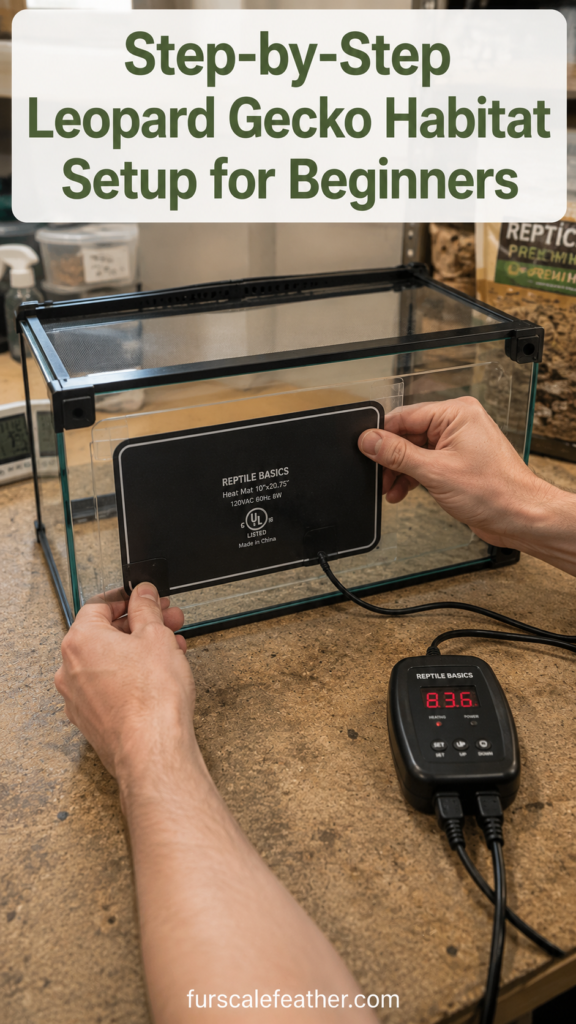
- Step 3: Attach the under-tank heater to the outside bottom of the tank, positioned under about one-third of the floor space, then plug it into the thermostat before plugging the thermostat into the wall.
- Step 4: Set the thermostat probe on the substrate surface directly above the heater, taped in place so it doesn’t shift.
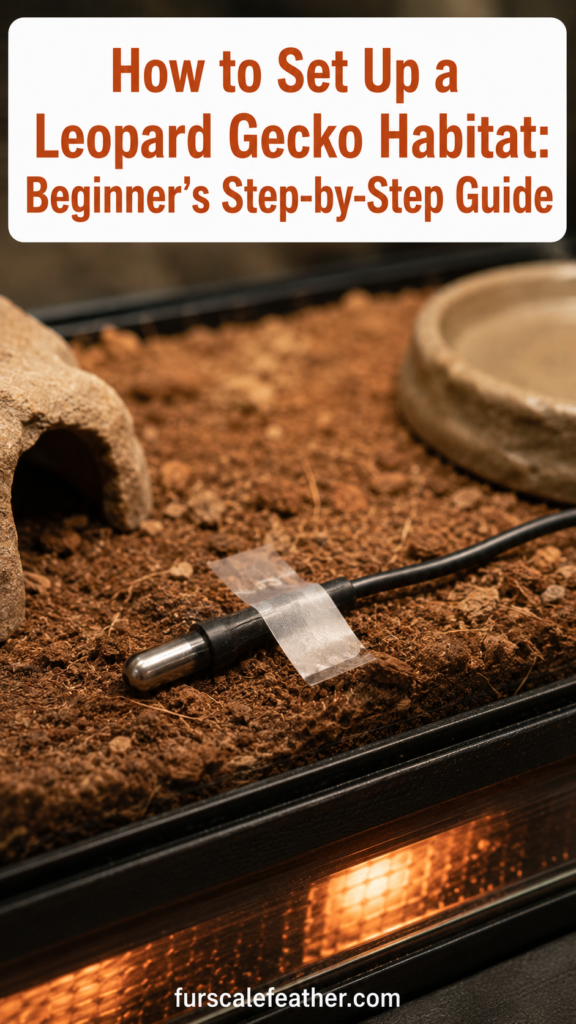
- Step 5: Add the warm-side hide directly over the heated area and the cool-side hide on the opposite end of the tank.
- Step 6: Add the humid hide on the warm side, filled with sphagnum moss kept consistently damp, not soaking wet.
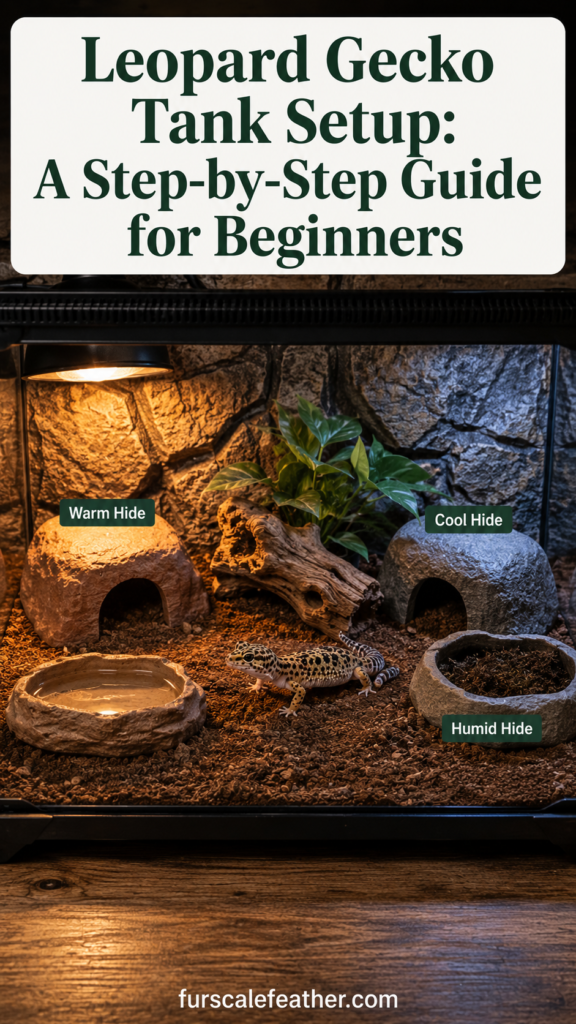
- Step 7: Install the UVB fixture across the top of the tank, running the full length if possible, and set it on a timer for 10 to 12 hours a day.
- Step 8: Add the water dish on the cool side and check that it’s shallow enough that a gecko can’t accidentally get trapped in it.
- Step 9: Run the empty tank for 24 to 48 hours before adding the gecko, checking both thermometers twice a day to confirm the warm side and cool side hold steady.
Leopard Gecko Temperature and Humidity Ranges That Actually Work
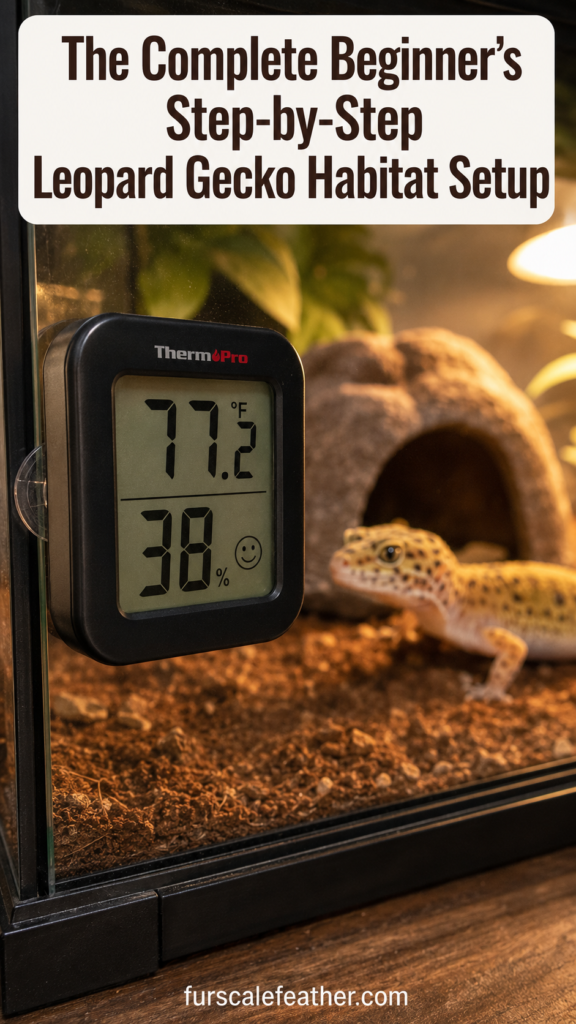
Here are the numbers that matter, measured at substrate level, not just air temperature from a dial thermometer stuck to the glass.
- Warm side floor temperature: 88 to 92°F
- Cool side floor temperature: 75 to 80°F
- Ambient air temperature: 75 to 82°F during the day, allowed to drop into the low 70s at night
- Humid hide humidity: 70 to 80 percent
- General tank humidity: 30 to 40 percent
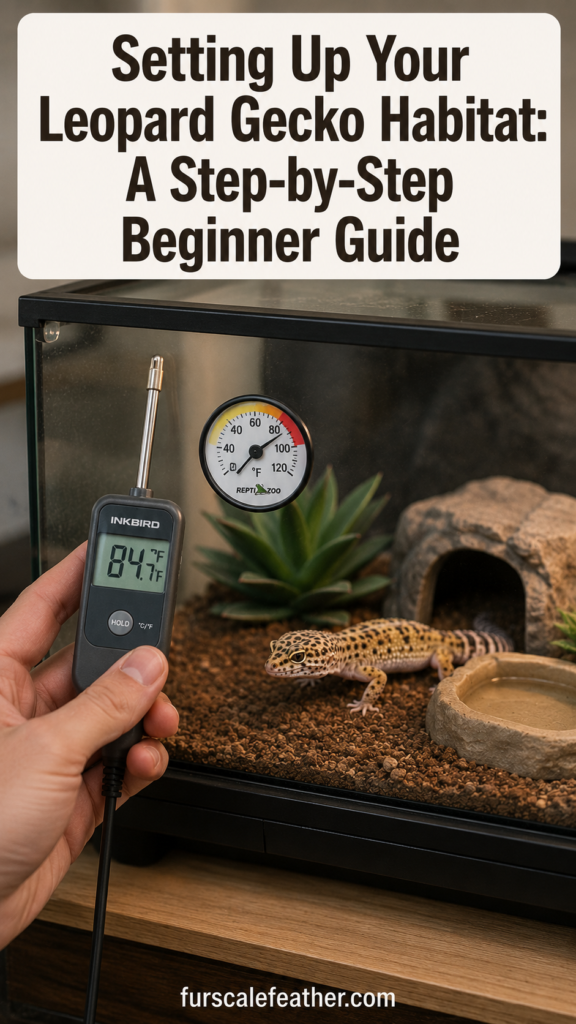
A reptile rescue I spoke with while researching this guide runs a standard test on every incoming leopard gecko tank donated to them: they place a probe thermometer directly on the substrate above the heater for a full 24 hours before clearing the enclosure for use. In three separate donated setups last year, the stick-on dial thermometers included with starter kits read 6 to 11°F lower than the actual substrate temperature. That gap is large enough to either underheat a gecko or, worse, mask a heater running hot enough to cause thermal burns. Their rule now is simple: never trust a glass-mounted dial thermometer alone, always confirm with a digital probe at substrate level.
Leopard Gecko Lighting: Do They Need UVB?
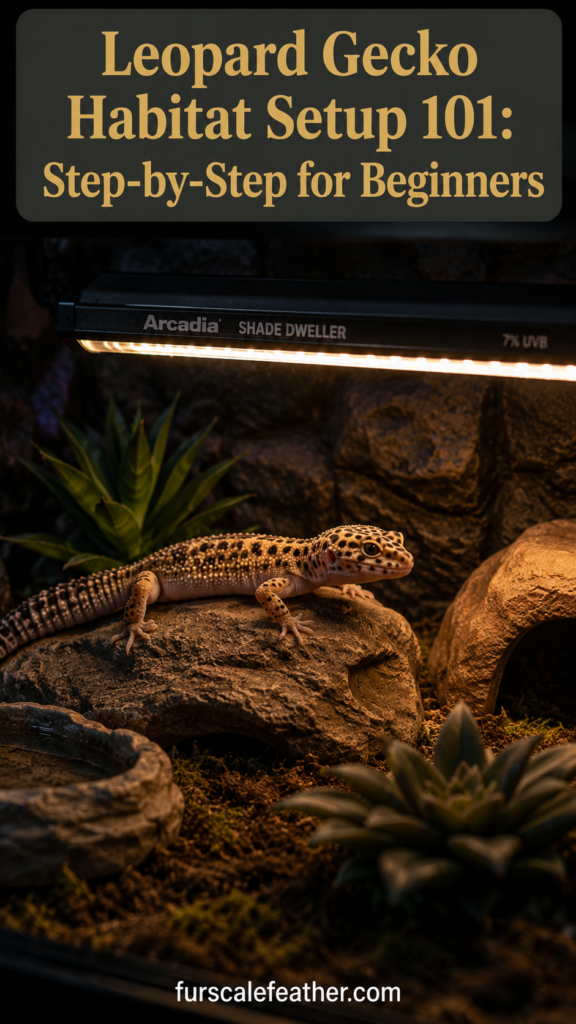
Leopard geckos are crepuscular, meaning they’re most active at dawn and dusk, and for years the advice was that they didn’t need UVB at all. That guidance has shifted. Wild leopard geckos do get low-level UVB exposure during twilight hours, and low-output UVB (around 5 to 6 percent UVB, or a low-strength linear fixture positioned with adequate distance from baking under it) has been linked to better calcium metabolism and stronger bone density in captive geckos. It’s not mandatory for survival the way it is for a bearded dragon, but most reptile veterinarians now recommend including it as good practice rather than skipping it.
Best Products for a Leopard Gecko Enclosure
I have not personally tested every item below in my own home. These picks are based on manufacturer specs, aggregated user reviews, and feedback from reptile shop staff and keepers I talked to while putting this guide together.
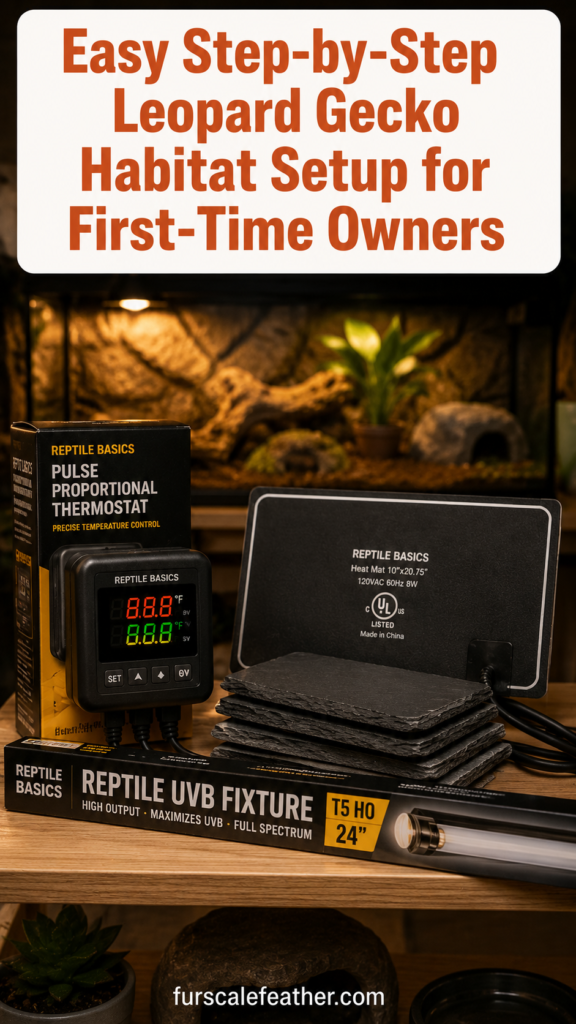
Under-tank heaters: Adhesive UTH pads from established reptile brands consistently outperform generic heat mats in user reviews, mainly because of more even heat distribution across the pad surface. Pros: reliable, inexpensive, low fire risk when paired with a thermostat. Cons: unusable safely without a thermostat, since an uncontrolled UTH can exceed 100°F and cause burns.
Thermostats: Pulse-proportional thermostats are the clear winner over basic on/off models. On/off thermostats let the temperature swing several degrees above and below the target before switching, while pulse-proportional models hold within about a degree. For a single-gecko setup, this is the one piece of gear worth spending more on.
Substrate: Reptile carpet wins for juveniles on cost and safety. For adults, slate tile is the standout choice among experienced keepers in online reptile communities, since it holds heat evenly, wipes clean in seconds, and removes impaction risk entirely, something loose sand products can’t claim no matter how finely milled they are.
UVB fixtures: Linear T5 UVB fixtures at 5 percent output are widely recommended over compact coil UVB bulbs, which several user-reported lab tests have shown can produce uneven UV output and, in rare cases, eye irritation in reptiles kept too close to the bulb.
Leopard Gecko Diet and Feeding Basics for New Owners
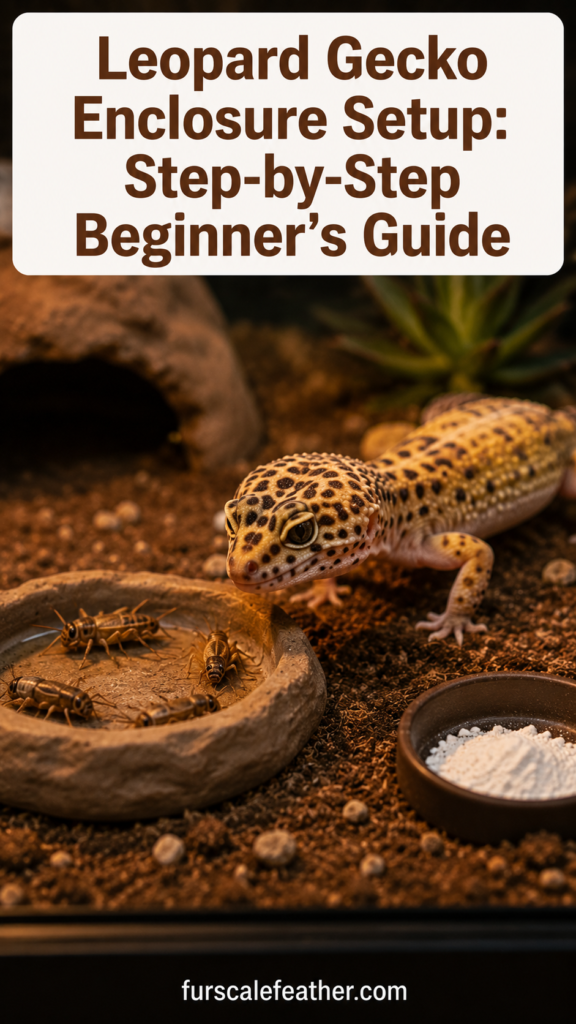
Feeding is simpler than the enclosure setup, but a few numbers matter. Juveniles under six months eat appropriately sized crickets or dubia roaches daily, dusted with calcium powder at every feeding. Adults eat every other day, with 5 to 8 appropriately sized insects per feeding, and calcium dusting can drop to three times a week once the gecko is past a year old. A shallow dish of calcium powder left in the tank at all times lets the gecko self-regulate between dustings. Skip mealworms as a staple diet, since their harder exoskeleton is more difficult to digest and offers less nutritional value per gram than crickets or roaches.
Common First-Time Leopard Gecko Owner Mistakes
A reader wrote in last year describing a gecko that stopped eating for close to two weeks and seemed sluggish even on the warm side of the tank. After a few questions back and forth, it turned out the tank’s only thermometer was the adhesive dial stuck to the outside glass, reading a comfortable 88°F. A digital probe check on the actual substrate showed the true warm-side temperature was closer to 79°F, too cold for a healthy appetite. Once the thermostat setting was adjusted and confirmed with the probe, the gecko was eating normally again within four days. That gap between glass-read and substrate-read temperature is the single most common issue behind “my gecko won’t eat” questions in beginner reptile forums, and it’s worth checking before assuming anything more serious is going on. If a gecko goes off food for more than two weeks, or shows weight loss, lethargy, or a swollen tail base, that’s a reason to see an exotics veterinarian rather than troubleshoot further at home.
Questions People Usually Ask
Do leopard geckos need a heat lamp or just an under-tank heater? An under-tank heater on a thermostat is the primary heat source most keepers use, since it mimics the ground warmth geckos seek in the wild. A heat lamp isn’t required for warmth, but a low-output UVB fixture is increasingly recommended for overall health.
What size tank does a single adult leopard gecko need? A 20-gallon long tank (30 x 12 x 12 inches) is the standard minimum for one adult. Bigger is fine as long as temperature gradients and hides are set up correctly across the extra space.
Can I use sand for a baby leopard gecko? No. Loose substrate of any kind carries impaction risk for juveniles under six months. Paper towels, reptile carpet, or tile are the safer choices until the gecko is older and has an established feeding history.
How often should I mist a leopard gecko tank? General tank humidity should stay around 30 to 40 percent, so daily misting of the whole tank usually isn’t necessary. Focus misting on the humid hide instead, keeping the sphagnum moss damp, especially in the days before a shed.
Why is my leopard gecko not eating? Temperature is the first thing to check, specifically substrate-level warm-side temperature rather than a glass-mounted dial reading. Stress from a recent move, shedding, or brumation triggered by seasonal light changes can also cause a temporary drop in appetite. If it lasts more than two weeks or comes with other symptoms, consult a veterinarian.
Getting a leopard gecko tank setup right the first time comes down to a handful of specific numbers: 88 to 92°F on the warm side, 70 to 80 percent humidity in the humid hide, and substrate matched to the gecko’s age. Confirm every temperature with a digital probe at substrate level rather than trusting a glass-mounted dial, and let the tank run for a full day or two before the gecko moves in. From there, feeding and maintenance are routine. If you’re still deciding on specific gear, start with the thermostat and substrate choices above, since those are the two most common places beginner setups go wrong.
Disclosures: This article does not contain paid or sponsored product placements. Product recommendations reflect manufacturer specifications and aggregated user and keeper feedback rather than firsthand long-term testing by the author. Readers with a leopard gecko showing signs of illness should consult a licensed exotics veterinarian rather than relying on this guide for diagnosis.