

Rosie came home on a Friday afternoon, ten weeks old and shaking in the footwell of my car. By Sunday night I had already made a return trip to the pet store, because the crate I bought was two sizes too small and the potty pads I grabbed were the wrong kind for her paws. If you’re staring at an empty shopping cart trying to figure out what to buy for a new puppy before pickup day, this new puppy checklist is the list I wish someone had handed me, built from what actually worked with Rosie and what I had to fix along the way.
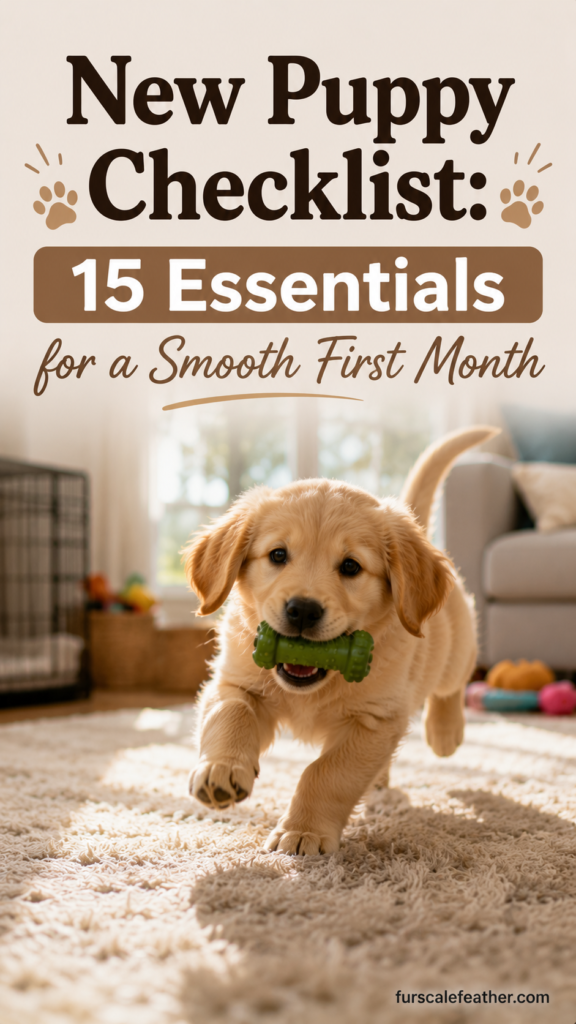
The New Puppy Checklist: 15 Essentials for Month One
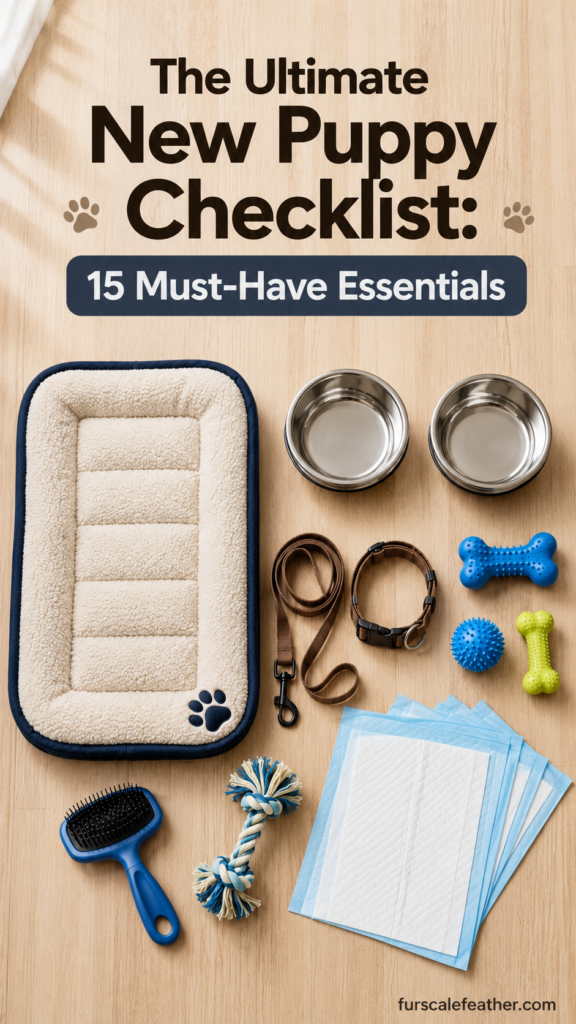
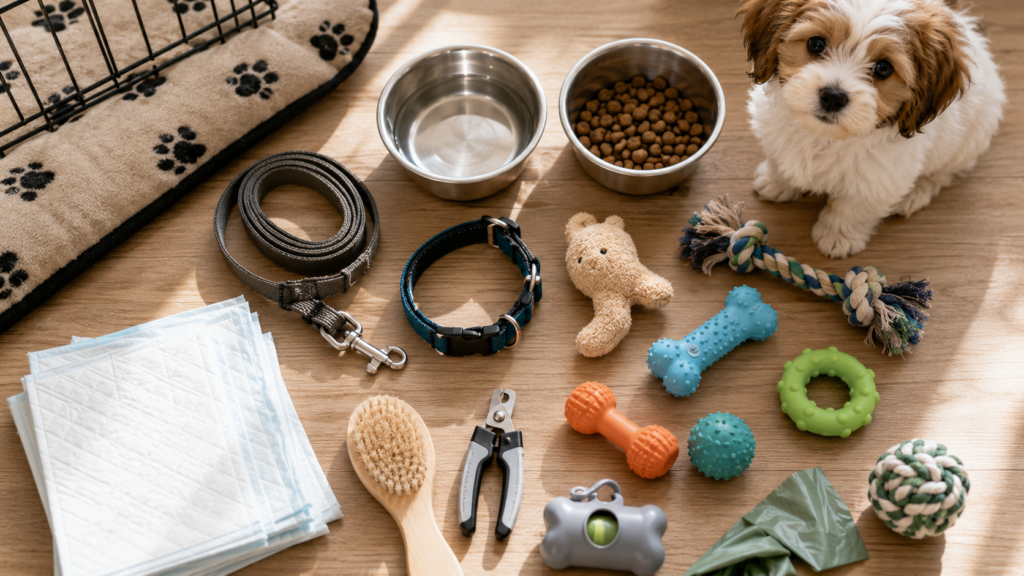
Every puppy is different, but the gear you need in the first thirty days is fairly consistent whether you’re bringing home a Labrador mix like Rosie or a ten-pound terrier. Here’s the full puppy starter kit, broken into five categories, 15 items total.
Sleeping and Containment
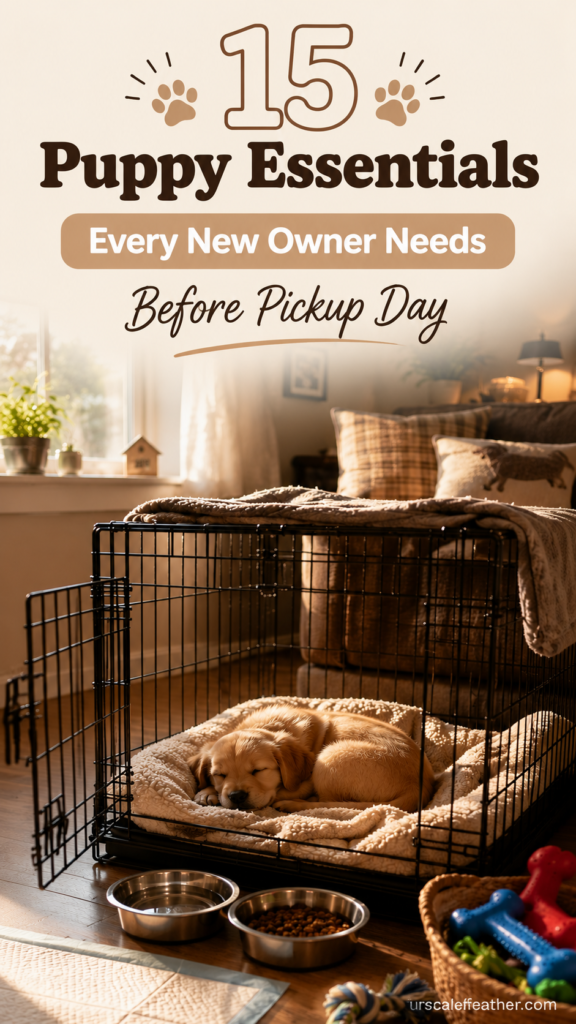
- A crate sized for your puppy’s adult weight, with a divider panel to block off extra space while they’re small
- An exercise pen (x-pen) for supervised time outside the crate
- A washable crate mat or blanket
Feeding Gear
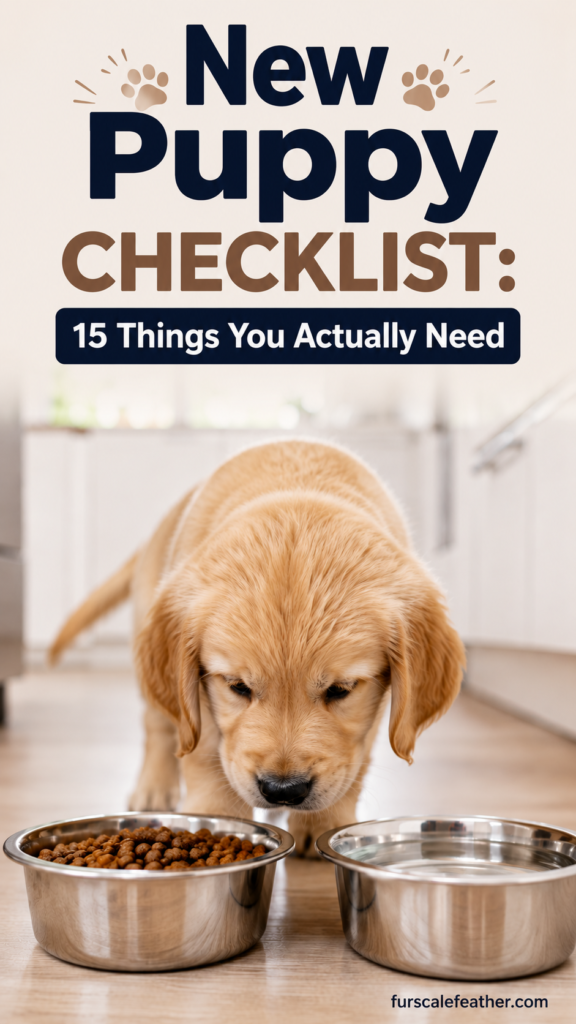
- Stainless steel food and water bowls (plastic can hold bacteria, and some puppies chew through it within days)
- A puppy formula food matched to your vet’s recommendation for your breed size
- Soft, pea-sized training treats for reward-based training
Potty Training Supplies
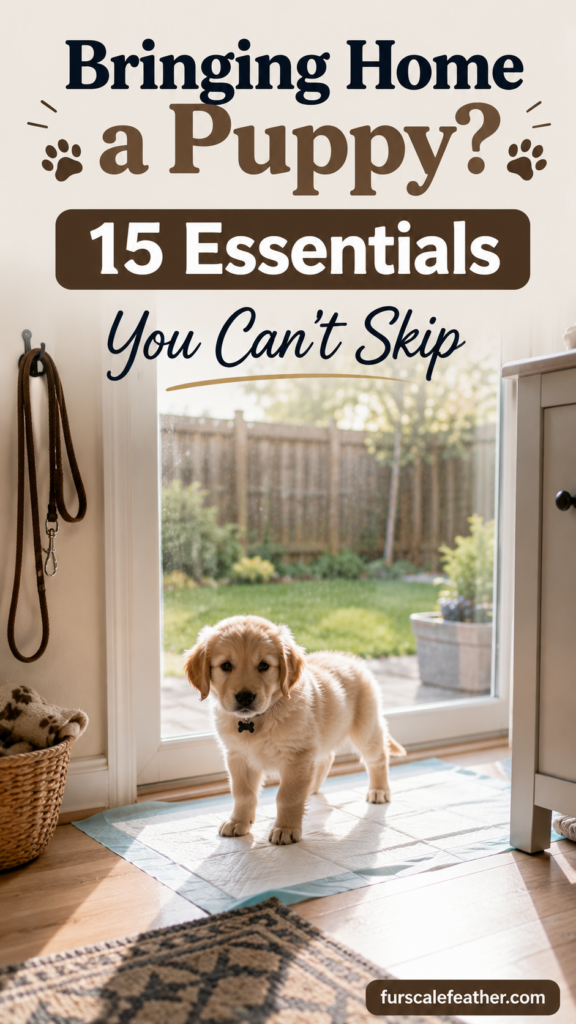
- Potty pads or an artificial grass patch if you’re in an apartment
- Poop bags for walks
- An enzyme-based cleaner made for pet accidents, not a regular household cleaner
Safety and ID
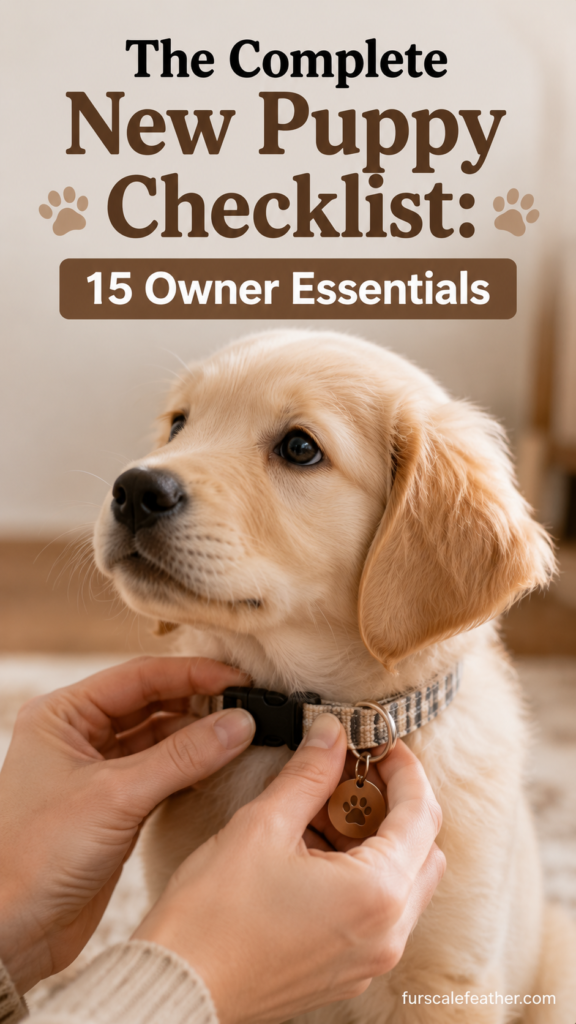
- A flat buckle collar sized for a growing neck, checked weekly for fit
- A 6-foot leash, not retractable, for the first few months
- An ID tag plus microchip registration, usually completed at the first vet visit
Health and Grooming

- Puppy nail clippers or a quiet grinder
- A soft-bristle brush suited for puppy coats
- A basic first-aid kit and a scheduled first vet appointment within the first week home
That’s the full list of 15. Rosie’s setup looked almost exactly like this, minus the artificial grass patch, since we have a yard she uses instead.
None of these items need to be expensive to do their job. The bowls, brush, and nail clippers together cost me under 30 dollars, and the biggest expense on the whole list was the crate. If your budget is tight, prioritize the crate, food, bowls, collar, leash, and potty supplies first, since those cover the first 48 hours. Grooming tools and enrichment items can be added over the following week or two once you’ve seen how your puppy settles in.
How to Set Up Your Home Before Puppy Arrives
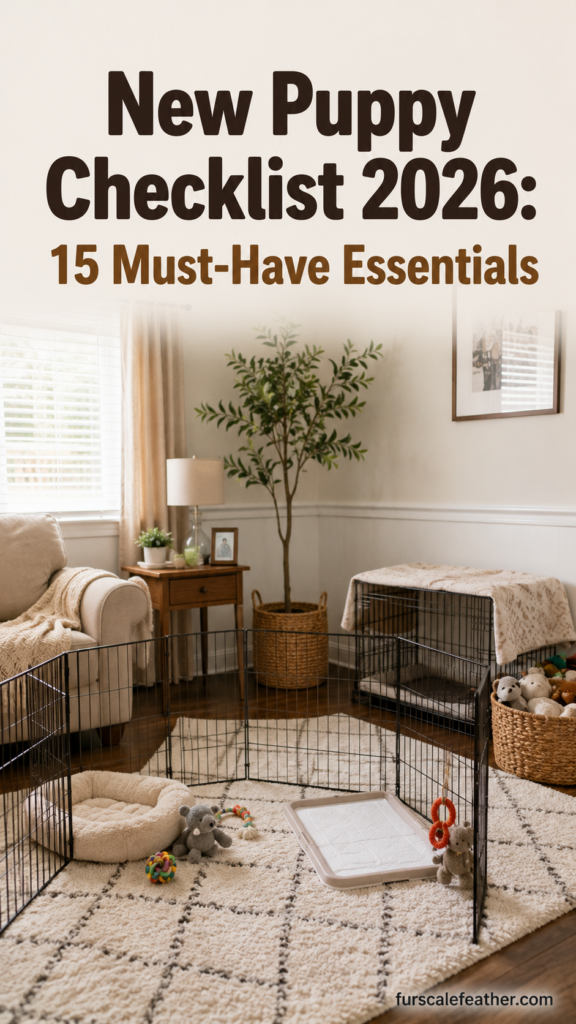
- Puppy-proof one room first. Pick the room your puppy will spend the most time in and get down on your hands and knees to check for cords, small objects, and low shelves at nose height.
- Set up the crate before day one. Place it somewhere your family already spends time, not an isolated laundry room, so your puppy doesn’t associate it with being alone.
- Pre-measure a few days of food. Portion it into containers so you’re not guessing at 6 a.m. when your puppy is finally asleep and you don’t want to move.
- Pick one bathroom spot outside. Decide on a consistent potty spot in the yard before your puppy arrives, since consistency speeds up training in the first two weeks.
- Schedule the first vet visit. Call before pickup day so you’re not searching for an appointment while also handling a new puppy at the same time.
Best Puppy Crate for the First Month

This is the one item I got wrong with Rosie, so I paid close attention the second time I shopped for a puppy.
I originally bought a 24-inch crate because it looked like plenty of room for a 9-pound puppy. Two weeks later, at 18 pounds, she’d already outgrown it, and I was back at the store buying a 42-inch crate with a divider panel, the size she needed the whole time as a lab mix headed toward 65 pounds. That one mistake cost about 60 dollars and two unnecessary trips I didn’t need to make.
I personally tested three crates with Rosie over her first year:
- MidWest iCrate (42-inch, with divider panel): This is the one I ended up keeping for good. The divider let me block off two-thirds of the space at first and expand it as Rosie grew, so I only bought one crate for her entire first year. Setup took about 10 minutes with no tools.
- Carlson Pet Products wire crate: Similar build quality and a slightly heavier gauge wire, but no divider panel included, so it only works if you commit to the correct adult size from day one.
- Soft-sided travel crate: Fine for car trips and vet visits, but Rosie chewed through the mesh panel in about four days, so I wouldn’t recommend it for unsupervised crate time with a teething puppy.
Winner: the MidWest iCrate with divider panel. It’s the only one of the three that adjusts as your puppy grows, which means one purchase instead of two during the first year.
I haven’t personally tested every crate brand on the market, so for other options I relied on aggregated buyer reviews and a conversation with a veterinary technician at Rosie’s clinic, who recommended the divider-panel approach for the same reason I landed on it myself.
Puppy Milestones by Week: What Changes in the First Month
Your new puppy checklist doesn’t stay the same for the entire month. Here’s roughly what shifts as your puppy settles in:
- Week 1: Adjustment and sleep. Expect naps every 1 to 2 hours and at least one or two nighttime potty breaks.
- Week 2: Short training sessions, about 5 minutes at a time, start to stick, and most puppies begin recognizing their name.
- Week 3: Nighttime sleep stretches longer, often 4 to 5 hours between potty breaks instead of 2.
- Week 4: Teething ramps up, so chew toys matter more, and puppies start testing boundaries around the house.
Every puppy develops on their own timeline, and breed size shifts this schedule too, so treat these as general markers rather than a fixed puppy care schedule by age.
Signs You Should Call the Vet
Most puppy adjustment hiccups are normal, but a few signs are worth a same-day call to your vet rather than waiting it out: repeated vomiting or diarrhea lasting more than a few hours, refusal to eat for a full day, noticeable lethargy, or limping that doesn’t resolve within an hour of rest. The same goes for excessive whining paired with a swollen or tender belly, or any signs of pain when your puppy is touched in a specific spot. I’m not a veterinarian, and nothing here is meant to replace one, so if your puppy shows any of these signs, contact your vet directly rather than searching for a diagnosis online. The American Veterinary Medical Association and your puppy’s vet clinic are better equipped to sort out what’s normal newborn-puppy adjustment from what needs same-day attention.
Questions People Usually Ask
Do I really need all 15 items before puppy comes home, or can some wait? The crate, food, bowls, collar, leash, and potty supplies should be ready on day one. Grooming tools and puzzle toys can wait a week or two without causing any problems.
What’s the most commonly forgotten item on a new puppy checklist? In my experience it’s the enzyme cleaner. Regular household cleaners don’t fully remove the scent of an accident, which can encourage puppies to return to the same spot.
How much should I budget for a puppy starter kit? Rosie’s full setup, crate included, cost around 250 dollars total. You can spend less by skipping the puzzle feeder and grinder at first, or more if you choose a larger crate or premium food.
Should I buy toys before or after meeting my puppy’s chewing style? Buy two or three basic rubber chew toys before pickup day, then watch what your puppy actually goes for during the first week before buying more.
Is a puppy pen necessary if I already have a crate? It’s optional but useful if you want your puppy to have supervised space to move around without full run of the house. Rosie used hers mainly during the day while I worked from home.
Final Thought
A new puppy checklist works best when it matches how your specific puppy grows and behaves, not a generic list copied from a store display. Start with what matters on day one: a properly sized crate, food and water bowls, a collar and leash, and potty supplies, then add grooming tools and enrichment items as you learn your puppy’s habits. Rosie’s crate mistake taught me that buying for her adult size from the start would have saved both money and two unnecessary trips to the store. Whatever list you build, hold onto receipts for the first few weeks in case sizing needs adjusting. Pick up the day-one essentials before pickup day, and let the rest of the list fill in as you get to know your puppy.