
A woman walked into my shop last month holding a small travel carrier with a brand new parakeet inside, and she had exactly one question: where do I even start? She had picked up the bird from a breeder an hour earlier and had nothing waiting for it at home, not even a cage. That kind of last-minute scramble happens more often than you would guess, and it is exactly why a solid bird cage setup needs to happen before your new pet ever comes through the door. Get the basics right on day one and you save yourself weeks of stress, and your bird a lot of unnecessary anxiety.
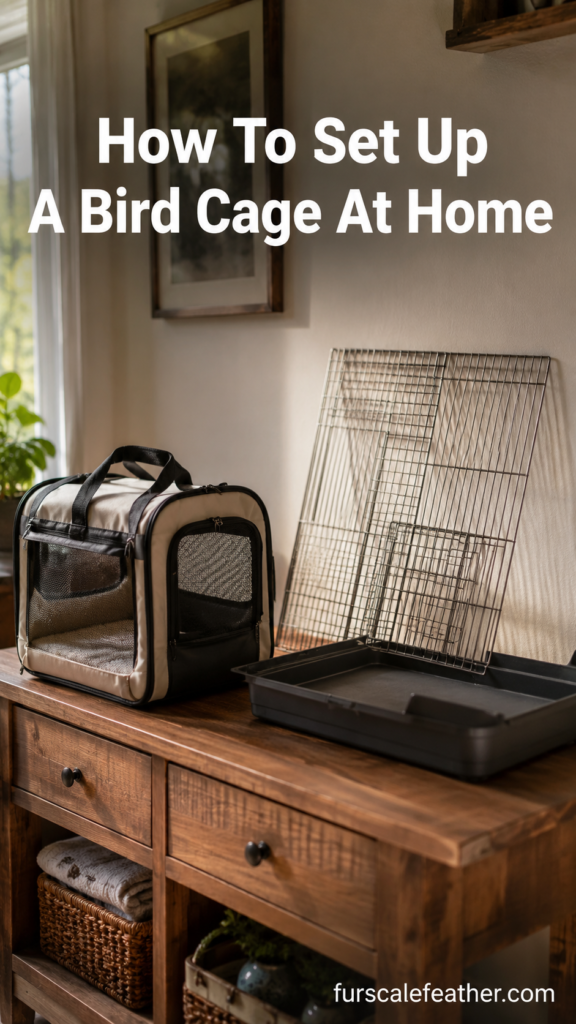
What A Safe Bird Cage Setup Actually Requires
Before you buy anything, you need two numbers: minimum cage size and bar spacing. Both depend entirely on species, and getting either one wrong is the single most common mistake I see in my shop.
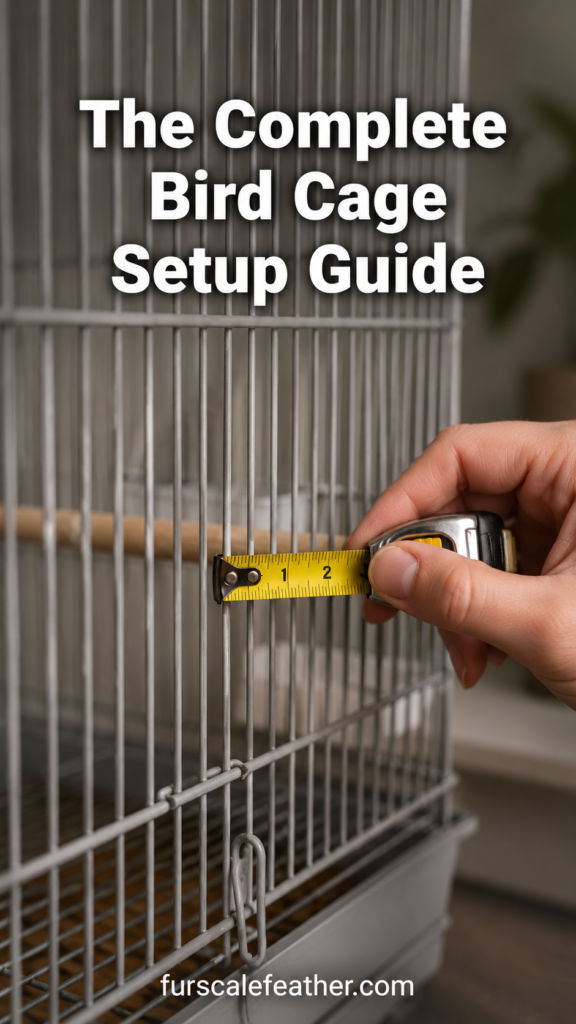
A good rule of thumb from bird care guides is to size the cage at least 1.5 times your bird’s wingspan. A budgie or parakeet needs a minimum footprint of about 18 x 18 x 24 inches for one bird, with 50 percent more floor space for each additional bird. Cockatiels need closer to 20 x 20 x 30 inches. Larger parrots need considerably more, which I cover below.
Bar spacing matters just as much as size, because gaps that are too wide let a bird’s head slip through and get stuck, while gaps that are too narrow make climbing painful and awkward.
- Budgies and parakeets: 3/8 to 1/2 inch
- Cockatiels, conures, and caiques: 1/2 to 3/4 inch
- African greys and amazons: 3/4 inch
- Macaws and large cockatoos: 1 to 1 1/4 inch
If you are unsure which category your bird falls into, a quick call to your vet or breeder will settle it in under a minute, and it is worth that minute.
Step-By-Step Bird Cage Setup
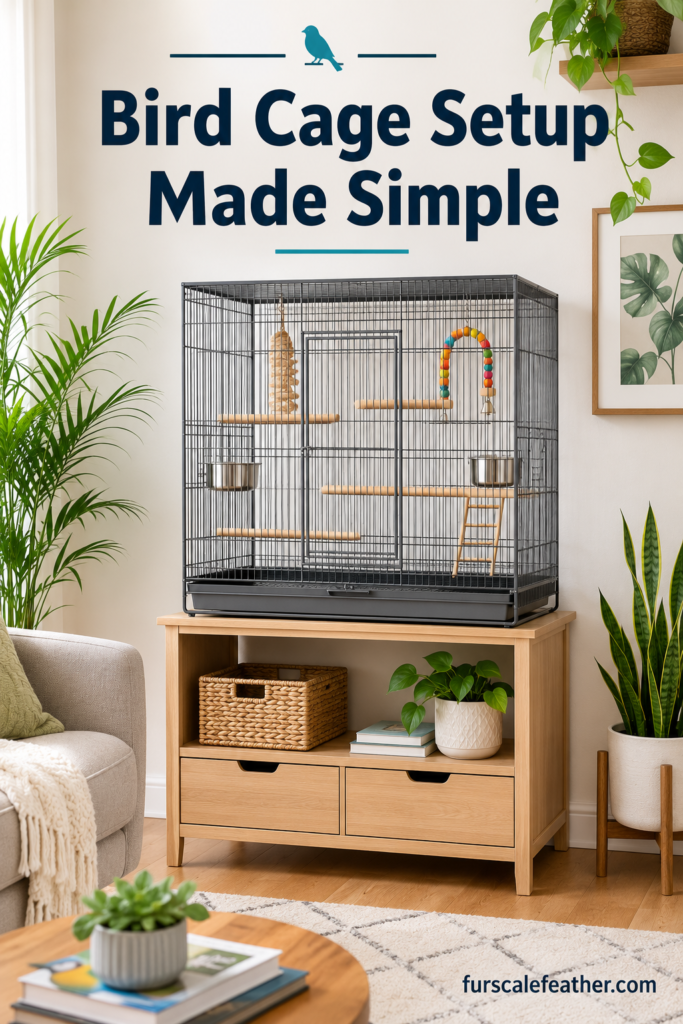
- Choose the right size and bar spacing. Use the numbers above as your floor, not your ceiling. Bigger is almost always better as long as the spacing stays safe for your species.
- Pick the spot before you build anything. Choose a spot against at least one solid wall, at roughly chest or eye height, away from direct sun, drafts, and the kitchen. More on placement below.
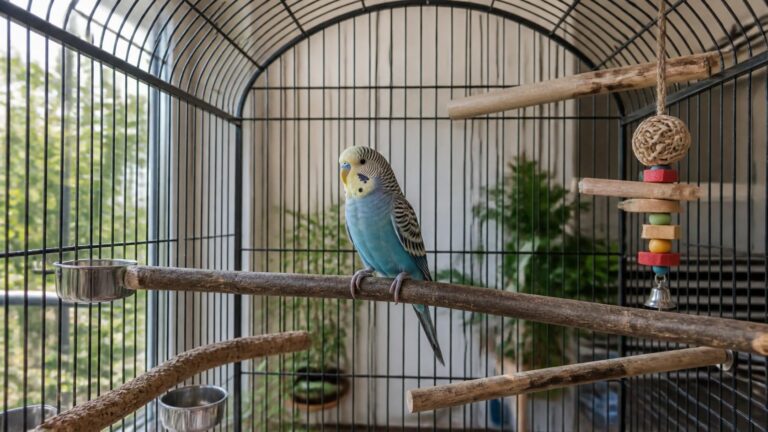
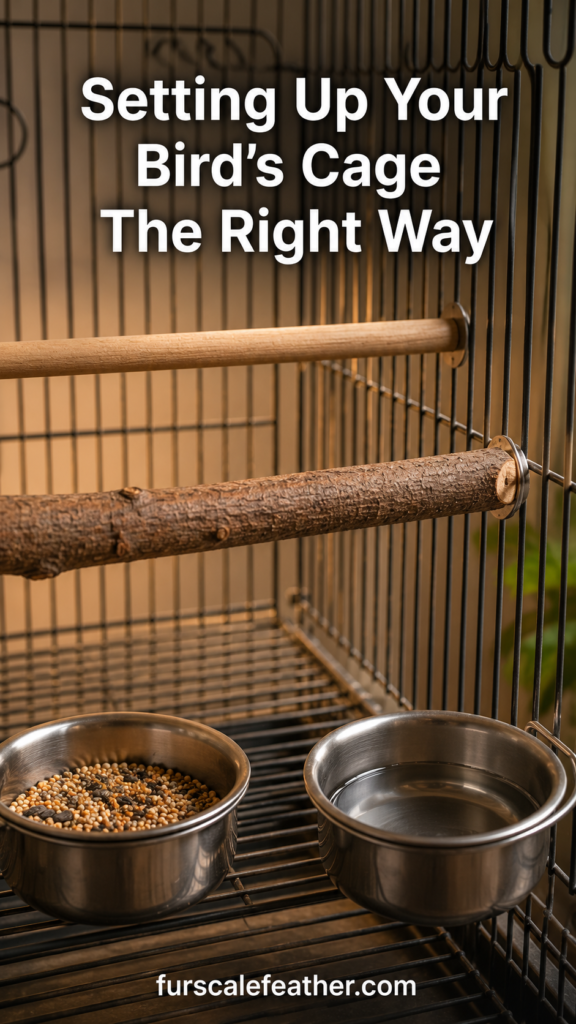
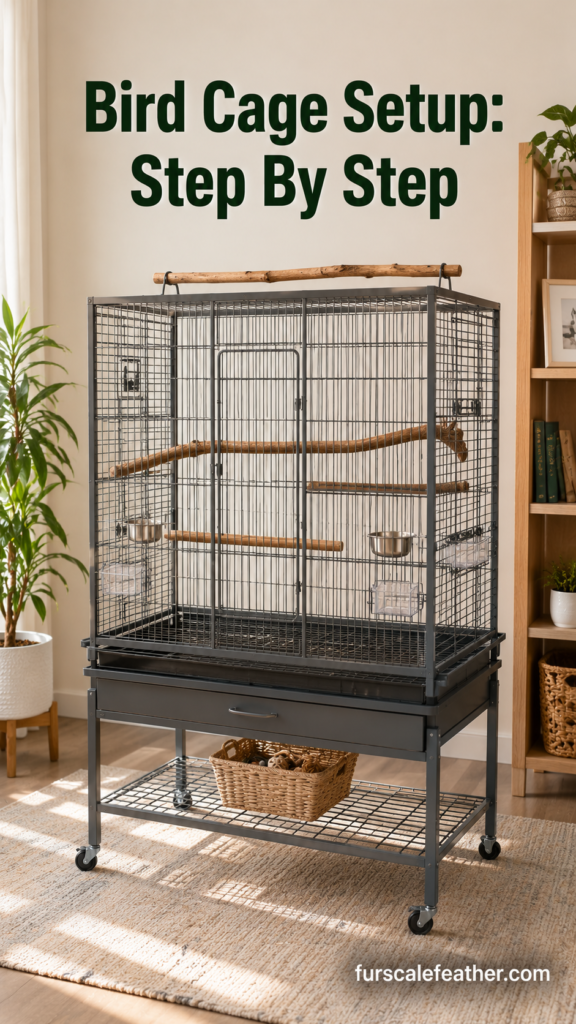
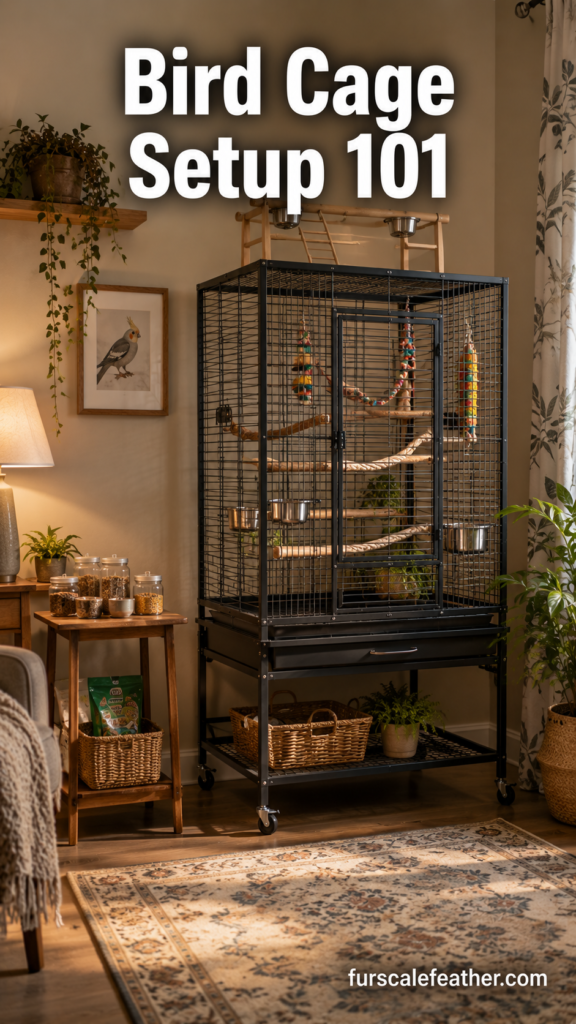
- Install two to three perches at different heights. Mix natural wood branches of varying thickness with one rope or comfort perch. Avoid lining every perch up at the exact same height, since your bird needs a reason to move around.
- Add food and water dishes away from the perches. Stainless steel bowls are worth the extra few dollars over plastic or galvanized metal, since galvanized hardware has been linked to zinc toxicosis in pet parakeets and cockatiels when birds chew on it.
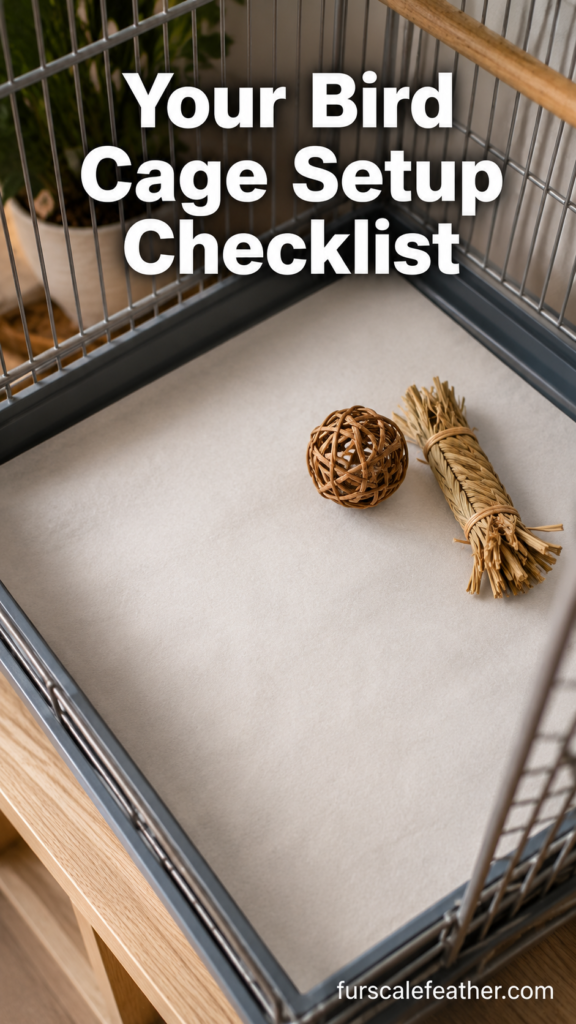
- Line the tray with paper, not shavings. Plain paper or a paper-based liner is easy to check daily for droppings and appetite changes. Corn cob and walnut shell bedding can grow mold in humid climates and are harder to monitor.
- Introduce two or three toys, not ten. Foraging toys and something to shred are a strong starting pair. You can rotate in more once your bird settles.
- Give your bird 24 to 48 hours to settle before heavy handling. Let it explore the new perches and dishes on its own schedule first.
Best Bird Cages For Parakeets, Cockatiels, And Larger Parrots
I have not personally tested every cage below in my own home. What follows is pulled from independent product-testing teams who logged weeks of hands-on use, along with thousands of aggregated customer reviews, so you are getting a summary of trustworthy evidence rather than a single opinion.
Best For Parakeets And Budgies
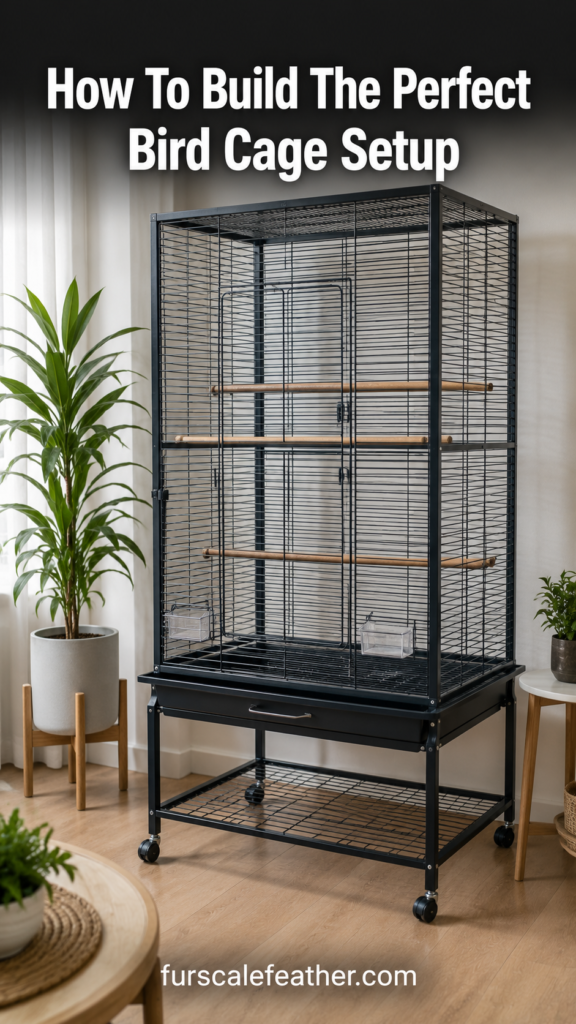
Prevue Hendryx Wrought Iron Flight Cage
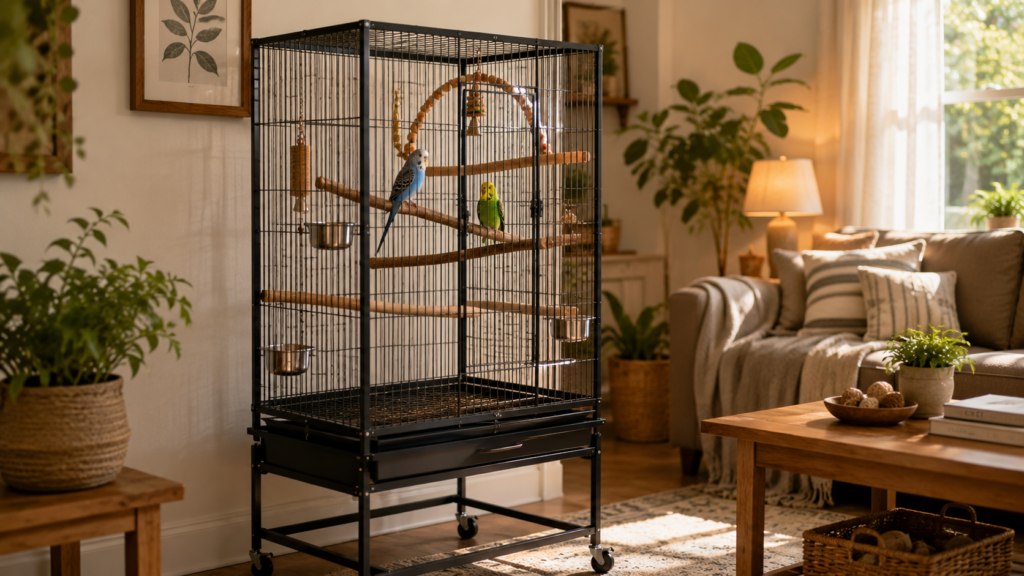
- Pros: Correct 3/8 inch bar spacing for budgies, deep pull-out tray that simplifies daily cleaning, rolling stand adds mobility, available in large and extra-large sizes
- Cons: Assembly is easier with two people, and the plastic feeder cups that ship with it are worth upgrading to stainless steel
Yaheetech Wrought Iron Flight Cage
- Pros: Strong customer ratings, three wood perches included, side-opening doors with a secure arc-shaped design, detachable base for cleaning
- Cons: Vertical-only bars on the side panels give climbing species like budgies fewer places to grip
Our pick: the Prevue Hendryx Wrought Iron Flight Cage. The combination of correct bar spacing, a deep tray, and a rolling stand covers the three things that matter most for a first parakeet cage, and it holds up well over years of daily use.
Best For Cockatiels
Look for a cage built specifically around cockatiel dimensions rather than a generic small-bird cage, since cockatiels need more horizontal flight room than a budgie cage typically offers. A cage in the 54-inch range with 1/2 to 5/8 inch bar spacing, multiple feeder doors, and a slide-out grate for easy cleaning covers the core needs. The main tradeoff across most models in this size is vertical-only side bars, which limits climbing, so if your cockatiel is an active climber, prioritize a model with at least some horizontal bar panels.
Best For African Greys, Amazons, And Macaws
Large parrots need both the space and the bar strength to match their beak power.
Prevue Hendryx F050 X-Large Flight Cage
- Pros: 37-inch width, locking casters, heavy-gauge construction built to outlast a decade or more of use, multiple access doors
- Cons: Premium price, and it needs a dedicated corner of a room
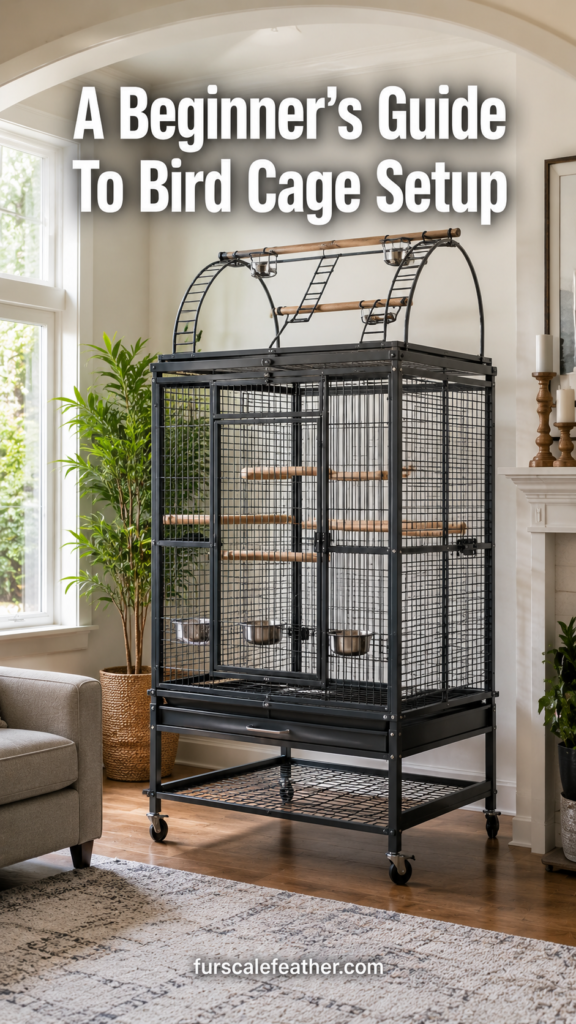
Yaheetech 63-inch Open Play Top
- Pros: 1 inch bar spacing suited to African greys, amazons, and mini macaws, stainless steel feed bowls that hold up to serious chewing, open play top for supervised time out of the cage
- Cons: At just under 49 pounds, moving it solo is a two-person job
Our pick: the Prevue Hendryx F050 for anyone who wants a cage that will not need replacing as their bird ages, and the Yaheetech 63-inch Open Play Top if budget is the deciding factor for an African grey or mini macaw. For a macaw or large cockatoo specifically, confirm the listing states 1 to 1 1/4 inch bar spacing before buying, since some cages marketed as large bird cages are actually built for medium parrots.
Some of the links a content team attaches to this article may be affiliate links, meaning a small commission could come back to us if you buy through them, at no extra cost to you.
Cage Accessories That Actually Matter
- Natural wood perches in at least two diameters, since a bird’s feet need variety to stay strong and to keep nails naturally worn down
- Stainless steel food and water bowls, placed away from perches so droppings do not land in them
- A washable, breathable cage cover for nighttime if the room stays bright or noisy after dark
- Two to three rotating toys, swapped out every few days rather than left permanently in place
- A millet spray or foraging toy for parakeets and cockatiels, which turns feeding into enrichment instead of a passive task
A Mistake Even Careful First-Time Owners Make
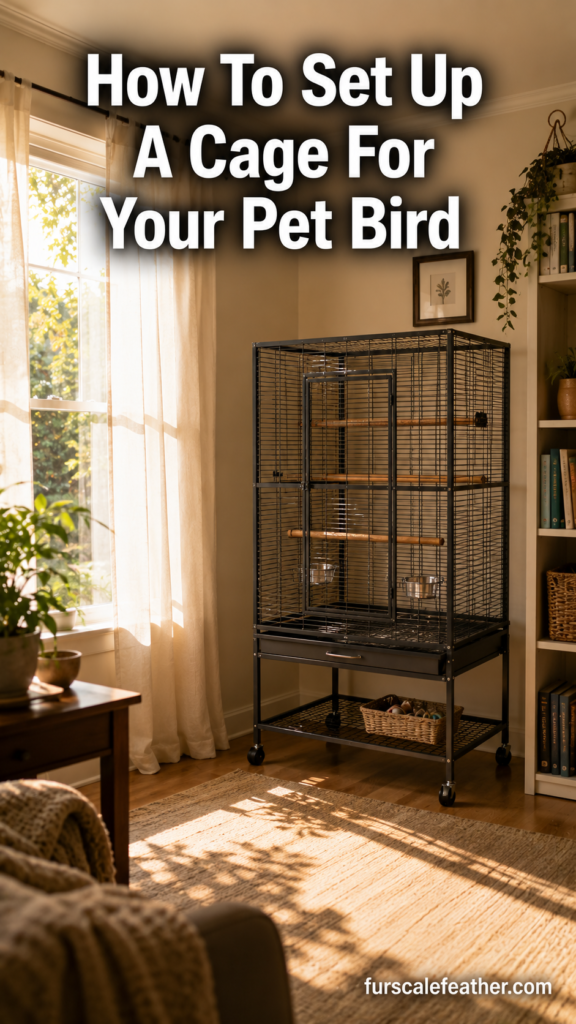
A customer told me she had set her cockatiel’s cage right against a sunny window because it looked cheerful in the photos she was posting online. Within a week the bird was panting and sitting low on the perch every afternoon, even though the room itself felt comfortable to her. We moved the cage back about six feet and added a light curtain to cut the direct sun, and the panting stopped within two days. The lesson was simple: what looks good through a camera lens is not always what feels good to a bird sitting a few inches from unfiltered glass.
Where To Put The Cage
Keep the cage out of the kitchen entirely. Overheated nonstick cookware releases fumes that are dangerous to birds well before a human would notice anything wrong. Avoid direct sun and drafts from doors, windows, or air vents, and set the cage at roughly chest or eye height rather than on the floor, since birds tend to feel more secure and more social when they are not looking up at everyone in the room. Position it against a wall on at least one or two sides so your bird has a sense of a protected edge rather than being exposed on all sides.
For anything beyond basic setup, including sudden changes in appetite, breathing, or droppings, talk to an avian veterinarian rather than guessing. A cage setup supports good health, but it is not a substitute for professional care when something seems off.
Questions People Usually Ask
How big should a cage be for a single parakeet? At minimum 18 x 18 x 24 inches, though a wider flight-style cage gives noticeably better exercise.
Can I keep two different bird species in the same cage? Generally no, since different species have different bar spacing needs and can vary widely in temperament. A shared room with separate cages works better than a shared cage.
How often should I clean the cage? Wipe bowls and change paper liner daily, and do a full scrub of perches, bars, and tray weekly.
What bar spacing is safe for a cockatiel? Between 1/2 and 3/4 inch, depending on the individual bird’s size.
Do I need a cage cover at night? Not always. It depends on how bright or noisy the room stays after dark. If your bird’s sleep looks disrupted, a breathable cover is worth trying.
Setting up a bird cage well the first time saves you from redoing it a month later once you notice your bird pacing, plucking, or avoiding certain perches. Start with the right size and bar spacing for your species, place the cage somewhere safe and social, and add perches and bowls that support natural behavior rather than just filling space. From there, watch how your bird actually uses the setup for the first week and adjust the toys and perch positions based on what it gravitates toward. That small bit of observation will tell you more than any single product review ever could.