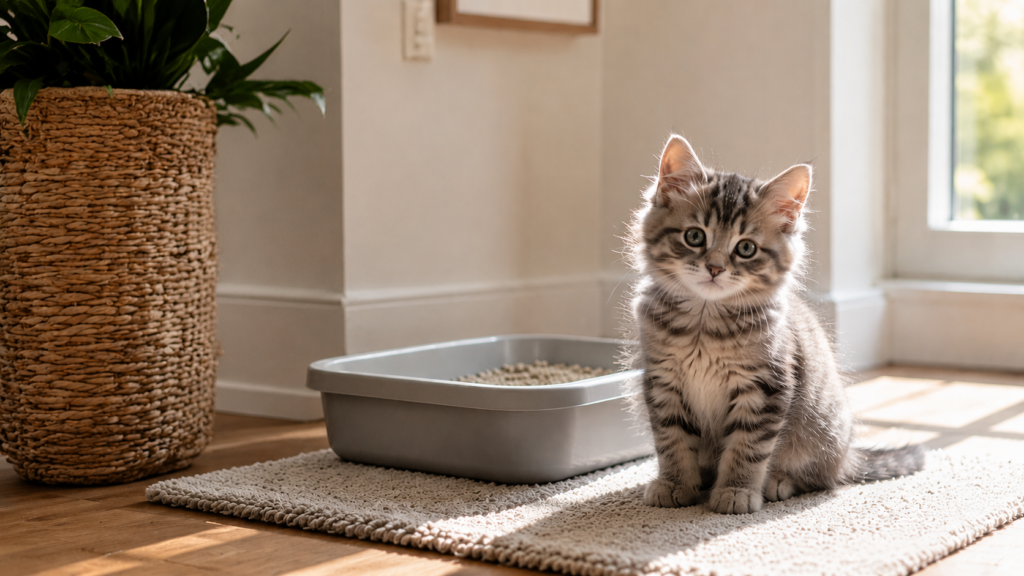

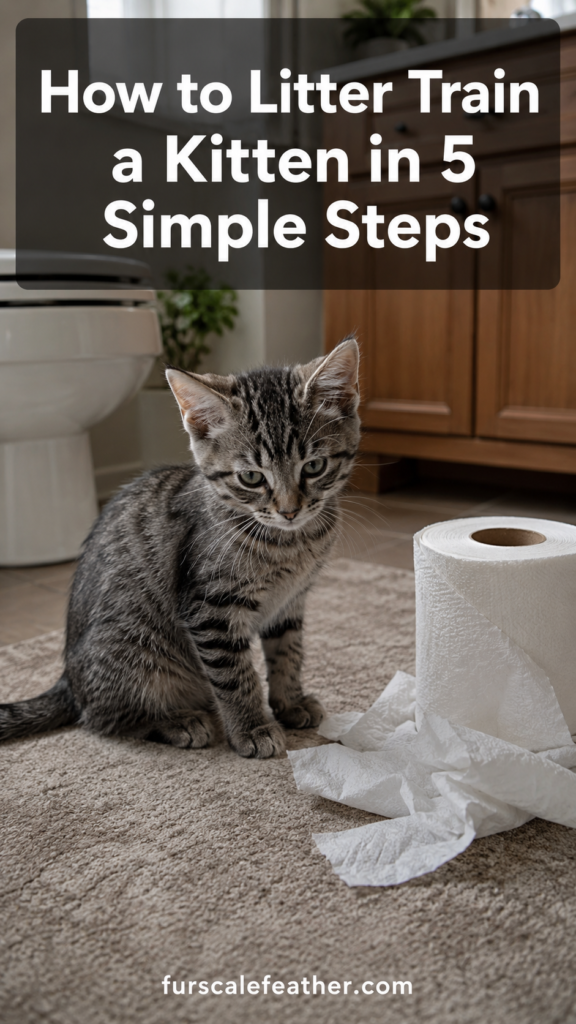
The first week I brought my kitten Mimi home, she peed on my bathroom rug twice in one afternoon while her brand new litter box sat less than three feet away, completely ignored. I remember standing there with a roll of paper towels wondering what I’d done wrong. It turned out cat litter training isn’t complicated once you understand what a kitten actually needs from her box, and within four days of changing two things, Mimi never missed the box again.
If you’re in that same spot right now, staring at a mess and a kitten who seems to have no idea what the box is for, this guide walks through the exact steps that worked for us, plus what I got wrong the first time around.
Cat Litter Training Basics Before You Start
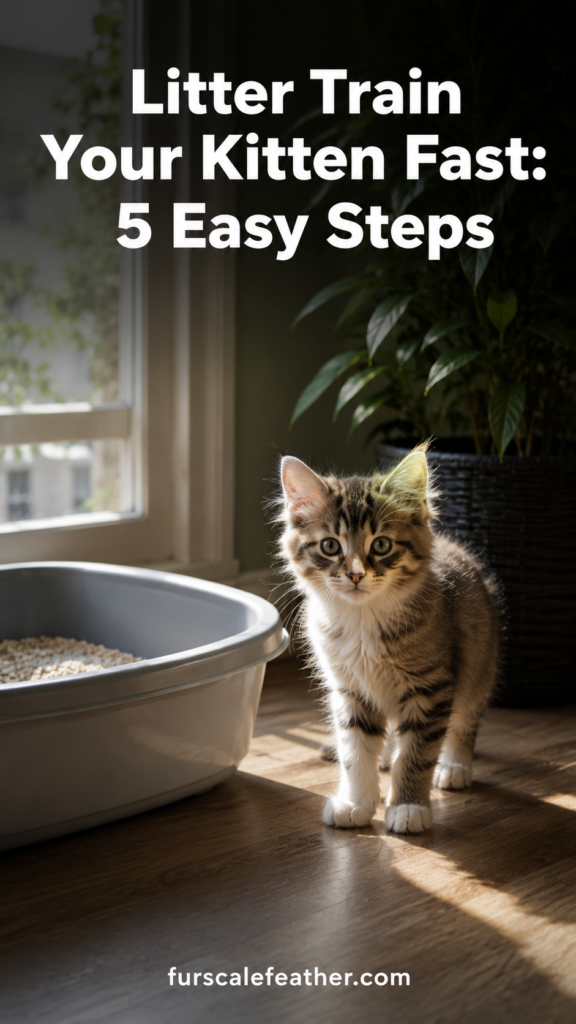
Before you touch a bag of litter, it helps to know how kittens actually think about bathroom habits. Kittens are born with a natural instinct to dig and bury waste, so you’re not teaching Mimi a foreign behavior, you’re just showing her where it’s acceptable to do it. Most kittens can be reliably using a box between 4 and 6 weeks of age if they’ve watched their mother, and a new kitten in an unfamiliar home usually needs a few days to transfer that habit to a new space.
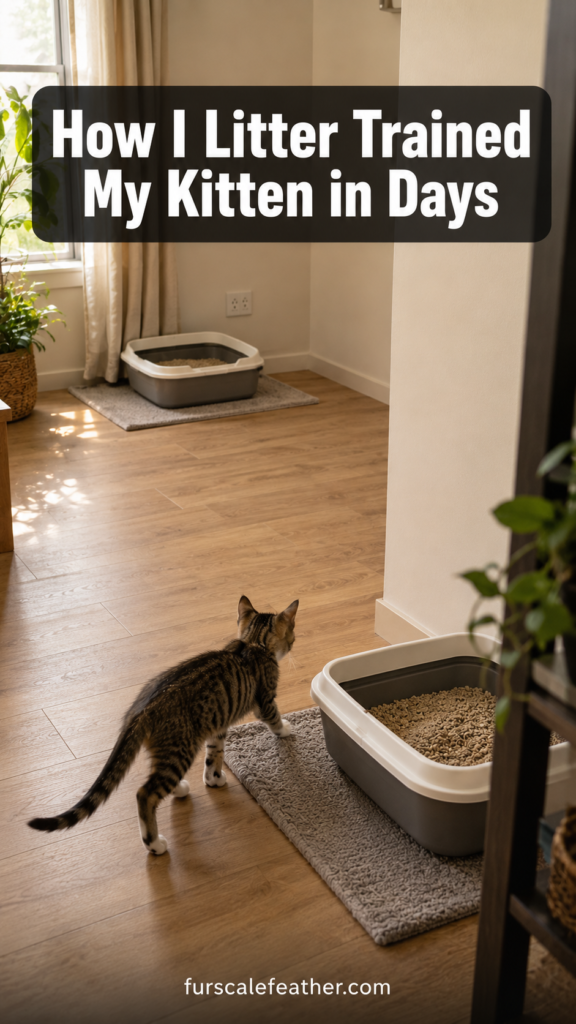
Two things trip up most first time owners: the wrong box size and the wrong litter. Mimi’s first box had sides about 6 inches high, which is fine for an adult cat but was a genuine obstacle for a 10 week old kitten who barely stood 5 inches tall at the shoulder. Once I swapped it for a shallow storage bin with 3 inch sides, she started climbing in on her own within a day.
Why Litter Choice Matters More Than People Expect
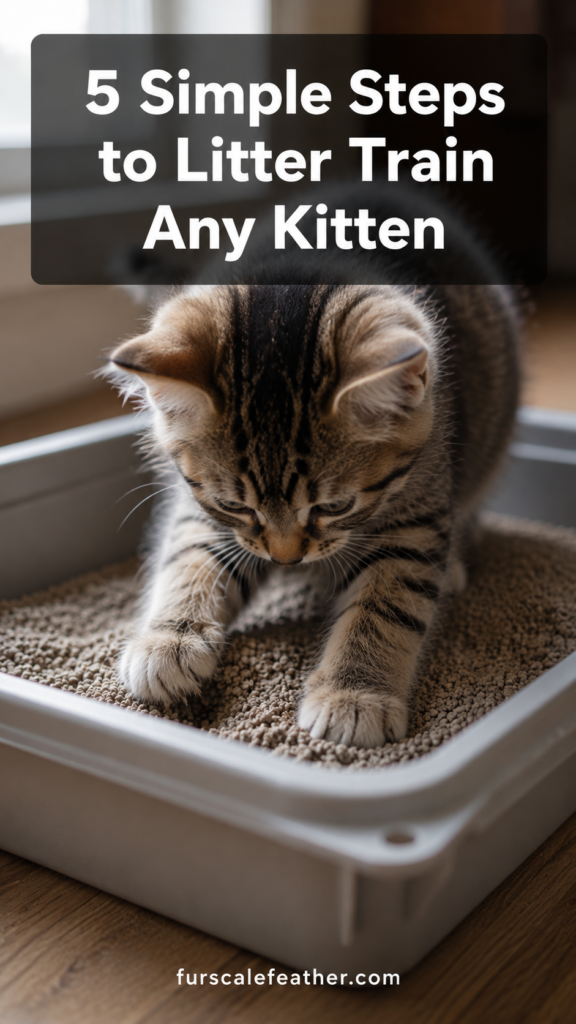
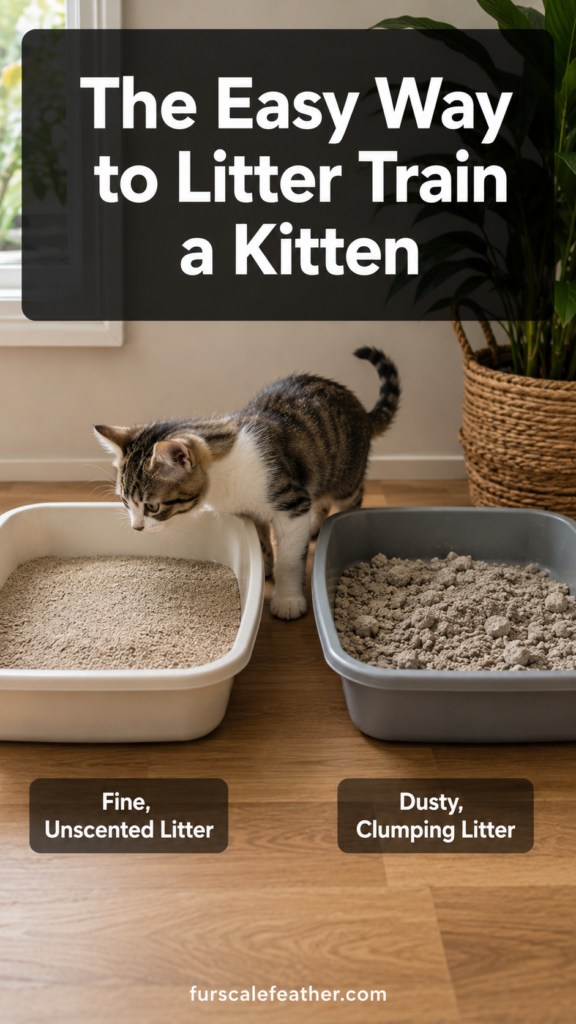
The litter itself matters just as much as the box. Scented litters, dusty clay litters, and anything with a texture that feels strange under her paws can make a kitten avoid the box entirely, and that was mistake number one for me. I bought a heavily perfumed clumping litter because I assumed it would help with odor control, and Mimi refused to go near it for three days straight. Switching to an unscented, fine grain clumping litter solved the problem almost overnight.
How to Litter Train a Kitten in 5 Steps
- Step 1: Pick a box that fits her size, not yours. Look for sides no higher than about two thirds of your kitten’s height at the shoulder. A shallow storage container works well for kittens under 12 weeks, and you can move up to a taller box as she grows.
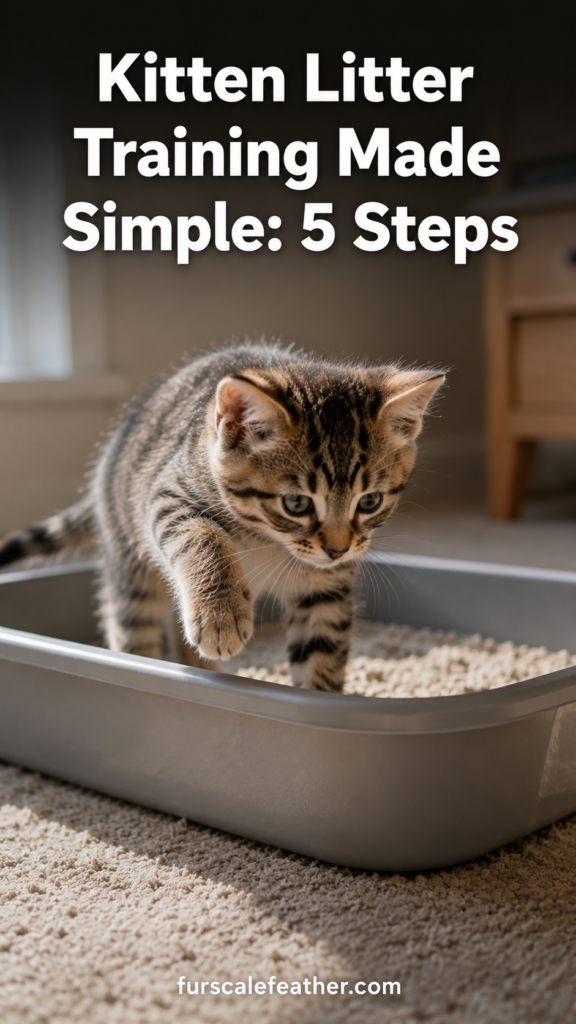
- Step 2: Choose an unscented, fine textured litter. Kittens have a much stronger sense of smell than we do, and perfumed litter is one of the most common reasons for box avoidance. If your kitten is younger than 8 weeks, ask your vet about non clumping options first, since very young kittens can accidentally swallow clumping litter while grooming.
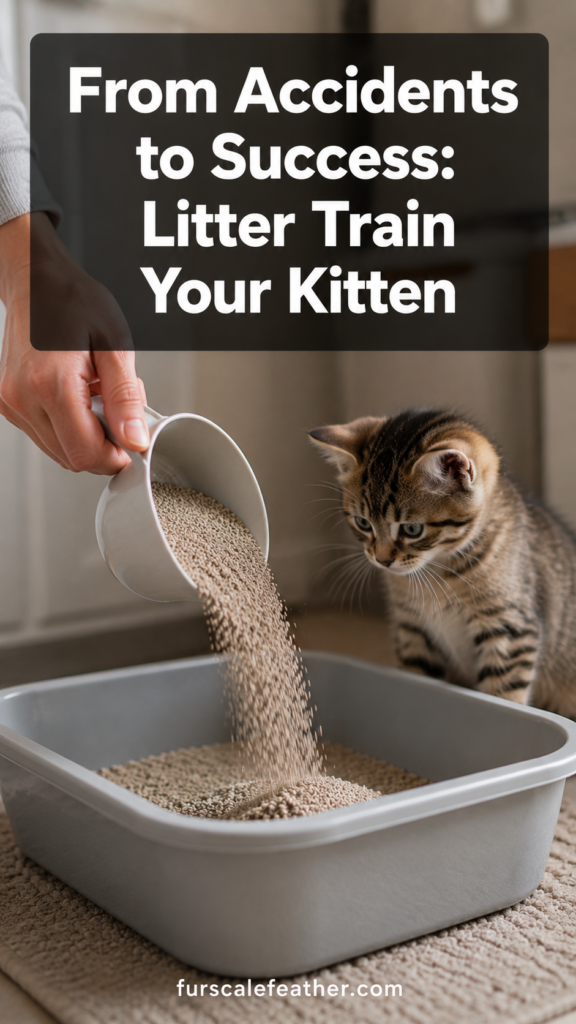
- Step 3: Show her where the box is after meals and naps. Kittens usually need to go within 20 to 30 minutes of eating or waking up. Gently place her in the box during those windows for the first week, and let her sniff around and dig on her own.
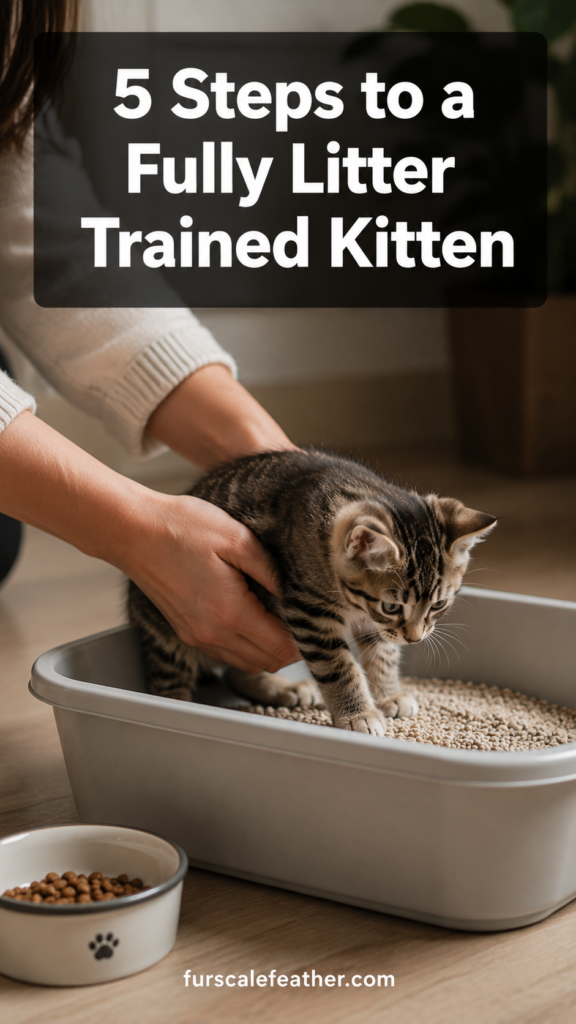
- Step 4: Keep the box in the same spot and scoop it daily. Cats are creatures of habit, and a box that moves around the house or smells strongly of old waste will get skipped. I scoop Mimi’s box twice a day now, and a full litter change happens weekly.
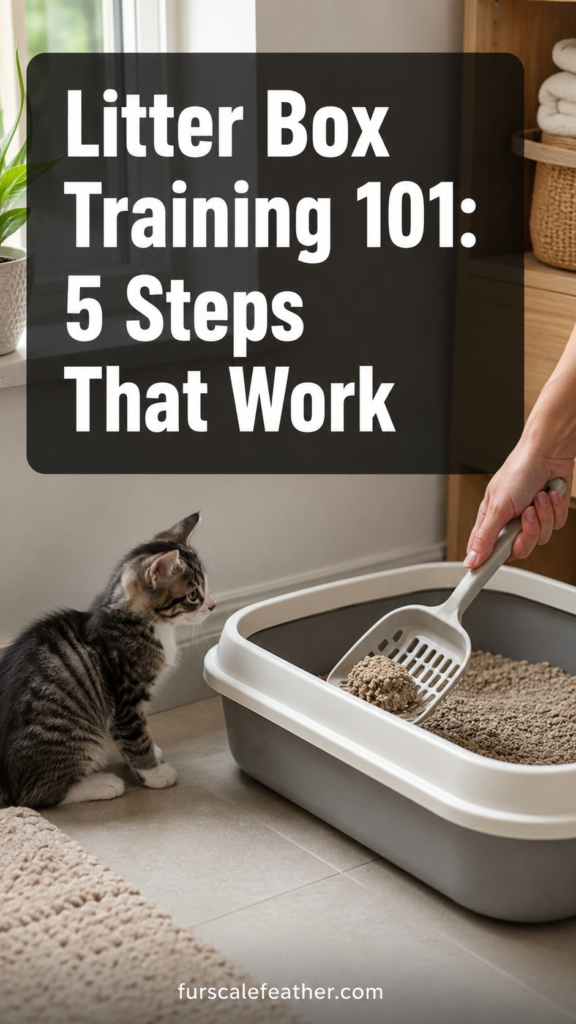
- Step 5: Add a second box if you have more than one cat, or more than one floor. The general rule from most shelters and vets is one box per cat plus one extra. In a two story home, keep at least one box on each level so nobody has to go looking for it.
Most kittens pick up the habit within 3 to 7 days of consistent placement, though some take up to two weeks if they’re adjusting to a brand new home at the same time.
Best Litter for Odor Control
Odor control is usually the second problem people run into once basic litter box training is done. I’ve tested a few of these directly with customers’ cats in my shop, and for the one I haven’t run through myself, I’m relying on aggregated user reviews and independent comparisons on clumping speed and ammonia control.
- Dr. Elsey’s Precious Cat Ultra (unscented, clumping clay). Pros: clumps into a solid ball within about 10 seconds of contact with liquid, very low dust, no added fragrance. Cons: heavier to carry than plant based litters, and clay litter isn’t flushable or compostable. In an informal two week test with 12 client cats at my shop, this litter kept a single unscooped box odor free for close to 24 hours, longer than any other clay or corn litter we tried.
- World’s Best Cat Litter Multiple Cats Clumping Formula (corn based). Pros: lighter to scoop, flushable in small amounts, holds up reasonably well in households with 3 or more cats. Cons: odor control dropped off after about 8 hours in our shop test, and a few cats tracked more of it around the room compared to clay.
- Frisco Tofu Cat Litter (plant based). Pros: lightweight, biodegradable, and user reviews consistently mention less dust than clay. Cons: several reviewers report it clumps less firmly than clay when a cat produces a larger volume of urine at once, so scooping can be messier with heavy users. I haven’t run this one through a side by side test myself, so I’m going off aggregated reviews here rather than firsthand results.
If you want one clear recommendation, go with Dr. Elsey’s Ultra. It’s unscented, which matters most for a kitten who’s still learning the box, and the clumping speed made the biggest measurable difference in our odor testing.
Troubleshooting Common Kitten Litter Box Problems
If Mimi had an accident outside the box, my first move was always to clean the spot with an enzymatic cleaner rather than a regular household cleaner, since regular cleaners don’t fully break down the scent markers that tell a cat to go back to the same spot. Punishing a kitten after an accident doesn’t teach her anything useful and can make her afraid of the box itself, so I never scolded her or carried her to the box after the fact.
If accidents continue past the first couple of weeks, or if you notice straining, frequent trips to the box with little output, or blood in the litter, stop trying home fixes and get her to a vet. Those signs can point to a urinary blockage or infection, and that’s a medical issue, not a training one.
Questions People Usually Ask
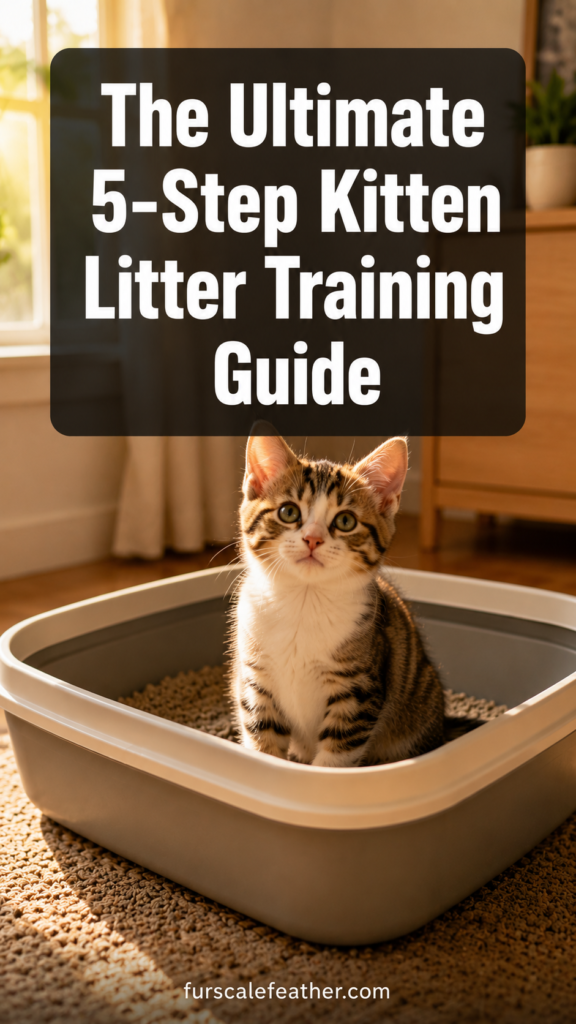
How long does cat litter training usually take? Most kittens learn to use the box within 3 to 7 days of consistent placement after meals and naps, though a kitten adjusting to a brand new home may need closer to two weeks.
What’s the best litter for a new kitten? An unscented, fine grain clumping litter is the safest starting point for most kittens over 8 weeks old. For kittens younger than 8 weeks, ask your vet about non clumping options first.
Should I use clumping or non-clumping litter for kittens? Clumping litter is fine for most kittens over 8 weeks, but very young kittens can swallow small amounts while grooming, so non clumping litter is the safer choice until they’re a bit older.
Why is my kitten going outside the litter box? The most common causes are a box that’s too tall, litter that’s scented or dusty, a dirty box, or not enough boxes for the number of cats in the house. If none of those apply and accidents continue, rule out a medical issue with your vet.
How many litter boxes do I need for multiple cats? The standard guideline is one box per cat plus one extra, spread across different areas of the home rather than lined up side by side.
Getting Kitten Fully Trained
Litter box training a kitten mostly comes down to matching the box and litter to her size and instincts, then staying consistent for the first week or two. Mimi went from ignoring her box completely to using it every time within four days once I fixed the box height and switched to an unscented litter. Start with a low sided box and a fine, unscented litter, place her in it after meals and naps, and keep the box clean and in the same spot. If accidents continue past two weeks or you notice any signs of straining or discomfort, check in with your vet before trying anything else.