
A reader emailed me last month in a bit of a panic. Her son had dropped a slice of grape into the cage “just to see,” and now she was staring at her phone at 11 p.m. trying to figure out if her hamster was about to get sick. That question, what can hamsters eat safely, is one of the most common things new hamster owners search for, and for good reason. Hamsters are small, their digestive systems are unforgiving, and a lot of food that seems harmless can cause real problems fast.
This guide covers the foods that are genuinely safe, the ones you should never offer, and a simple daily plan you can follow without overthinking every snack.
What Can Hamsters Eat? The Foundation of a Safe Diet
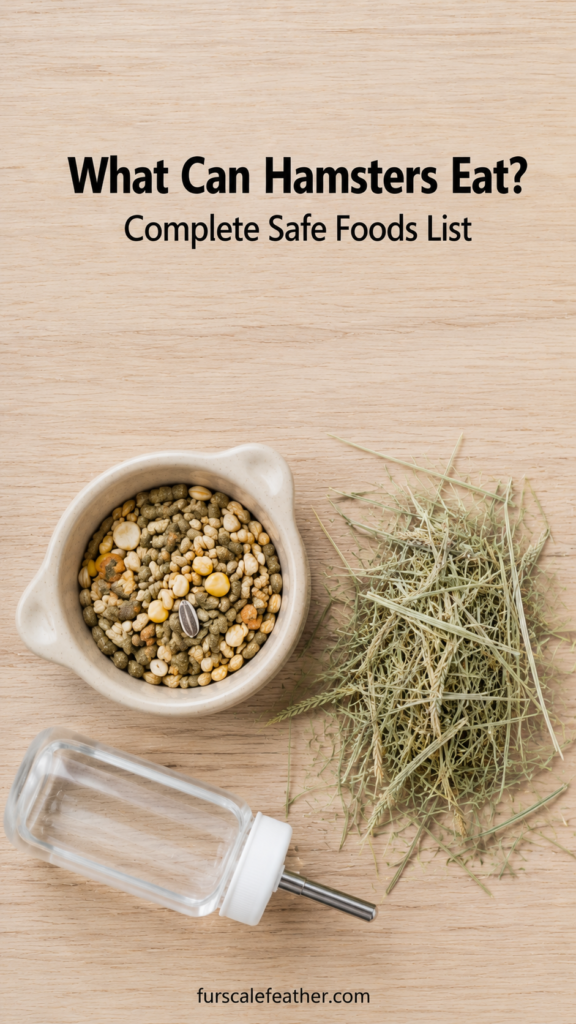
The base of a healthy hamster diet is a commercial pellet or lab block, not a colorful seed mix. Pellets are formed so your hamster eats a complete, balanced blend in every bite. Seed mixes let hamsters pick out their favorite bits, usually the fatty seeds, and leave the rest, which leads to nutritional gaps over time.
A good rule of thumb from small-animal nutrition guidance: aim for roughly 16 to 20 percent protein and around 4 to 6 percent fat as the base diet, then supplement with a small amount of fresh produce, an occasional protein treat, and hay for grazing and enrichment.
Here is what belongs in a typical hamster’s routine:
- A quality pellet or lab block (available at all times, replaced daily so it stays fresh)
- Fresh vegetables, a teaspoon or two, three to four times a week
- Fresh fruit, a small piece the size of a fingertip, once or twice a week at most
- Occasional protein such as a small piece of cooked, unseasoned chicken or a mealworm
- Timothy or grass hay for grazing and digestion
- Fresh water, changed daily
Safe Fruits and Vegetables for Hamsters
Most everyday produce is fine for hamsters in small amounts, as long as it is washed well and introduced slowly. Wash everything first. Pesticide residue on unwashed produce is one of the more common causes of upset stomachs that owners don’t connect back to the actual cause.
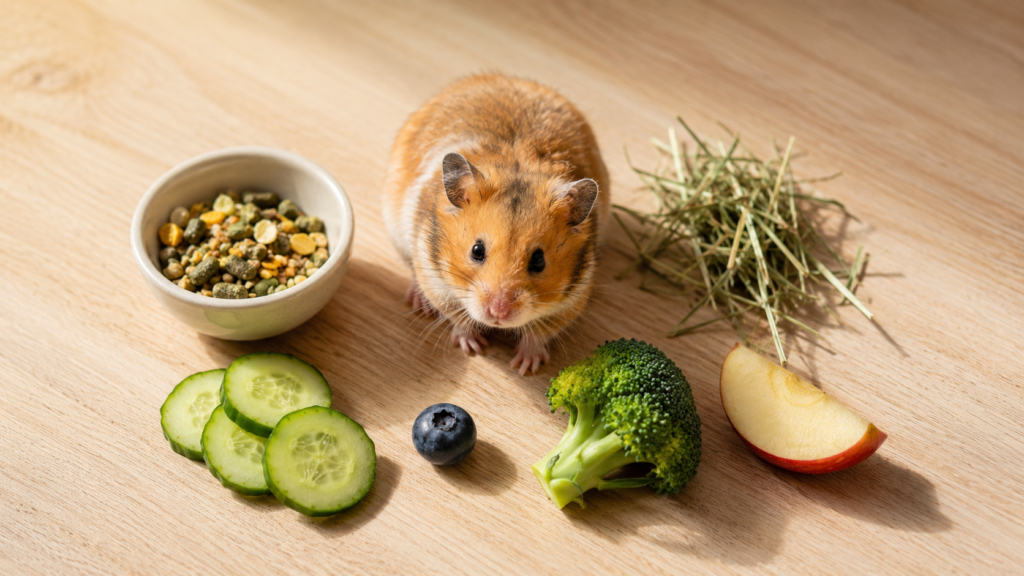
Safe vegetables include:
- Cucumber, a good hydrating option in warm weather
- Broccoli florets, in small amounts, a couple of times a week
- Carrot, grated or in thin slices
- Zucchini
- Bell pepper, seeds removed
- Spinach and kale, occasionally, since both are high in oxalates
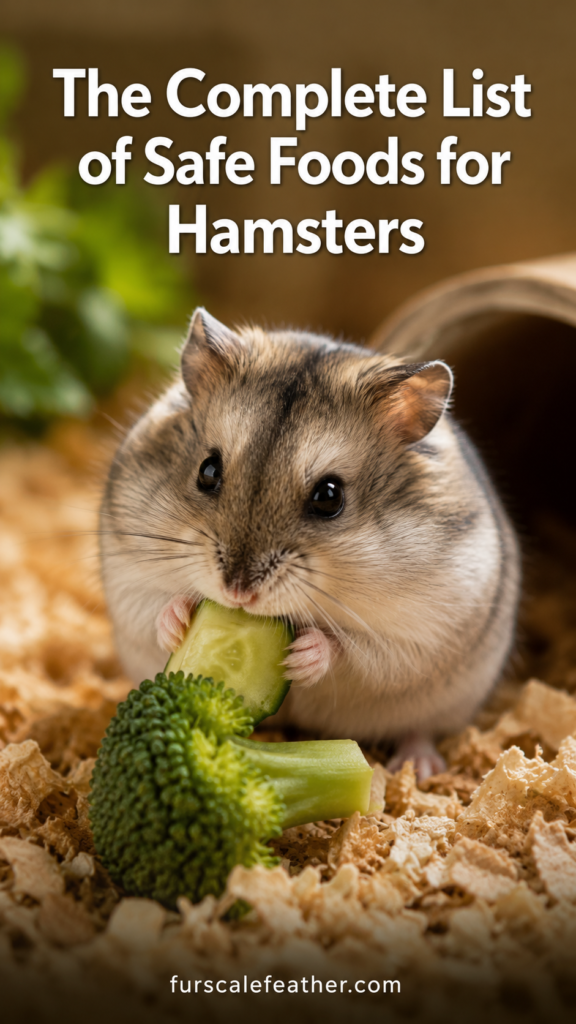
Safe fruits include:
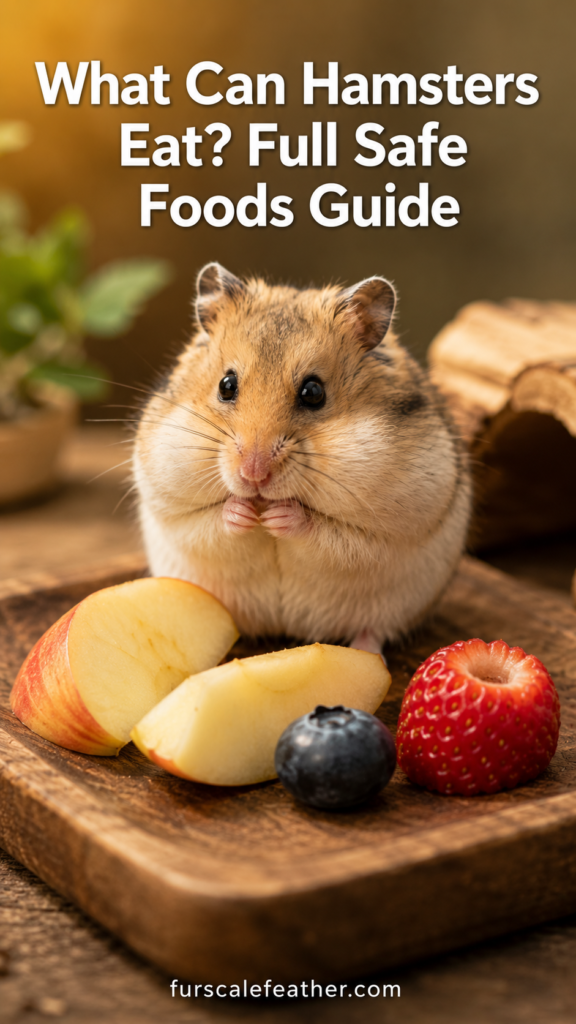
- Apple, seeds and core removed
- Banana, a small slice
- Blueberries, a couple at a time
- Pear
- Strawberry, tops removed
Fruit should stay occasional rather than daily. Fruit sugar adds up quickly for an animal this small, and dwarf breeds such as Campbell’s, Winter White, and Chinese hamsters are prone to diabetes, so keep their fruit intake especially light and watch for excessive drinking or urination, which can be an early warning sign.
Foods That Are Toxic to Hamsters
This is the list that matters most, because a few of these can cause real harm quickly.
Never feed a hamster:
- Chocolate, especially dark chocolate, which contains theobromine
- Onions and garlic, which can damage red blood cells and lead to anemia
- Raw potato, which contains solanine
- Raw kidney beans
- Almonds that haven’t been confirmed sweet, since bitter almonds contain compounds that convert to cyanide
- Citrus fruits, which are too acidic for a hamster’s stomach
- Avocado
- Eggplant (aubergine)
- Tomato leaves and stems (the tomato fruit itself, in small amounts, is generally fine)
- Rhubarb and rhubarb leaves
- Anything salty, sugary, or heavily spiced
- Whole stalks of celery, due to choking risk from the stringy texture
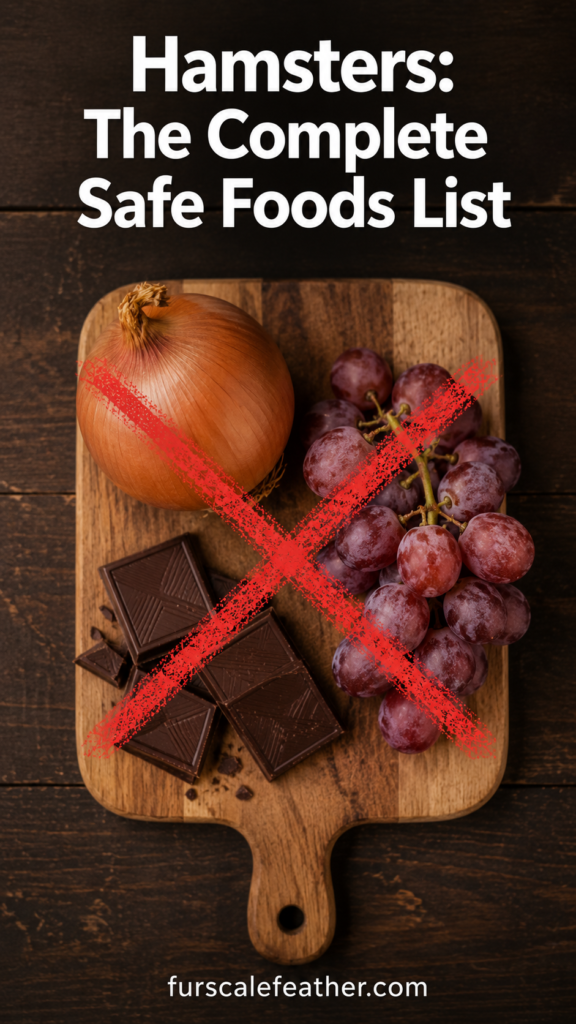
A local small-pet rescue I’ve worked with on adoption events told me about a Syrian hamster that came in after its previous owner had been feeding grapes daily as a treat because “hamsters love them.” Grapes aren’t officially classified as toxic, but they carry a real risk of mold and mycotoxin contamination that isn’t visible from the outside, and this particular hamster developed loose stool and lethargy that cleared up within about a week once grapes were removed entirely and the diet was simplified back to pellets, hay, and cucumber. The lesson the foster took from it, and one worth repeating here, is that “hamsters can technically eat it” and “hamsters should regularly eat it” are two different things. When in doubt, leave it out and ask a vet.
How to Build a Hamster Diet Plan
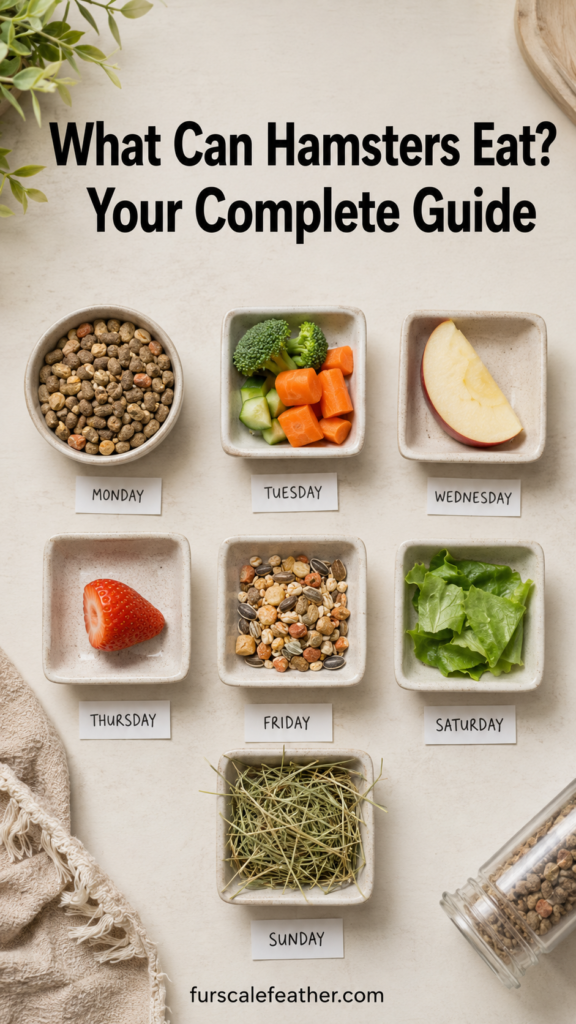
If you want a simple system instead of guessing every day, here’s a plan that works for most healthy adult hamsters.
- Set the base. Fill the food dish with a measured amount of pellets, roughly one to two tablespoons for a Syrian and slightly less for a dwarf breed. Refresh daily and remove any leftover softened food.
- Add hay daily. Keep a small handful of timothy hay available at all times for grazing and gut health.
- Offer vegetables three to four times a week. Rotate between two or three of the safe options above, roughly a teaspoon per serving, and introduce anything new one at a time so you can watch for soft stool or refusal.
- Offer fruit once or twice a week. Keep it to a small piece, and skip it entirely for dwarf breeds showing any signs of diabetes.
- Add a protein source once or twice a week. A small piece of plain cooked egg, chicken, or a mealworm supports coat and muscle health.
- Check the cheek pouches weekly. Hamsters stash food, and a build-up of soft or perishable food in the pouches can lead to impaction or infection. A gentle check while handling your hamster catches this early.
- Watch for changes. A hamster that stops eating, develops soft stool, or seems unusually quiet after a new food should go back to a simple diet of pellets and hay, and if symptoms continue past a day, that’s a sign to call an exotic vet rather than wait it out.
Best Hamster Food Mixes We Recommend
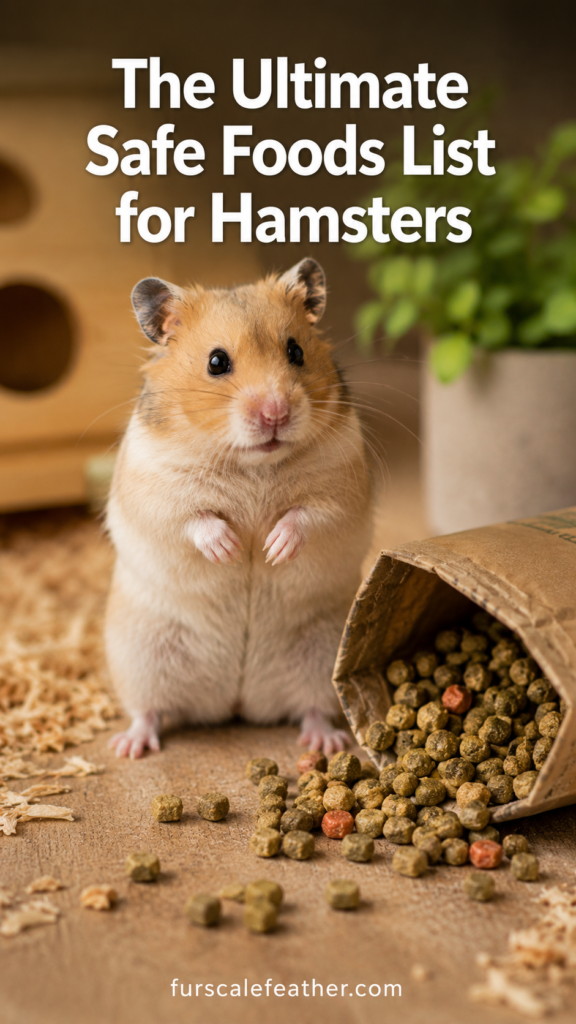
I haven’t personally kept hamsters, so these picks come from comparing product reviews, ingredient panels, and feedback from vets and rescues rather than my own cage. Here’s how three widely available options stack up.
Oxbow Essentials Hamster & Gerbil Food This is a uniform pellet, meaning every bite has the same nutrient profile, so there’s no selective eating. It’s fortified with vitamins and minerals and doesn’t rely on artificial colors to look appealing, which matters more to owners than hamsters.
- Pros: consistent nutrition in every pellet, widely recommended by exotic vets, no artificial coloring
- Cons: less visually varied, and some picky hamsters take a few days to adjust from a seed mix
Kaytee Forti-Diet Pro Health A budget-friendly pellet-based formula with added probiotics for digestive support. Reviewers consistently note it holds up well for hamsters transitioning off cheaper store-brand mixes.
- Pros: lower cost per ounce, added probiotics, easy to find in stores
- Cons: slightly less protein density than premium options, so it works best paired with occasional protein treats
Supreme Tiny Friends Farm Hazel Hamster Tasty Mix A seed-and-grain mix built around natural foraging behavior. Palatability scores are high, meaning hamsters reliably eat it without much encouragement.
- Pros: encourages natural foraging, high acceptance rate, good enrichment value
- Cons: seed-mix format carries selective eating risk, so it’s better as a supplement to a pellet base than a sole diet
Our pick: Oxbow Essentials Hamster & Gerbil Food is the strongest all-around choice for most owners, specifically because the uniform pellet removes the guesswork of whether your hamster is actually eating a balanced diet or just picking out the sunflower seeds. If your hamster is a stubborn eater and refuses to touch it at first, mixing in a small amount of the Supreme seed mix for the first week and gradually reducing it tends to ease the transition.
Questions People Usually Ask
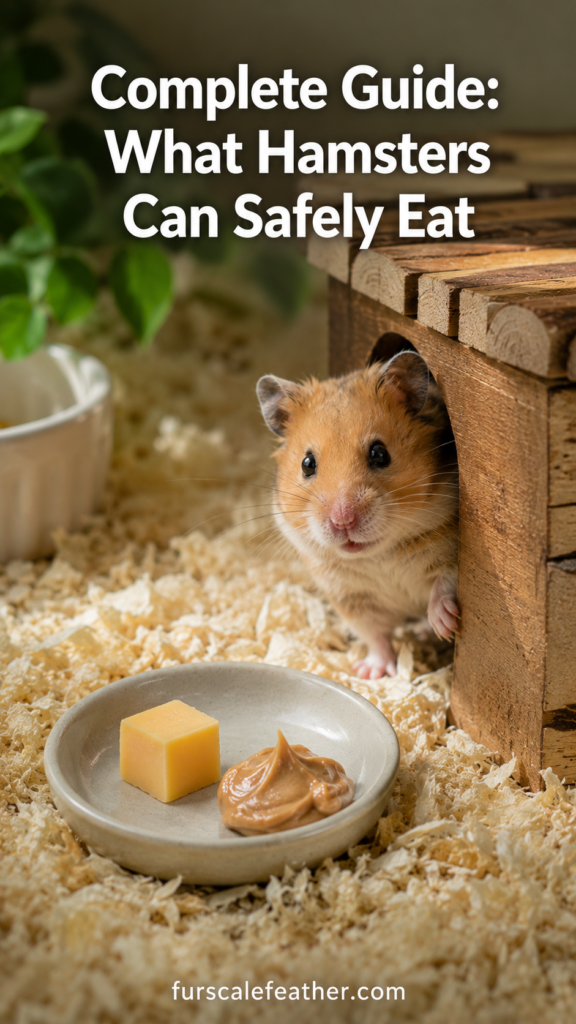
Can hamsters eat cheese? A small amount of plain, low-fat cheese is generally fine as an occasional protein treat, but it shouldn’t be a regular addition since hamsters don’t digest dairy fat well in large amounts.
How much food does a hamster need per day? Most adult hamsters do well on one to two tablespoons of pellets daily, plus small amounts of fresh produce a few times a week. Overfeeding shows up quickly as hoarded food and excess weight.
Why is my hamster hoarding food instead of eating it? Hoarding is normal hamster behavior tied to instinct, not a sign of hunger. Check stored food in the bedding regularly and remove anything perishable before it spoils.
Can hamsters eat peanut butter? A tiny amount of unsalted, unsweetened peanut butter is safe occasionally, but it’s sticky enough to pose a choking risk if given in a large glob, so a thin smear on a small piece of veggie is safer than a spoonful.
What should I do if my hamster eats something toxic? Remove any remaining food immediately, note what and roughly how much was eaten, and contact an exotic veterinarian right away rather than waiting to see if symptoms appear.
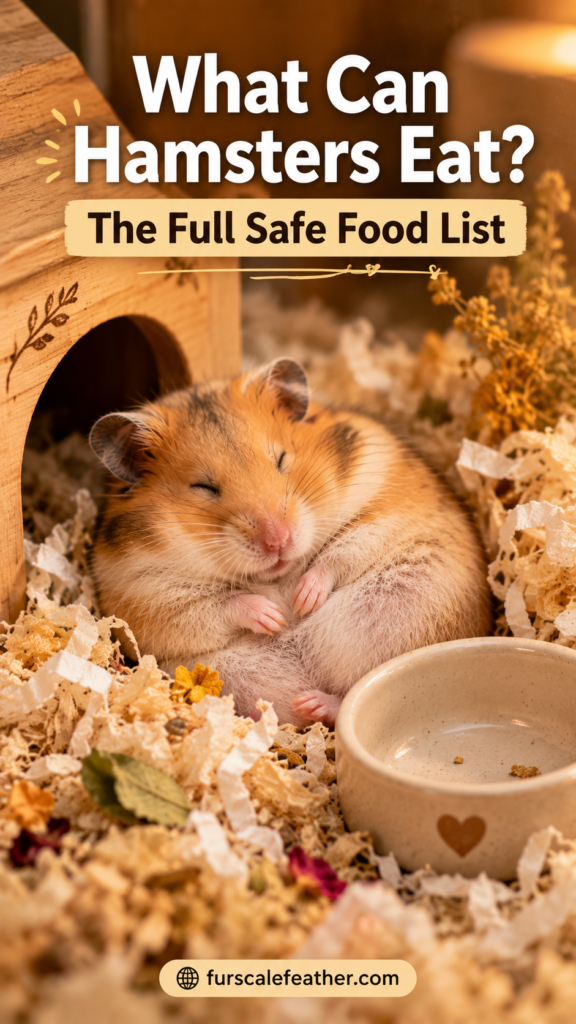
A safe hamster diet isn’t complicated once you know the short list of foods to avoid and build meals around a quality pellet base. Stick to small, rotating portions of the safe fruits and vegetables above, skip anything on the toxic list without exception, and keep an eye on your hamster’s eating habits and cheek pouches so small problems don’t turn into vet visits. If you’re ever unsure about a specific food, it’s always safer to skip it and check with a vet than to guess.
Disclosure: The food products mentioned above were evaluated through product research and review comparison, not personal testing.