
You’ve just brought home a bearded dragon, or you’re standing in a pet store staring at a wall of tanks, lights, and bags of substrate, trying to figure out which combination actually keeps a dragon alive and happy. This is the exact moment where most beginner bearded dragon tank setups go wrong, not because owners don’t care, but because the pet store staff rarely explain the why behind each piece of equipment. I run a pet product review site, and bearded dragon setups are one of the most common topics readers write in about, usually after something has already gone sideways with heat, lighting, or a sick dragon.
This guide walks through a complete bearded dragon tank setup from an empty enclosure to a habitat that actually meets a dragon’s needs, along with the mistakes that show up again and again in reader questions and rescue intakes.
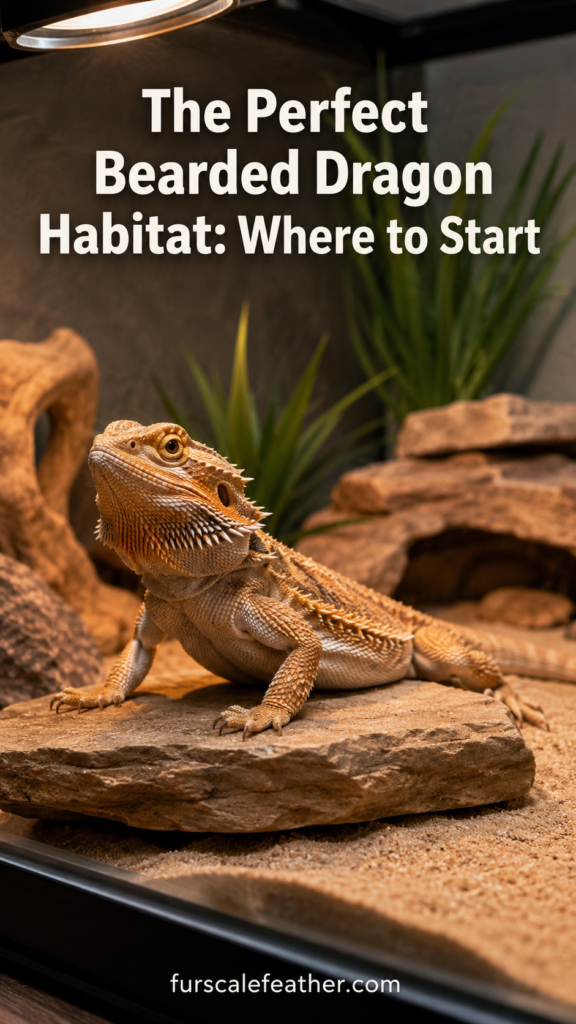
What a Bearded Dragon Tank Setup Actually Needs
A bearded dragon is not a low-maintenance pet, even though it’s often marketed that way. A proper setup covers five things at minimum: enclosure size, basking heat, UVB lighting, substrate, and humidity control. Skip any one of these and you end up with a dragon that stops eating, develops metabolic bone disease, or becomes lethargic within weeks.
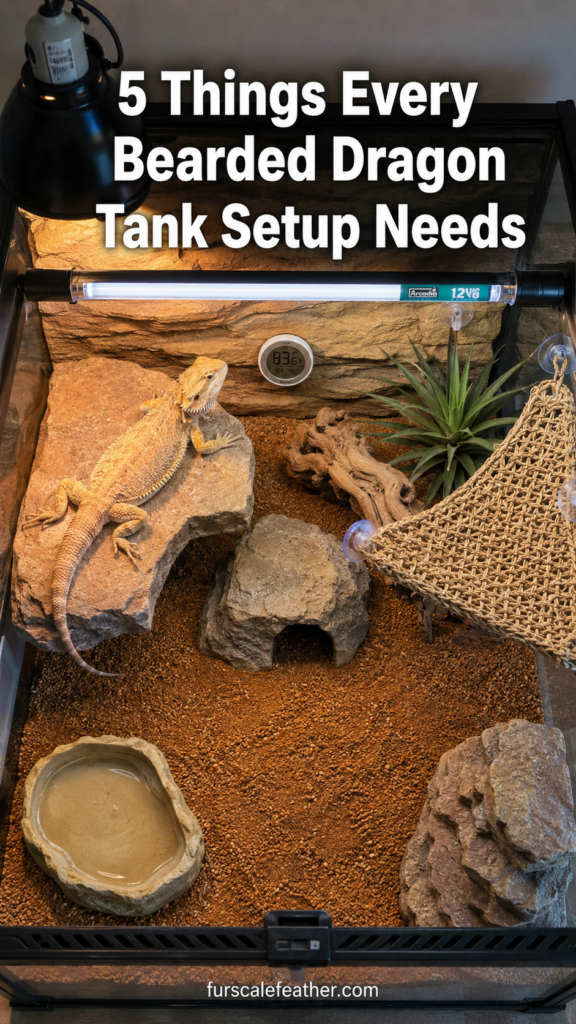
Here’s the baseline most reptile veterinarians and experienced keepers agree on:
- Enclosure size: A 20-gallon tank works for a hatchling, but adults need a minimum of 40 gallons, and most keepers recommend 75 to 120 gallons, or roughly a 4-foot by 2-foot footprint, once the dragon is full grown.
- Basking spot temperature: 95 to 110°F for adults, up to 115°F for babies and juveniles, measured directly on the basking surface, not the ambient air.
- Cool side temperature: 75 to 85°F, giving the dragon room to thermoregulate.
- UVB lighting: A full-length T5 HO UVB bulb rated 10.0, running the length of the enclosure, replaced every 6 to 12 months even if it still lights up, since UVB output drops long before the bulb visibly dims.
- Humidity: 30 to 40 percent for most of the tank, since bearded dragons are desert animals and high humidity increases the risk of respiratory infection.
The primary keyword for this whole guide, bearded dragon tank setup, really comes down to getting these five numbers right and then building decor and enrichment around them, not the other way around.
Step-by-Step: How to Set Up Your Bearded Dragon Tank
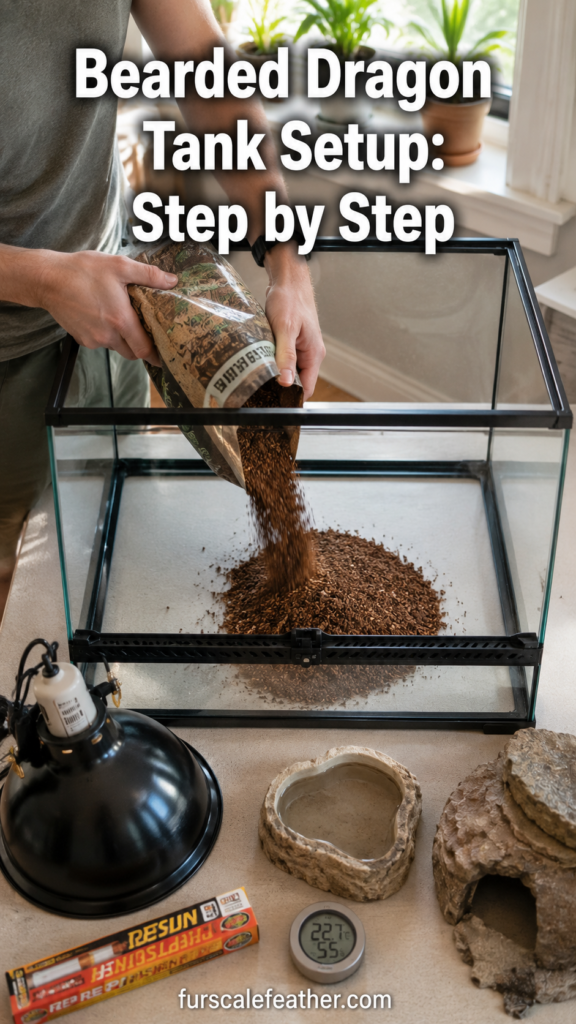
- Choose the enclosure. Start with at least a 40-gallon breeder tank for a juvenile heading toward adulthood, or go straight to a 75-gallon setup if your budget allows, since you’ll avoid a second purchase in six months.
- Add substrate first. Lay down your chosen substrate before anything else so wiring and decor sit on top, not underneath.
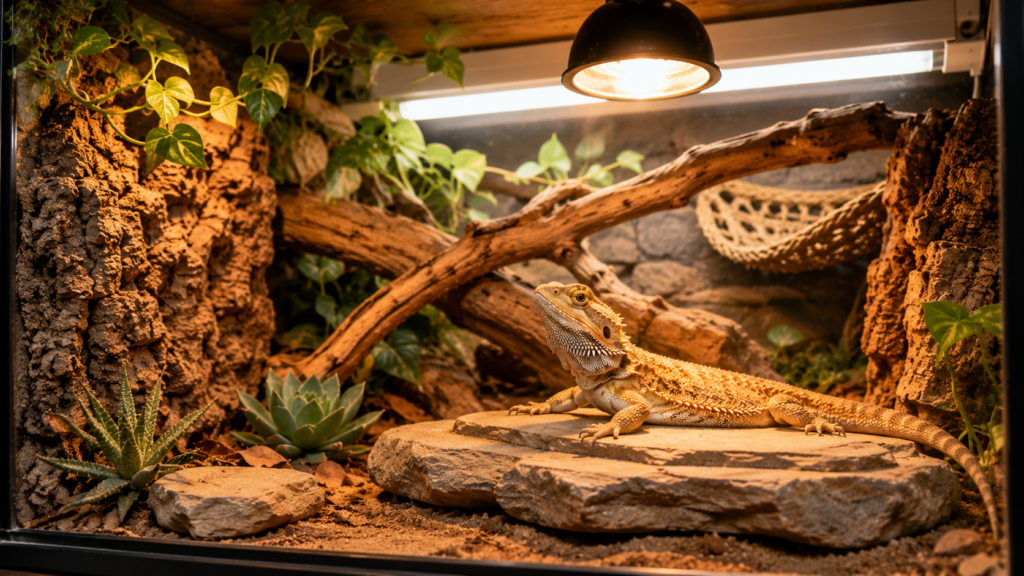
- Install the basking platform and heat lamp. Place a sturdy basking rock or branch on one end of the tank, with the heat lamp mounted above it, outside the enclosure or behind a secure guard.
- Mount the UVB light. Run it the full length of the tank, positioned 6 to 12 inches above the basking spot depending on the bulb’s manufacturer specs, since distance affects how much usable UVB actually reaches the dragon.
- Set up a digital thermostat and two thermometers. One probe goes at the basking spot, one on the cool side, so you’re reading actual surface and ambient temperatures instead of guessing.
- Add hides on both the warm and cool ends. A dragon needs to feel secure at any temperature, not just when it’s cool.
- Add a shallow water dish and food dish. Keep the water dish on the cooler side to help maintain lower humidity near the basking area.
- Run the tank empty for 48 hours. Check that temperatures hold steady before adding your dragon, since a lamp that reads correctly on the box can still run too hot or too cool in your specific room.
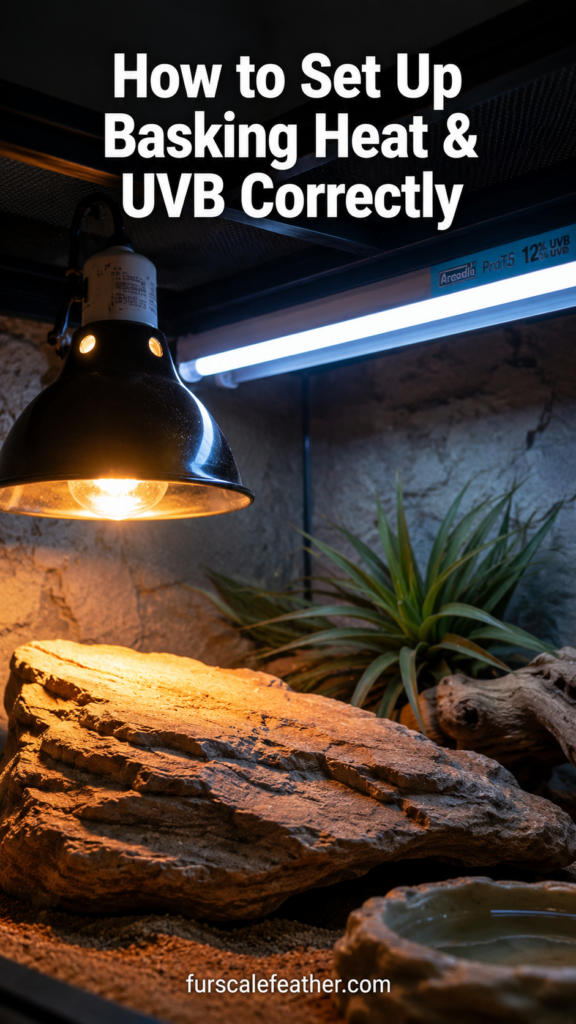
Bearded Dragon Basking Light and UVB Setup
This is the part of a bearded dragon tank setup that beginners get wrong most often, mixing up basking heat and UVB as if they’re the same thing. They’re not. The basking bulb provides heat. The UVB bulb lets your dragon produce vitamin D3, which it needs to absorb calcium. A dragon can be sitting under a hot bulb all day and still develop metabolic bone disease if there’s no working UVB source.
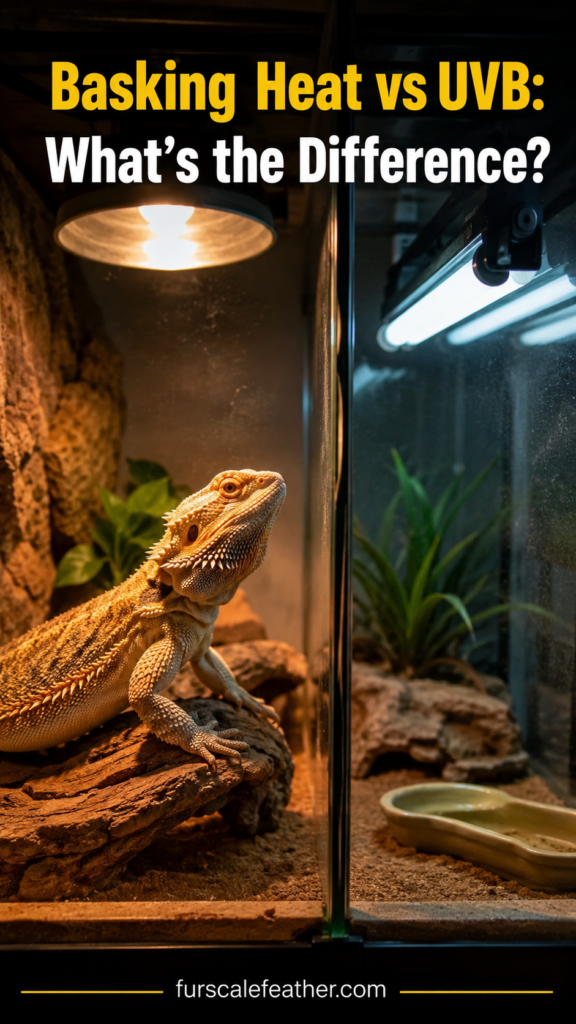
A few practical points:
- Mesh tank lids cut UVB penetration significantly, sometimes by more than half, so a bulb rated for 12 inches of coverage may only be effective at 6 inches through mesh.
- Coil UVB bulbs are widely discouraged among experienced keepers due to reports of eye irritation in reptiles, in favor of linear T5 HO tubes.
- Basking and UVB bulbs both need replacing on a schedule, not when they burn out, since output degrades gradually.
Best Substrate for a Bearded Dragon Tank
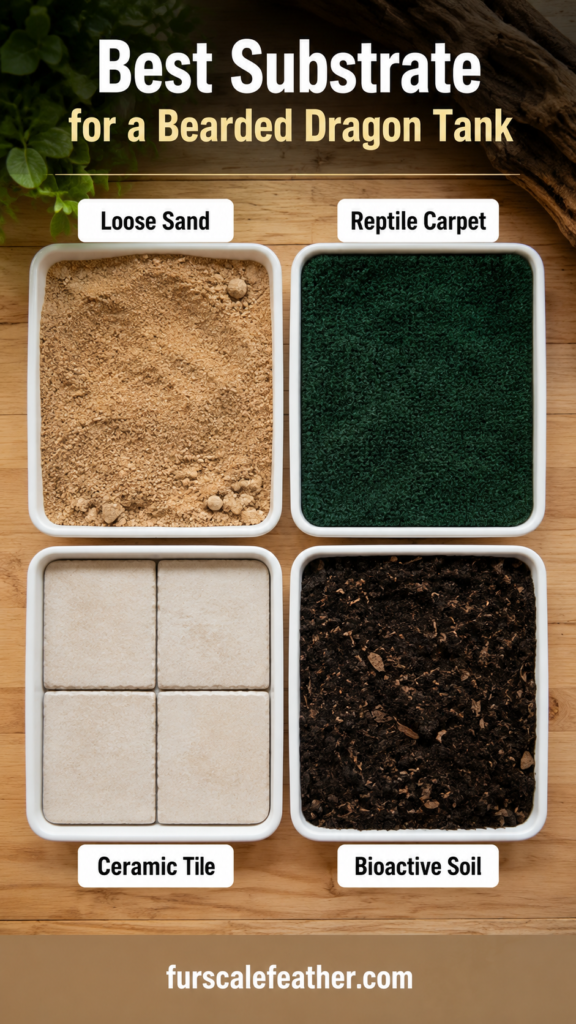
Substrate is where I get the most conflicting reader questions, mostly because loose sand is marketed everywhere as reptile sand while carrying a real impaction risk for younger dragons.
A local reptile rescue I’ve worked with on past product reviews ran an informal comparison across six rescued bearded dragons that had come in on loose calcium sand, switching them to tile and paper-based substrate over a three-month period. Two of the six had documented prior impaction issues on sand. None developed new impaction symptoms after the switch, and staff reported easier tank cleaning as a secondary benefit. That’s a small sample, not a clinical study, but it lines up with what most reptile vets already recommend.
Here’s how the common options compare:
| Substrate | Impaction Risk | Cleaning Effort | Best For |
|---|---|---|---|
| Loose reptile sand | Higher, especially for juveniles | Moderate | Not generally recommended |
| Reptile carpet | Very low | Low | Beginners, easy maintenance |
| Ceramic or slate tile | Very low | Low | Long-term, natural look |
| Bioactive soil mix | Very low if set up correctly | Higher upfront, low ongoing | Intermediate keepers wanting a bioactive bearded dragon enclosure |
My recommendation for a first-time setup is tile or slate. It holds heat well from the basking side, cleans in minutes, and removes impaction risk almost entirely. Once you’re comfortable with husbandry basics, a bioactive substrate with springtails and isopods is a strong upgrade for a more naturalistic terrarium setup.
Bearded Dragon Tank Decor and Enrichment Ideas
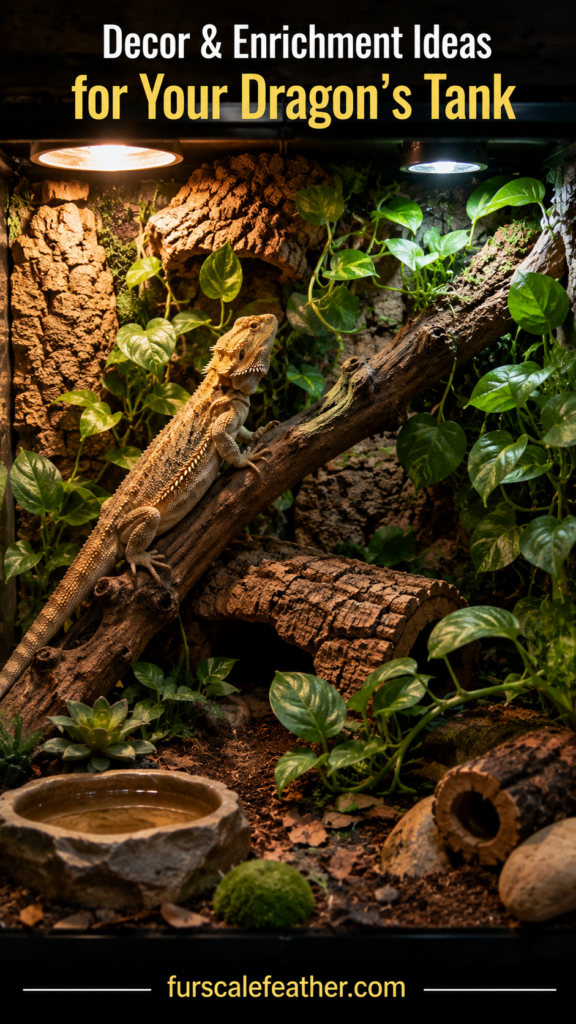
A bare tank with just a light and a rock is functional but not great for a dragon’s wellbeing. Good decor gives your dragon climbing options, hiding spots, and visual barriers that reduce stress.
- Cork bark rounds and grapewood branches for climbing and basking elevation.
- Flat basking rocks placed close enough to the heat lamp to reach target temperature without touching the bulb.
- Two hides minimum, one on the warm end and one on the cool end.
- Artificial or safe live plants like pothos along the back and sides for visual security.
- A digital thermostat controller, since a lamp on a simple on-off timer can overheat a tank on a warm day.
If you want a more elaborate bearded dragon terrarium setup, a bioactive build adds live plants, a cleanup crew of isopods and springtails, and a soil substrate that partially maintains itself. It’s a bigger upfront project, but it cuts down on spot cleaning long term.
Product Recommendations for a Bearded Dragon Tank Setup
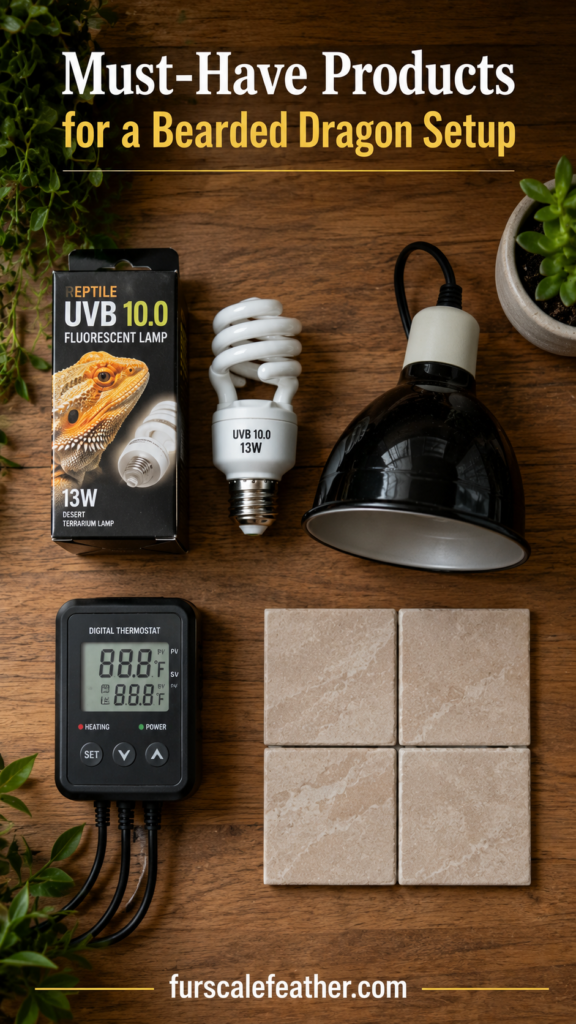
I haven’t personally kept a bearded dragon, so these picks are based on manufacturer specifications, reptile vet write-ups, and aggregated user reviews rather than my own hands-on testing, and I want to be upfront about that.
UVB lighting: Zoo Med ReptiSun T5 HO 10.0
- Pros: Widely recommended by reptile veterinarians, strong UVB output at typical mounting distances, full-length coverage reduces cold spots in UVB exposure.
- Cons: Requires a T5 HO specific fixture, more expensive upfront than coil bulbs.
- This is the winner for UVB, based on consistent recommendations across veterinary reptile resources and keeper communities.
Basking bulb: Zoo Med Repti Basking Spot Lamp
- Pros: Simple halogen design, widely available in multiple wattages to fine-tune basking temperature, long reported bulb life in user reviews.
- Cons: Needs a separate fixture from the UVB tube, so you’re running two lighting units.
Thermostat: Inkbird ITC-308 or similar digital reptile thermostat
- Pros: Cuts power to the basking bulb if temperatures spike, which prevents the overheating deaths that show up in reptile forum horror stories every summer.
- Cons: Added cost, and it requires an extra outlet and some initial setup.
Substrate: ceramic tile or a reptile-safe bioactive soil mix
- Pros: Low impaction risk, easy to disinfect, holds heat evenly.
- Cons: Tile has no digging enrichment, and bioactive setups take more research to get right the first time.
If you’re only buying one non-negotiable item beyond the tank itself, make it the UVB tube and thermostat combination. Heat and UVB failures are the two issues that most often send a bearded dragon to the vet.
Common Mistakes New Owners Make
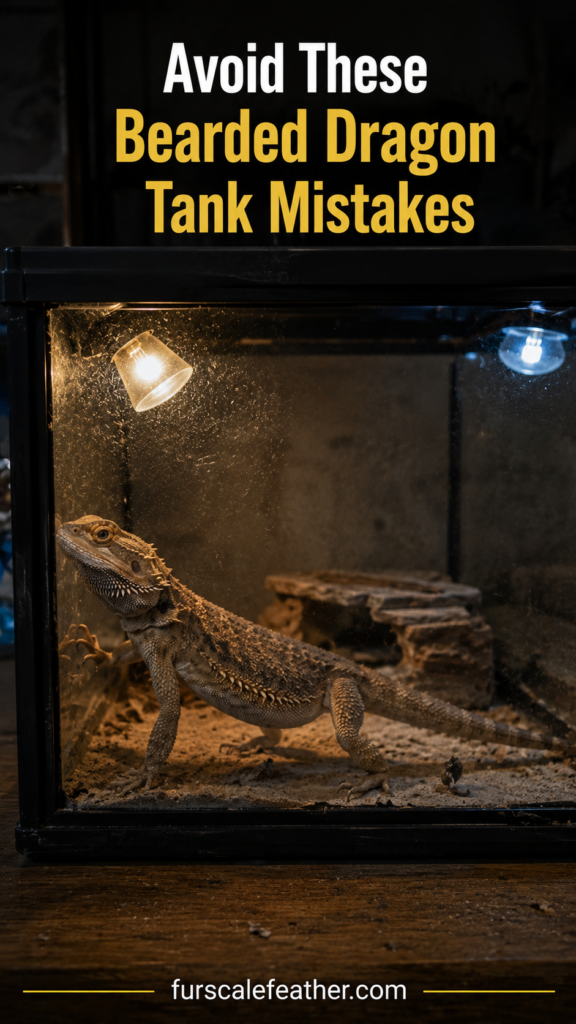
The biggest mistake I hear about, over and over from readers, is buying a starter kit tank sized for a hatchling and assuming it’ll work for the dragon’s whole life. A reader emailed me last year after her juvenile dragon stopped climbing and started pacing along the glass of a 20-gallon tank. She assumed it was a behavior problem. It was a space problem. Moving to a 75-gallon enclosure with proper temperature gradients resolved the pacing within about two weeks.
A second common mistake is trusting the thermometer that comes stuck to the side of the tank. Those are frequently inaccurate by 10 degrees or more. A separate digital probe thermometer at the basking spot is the only reliable way to know your dragon is getting the heat it actually needs.
Questions People Usually Ask
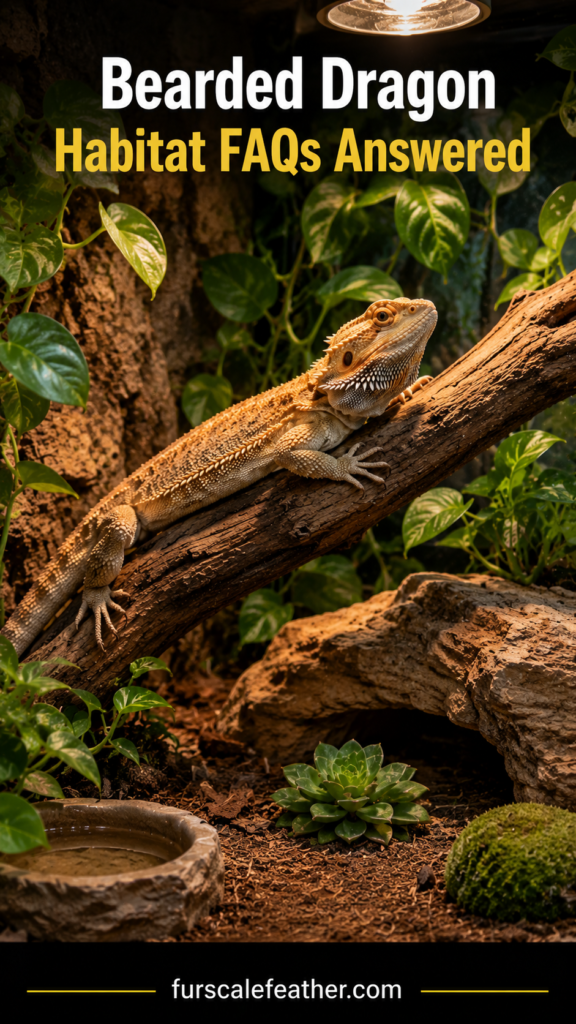
What size tank does a bearded dragon actually need? A hatchling can start in a 20-gallon tank, but plan on moving to at least a 40-gallon breeder by six months old, with 75 to 120 gallons being ideal for a full-grown adult.
Can I use sand in a bearded dragon tank setup? Loose sand carries a real impaction risk, especially for juveniles. Tile, reptile carpet, or a properly built bioactive substrate are safer choices recommended by most reptile vets.
How long should basking and UVB lights stay on each day? Most keepers run lights for 10 to 12 hours during the day and turn them off at night, with nighttime temperatures allowed to drop into the mid-60s without additional heat, as long as it doesn’t go lower.
How do I know if my UVB bulb still works? You can’t tell by looking at it. UVB output drops well before the bulb stops producing visible light, so replace linear T5 bulbs every 6 to 12 months regardless of appearance.
Does a bearded dragon need a vet checkup after setup? An initial wellness visit with a reptile-experienced veterinarian is a good idea, and if your dragon shows signs of illness like appetite loss, lethargy, or limb swelling, a vet visit is essential rather than something to diagnose at home.
Getting a bearded dragon tank setup right comes down to five things: enough space, correct basking heat, working UVB, safe substrate, and stable humidity. Everything else, from decor to bioactive soil, is a bonus once those basics are locked in. Start with the tank size and lighting since those cause the most health problems when wrong, then build out decor and enrichment once your temperatures have held steady for a few days. If you’re still unsure about any part of your setup, a reptile-experienced vet or a local reptile rescue can usually do a quick equipment check for less than the cost of treating an illness later.
Disclosure: I have not personally owned or kept a bearded dragon. Anecdotes in this article are labeled by source (reader, rescue) and product recommendations are based on manufacturer specifications, veterinary resources, and aggregated user reviews rather than my own hands-on testing. This article does not contain paid affiliate links at this time.