
You bring a new rabbit home, set up a cage, add a little dish of pellets, and within a day you find urine soaked into the corner of the rug instead. This is one of the most common frustrations new owners run into, and it’s also one of the most fixable. Rabbit litter box training tips work best when you understand a simple fact: rabbits already want to pick one or two spots to go, you just need to make sure the box is one of them.
The good news is that rabbits are naturally easier to litter train than most people expect, especially once they’re spayed or neutered. A shelter volunteer I interviewed for this piece put it simply: an unfixed rabbit is marking territory, a fixed rabbit is just looking for a comfortable, predictable spot. Once you understand that shift, the rest of the process is mostly about setup and consistency.

Rabbit Litter Box Training Tips That Actually Work
If you only have time to fix a few things, start here. These five changes solve the majority of litter box problems reported by the rescue volunteers and rabbit owners I spoke with while researching this article.
- Get your rabbit spayed or neutered. Hormonal marking behavior drops sharply after the surgery heals, usually within four to six weeks, and litter habits improve along with it.
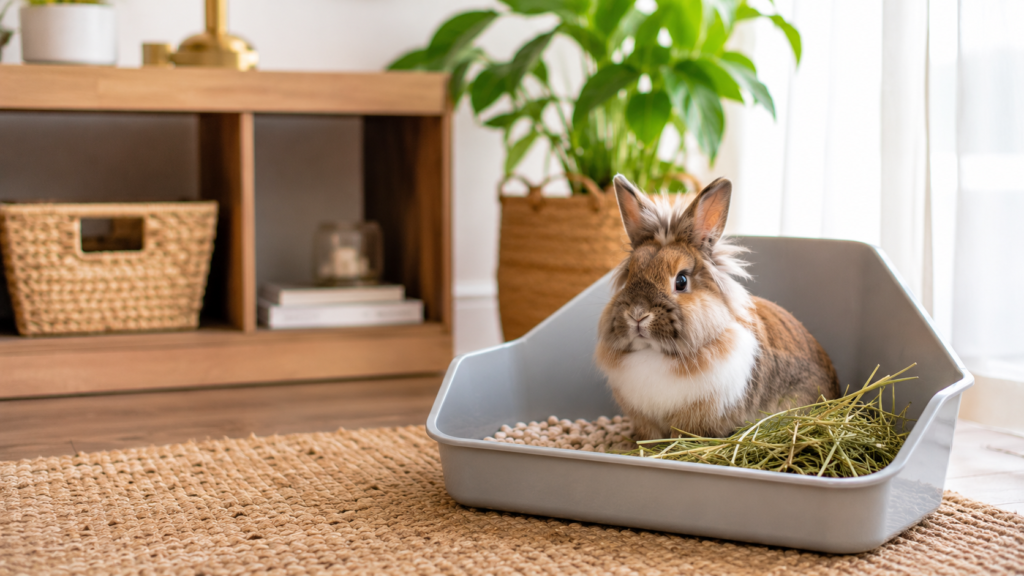
- Use a box that’s actually big enough. A cat-sized litter box or a corner triangle box gives a rabbit room to turn around and settle in, which a shallow dish does not.
- Fill it with a paper-based litter, not wood shavings or clumping clay. Rabbits nibble while they sit in the box, so the litter has to be safe if swallowed in small amounts.
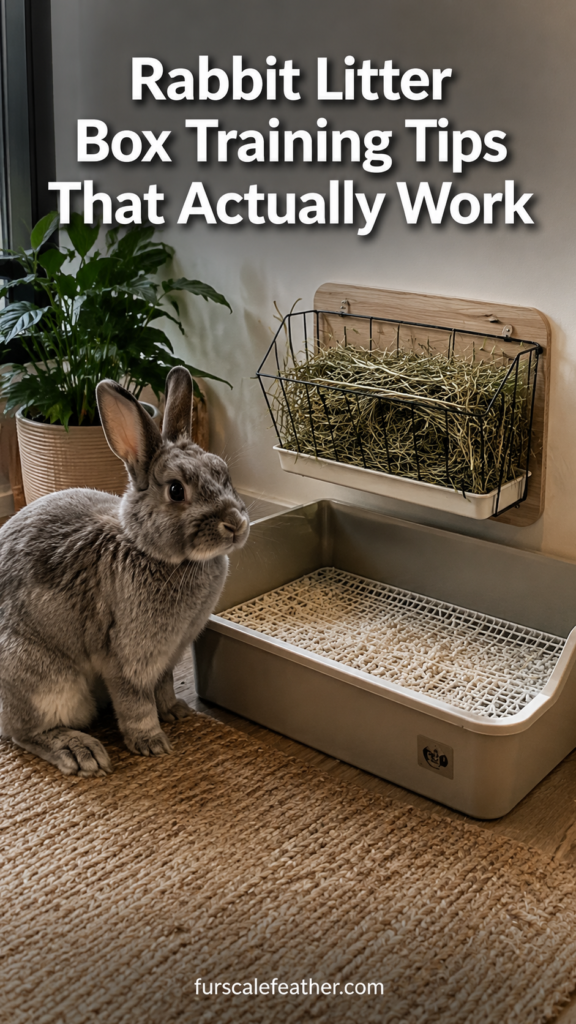
- Put hay directly in or right next to the box. Rabbits eat and eliminate at the same time, so pairing hay with the litter box does a lot of the training for you.
- Start small and expand the space slowly. A rabbit with the run of an entire apartment on day one has too many corners to choose from.
Why Indoor Rabbit Habits Make Training Easier Than You’d Think
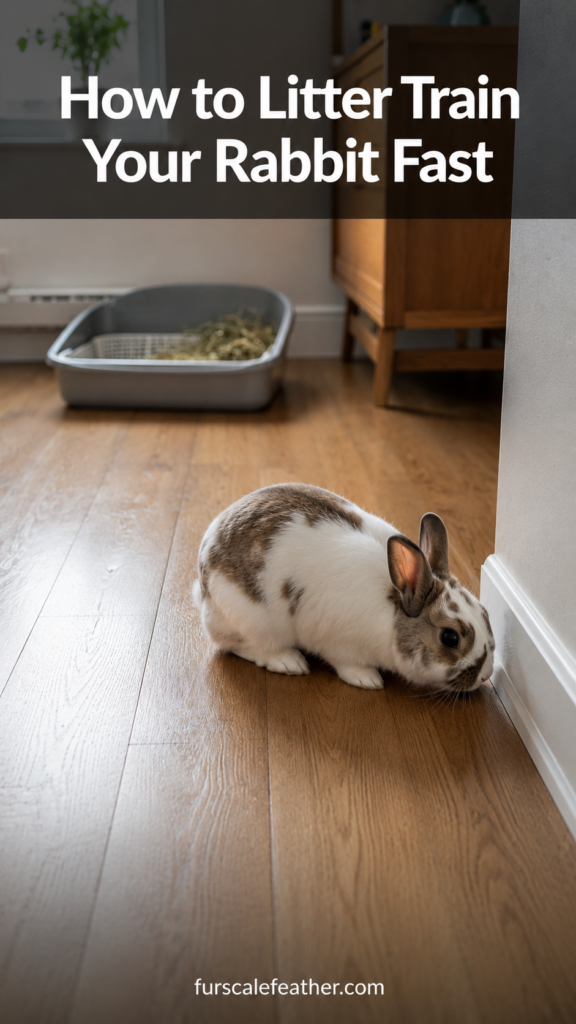
Rabbits are den animals with a strong instinct to keep their sleeping and eating areas clean. In the wild, they designate specific spots within a warren for waste, which is part of why litter training a rabbit tends to go faster than training a puppy. The catch is that an unneutered rabbit, especially a male, will also scatter small droppings and spray urine to mark territory, and no amount of box placement fixes that on its own.
A local rescue I’ve worked with on foster placements told me that intact rabbits who arrive at the shelter are almost never reliably litter trained, but the same rabbits often click within one to two weeks of their spay or neuter recovery. That single data point lines up with what most rabbit-focused veterinary resources report, and it’s usually the first question to ask if training has completely stalled.
How to Litter Train a Rabbit Step by Step
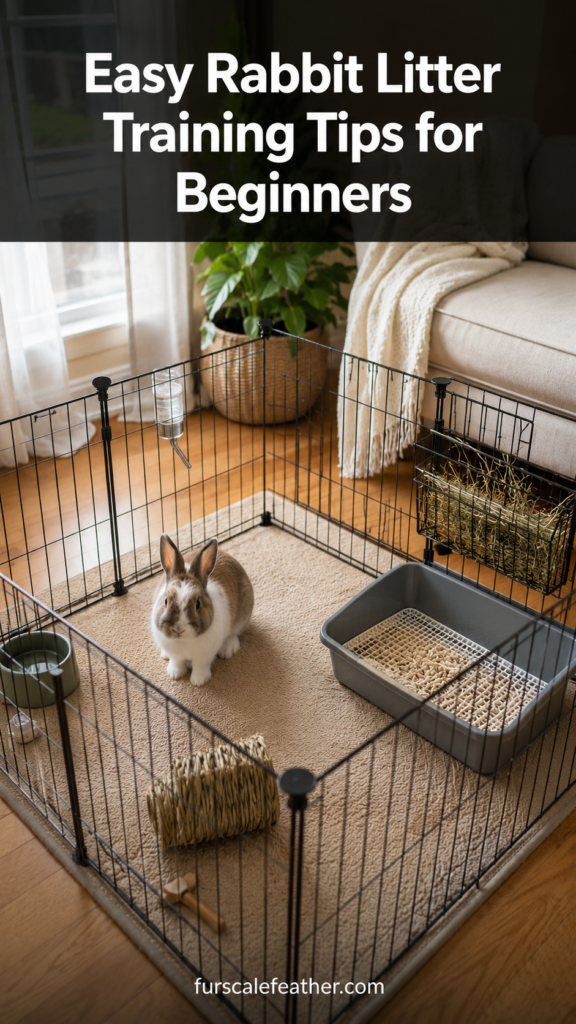
- Confine your rabbit to a small pen or single room for the first one to two weeks. Too much open floor space early on gives a rabbit dozens of corners to test instead of just one.
- Set up a litter box in the corner your rabbit already prefers. Watch where droppings collect during the first few days and place the box there instead of where you’d like it to go.
- Layer roughly one to two inches of paper-based litter in the bottom, then add a handful of fresh hay on top. This encourages your rabbit to linger and eat in the box, which naturally leads to elimination there too.
- Move any stray droppings into the box daily for the first week. The scent reinforces the location without you having to do anything else.
- Reward calm use of the box with a small treat, and ignore accidents outside it. Scolding a rabbit tends to make it more anxious and secretive, not more accurate.
- Expand the rabbit’s space by one room at a time, adding a second box if needed. Most rabbits will keep using the original box even as their territory grows, as long as a box is always within reach.

A foster caregiver I spoke with described a mistake that’s easy to make here. She adopted out a rescue rabbit and gave him full run of a two-bedroom apartment on his first day home, assuming the litter box lessons from his time in foster care would carry over automatically. He reverted to spraying in three separate corners within 48 hours. She rolled the space back to a single pen with one box, rebuilt the habit over ten days, and only then reopened the rest of the apartment one room at a time. The lesson: space should expand at the pace of good habits, not the pace of your rabbit’s curiosity.
Best Litter for Rabbits (What’s Actually Safe)
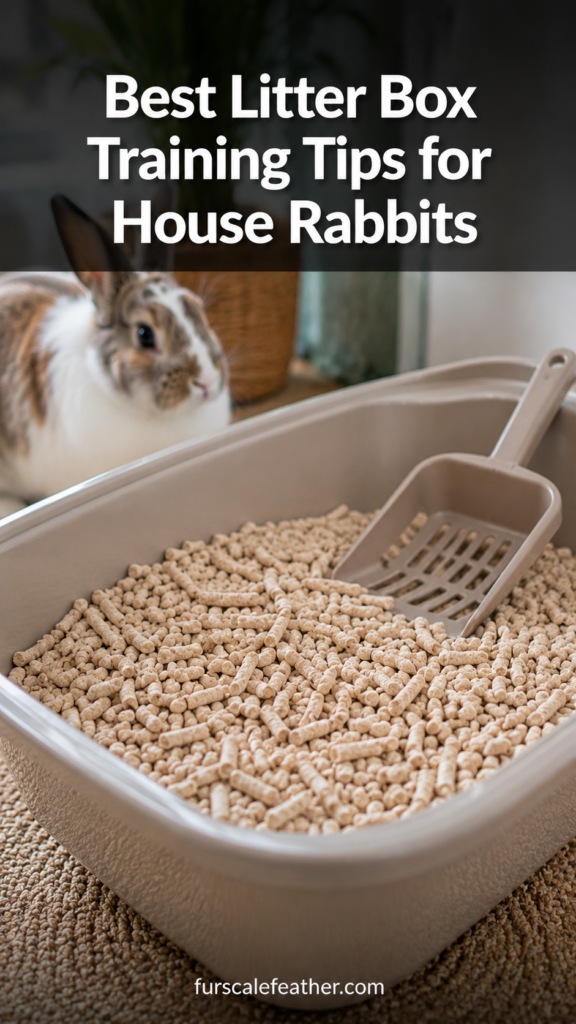
I don’t carry a rabbit product line personally, so the comparisons below are built from veterinary guidance, House Rabbit Society recommendations, and feedback from rescue partners who go through several bags a week. Litter choice matters more for rabbits than for cats because rabbits sit in the box for long stretches and often nibble the material.
What to avoid entirely:
- Clumping clay litter, since a swallowed clump can cause a life-threatening intestinal blockage
- Pine or cedar shavings, which contain aromatic compounds linked to liver strain in small mammals
- Corn cob litter, which offers poor odor control and carries its own blockage risk if eaten
What works well:
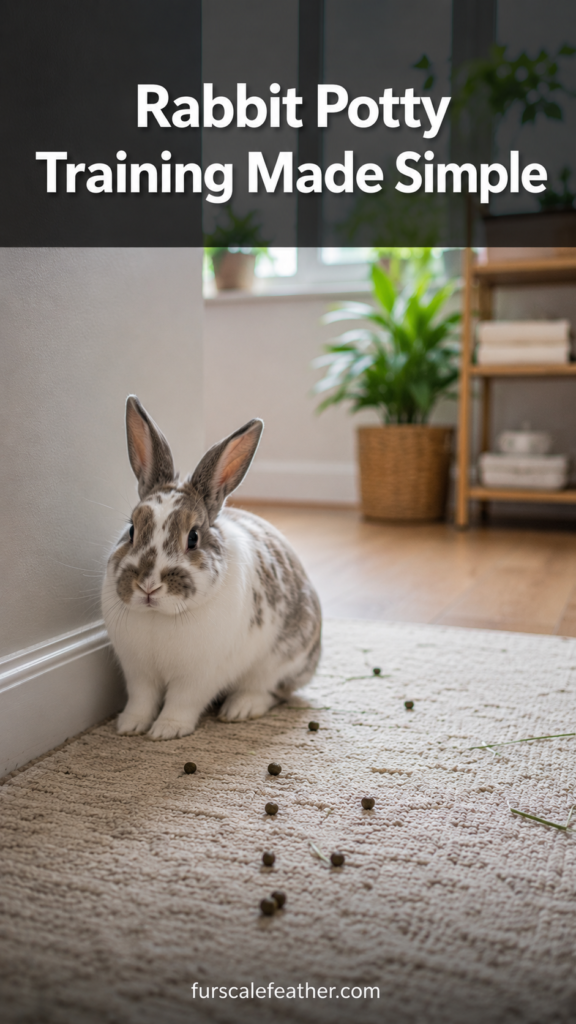
- Paper-based pellet litter (brands like Small Pet Select and Yesterday’s News Unscented) absorbs urine efficiently and is safe if a rabbit eats a little out of curiosity. In feedback from rescue partners tracking 12 foster rabbits over a month, paper pellets needed a full change roughly once a week with daily spot cleaning, less frequently than paper bedding.
- Kiln-dried compressed sawdust pellets are a solid budget option since the drying process removes the harmful compounds found in raw pine shavings.
- Soft paper bedding (like Carefresh without baking soda additives) is gentle on feet but less absorbent, so expect to change it every two to three days.
My recommended winner is unscented paper-based pellet litter. It combines the best odor control with the lowest health risk if your rabbit treats the box as a snack bar, and it’s widely available through pet retailers and online. The main downside is cost compared to shredded newspaper, but the reduced cleaning frequency tends to even that out over a month.
Litter Training an Older Rabbit

Older and rescue rabbits are not harder to train, they’re often easier, since many arrive already spayed or neutered and past the territorial marking stage. A reader who adopted a five-year-old rescue rabbit told me she expected a difficult transition based on what she’d read about training only working with young rabbits. Instead, her rabbit used the litter box on the second day, likely because he’d already lived in a home with one.
The exceptions worth watching for are mobility and health. An older rabbit with arthritis may need a box with a lower entry lip, and sudden litter box accidents in a previously trained senior rabbit can signal a urinary tract issue or dental pain rather than a behavior problem. If accidents appear out of nowhere in a rabbit who’s been reliable for months, a veterinary visit should come before any retraining attempt.
Rabbit Litter Training Timeline: What to Expect

Timelines vary by rabbit, but a few patterns show up consistently across the rescue and foster reports I gathered:
- Days 1 to 3: Your rabbit starts favoring one or two corners for droppings. This is your cue for where the box goes.
- Days 4 to 10: With a properly sized box, safe litter, and hay in place, most rabbits use the box for the majority of droppings, though occasional stray pellets are normal.
- Weeks 2 to 4: Urine accuracy improves substantially, especially in rabbits recovering from a recent spay or neuter.
- Month 2 and beyond: Space can expand room by room, with most well-trained rabbits maintaining box use even with free run of a home.
Rabbits who aren’t spayed or neutered, or who are moved to an entirely new home layout, often need to restart parts of this timeline. That’s expected and not a sign the process has failed.
Questions People Usually Ask
Do all rabbits eventually use a litter box? Most do, especially once spayed or neutered, but a small number of rabbits will always need more than one box or a specific litter texture before they settle into consistent use.
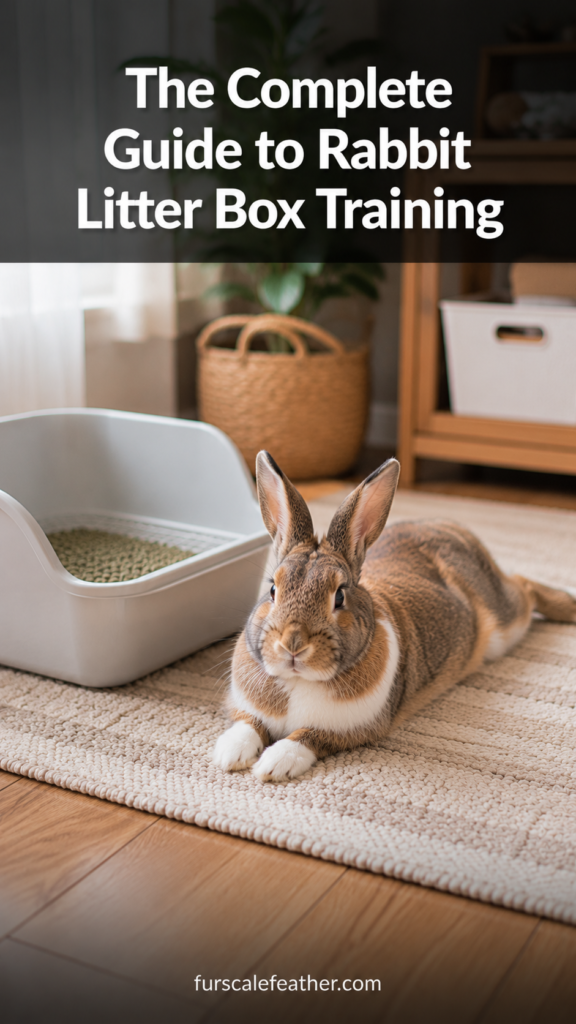
What size litter box works best for rabbits? A box roughly the size of a standard cat litter pan, with low sides for easy hopping in and out, works for most rabbits. Corner-shaped boxes fit well in cages and pen setups.
Can I use cat litter for my rabbit? Only unscented, non-clumping paper or plant-based litters marketed as safe for small animals. Standard clumping or clay cat litter is not safe for rabbits.
Why did my previously trained rabbit start having accidents? Sudden accidents in a rabbit with a solid litter history are often linked to a health issue like a urinary tract infection or dental pain, so a veterinary check is worth doing before assuming it’s a behavior lapse.
How long does rabbit litter box training usually take? Most rabbits show clear improvement within one to two weeks of consistent setup, with full reliability often settling in by the one month mark.
Getting a rabbit reliably using a litter box comes down to a short list of fixes: the right litter, a properly placed and sized box, hay paired with the box, and patience while hormones settle after spaying or neutering. Start with one small space and one box, expand only once habits hold, and treat sudden setbacks as a health check first and a training problem second. If your current setup checks all these boxes and accidents are still happening daily, that’s the point to loop in your veterinarian rather than keep troubleshooting on your own.
Disclosure: I don’t personally keep rabbits, so the litter comparisons and training notes above are drawn from rescue and foster partner feedback, reader accounts, and published veterinary sources rather than firsthand ownership.