
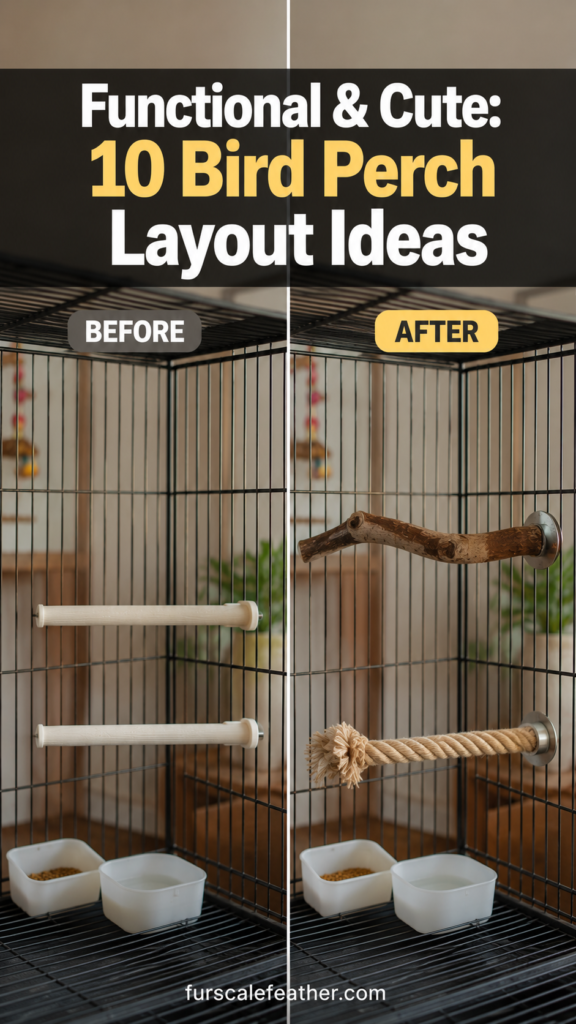
Open almost any starter bird cage and you’ll find the same thing: two identical plastic dowels, one near the top and one near the bottom, both exactly the same width. It looks tidy. It’s also one of the most common setup mistakes new bird owners make. Bird perches aren’t just furniture for a cage, they’re the surface your bird stands on for most of its waking life, and the wrong mix can lead to sore feet, boredom, and a bird that barely moves around its own home.
If you’re staring at an empty cage trying to figure out where perches should even go, this guide walks through ten layout ideas that balance looks with actual foot health and enrichment, plus a step-by-step way to plan it out.
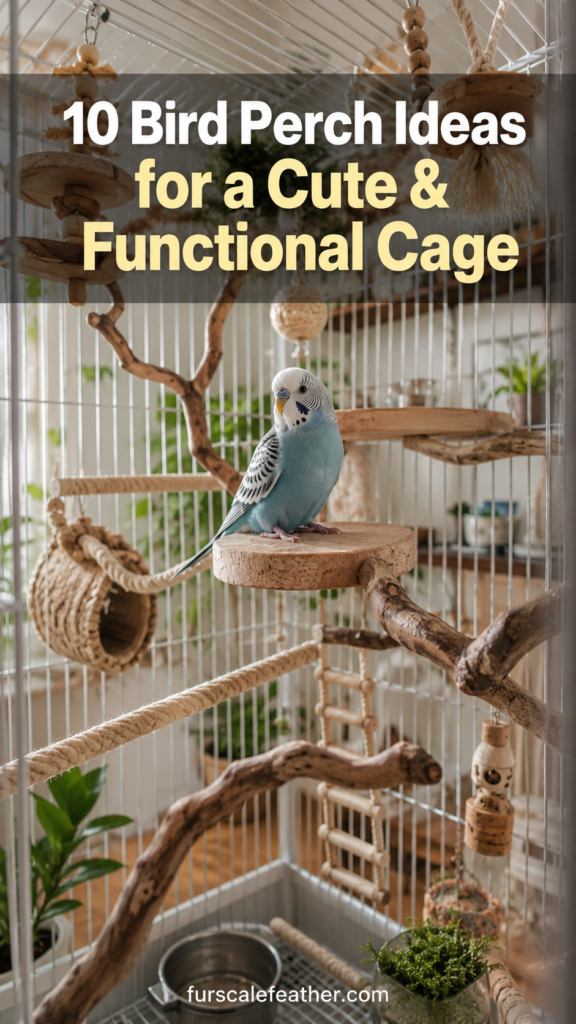
Why Bird Perches Matter for Your Cage Setup
The short answer: birds need a variety of bird perches, not just one shape repeated everywhere. Wild birds land on branches of constantly changing width, texture, and angle. That variation keeps their feet flexible and their leg muscles engaged. A cage with only same-size dowel perches removes all of that variation, and over months it can contribute to pressure sores, especially on the balls of the feet.
A good layout usually includes at least three different textures (wood, rope, and a harder mineral or cement surface), two or more diameters so the foot never grips the exact same way twice, and enough open floor space that your bird can still flap and move between perches without clipping its wings on the cage bars.
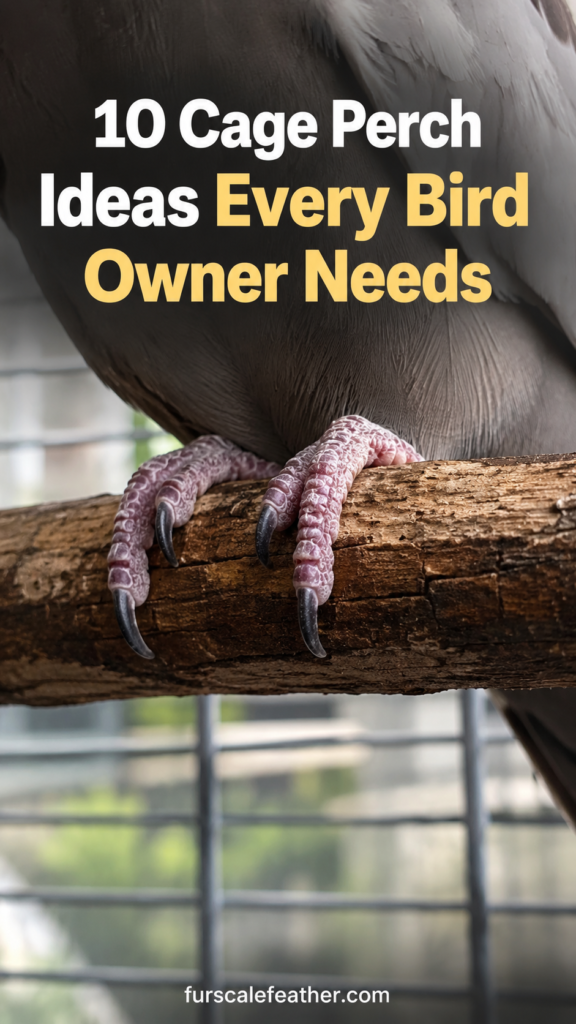
How to Plan a Bird Perch Layout
Before buying anything, walk through these steps so you’re not just guessing where things go.
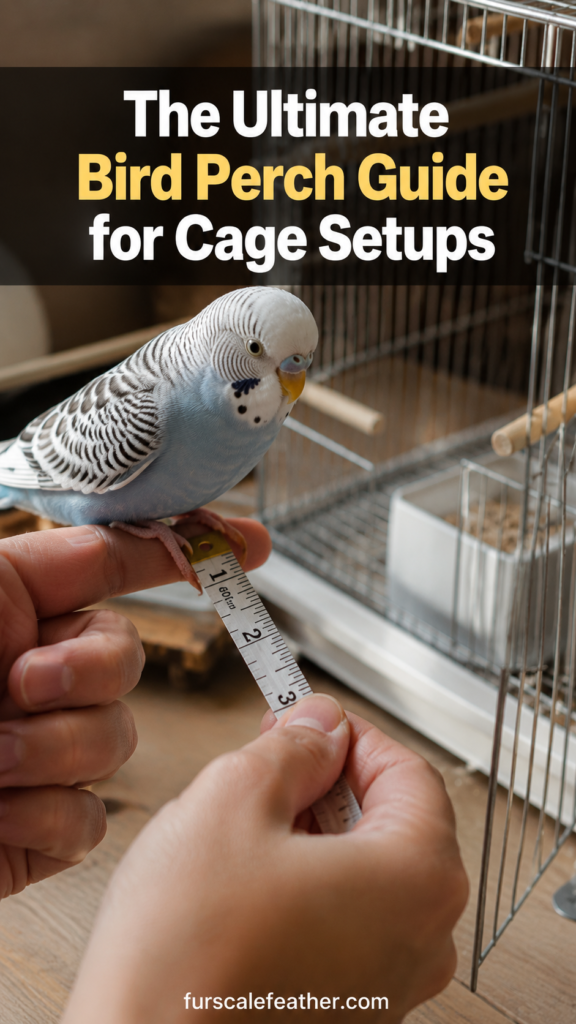
- Measure your bird’s foot span. Wrap a soft measuring tape around your bird’s foot at rest. The ideal perch diameter lets the toes wrap about two-thirds of the way around, not flat and not overlapping.
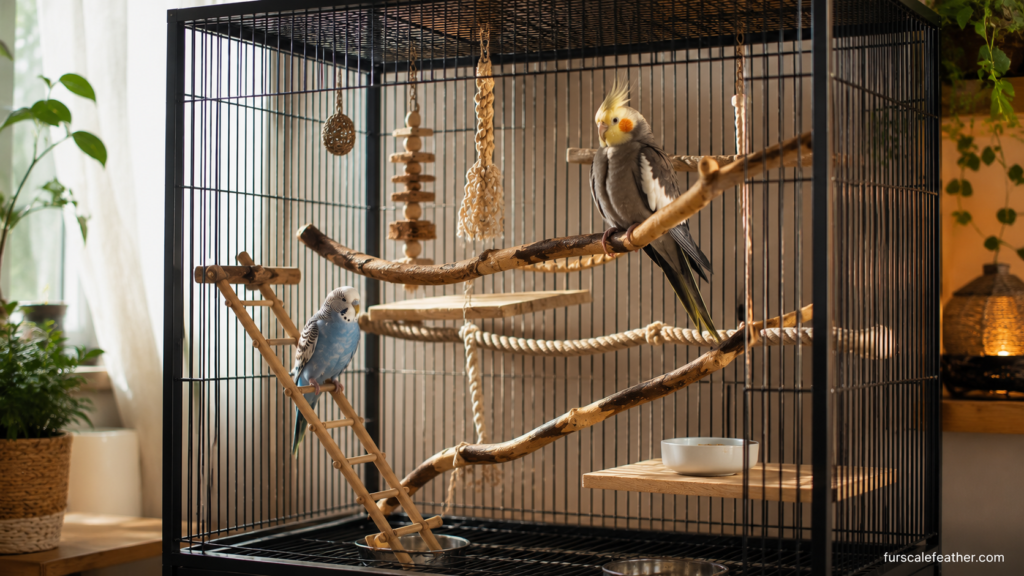
- Map the cage into zones. Pick a high perch for sleeping, a mid-level perch for general perching and play, and keep the area below the food and water dishes clear so droppings don’t land on food.
- Stagger the heights. Avoid placing perches directly above one another. Staggering forces your bird to actually move and climb instead of hopping straight down.
- Leave flight or flap space. Even in a cage too small for real flight, your bird should be able to fully extend its wings between perches without touching the bars.
- Rotate textures every few weeks. Swap a rope perch for a wood one, or move the cement perch to a different spot. Small changes keep the cage mentally stimulating.
10 Bird Perch Ideas for a Cute and Functional Cage
Once you know the basic zones, here are ten specific perch types and placements to mix and match.
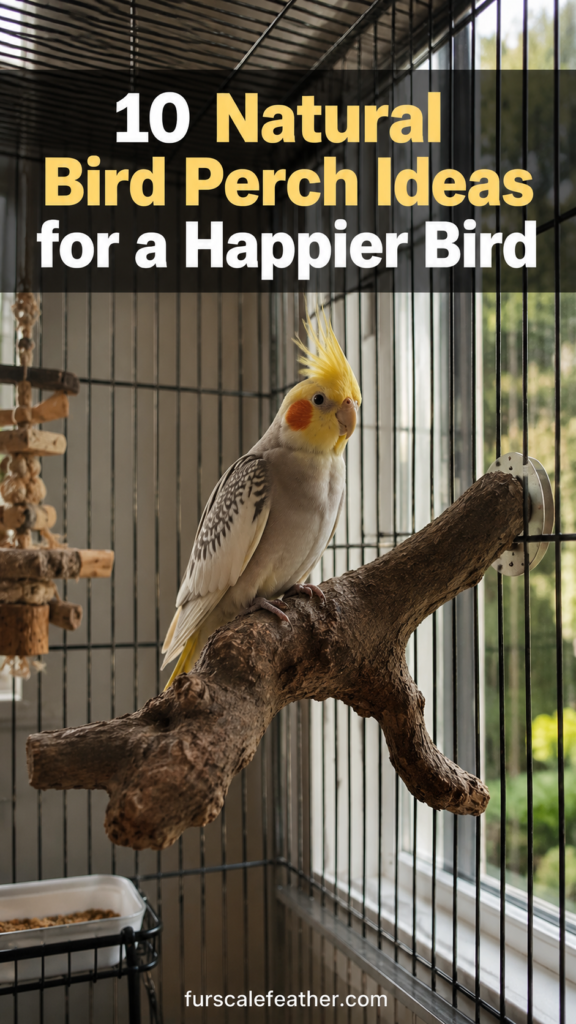
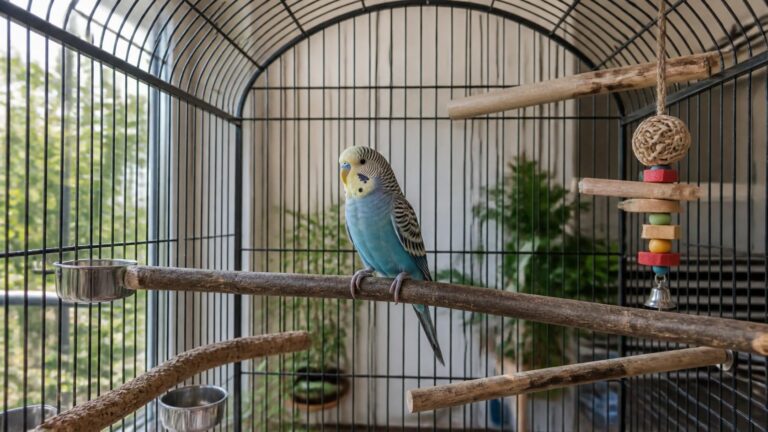
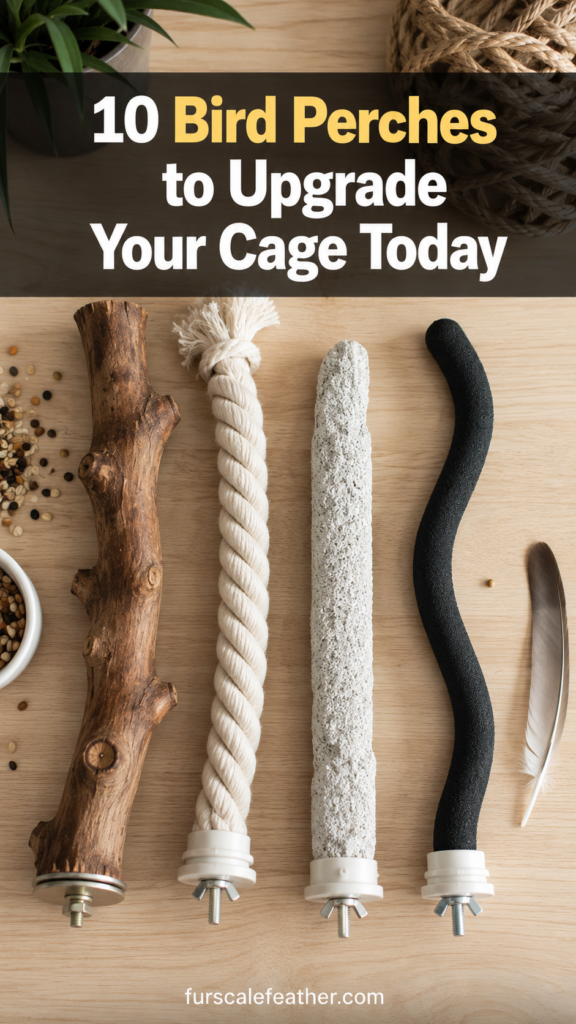
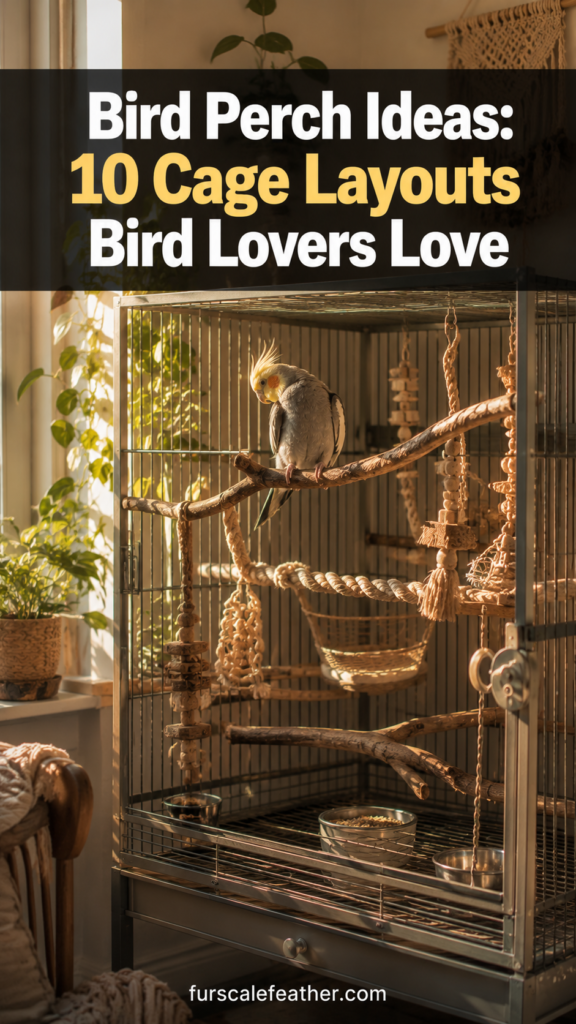
- A natural wood branch as the anchor perch. Untreated manzanita, java wood, or dragonwood branches have irregular width along their length, which is exactly the variation a bird’s foot needs. Place this as the main, most-used perch.
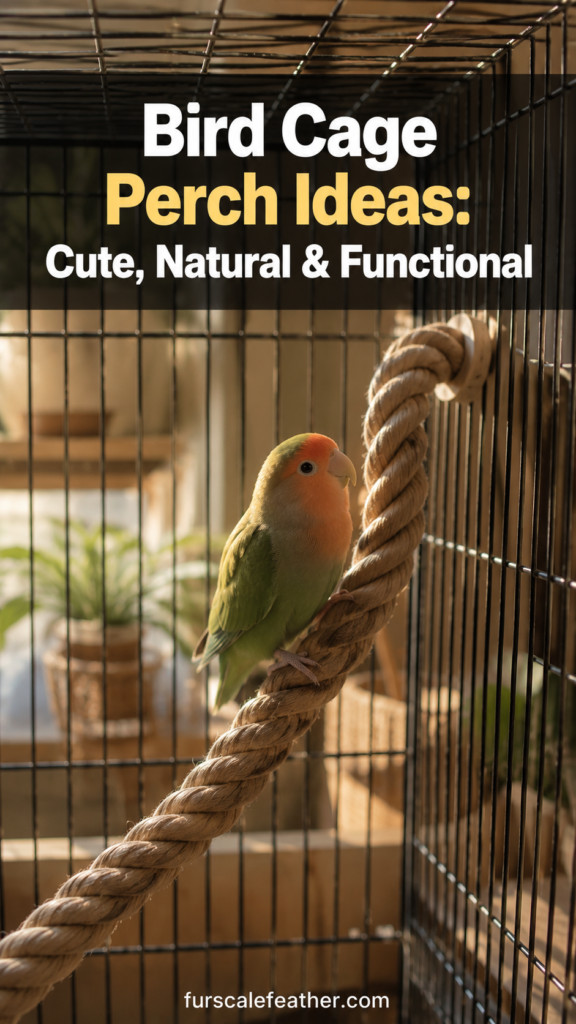
- A rope perch in a corner. Rope bends into corners other perches can’t reach, adding usable space without crowding the cage. It’s also soft underfoot, which helps older or arthritic birds.
- A cement or mineral perch near the food dish only. These naturally file down nails and beak, but they’re abrasive if a bird stands on them all day. Keep this one perch limited to a spot the bird visits briefly, like right next to food.
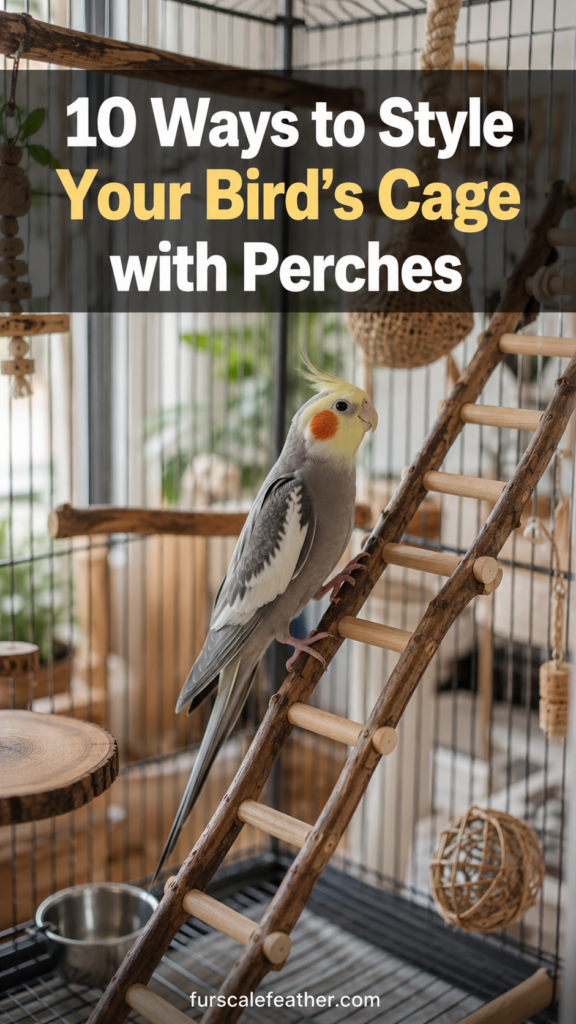
- A ladder perch connecting two levels. Ladders double as a climbing toy and a functional bridge between a lower play area and a higher sleeping perch.
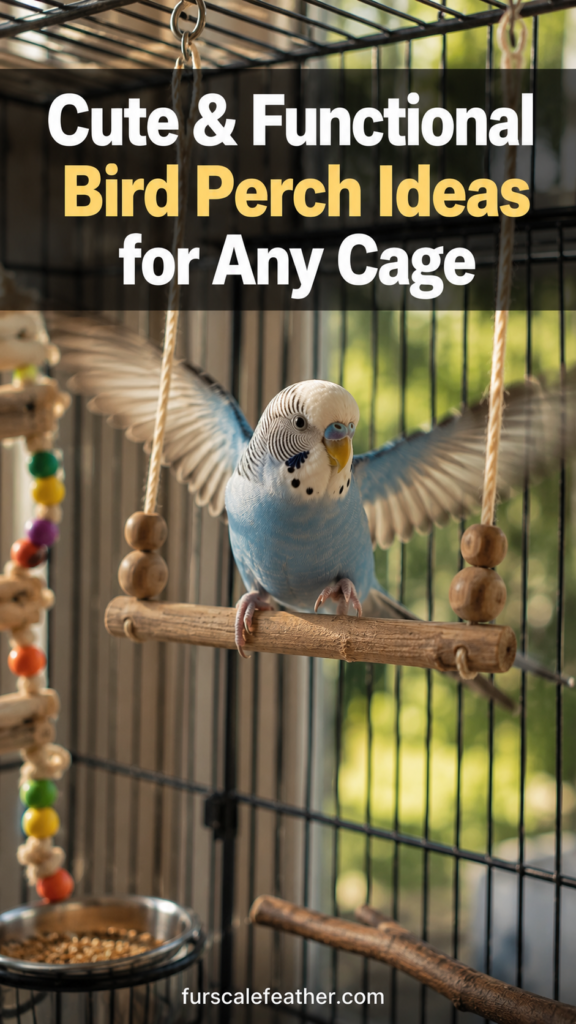
- A swing perch for active enrichment. Swings give birds a sense of movement and are especially popular with cockatiels and budgies. Hang it away from the cage wall so it can move freely without banging.
- A flat platform perch for resting. Parrots with arthritis, missing toes, or older birds often do better with a flat wood or cork platform where they can rest their whole foot instead of gripping constantly.
- A corner triangle perch to save floor space. These fit into unused corners and free up the center of the cage for toys or foraging bowls.
- A varied-diameter perch set stacked at different heights. Instead of buying five identical perches, buy in a range from thin to thick so the same two perches never repeat the same grip.
- A perch positioned near the cage’s best window view. Birds are naturally curious and like a vantage point. Just avoid placing it in direct, unshaded sun for long stretches.
- A low, wide perch near the cage floor for foraging. This gives ground-loving species like quaker parakeets or cockatiels an easy landing spot near foraging toys and encourages natural foot-and-beak play.
A rescue coordinator I interviewed, who oversees intake for a mid-sized parrot rescue, told me that new arrivals are almost always set up with a wood, rope, and platform perch on day one specifically to see which grip the bird favors before finalizing a permanent layout. That habit of testing a few textures early is worth borrowing even for a bird you’ve had for years.
Best Bird Perches We Recommend
I have not personally kept birds long-term, so the notes below come from a combination of published avian care guidance, aggregated user reviews, and feedback from the rescue coordinator mentioned above, who has run all of these products through daily use across multiple cages.
Featherland Paradise Java Wood Perch
- Pros: irregular natural shape wears nails down gradually, holds up for months, widely sized options
- Cons: bark occasionally sheds and needs sweeping, slightly pricier than plain dowels
JW Pet Insight Comfy Perch (flexible foam perch)
- Pros: bends to fit odd cage shapes, soft on arthritic feet, easy to clean
- Cons: according to the rescue coordinator, heavy chewers can strip the foam coating within two to three weeks, so it works best as a secondary perch rather than the only one
Polly’s Pet Products Pumice Perch
- Pros: low maintenance, naturally keeps nails and beak trimmed
- Cons: too rough for constant standing, should only be placed near food or water, not as a main perch
Super Bird Creations Rope Perch
- Pros: inexpensive, bends into corners, adds a soft landing option
- Cons: fraying strands need to be checked weekly and trimmed, since loose threads can wrap around toes
If you only buy one perch to start, go with the Featherland Paradise Java Wood Perch. It covers the biggest need first, natural diameter variation, and it holds up well enough that most owners in the aggregated reviews reported replacing it only once or twice a year.
A Mistake to Avoid When Choosing Bird Perches
A reader named Priya emailed me after her cockatiel developed sore, reddened patches on the bottom of both feet. Her cage had two perches, both the same plastic dowel, positioned directly above each other. She swapped one for a natural wood branch and the other for a rope perch, and staggered their heights so the bird had to actually move between them. Within about three weeks, the redness cleared and she noticed the bird gripping and climbing more confidently than before.
The lesson from her case is simple. Identical, same-width perches placed in a straight vertical line are one of the most common setups sold in starter cage kits, and they’re also one of the easiest things to fix.
Signs Your Bird Perch Setup Needs an Update
- Redness, flat spots, or scabbing on the bottom of the feet
- Your bird stands on only one perch and avoids the others
- Perches are worn smooth with no texture left
- Droppings are accumulating directly on a perch below the food dish
- Your bird hasn’t chewed, climbed, or interacted with a perch in weeks
If you notice swelling, limping, or a foot that looks visibly injured, that’s a job for an avian veterinarian rather than a perch swap. The Association of Avian Veterinarians keeps a directory of certified vets by region if you need to find one nearby.
Questions People Usually Ask
How many perches does a bird cage actually need? Most single-bird cages do well with three to five perches of varying width and texture, spaced so the bird has to move between them rather than reaching every spot from one spa.
What’s the best perch diameter for a budgie or cockatiel? For budgies, roughly 3/8 to 5/8 inch works well. For cockatiels, closer to 5/8 to 3/4 inch. The exact fit depends on the individual bird’s foot size, so measuring is more reliable than a generic chart.
Can I use sandpaper perch covers? Most avian sources advise against them. They’re too abrasive for constant contact and are linked to foot irritation rather than the gentle filing owners expect.
Do bird perches need to be replaced regularly? Wood and rope perches typically last several months to a year depending on how much the bird chews. Once bark is fully stripped or rope is heavily frayed, it’s time to swap it out.
Where should I avoid placing a perch? Skip placing any perch directly above food or water dishes, aside from a cement perch meant for brief visits, since droppings will contaminate the food below.
A cage full of matching plastic dowels is easy to buy but not particularly kind to a bird’s feet or its curiosity. Mixing in natural wood, rope, a platform, and a touch of mineral texture, then staggering the heights, gives your bird a setup that’s both healthier and more engaging to move through. Start with one or two swaps this week, watch which perch your bird gravitates toward, and build the rest of the layout around that preference.
Disclosure: Product recommendations above are based on published reviews, aggregated user feedback, and input from a rescue professional, not personal long-term testing.