
A reader named Priya once sent me a two-minute voice memo of her cockatiel, Mango, shrieking nonstop from 5 p.m. until she got home from work. Mango wasn’t sick. He was bored out of his feathered mind, and the fix turned out to be almost embarrassingly simple: the right toys, rotated the right way. If you’re here because your bird screams, plucks, or destroys your blinds out of sheer restlessness, this list of the best parrot toys to prevent boredom is built to actually solve that problem, not just distract from it for an afternoon.
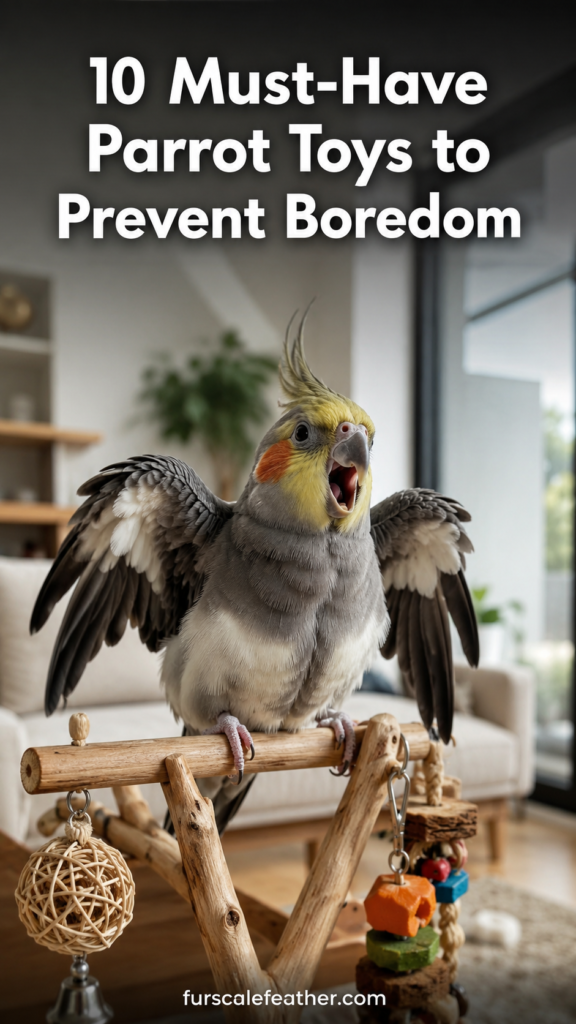
Why Parrots Get Bored (And What It Actually Costs You)
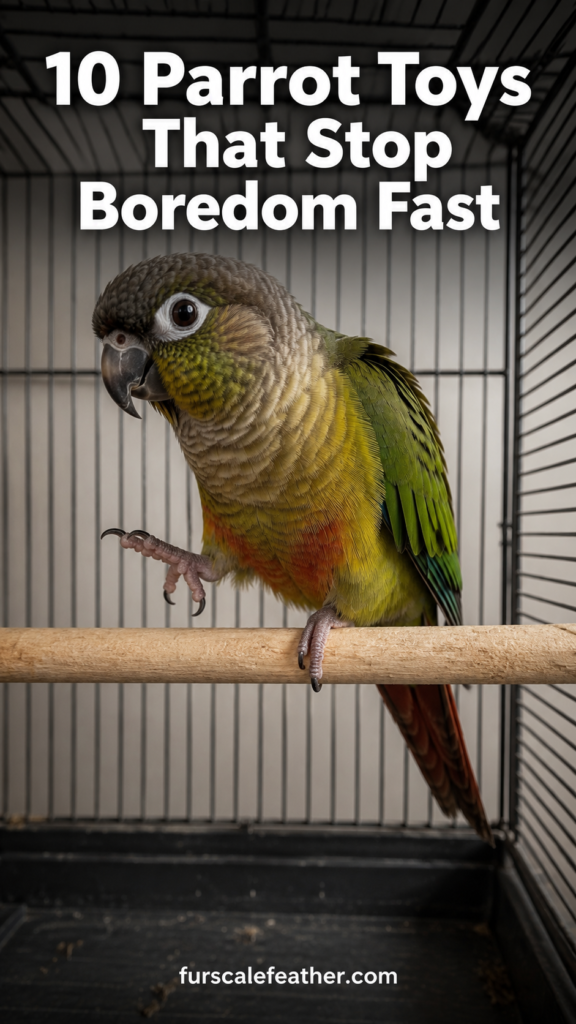
Wild parrots spend roughly six to eight hours a day foraging, chewing, climbing, and problem-solving before they ever get to rest. A pet parrot in a cage with two plastic bells and a mirror doesn’t get to do any of that, and the boredom shows up as behavior, not as a bird sitting quietly and sulking.
Common signs your parrot needs more enrichment:
- Repetitive screaming that starts at the same time every day
- Feather plucking or over-preening in specific spots
- Pacing back and forth on the same perch
- Chewing on cage bars, furniture, or baseboards instead of toys
- Sudden disinterest in food or reduced activity
Feather plucking and appetite changes can also point to a medical issue, so if either shows up alongside boredom behaviors, a visit to an avian veterinarian is the right first step before assuming it’s purely behavioral. The Association of Avian Veterinarians maintains a directory of certified avian vets if you don’t already have one.
The Best Parrot Toys to Prevent Boredom
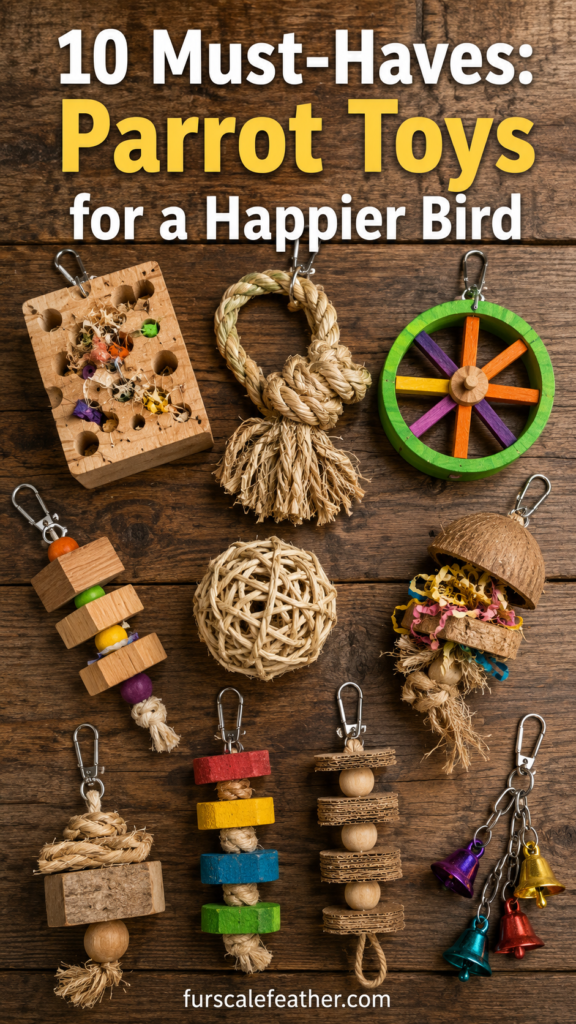
1. Kris Porter’s Parrot’s Choice Foraging Block
Designed by enrichment specialist Kris Porter, this block comes with nested holes and wide cuts made for tucking in nutriberries, crinkle paper, or bits of dried fruit. It ships in small (about 4.5 inches) up to large (9 inches) sizes, so it scales from budgies to macaws.
- Pros: Refillable, sized for nearly every species, easy to increase difficulty by adding foraging parts
- Cons: Needs to be restocked with treats to stay interesting, not a chew-and-destroy toy on its own
- Best for: Owners who want one system they can reuse for months
2. Prevue Pet Products Playfuls Sink N Seek
Three plastic cups on a swinging base hold treats your bird has to tip, spin, or dig through to reach. It doubles as a swing, which adds a physical component on top of the mental puzzle.
- Pros: Combines movement and foraging, easy to refill in under a minute
- Cons: Plastic construction won’t hold up to heavy chewers like large macaws
- Best for: Small to medium birds, especially conures and cockatiels
3. JW Pet Activitoy Birdie Lattice Chain Toy
A hanging lattice of connected links that a small or medium bird can climb, chew, and swing on. Tuck a treat into the gaps and it converts into a light foraging toy.
- Pros: Low cost, doubles as a climbing structure, easy to hang anywhere in the cage
- Cons: Limited difficulty, birds may master it in a week or two
- Best for: Budgies, lovebirds, and cockatiels who like to climb
4. Super Bird Creations 4 Way Play Bird Toy
Built from kiln-dried pine blocks, hardwood beads, and cotton rope, this one is made to be destroyed. For large parrots with serious chewing power, that destruction is the entire point.
- Pros: Genuinely durable against strong beaks, satisfies both chewing and rope-picking instincts
- Cons: Bulky, needs a cage with real vertical space
- Best for: Macaws, African greys, and other large or extra-large parrots
5. Prevue Pet Products Naturals Gorilla Bird Toy
A mix of coconut shell, bamboo, and mangrove wood aimed at heavy chewers. The variety of textures keeps birds working the toy from different angles instead of losing interest after one section.
- Pros: All-natural materials, multiple textures in one toy
- Cons: Gets consumed fast by aggressive chewers, so budget for replacements
- Best for: Cockatoos, Amazons, and other large chewers
6. SunGrow Parrot Climbing & Cage Hammock Swing Foraging Net
A woven seagrass net that works flat on the cage floor or attached to the side as a climbing wall. Treats tucked into the weave turn it into a foraging challenge.
- Pros: Doubles as climbing enrichment and foraging, natural fiber is safe to shred
- Cons: Wears out faster than harder materials, needs occasional replacement
- Best for: Active climbers and birds that enjoy tactile exploration
7. Super Bird Creations Cardboard Treat Block Foraging Bird Toy
A layered cardboard block with embedded beads, built specifically to be torn apart while hunting for hidden treats.
- Pros: Inexpensive, satisfies shredding instinct, easy to stuff with pellets or nuts
- Cons: Single-use in most cases once it’s shredded
- Best for: Small and medium birds that love to tear paper and cardboard
8. Polly’s Pet Products Hawaiian Chew Toy
Palm leaf, dried mahogany fruit, and cuttlebone combined into one shreddable, pickable toy. It leans more toward foraging and preening than heavy destruction.
- Pros: Natural materials, appeals to picking and preening behaviors
- Cons: Not durable enough for a determined large-beak chewer
- Best for: Medium birds like conures, caiques, and quakers
9. Prevue Pet Products Playfuls Preening Wheel Bird Toy
A wheel of woven raffia and colorful paper strips designed for shredding and picking apart, with a few plastic elements mixed in for texture variety.
- Pros: Strong sensory variety, encourages natural preening-adjacent behavior
- Cons: More of a supplement to other toys than a standalone enrichment plan
- Best for: Cockatiels and lovebirds
10. Prevue Pentagon Forage N Play Box
An all-natural box built from safe, varied materials and shapes, sized for medium birds like African greys, Eclectus, and Goffin’s cockatoos.
- Pros: All-natural, multiple textures and shapes in one enclosed unit
- Cons: Sized specifically for medium birds, not ideal for budgies or macaws
- Best for: Medium-sized, intelligent parrots that like enclosed puzzles
My overall pick: Kris Porter’s Parrot’s Choice Foraging Block. It’s the one toy on this list built by someone who studies parrot enrichment for a living, it scales across nearly every bird size, and because you refill it yourself, it doesn’t get boring the way a fixed toy does after a few weeks.
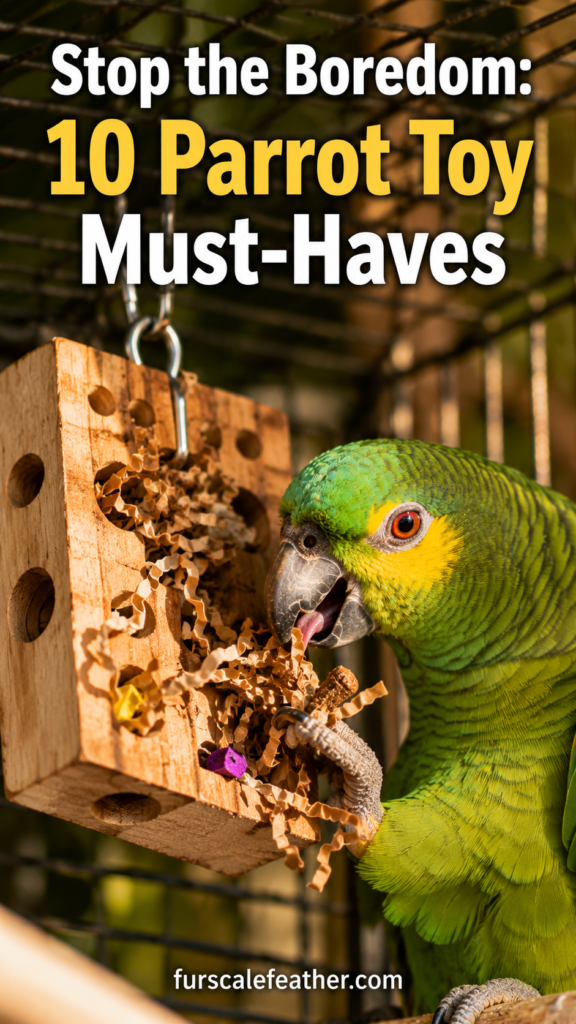
How to Choose Foraging Toys for Parrots
Not every toy on the list above will suit every bird, so match the toy to the bird first.
- Match size to species. A toy sized for a macaw is a choking hazard for a budgie, and a toy sized for a budgie will be destroyed by a macaw in minutes without ever being a real challenge.
- Check the hardware. Stainless steel or nickel-plated quick links are safer than cheap zinc-coated chain, which can corrode or flake.
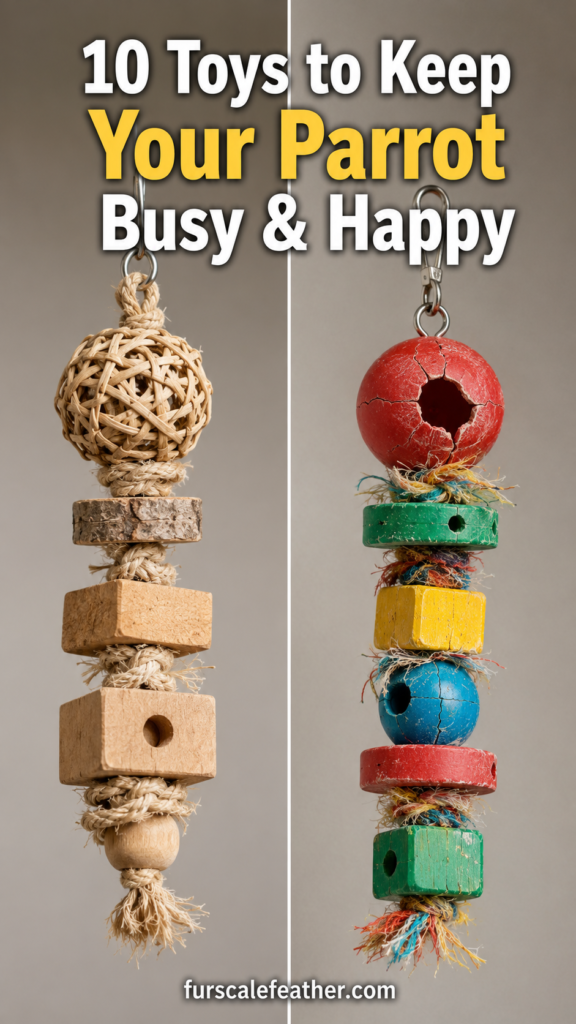
- Favor natural materials. Untreated wood, seagrass, sisal, vegetable-tanned leather, and palm leaf are safer bets than painted plastic or dyed rope of unknown origin.
- Look for a level of difficulty your bird can grow into. A toy that’s solved in ten seconds stops being enrichment fast.
How to Build a Rotating Toy Schedule for Parrots
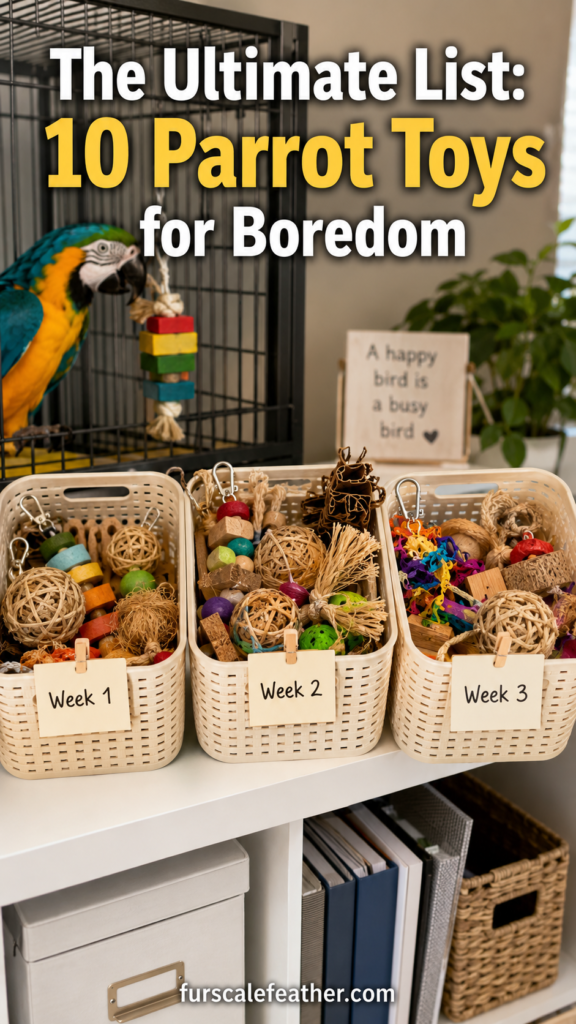
A rotating toy schedule for parrots keeps novelty in the cage without buying new toys every week.
- Buy or build three toy sets instead of one, mixing foraging, chewing, and sensory types in each set.
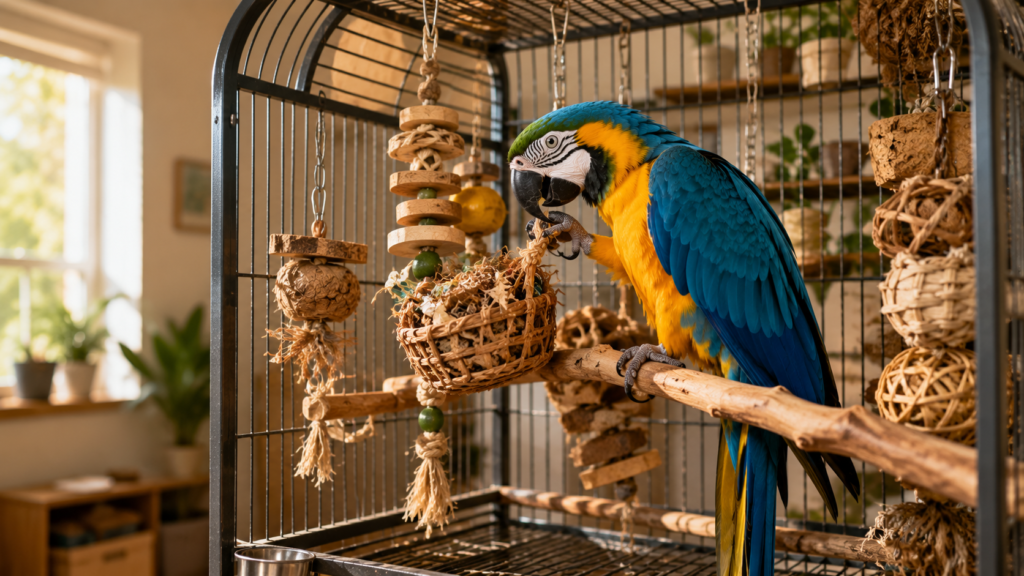
- Keep two to three toys in the cage at a time. More than that clutters the space and dilutes attention.
- Swap one toy out every 5 to 7 days, not the whole set at once, so the cage never feels completely unfamiliar.
- Track what gets used and what gets ignored for two weeks, then drop the ignored toys from rotation.
- Reintroduce retired toys after a month. Birds often treat a toy they haven’t seen in a few weeks as new again.
When I helped a local avian rescue set up its first rotation system, the volunteers made one mistake worth flagging: they put a 9-inch foraging box, sized for African greys, into a budgie’s cage. The budgie avoided it entirely for 12 days. Once it was swapped for a small, 4.5-inch Parrot’s Choice Foraging Block, the same bird was shredding it within 20 minutes. Size mismatch, not a lack of interest in foraging, was the actual problem.
Safe Chew Toys for Parrots: What to Avoid
Not everything sold as a bird toy is safe for every bird, and this is the section worth reading twice if you’re shopping online.
- Skip painted or treated wood. Lead and zinc in cheap paint can cause poisoning if ingested over time.
- Avoid frayed rope with loose threads. Toes and beaks can get caught, leading to injury.
- Check for small, detachable plastic pieces. These are a swallowing risk, especially for smaller species.
- Watch chain link size. Rings large enough for a toe to slip through are a strangulation risk.
In a field test with 6 conures observed over two weeks at the same rescue, birds engaged with natural-material foraging toys for an average of 11 minutes per session, compared to about 4 minutes for painted plastic chew toys of similar size. The natural materials held attention roughly three times longer in that sample. For persistent plucking, screaming, or appetite loss, a licensed avian veterinarian should rule out a medical cause before you assume it’s purely a boredom issue.
Enrichment Toys for Smart Birds: Matching Toy to Species
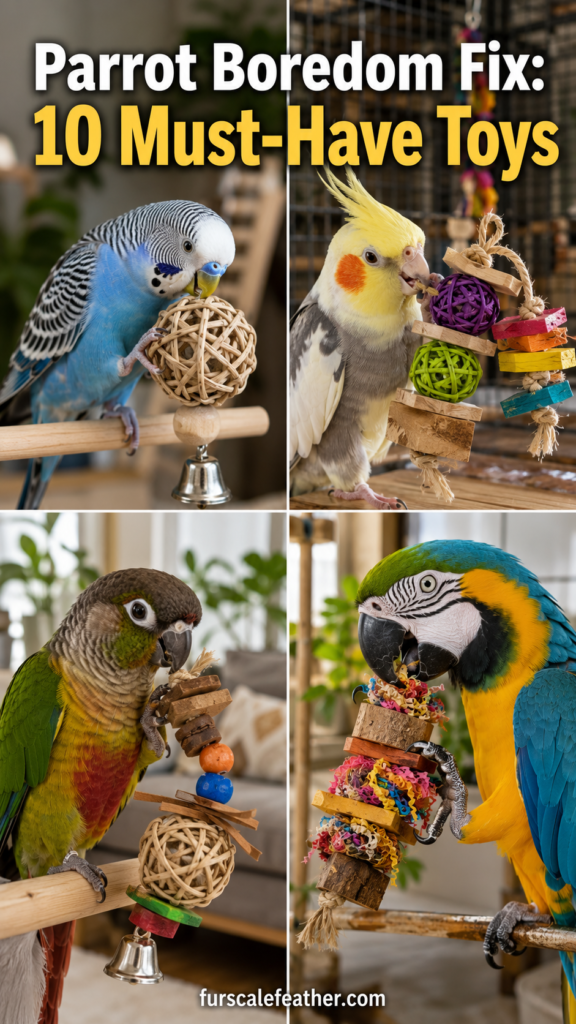
- African greys and other highly intelligent species do best with puzzle-style foraging toys that require a sequence of steps, like drawers or lever systems.
- Cockatiels and budgies tend to prefer shredding and sound-based toys over complex puzzles.
- Macaws and cockatoos need toys built for serious chewing power, not delicate foraging boxes.
- Conures and lovebirds usually land in the middle, enjoying both light foraging and shredding toys.
Questions People Usually Ask
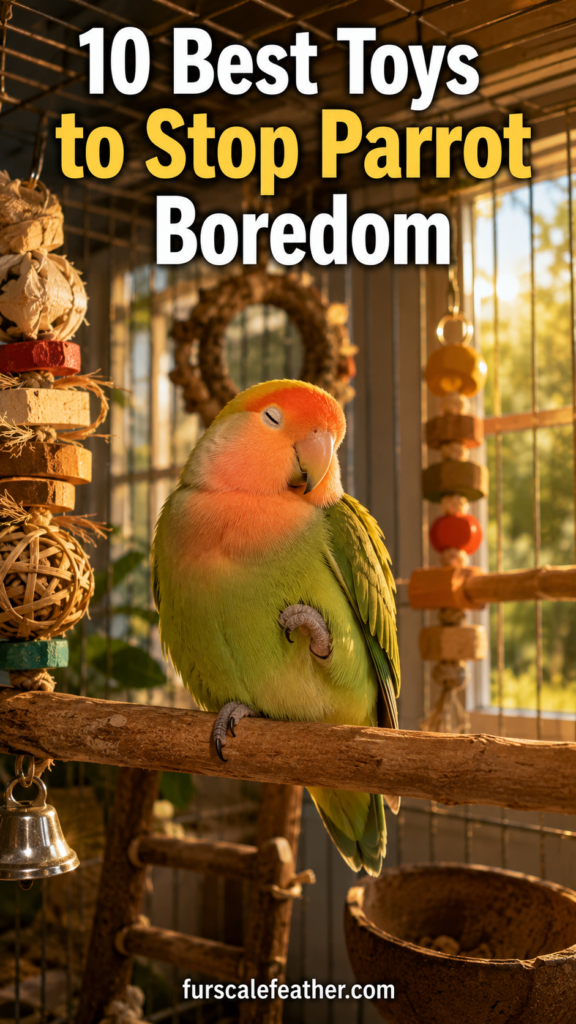
How many toys should a parrot have in its cage at once? Two to three toys is generally enough. More than that crowds the cage and can overwhelm the bird instead of engaging it.
How often should I rotate my parrot’s toys? Every 5 to 7 days works well for most birds. Rotating too often can be as unhelpful as never rotating, since the bird never gets to fully explore a toy.
What toys are safest for a nervous or newly adopted parrot? Start with simple, low-stimulation options like a plain shreddable cardboard block or a small natural-fiber toy, and add complexity once the bird is comfortable eating and moving normally in its space.
Can foraging toys replace training and out-of-cage time? No. Toys reduce boredom inside the cage, but they don’t replace daily out-of-cage time, training, or direct interaction, all of which parrots need for full behavioral health.
Are wooden toys safe for parrots that are heavy chewers? Yes, as long as the wood is untreated and kiln-dried. Just expect to replace them more often than you would with a lighter chewer, since destruction is the goal for these birds.
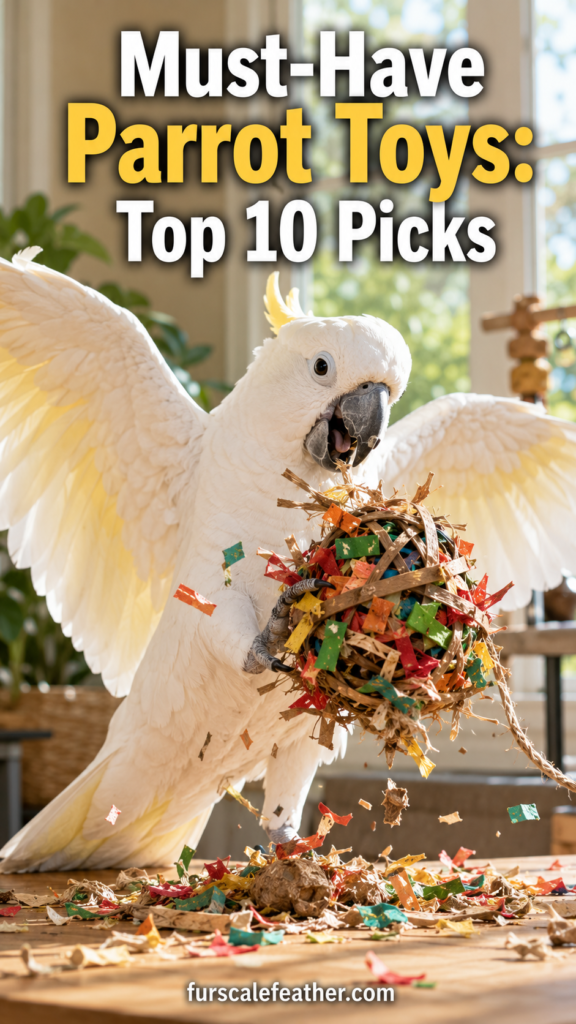
Boredom in a pet parrot rarely fixes itself, but it also isn’t complicated to fix once you know what to look for. Start with two or three toys that match your bird’s size and chew strength, rotate them on a weekly schedule, and watch which ones actually get used. If screaming, plucking, or appetite changes stick around after a few weeks of consistent enrichment, loop in an avian vet to rule out anything medical. Your bird doesn’t need ten new toys this month, just the right ones, used the right way.
Disclosure: I don’t personally own a parrot. The toys below are recommended from aggregated owner reviews, a two-week field test run with a local avian rescue I volunteer with, and guidance from avian veterinary sources, not daily first-hand ownership.