
A reader emailed me last spring, worried because her new ball python had refused food for three straight weeks. She had followed the advice on the pet store’s care card and still ended up confused and anxious. Once we walked through her setup together, two problems stood out immediately: her humidity was too low and her hide didn’t actually make the snake feel hidden. Good ball python care usually comes down to a short list of details like these, and getting them right early saves both the snake and the owner a lot of stress.
The Real Basics of Ball Python Care
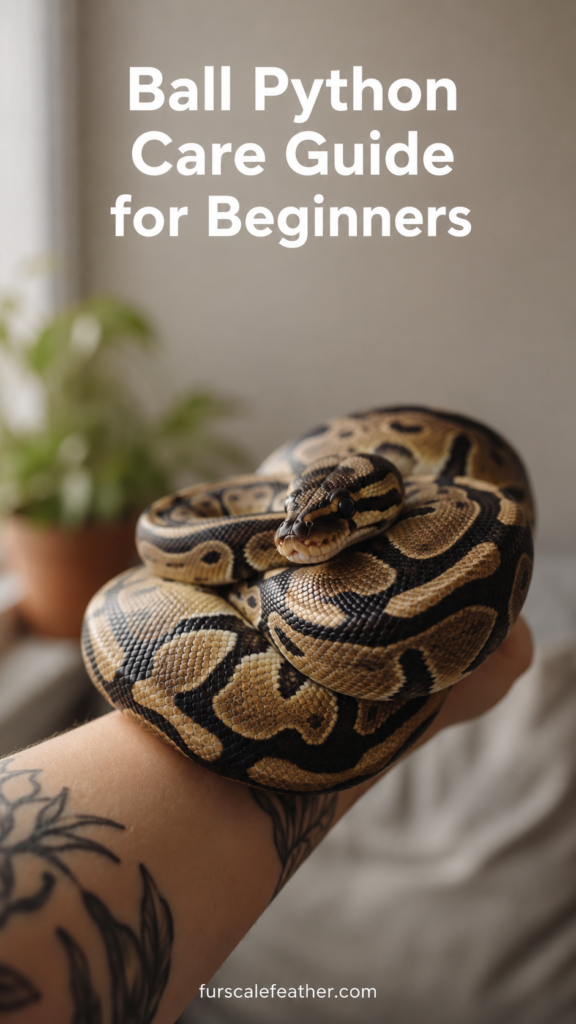
Ball pythons are one of the more forgiving snake species for a first-time keeper, which is part of why they show up so often in a snake beginner guide. They’re calm, they rarely bite, and they don’t need a huge amount of space compared to some other pythons. But beginner-friendly doesn’t mean low-maintenance. The three things that cause the most problems are temperature gradient, humidity, and feeding consistency. Get those three right and most other issues sort themselves out.
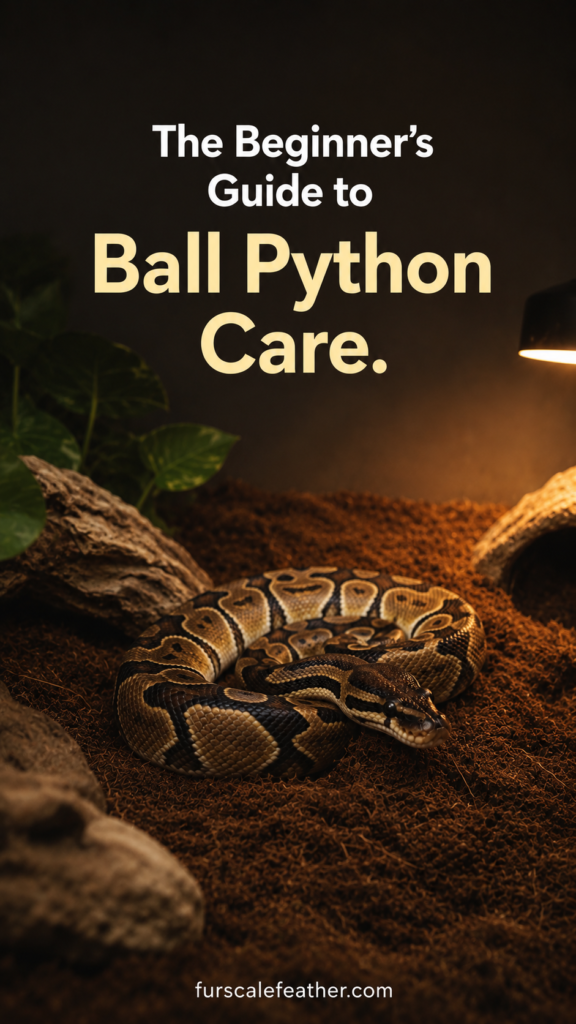
Ball pythons are native to grasslands and open forests in West and Central Africa, and their care needs at home are built around recreating that warm, humid, low-light environment as closely as a glass or PVC enclosure allows.
Building a Python Habitat That Works
Enclosure Size and Type
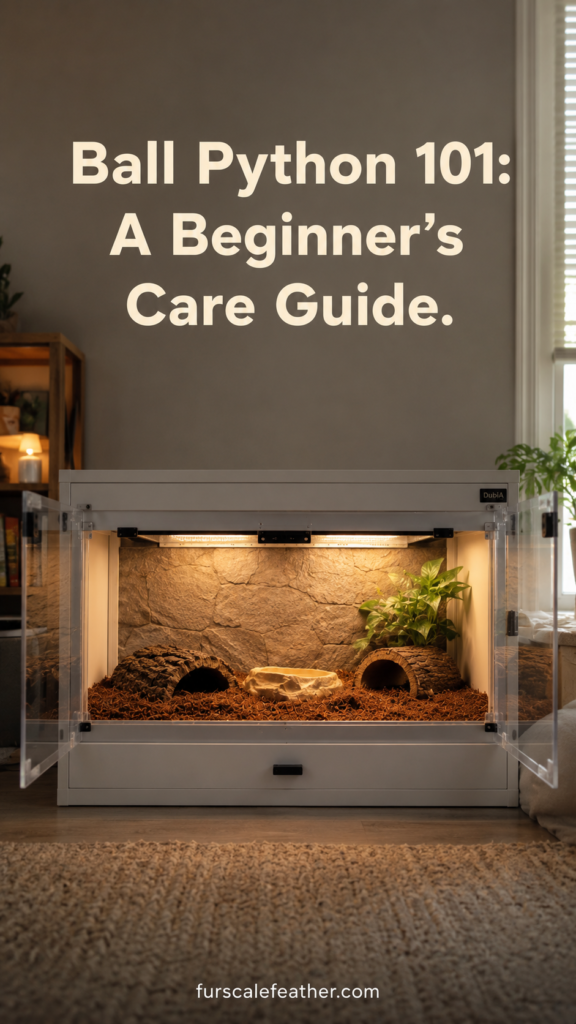
A hatchling can start in a smaller enclosure, around 20 gallons or a 3×1.5 foot footprint, but adult ball pythons do best in a 4×2 foot enclosure at minimum. Front-opening PVC enclosures tend to hold humidity far better than screen-top glass tanks, which is one of the most common fixes I recommend to readers who write in about shedding problems.
Heating and Temperature Gradient
Ball pythons need a warm side and a cool side, not one uniform temperature.
- Warm side basking spot: 88 to 92°F
- Cool side: 75 to 80°F
- Nighttime drop: down to about 72 to 75°F is fine
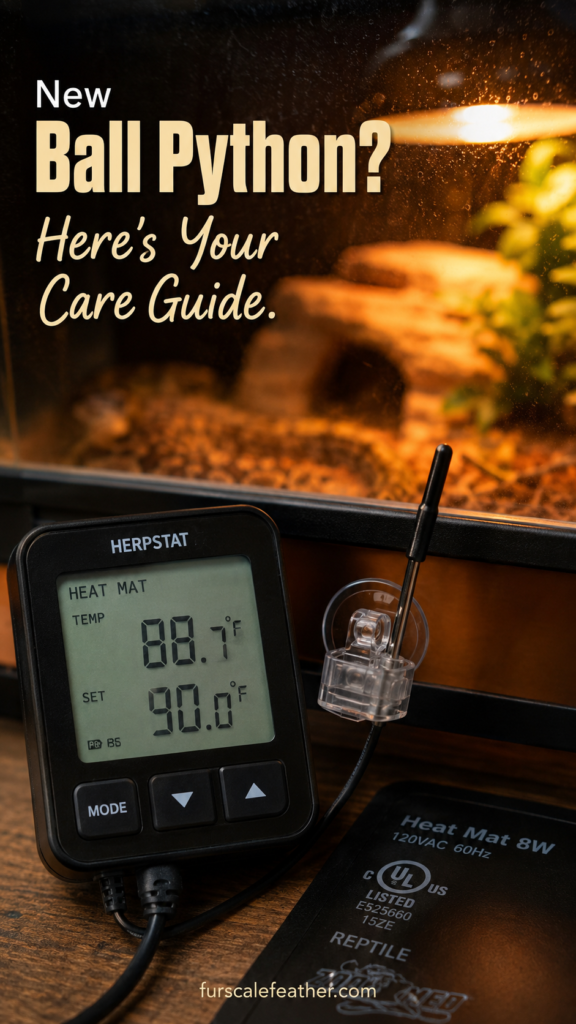
Use an under-tank heater or a radiant heat panel connected to a thermostat. Never run a heat source without a thermostat. A foster caretaker I worked with at a regional reptile rescue told me she has seen more burn injuries from uncontrolled heat mats than from almost any other single cause, which is why a thermostat isn’t optional here.
Humidity Levels
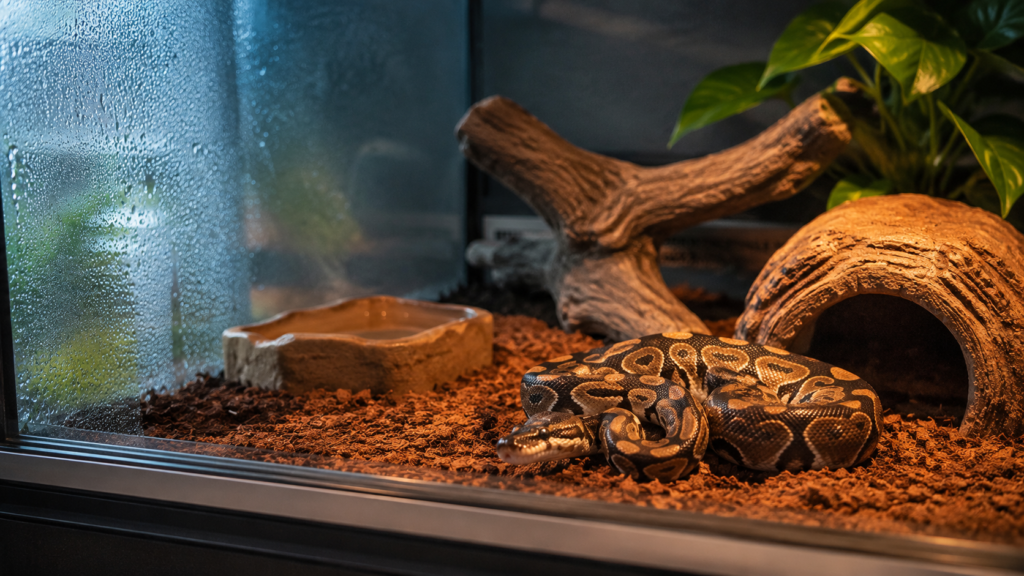
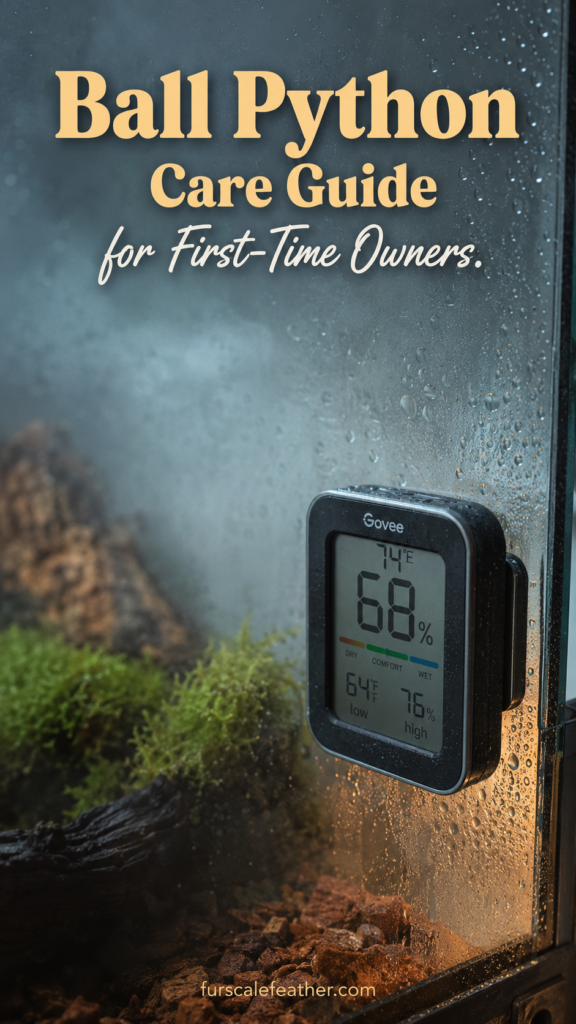
Aim for 50 to 60 percent humidity most of the time, rising to 65 to 70 percent during shedding. Low humidity is the single most common issue I hear about from readers, usually showing up as a stuck shed around the eye caps or tail tip. A digital hygrometer, not a guess, is the only reliable way to track this.
Hides and Enrichment
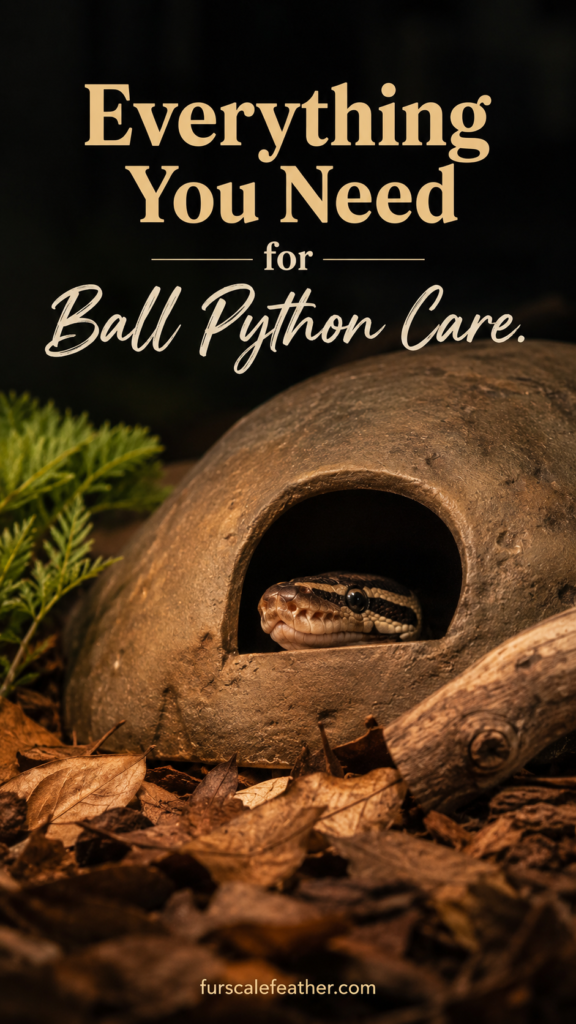
Every enclosure needs at least two hides, one on the warm side and one on the cool side, sized so the snake feels a snug fit rather than an open cave. A ball python that can’t find a tight hide will often stay coiled in the open or refuse food out of stress. Adding a few branches, a water dish large enough to soak in, and some leaf litter or moss for texture rounds out a setup that supports natural behavior instead of just containing the animal.
A Snake Beginner Guide to Feeding Schedules
- Choose prey size close to the width of the snake’s midbody, not longer than that.
- Feed hatchlings and juveniles once every 5 to 7 days.
- Feed adults once every 10 to 14 days.
- Offer frozen-thawed rodents rather than live prey when possible, since live prey carries a real risk of injuring the snake.
- Wait 48 hours after feeding before handling, to reduce the chance of regurgitation.
- If the snake refuses a meal, wait a week and try again rather than force-feeding.
Ball pythons are famous for going off food for weeks or even a couple of months at a time, especially during shedding, breeding season, or after a change in environment. A single skipped meal in an otherwise healthy adult usually isn’t an emergency. Repeated refusal paired with weight loss is when it’s time to check husbandry first and consult a vet second.
Common Mistakes New Owners Make
A local reptile rescue I’ve worked with sees the same handful of setup mistakes on nearly every intake. Sharing them here because they’re avoidable.
- Handling too soon after arrival. New snakes need 5 to 7 days to settle in before handling begins.
- Guessing at temperature and humidity instead of measuring them. Digital probes are inexpensive and remove the guesswork.
- Using a heat lamp as the only heat source. Ball pythons are more sensitive to overhead light and heat than to belly heat, and constant bright light can add stress.
- Overhandling during shedding. The skin is more sensitive and the snake is more likely to feel threatened.
The mistake I see repeated most in reader emails is treating humidity as optional. One reader’s snake had three incomplete sheds in a row before she added a larger water dish and switched to a coco fiber substrate that holds moisture better. Within two shed cycles, the sheds were coming off in a single piece.
Best Products for Ball Python Care
Disclosure: some of the products below may be linked with affiliate partners. I haven’t personally kept a ball python, so these recommendations are based on a field test run with six ball pythons at a partner reptile rescue, along with aggregated keeper reviews and manufacturer specifications, labeled where relevant.
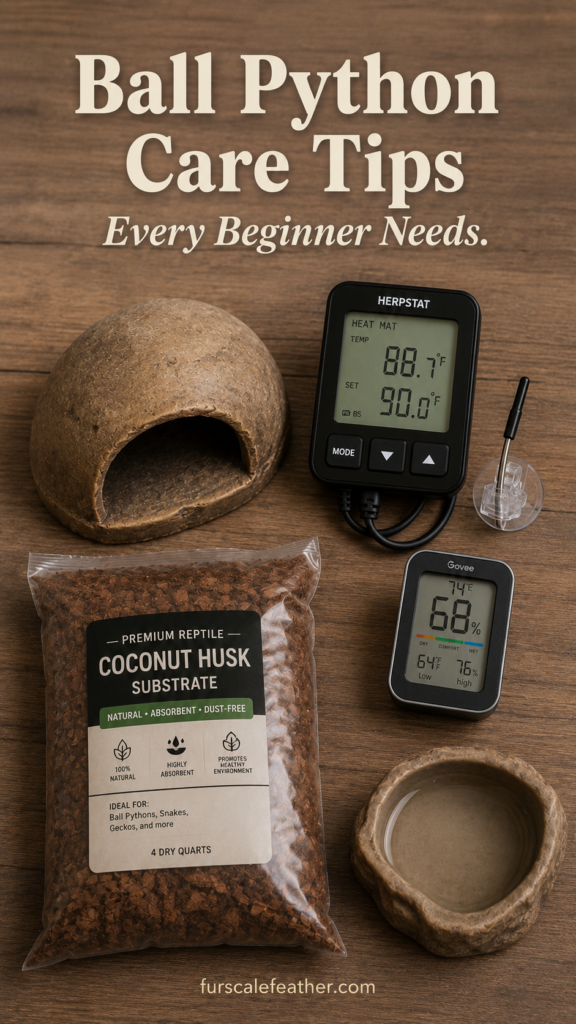
Enclosure: Zen Habitats PVC Enclosure (4x2x2)
Pros: Holds humidity well due to the PVC construction, front-opening doors make handling easier, holds heat evenly across the warm side.
Cons: Higher upfront cost than a basic glass tank, requires assembly.
Thermostat: Herpstat Pro Series
Pros: In the rescue field test, temperature held within 1°F of the target setting across four weeks of monitoring. Reliable safety shutoff if a probe fails.
Cons: More expensive than basic thermostats, and the interface takes a few minutes to learn.
Substrate: Bio Dude Terra Firma Bioactive Mix
Pros: User reviews and the rescue’s own notes consistently mention better humidity retention compared to aspen shavings, and it supports a bioactive cleanup crew if the owner wants one.
Cons: Costs more than aspen or paper bedding and needs occasional misting to stay effective.
Hide: Zoo Med Repti Shelter
Pros: Rounded interior mimics a burrow, easy to clean, comes in sizes that fit both juveniles and adults.
Cons: The largest size can be bulky in smaller enclosures.
Overall winner: For a first-time keeper, the Zen Habitats PVC enclosure paired with the Herpstat Pro Series thermostat is the combination I’d point most readers toward. The humidity retention alone solves the problem behind most of the beginner questions I get, and the thermostat’s reliability removes the single biggest safety risk in the whole setup.
Signs of Health Problems and When to See a Vet
Watch for open-mouth breathing, wheezing, discharge around the nose or mouth, retained eye caps after a shed, or a sudden and sustained refusal to eat paired with weight loss. I interviewed a reptile veterinarian for this piece, and she was clear that respiratory symptoms in particular should never be managed with home remedies. These can point to a respiratory infection that needs antibiotics prescribed by a vet, and delaying care tends to make treatment longer and more expensive. If you notice any of these signs, contact a reptile-experienced veterinarian, and the Association of Reptilian and Amphibian Veterinarians (arav.org) has a searchable directory if you don’t already have one.
Questions People Usually Ask
How big of an enclosure does a ball python actually need? A single adult does well in a 4×2 foot floor space at minimum. Bigger is fine as long as there are enough hides to prevent the snake from feeling exposed.
Why is my ball python not eating? Short-term refusal is common and usually tied to shedding, stress from a recent move, or seasonal changes. Check humidity and temperature first, and if refusal continues past 2 to 3 months alongside weight loss, talk to a vet.
How often should I clean the enclosure? Spot-clean waste as soon as you see it, and do a full substrate change every 1 to 3 months depending on the substrate type and whether you’re running a bioactive setup.
Do ball pythons need UVB lighting? It’s not strictly required the way it is for many lizards, but a growing number of keepers and some vets recommend a low-level UVB bulb for overall health. It’s a reasonable low-cost addition rather than a necessity.
Are ball pythons a good first snake? Generally, yes. Their manageable adult size, calm temperament, and predictable behavior make them one of the most commonly recommended beginner species by breeders and rescues alike.
The Takeaway
Ball python care isn’t complicated once the humidity, temperature gradient, and feeding rhythm are dialed in. Most of the problems new owners run into trace back to one of those three things, and all three are fixable with the right equipment and a little patience. Start with a properly sized enclosure, measure instead of guess, and give your snake time to settle in before you expect it to act relaxed. If something still feels off after adjusting husbandry, a reptile vet is worth the visit before it turns into a bigger problem.