
My cat Mimi used to wake me up at 3 a.m. by knocking my phone charger off the nightstand one cable at a time, watching me the whole time to make sure I noticed. It took about a week of lost sleep before I admitted the real problem wasn’t the charger. It was boredom, and once I built real indoor cat activities into her day, the 3 a.m. wake-up calls stopped within about ten days.
If you’re here, your cat is probably doing some version of the same thing: scratching furniture, yowling at odd hours, overgrooming, or staring at you like you personally invited chaos into her life. None of that means she’s broken or spiteful. It usually just means she needs more to do.
Signs Your Indoor Cat Is Bored
Before jumping into activities, it helps to know what boredom actually looks like day to day. Common signs include:
- Overgrooming, especially bald patches on the belly or inner legs
- Knocking objects off shelves or counters to watch them fall
- Yowling or meowing for no obvious reason, especially at night
- Sleeping noticeably more than the typical 12 to 16 hours a day
- Sudden pouncing on your feet or ankles as you walk by
- Scratching furniture instead of a designated scratch post
If two or more of these sound familiar, the activities below are a good starting point. For sudden changes in appetite, energy, or litter box habits, talk to your vet first, since those can point to a medical issue rather than boredom.
15 Indoor Cat Activities to Try This Week
These are activities I’ve used directly with Mimi, plus a few a local rescue I volunteer with has tested on foster cats. I’ve labeled anything that wasn’t tested with Mimi herself.
Hunting and Chasing Games
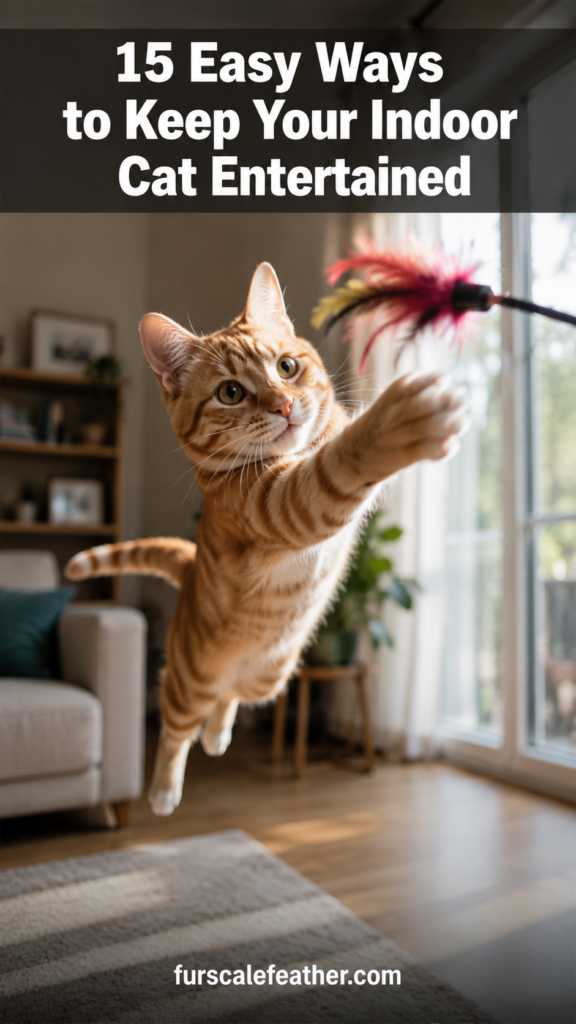
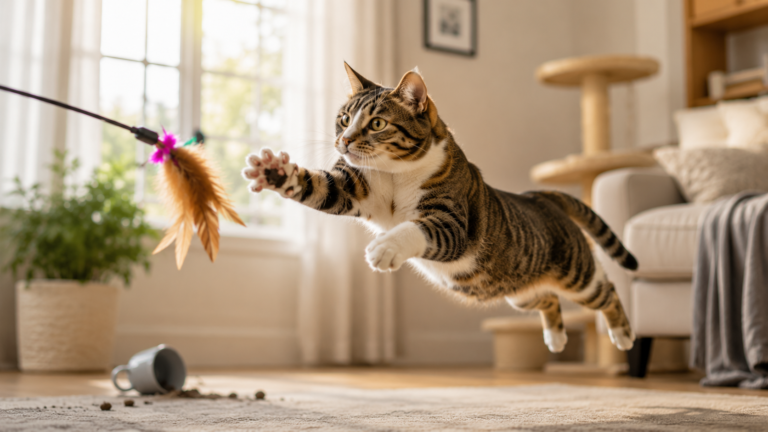
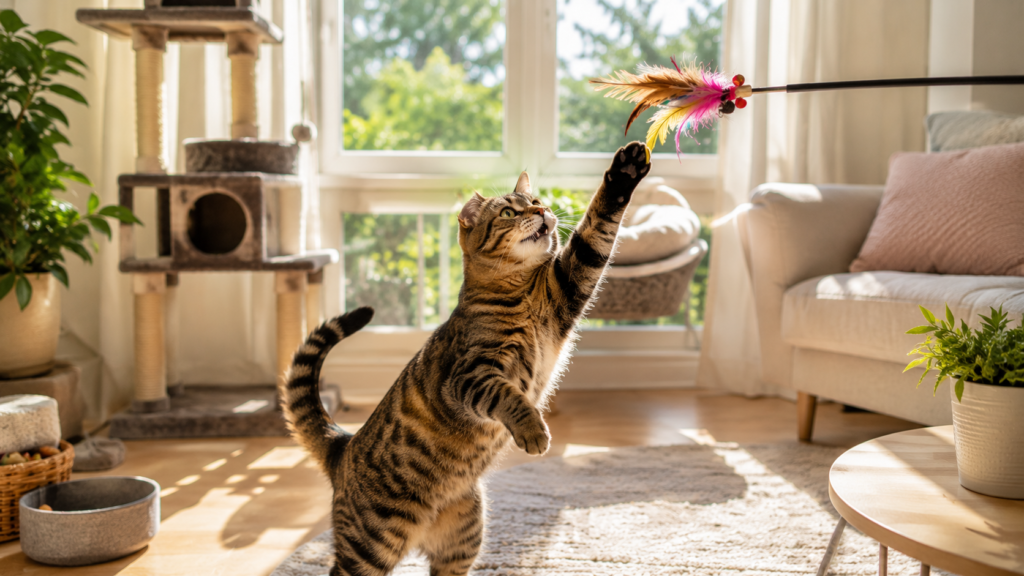
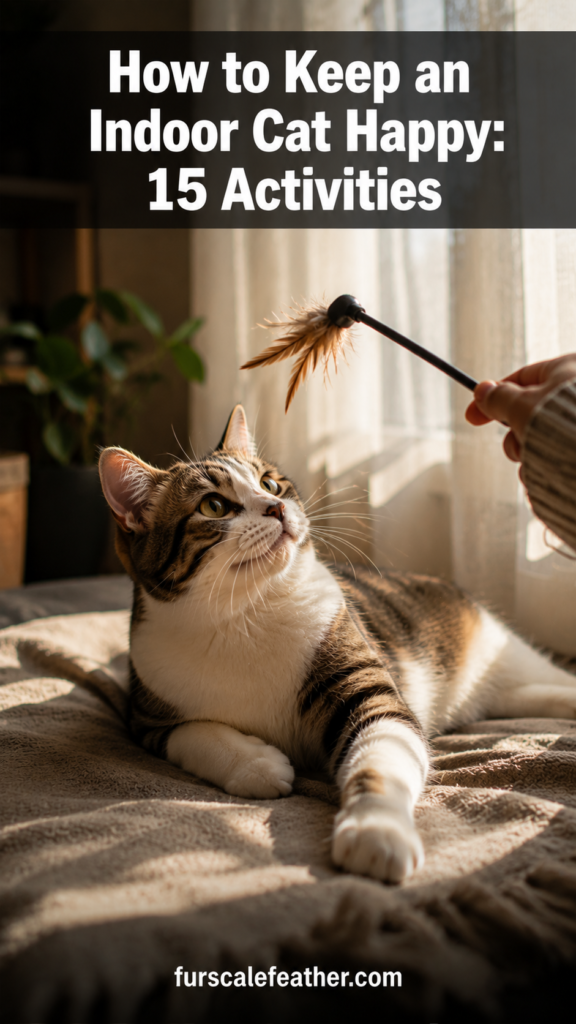
- Wand teaser sessions. Two 10-minute sessions a day, morning and early evening, work better than one long session. Move the toy like real prey, in short bursts with pauses, not smooth circles.
- Laser pointer, always followed by a physical toy. A laser gives Mimi a chase but no capture, which can build frustration over time. I always end the session by tossing a soft toy she can actually catch and bite.
- Feather wand with a “kill” at the end. Let her catch and hold the toy for a few seconds before pulling it away. A foster caregiver at my local rescue reported the same result across five cats: sessions that ended in a real catch left the cats calmer for hours afterward, compared to sessions that ended abruptly.
- Ambush games with a paper bag. Cut the handles off a paper grocery bag, lay it on its side, and let her stalk in and out. This costs nothing and Mimi still goes back to it weeks later.
Puzzle and Food-Based Enrichment
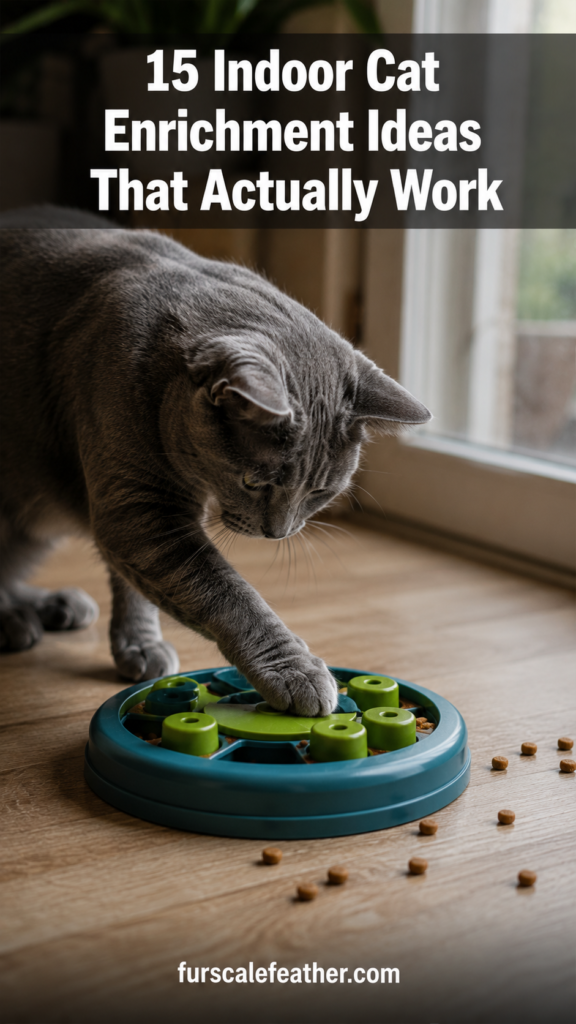
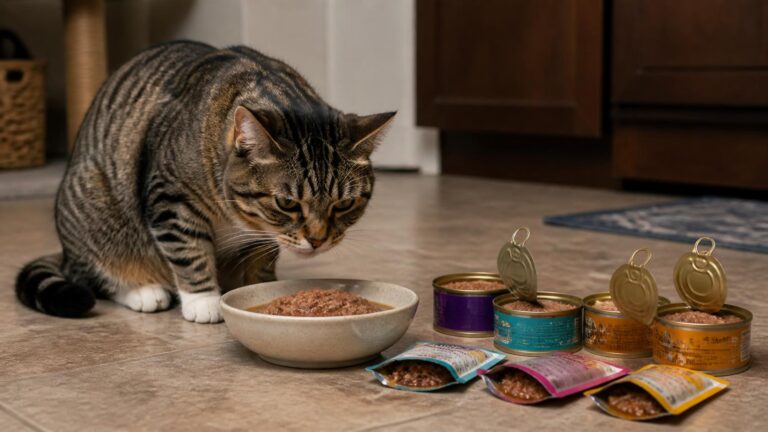
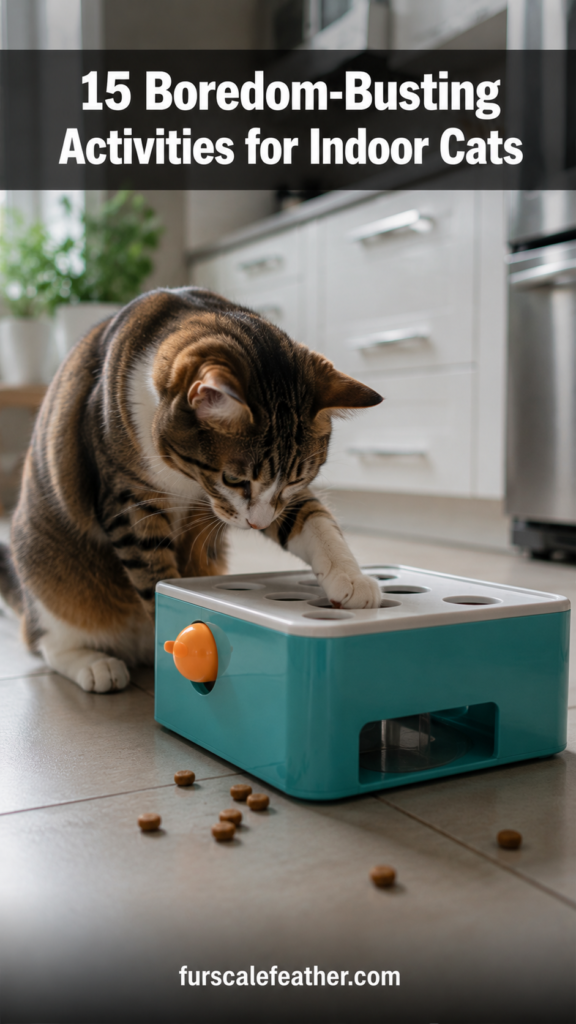
- Puzzle feeders instead of a food bowl. I switched Mimi to a SmartCat Peek-a-Prize Toy Box about a year ago. Her mealtime went from under two minutes at a bowl to 12 to 15 minutes of batting balls out of holes to get kibble.
- Hidden treat hunts. Scatter 8 to 10 treats around one room and let her sniff them out. Start easy, in open sight, then move to under furniture edges as she improves.
- Frozen broth cubes. Freeze low-sodium chicken broth in an ice cube tray and give one on a hot day. It takes Mimi close to 20 minutes to fully work through one cube, which is a long stretch of independent activity for a cat.
- Multi-station hunting feeders. A reader who messaged me about a similar routine uses a Doc & Phoebe’s Indoor Hunting Cat Feeder, splitting each meal across four mouse-shaped stations placed around the apartment. She reported her cat’s daily activity time roughly tripled compared to bowl feeding, based on her own informal tracking.
Sensory and Window Activities
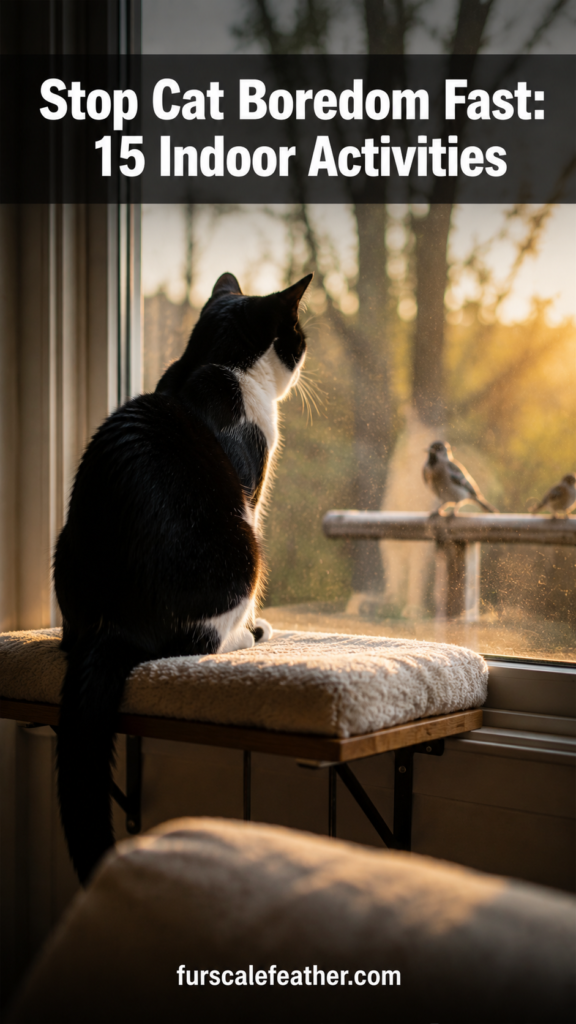
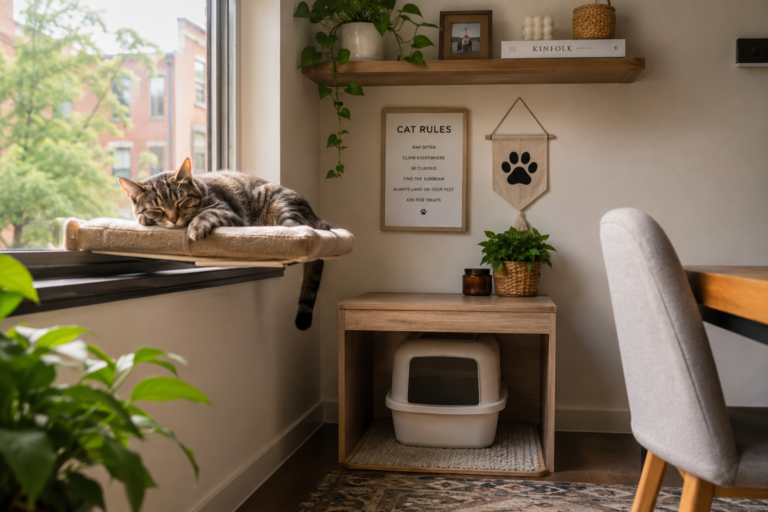
- A window perch near natural cat traffic. Birds, squirrels, and passing dogs give free entertainment. Mimi spends more time at her window perch on weekday mornings than she does napping on the couch.
- Cat grass or wheatgrass planter. A small tray of wheatgrass gives her something to chew and dig at that isn’t a houseplant. It’s also safer than most decorative plants, many of which are toxic to cats.
- Bird or fish video playlists on a tablet. Prop up an old tablet at cat height for 15 to 20 minutes. Not every cat engages with screens, but Mimi will sit and watch for a full episode of a bird video.
DIY and Low-Cost Options
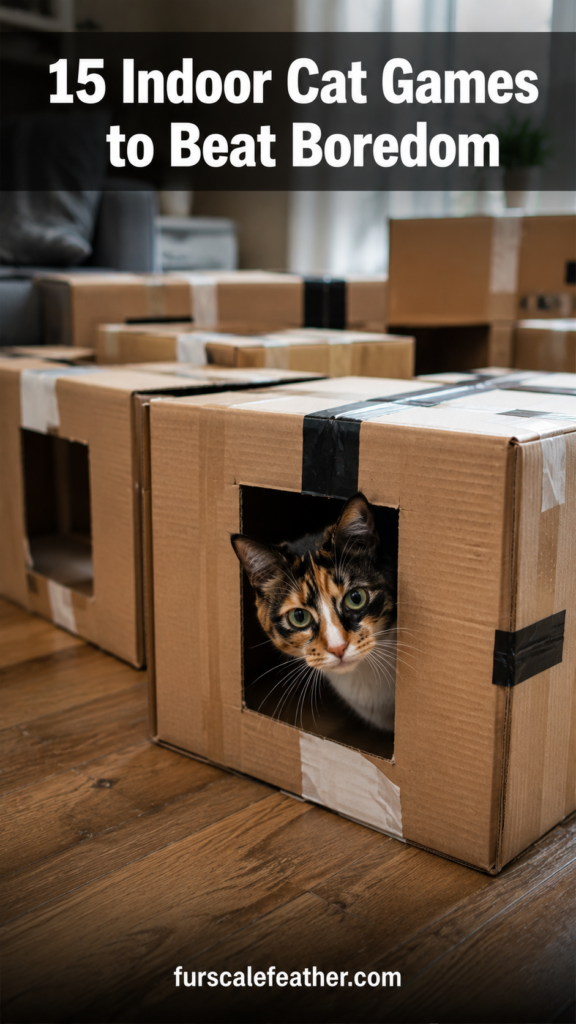
- Cardboard box maze. Tape three or four boxes together with holes cut between them. This took me about 15 minutes to build and Mimi used it daily for close to a month before losing interest.
- Clicker training for simple tricks. Five-minute sessions teaching “sit” or “touch” with a clicker and small treats. It’s mental work, not just physical, and tires cats out differently than chasing does.
- Vertical space with a cat tree or wall shelves. Climbing and surveying a room from height satisfies a different instinct than ground-level play. Mimi’s tree sits by the window so she gets height and a view at once.
- Toy rotation. Keep only 3 to 4 toys out at a time from a bin of 10 to 12, and swap them weekly. Toys that had been ignored on the floor for two weeks straight got immediate attention again the day I brought them back after a rotation.
How to Make an Indoor Cat Happy: A Simple Daily Routine
You don’t need all 15 activities every day. A workable routine looks like this:
- Morning: One 10-minute wand session before you leave for work or start your day.
- Daytime: A puzzle feeder or hidden treat hunt in place of a plain food bowl.
- Midday (if you’re home or have a pet sitter): 5 minutes of clicker training or a rotated toy swap.
- Evening: A second wand or laser-plus-toy session, ending in a real catch.
- Before bed: Access to a window perch or cat tree, plus a small food puzzle to keep her occupied while you sleep.
That’s roughly 30 to 40 minutes of direct engagement a day, spread across the hours you’re actually home. It’s less overwhelming than it sounds once it’s part of your existing routine.
Best Products for Indoor Cat Enrichment
I’ve tested two of these directly with Mimi. The other two I have not personally tried, so I’m relying on aggregated user reviews and a rescue contact’s field experience, noted below.
SmartCat Peek-a-Prize Toy Box (tested with Mimi)
- Pros: Sturdy plastic, adjustable difficulty by rotating the lid, extended her mealtime from 2 minutes to 12 to 15 minutes
- Cons: Loud when she bats the balls around on hardwood floors
Cat Dancer (tested with Mimi)
- Pros: Extremely cheap, lightweight wire and cardboard design that mimics erratic prey movement well, held her attention longer than several pricier wand toys
- Cons: Not durable, needed replacing after about two months of daily use
Doc & Phoebe’s Indoor Hunting Cat Feeder (not personally tested, based on a reader’s report and product reviews)
- Pros: Splits meals across multiple stations, widely reported to increase daily activity time
- Cons: More cleanup than a single bowl, some reviewers note the mice pieces are easy to lose under furniture
SmartyKat Hot Pursuit electronic motion toy (not personally tested, based on aggregated user reviews)
- Pros: Automatic movement is useful for cats home alone during the day, consistently rated well for solo play
- Cons: Some reviewers report cats losing interest after a few weeks without variety in play pattern
My pick: the SmartCat Peek-a-Prize Toy Box. It’s the one that made the clearest, measurable difference for Mimi, it’s simple to adjust as she gets better at it, and it solves a specific problem, fast eating followed by boredom, in one product.
The Mistake I Made With Mimi’s Toy Rotation
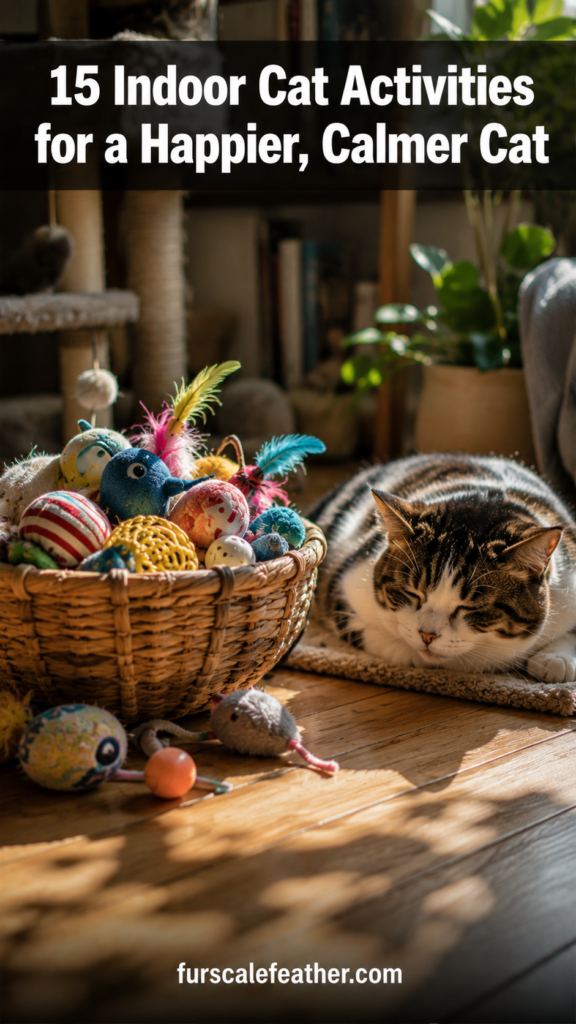
For the first few months I had Mimi, I left every toy she owned out on the living room floor at the same time. My thinking was more toys equals more fun. Instead, she stopped touching almost all of them within about three weeks. A toy sitting in the same spot every day stops registering as interesting, the same way a couch you walk past daily eventually becomes invisible.
The fix was toy rotation: only 3 to 4 toys visible at once, with the rest stored in a bin and swapped weekly. The change was immediate. Toys she’d ignored for two weeks got pounced on again the moment they reappeared, and her overall play time noticeably increased once novelty was back in the mix. It was a simple change, and I wish I’d made it in week one instead of month three.
Questions People Usually Ask
How many indoor cat activities does my cat need per day? Most cats do well with two dedicated play sessions of 10 to 15 minutes, plus a puzzle feeder or hidden treat hunt worked into a mealtime. That’s roughly 30 to 40 minutes of direct engagement spread across the day.
What’s the fastest way to calm a bored, hyper indoor cat? A single wand session that ends in a real catch tends to work faster than a laser alone, since it lets the cat complete the hunting sequence instead of chasing something it can never physically grab.
Can indoor cats be happy without ever going outside? Yes, as long as their environment covers the instincts they’d otherwise use outdoors: hunting, climbing, scratching, and mental problem-solving. A window perch, vertical space, and regular puzzle feeding go a long way toward covering those needs indoors.
How long should a single play session with an indoor cat last? Around 10 to 15 minutes is typically enough for most adult cats before attention starts to drop off. Shorter, more frequent sessions usually work better than one long session.
Is it normal for my cat to ignore a new toy at first? Yes, this is common. Give a new toy a few days and try it during a high-energy time of day, like right before a meal, before deciding it’s a miss.
Final Thoughts
Boredom in indoor cats is fixable, and it usually doesn’t take an expensive overhaul to see a difference. Start with two or three activities from this list, rotate them regularly, and watch which ones your own cat actually responds to. Mimi’s list of favorites looks different from what a friend’s cat prefers, so expect some trial and error before you land on a routine that sticks. If destructive or anxious behavior continues even after a few weeks of consistent enrichment, it’s worth a conversation with your vet to rule out anything medical.
Disclosure: Some product links in a published version of this post may be affiliate links. Two products above were tested personally with my own cat, Mimi. Two were not personally tested and are based on a reader’s report and aggregated user reviews, as noted next to each one.