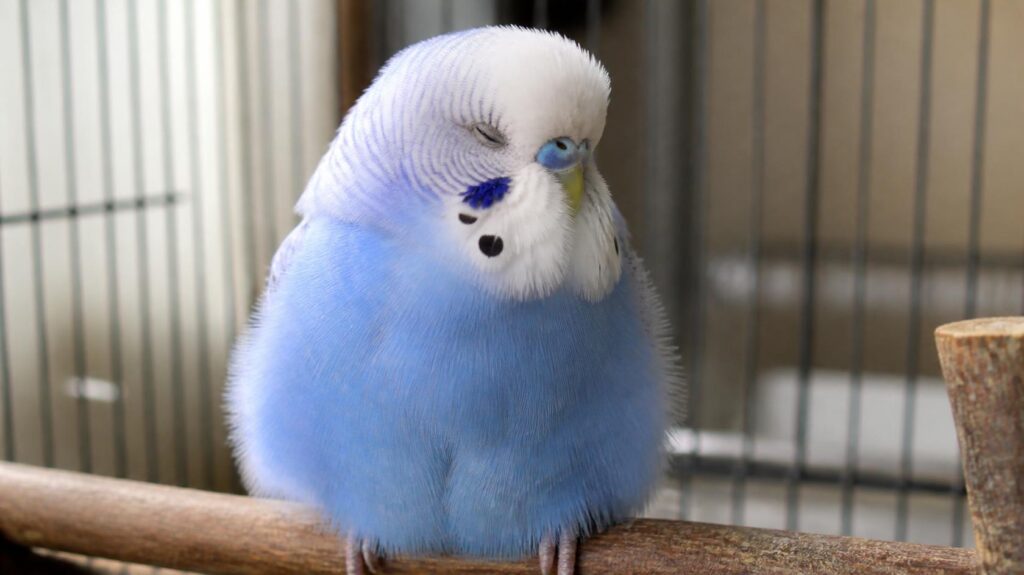

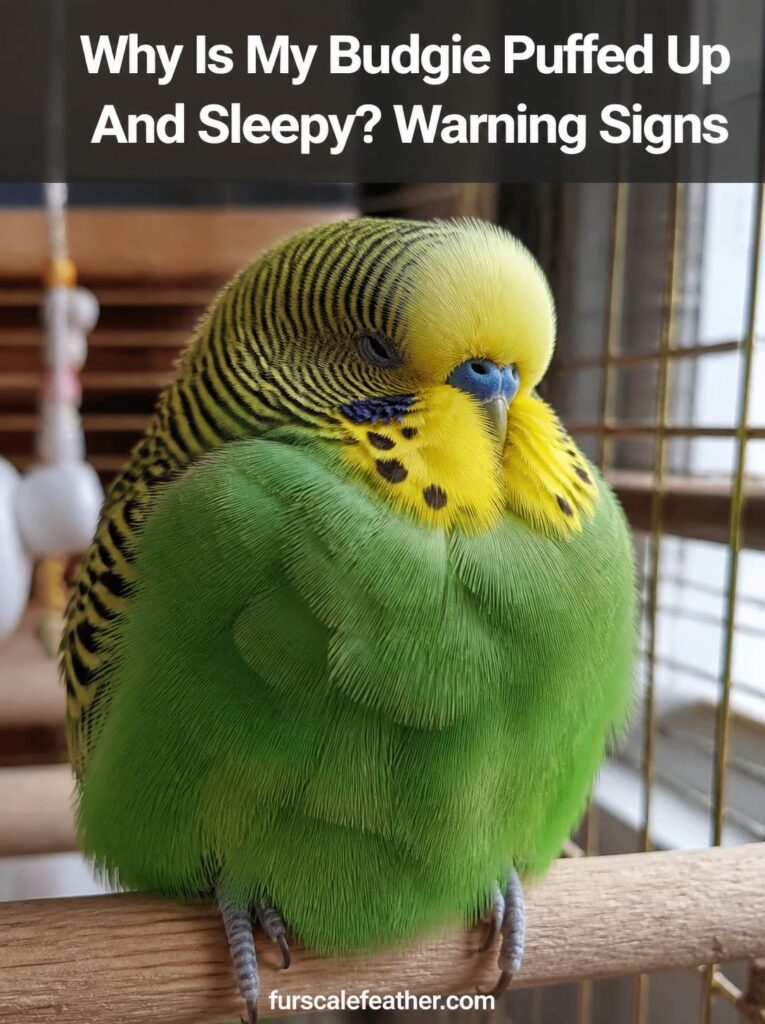
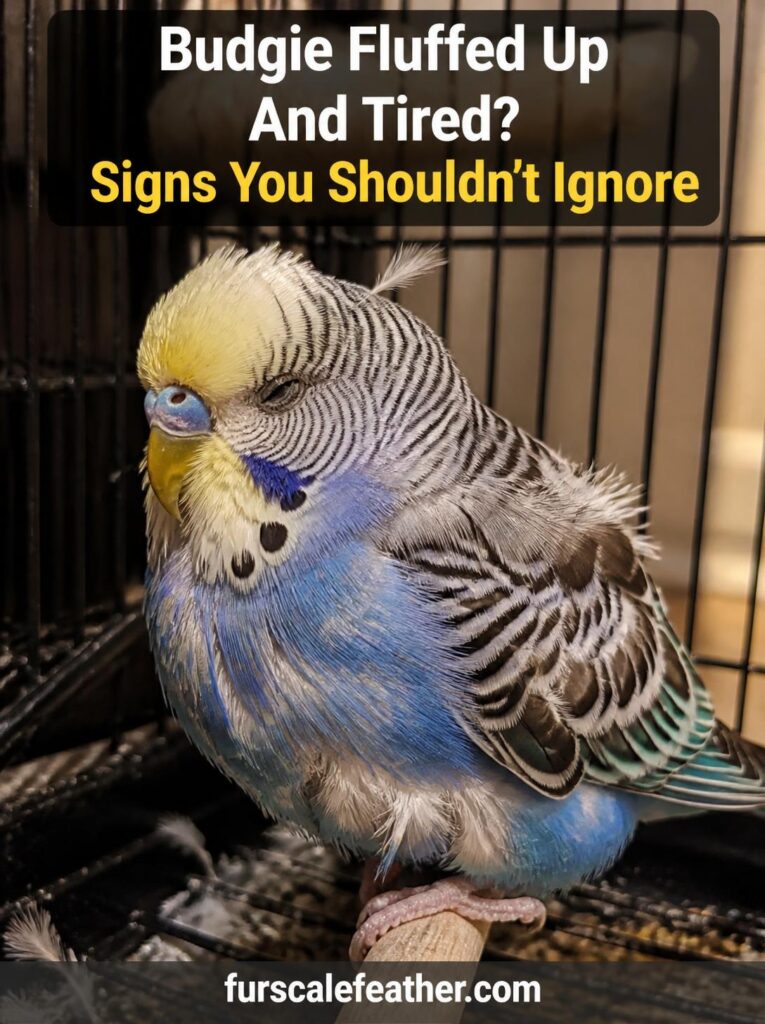
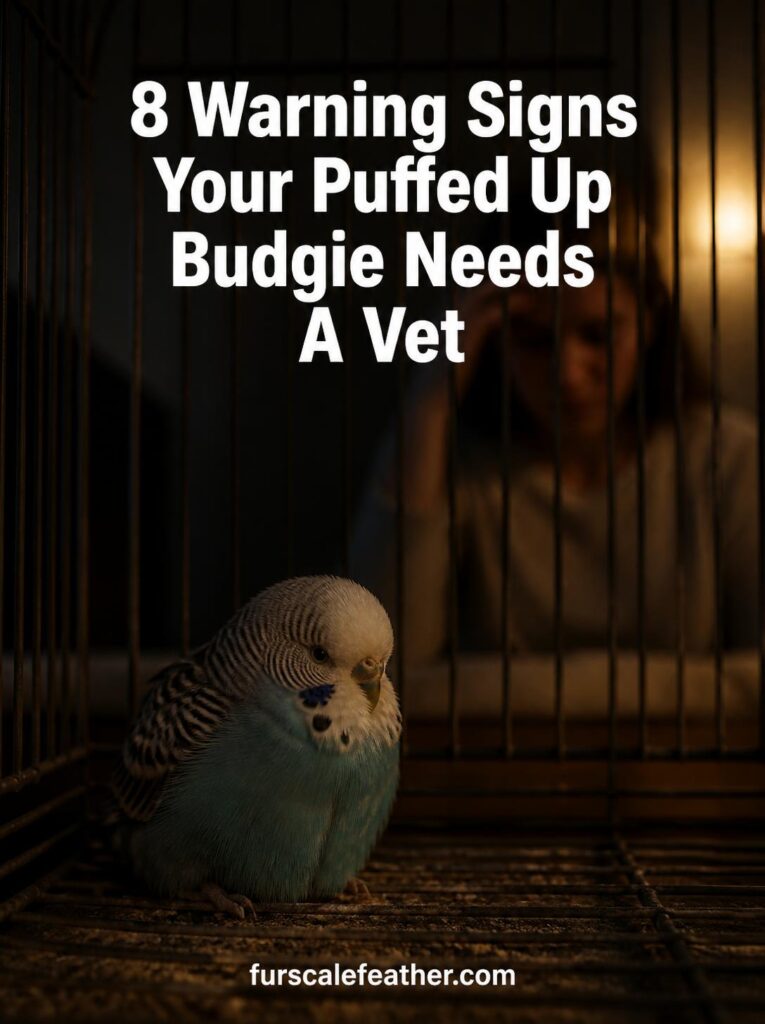
You glance at the cage at two in the afternoon and your budgie is sitting on the perch like a fluffed-up tennis ball, eyes half closed, ignoring the millet spray you clipped to the bars an hour ago. Is this a normal nap or something worse? A budgie puffed up and sleepy in the middle of the day is one of the most common reasons owners end up searching the internet at 11 p.m., and the honest answer is that it can mean anything from a completely normal rest to a genuine emergency.
Budgie Puffed Up And Sleepy: What This Combination Usually Means
Budgies are prey animals, and prey animals are wired to hide weakness. A healthy bird can look sick right before your eyes and give almost no warning until the illness has already progressed. That is why puffed feathers plus sleepiness together, especially during daylight hours, matter more than either sign on its own.
A single fluffed-up moment during a nap is normal. A bird who stays puffed for hours, sits low on the perch or the cage floor, and does not perk up when you approach is showing a pattern that deserves attention. The combination is your budgie’s way of conserving body heat and energy, which is exactly what a body does when it is fighting off illness, cold, or low blood sugar from not eating.
Normal Fluffing vs Concerning Fluffing
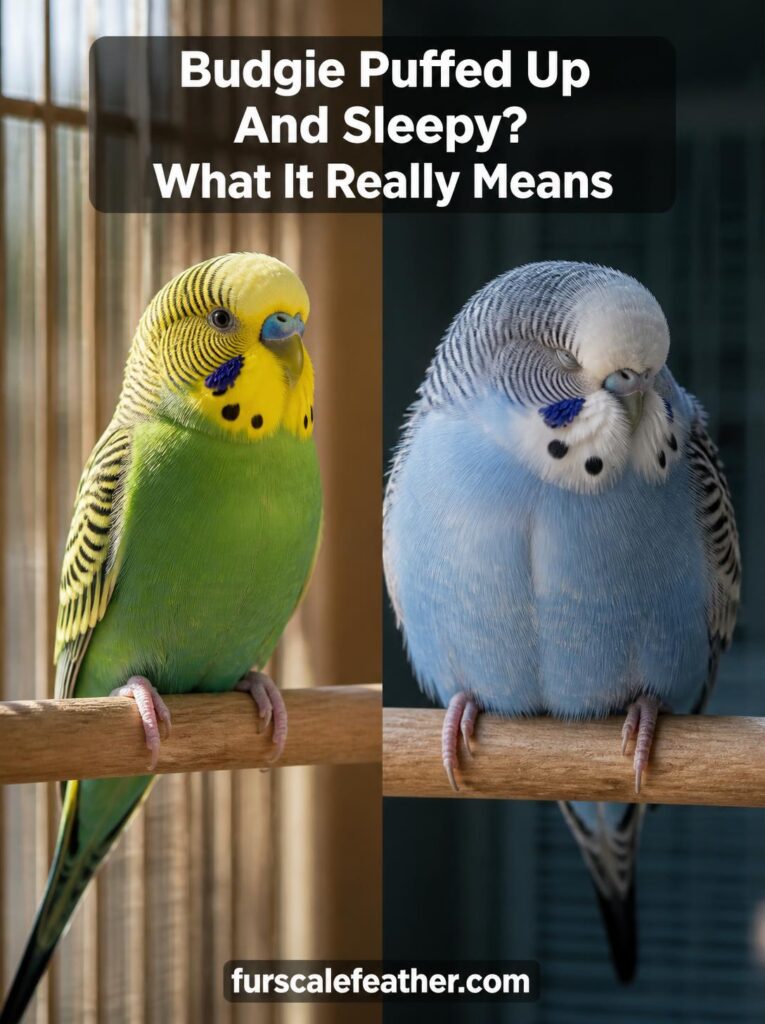
- Normal: Brief fluffing while dozing on one leg, feathers smooth out the moment you speak or move, bird is alert within seconds of a noise.
- Normal: Light fluffing in a cooler room that resolves once the room warms up.
- Concerning: Feathers stay puffed for most of the day, even during normal activity times like morning and early evening.
- Concerning: Bird stays on the cage floor, sits low with both feet instead of perching normally, or keeps eyes closed most of the day.
- Concerning: No improvement in energy after the room is warmed and the bird has had time to eat.
Warning Signs To Watch For Beyond Puffiness
Puffed feathers and drowsiness rarely show up completely alone. Watch for these signs at the same time, since two or more together raise the urgency significantly.
- Tail bobbing up and down with each breath
- Open-mouth breathing or clicking, wheezing sounds
- Discharge or crust around the nostrils (cere) or eyes
- Droppings that change color, become watery, or stop appearing for over 8 hours
- Sitting on the cage floor instead of a perch
- A keel bone (breastbone) that feels sharp instead of padded when gently felt through feathers
- No interest in favorite treats for more than a few hours
- Feathers around the vent looking messy or matted
If you see two or more of these alongside puffing and sleepiness, treat it as a same-day vet situation rather than a wait-and-watch one.
Common Causes Behind A Puffed Up, Sleepy Budgie
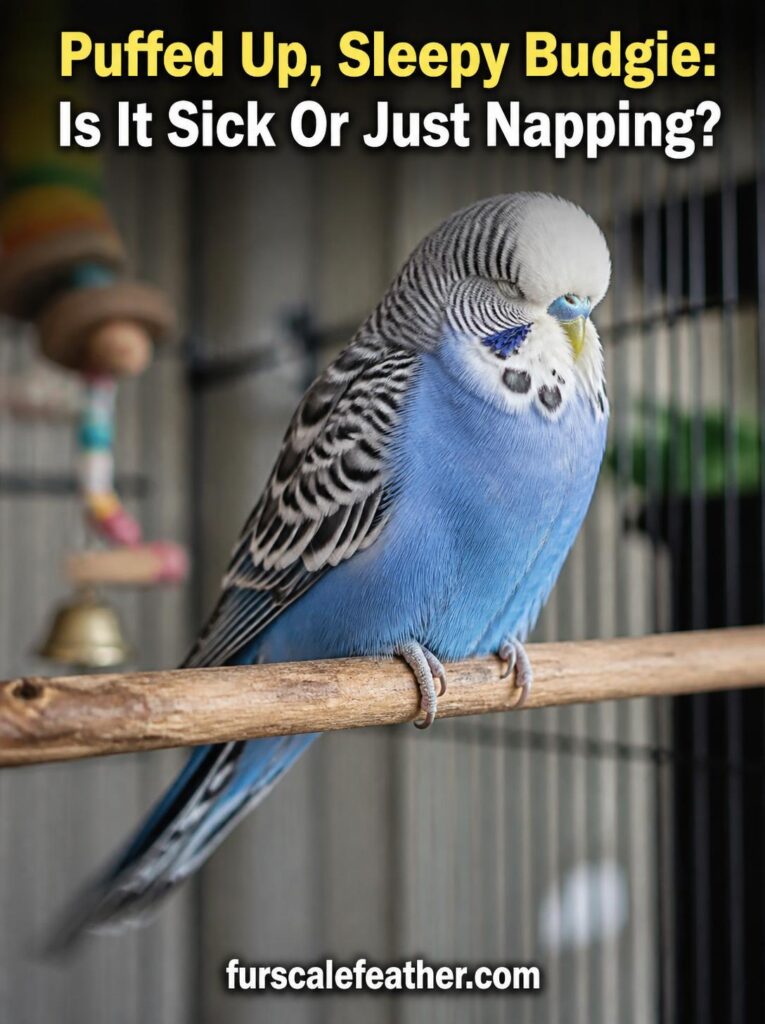
- Normal rest or a light nap during a quiet part of the day, especially early afternoon.
- A cold room. Budgies are comfortable around 70 to 75°F, and a draft or an overnight temperature drop can trigger fluffing that resolves once the room warms.
- Molting. Growing in new feathers takes energy, and a molting bird can look scruffier and nap more for a week or two at a time.
- Respiratory infection. Bacterial or fungal infections in the air sacs or lungs commonly cause puffing, tail bobbing, and lethargy together.
- Parasites such as mites or intestinal worms, which drain energy and appetite over days or weeks.
- Egg binding in females, which causes puffing, straining, and a swollen lower abdomen and is a same-day emergency.
- Liver or kidney strain, often linked to a poor diet heavy in seed with little fresh food.
- General stress, including a recent move, a new cage location, or a new pet in the house.
None of these can be told apart with certainty from a description online, which is exactly why the next section focuses on immediate steps rather than guessing at a diagnosis.
What To Do Right Now
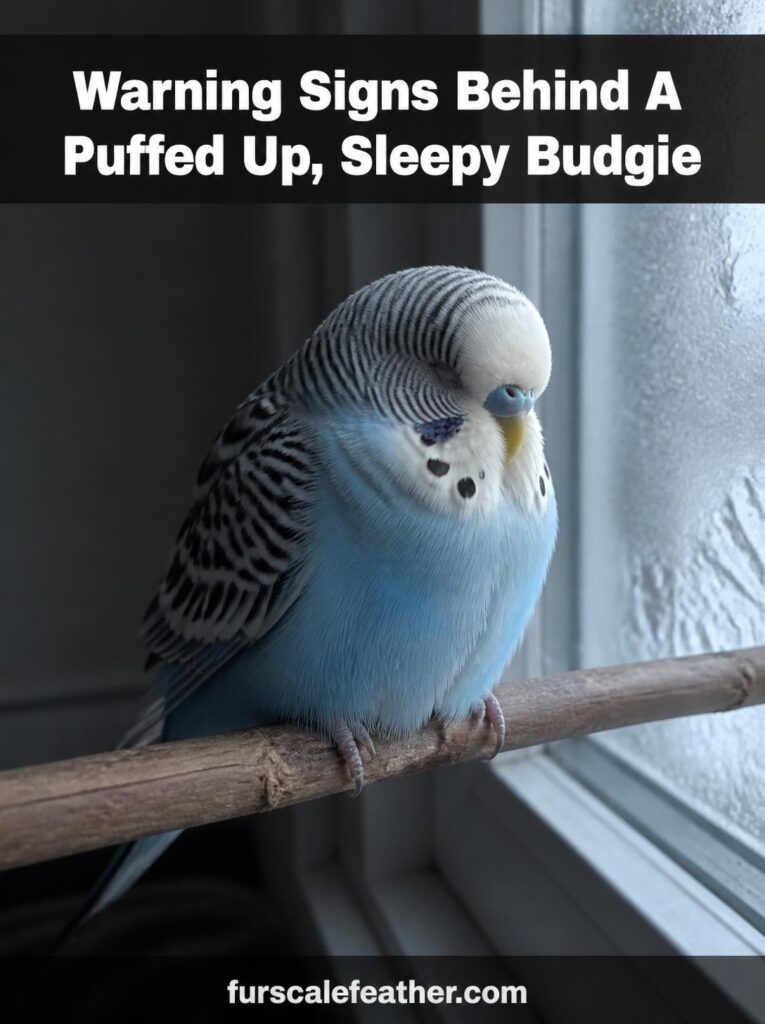
- Move the cage to a warm, quiet, low-traffic room, away from drafts, air vents, and windows. Aim for 80 to 85°F if the bird is clearly unwell, using a covered heating pad set on low under one side of the cage rather than directly on it.
- Check the droppings on the cage tray from the last few hours. Note the color, texture, and whether there is less volume than usual, and photograph them so you can describe or show a vet.
- Offer familiar food within easy reach, lower on the perch if the bird seems weak, since a sick budgie may not have the energy to climb to a high feeding station.
- Reduce handling and noise for the next few hours. Constant checking and handling adds stress on top of whatever is already going on.
- Look for the additional warning signs listed above and write down what you find with a time stamp.
- Call an avian vet the same day if you see tail bobbing, discharge, floor-sitting, or no droppings for over 8 hours. If it is after hours, call an emergency vet line or the nearest 24-hour animal hospital that treats birds.
- Do not give over-the-counter medication, herbal remedies, or extra supplements without veterinary guidance, since budgies are small enough that dosing mistakes can do real harm quickly.
Products That Help You Monitor And Support A Sick Budgie
I have not personally owned a budgie, so the products below are not based on my own bird. The recommendations come from a local bird rescue I have worked with on product testing, along with aggregated user reviews and general guidance from avian care sources. Full disclosure: some links may be affiliate links, which means I may earn a small commission at no extra cost to you if you buy through them.
The rescue ran a two-week informal test with 5 recovering budgies in their care, comparing a heated perch against a plain heating pad placed under the cage, while tracking recovery time and how quickly each bird returned to normal perching behavior.
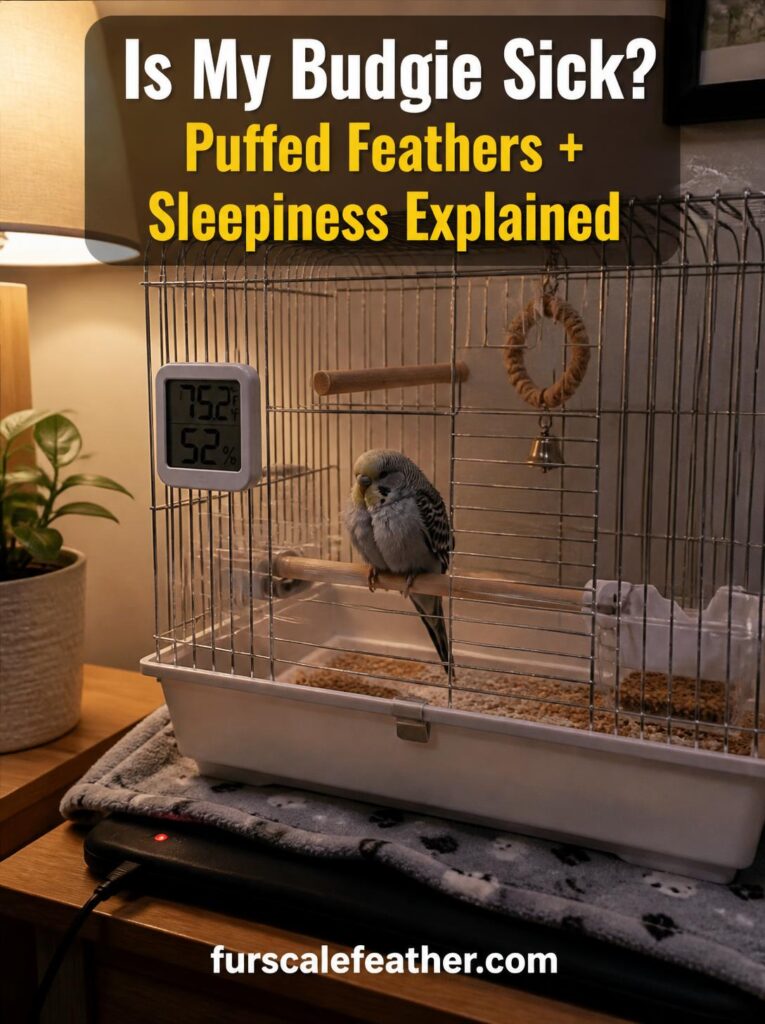
ThermoPro TP50 Digital Thermometer and Hygrometer
- Pros: Reads temperature and humidity at a glance, small enough to clip inside or near the cage, battery lasts several months with daily use.
- Cons: Does not heat anything on its own, it only measures.
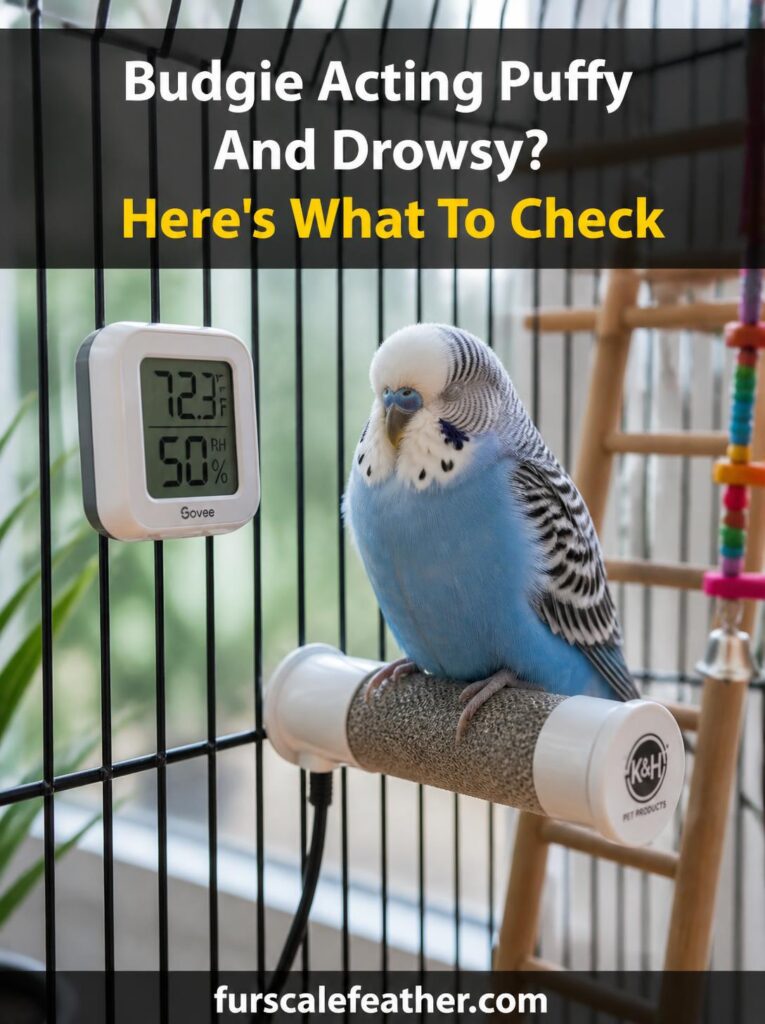
K&H Thermo-Perch Heated Bird Perch
- Pros: Warms the feet gently without heating the whole cage, low wattage design, rescue staff reported 3 of 5 test birds chose to perch on it within the first hour once introduced.
- Cons: Only warms the feet, not the whole body, so it works best alongside a warmed room rather than as a standalone fix for a cold, sick bird.
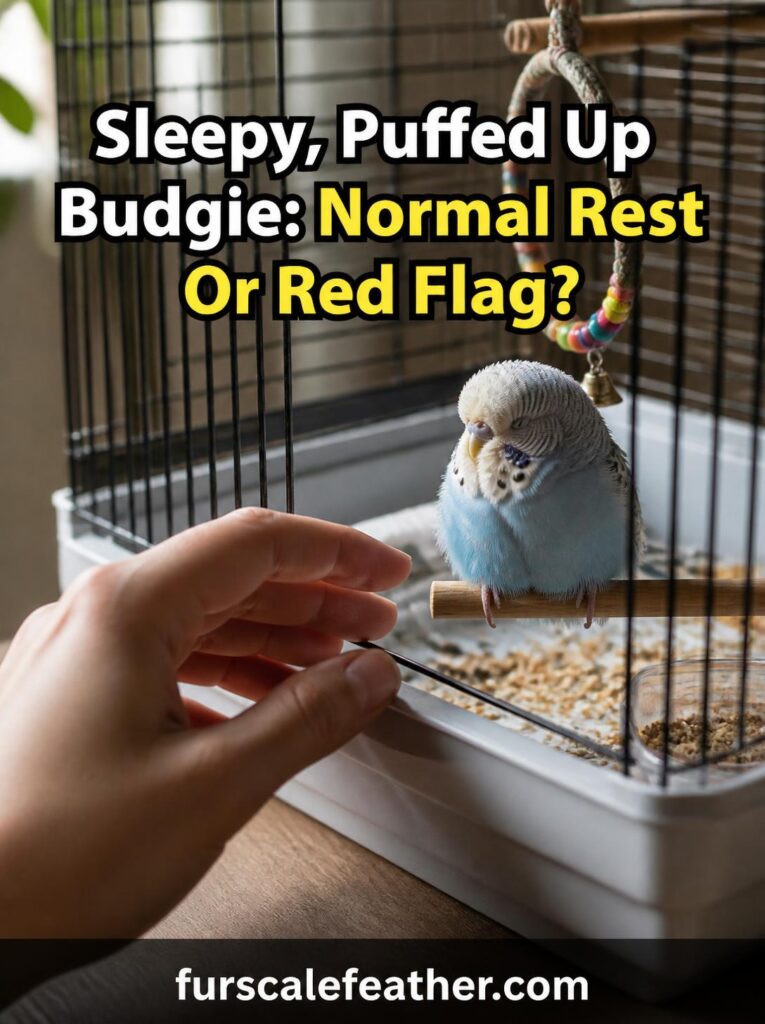
Cozy covered heating pad set on low, placed under one side of a hospital cage
- Pros: Rescue staff used this as their primary method during the test and reported birds moved closer to the warm side within 15 to 20 minutes and settled with feathers smoothing out faster than on the heated perch alone.
- Cons: Needs a cover between the pad and the cage floor to prevent overheating, and it must never be placed where the bird can chew the cord.
Recommended winner: the covered heating pad paired with the ThermoPro thermometer. The rescue’s informal results and general avian care guidance both point to whole-body warmth as more effective than a heated perch alone for a genuinely sick, puffed-up bird, and the thermometer lets you confirm the cage is actually in the 80 to 85°F range rather than guessing.
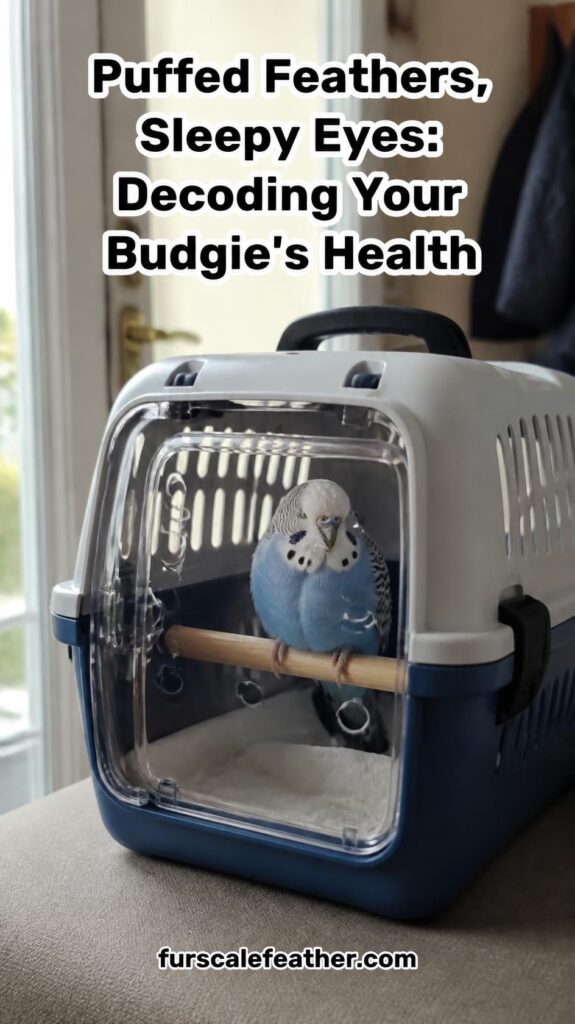
A sturdy travel carrier is also worth keeping on hand before you need it. A hard-sided small bird carrier with secure perches lets you get to the vet quickly without the stress of transferring a sick bird into an unfamiliar box at the last minute.
A Mistake Worth Learning From
A reader wrote to me after her budgie, Pip, stayed puffed up for three days. She assumed the cause was a cold snap in her apartment and kept adjusting the thermostat, waiting for improvement before calling a vet. By the fourth day Pip was sitting on the cage floor and had stopped eating. The vet diagnosed a respiratory infection that had been building the entire time, and Pip needed several days of antibiotics and supportive care to recover. The lesson she shared with me was simple: if puffing and sleepiness last beyond a single day, treat it as a reason to call a vet rather than a reason to keep waiting and watching. Warmth can help a mildly chilled bird, but it will not fix an infection, and the days spent waiting cost Pip real ground in his recovery.
When To Call An Avian Vet
Any budgie who is puffed up and sleepy for more than a few hours, especially alongside tail bobbing, discharge, floor-sitting, or a stop in eating or droppings, needs to see a vet the same day. Regular dog and cat vets are usually not equipped to treat birds, so look specifically for an avian or exotic vet. The Association of Avian Veterinarians maintains a vet finder tool that can help you locate one near you before you need it in an emergency, which is worth bookmarking today rather than searching for it while stressed. This article is not a substitute for a veterinary diagnosis, and any bird showing multiple warning signs should be examined by a professional as soon as possible.
Questions People Usually Ask
Is it normal for a budgie to puff up while sleeping? Yes. Brief fluffing during a nap, especially on one leg with eyes drifting shut, is normal and should resolve within a minute or two of any noise or movement nearby.
How long can a sick budgie go without eating before it becomes an emergency? Budgies have a fast metabolism and can decline quickly. If a budgie has not eaten for more than 8 to 12 hours while also showing other warning signs, treat it as an urgent situation and contact a vet.
Can a cold room alone cause a budgie to puff up and act sleepy? Yes, a chilly room can cause fluffing on its own. Warm the room to 70 to 75°F and watch for improvement within an hour. If the bird does not perk back up once warm, something else is likely going on.
What temperature should a sick budgie’s cage be kept at? Many avian sources recommend 80 to 85°F for a bird showing illness signs, using a covered heating pad under part of the cage so the bird can move away from the heat if it gets too warm.
Should I take my budgie to my regular vet or a bird specialist? A bird specialist, known as an avian or exotic vet, is strongly recommended. Standard small animal vets often have limited training in avian medicine, and a delay in finding the right vet can cost valuable time.
The Bottom Line
A budgie puffed up and sleepy for a short nap is nothing to worry about, but the same posture held for hours, especially with tail bobbing, floor-sitting, or a lost appetite, is a signal to act rather than wait. Warm the room, check the droppings, remove stress, and have an avian vet’s number ready before you need it. The pattern matters more than any single moment, so trust what you see over the next few hours and get professional help the same day if things are not improving.