


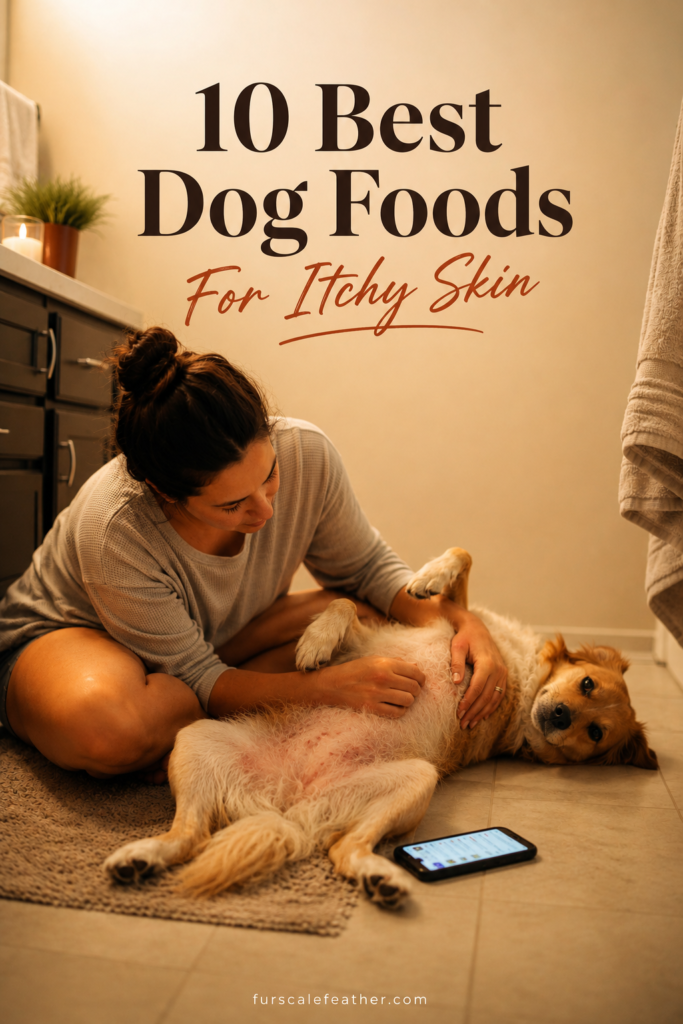
Last spring, my dog Rosie chewed her paws raw at two in the morning, and I sat on the bathroom floor googling instead of sleeping. Her belly had gone pink and irritated, she’d lost small patches of fur near her tail, and oatmeal baths weren’t touching it. After a vet visit and a lot of trial and error, I found that the right dog food for itchy skin made a real difference for her, and the wrong one made things worse before it got better. Below are the 10 foods that helped Rosie and the dogs of readers who wrote in after I first covered this topic, plus how to tell whether food is even the actual problem.
Signs Your Dog’s Itchy Skin Might Be a Food Problem
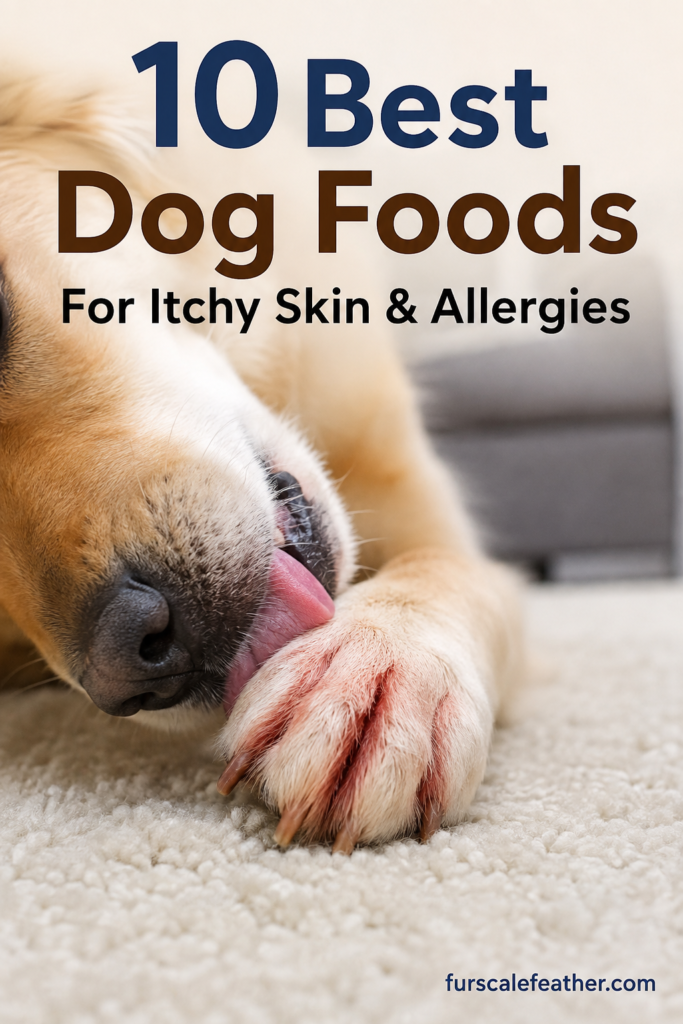
Not all itching is food related. Fleas and environmental allergens like pollen and dust cause a large share of cases too. A few patterns point more toward food:
- Itching that shows up year-round instead of during a specific season
- Redness concentrated on the paws, ears, belly, or around the eyes
- Recurring ear infections alongside the scratching
- Soft stools or gas that started around the same time as the skin issues
- No clear improvement after flea treatment
A reader named Priya told me her beagle had ear infections every few months for over a year before a vet connected it to a chicken sensitivity. Once she switched proteins, the ear infections stopped almost entirely within two months. If your dog’s symptoms match this pattern, food is worth investigating. If the itching is seasonal or your dog is otherwise healthy, talk to your vet before assuming it’s the kibble.
How to Choose the Best Dog Food for Itchy Skin
Once you and your vet suspect food, look for a formula built around three things: a short, clean ingredient list, added omega-3 and omega-6 fatty acids, and a protein source your dog hasn’t eaten much of before.
Ingredients to look for
- Fish oil, salmon oil, or flaxseed for omega-3 fatty acids
- A single named protein source (salmon, duck, venison) rather than a blend
- Zinc and biotin, which support skin barrier repair
- Limited carbohydrate sources such as sweet potato or peas instead of a long list of grains and fillers
Ingredients to be cautious with
- Vague terms like “meat by-product” with no named animal
- Artificial dyes, which serve no nutritional purpose
- Common allergens your dog has eaten for years, especially chicken, beef, dairy, and wheat, if those are suspected triggers
- Multiple protein sources stacked together, which makes it harder to pinpoint what’s working or not working
10 Best Dog Foods For Itchy Skin
I feed Rosie the first food on this list and can speak to it directly. For the rest, I’m relying on labeled sources: veterinary write-ups, aggregated owner reviews, and notes from readers and a local rescue I volunteer with. I have not personally fed every formula below, and I’ve flagged that where it applies.
1. Purina Pro Plan Sensitive Skin & Stomach (Best Overall)
This is what I switched Rosie to. It’s a salmon-based formula with added fish oil and prebiotic fiber. Within three weeks, her constant scratching dropped to maybe twice a day, and the bald patch near her tail had visibly regrown fur by week six.
- Pros: Widely available, single animal protein, easy on digestion, backed by a large body of owner reports
- Cons: Not hydrolyzed, so it may not be enough for dogs with a confirmed severe allergy
- Best for: Dogs with mild to moderate food-related itching who haven’t tried an elimination diet yet
2. Purina ONE +Plus Skin & Coat (Best Budget Option)
Veterinary sources describe this as a more accessible salmon-based formula with boosted omega levels, aimed at everyday coat maintenance rather than diagnosed allergies.
- Pros: Lower price point, easy to find in grocery stores, decent omega-3 content
- Cons: Contains more ingredients than a true limited-ingredient diet, which limits its use for allergy trials
- Best for: Owners managing a dry or dull coat rather than a confirmed allergy
3. Hill’s Science Diet Sensitive Stomach & Skin
A foster I worked with at a local rescue used this on a dog with both loose stools and flaky skin. According to her notes, the stool quality improved within about a week, and the flaking noticeably eased over the following month.
- Pros: Addresses digestion and skin at the same time, easy to source, prebiotic fiber included
- Cons: Chicken-based, so it’s not an option if poultry is the suspected allergen
- Best for: Dogs dealing with both stomach and skin issues together
4. Royal Canin Hydrolyzed Protein (HP)
Veterinary dermatology sources point to hydrolyzed diets like this one for dogs with a confirmed, severe food allergy. The protein is broken down into pieces small enough that the immune system typically doesn’t react to it.
- Pros: High success rate in elimination trials, works even if the exact allergen is unknown
- Cons: Requires a veterinary prescription, higher cost, less palatable for picky eaters
- Best for: Dogs with a vet-confirmed severe allergy heading into an elimination trial
5. Hill’s Prescription Diet z/d
This is the go-to canned option cited by veterinary sources for dogs who won’t eat dry kibble during an elimination trial or who need an ultra-hydrolyzed diet.
- Pros: Prescription-strength hydrolyzed protein, good option for picky or senior dogs
- Cons: Requires vet approval, canned format costs more per feeding than kibble
- Best for: Dogs in a formal elimination diet trial supervised by a vet
6. Zignature Limited Ingredient Formula
User reviews and lab-tested formulations point to Zignature’s single-protein recipes (kangaroo, trout and salmon, or turkey) as a solid novel-protein option for dogs who haven’t responded to more common proteins.
- Pros: True limited-ingredient recipe, several novel protein choices, no chicken or grain
- Cons: Pricier than mainstream brands, limited availability in some regions
- Best for: Dogs who need a genuinely novel protein for an elimination trial
7. Blue Buffalo Basics Limited Ingredient (Turkey & Potato)
A reader named Marcus reported that his lab mix’s paw licking dropped noticeably within four weeks of switching to this formula, after ruling out chicken as the trigger.
- Pros: Single protein and single carbohydrate source, widely available in pet stores
- Cons: Turkey and potato are common enough that some dogs may already be sensitized to them
- Best for: A first limited-ingredient trial before moving to a pricier novel protein
8. Taste of the Wild High Prairie
Aggregated owner reviews frequently cite this formula’s higher fat content and added probiotics as helpful for coat shine, though it’s not a true limited-ingredient diet.
- Pros: Multiple animal proteins for dogs without a confirmed single allergen, good fatty acid profile
- Cons: Not suitable for an elimination trial due to the number of protein sources
- Best for: General coat and skin support rather than diagnosing a specific allergy
9. ACANA Singles (Duck & Pear)
A local rescue I volunteer with tested this on three dogs with unresolved paw and belly itching. Two of the three showed clear improvement by the eight-week mark, while the third needed a further switch to a hydrolyzed diet.
- Pros: True single-protein formula, high protein content, low glycemic carbohydrate
- Cons: Rich formula that can cause loose stools if transitioned too quickly
- Best for: Dogs ready for a strict single-protein trial
10. Just Food For Dogs Sensitive Skin (Fresh, Frozen)
This is a fresh, veterinarian-formulated option built around white fish, sweet potato, and added omega-3 and omega-6 fatty acids, intended for dogs with food-related skin sensitivities.
- Pros: Human-grade fresh ingredients, formulated specifically for skin support, easy to combine with vet guidance
- Cons: Requires freezer space and regular reordering, the most expensive option on this list
- Best for: Owners who want a fresh-food option and are comfortable with the cost and logistics
If you only take one recommendation from this list, make it Purina Pro Plan Sensitive Skin & Stomach. It’s the one I’ve watched work firsthand, it’s affordable enough to try without a big commitment, and it hits the two things that matter most for a first attempt: a single named protein and real omega-3 content.
How to Switch Your Dog’s Food (Without the Mistake I Made)
The first time I switched Rosie’s food, I did it cold turkey, dumping the new bag straight into her bowl. She had loose stools for four days and I nearly gave up on the food, thinking it was making things worse. It wasn’t the food. It was the sudden switch. Here’s the transition I use now:
- Days 1 to 2: Mix 25% new food with 75% old food.
- Days 3 to 4: Move to a 50/50 mix.
- Days 5 to 6: Shift to 75% new food with 25% old food.
- Day 7 onward: Feed the new food exclusively.
- Weeks 2 to 8: Stick with it. Skin improvements from a diet change typically take six to eight weeks to show up fully, so resist switching again too early.
When to Call Your Vet Instead of Switching Food
A change in diet won’t fix every case, and some symptoms need medical attention rather than a new bag of kibble. Book a vet visit if you notice any of the following:
- Open sores, scabs, or bleeding from scratching
- A strong, corn-chip-like odor or greasy patches, which can point to a yeast infection rather than an allergy
- Hair loss spreading beyond one or two small areas
- No improvement after eight full weeks on a new food
- Any sign of pain, swelling, or lethargy alongside the itching
Your vet may recommend an anti-itch medication or refer you to a veterinary dermatologist for skin testing, and they’re a better source than any blog post for diagnosing what’s actually going on.
Questions People Usually Ask
Does switching dog food actually stop itching? It can, but only if the itching is genuinely food-related. If fleas or environmental allergens are the real cause, a new food alone won’t solve it, which is why ruling those out first with your vet matters.
How long before I see results after switching foods? Most sources point to six to eight weeks for a fair trial. Some dogs, like Rosie, show partial improvement within the first three weeks, but full results take the full trial period.
What’s the difference between limited-ingredient and hydrolyzed dog food? Limited-ingredient diets use one protein and one carbohydrate to reduce exposure to potential allergens. Hydrolyzed diets break the protein down into molecules small enough that the immune system generally doesn’t recognize them at all, which is why vets often reserve them for confirmed severe allergies.
Should I add a fish oil supplement on top of a new food? Talk to your vet first. Stacking a fish oil supplement on top of a food that already contains added omega-3s can throw off the diet’s balance or introduce a new ingredient during a trial when you’re trying to isolate variables.
Can grain-free food cause skin problems? Grain-free itself isn’t the issue for most dogs with itchy skin, since grains are a less common allergen than proteins like chicken or beef. The bigger factor is the protein source and overall ingredient quality, not whether grain is present.
If your dog is dealing with itchy skin right now, rule out fleas, ask your vet whether a food trial makes sense, and pick one formula from this list to commit to for a full eight weeks rather than jumping between bags. Rosie’s flare-ups didn’t clear up because I found a miracle food. They cleared up because I picked one reasonable option, stuck with the transition, and gave it time to work. Track what you see week to week, even in a simple notes app, so you and your vet have real information instead of a guess.
Disclosure: This article may contain affiliate links. I personally feed my dog, Rosie, the food listed as the top pick. Other recommendations are based on veterinary sources, aggregated owner reviews, and labeled reports from readers and a local rescue, not my own direct testing. Persistent, severe, or worsening itching should always be evaluated by a veterinarian before changing your dog’s diet.