
You’ve rearranged the same three plastic plants in your tank for the third time this month, and it still looks like a plain glass box with fish swimming in circles. Scrolling through aquarium accounts online doesn’t help, since every tank in your feed looks like it belongs in a magazine while yours still has that bare pet-store starter kit look. The good news is that most of those dream tanks started exactly where yours is now, and the jump from boring to bookmark-worthy usually comes down to a handful of aquarium setup ideas you can copy piece by piece instead of redoing the whole tank at once.
What Actually Makes an Aquarium Setup Look Good
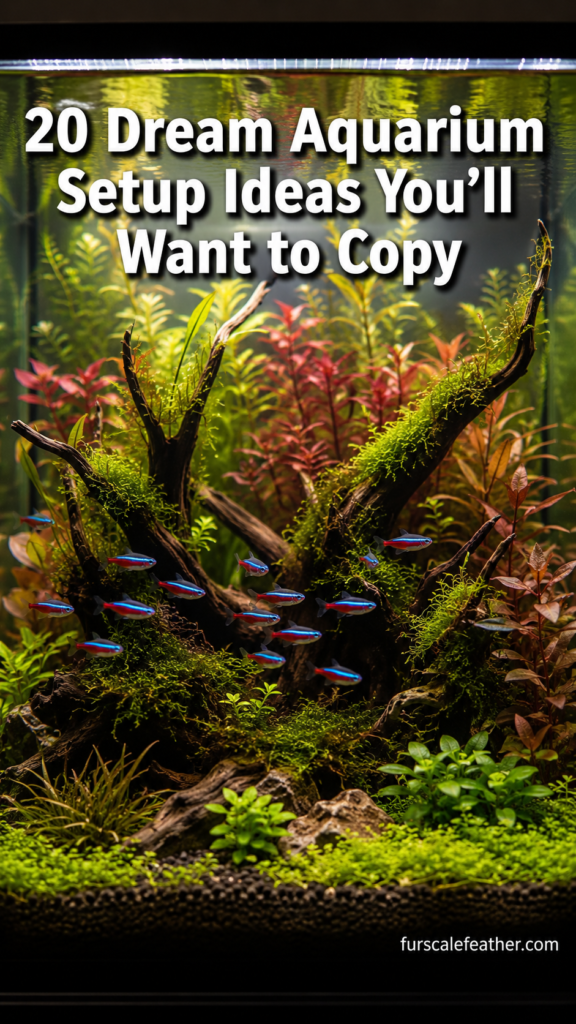
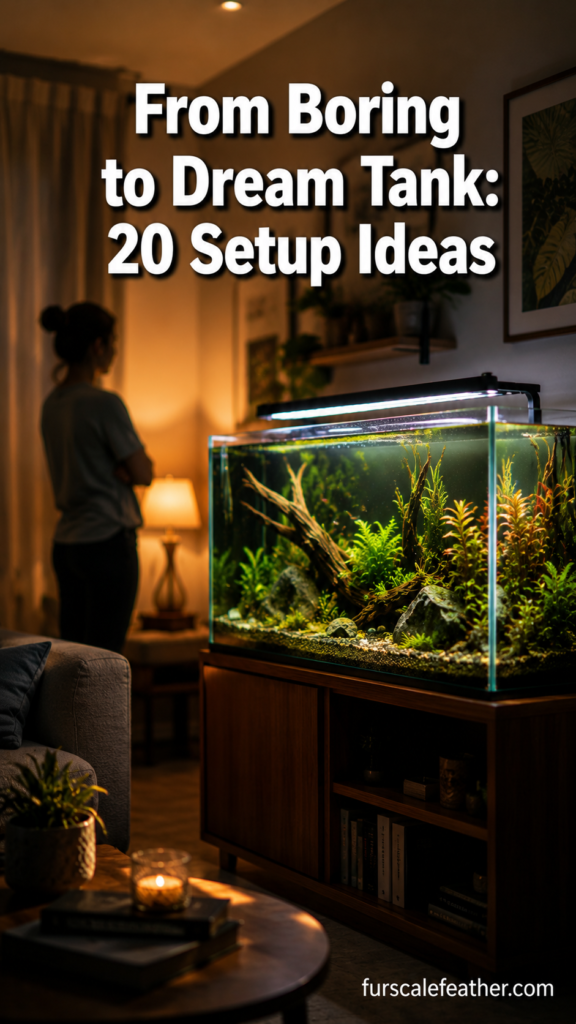
Before jumping into a list of ideas, it helps to know what separates a tank that looks planned from one that looks like leftover decorations got dumped in water. Four things tend to matter most: a clear hardscape (rocks, wood, or structure placed first), plants or decor layered by height, a lighting choice that flatters the colors in the tank, and restraint. Odd numbers of focal pieces and open swimming space usually read as more intentional than a tank packed edge to edge.
A reader told me she kept adding ornaments to her 40-gallon tank every time she visited the pet store, until it looked like a clearance aisle instead of an aquarium. When she pulled everything out and rebuilt it around three pieces of matched driftwood and a single rock formation, the tank looked finished within a single afternoon, even though she had actually removed items rather than added them. That is usually the fastest fix available, and it costs nothing.
20 Aquarium Setup Ideas You’ll Want to Copy
These are grouped by style, so skim for the category that matches your tank size, budget, and how much maintenance you actually want to take on.
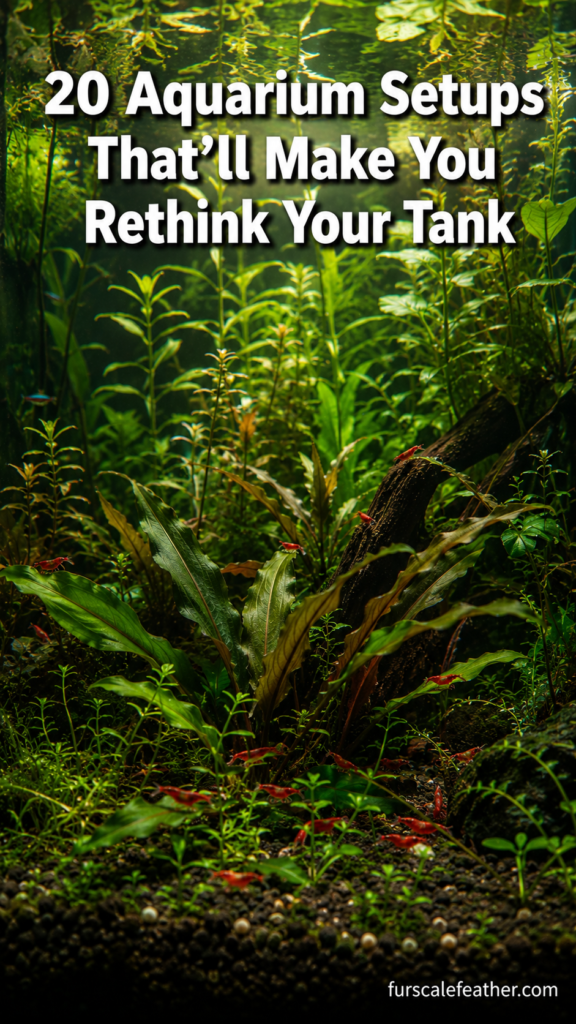
Nature-Inspired and Planted Layouts
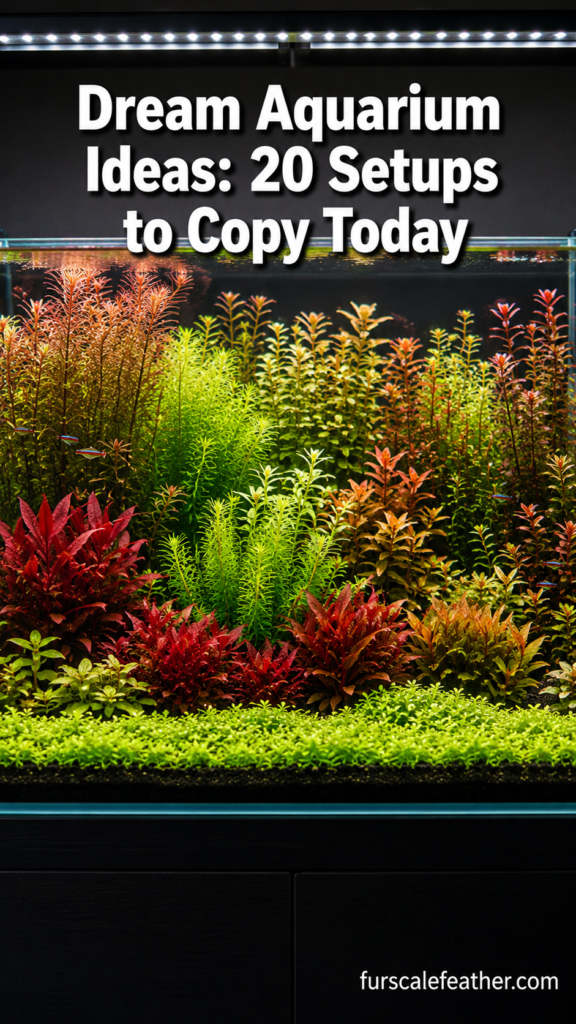
- Dutch-style plant terraces. Rows of different plant heights and leaf textures, arranged like a garden bed, with no visible hardscape at all.
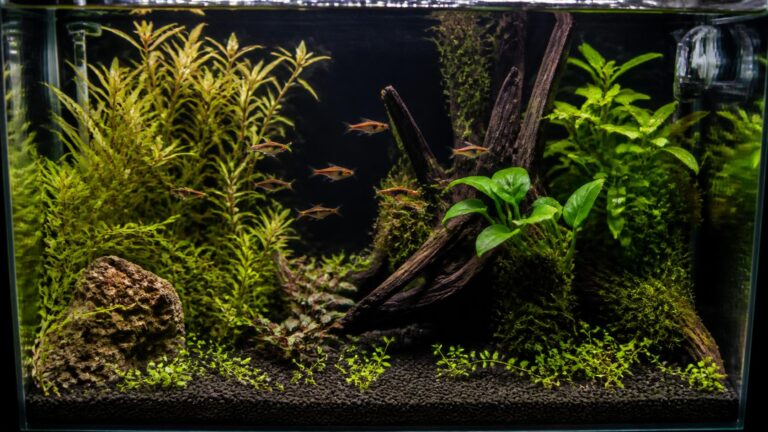
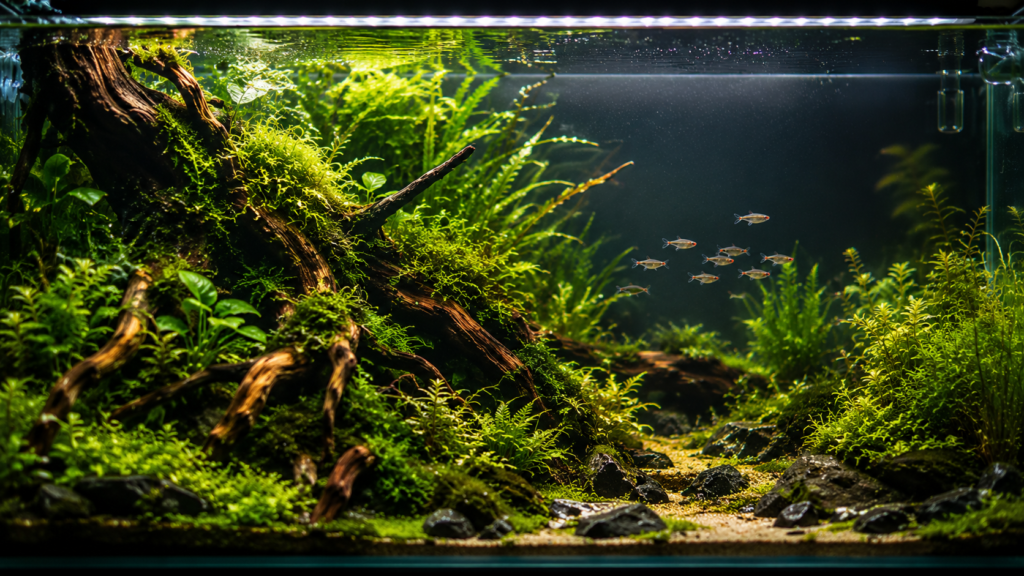
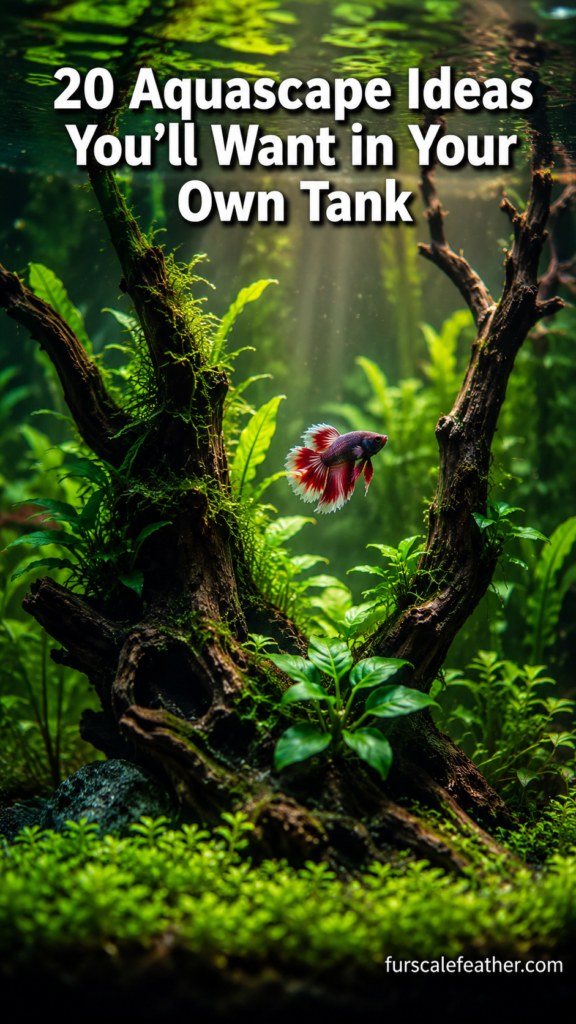
- Driftwood forest. Two or three branching pieces of driftwood anchored with java fern or anubias tied on with fishing line until roots take hold, usually within two to three weeks.
- Iwagumi rock layout. A minimalist Japanese style built around three to five stones in odd groupings, carpeted with a low-growing plant like dwarf hairgrass.
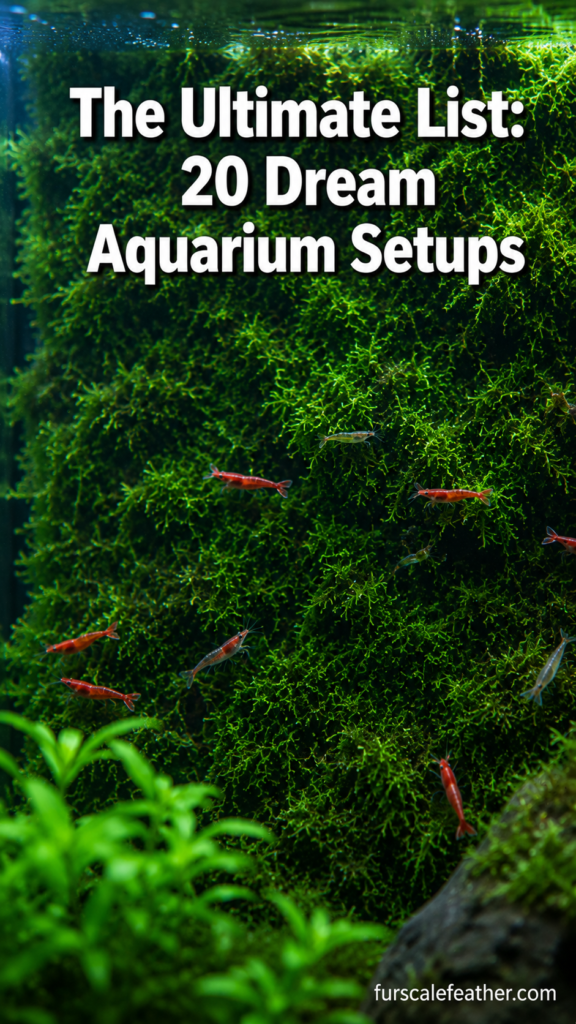
- Moss wall backdrop. Java moss or Christmas moss attached to a mesh panel along the back glass, which fills in fully in about six to eight weeks under decent lighting.
- Floating plant canopy. Frogbit or red root floaters left to spread across the surface, which softens overhead light and gives shy fish somewhere to hide.
- Carpet and canyon. A dense foreground carpet plant split by a sand path, which draws the eye front to back instead of side to side.
Minimalist and Modern Tanks
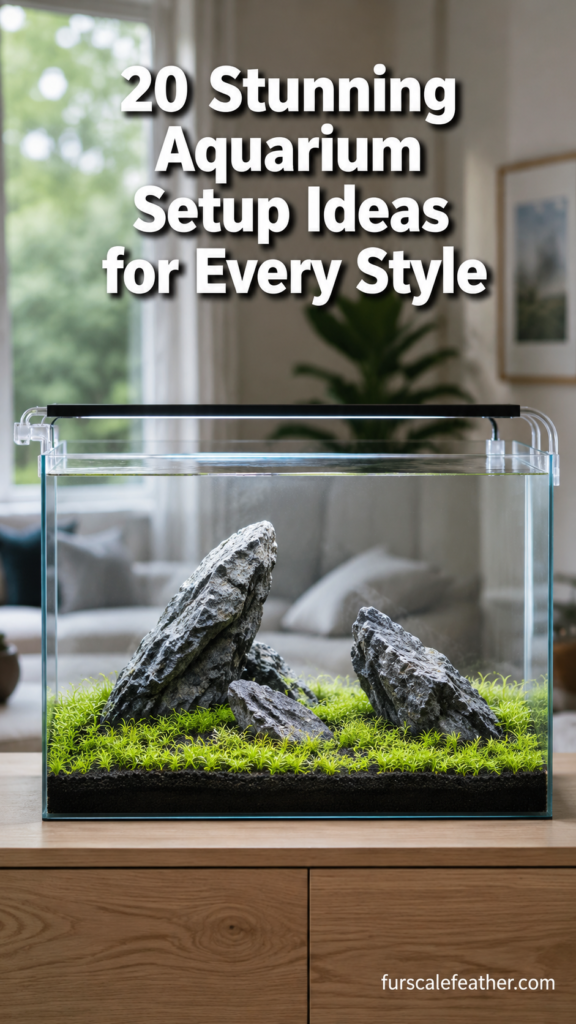
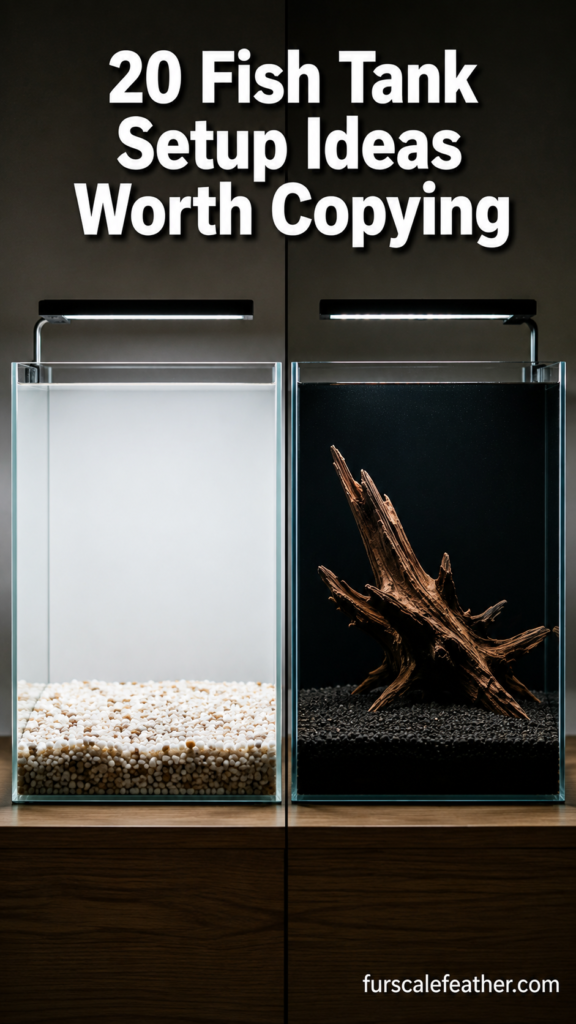
- Black sand and white rock. High contrast substrate and stone that photographs well and hides algae less obviously than lighter substrate.
- Single statement piece. One large rock or wood centerpiece with almost no other decor, letting the fish and plant color do the work.
- Monochrome plant palette. Sticking to two or three plant species in similar shades of green instead of mixing bright reds and greens.
- Open-top rimless tank. A frameless glass tank with no visible trim, paired with a pendant light above rather than a built-in hood.
Themed and Story-Driven Tanks
- Sunken shipwreck. A resin ship or barrel ornament partially buried in substrate, surrounded by plants that look like they grew over time.
- Biotope replica. A layout modeled on a real river or lake habitat, matched to the actual origin of the fish species in the tank.
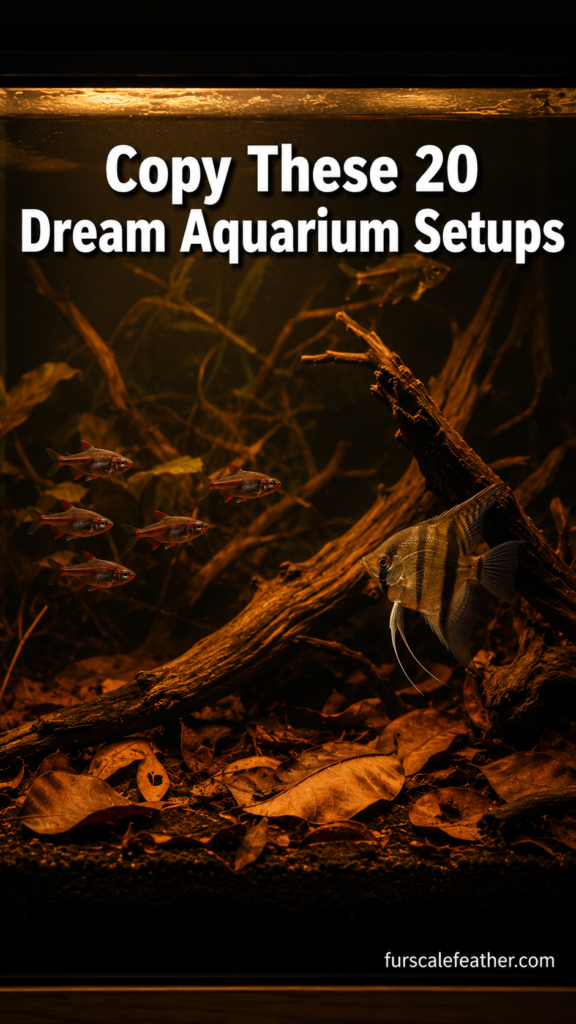
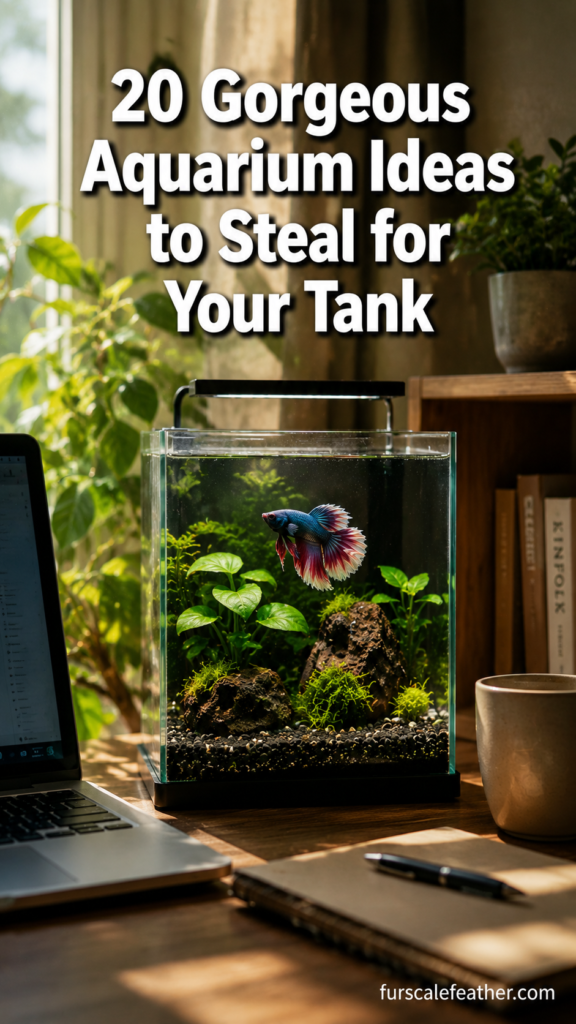
- Blackwater tank. Indian almond leaves and driftwood that tint the water a tea color, mimicking Amazon basin conditions many tetras and bettas evolved in.
- Coral reef look for freshwater. Bright blue gravel and fake coral decor for a saltwater feel without the cost of a true reef setup.
- Jungle overgrowth. Deliberately dense planting left untrimmed for a wild, overgrown look rather than a manicured one.
Budget-Friendly Makeovers
- Repainted background. A can of black or dark blue spray paint on the back exterior glass, which instantly makes colors pop for under ten dollars.
- Thrifted decor refresh. Ceramic mugs, ornaments, or ornaments from secondhand stores, soaked and rinsed thoroughly before use.
- Substrate swap only. Changing gravel color or adding a sand cap without touching anything else in the tank.
- Rescaping with what you own. Rearranging existing rocks and wood into a new layout before buying anything new.
- DIY background art. A printed 3D rock or plant background taped to the outside of the tank for texture without real hardscape cost.
How to Plan Your Aquarium Makeover in 5 Steps
- Pick one style from the list above. Trying to combine a biotope look with a coral reef theme in the same 20 gallons usually ends up looking cluttered rather than layered.
- Sketch the hardscape placement first. Decide where wood or rock goes before adding a single plant or fish, since moving hardscape later disturbs roots and substrate.
- Buy plants and decor in odd numbers. Groups of three or five read as more natural than pairs or single scattered pieces.
- Let the tank run for one to two weeks before adding fish. This gives plants time to root and lets you catch cloudy water or pH swings before livestock are affected.
- Trim and adjust weekly for the first month. Fast growers like stem plants can double in height within seven to ten days and need regular shaping to hold the intended layout.
Products That Make These Aquarium Setup Ideas Easier to Pull Off
I have not personally tested every product below, so the recommendations here are built from aggregated user reviews, manufacturer lab specs, and a conversation with a local aquarium shop owner who stocks and demonstrates this gear daily.
Fluval Stratum Substrate
Pros: Porous volcanic soil that supports root growth for carpet and stem plants, holds its shape without compacting.
Cons: Can cloud the water for the first day or two if not rinsed, and it is more expensive than plain gravel.
Chihiros WRGB II LED Light
Pros: Adjustable color channels let you match lighting to a planted, blackwater, or minimalist theme, and app control makes scheduling simple.
Cons: Higher price point than a basic single-color LED, and the app has a learning curve for first-time users according to aggregated reviews.
Fluval 3D Background (rock or driftwood texture)
Pros: Budget-friendly way to add depth and texture without real hardscape, easy to trim to size.
Cons: Reduces visible tank width slightly and needs to be cleaned separately if algae builds up behind it.
The overall winner for most beginner-to-intermediate tanks is the Chihiros WRGB II. It is the single upgrade that affects the largest number of ideas on this list, since lighting changes how every plant, rock, and fish color reads in the tank, and shop owners report it as one of the most requested lights among customers doing a full aquarium makeover.
Questions People Usually Ask
How much does a nice aquarium setup cost? A modest planted rescape can run $50 to $150 using existing equipment, while a full redo with new lighting, substrate, and hardscape often lands between $200 and $400 for a 20 to 40 gallon tank.
Can I copy these ideas in a small tank? Most of them scale down fine. Iwagumi layouts and single statement pieces actually work especially well in tanks under 10 gallons, since fewer elements are needed to fill the space.
Do I need CO2 for a planted tank? Not for beginner-friendly plants like anubias, java fern, or moss. Faster-growing carpet plants and stem plants generally do better with supplemental CO2, but it is not required to start.
How often should I change my aquarium decor? There is no fixed schedule. A seasonal refresh every three to six months keeps a tank feeling current without stressing fish through constant rearranging.
What’s the easiest aquarium setup idea for beginners? A driftwood forest with anubias and java fern tied on is one of the most forgiving options, since both plants tolerate a wide range of lighting and water conditions while still looking intentional.
If your tank has been feeling flat for a while, you do not need to rebuild the whole thing this weekend. Pick one idea from this list, whether that is a driftwood forest, a repainted background, or simply pulling out half your ornaments the way that reader did, and give it two weeks before judging the result. Small, deliberate changes tend to outperform a full overhaul, both for your budget and for your fish, who generally prefer fewer disruptions to their water and substrate. Once one section feels right, the rest of the tank usually falls into place around it.
Disclosure: Product recommendations above are based on manufacturer specifications, aggregated user reviews, and input from a local aquarium retailer, not personal long-term testing. This post contains no paid sponsorships or affiliate compensation at the time of writing.