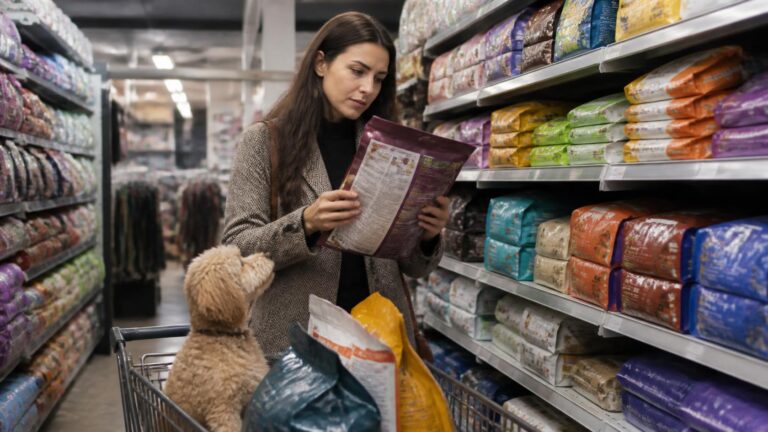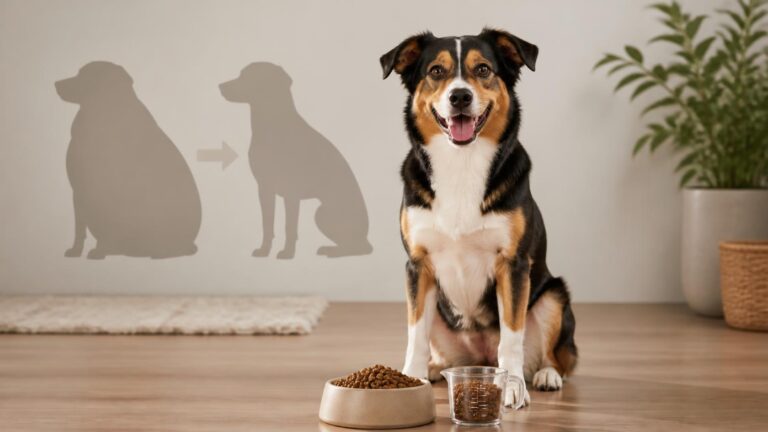
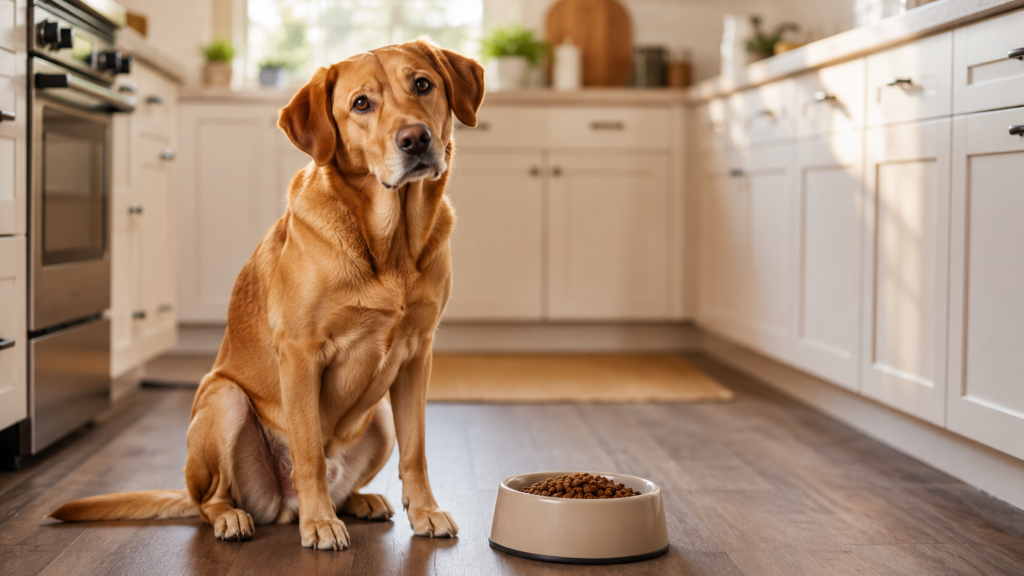

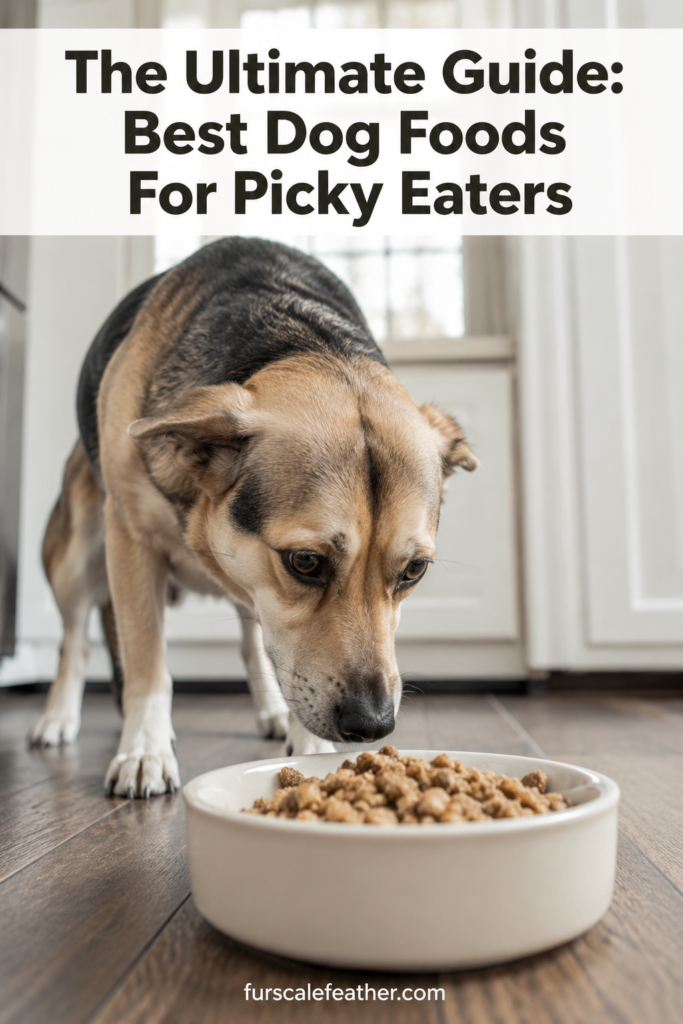
Rosie, my dog, once stood over a full bowl of kibble for almost two minutes, looked up at me, and walked away without touching it. That happened four nights in a row before I admitted the food wasn’t the problem I thought it was, it was a picky dog food problem, and I needed a different approach than just switching brands at random. If you’ve stood in the kitchen watching your dog sniff, circle, and walk away from dinner, you already know how that feels.
This guide covers what actually causes picky eating, ten dog foods worth trying, and the exact way I switched Rosie over without an upset stomach.
Why Your Dog Might Be Turning Away From the Bowl
Before you buy anything new, it helps to know what you’re dealing with. Most picky eating falls into one of these categories.
- Boredom with the same flavor and texture. Dogs fed the exact same kibble for years sometimes lose interest, especially if the food has gone slightly stale.
- Free feeding. A bowl that’s always full removes the hunger cue that makes mealtime feel rewarding.
- Low aroma food. Dogs rely on smell more than taste. Dry kibble that’s been sitting in a bag for months has weaker aroma than fresh or freeze-dried options.
- A recent switch or stressor. New home, new pet, a change in routine, or a recent illness can all make a dog temporarily fussy.
- An underlying health issue. Sudden appetite loss, especially paired with vomiting, weight loss, or lethargy, is not the same as garden-variety pickiness and should be checked by a veterinarian rather than solved with a new bag of food.
What Actually Makes a Picky Dog Food Work
A good picky dog food usually shares a few traits, regardless of price point.
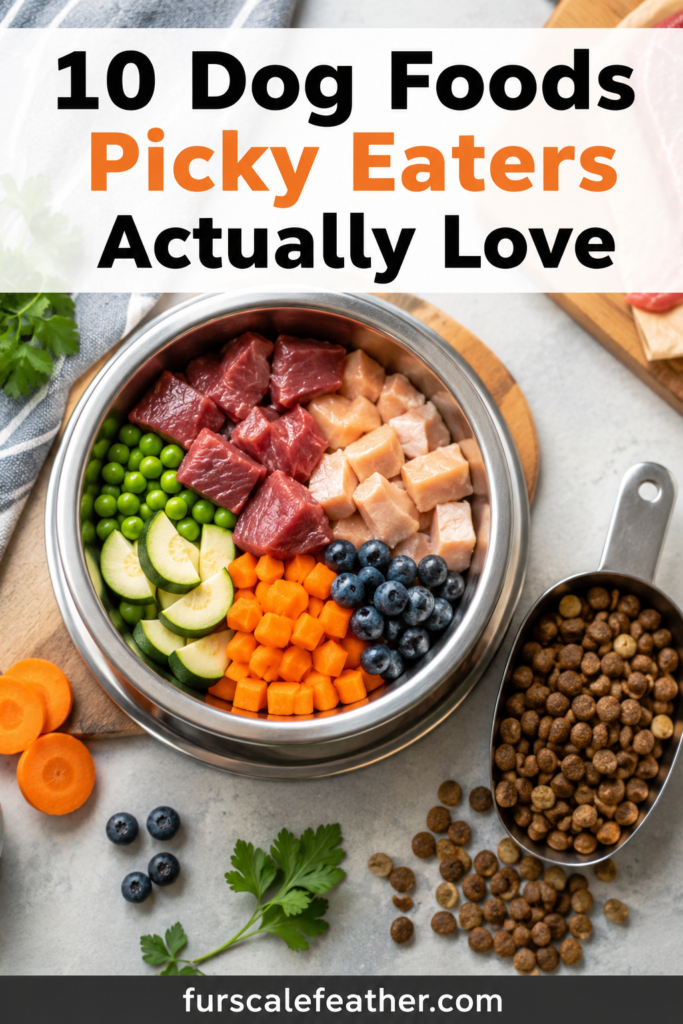
- Real meat or fish listed as the first ingredient, not a meat meal or byproduct blend.
- Strong, natural aroma from the ingredients themselves rather than added flavor sprays.
- A moisture content or texture that’s different from whatever the dog already refused, since dogs that reject dry kibble often respond to wet, fresh, or freeze-dried textures.
- Consistency between bags or batches, so the dog isn’t relearning a new smell every few weeks.\
The 10 Best Dog Foods for Picky Eaters
A quick disclosure before the list: I’ve personally fed three of these to Rosie over the past year. For the rest, I’m relying on ingredient panels, aggregated owner reviews, and feedback from a foster I know who has taken in a string of senior rescue dogs, several of them notoriously fussy eaters. I’ll flag which is which as we go.
1. The Farmer’s Dog (Our Pick for Best Overall)
Fresh, gently cooked meals delivered pre-portioned for your dog’s size and age. This is the one that finally worked for Rosie after three other brands failed.
- Pros: Real, visible ingredients, strong aroma straight out of the fridge, portions built around your dog’s weight
- Cons: Costs more than kibble, requires fridge or freezer space, subscription-based
2. Nom Nom
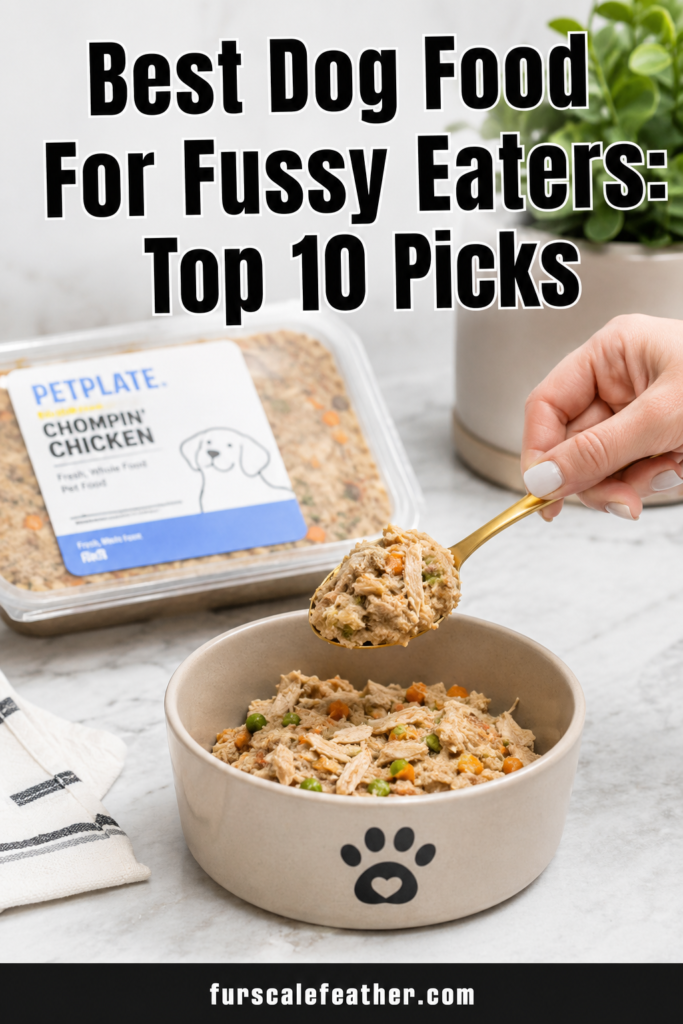
Another fresh-food subscription, with a two-week trial that lets you test it before committing.
- Pros: Low-risk trial period, vet-formulated recipes, easy to rotate flavors
- Cons: Subscription only, not sold in stores
3. Spot & Tango Fresh
Gently cooked meals in flavors like lamb and brown rice or beef and brown rice, built from a short questionnaire about your dog’s needs.
- Pros: Human-grade ingredients, no fillers, portioned to the dog
- Cons: Higher price point, requires refrigeration
4. Spot & Tango UnKibble
A dry alternative from the same company, made by drying fresh ingredients rather than the usual rendering process.
- Pros: Shelf stable like regular kibble, stronger smell than most dry food, no artificial fillers
- Cons: Pricier than standard kibble, limited flavor count
5. Ollie
Fresh and baked meals across several proteins including beef, turkey, chicken, and lamb, with more texture variety than most competitors.
- Pros: Wide flavor rotation, multiple textures to test what your dog prefers, pre-measured portions
- Cons: Subscription commitment, cost adds up for larger dogs
6. Stella & Chewy’s Freeze-Dried Raw
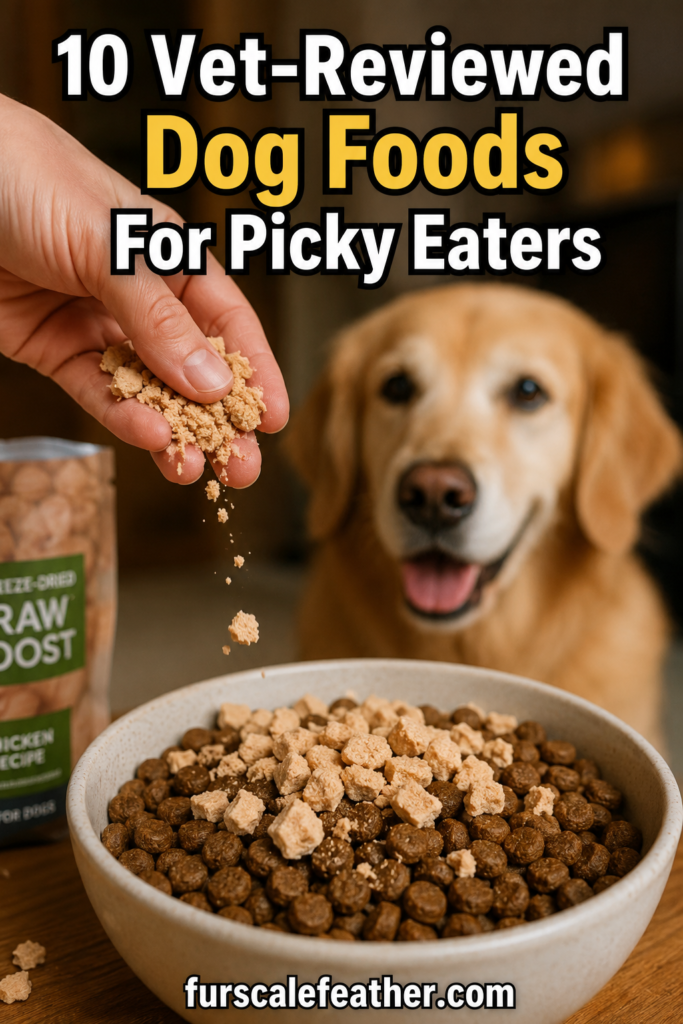
A foster I know uses this as a topper for senior dogs who won’t touch anything else. She reported that most of her fosters started eating within the first two feedings once the freeze-dried raw pieces were mixed in.
- Pros: Very strong aroma, works as a topper over existing kibble, shelf stable
- Cons: More expensive per pound than kibble, needs rehydrating for some dogs with dental issues
7. Orijen
A high-meat-content dry kibble known for aroma and ingredient density rather than fillers.
- Pros: High protein and meat content, strong smell for a dry food, widely available in stores
- Cons: Rich formula that some dogs need to transition into slowly, premium pricing
8. Merrick Wet Food
A wet food line with flavors like slow-cooked beef stew and duck with sweet potato, useful both as a standalone meal and a mixer.
- Pros: Real deboned meat as the first ingredient, wide flavor range, works well as a topper
- Cons: Not as economical as dry food if used as a full-time diet\
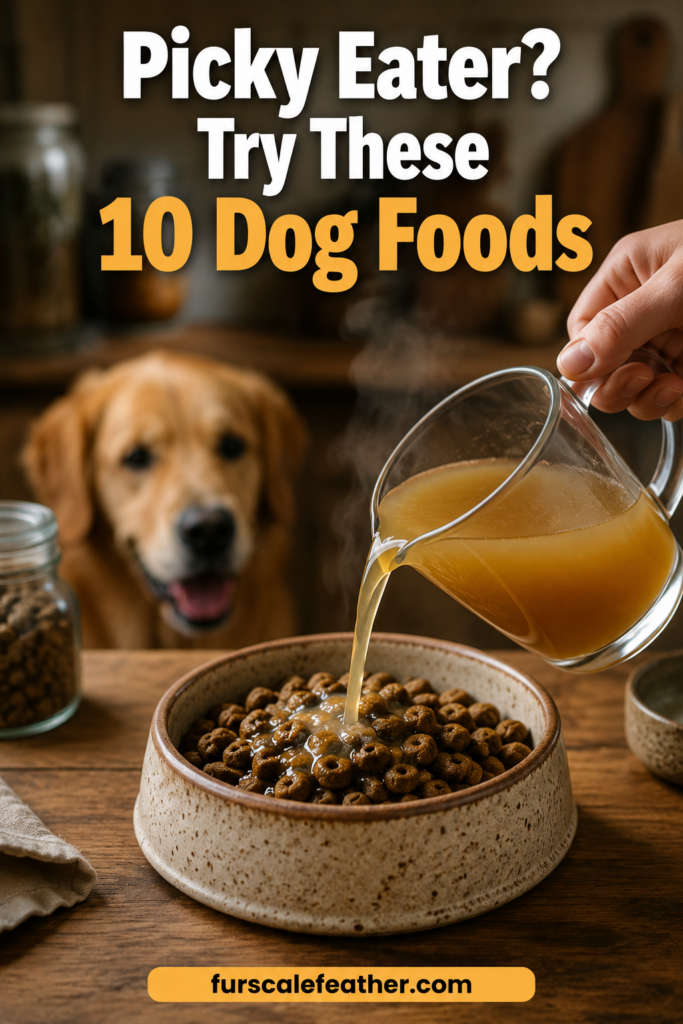
9. Open Farm Bone Broth
A simple, budget-friendly topper made from humanely raised meat with no artificial additives.
- Pros: Inexpensive way to boost aroma over existing food, easy to portion, gentle on digestion
- Cons: Not a complete meal on its own, needs to be paired with a base food
10. Blue Buffalo Life Protection Formula
A widely available dry food that balances nutrition and cost better than most premium brands.
- Pros: Budget-friendly, sold in most pet stores, multiple bag sizes to test before buying in bulk
- Cons: Fewer flavor options than the fresh or wet brands on this list
How to Switch a Picky Eater to a New Food Without a Battle
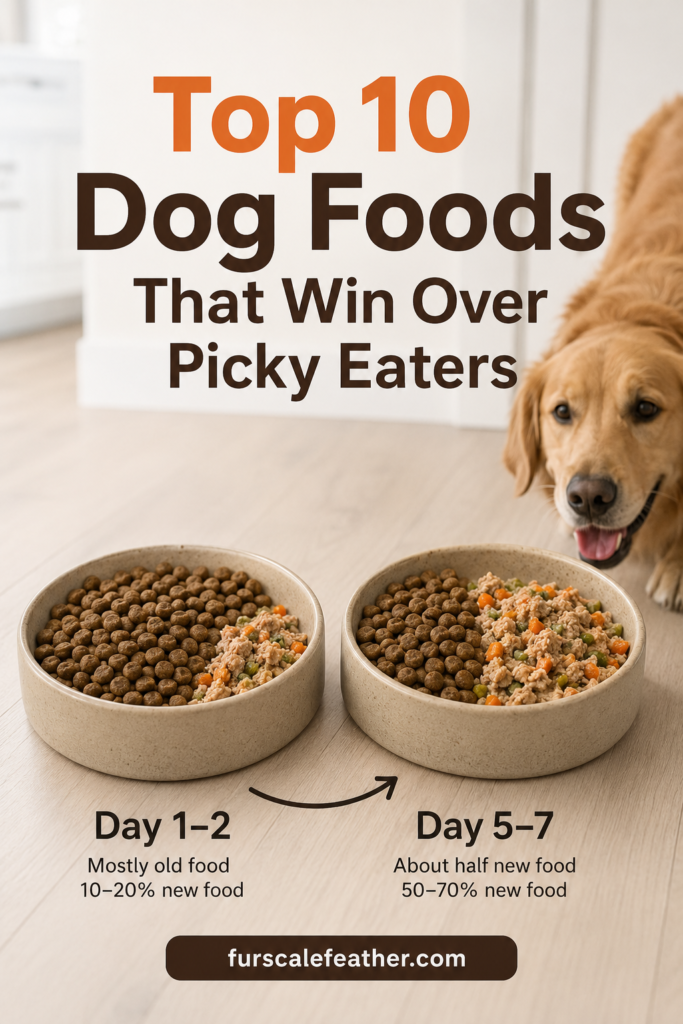
Switching too fast is the single most common mistake I see, and the one I made myself. Go slowly using these steps.
- Start with 75% old food and 25% new food for two days.
- Move to a 50/50 mix for two more days, watching stool consistency.
- Shift to 25% old food and 75% new for another two days.
- Feed 100% new food from day seven onward, assuming no stomach upset.
- Set fixed mealtimes twice a day for adult dogs instead of leaving food out all day.
- Pick the food up after 20 minutes whether it’s finished or not, to rebuild a hunger cue.
- Give any single food a full seven to ten days before deciding it’s a failure.
The Mistake I Made With Rosie
When Rosie first started refusing her kibble, I panicked and switched her cold, straight from dry kibble to a full bowl of fresh food overnight. She ate it eagerly, then had loose stool for two days afterward. The food wasn’t wrong, the switch was too abrupt. Once I reintroduced it gradually using the seven-day method above, she ate full bowls within four minutes, something she hadn’t done in nearly three weeks, and her stool went back to normal by day four.
When Picky Eating Is Something More
If your dog stops eating entirely for more than 24 hours, loses weight, vomits, or seems lethargic alongside the appetite change, that’s not a food preference issue. Contact your veterinarian rather than trying another bag of food. Organizations like the World Small Animal Veterinary Association publish nutrition guidelines that your vet can use to rule out underlying causes.

Questions People Usually Ask
Why is my dog suddenly a picky eater when they used to eat everything? Sudden changes are usually tied to a batch of stale food, a recent stressor, or in some cases a health issue. If the change is abrupt and paired with other symptoms, a vet visit is the right first step before trying new food.
Should I switch foods every time my dog gets picky? Not right away. Try fixed mealtimes and the 20-minute rule first, since inconsistent feeding schedules cause more pickiness than the food itself.
Is it okay to mix wet and dry food for a picky eater? Yes. A spoonful of wet food or bone broth over dry kibble often boosts aroma enough to get a picky dog interested again, without the cost of switching entirely.
How long should I wait before giving up on a new food? Give any new food seven to ten days of a gradual transition before deciding it isn’t working, unless your dog shows signs of illness.
Can stress or boredom make a dog picky about food? Yes. New pets, moving homes, or a repetitive diet can all reduce a dog’s interest in food even when nothing is wrong physically.
Picky eating is frustrating, but it’s rarely as mysterious as it feels in the moment. Start by ruling out a health issue with your vet if the refusal is sudden or paired with other symptoms. From there, pick one food from this list that matches your budget and your dog’s texture preference, and give it a full week using the gradual switch above before judging whether it worked. Rosie’s bowl gets licked clean these days, and most of that came down to patience rather than finding one miracle brand.
Disclosures: This post contains general product recommendations. Some links may be affiliate links, meaning a small commission could be earned at no extra cost to you if you purchase through them. Three products in this list (The Farmer’s Dog, Stella & Chewy’s, and the transition method) were personally tested with my own dog, Rosie. The remaining recommendations are based on ingredient analysis, aggregated owner reviews, and feedback from a foster contact rather than personal testing, as noted in the relevant sections above.