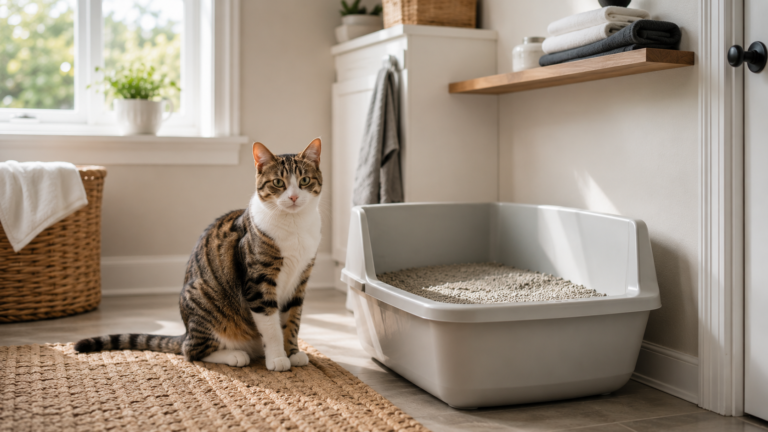
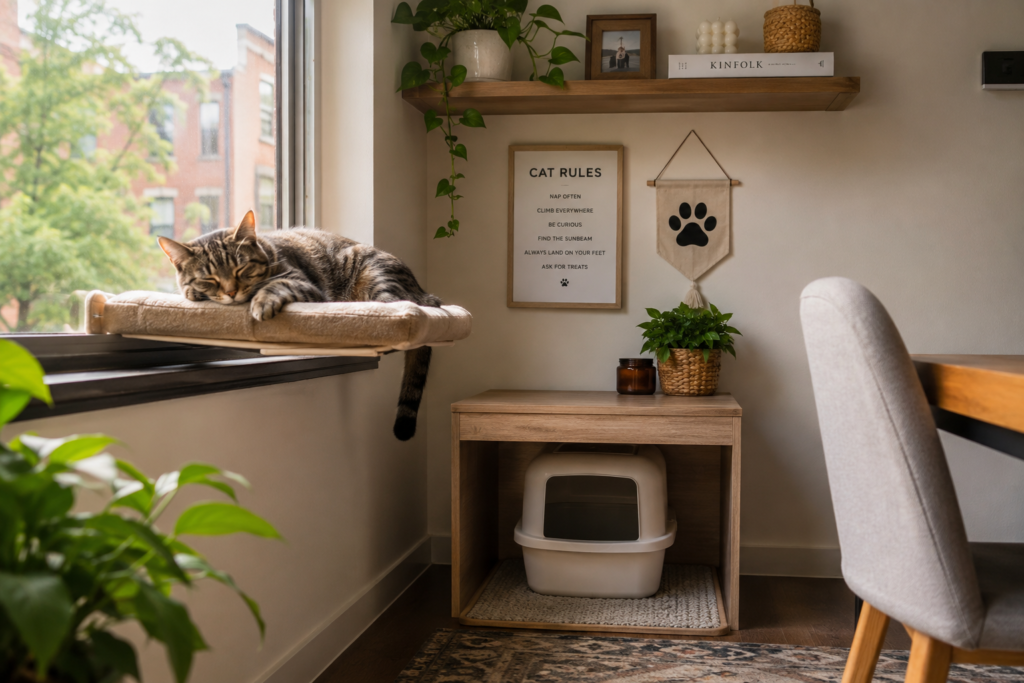

Last spring, my cat Mimi claimed the linen closet in our guest room and slept there every night for three weeks straight, ignoring the bed I’d bought her ten feet away. It turns out most cat room ideas focus on furniture instead of asking what a cat is actually trying to get from a space in the first place. If you’re here because your cat has already staked a claim on part of your house, you’re in the right place, because setting up a cat room is more about matching her instincts than picking pretty furniture.
Below is what I’ve learned setting one up for Mimi, plus what other owners and a few professional sources have to say about doing it well.
Cat Room Ideas: What Actually Makes One Work
A good cat room, whether it’s a spare bedroom, a closet, or one wall of your living room, comes down to five things.
- Height. Cats feel safer above eye level, so a shelf or perch matters more than square footage.
- Sightlines. A cat who can see the door and the rest of the room at once is a calmer cat.
- Separation. Food, water, litter, and scratching surfaces each need their own footprint, ideally a few feet apart.
- Safety. No dangling blind cords, no toxic plants, no gaps behind furniture where a cat can get stuck.
- Choice. More than one bed and more than one perch, so she isn’t fighting for the single good spot.
The American Association of Feline Practitioners covers similar ground in its feline environmental needs guidelines, which group resources like elevated perches and private retreat spots under what it calls the pillars of a healthy feline environment.
If you only fix one of these five in an existing setup, start with separation. It solves more litter box problems than any product on this list.
How to Make a Cat Room: Step by Step
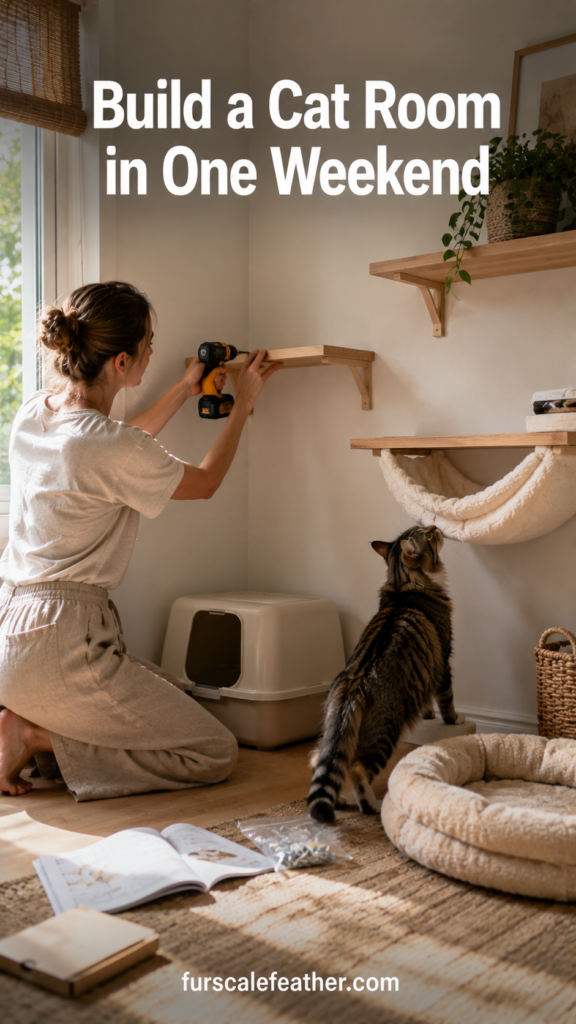
Once you know what a cat room needs, the setup itself takes an afternoon, not a renovation budget.
- Measure the room and note the ceiling height. This tells you whether a floor-to-ceiling cat tree will fit. Most adjustable models extend somewhere between 95 and 108 inches.
- Pick one wall for vertical space. A shelf, tree, or window perch mounted here becomes the anchor for everything else.
- Put the litter box on the opposite side of the room from food and water. Aim for at least six feet of distance if the room allows it.
- Add one hideout per cat, plus one spare. A covered bed, a box, or the underside of a shelf all count.
- Give her a scratching option at floor level and up higher. Cats scratch to mark territory as much as to file their claws, so one post rarely covers both instincts.
- Live with it for a week before buying anything else. Watch which spot she avoids and which one she claims, then adjust instead of guessing upfront.
15 Cat Room Ideas for Every Space and Budget
These work whether you have a full spare room or one wall to dedicate to her. I’ve grouped them by the problem each one solves.
Vertical space and climbing
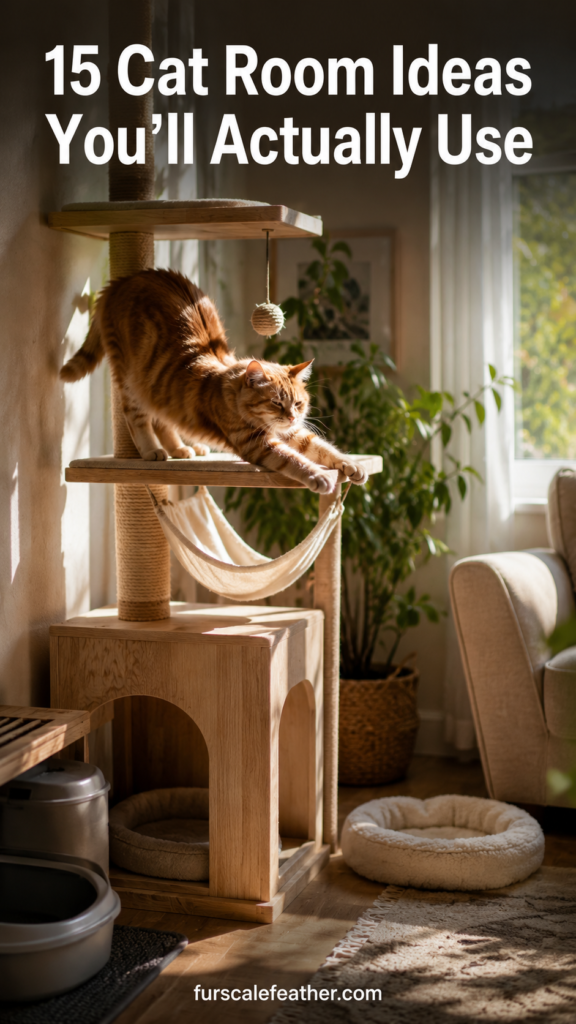
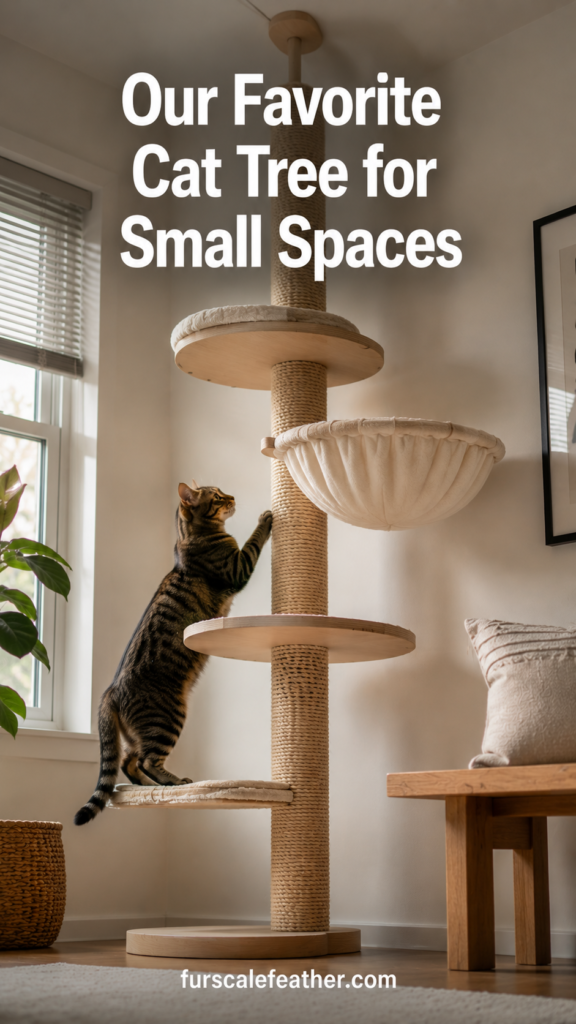
- A floor-to-ceiling cat tree that uses a tension pole, no drilling required and easy to move if you rent.
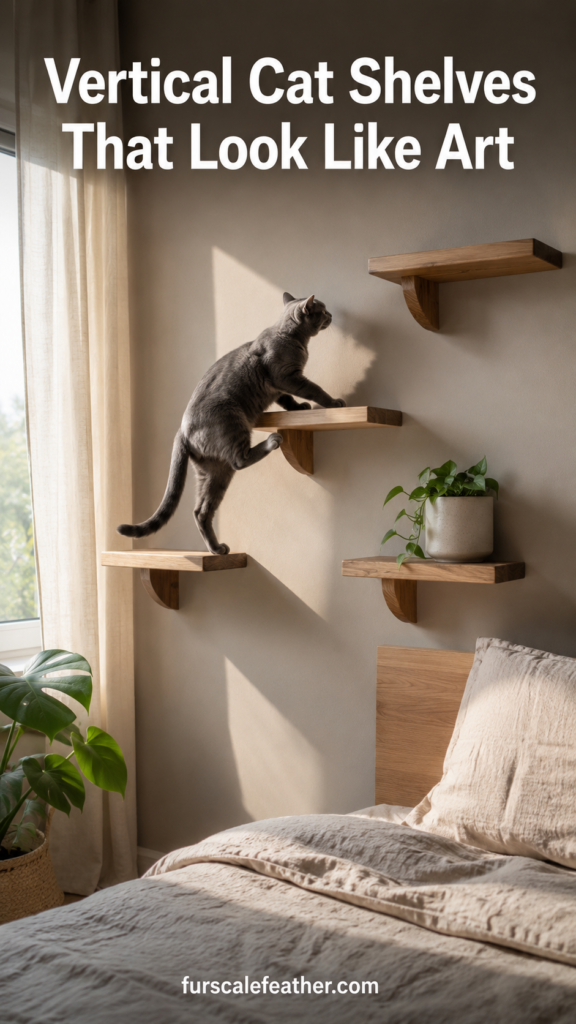
- Wall-mounted shelves staggered like a staircase so she can climb without a running start.
- A repurposed bookshelf with one shelf cleared on each level for climbing and lounging.
Cozy hideouts and beds
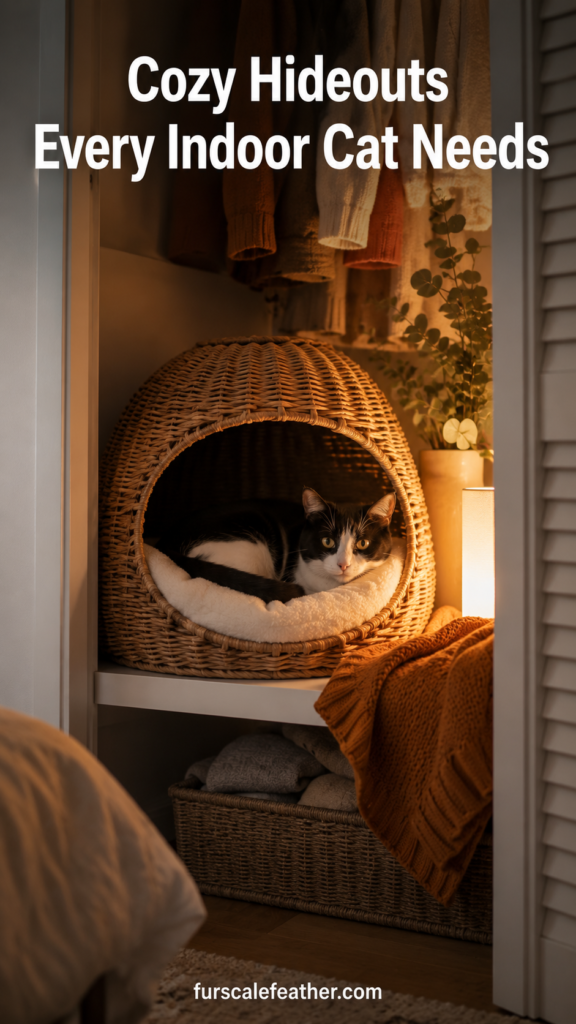
- A covered cat bed tucked into a closet shelf for cats that like to disappear completely.
- A cardboard box with the top half cut away, cheaper than most beds and often preferred anyway.
- A heated bed near a radiator or vent for cats who chase warmth in winter.
Window and sunlight spots
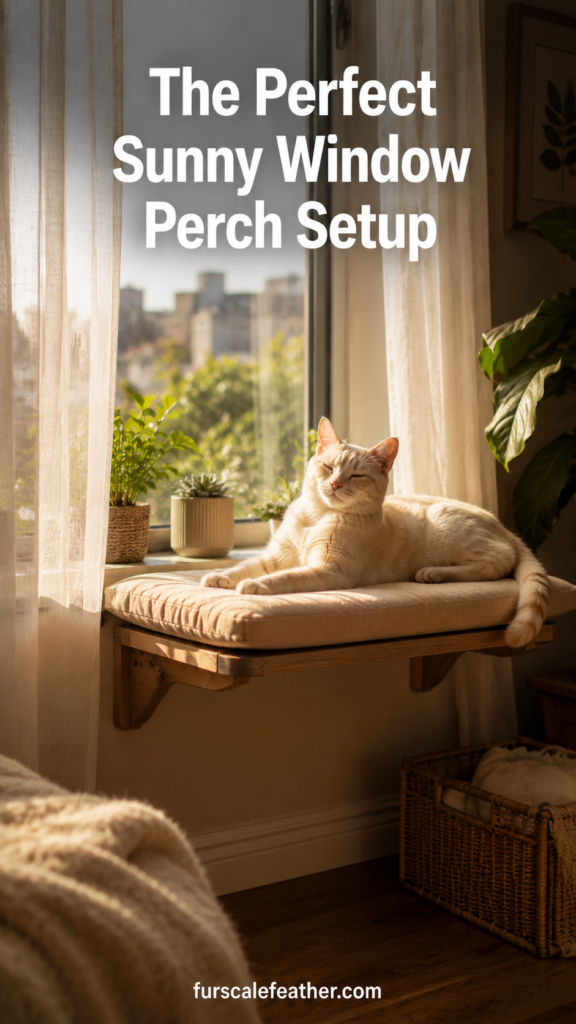
- A sill-mounted window perch positioned where morning sun lands.
- A deep windowsill cleared of plants and styled with a simple washable cushion.
Litter box solutions
- A top-entry litter box set against a wall, which cuts down on tracked litter compared to an open pan.
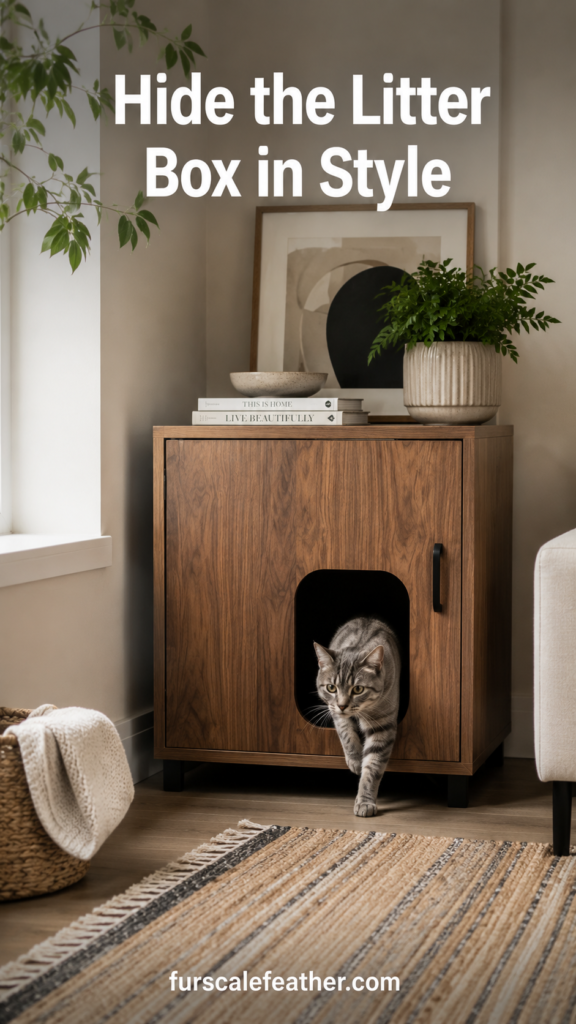
- A litter box hidden inside a cabinet or ottoman with a cutout door, useful in rooms that double as guest space.
Multi-cat layouts
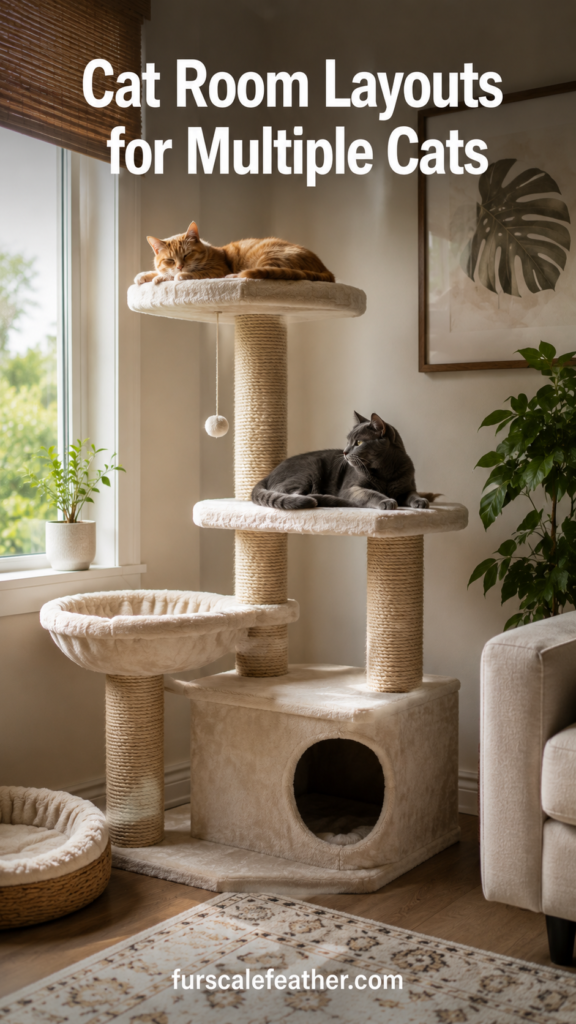
- Two separate feeding stations on opposite walls so no one is guarding a shared bowl.
- A tree with at least three perches so no single cat controls the best spot.
Small apartment tricks
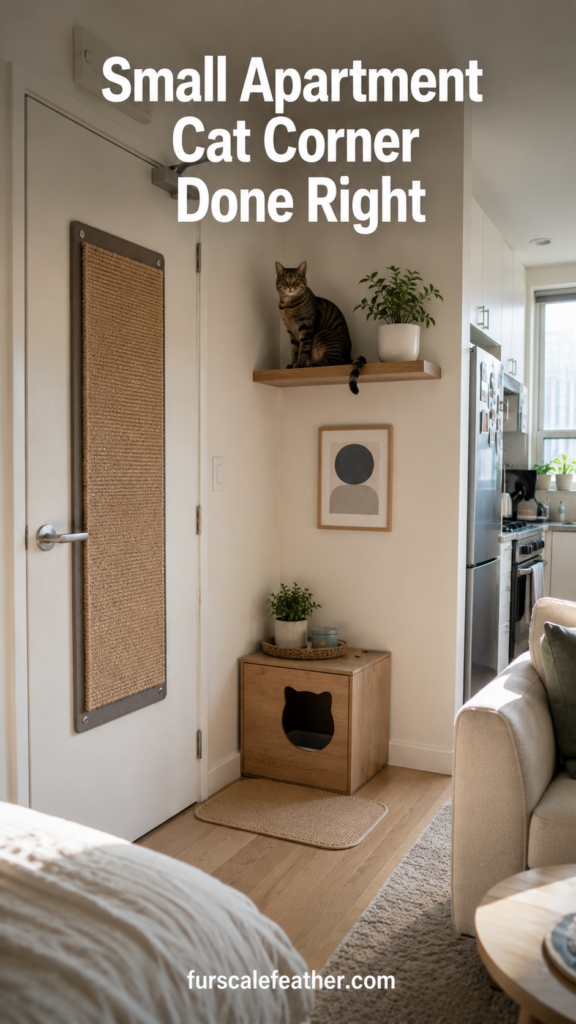
- An over-the-door scratching pad that takes up zero floor space.
- A rolling cart repurposed as a mobile cat station you can move between rooms.
- One corner outfitted with a stacked combination of a scratcher, a perch, and a hideout, built to work in under 10 square feet.
A Mistake I Made Setting Up Mimi’s Room
When I first set up Mimi’s corner, I put her litter box right next to her scratching post and about three feet from her food bowl, mostly because that’s where the space happened to fit. Within two weeks she started leaving accidents just outside the box instead of in it. I assumed she was being difficult. When I looked into it, cats generally want distance between where they eat, where they scratch, and where they go to the bathroom, not out of pickiness but because those are separate instincts stacked into one spot. I moved the litter box to the far wall, about eight feet away, and she was using it normally again within three days. The lesson wasn’t about the litter box itself. It was that a layout that’s convenient for me and one that’s comfortable for her are not automatically the same thing.
Products I’d Actually Put in an Indoor Cat Space
I’ve personally tested two of these with Mimi. For the other two, I’m relying on manufacturer specs and aggregated buyer reviews rather than my own use, and I’ve labeled that below.
Floor-to-ceiling cat tree (adjustable tension pole)
I have not tested this category myself, so this is based on manufacturer specs across several listings. Most adjustable floor-to-ceiling trees fit ceilings between roughly 95 and 108 inches and come with 3 to 5 levels, a hammock, and hanging toys.
- Pros: no wall damage, uses vertical space a low tree can’t, works for multiple cats at once.
- Cons: assembly takes time, and the tension pole needs a solid ceiling rather than a drop ceiling.
SmartCat Bootsie’s Combination Scratcher
I bought one for Mimi and mounted it about 18 inches off the floor near her window perch. She started using it the first day, and six months later the sisal is still holding up. It measures 24 inches long, 7 inches wide, and 2.5 inches thick, and works laid flat or mounted to a wall, so you can test which orientation she prefers before committing. Independent testing from CNN Underscored also rated it among the better budget scratchers, priced around $20.
- Pros: cheap, versatile, durable sisal.
- Cons: not tall enough for a cat that wants a full vertical stretch, so it works better as a second scratcher than a cat’s only one.
K&H Kitty Sill window perch
I use the heated version by a south-facing window, and Mimi naps there most sunny afternoons, often for an hour or more at a stretch. It holds up to 40 pounds, needs a sill at least 24 inches long and 2 inches deep, and installs with hook-and-loop fasteners or screws.
- Pros: turns unused window space into a favorite spot, the heated version helps in cold rooms.
- Cons: needs a sill deep enough to support it, and the heated model needs an outlet nearby.
IRIS USA top-entry litter box
I have not tested this one personally. Based on manufacturer specs and aggregated buyer reviews, it measures roughly 20.75 by 16 by 14.6 inches and includes a scoop, with a top-entry design meant to reduce tracked litter.
- Pros: hides the box visually, reduces tracking.
- Cons: cats with mobility issues or a strong preference for open boxes may avoid a top-entry design, so introduce it next to the old box rather than swapping overnight.
My pick: if you’re only buying one item, make it the floor-to-ceiling cat tree. It covers height, a hideout, and scratching in a single purchase, and it’s the easiest one to justify if your cat room is really just a corner of another room.

Questions People Usually Ask
How big does a cat room need to be? It doesn’t need to be a full room at all. A single wall or corner works if it includes vertical space, a hideout, and a litter box kept away from food and water.
Where should the litter box go in a cat room setup? Keep it several feet from food, water, and any scratching post. Cats generally prefer distance between these areas, and crowding them together is a common cause of litter box avoidance.
What’s the best flooring for a cat room? Anything easy to wipe down works well, tile, sealed hardwood, or a low-pile rug that won’t trap litter or fur. Skip deep shag carpet near the litter box.
Can I set up an indoor cat space in a small apartment? Yes. Vertical solutions like wall shelves, over-the-door scratchers, and window perches give you most of what a full room would, without using floor space.
My cat won’t use the room I set up. What’s wrong? Usually it’s placement rather than the room itself. Check whether the litter box sits too close to food, whether there’s a quiet retreat spot, and whether another pet is blocking access. If she’s suddenly avoiding a litter box she used fine before, it’s worth ruling out a urinary issue with a veterinarian before assuming it’s just a preference.
The Takeaway
A good cat room comes down to a handful of repeatable choices: give her height, give her distance between resources, and give her more than one option for resting and hiding. Start small, maybe just one shelf and a better-placed litter box, and watch how she actually uses it before buying anything else. My biggest change came from moving a litter box eight feet across a room, not from any single product. Pick one idea from this list, try it for a week, and let her behavior tell you what to add next.
Disclosure: Some products mentioned may be linked with affiliate tags if this is published with affiliate partnerships in place. Two products (the SmartCat scratcher and the K&H window perch) were personally purchased and tested with my own cat. The floor-to-ceiling cat tree and the IRIS USA litter box were not personally tested. Those recommendations are based on manufacturer specifications and aggregated buyer and third-party reviews, as noted in the article.